1
Filtration
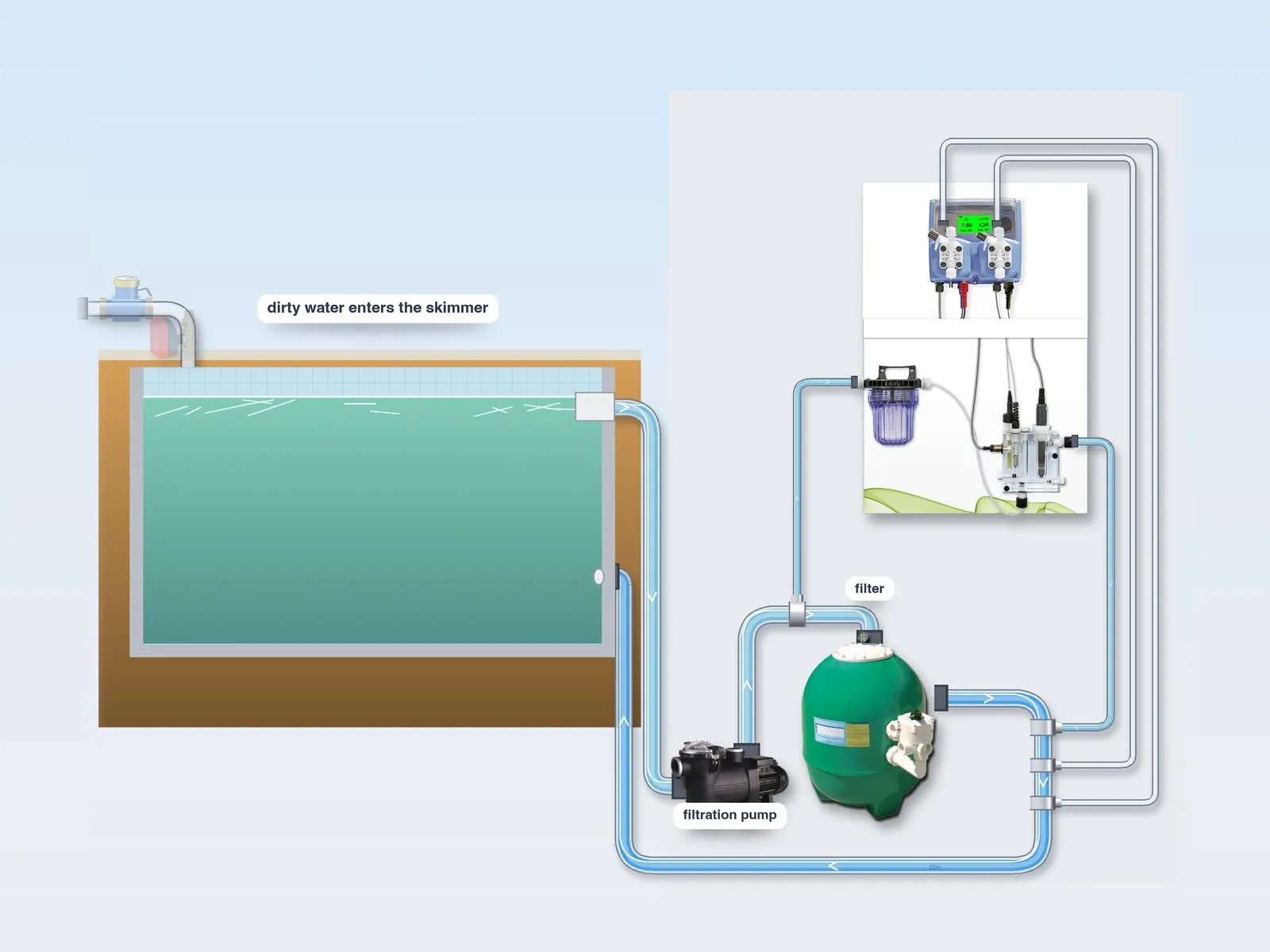
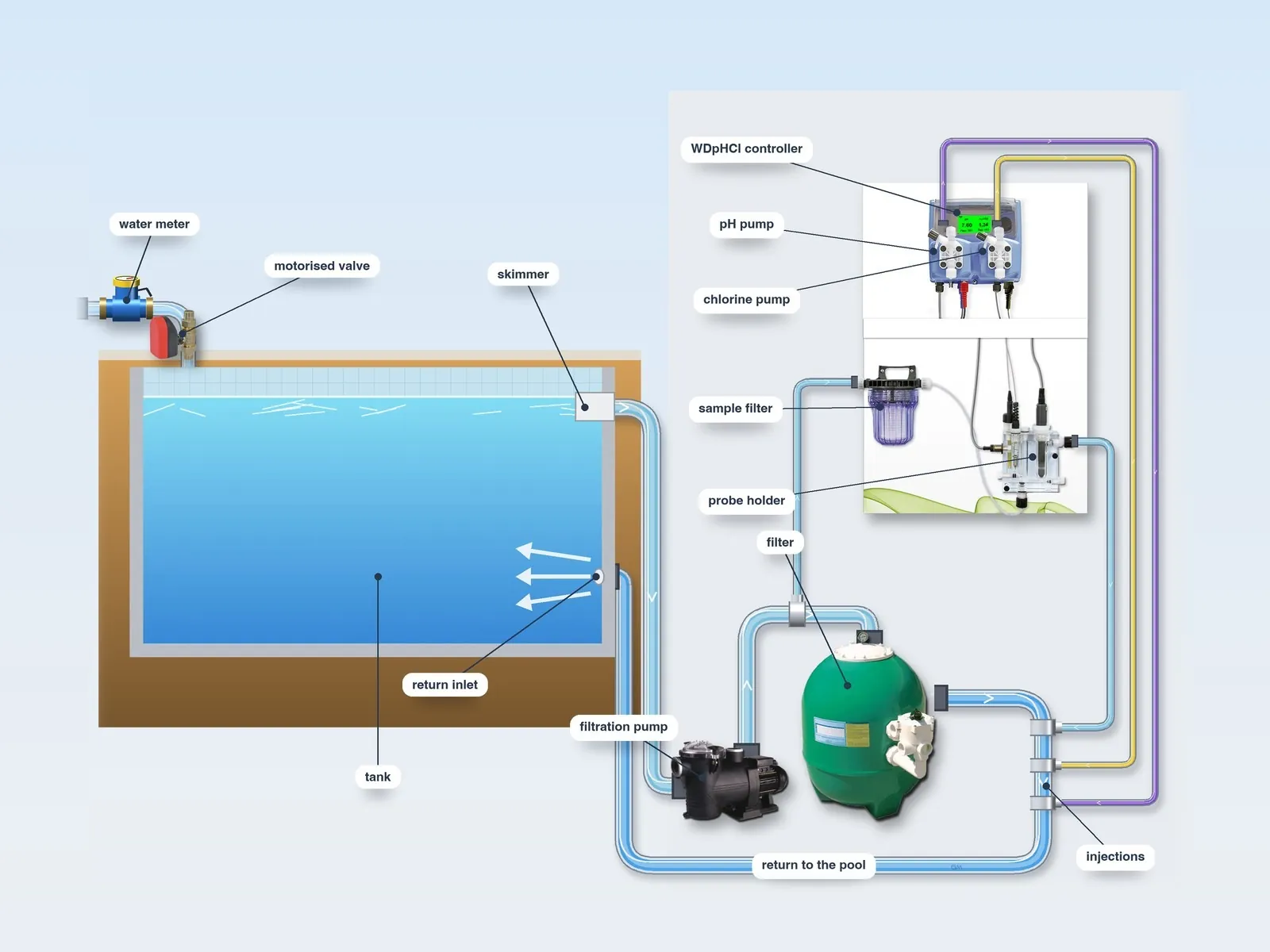
The water is drawn in through the skimmer and sent by the filtration pump to the filter, which retains the suspended impurities.
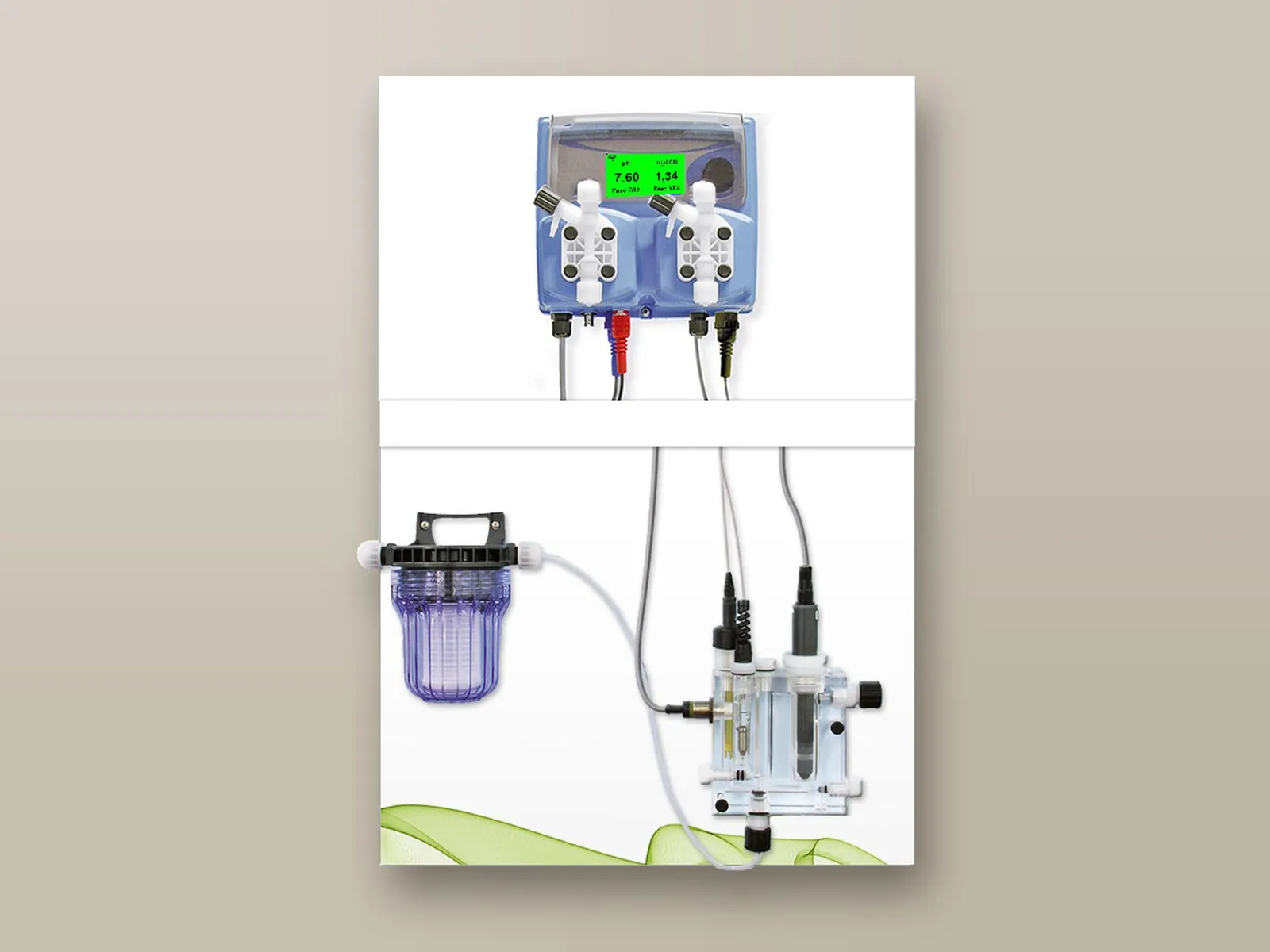
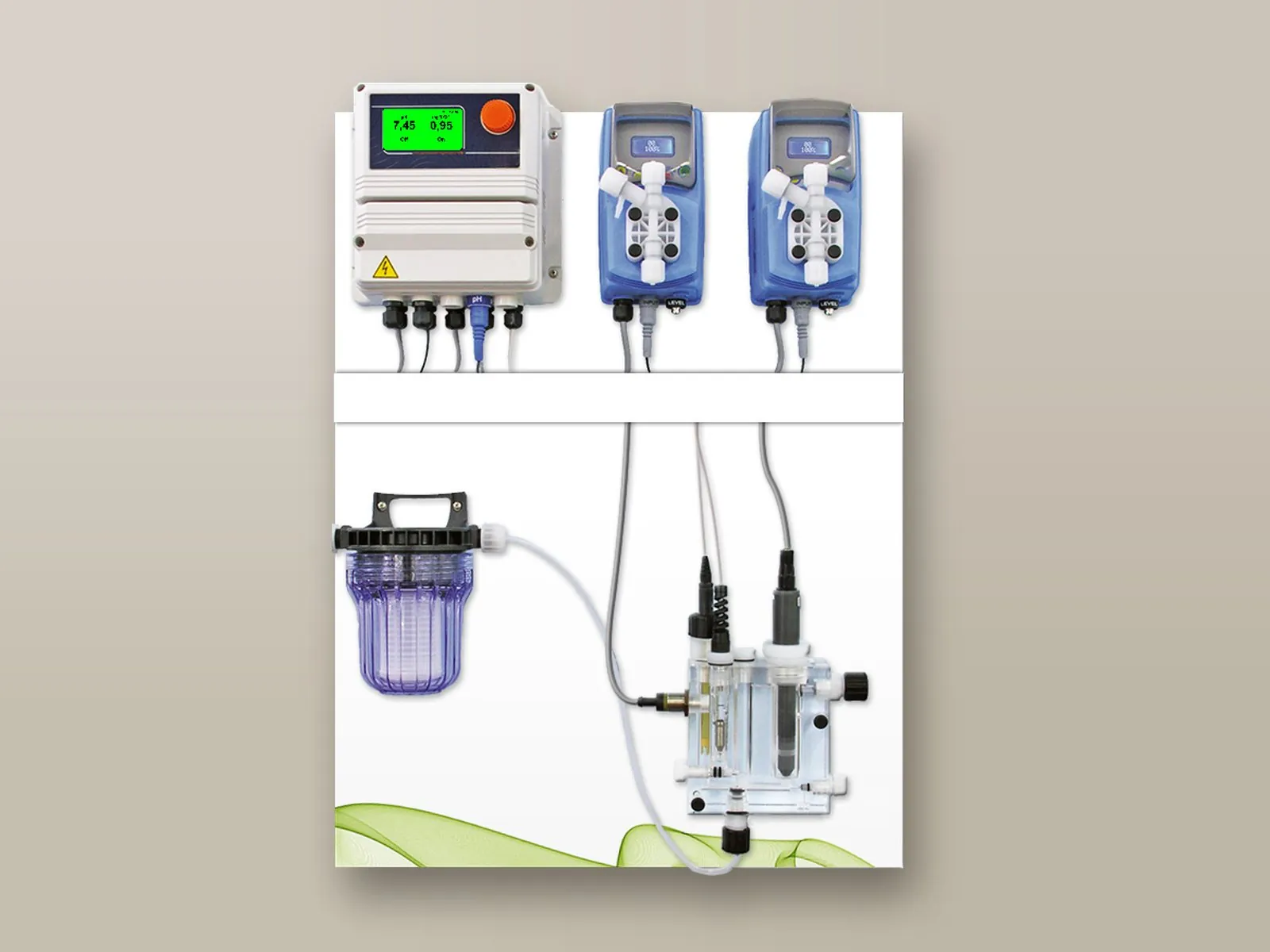
The controller measures the pH and the disinfectant and automatically doses pH corrector and disinfectant. Up to 150 m³ the WD systems are used, with the two pumps integrated in the controller; above 150 m³ the LD controllers become the most suitable, with the option of using dosing pumps sized for the pool volume. The preferred solution measures free chlorine with a closed (membrane) amperometric cell; alternatively, Redox, bromine or hydrogen peroxide (active oxygen) systems can be used.
The pool water circulates continuously between the pool and the plant room, where it is filtered, analysed and disinfected before being returned.
Insight: swimming pool water →
The water is drawn in through the skimmer and sent by the filtration pump to the filter, which retains the suspended impurities.
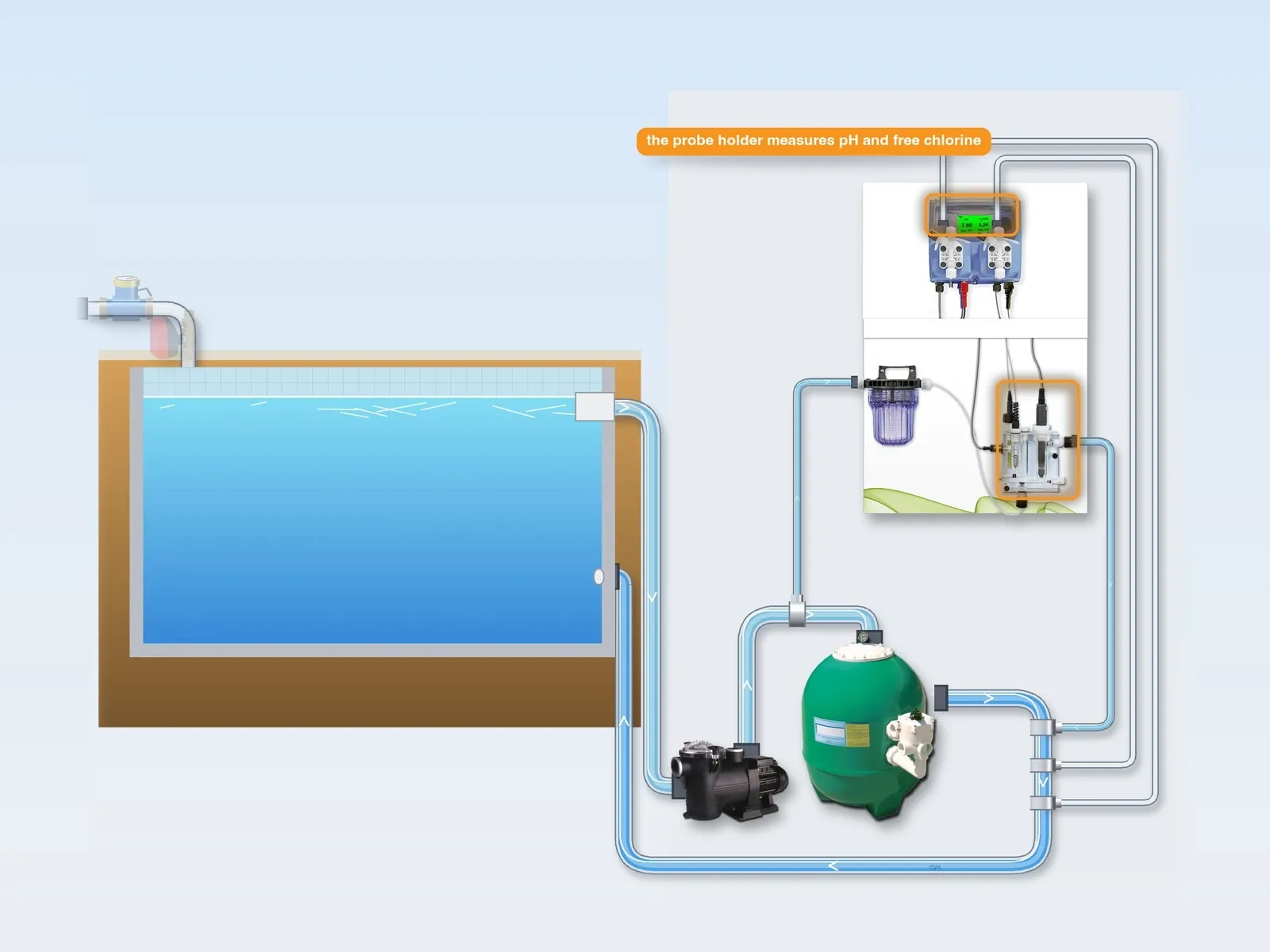
A water sample flows through the probe holder of the panel, where pH and free chlorine are measured continuously.
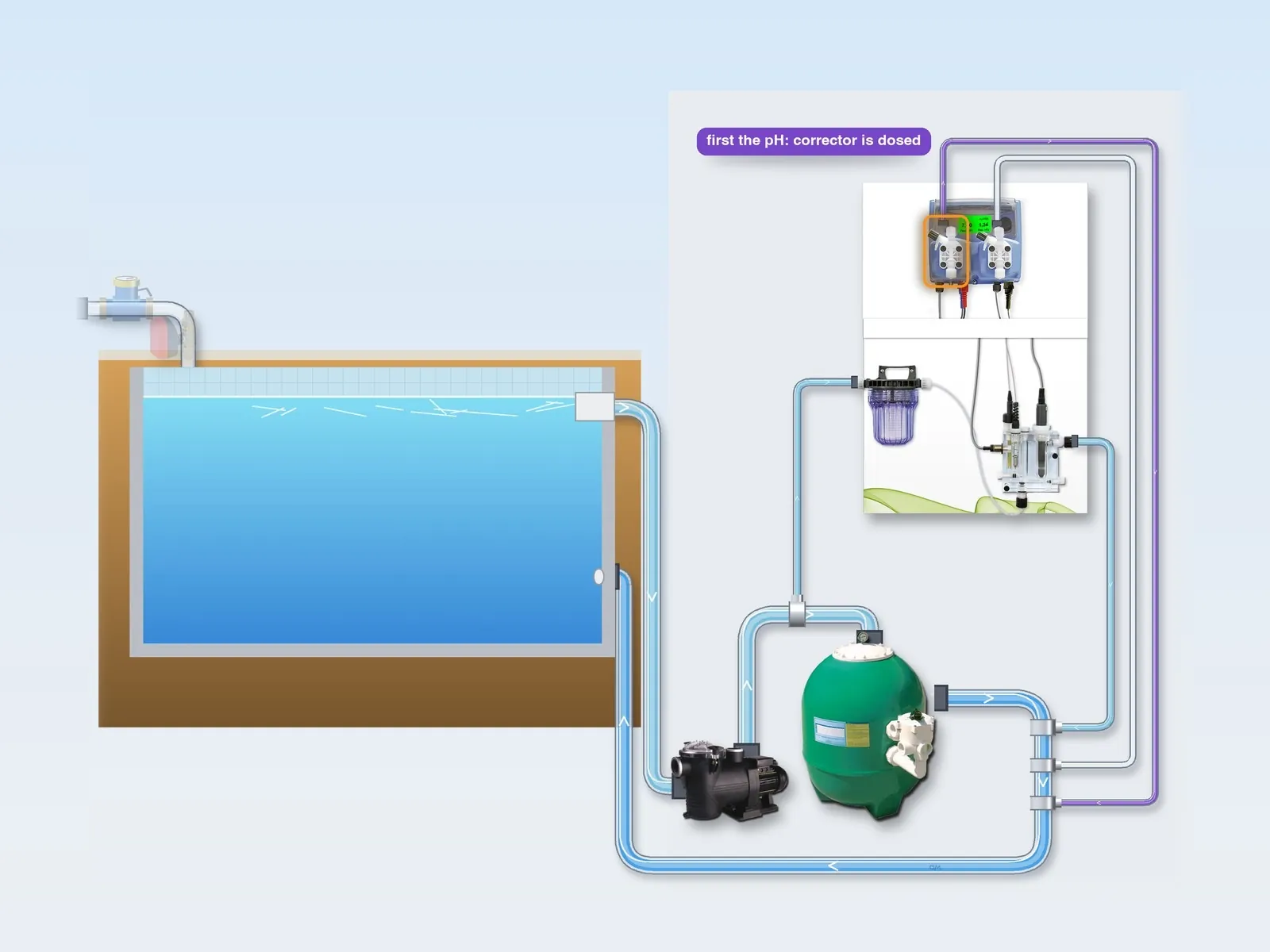
The controller regulates pH as a priority: the pump doses the corrector until the set value is reached.
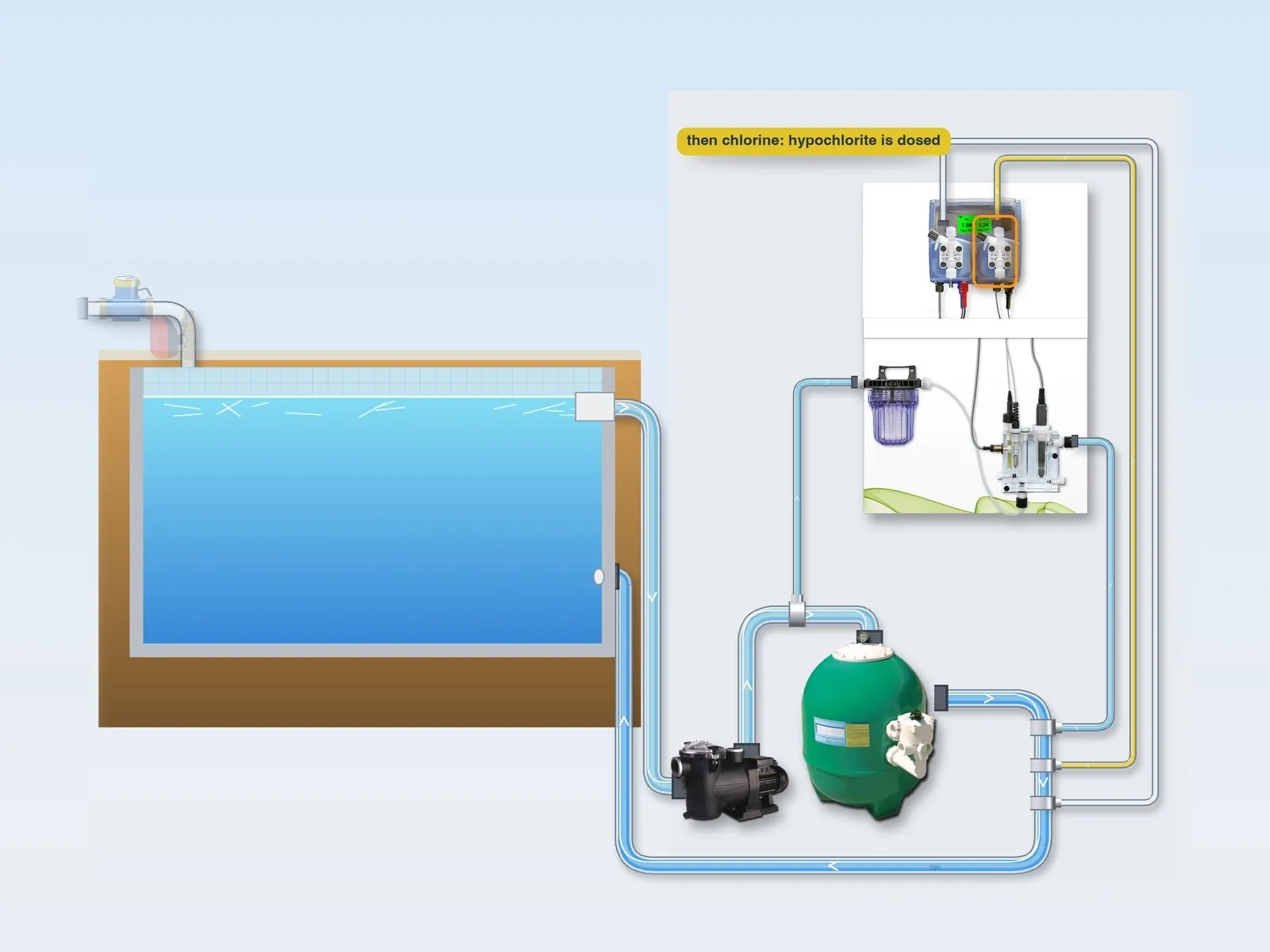
With the pH at the correct values, hypochlorite is dosed, at a flow rate that is progressively reduced as the set point is approached.
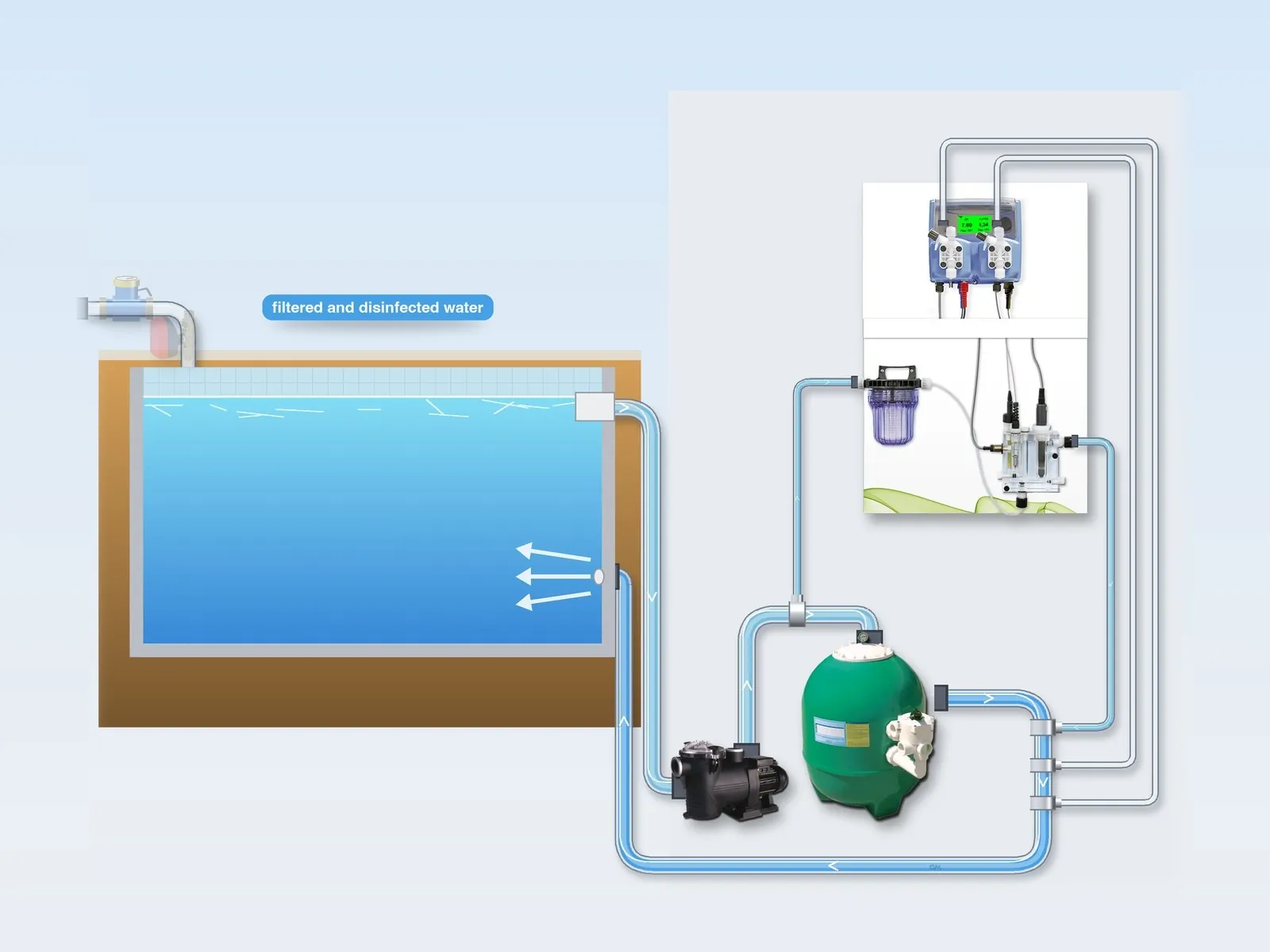
The filtered and disinfected water is returned to the pool through the return inlets.
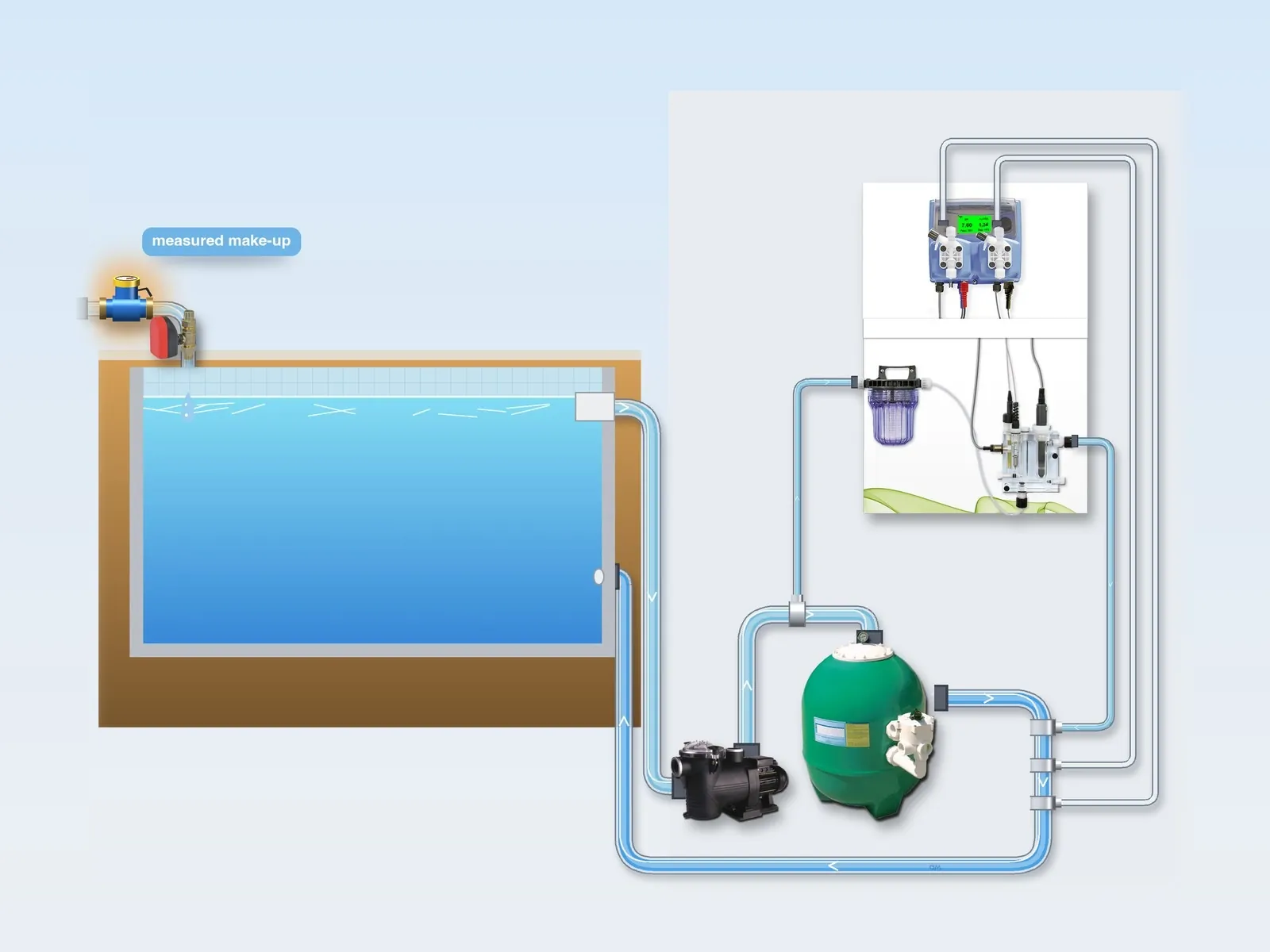
Water lost through evaporation or discharge is replaced; with the Centurio POOL the volume fed in is measured by a pulse-output water meter.
The treatment system is installed in the plant room, downstream of the filtration: the probes analyse a water sample and injection takes place on the delivery pipe to the pool.
Controller and two solenoid dosing pumps in a single unit, with probe holder, cell and sample filter pre-assembled on a panel. Also suitable for type 2 collective-use swimming pools up to 150 m³.
Two-channel controller with colour display and external dosing pumps, selected according to the pool volume; it also manages the salt chlorinator and flocculant dosing.
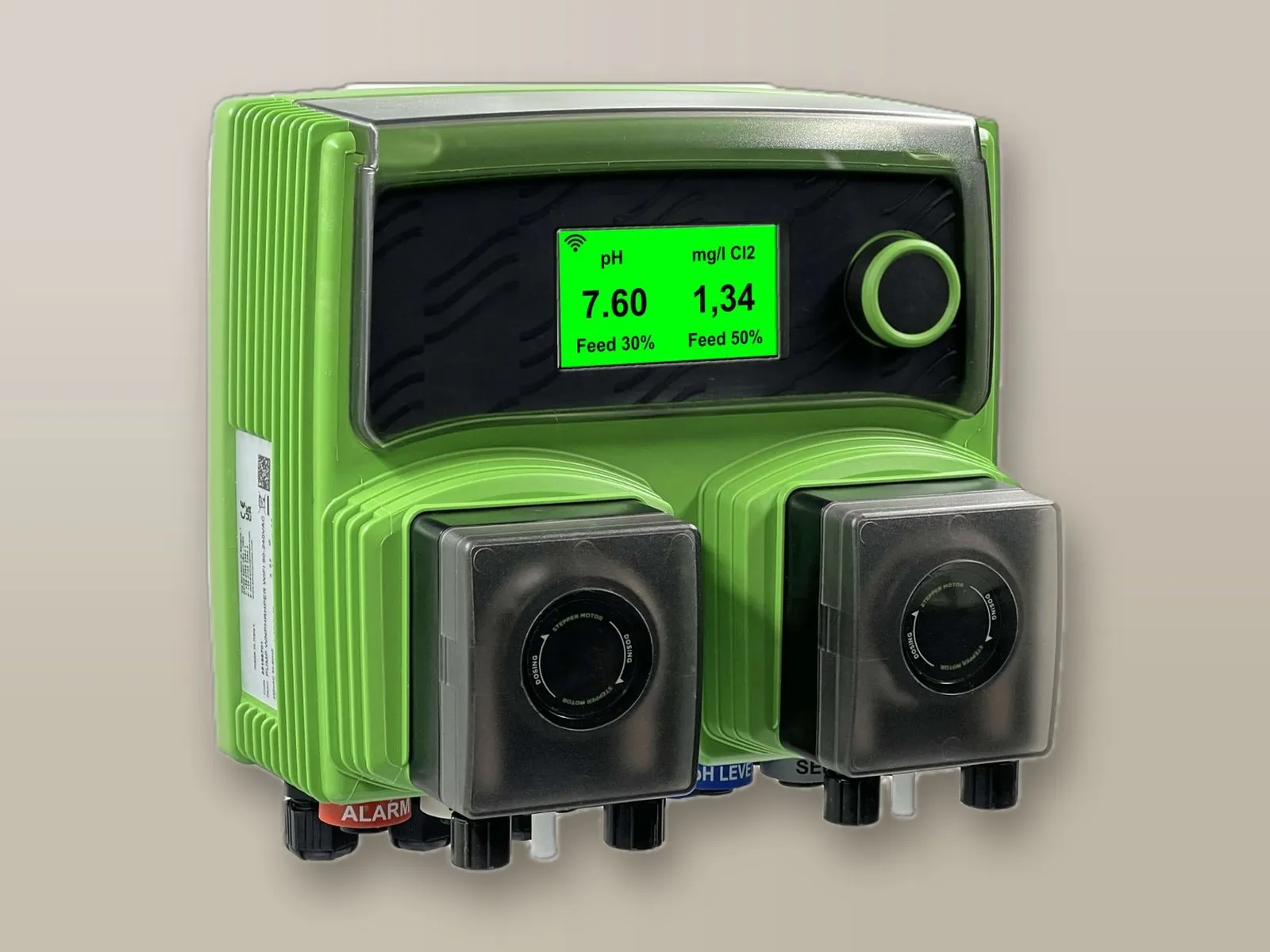
Quiet version: two stepper-motor peristaltic pumps, quiet and precise; free chlorine with the SCL closed cell.
The same systems with the ECL6 open cell, 0 – 10 mg/l range.
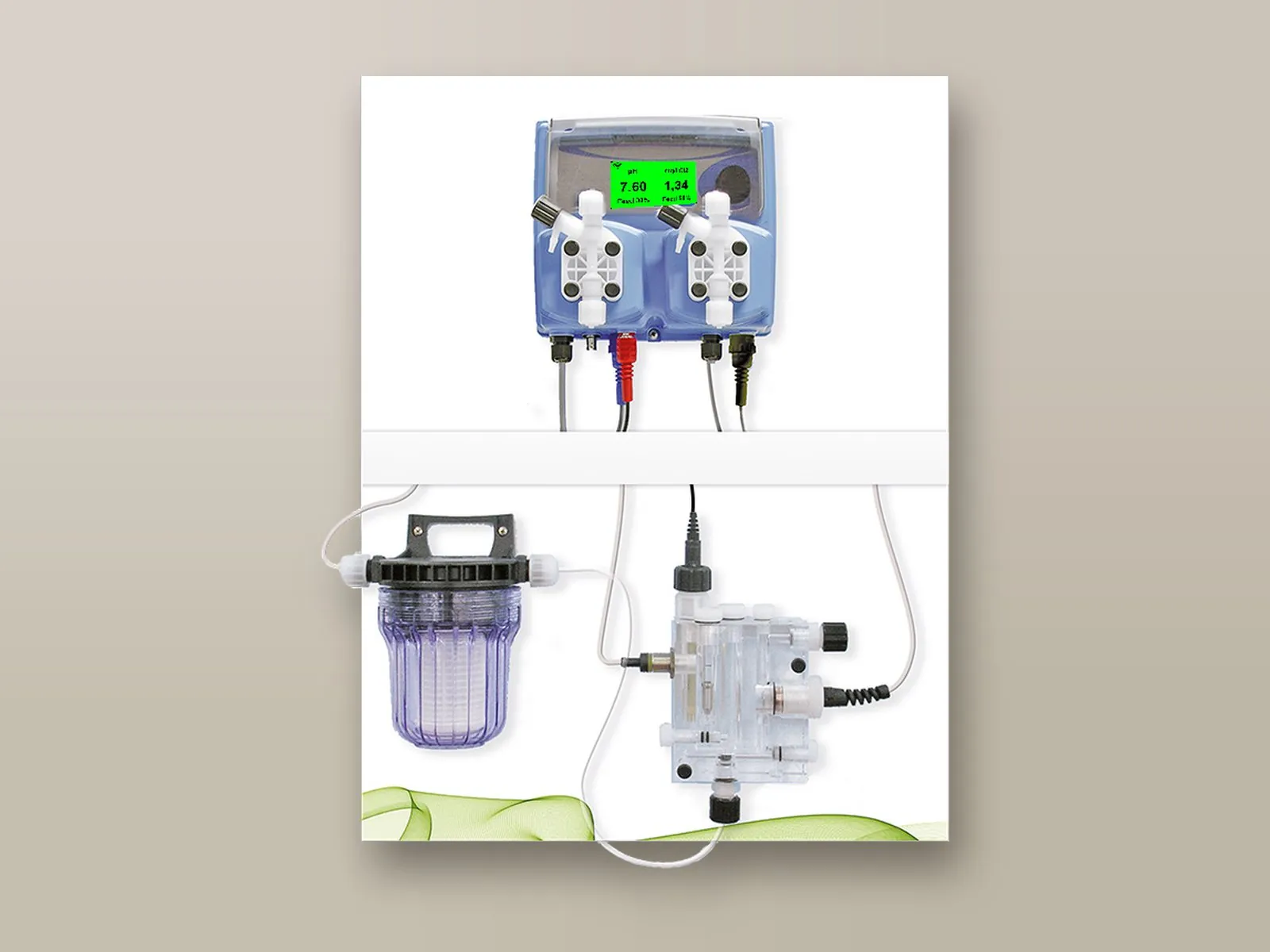
With the two pumps integrated in the controller.
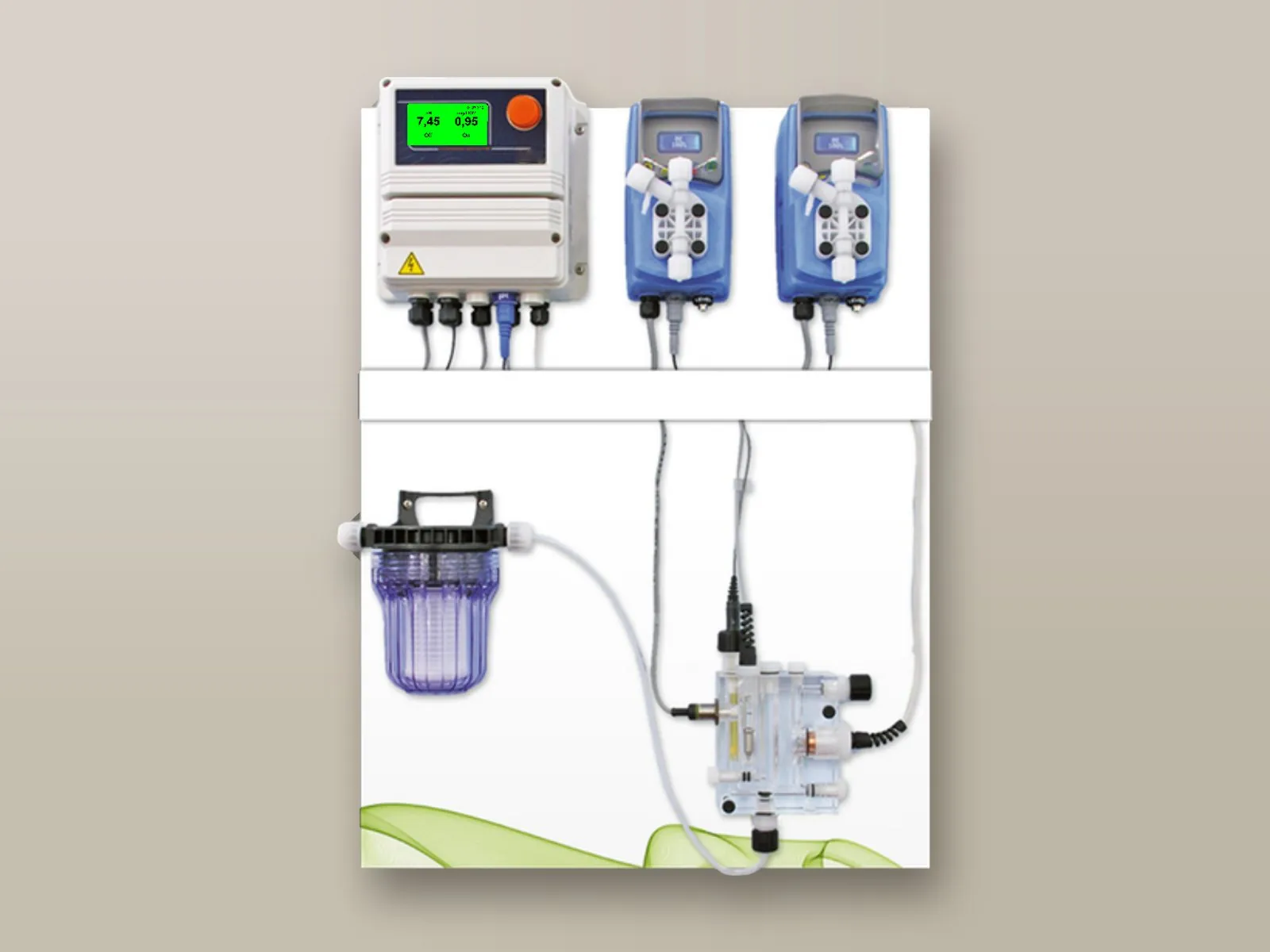
With external pumps sized for the pool.
Quiet version: two stepper-motor peristaltic pumps, quiet and precise; free chlorine with the ECL6 open cell.
The Redox potential (0 – 1,000 mV) indicates the oxidising power of the water: it is the most economical solution. The set point is determined by bringing the pH to the optimum value, measuring free chlorine with the colorimetric kit and reading the corresponding Redox value, typically 650 mV at pH 7.5.
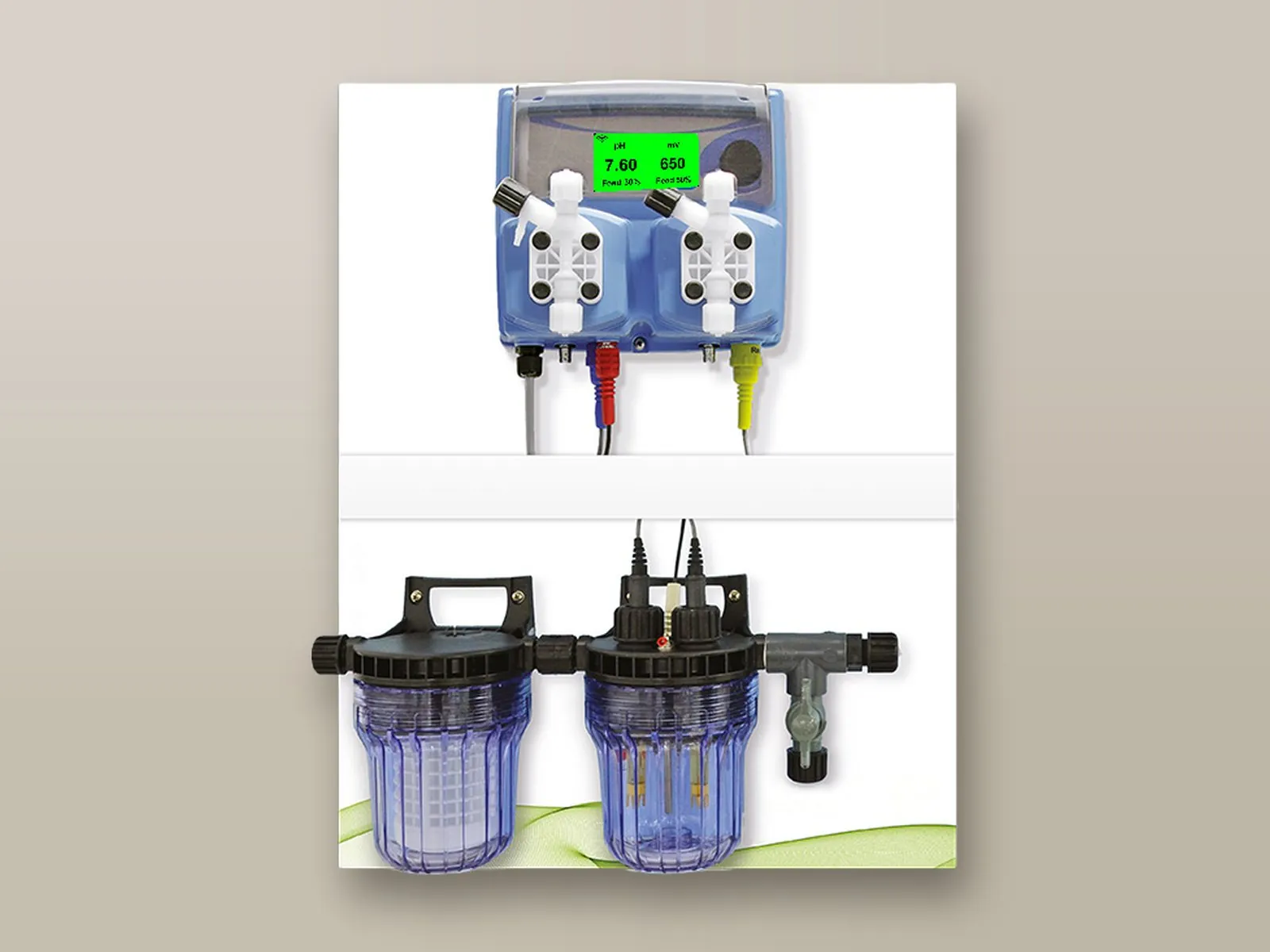
Controller with the two integrated pumps, sample filter and in-line probe holder on the panel.
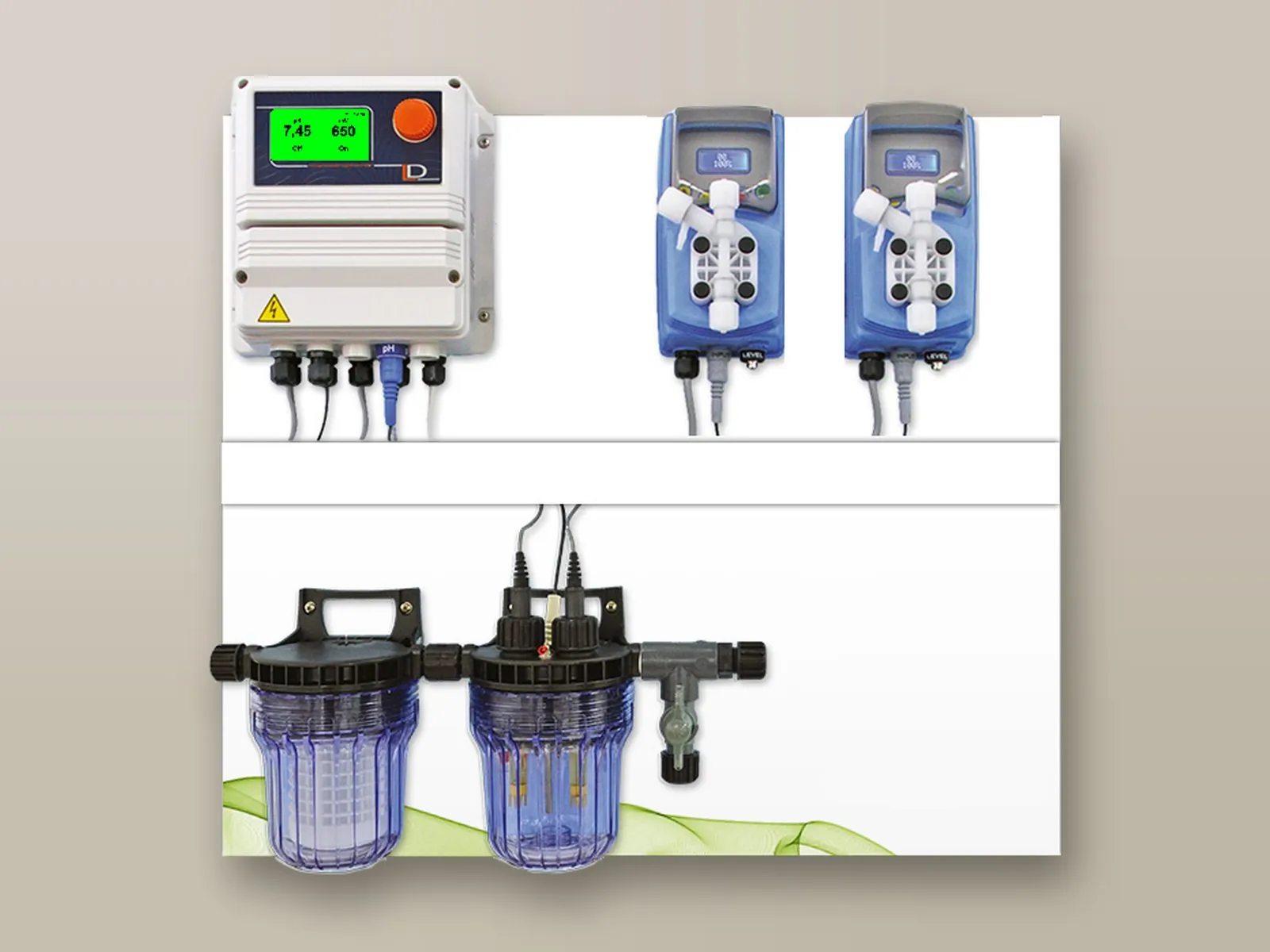
Two-channel controller with temperature compensation and external dosing pumps.
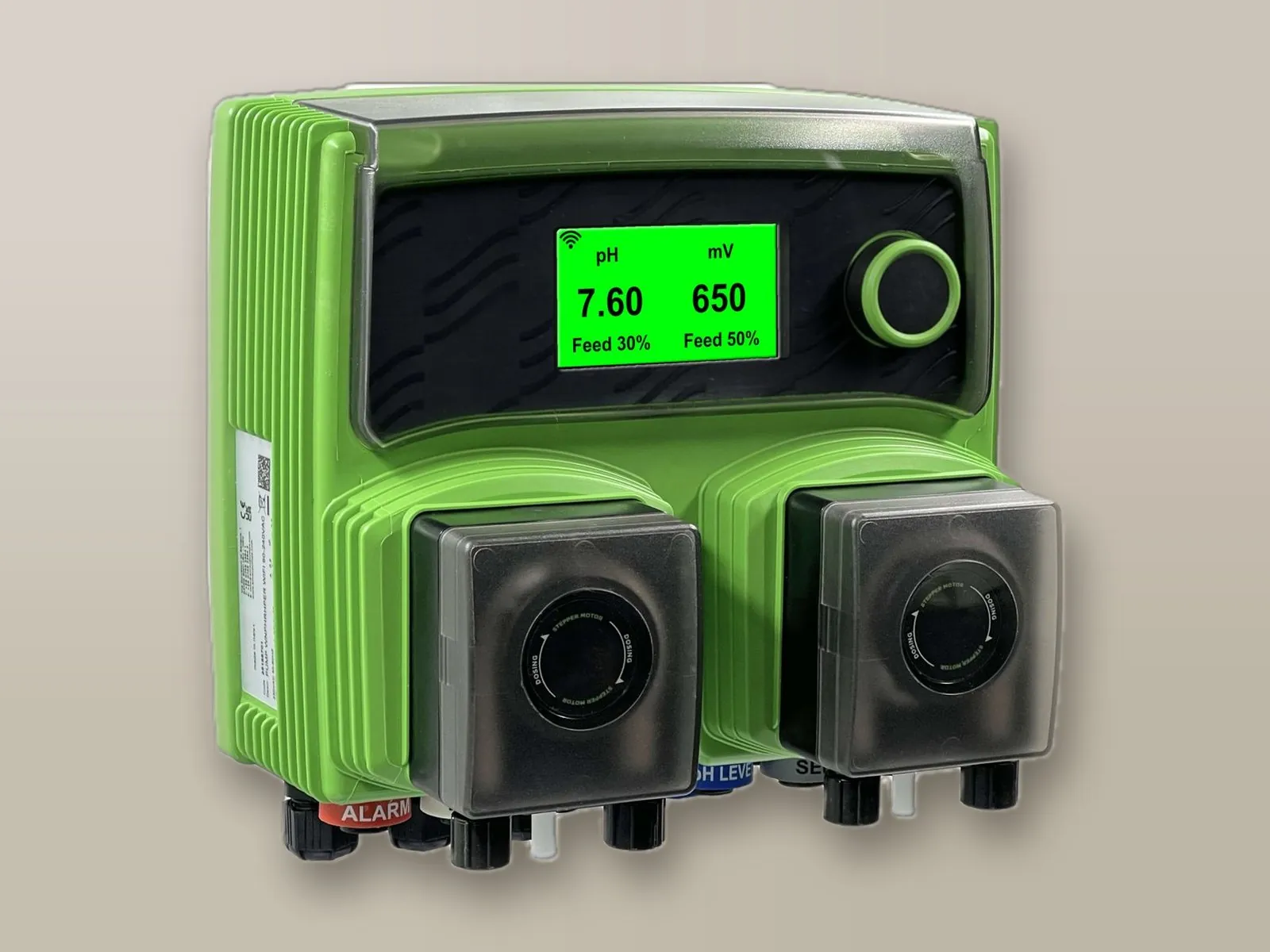
Quiet version: two stepper-motor peristaltic pumps, quiet and precise; Redox control.
Bromine, which is more stable at high temperatures, or hydrogen peroxide (active oxygen), which raises no issues of chlorine by-products or dechlorination of the discharge. The controllers are the same, with the closed cell dedicated to the disinfectant: WD up to 150 m³, LD above. As an alternative to liquid hypochlorite, the salt chlorinator produces chlorine directly from the salt dissolved in the pool.
Insight: swimming pool water discharges →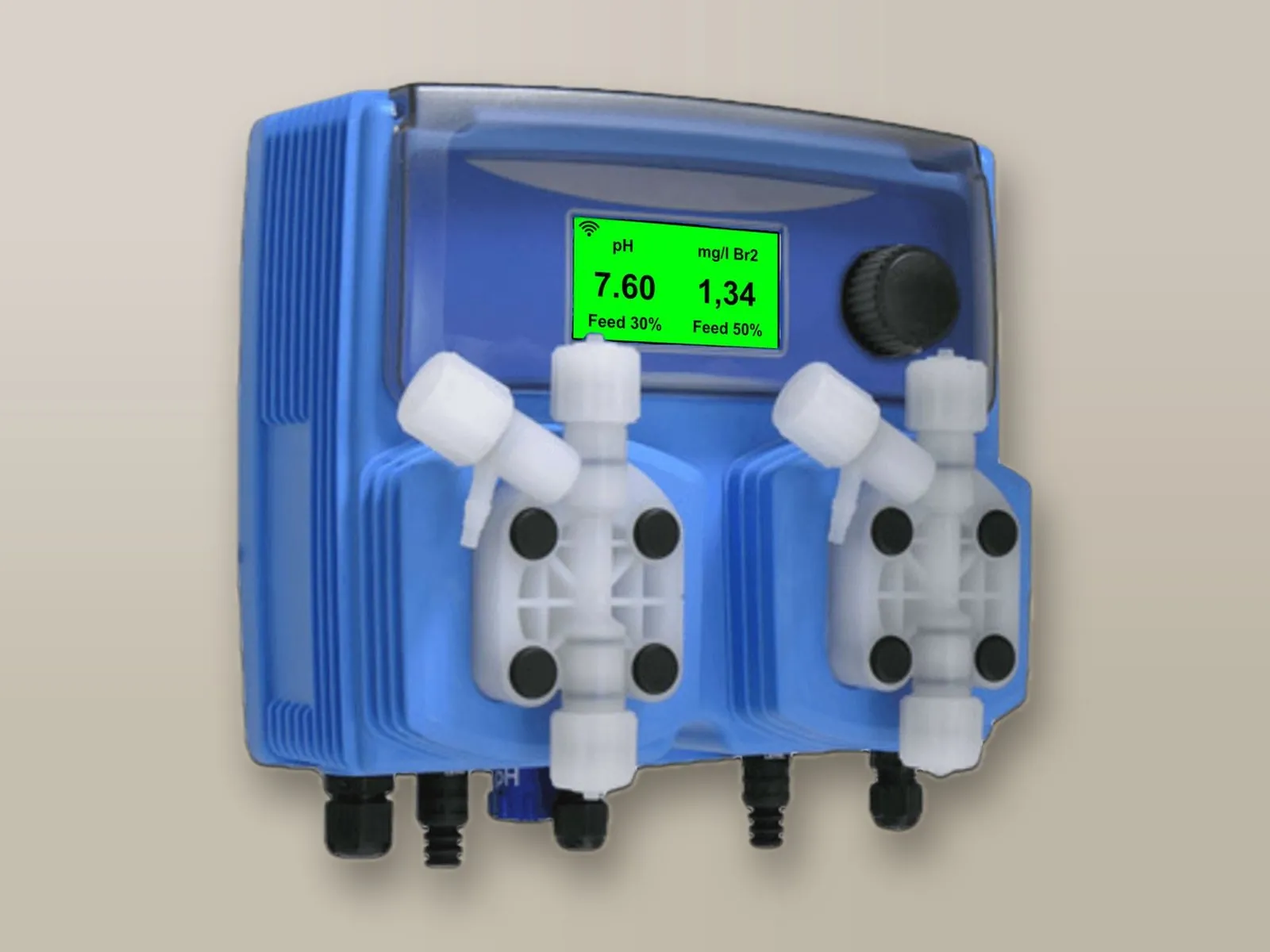
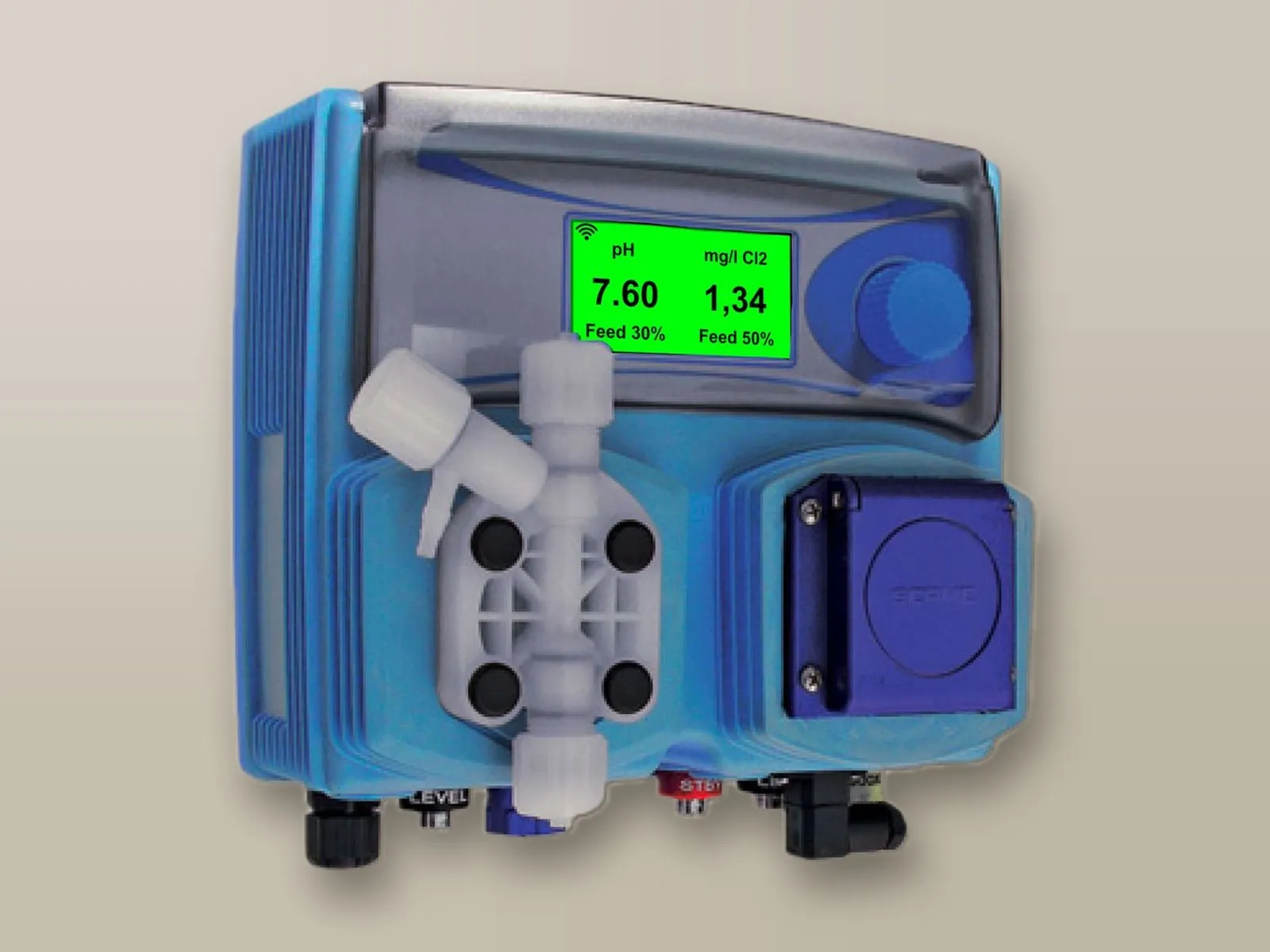
Free bromine in mg/l with the SBR closed cell (0 – 20 mg/l, 0.01 mg/l resolution): WDpHCl Bromine up to 150 m³, LDpHCl for bromine above.
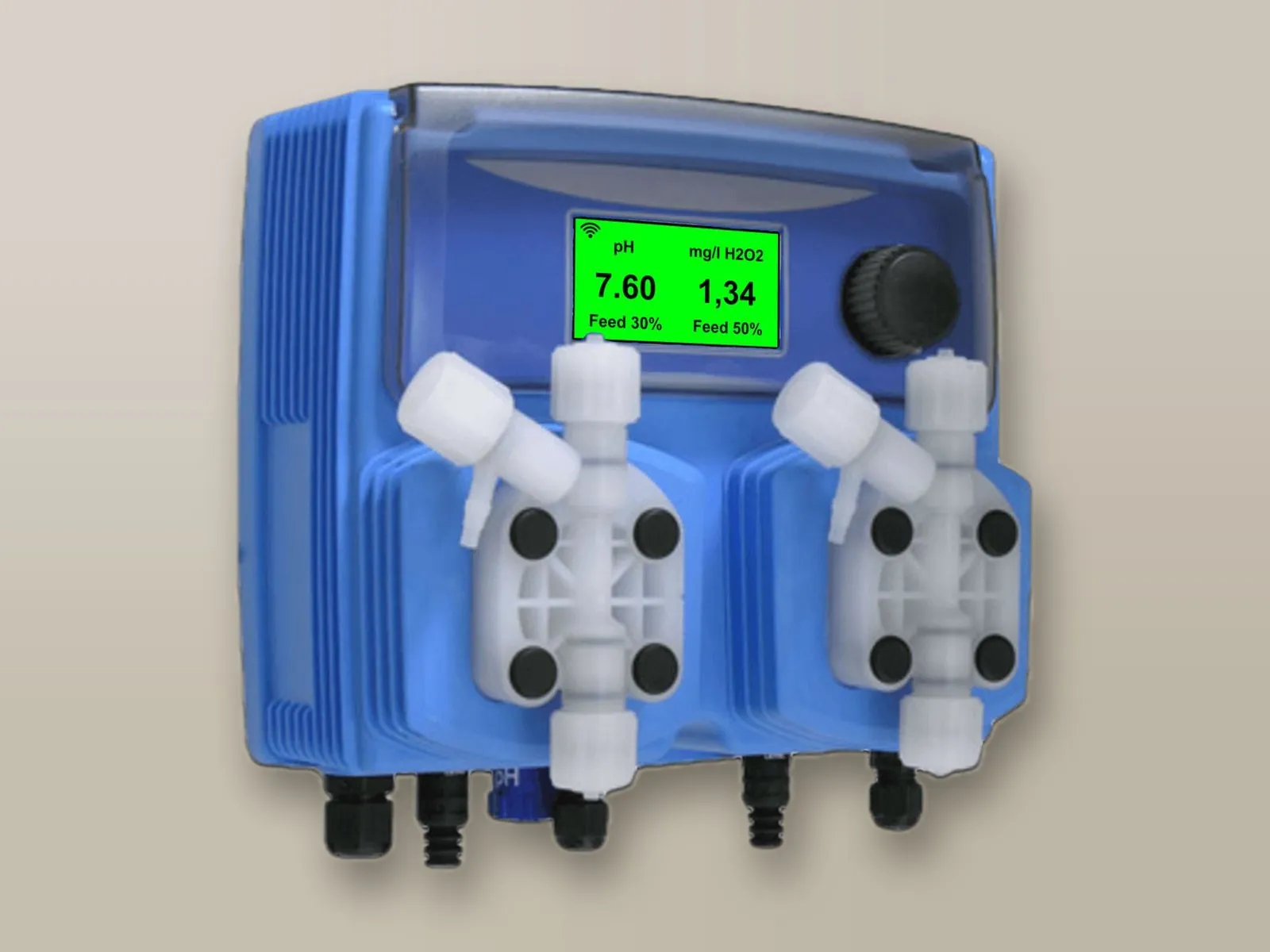
Active oxygen measured by the SCL9 closed cell (0 – 200 mg/l, 0.1 mg/l resolution); typical set points 30 mg/l and pH 7: WDpHCl Peroxide up to 150 m³, LDpHCl for hydrogen peroxide above.
The salt chlorinator produces chlorine from the salt dissolved in the pool, with no storage or dosing of hypochlorite. The S versions (WDpHCls, WDpHRhs) up to 150 m³, and the LDpHCl above, control the control unit on the basis of the measured free chlorine or Redox.
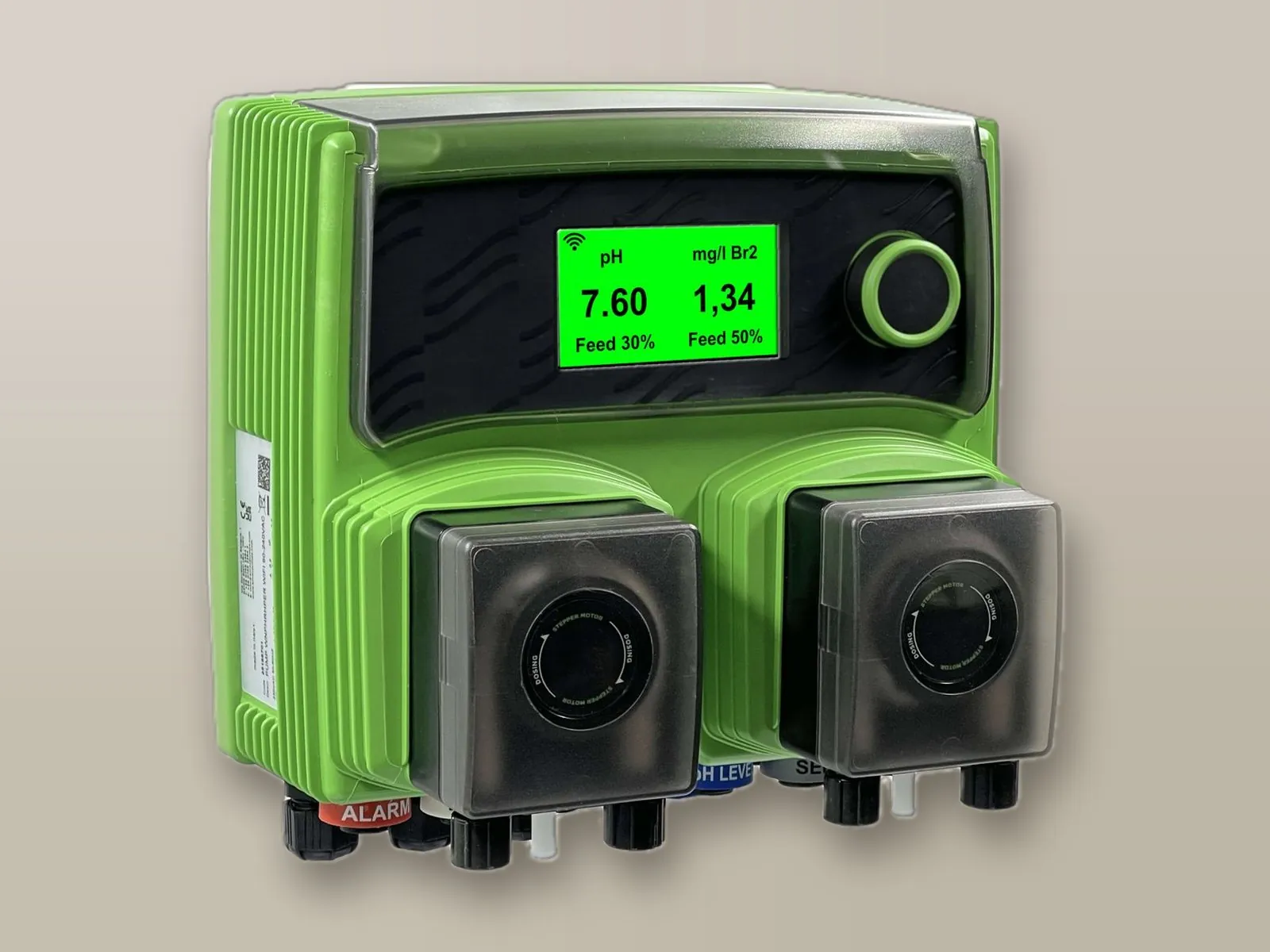
Quiet version: pH and free bromine, with two stepper-motor peristaltic pumps.
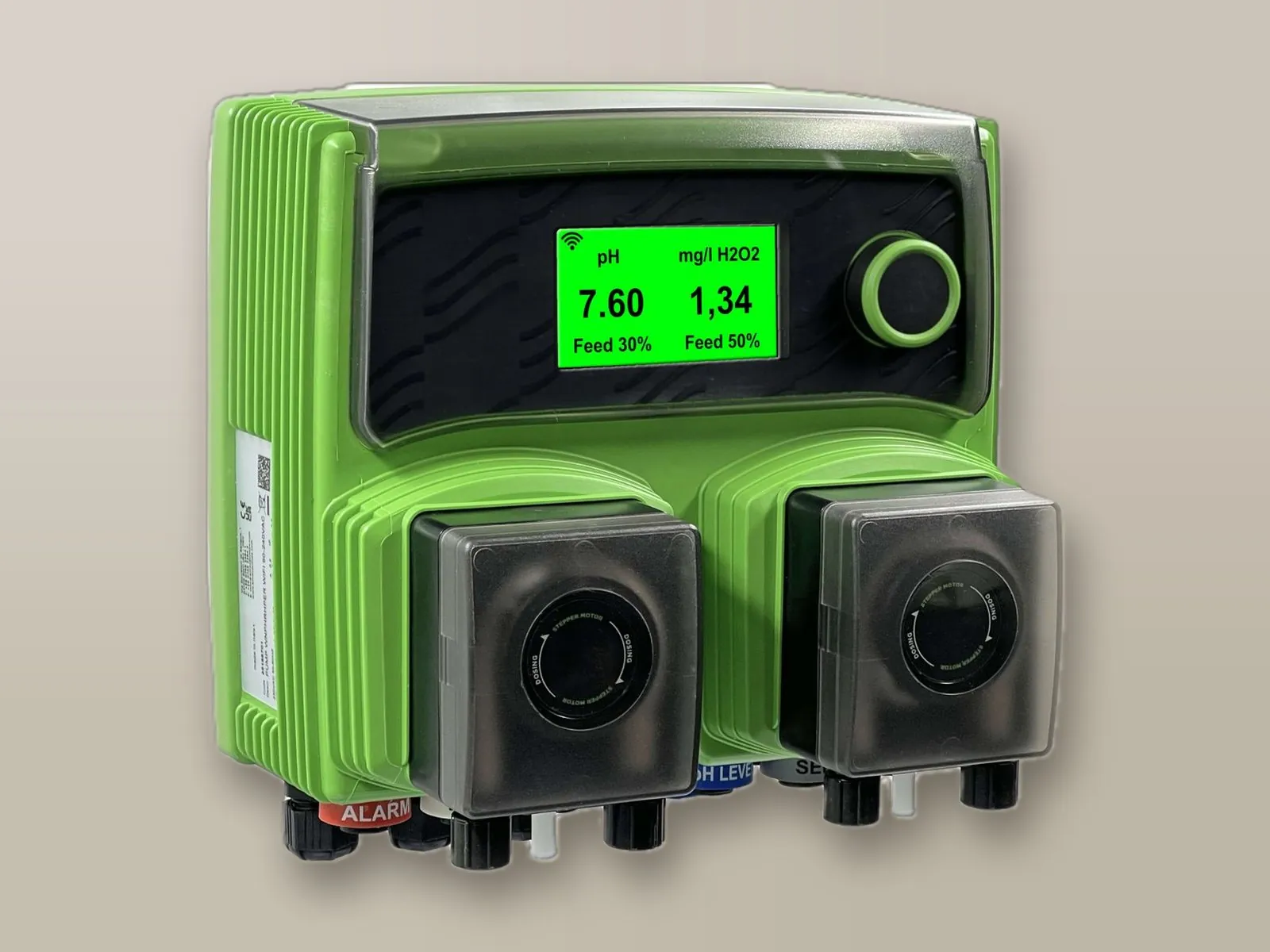
Quiet version: pH and hydrogen peroxide, with two stepper-motor peristaltic pumps.
The pool volume determines the controller and the desired level of maintenance determines the disinfectant measurement; for chlorine, you then choose between liquid hypochlorite and a salt chlorinator.
Answer the questions: the recommended system appears below.
Free chlorine measured directly in mg/l, with maximum precision and calibrations kept to a minimum.
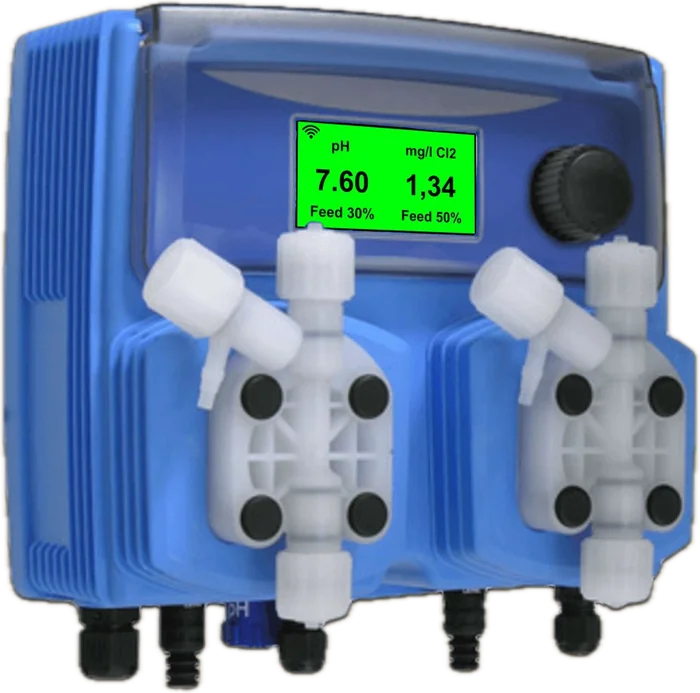
With the two integrated dosing pumps: pH corrector and disinfectant.
The pump →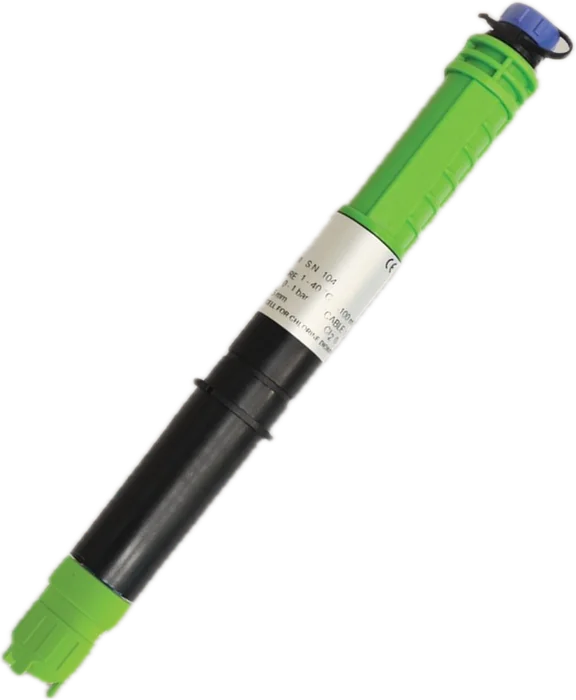
Free chlorine in mg/l, selective membrane, 0.01 mg/l resolution.
SCL cells →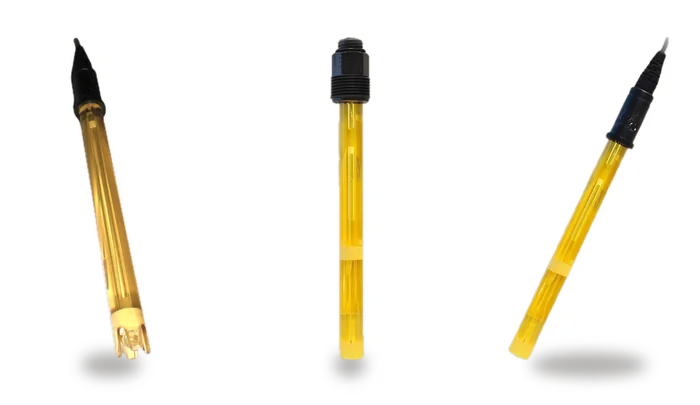
EPHS combination electrode, 0 – 14 pH.
pH electrodes →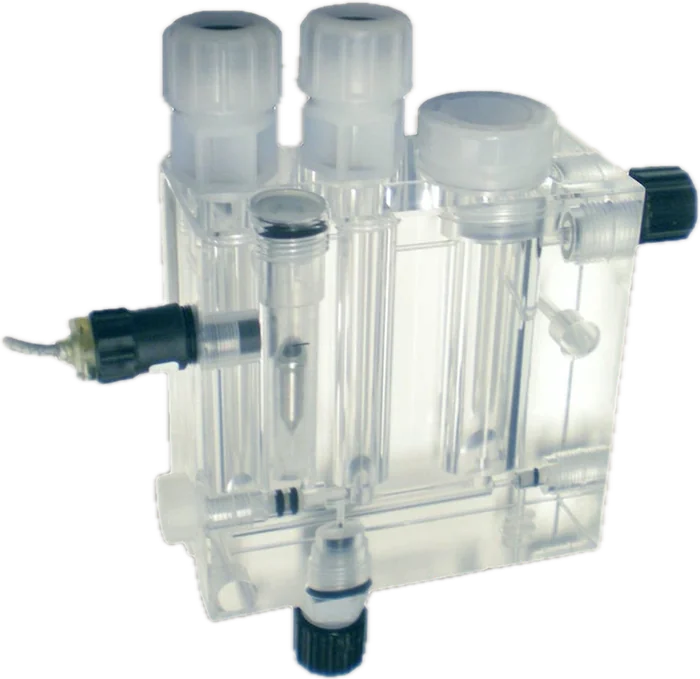
Flow-through probe holder with flow sensor, 50 µm sample filter.
Probe holders →Free chlorine measured directly in mg/l, with dosing pumps sized for the pool volume.
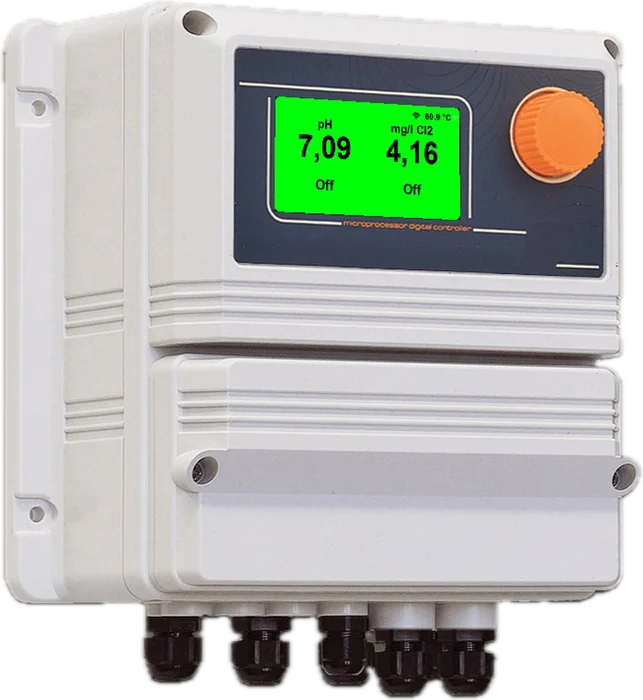
Two-channel controller with colour display: it controls the external pumps.
The controller →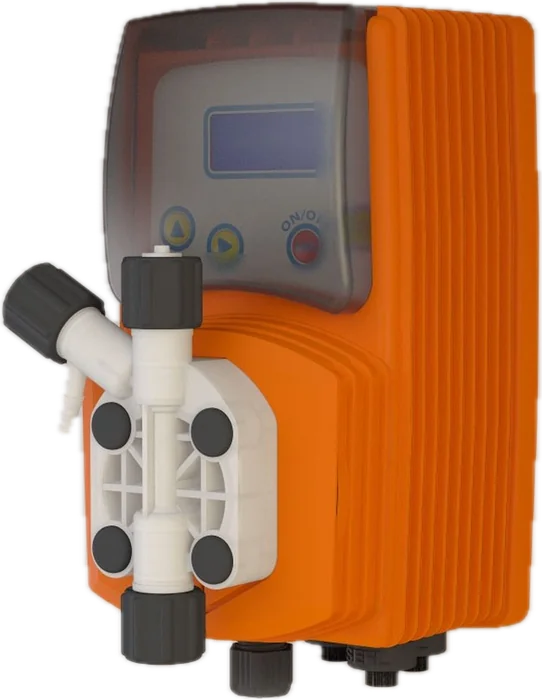
Solenoid dosing pump, flow rate selected according to the pool volume.
V and VMS pumps →Dosing proportional to the measured value.
V and VMS pumps →Free chlorine in mg/l, selective membrane, 0.01 mg/l resolution.
SCL cells →EPHS combination electrode, 0 – 14 pH.
pH electrodes →Flow-through probe holder with flow sensor, 50 µm sample filter.
Probe holders →Free chlorine in mg/l with the open cell: the measurement requires periodic calibration.
With the two integrated dosing pumps: pH corrector and disinfectant.
The pump →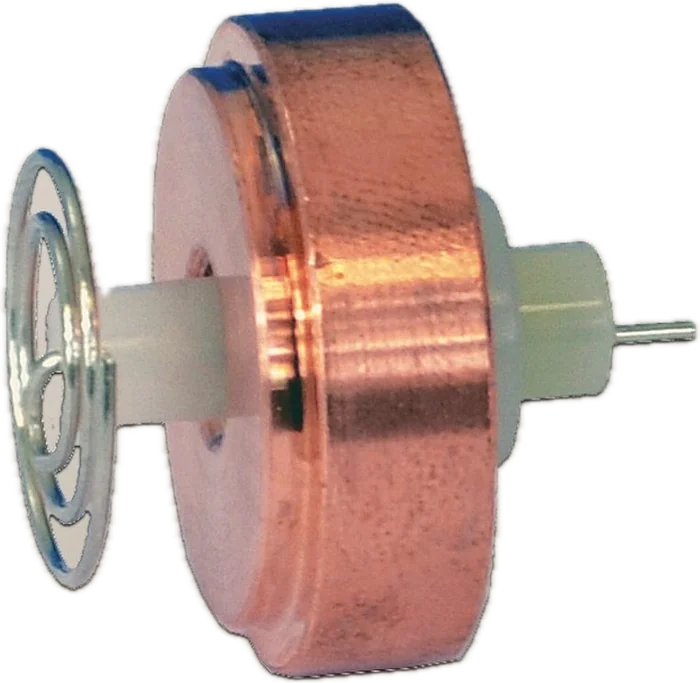
Free chlorine 0 – 10 mg/l, periodic calibration.
ECL6 cell →EPHS combination electrode, 0 – 14 pH.
pH electrodes →Flow-through probe holder with flow sensor, 50 µm sample filter.
Probe holders →Free chlorine in mg/l with the open cell and pumps sized for the pool; the measurement requires periodic calibration.
Two-channel controller with colour display: it controls the external pumps.
The controller →Solenoid dosing pump, flow rate selected according to the pool volume.
V and VMS pumps →Dosing proportional to the measured value.
V and VMS pumps →Free chlorine 0 – 10 mg/l, periodic calibration.
ECL6 cell →EPHS combination electrode, 0 – 14 pH.
pH electrodes →Flow-through probe holder with flow sensor, 50 µm sample filter.
Probe holders →The most economical solution: the Redox reading must be checked periodically with the chlorine test.
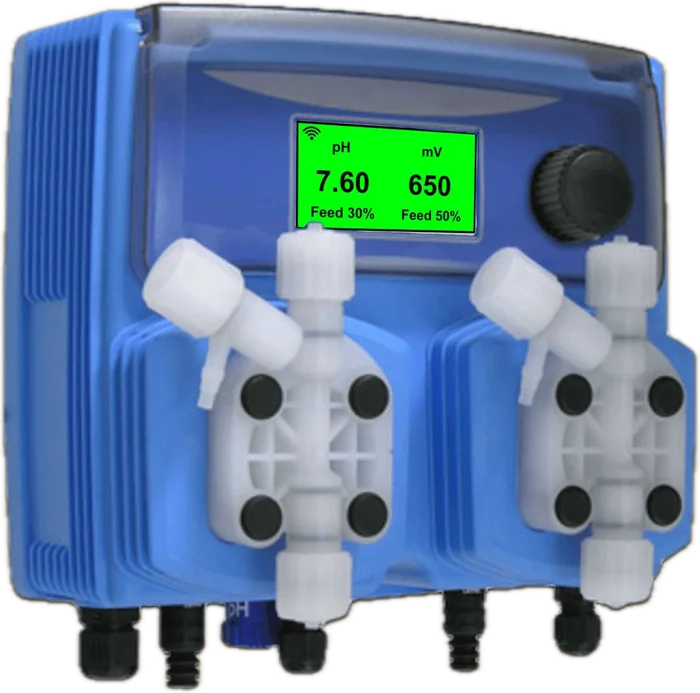
With the two integrated dosing pumps: pH corrector and disinfectant.
The pump →EPHS combination electrode, 0 – 14 pH.
pH electrodes →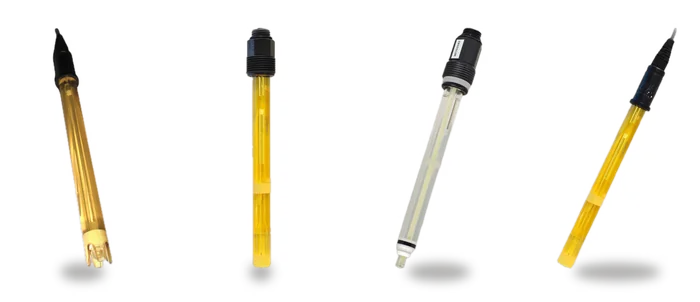
Single-junction combination electrode, 0 – 1,000 mV.
Redox electrodes →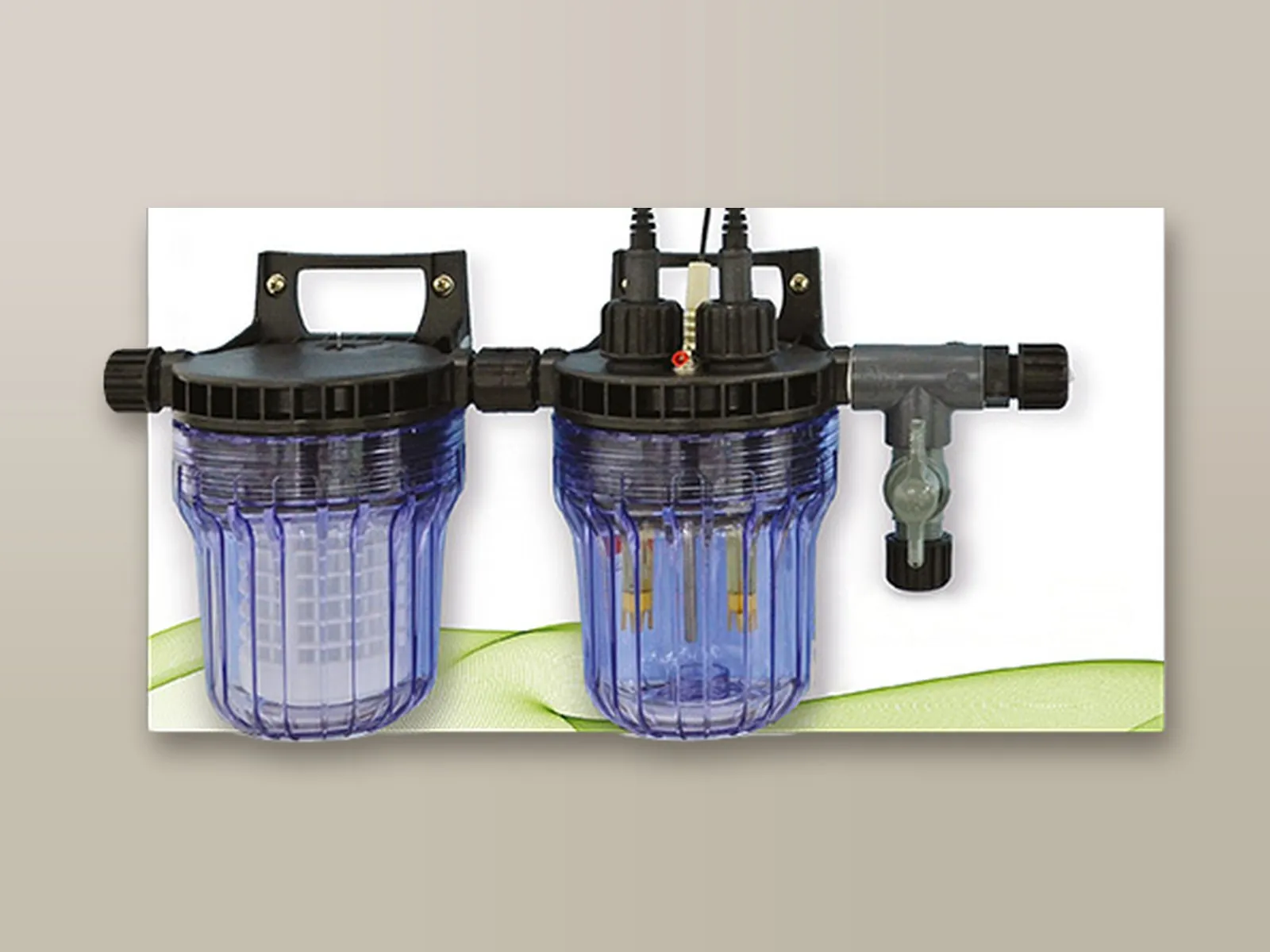
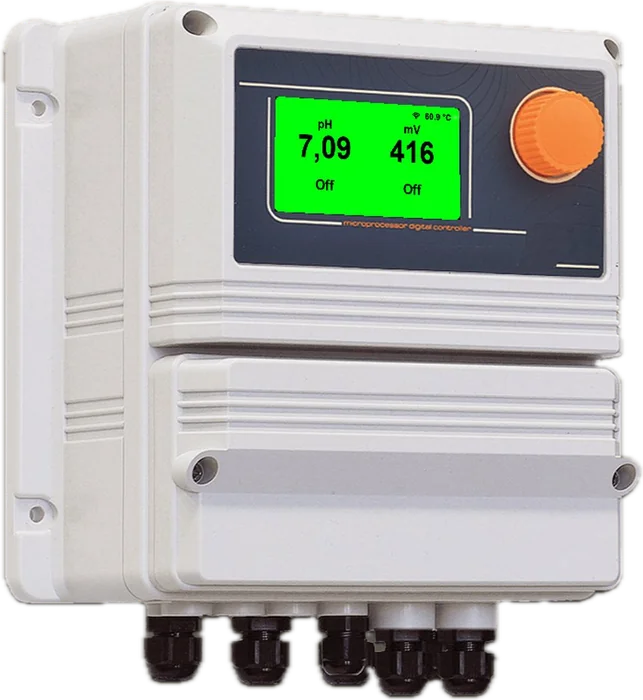
In-line on the panel: the sample is filtered and flows through the probe holder.
Probe holders →Redox control with pumps sized for the pool; the reading must be checked periodically with the chlorine test.
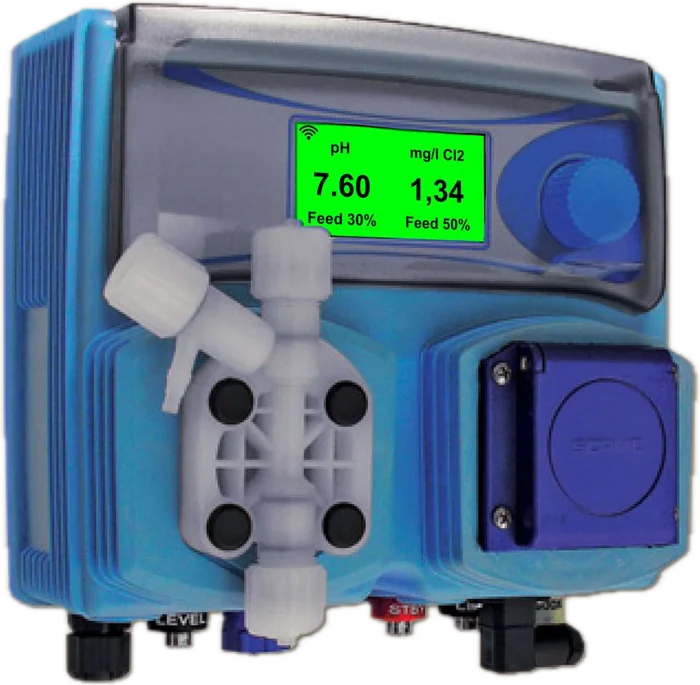
Two-channel controller with colour display: it controls the external pumps.
The controller →Solenoid dosing pump, flow rate selected according to the pool volume.
V and VMS pumps →Dosing proportional to the measured value.
V and VMS pumps →EPHS combination electrode, 0 – 14 pH.
pH electrodes →Single-junction combination electrode, 0 – 1,000 mV.
Redox electrodes →In-line on the panel: the sample is filtered and flows through the probe holder.
Probe holders →Free chlorine measured with the closed cell: the controller activates the salt chlorinator according to the measured value and corrects the pH first.
Integrated pH corrector pump and 230 VAC 10 A Schuko socket for the salt chlorinator control unit.
The pump →Free chlorine in mg/l, selective membrane, 0.01 mg/l resolution.
SCL cells →EPHS combination electrode, 0 – 14 pH.
pH electrodes →Flow-through probe holder with flow sensor, 50 µm sample filter.
Probe holders →Free chlorine measured with the open cell, which requires periodic calibration: the controller activates the salt chlorinator according to the measured value.
Integrated pH corrector pump and 230 VAC 10 A Schuko socket for the salt chlorinator control unit.
The pump →Free chlorine 0 – 10 mg/l, periodic calibration.
ECL6 cell →EPHS combination electrode, 0 – 14 pH.
pH electrodes →Flow-through probe holder with flow sensor, 50 µm sample filter.
Probe holders →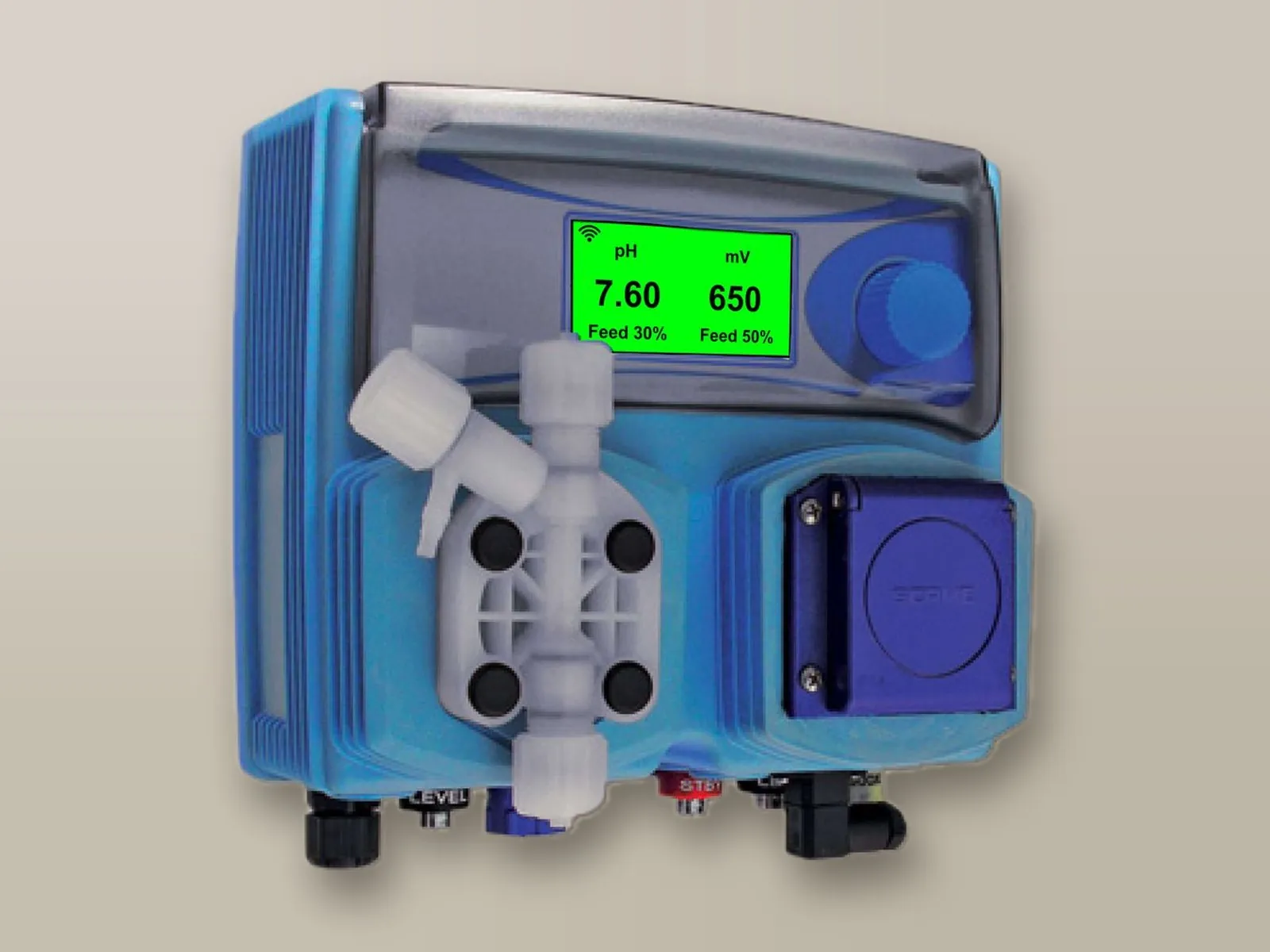
Redox control: the controller activates the salt chlorinator according to the measured mV; the reading must be checked periodically with the chlorine test.
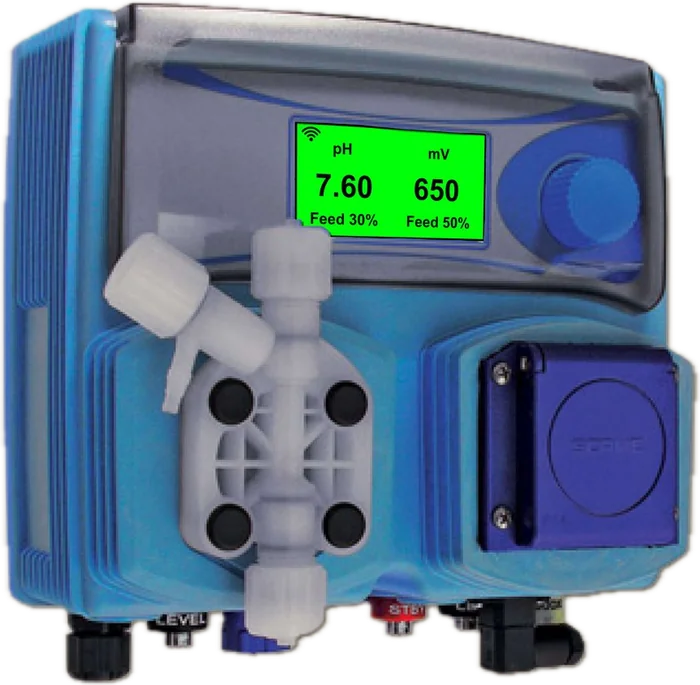
Integrated pH corrector pump and 230 VAC 10 A Schuko socket for the salt chlorinator control unit.
The pump →EPHS combination electrode, 0 – 14 pH.
pH electrodes →Single-junction combination electrode, 0 – 1,000 mV.
Redox electrodes →In-line on the panel: the sample is filtered and flows through the probe holder.
Probe holders →The controller measures free chlorine with the closed cell and controls the salt chlorinator control unit; the pump doses the pH corrector only.
Two-channel controller: it controls the pH pump and the salt chlorinator control unit.
The controller →Solenoid dosing pump, flow rate selected according to the pool volume.
V and VMS pumps →Free chlorine in mg/l, selective membrane, 0.01 mg/l resolution.
SCL cells →EPHS combination electrode, 0 – 14 pH.
pH electrodes →Flow-through probe holder with flow sensor, 50 µm sample filter.
Probe holders →The controller measures free chlorine with the open cell and controls the salt chlorinator control unit; the pump doses the pH corrector only.
Two-channel controller: it controls the pH pump and the salt chlorinator control unit.
The controller →Solenoid dosing pump, flow rate selected according to the pool volume.
V and VMS pumps →Free chlorine 0 – 10 mg/l, periodic calibration.
ECL6 cell →EPHS combination electrode, 0 – 14 pH.
pH electrodes →Flow-through probe holder with flow sensor, 50 µm sample filter.
Probe holders →The controller measures Redox and controls the salt chlorinator control unit; the pump doses the pH corrector only.
Two-channel controller: it controls the pH pump and the salt chlorinator control unit.
The controller →Solenoid dosing pump, flow rate selected according to the pool volume.
V and VMS pumps →EPHS combination electrode, 0 – 14 pH.
pH electrodes →Single-junction combination electrode, 0 – 1,000 mV.
Redox electrodes →In-line on the panel: the sample is filtered and flows through the probe holder.
Probe holders →Free bromine measured in mg/l with the dedicated closed cell, on the same panel as the WDpHCl.
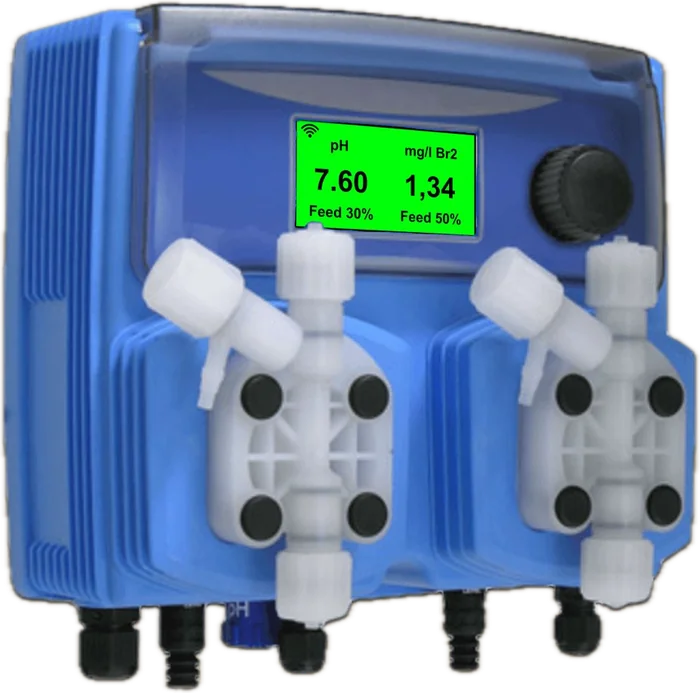
With the two integrated dosing pumps: pH corrector and disinfectant.
The pump →Free bromine 0 – 20 mg/l, 0.01 mg/l resolution.
SBR cell →EPHS combination electrode, 0 – 14 pH.
pH electrodes →Flow-through probe holder with flow sensor, 50 µm sample filter.
Probe holders →Free bromine measured in mg/l with the dedicated closed cell and pumps sized for the pool.
Two-channel controller with colour display: it controls the external pumps.
The controller →Solenoid dosing pump, flow rate selected according to the pool volume.
V and VMS pumps →Dosing proportional to the measured value.
V and VMS pumps →Free bromine 0 – 20 mg/l, 0.01 mg/l resolution.
SBR cell →EPHS combination electrode, 0 – 14 pH.
pH electrodes →Flow-through probe holder with flow sensor, 50 µm sample filter.
Probe holders →Hydrogen peroxide (active oxygen) measured with the SCL9 closed cell; typical set points 30 mg/l and pH 7.
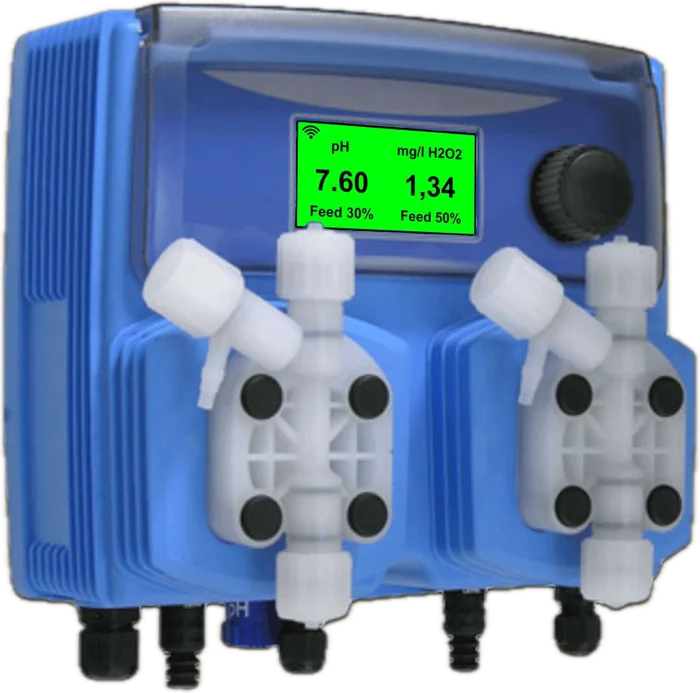
With the two integrated dosing pumps: pH corrector and disinfectant.
The pump →
Hydrogen peroxide 0 – 200 mg/l, 0.1 mg/l resolution.
SCL9 cell →EPHS combination electrode, 0 – 14 pH.
pH electrodes →Flow-through probe holder with flow sensor, 50 µm sample filter.
Probe holders →Hydrogen peroxide (active oxygen) with the SCL9 closed cell and pumps sized for the pool; typical set points 30 mg/l and pH 7.
Two-channel controller with colour display: it controls the external pumps.
The controller →Solenoid dosing pump, flow rate selected according to the pool volume.
V and VMS pumps →Dosing proportional to the measured value.
V and VMS pumps →Hydrogen peroxide 0 – 200 mg/l, 0.1 mg/l resolution.
SCL9 cell →EPHS combination electrode, 0 – 14 pH.
pH electrodes →Flow-through probe holder with flow sensor, 50 µm sample filter.
Probe holders →Chlorine added to water, whether as hypochlorite or trichlor, splits into hypochlorous acid and hypochlorite ion; the ratio between the two forms depends on the pH.
This is the form with the highest and fastest disinfecting power. Its share increases with a pH close to 7 (7.2 – 7.4) and stable: for the same quantity of chlorine dosed, disinfection is more effective.
Its disinfecting power is considerably lower and it prevails as the pH tends towards 8. For this reason the systems regulate pH as a priority and only then the chlorine dosing.
Chlorine that reacts with the nitrogenous substances introduced by bathers forms chloramines, which are responsible for eye and mucous membrane irritation and for the characteristic odour. The value must not exceed 0.4 mg/l; the sum of free and combined chlorine is the total chlorine.
The use of liquid sodium hypochlorite is recommended, dosed by a pump controlled by the free chlorine and pH measurement.
The salt chlorinator produces chlorine from the salt dissolved in the pool. The S models (WDpHCls, WDpHRhs) manage it directly: instead of the hypochlorite pump they have a 230 VAC 10 A Schuko socket, to which the control unit is connected; it is activated according to the measured value.
Example with Redox measurement: the control unit is active below 600 mV, stops at 700 mV and restarts when the value next falls below 600 mV.
Below 600 mV the control unit runs continuously and at 700 mV it stops; in the intermediate range the controller modulates its activation frequency and duration.
The corrector pump acts first (for example at maximum frequency at pH 8.00 and stopped at 7.00); disinfectant control follows once the set pH has been reached.
All systems are supplied pre-assembled on a plastic panel, in a watertight box or on a skid, with solenoid or peristaltic dosing pumps.
Injection takes place on the delivery line, downstream of the filtration, by means of an injection valve or lance; the probes analyse a water sample in the flow-through probe holder.
Probe holders →The controller must always remain powered, to maintain the polarisation of the electrodes; when the filtration pump stops it goes into stand-by, continuing to measure without dosing.
| Redox | Open cell | Closed cell | |
|---|---|---|---|
| Reading | mV (chlorine estimate) | mg/l of free chlorine | mg/l of free chlorine |
| Range | 0 – 1,000 mV | 0 – 10 mg/l | 0 – 20 mg/l |
| Water composition and conductivity | Affect the reading | Affect it to a lesser extent | No effect |
| pH | Significant effect | Reduced effect | Compensated |
| Temperature | Can be compensated | Compensated | Compensated |
| Combined chlorine and hypochlorite ion | Affect the reading | Affect the reading | Excluded by the membrane |
| Stabiliser (cyanuric acid) | Affects the reading | Affects the reading | Excluded by the membrane |
| Calibration | Frequent, with colorimetric test | Periodic | Kept to a minimum |
In public swimming pools and pools for collective use, UNI 10637:2024 (Italian standard) does not allow chlorine to be derived from the Redox potential, which is accepted only as a supplementary indication: measuring instruments required by the standard.
| Electrode | Pressure | Connection | Body | Minimum conductivity | Junction | Temperature | Cable | Diameter | Notes |
|---|---|---|---|---|---|---|---|---|---|
| EPHS | 7 bar (3.5 bar) | BNC | Epoxy | 100 µS | – | 70 °C (80 °C) | 0.8 m | 12 mm | – |
| EPHM | 7 bar (3.5 bar) | BNC | Epoxy | 100 µS | – | 70 °C (80 °C) | 4.5 m | 12 mm | – |
| EPHL | 7 bar (3.5 bar) | BNC | Epoxy | 100 µS | – | 70 °C (80 °C) | 15 m | 12 mm | – |
| EPHSN6 | 7 bar (3.5 bar) | SN6 with PG13.5 thread | Epoxy | 100 µS | – | 70 °C (80 °C) | 1 – 100 m | 12 mm | – |
| EPHMD/100 | 7 bar | BNC | Epoxy | 100 µS | Double | 100 °C | 4.5 m | 12 mm | – |
| EPHM/D | 7 bar (3.5 bar) | BNC | Epoxy | 100 µS | Double | 70 °C (80 °C) | 4.5 m | 12 mm | – |
| EPHM/D/SN6 | 7 bar (3.5 bar) | SN6 with PG13.5 thread | Epoxy | 100 µS | Double | 70 °C (80 °C) | 1 – 100 m | 12 mm | – |
| EPHMD/LI | 7 bar (3.5 bar) | SN6 with PG13.5 thread | Epoxy | 3 µS | Double | 70 °C (80 °C) | 1 – 100 m | 12 mm | For low-conductivity water |
| EPHSC | 7 bar (3.5 bar) | BNC | Epoxy | 100 µS | Double | 70 °C (80 °C) | 4.5 m | 12 mm | Self-cleaning |
| EPHSC/SN6 | 7 bar (3.5 bar) | SN6 with PG13.5 thread | Epoxy | 100 µS | Double | 70 °C (80 °C) | 1 – 100 m | 12 mm | Self-cleaning |
| EPHM/HF | 7 bar (3.5 bar) | BNC | Epoxy | 100 µS | Double | 70 °C (80 °C) | 4.5 m | 12 mm | Resistant to 1% hydrofluoric acid |
| EPHSN6 GK | 10 bar | SN6 | Glass | 150 µS | – | −5 / 135 °C | 1 – 100 m | 12 mm | High temperature |
All models: combination electrode, range 0 – 14 pH, resolution 0.01.
| Electrode | Range | Pressure | Connection | Body | Minimum conductivity | Junction | Temperature | Cable | Diameter | Notes |
|---|---|---|---|---|---|---|---|---|---|---|
| ERhS | ± 1,000 mV | 7 bar (3.5 bar) | BNC | Epoxy | 100 µS | – | 70 °C (80 °C) | 0.8 m | 12 mm | – |
| ERhM | ± 1,000 mV | 7 bar (3.5 bar) | BNC | Epoxy | 100 µS | – | 70 °C (80 °C) | 4.5 m | 12 mm | – |
| ERhL | ± 1,000 mV | 7 bar (3.5 bar) | BNC | Epoxy | 100 µS | – | 70 °C (80 °C) | 15 m | 12 mm | – |
| ERhHLB SN6 | ± 1,500 mV | 6 bar | SN6 with PG13.5 thread | Glass | 100 µS | – | 80 °C | 10 m | 12 mm | High linearity and sensitivity, for low chlorine concentrations |
| ERhSN6 | ± 1,000 mV | 7 bar | SN6 with PG13.5 thread | Epoxy | 100 µS | – | 100 °C | 1 – 100 m | 12 mm | – |
| ERhMD/100 | ± 1,000 mV | 7 bar | BNC | Epoxy | 100 µS | Double | 100 °C | 4.5 m | 12 mm | – |
| ERhM/D | ± 1,000 mV | 7 bar (3.5 bar) | BNC | Epoxy | 100 µS | Double | 70 °C (80 °C) | 4.5 m | 12 mm | – |
| ERhSC | ± 1,000 mV | 7 bar (3.5 bar) | BNC | Epoxy | 100 µS | Double | 70 °C (80 °C) | 4.5 m | 12 mm | Self-cleaning |
| ERhSC/SN6 | ± 1,000 mV | 7 bar (3.5 bar) | SN6 with PG13.5 thread | Epoxy | 100 µS | Double | 70 °C (80 °C) | 1 – 100 m | 12 mm | Self-cleaning |
All models: combination electrode, resolution 1 mV.
| SCL3N/0.5 | SCL3N/2 | SCL3N/20 | SCL18/0.5 | SCL18/2 | SCL18/20 | SCL3S/20 | |
|---|---|---|---|---|---|---|---|
| Measuring range | 0 – 0.5 mg/l | 0 – 2 mg/l | 0 – 20 mg/l | 0 – 0.5 mg/l | 0 – 2 mg/l | 0 – 20 mg/l | 0 – 20 mg/l |
| Resolution | 0.001 | 0.001 | 0.01 | 0.001 | 0.001 | 0.01 | 0.01 |
| Free chlorine | Inorganic | Inorganic | Inorganic | Inorganic | Inorganic | Inorganic | Organic and inorganic |
| Water | Fresh | Fresh | Fresh | Fresh | Fresh | Fresh | Fresh or salt |
| Electrodes | 2 | 2 | 2 | 3 | 3 | 3 | 2 |
| Selective membrane | Yes | Yes | Yes | No | No | No | Yes |
| Automatic compensation | pH and temperature | pH and temperature | pH and temperature | pH and temperature | pH and temperature | pH and temperature | Temperature |
| Self-cleaning | – | – | – | Yes | Yes | Yes | – |
| Operating pH | 5 – 9.5 | 5 – 9.5 | 5 – 9.5 | 5 – 9 | 5 – 9 | 5 – 9 | 5.5 – 9.5 |
| Operating temperature | 1 – 40 °C | 1 – 40 °C | 1 – 40 °C | 5 – 70 °C | 5 – 70 °C | 5 – 70 °C | 5 – 45 °C |
| Operating pressure | 1 bar | 1 bar | 1 bar | 8 bar | 8 bar | 8 bar | 1 bar |
| Water flow | 30 l/h | 30 l/h | 30 l/h | 40 l/h | 40 l/h | 40 l/h | 30 l/h |
| SCL8/2 | SCL8/20 | SBR/20 | SCL9 | SCL11/200 | SCL11/2000 | SCL10 | SCT | |
|---|---|---|---|---|---|---|---|---|
| Measurement | Total chlorine | Total chlorine | Bromine | Hydrogen peroxide | Peracetic acid | Peracetic acid | Ozone | Chlorites |
| Measuring range | 0 – 2 mg/l | 0 – 20 mg/l | 0 – 20 mg/l | 0 – 200 mg/l | 0 – 200 mg/l | 0 – 2,000 mg/l | 0 – 20 mg/l | 0 – 2 mg/l |
| Resolution | 0.001 | 0.01 | 0.01 | 0.1 | 0.1 | 1 | 0.01 | 0.001 |
| Operating pH | 4 – 12 | 4 – 12 | 6.5 – 9.5 | 1 – 11 | 1 – 6 | 1 – 6 | 2 – 11 | 5.5 – 9.5 |
| Operating pressure | 1 bar | 1 bar | 0.5 bar | 1 bar | 1 bar | 1 bar | 1 bar | 1 bar |
All models: 2 electrodes, selective membrane, automatic temperature compensation, operating temperature 1 – 40 °C, water flow 30 l/h.
| ECL6 | ECL6/E | ECL7 | ECL12 | ECL12/E | ECL20 | ECL21 | |
|---|---|---|---|---|---|---|---|
| Water | Fresh | Fresh | Fresh | Sea | Sea | Fresh | Sea |
| Flow stabiliser | Yes | Yes | Yes | Yes | Yes | – | – |
| Flow sensor and regulation | Yes | Yes | Yes | Yes | Yes | – | – |
| Probe holder for | Temperature, pH, Redox | Temperature | Temperature, pH, Redox (PG13.5) | Temperature, pH, Redox | Temperature | – | – |
All models: amperometric system, range 0 – 10 mg/l, resolution 0.01, organic and inorganic free chlorine, operating temperature 1 – 40 °C, pressure 0.4 – 5 bar, water flow 40 l/h.
The controllers can be remotely monitored and controlled via Wi-Fi, Ethernet or 4G from the web portal, free of charge and with no subscription: set points, dosing, alarms and logged data are accessible from PC, tablet and smartphone.
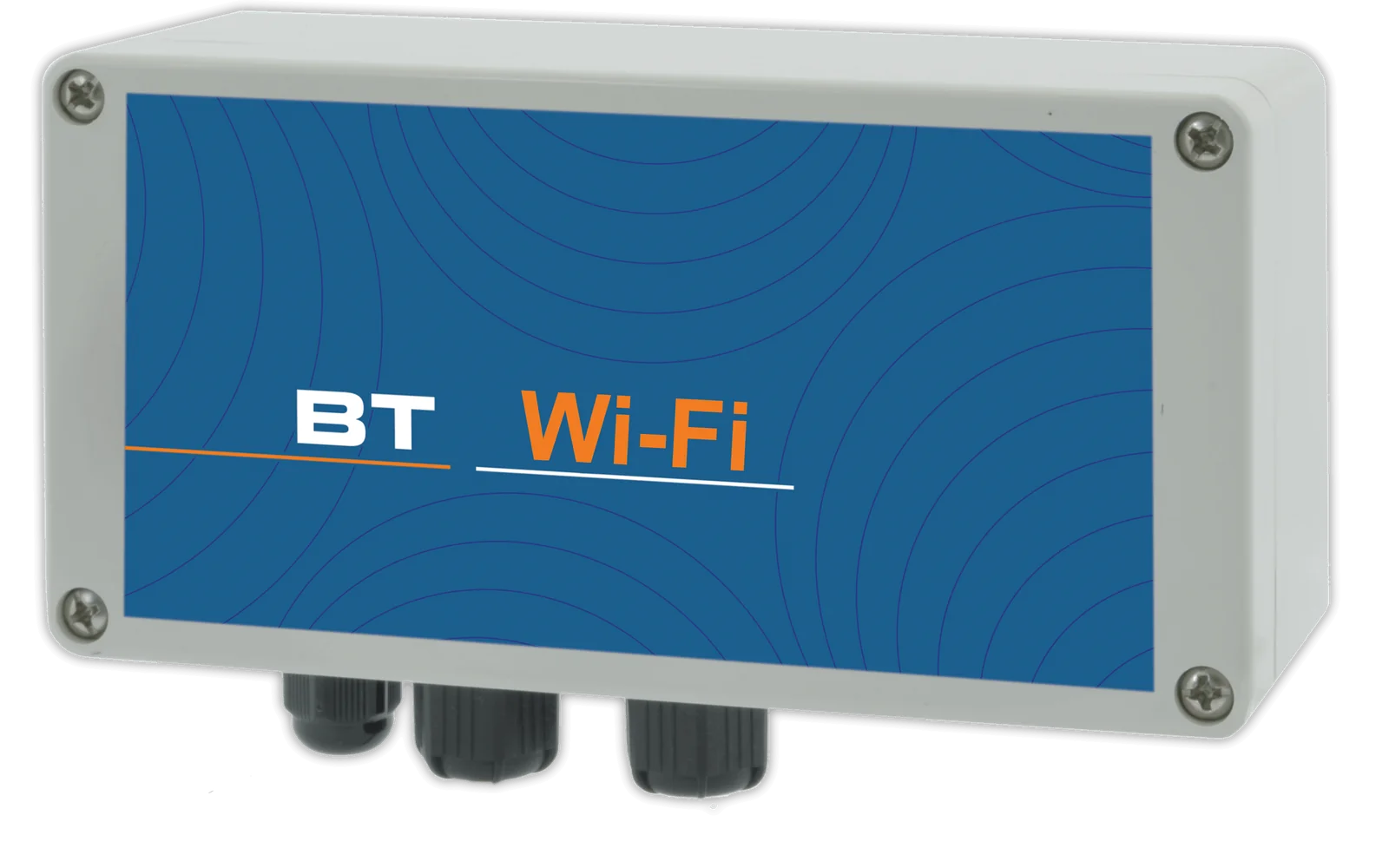
Wireless connection to the web portal, with the same functions as the cable connection.
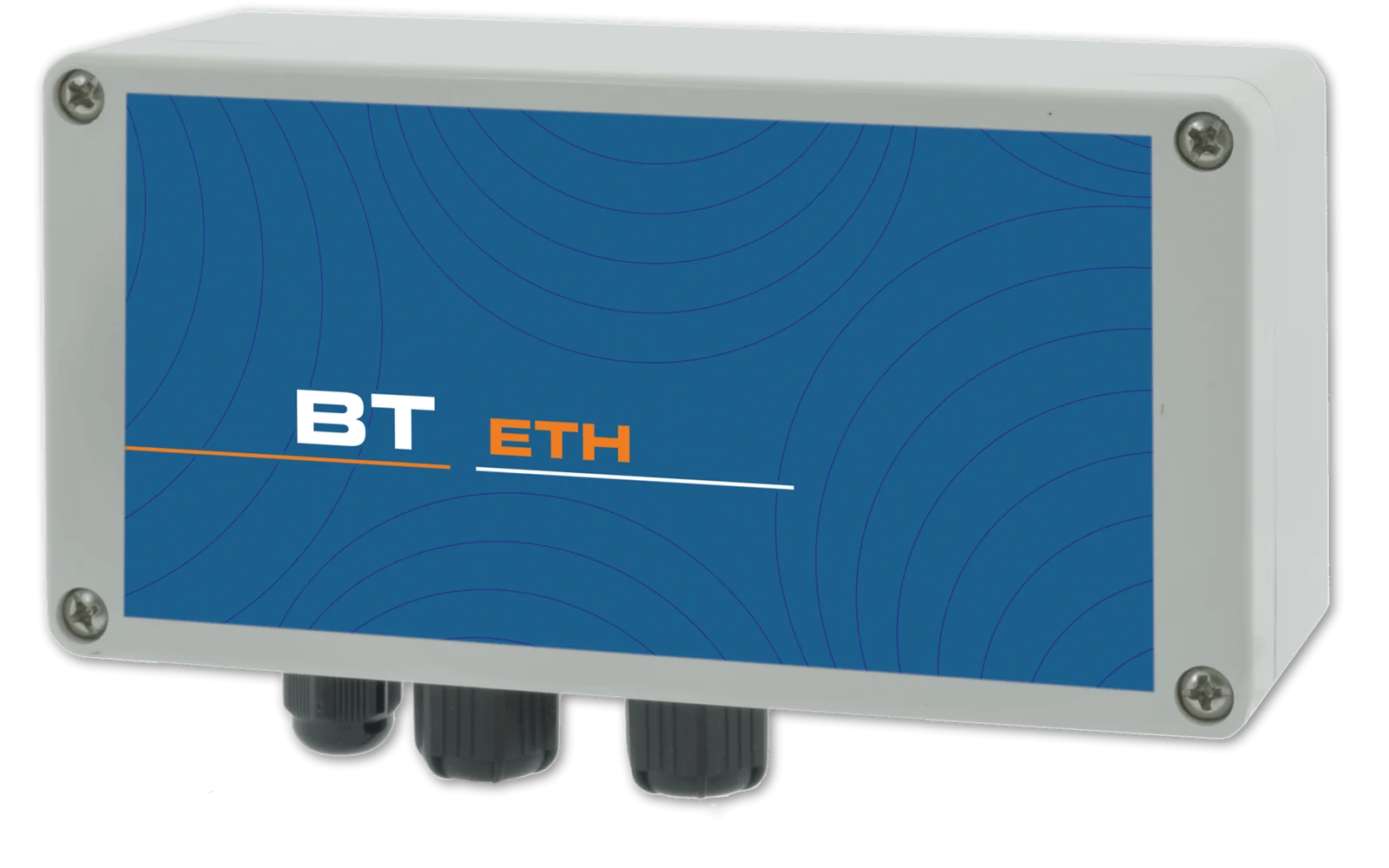
Connection to the web portal via network cable: measurements, set points, dosing and alarms accessible from PC, tablet and smartphone.
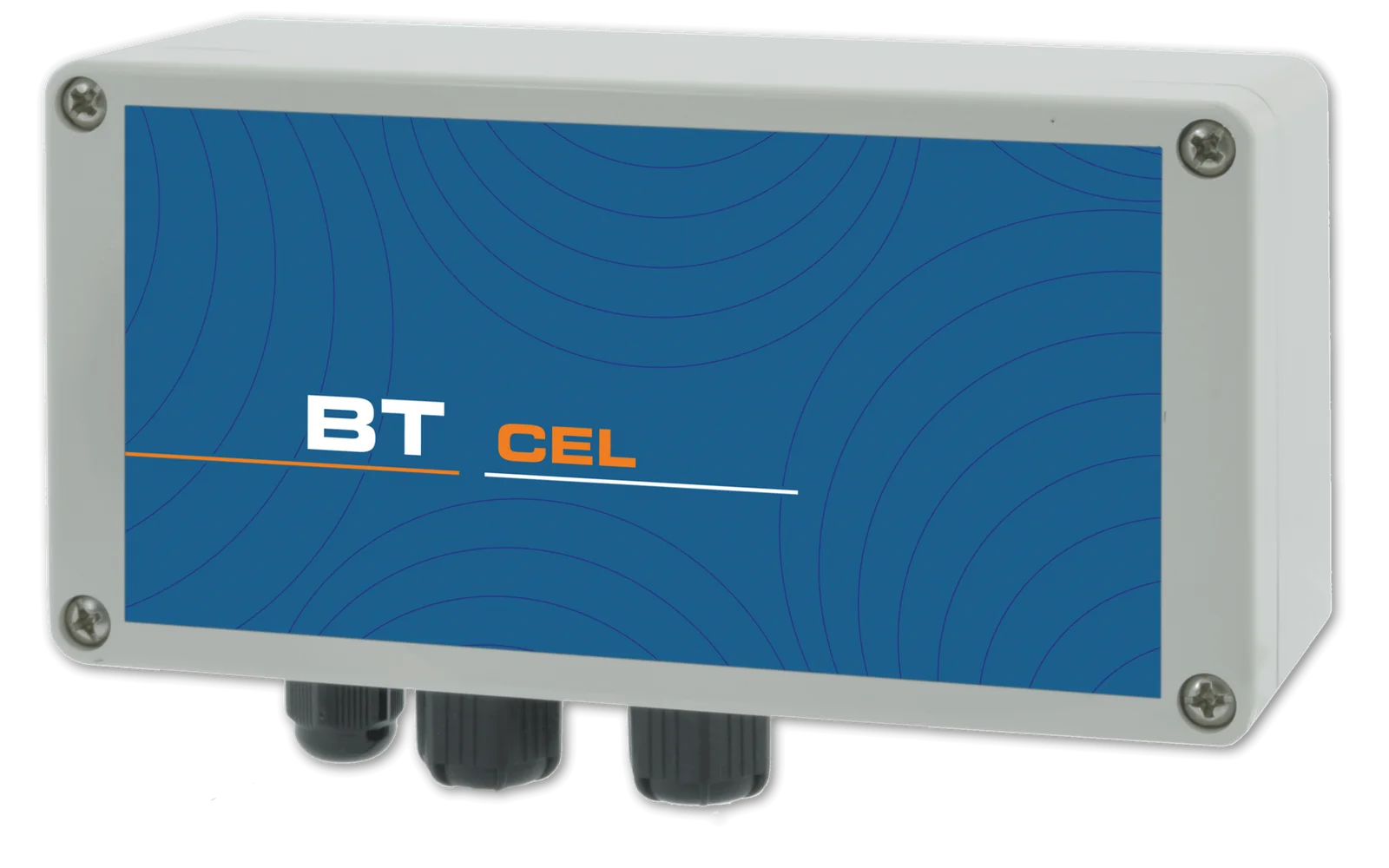
Connection via the cellular network for installations without a local network, with alarm notification by SMS or e-mail.
Integration into your PLC via serial port.
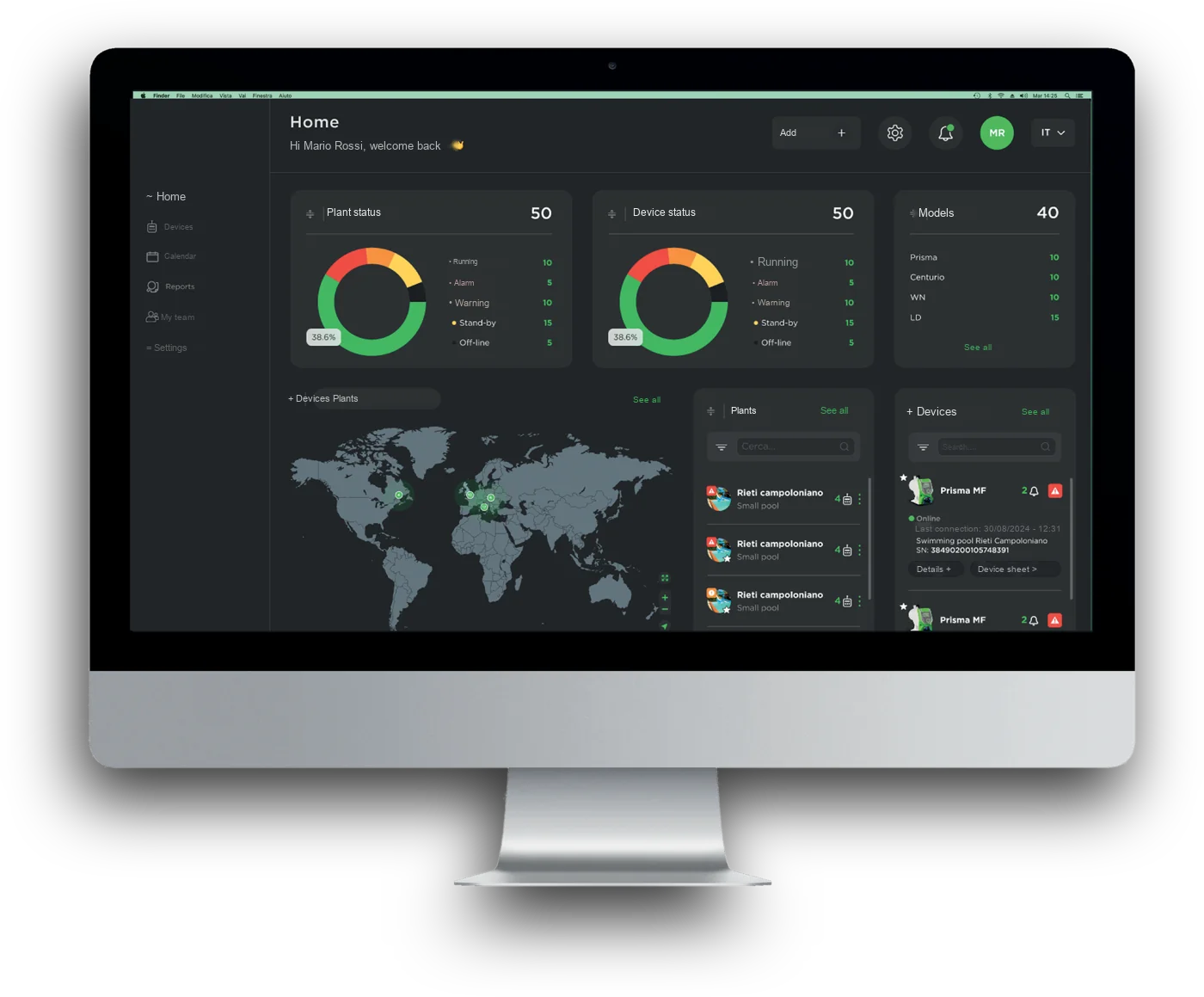
A single account brings together all registered installations, each with its own devices: the web portal, free of charge and with no subscription, can be accessed from PC, Mac, tablet and smartphone and allows every parameter to be both viewed and changed, with an encrypted connection and protected access.
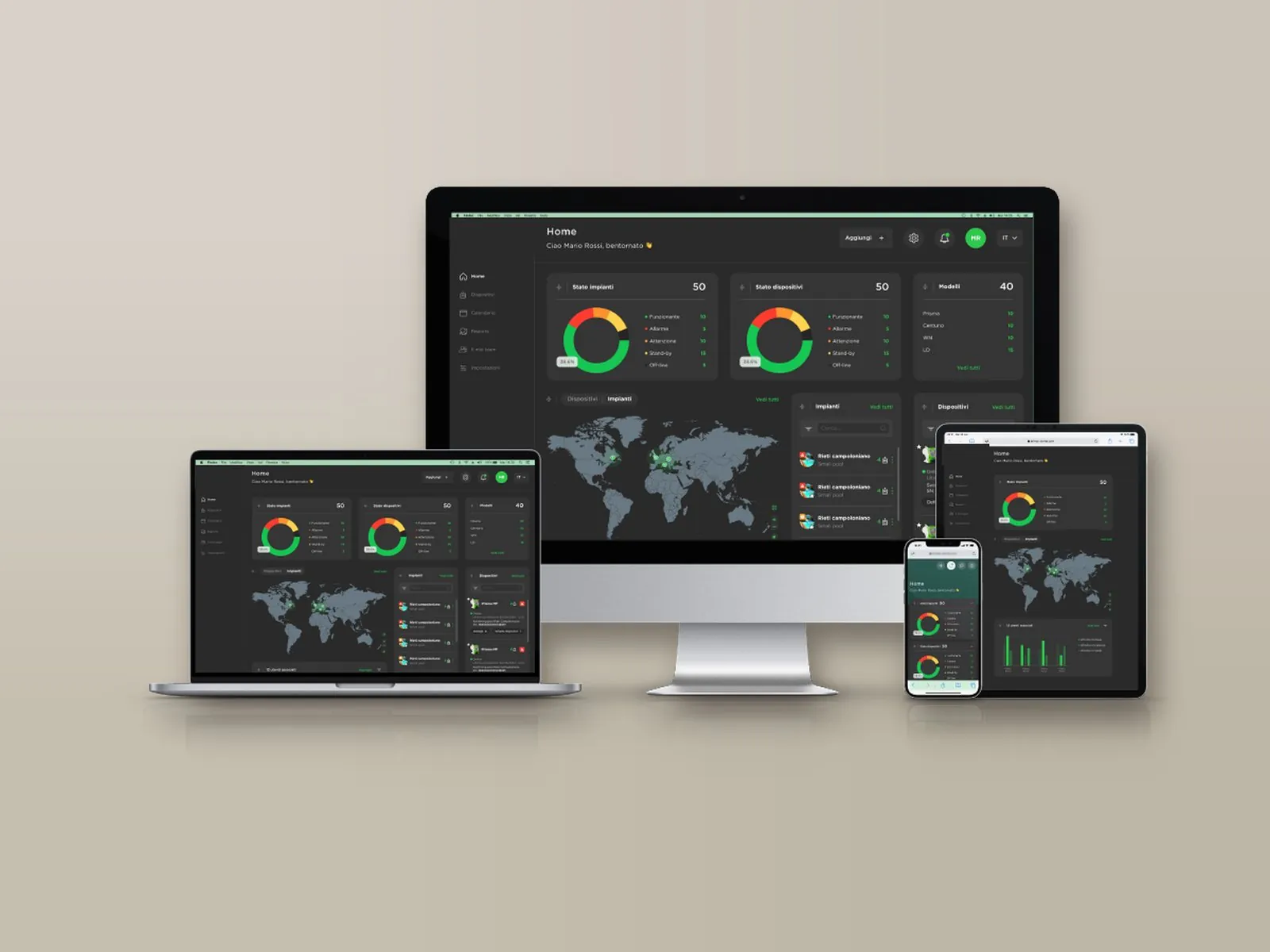
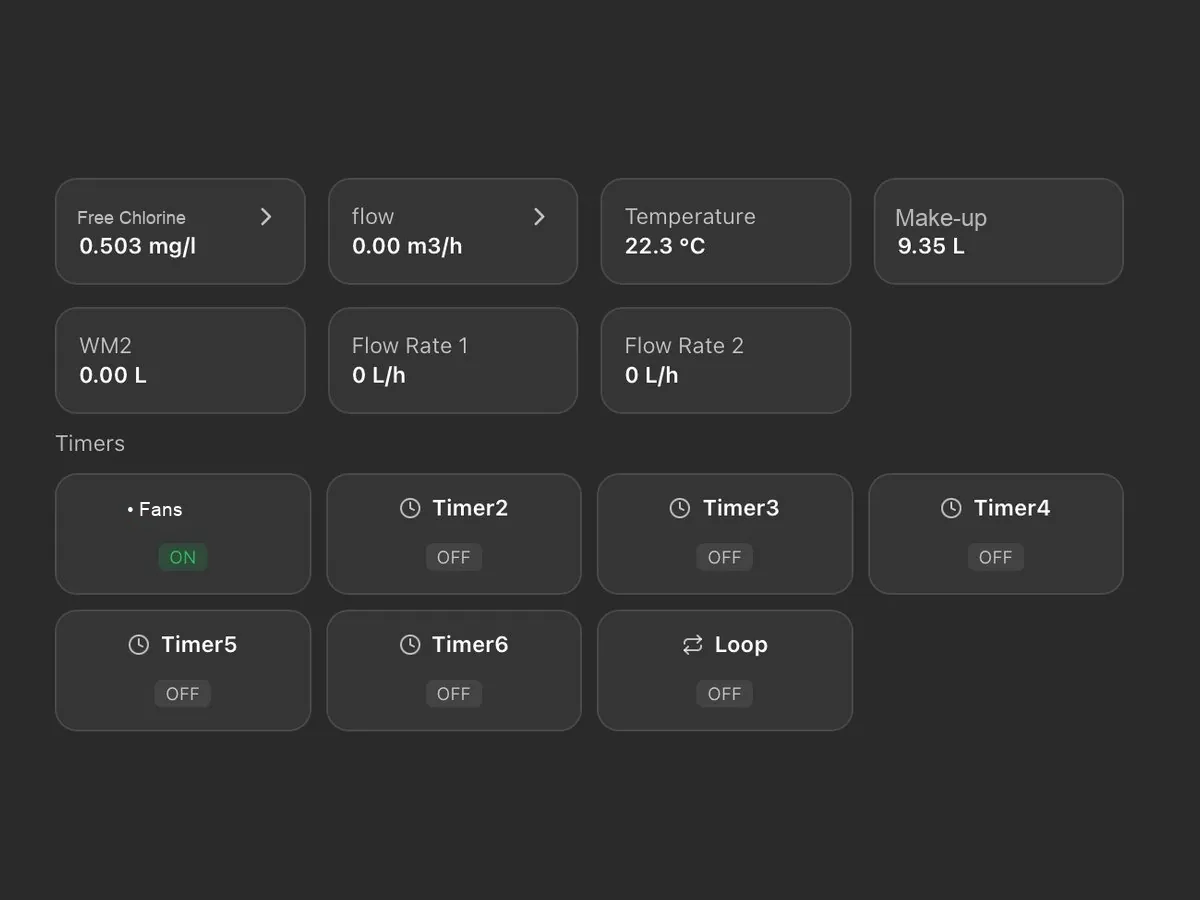
On a single screen: probe readings, chemical levels, pump activation thresholds and active alarms, with the status of installations and devices (normal, warning, alarm, standby, not connected).
Installations appear on an interactive map with their status and open with a click; for each one, the local weather conditions and temperature are also shown.
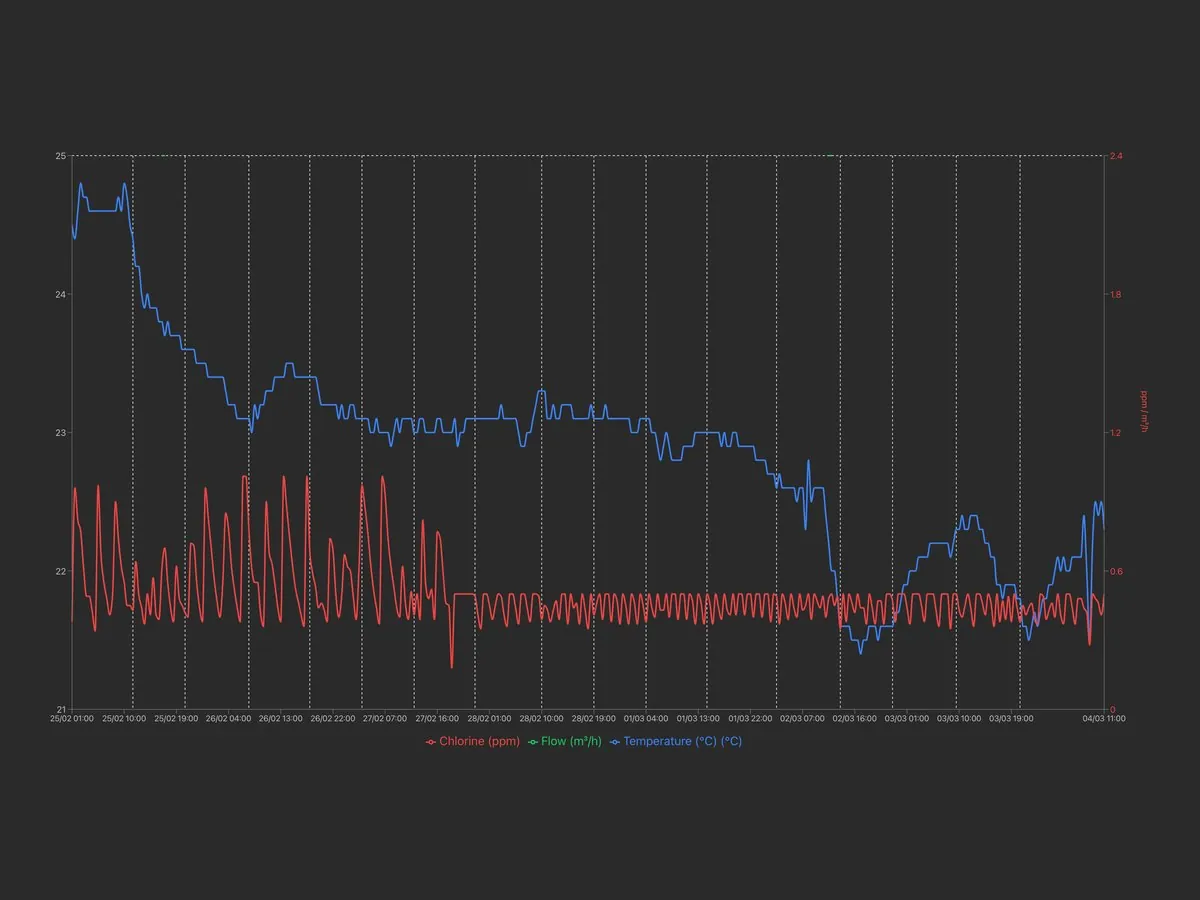
Archive of measurements and alarms, available for consultation at any time with charts and numerical reports exportable in Excel format.
Alarm thresholds for readings, dosing, faulty probe and out-of-range readings, with notification by e-mail or SMS depending on the communication system; a warning is also issued when an installation remains disconnected beyond the set time.
Remote modification of the set points, of the dosing pump activation thresholds and of the corresponding hourly flow rate.
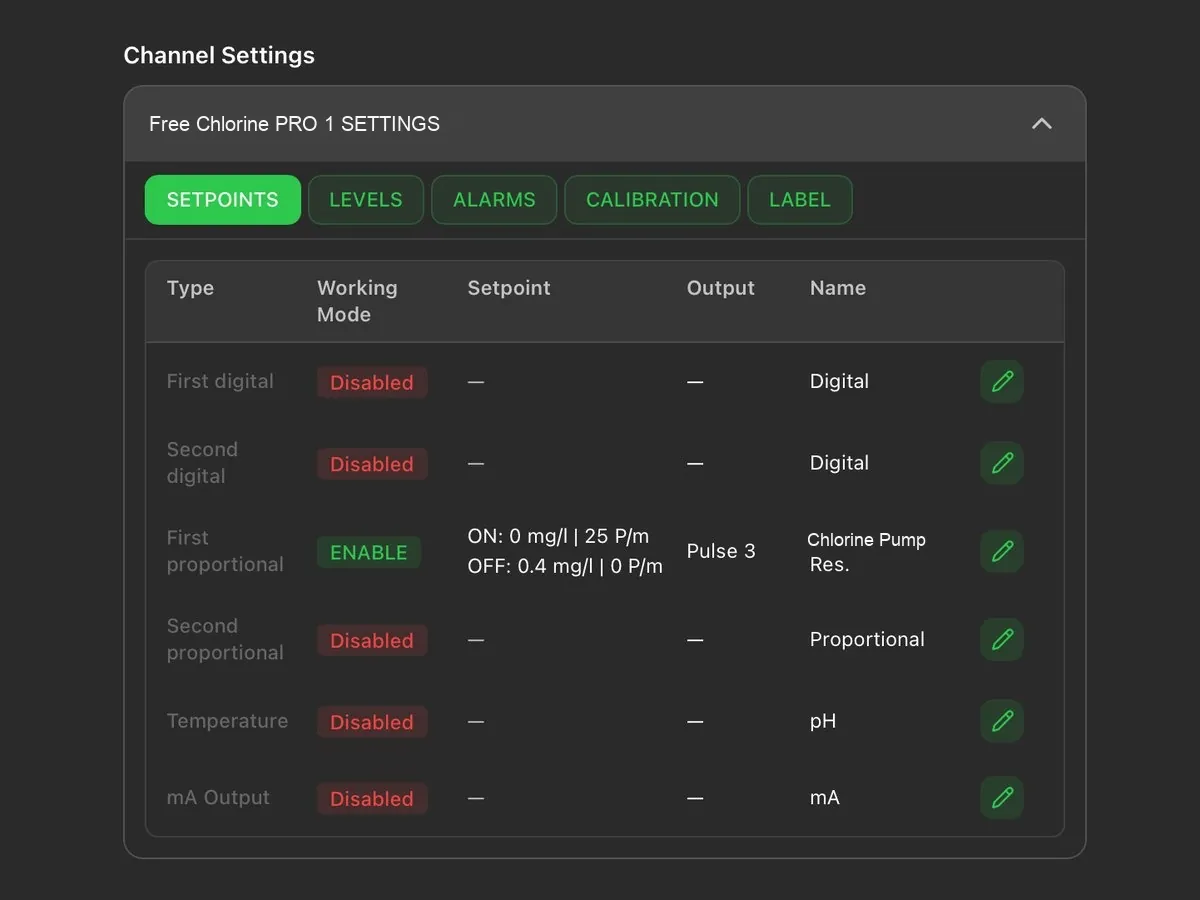
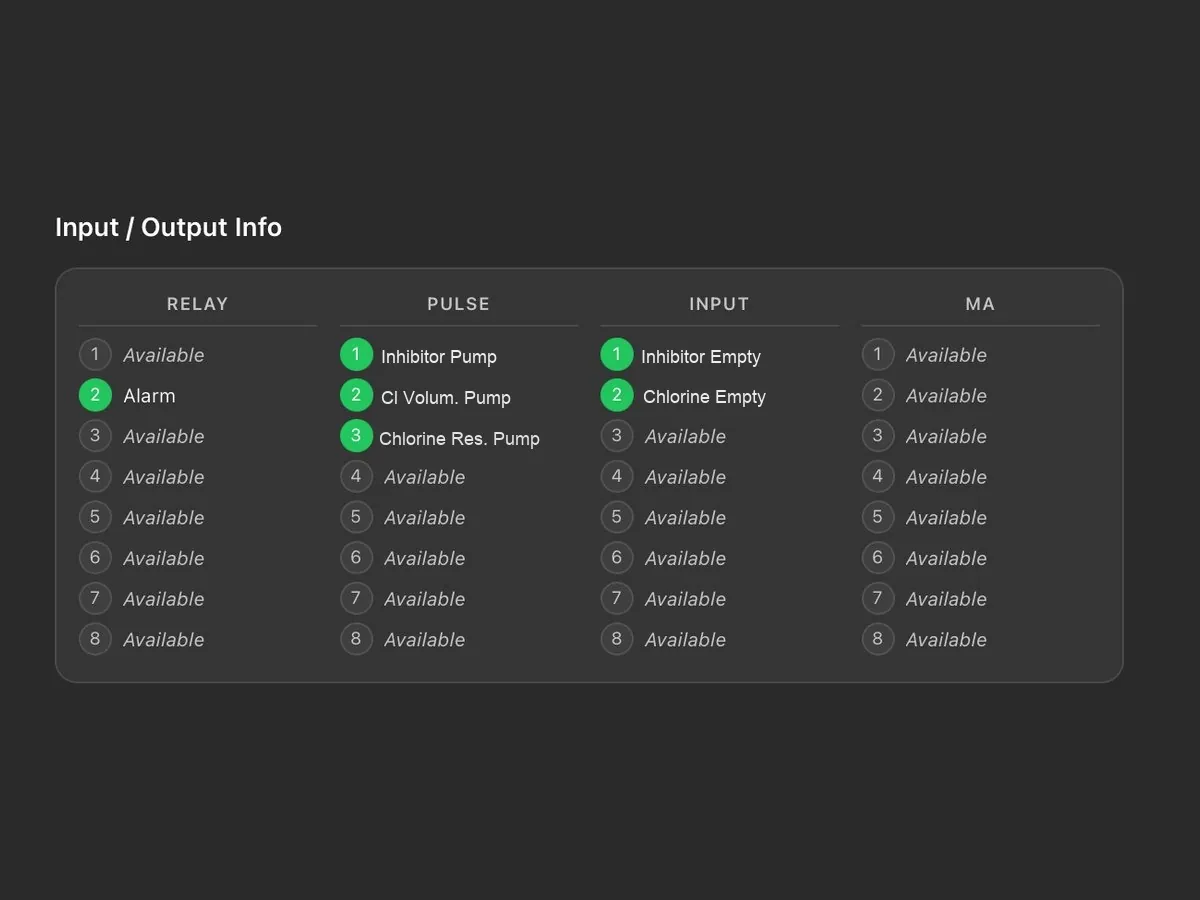
Status of relays, pulse outputs, digital inputs and current outputs, with the name assigned to each connection.
Tasks are scheduled by installation or by device and assigned to technicians; a reminder is sent by e-mail two days before the due date. Each task is shown as scheduled, due, overdue or completed.
The main account has full access and creates the technicians’ accounts, each enabled only for the assigned installations and devices; the last login and activity of each technician are visible.
Reports on devices, tasks and technicians, downloadable in PDF or CSV with the customer’s logo; the log keeps the history of operations and disconnections.
Logo, main colour and light or dark theme; the tiles on the main screen can be rearranged by dragging them. Two installations can be displayed side by side for comparison.
Each device is added through a guided procedure: the model is recognised automatically and associated with the installation, together with the technician to be contacted.
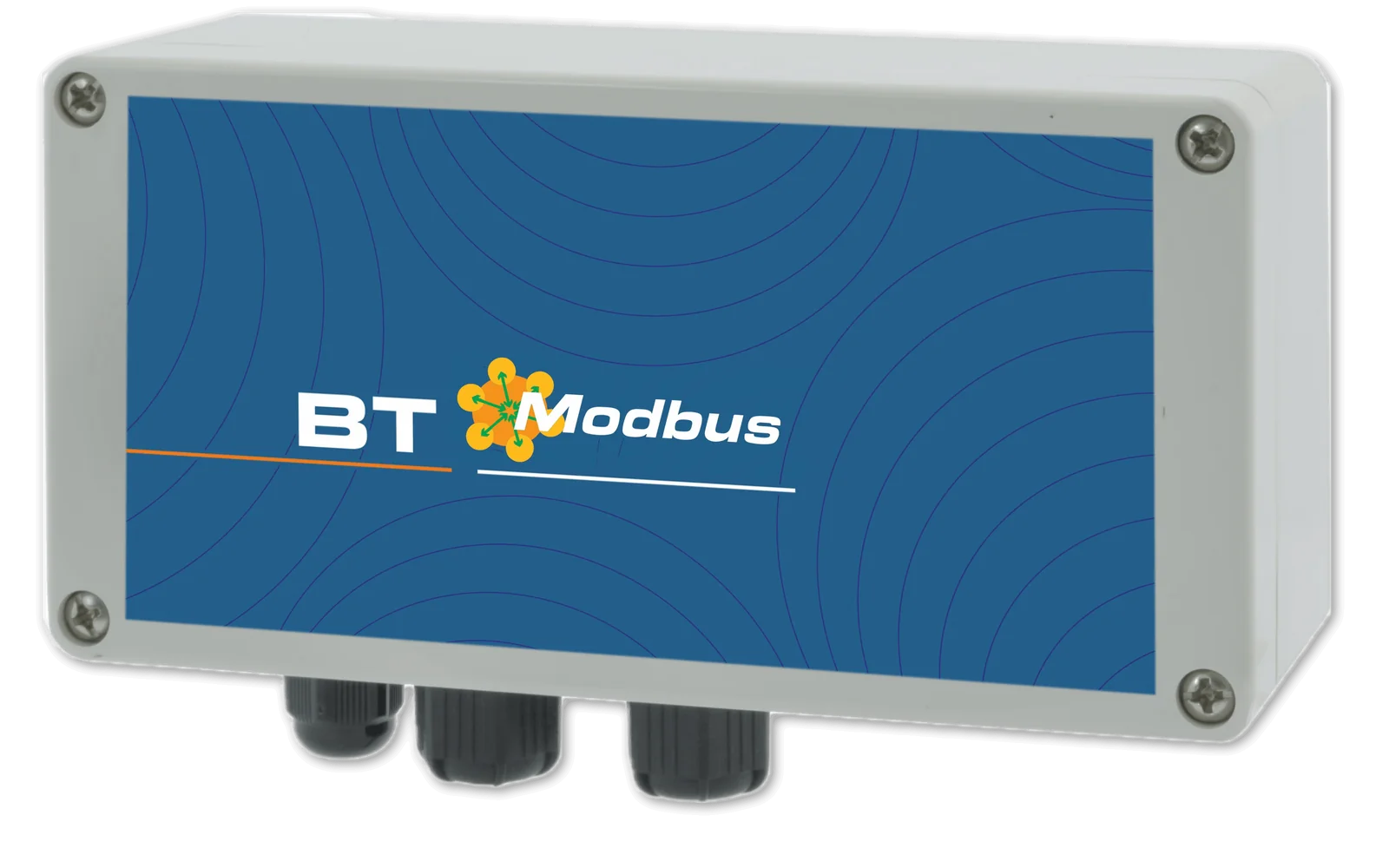
As an alternative to the portal, the Modbus RTU or TCP/IP port allows integration into the plant supervision system.
Systems are supplied pre-assembled and tested, in the form best suited to the plant room: on a panel, in a cabinet or on a skid (with cover, in a box or on a frame), also tailor-made. Some examples.
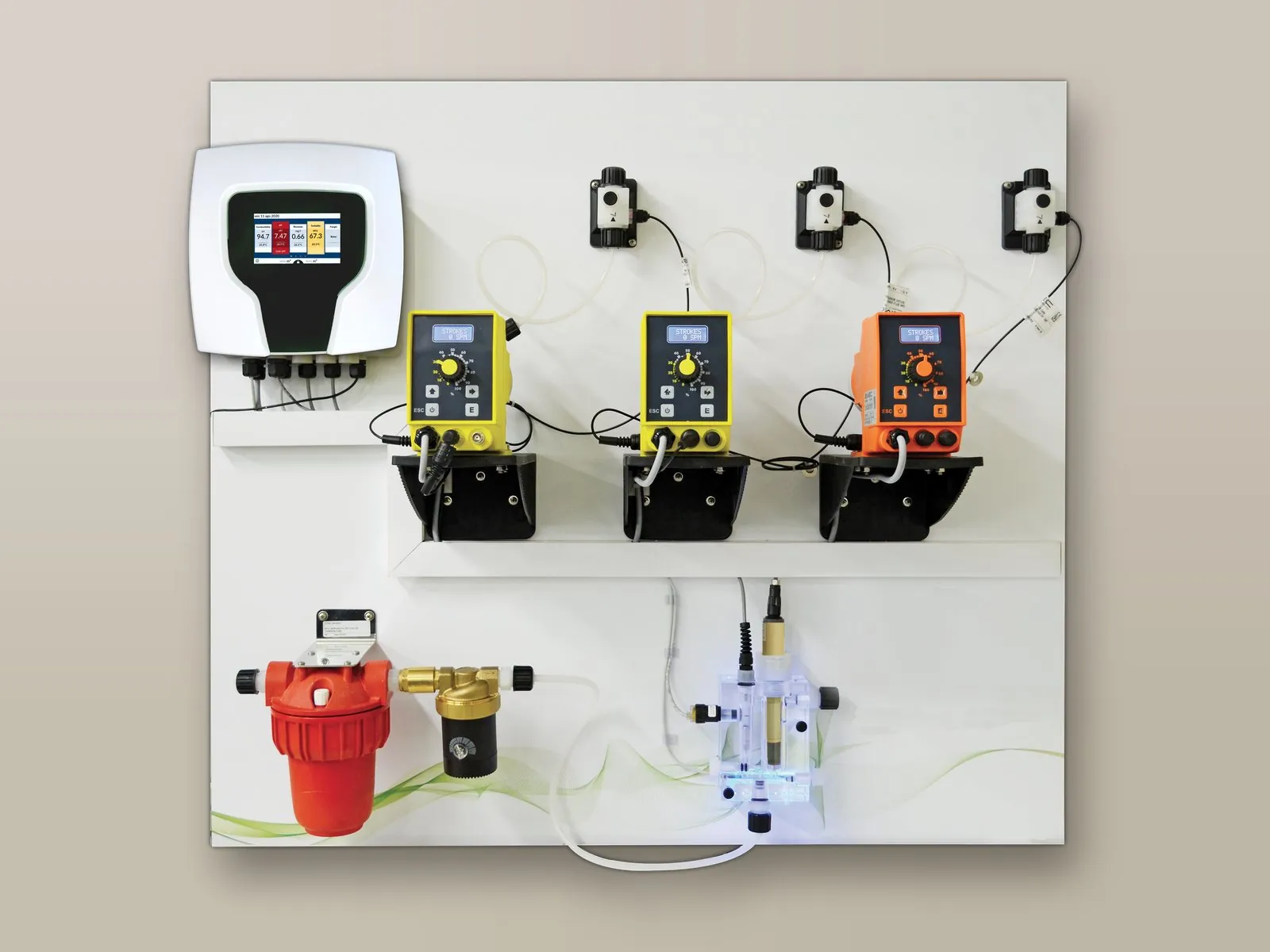
Controller, pumps, probe holder and accessories mounted and wired on a wall panel.
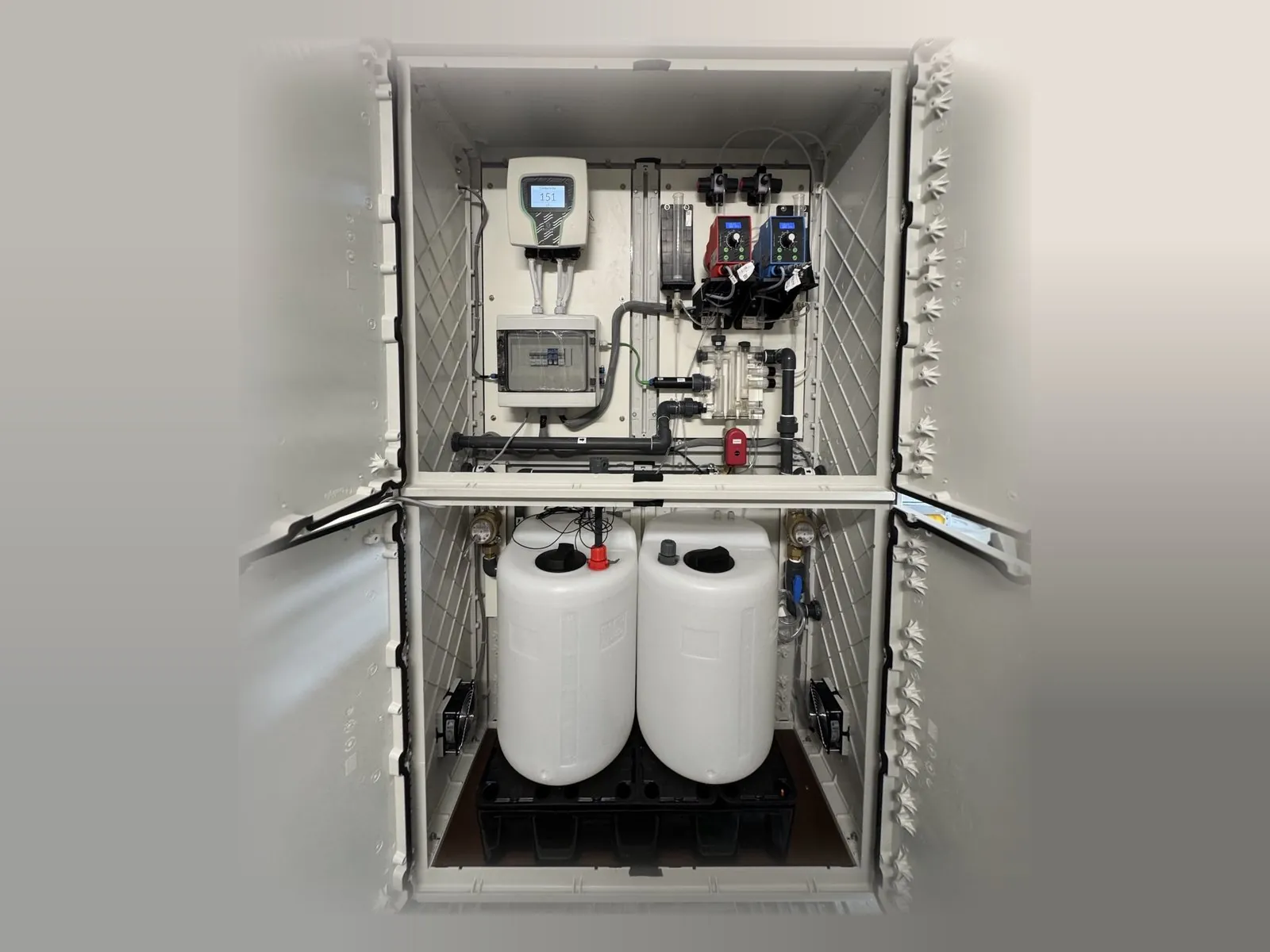
System panel and chemical tanks housed in a single cabinet.
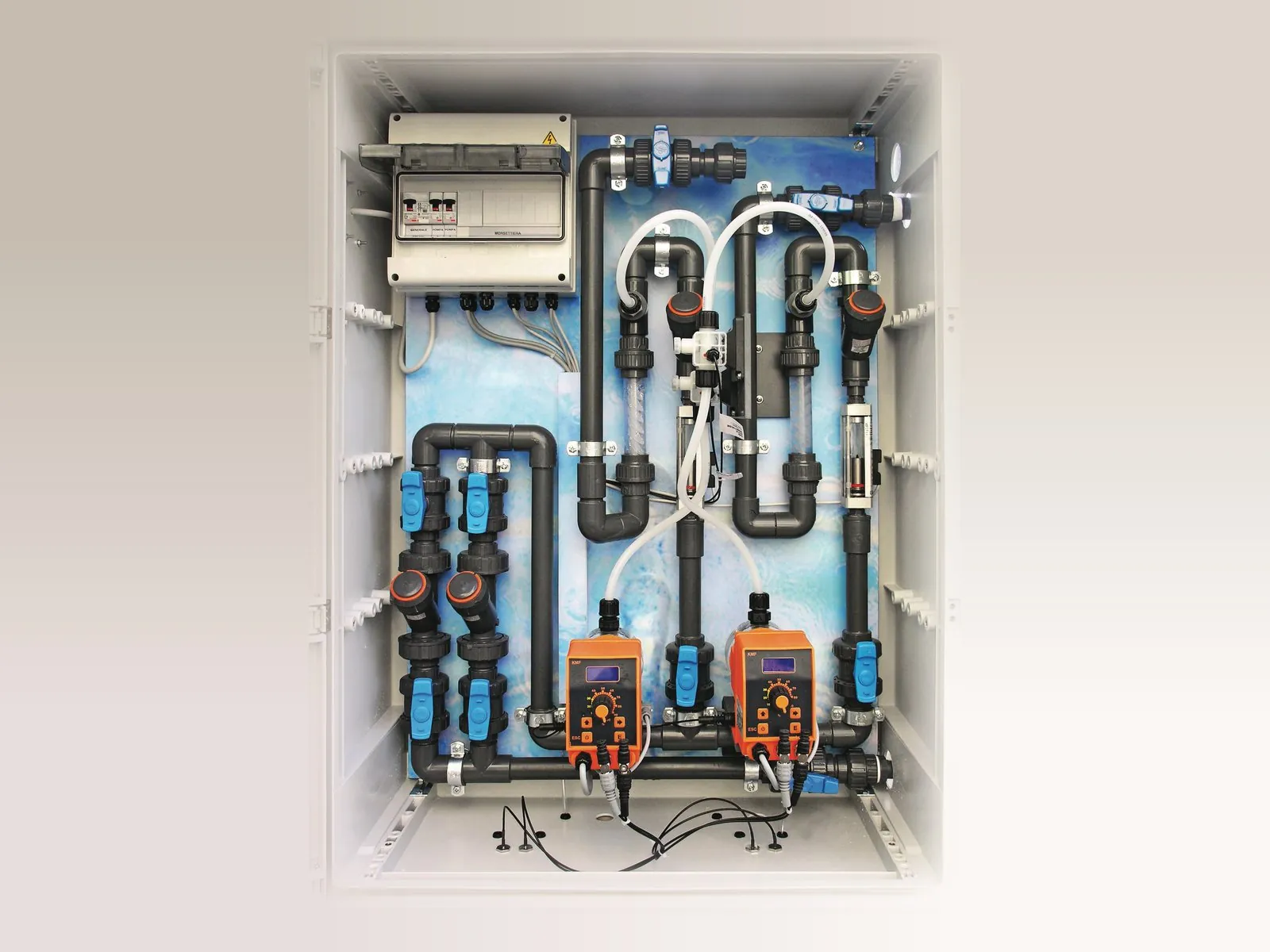
Pipework, pumps and electrical panel in a wall cabinet with door.
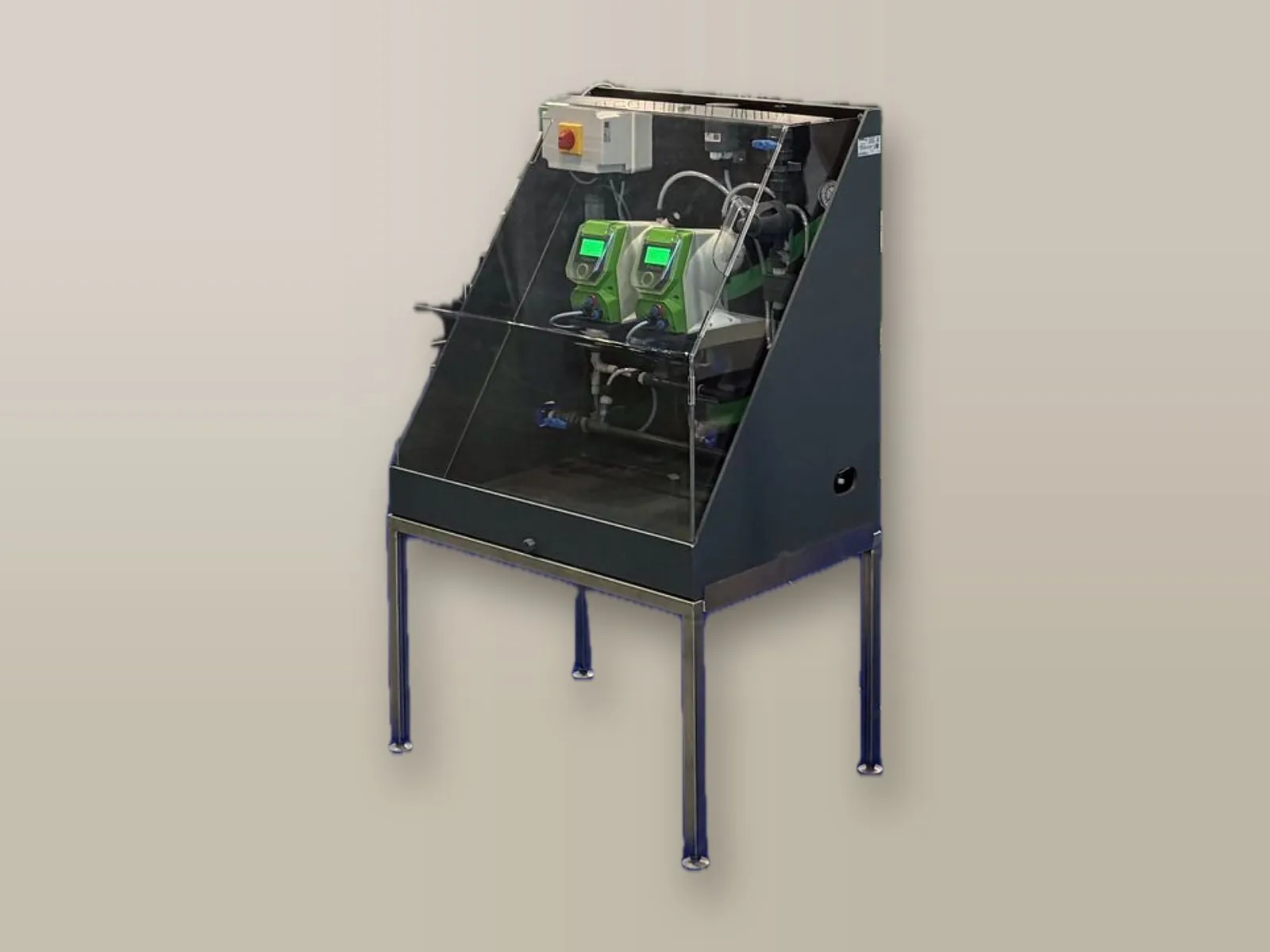
Skid with raised stainless steel frame and protective PMMA cover.
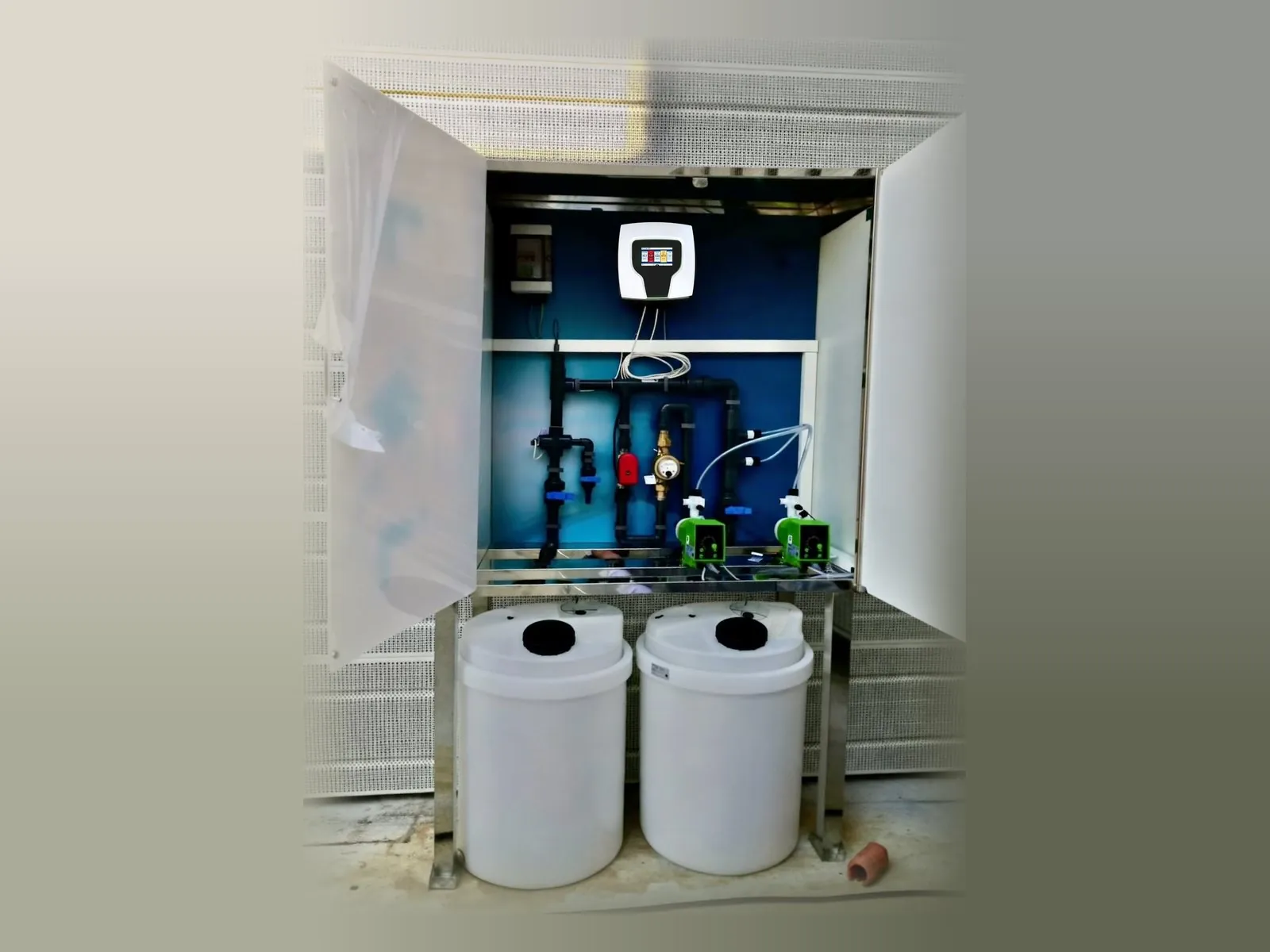
Skid enclosed in a box with door, with the chemical tanks at the base.
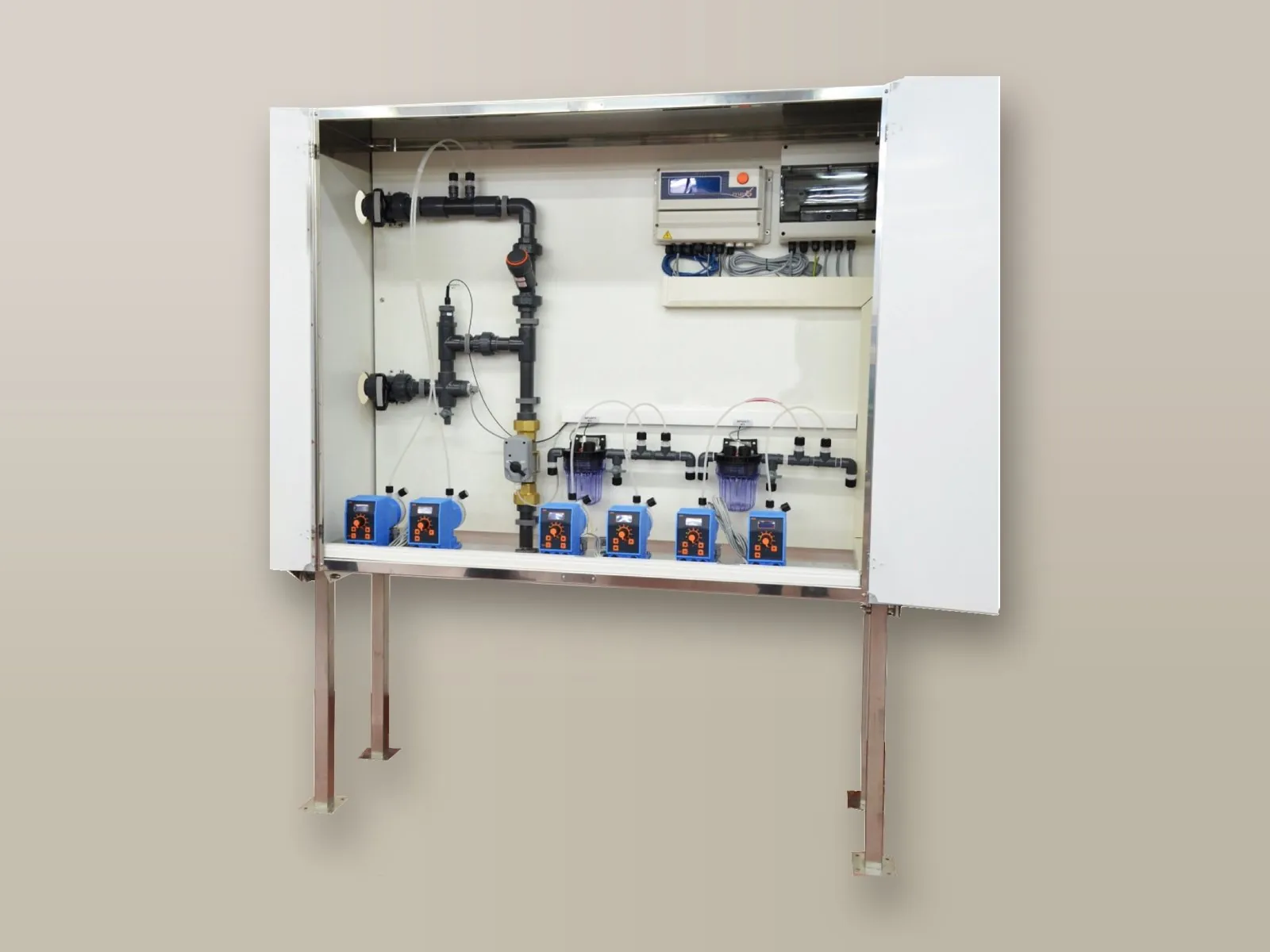
Skid on a frame with doors, pre-assembled and ready for connection.
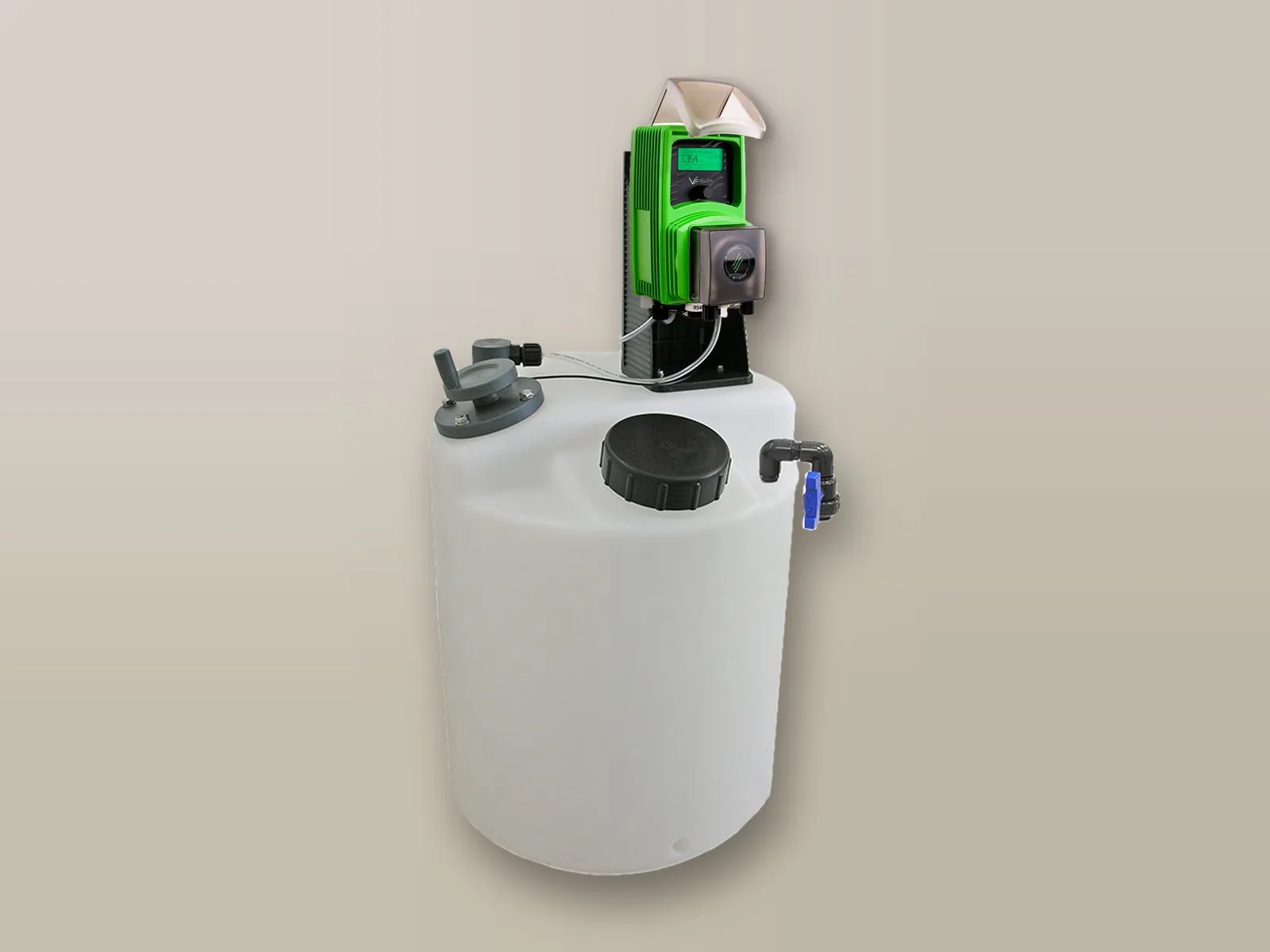
Dosing pump mounted directly on the tank: the most compact solution.
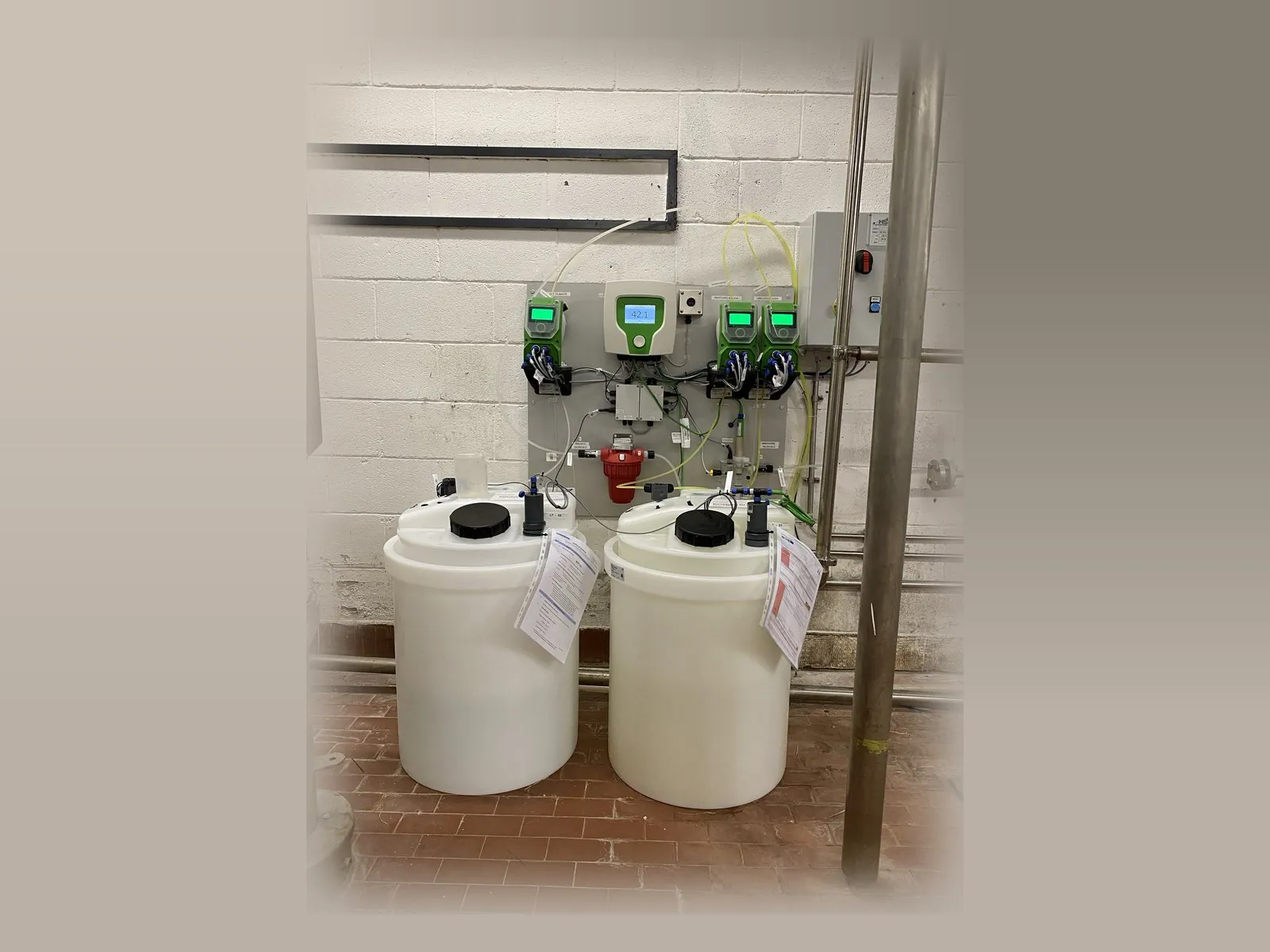
Wall installation in the plant room, with the chemical tanks on the floor.
Pumps, controllers or components supplied by the customer can also be fitted, with custom dimensions, back panel and electrical panel. Dosing stations and skids →
For chlorine and other disinfectants the basic solution is the dosing station; to dose according to the concentration actually present in the water, measuring controllers are used.
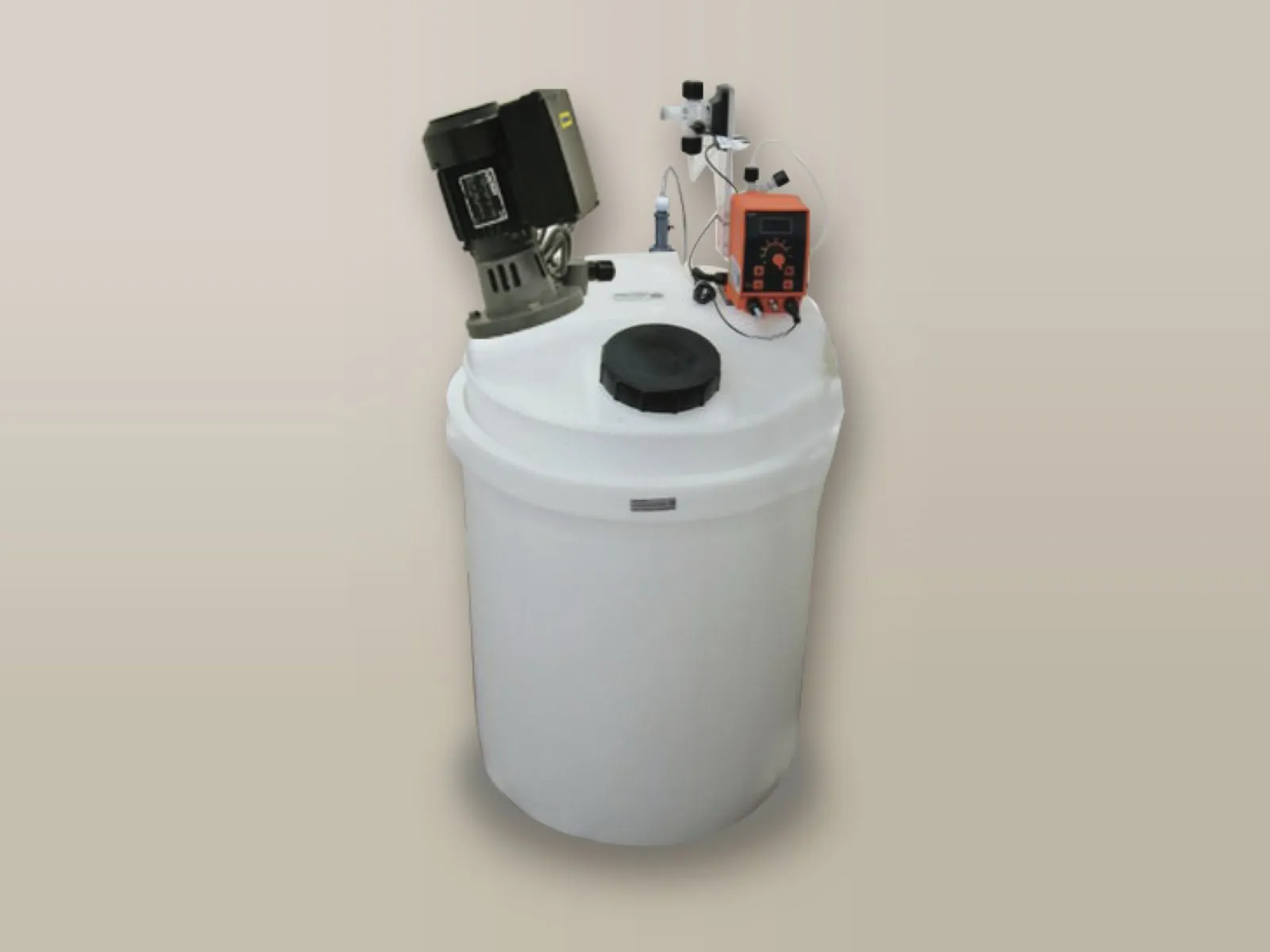
The simplest solution: the pump doses at a constant rate or in proportion to the volume of water measured by the pulse-output water meter.
Details →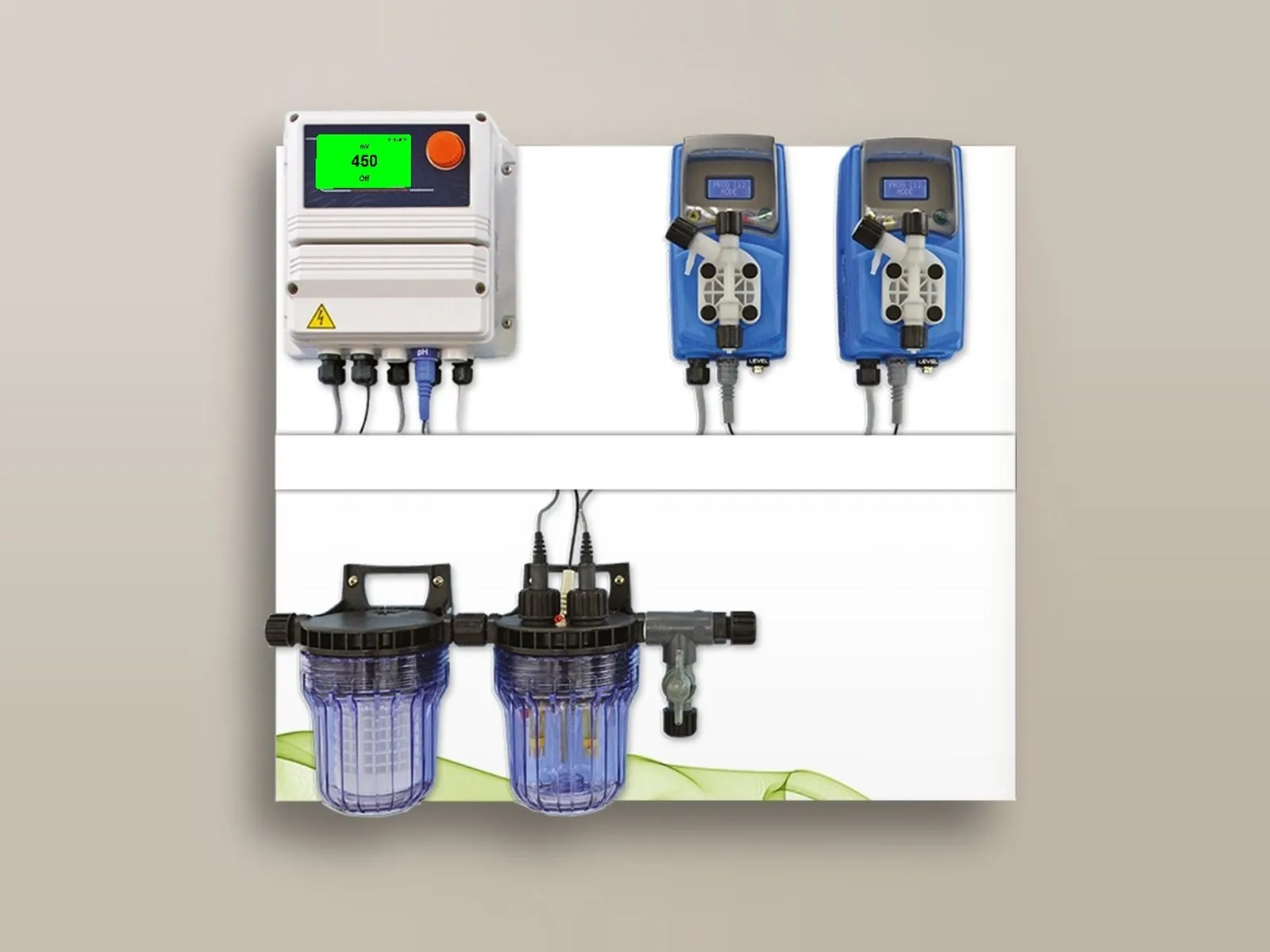
Dosing based on the Redox potential of the water: an economical solution, based on an indirect measurement.
Details →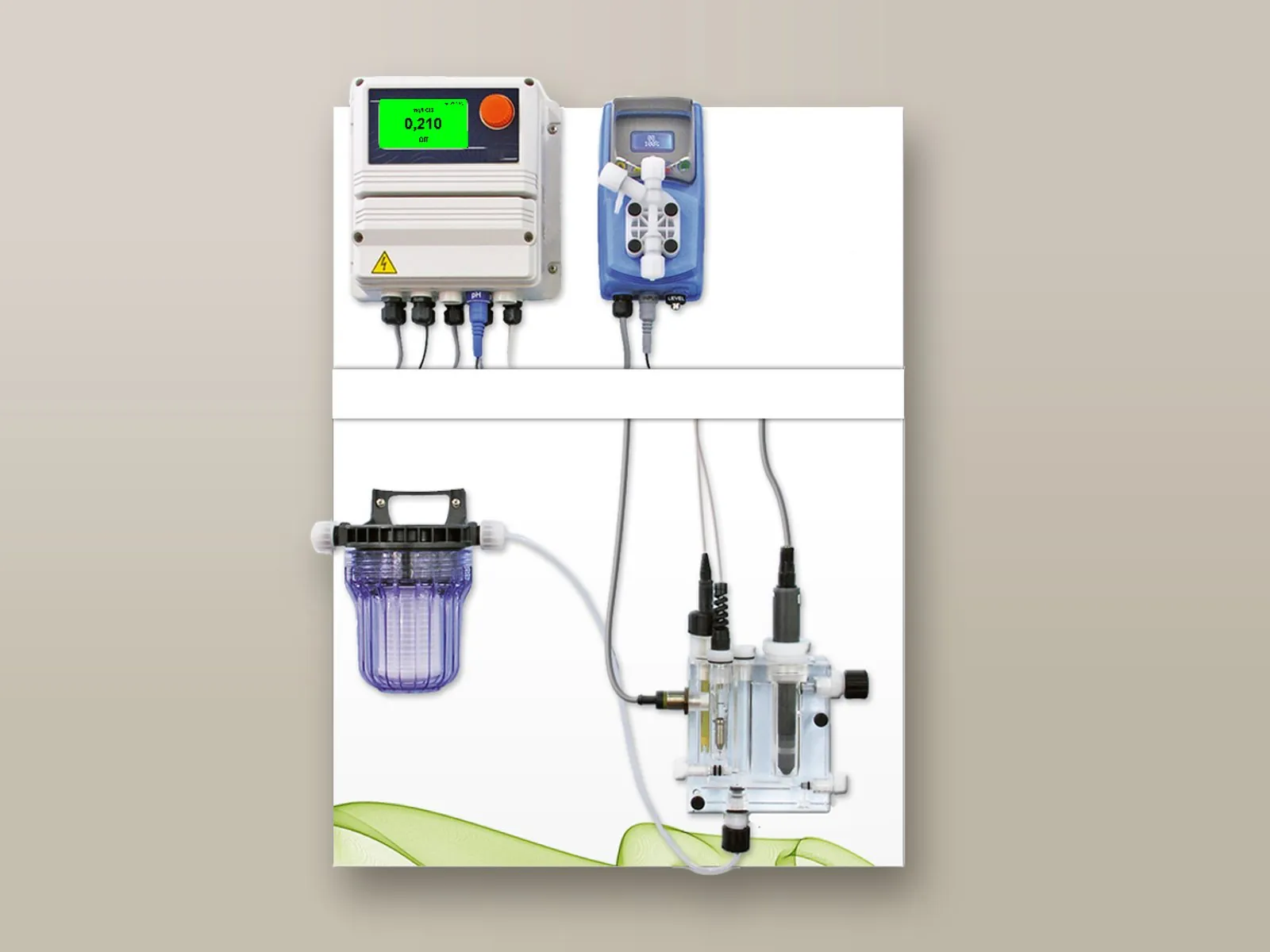
The amperometric cell directly measures the disinfectant concentration in mg/l, ensuring maximum dosing accuracy.
Details →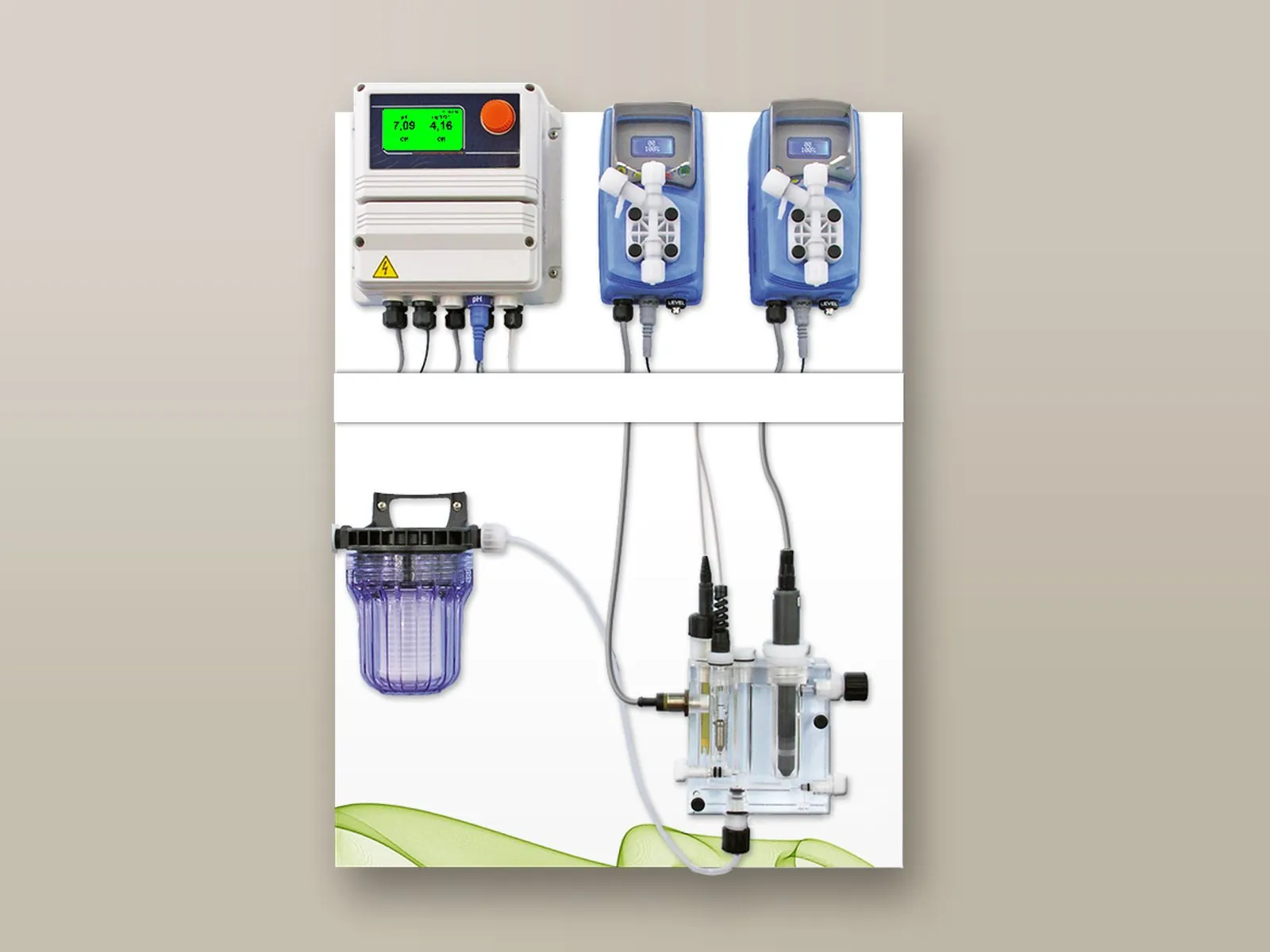
Simultaneous management of two parameters, for example pH and chlorine, with a single controller.
Details → Management of up to 10 parameters and of all the pumps in the installation, with touch screen and remote control as standard.
Details →Tell us the pool volume and the disinfectant you prefer: we will propose the most suitable system and accessories.
Call or write to us: a technician will reply with a tailored proposal of controllers, pumps, probes and accessories.