1
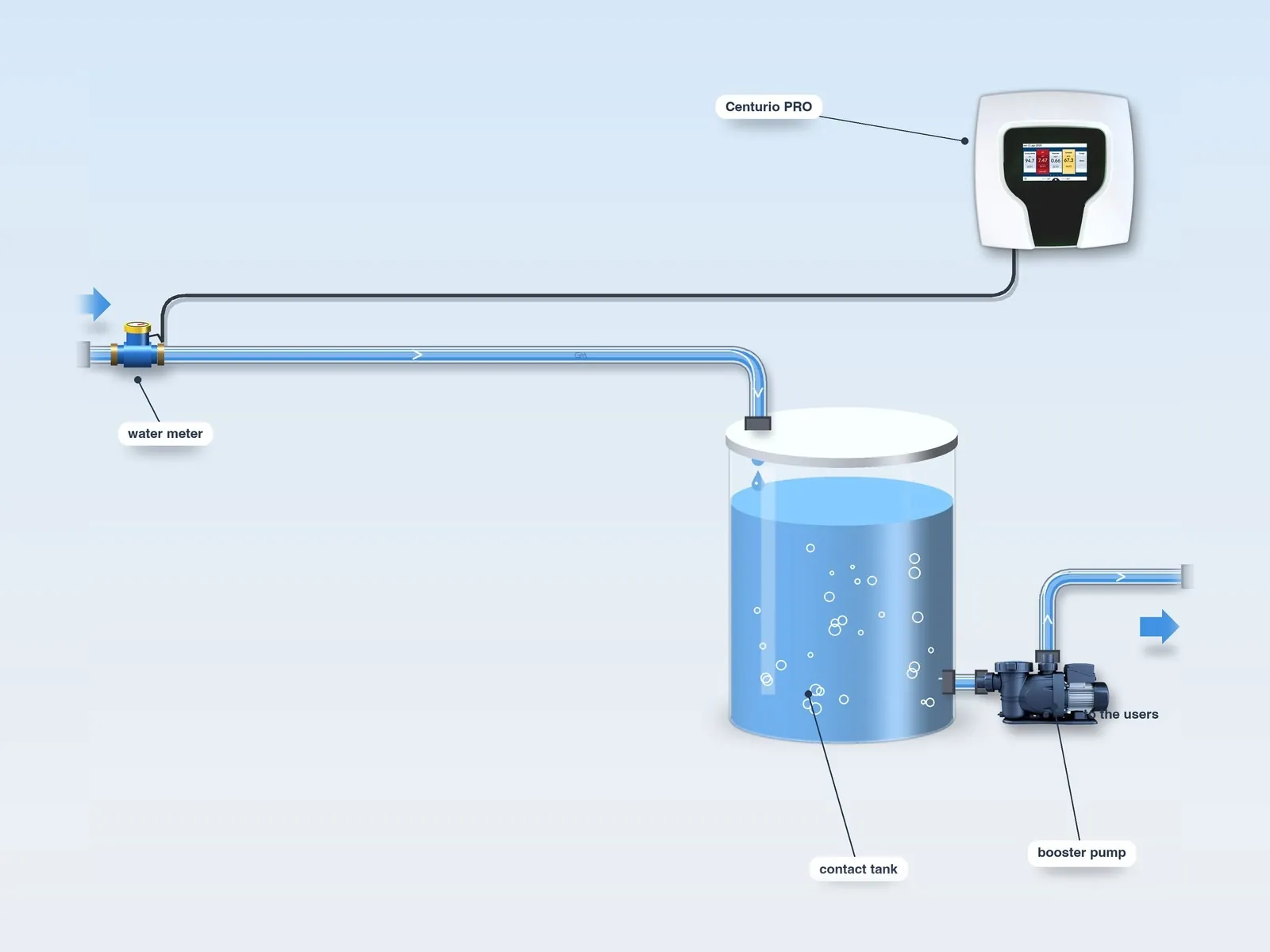
Inlet water meter
The pulse-output water meter measures the water entering the contact tank: the Centurio PRO doses chlorine in proportion to the volume.
Multi-channel controller with touch screen: it acquires the signals of all the sensors and controls all the dosing pumps of the plant, including the sampling pump. Intended for drinking water and storage tanks, domestic hot water (anti-Legionella), process water and wastewater.
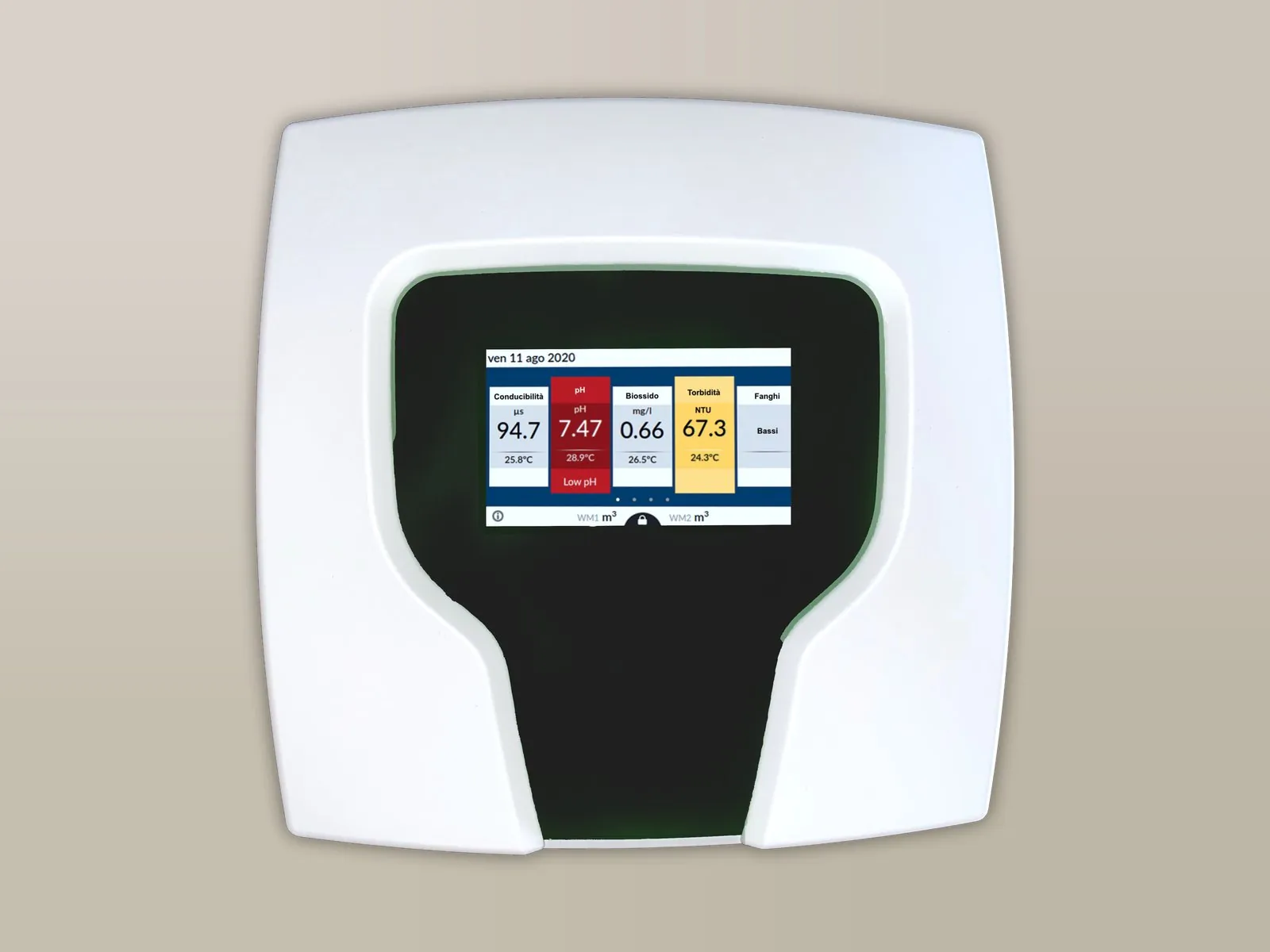
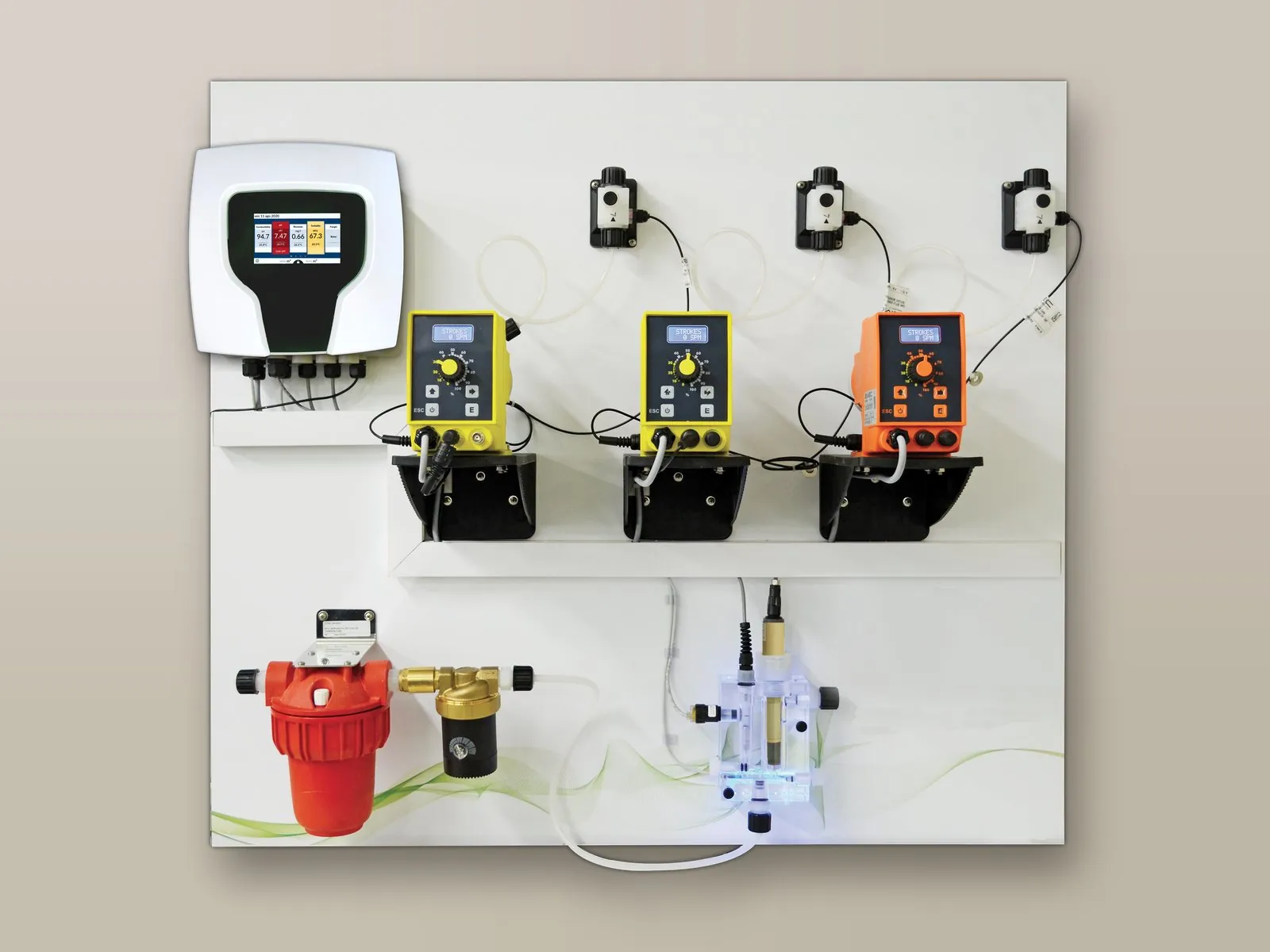
A single Centurio PRO measures all the parameters of the plant and controls dosing pumps and valves: the layout is built up one step at a time.
The pulse-output water meter measures the water entering the contact tank: the Centurio PRO doses chlorine in proportion to the volume.
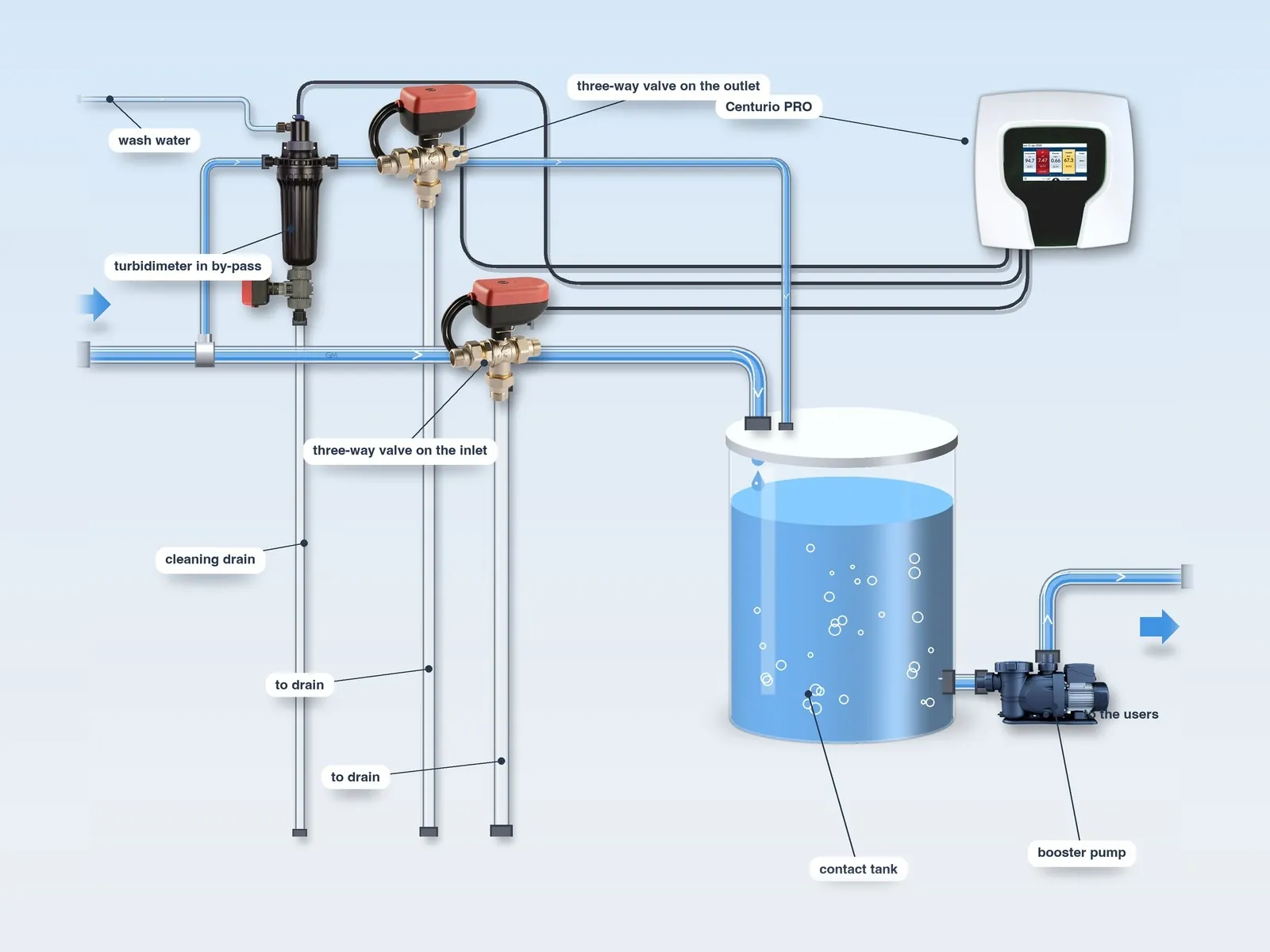
The turbidity meter in by-pass analyses the incoming water; when turbidity exceeds the set point, the three-way valves on the by-pass outlet and on the tank inlet divert the water to drain. The probe holder has a drain valve for cleaning and a flushing water connection.
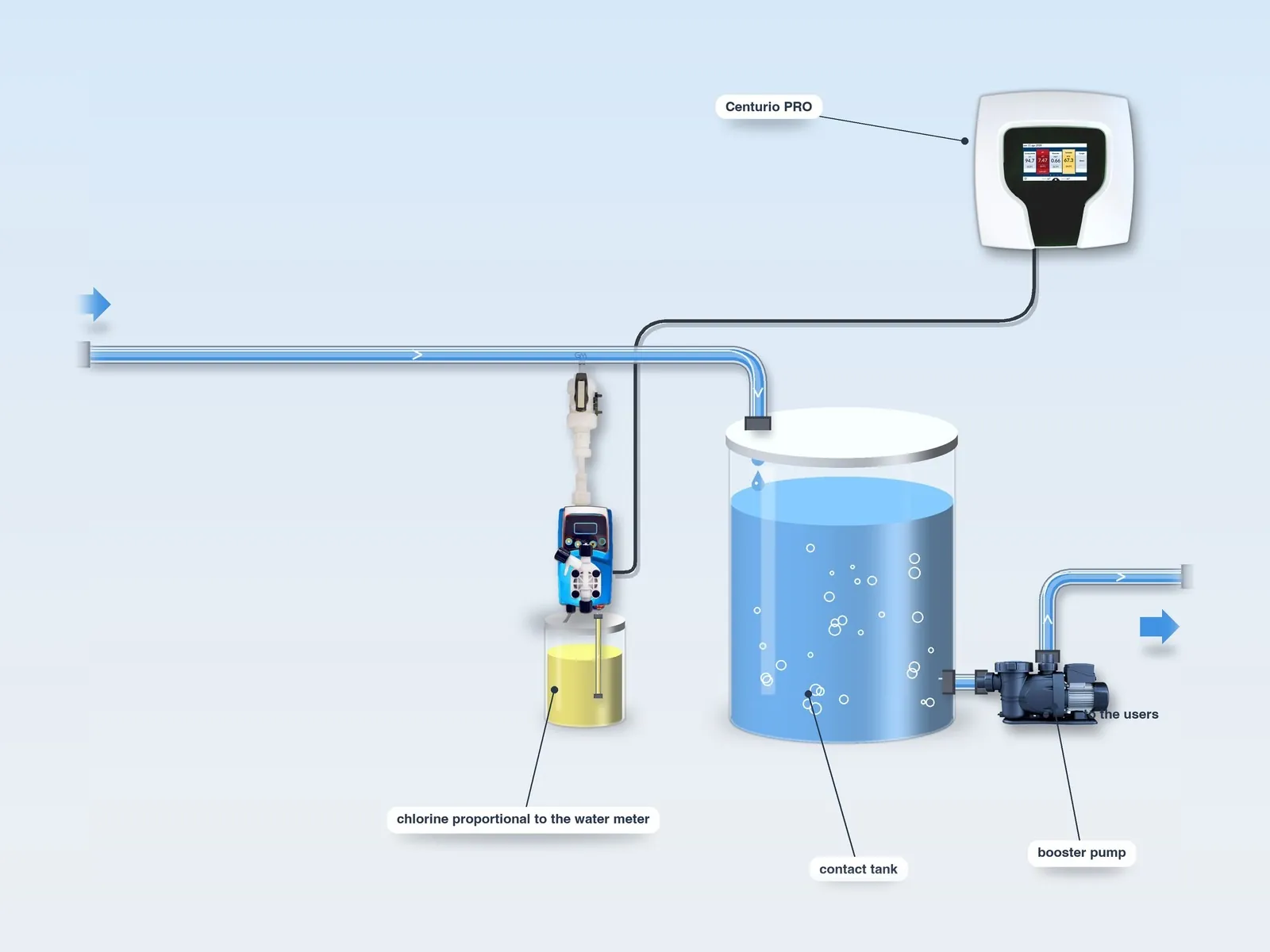
The first pump injects chlorine into the inlet pipe in proportion to the water measured by the meter: disinfection begins before the tank.
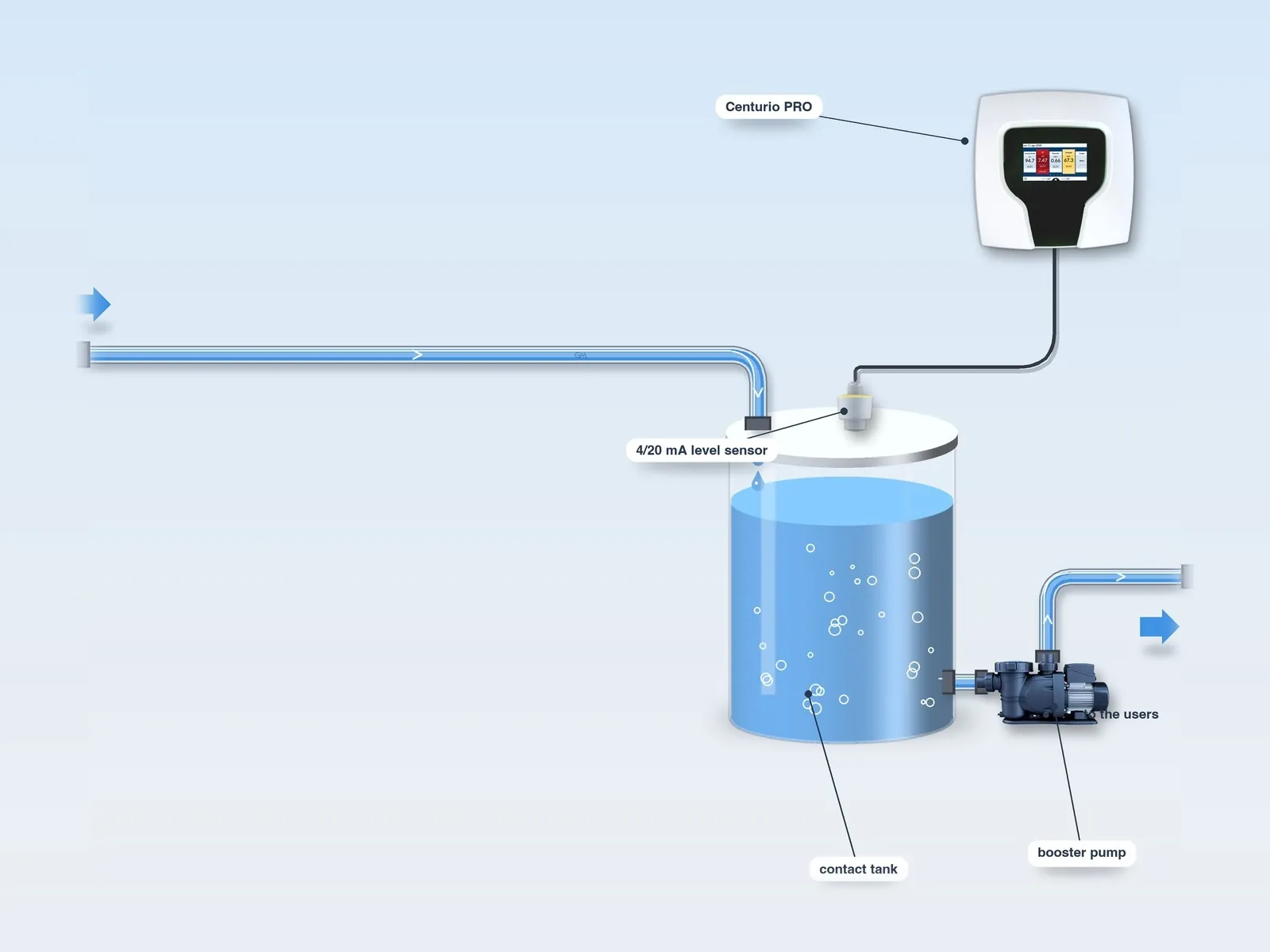
The 4/20 mA level probe, connected to a current input, measures the water level in the contact tank.
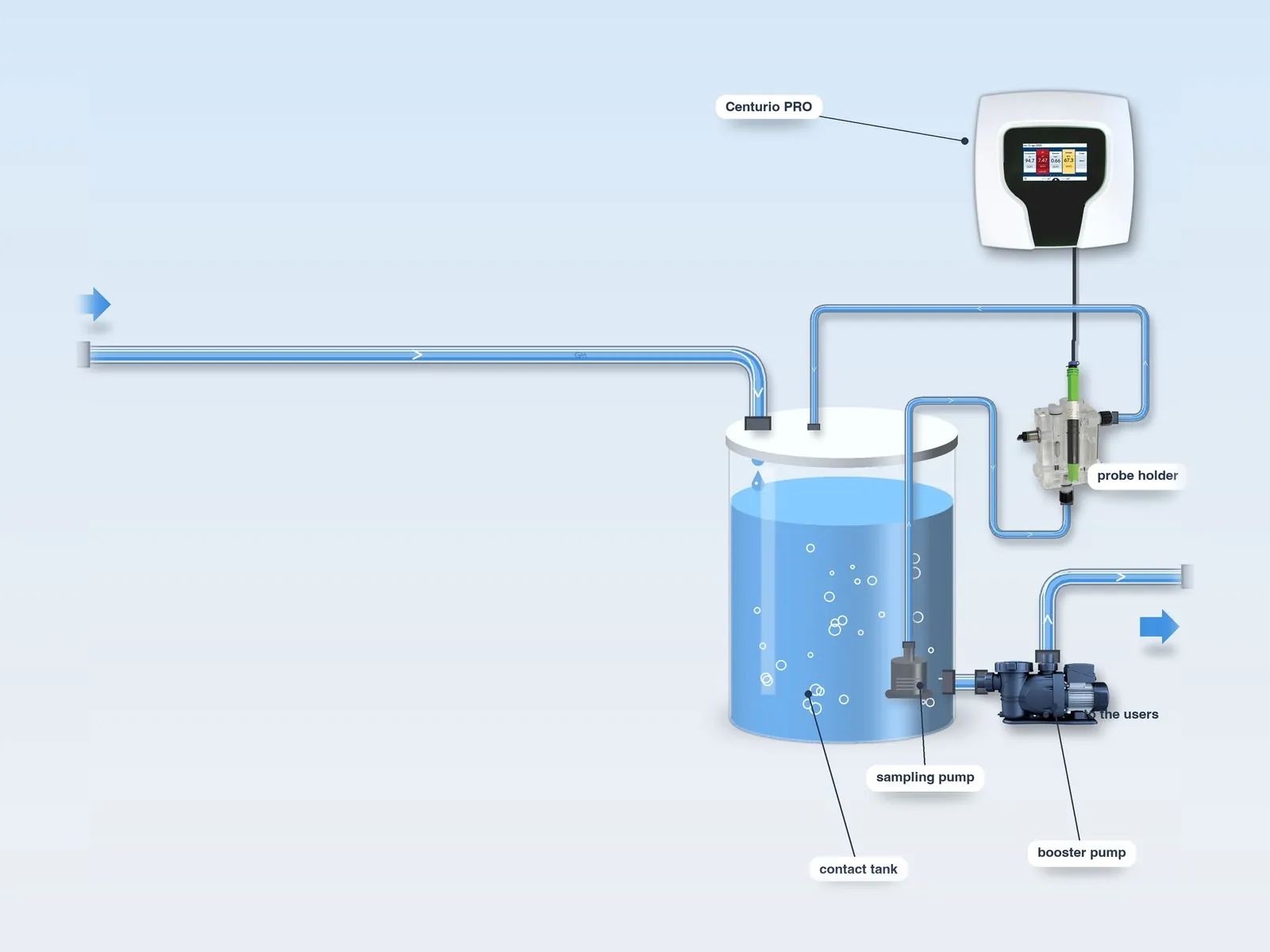
The sampling pump sends water from the tank to the probe holder, where the amperometric cell measures free chlorine; the water returns to the tank.
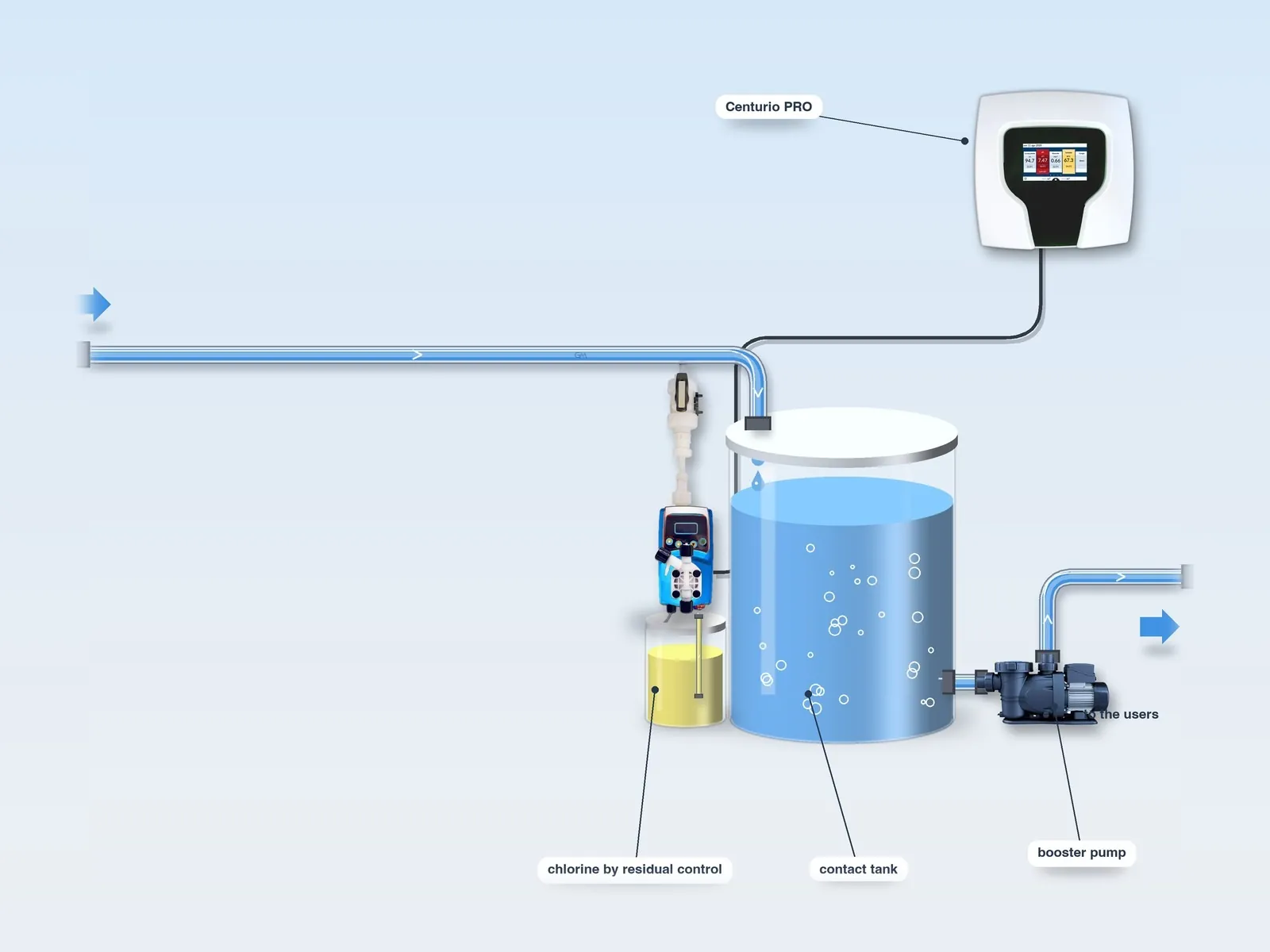
The second pump corrects the dosing on the basis of the measured free chlorine, maintaining the set residual.
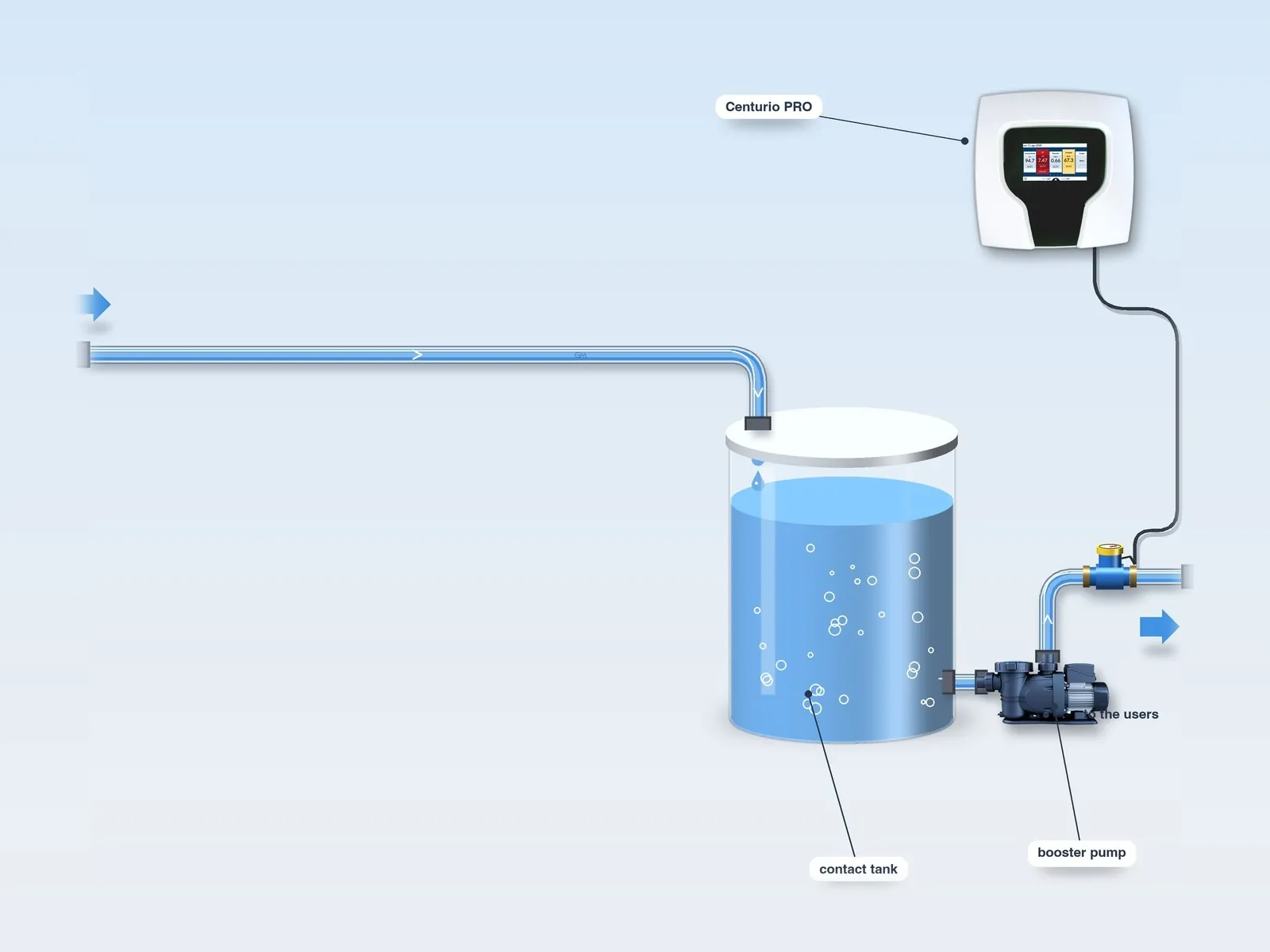
The booster pump sends the water to the users; the second water meter measures the water supplied.
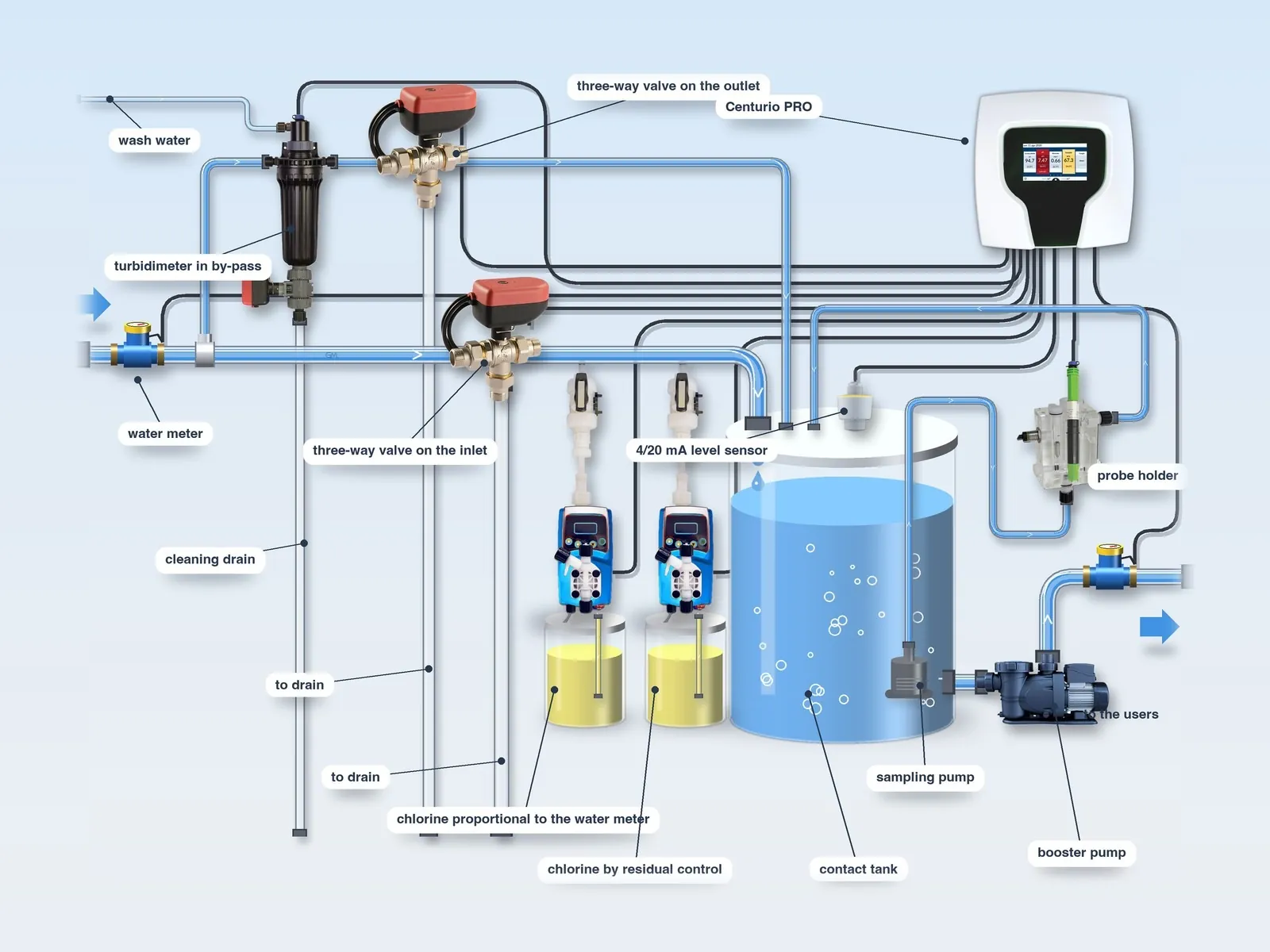
The complete plant: a single Centurio PRO for water meters, turbidity, level, chlorine and valves.
Dissolved oxygen, pH, Redox, level, flow rate and turbidity in a single controller, which manages the dosing, timed or proportional to the flow rate, of flocculant, caustic soda, nutrients, acid, antifoam and chlorine.
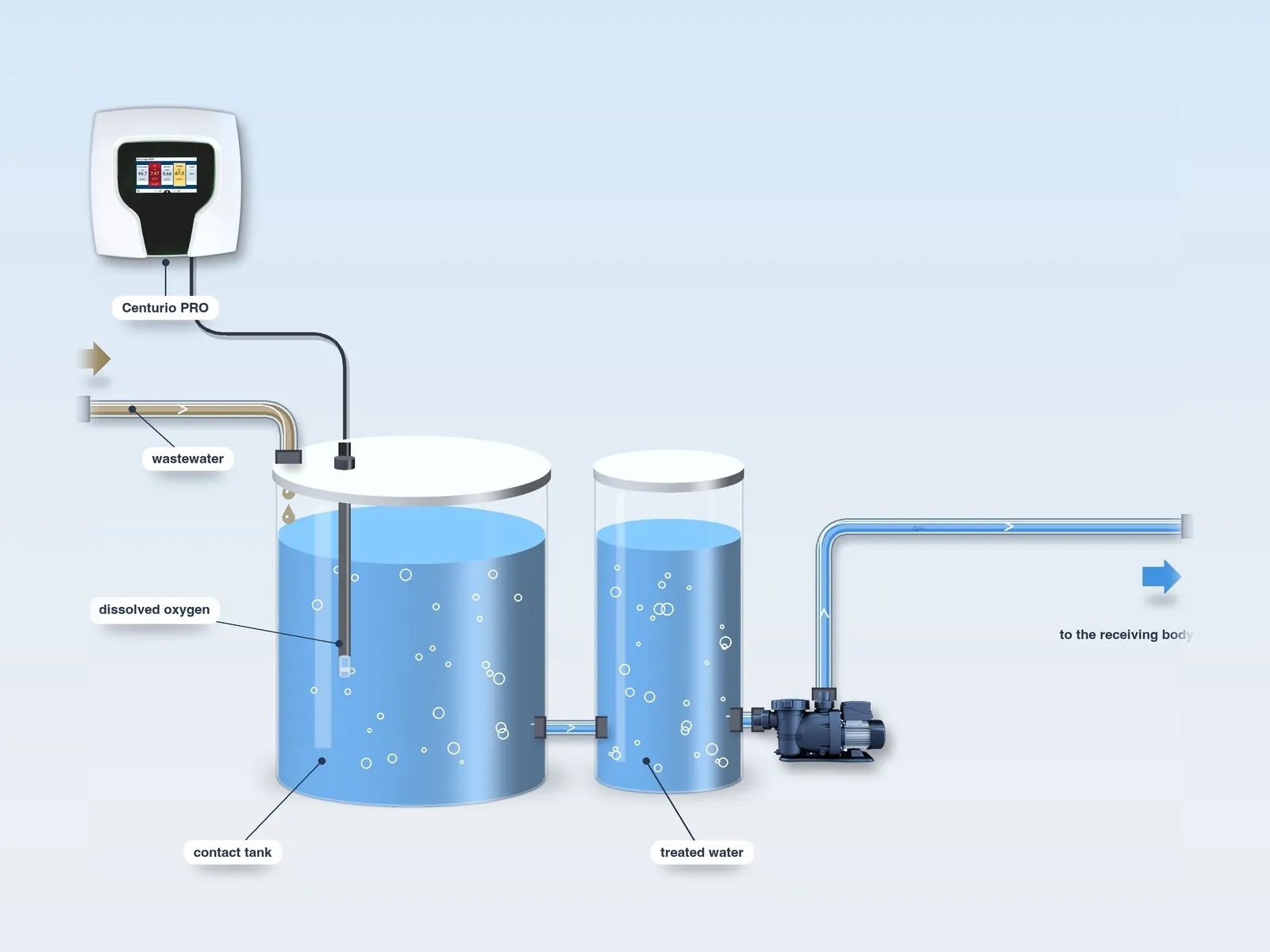
The optical probe measures the dissolved oxygen in the contact tank.
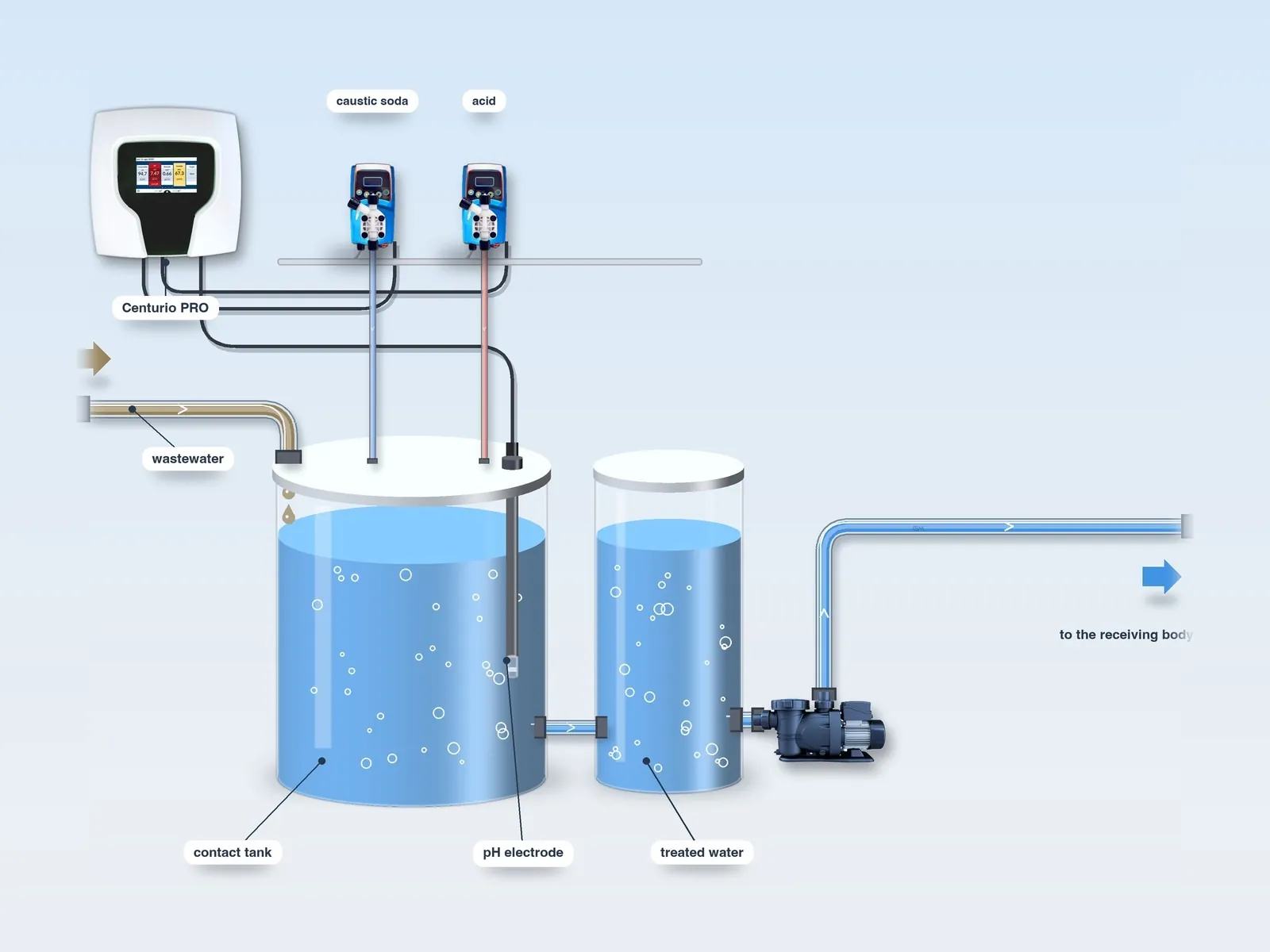
The pH electrode controls the caustic soda and acid pumps, which maintain the pH at the set value.
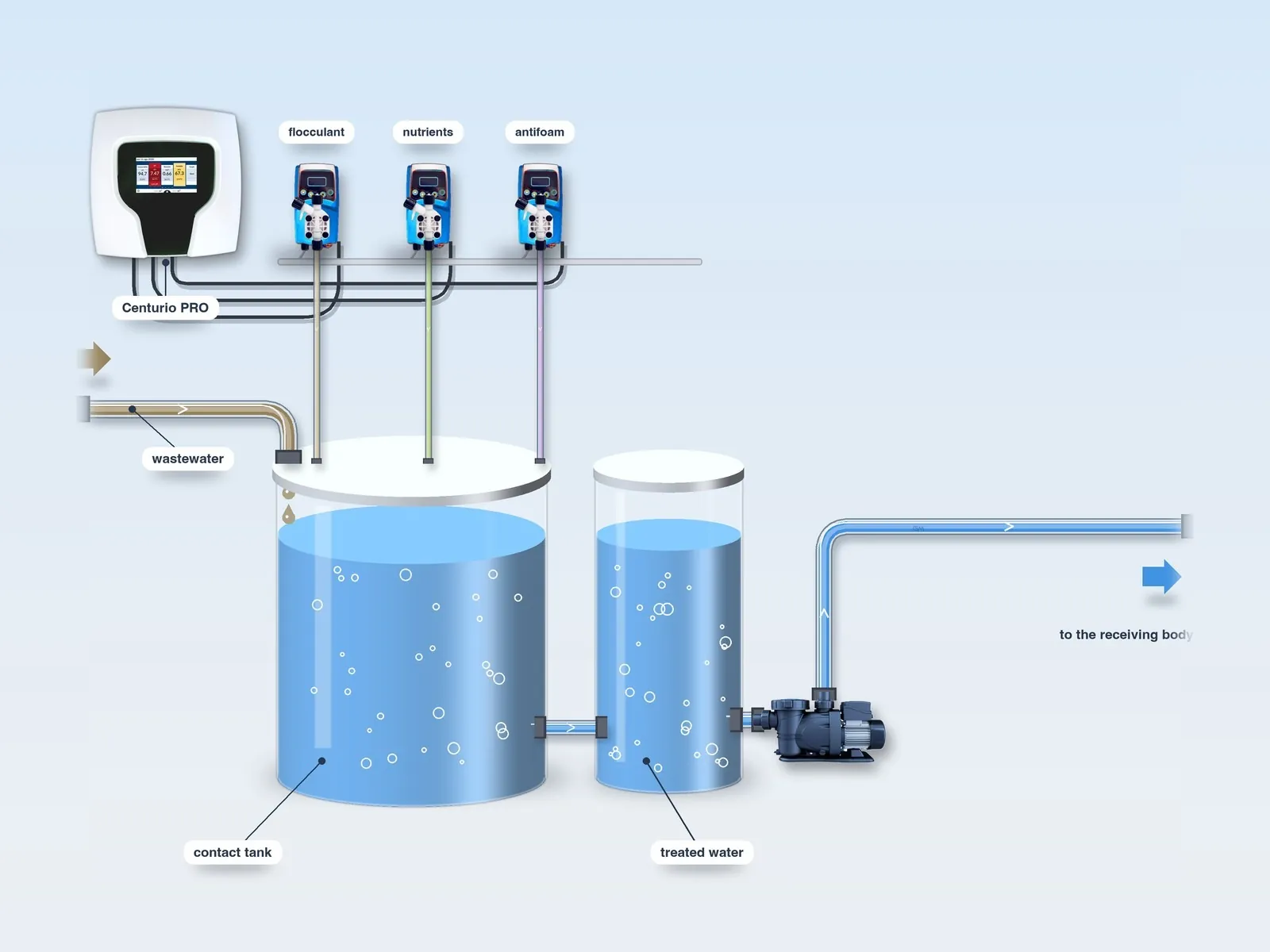
The Centurio PRO controls the dosing, timed or proportional to the flow rate, of flocculant, nutrients and antifoam.
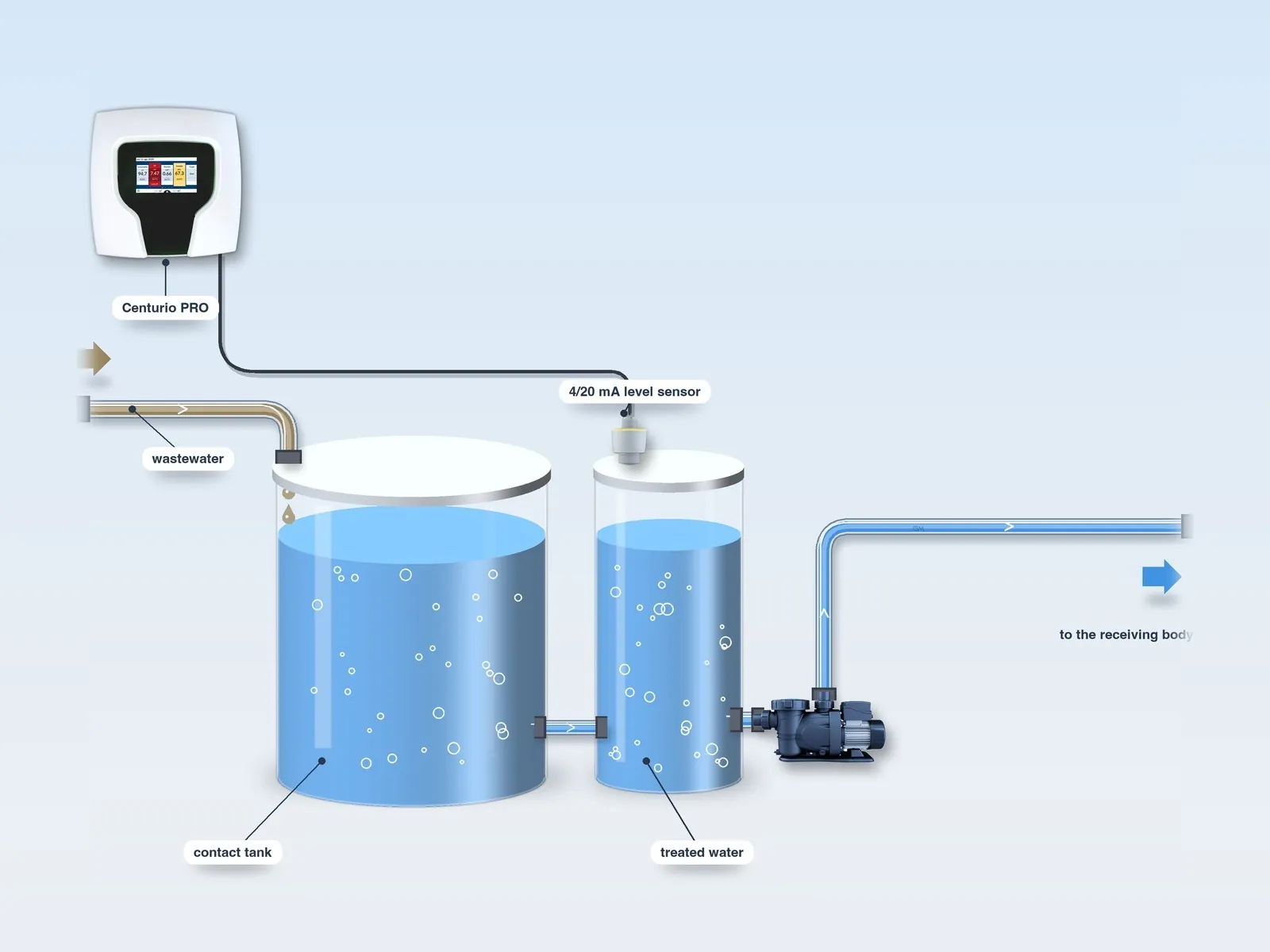
The 4/20 mA level probe measures the level in the treated water storage tank.
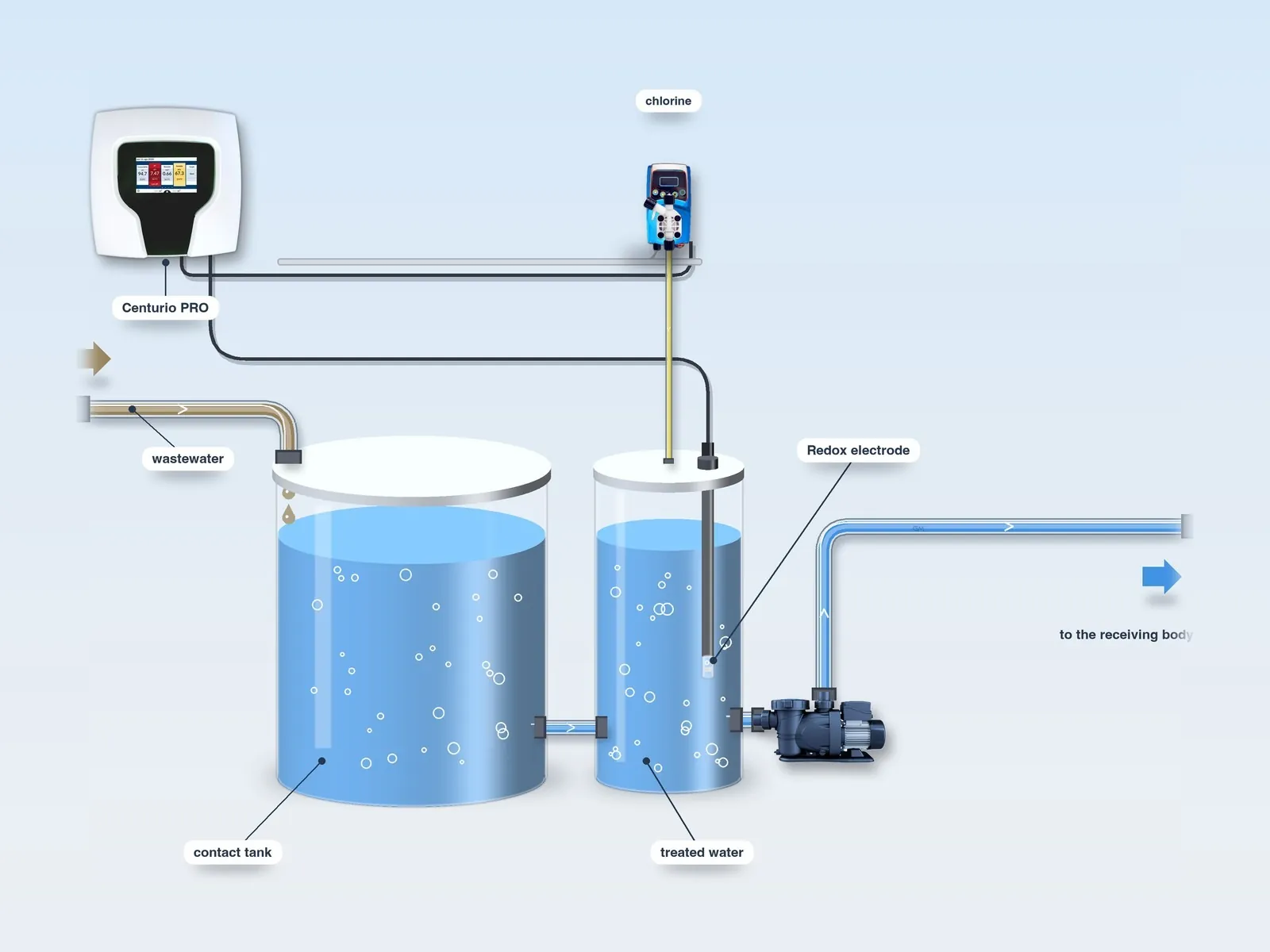
The Redox electrode in the treated water storage tank controls the chlorine pump.
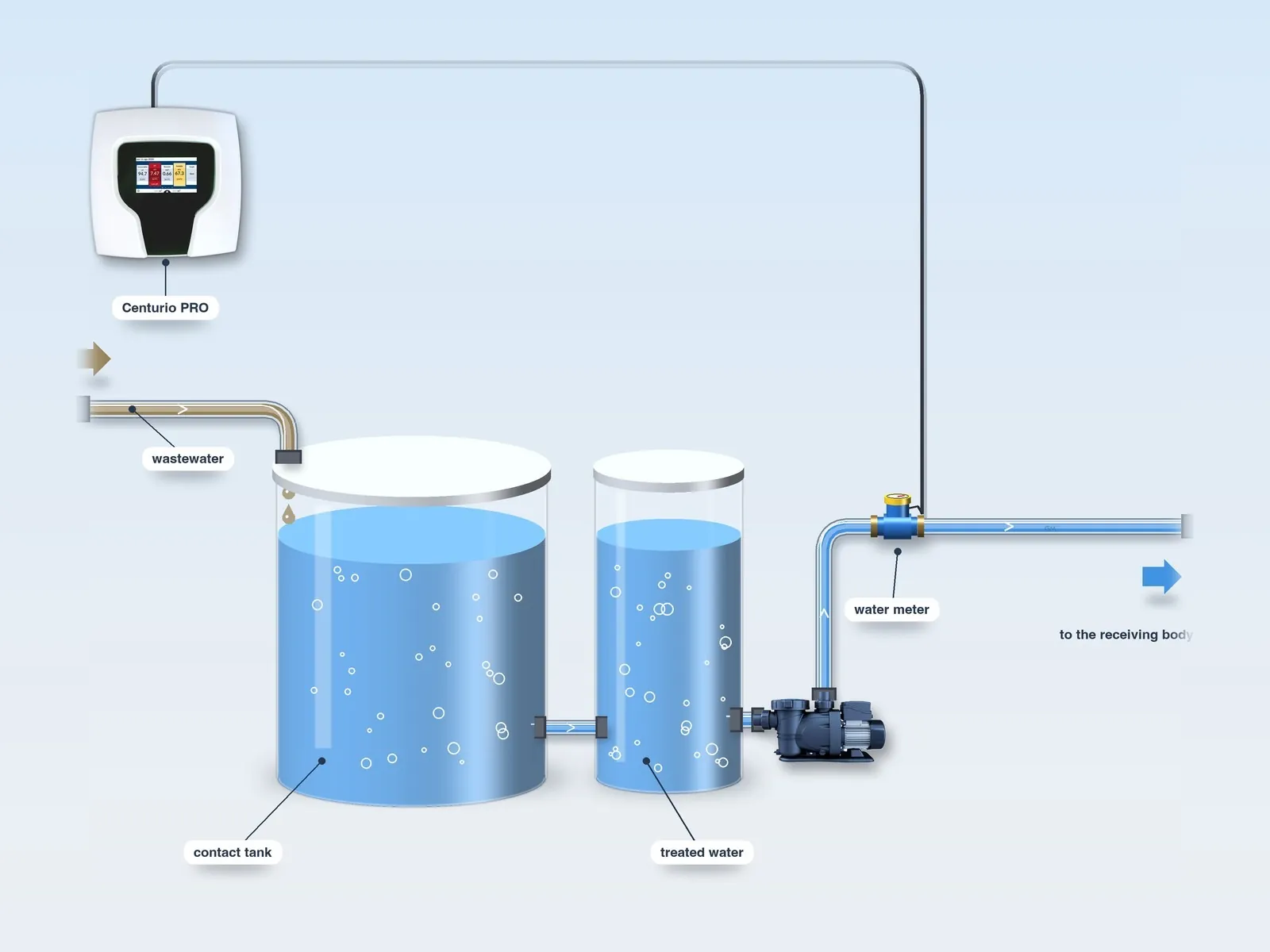
The pulse-output water meter measures the water discharged to the receiving body.
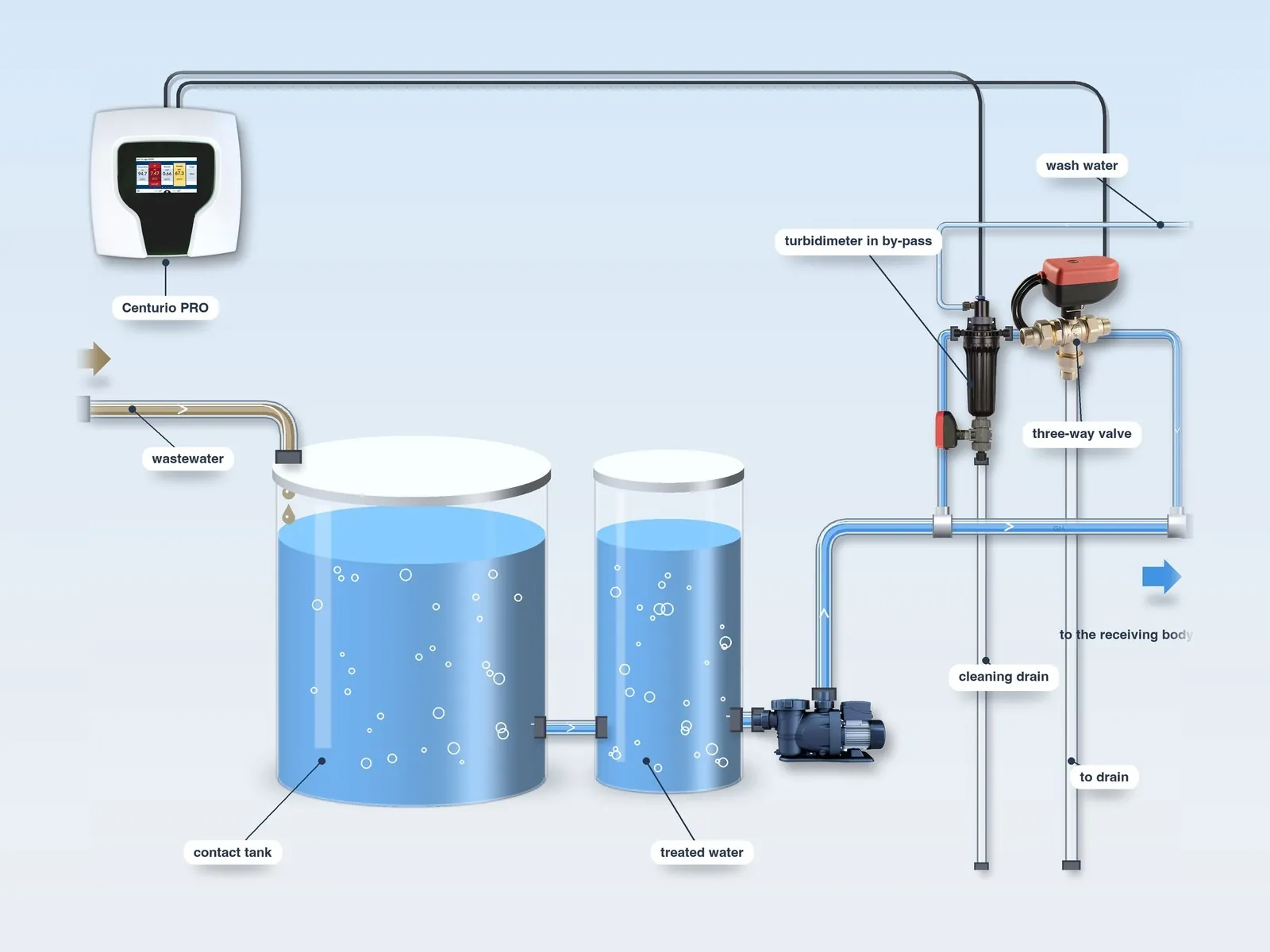
The turbidity meter in by-pass on the line to the receiving body measures turbidity; the three-way valve on the by-pass outlet diverts the turbid sample to drain.
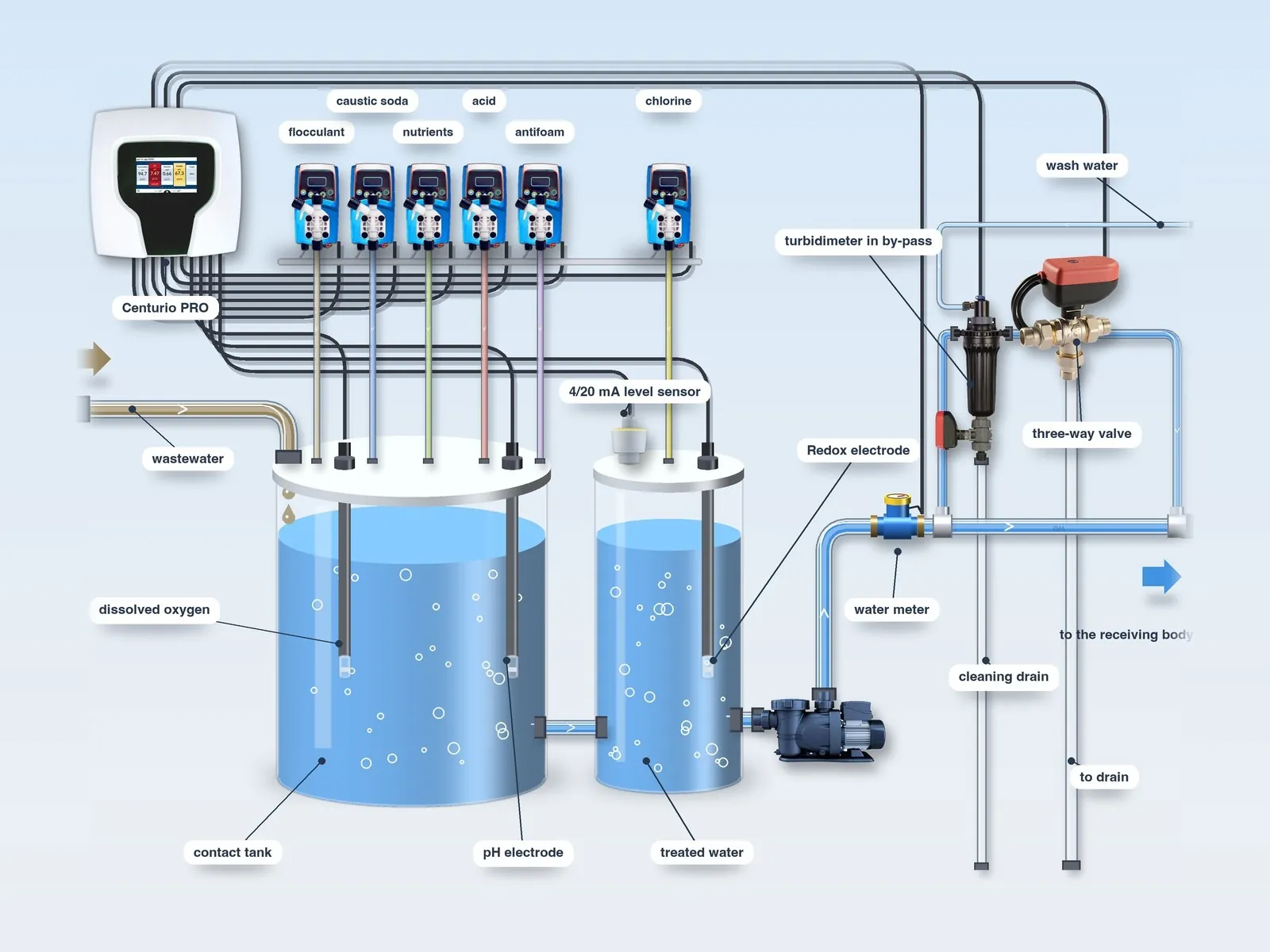
The complete plant, managed by a single Centurio PRO.
Biocide and antiscalant proportional to the make-up water, biocide with residual control on the recirculation: the domestic hot water layout one step at a time. Legislation, treatments and systems: anti-Legionella.
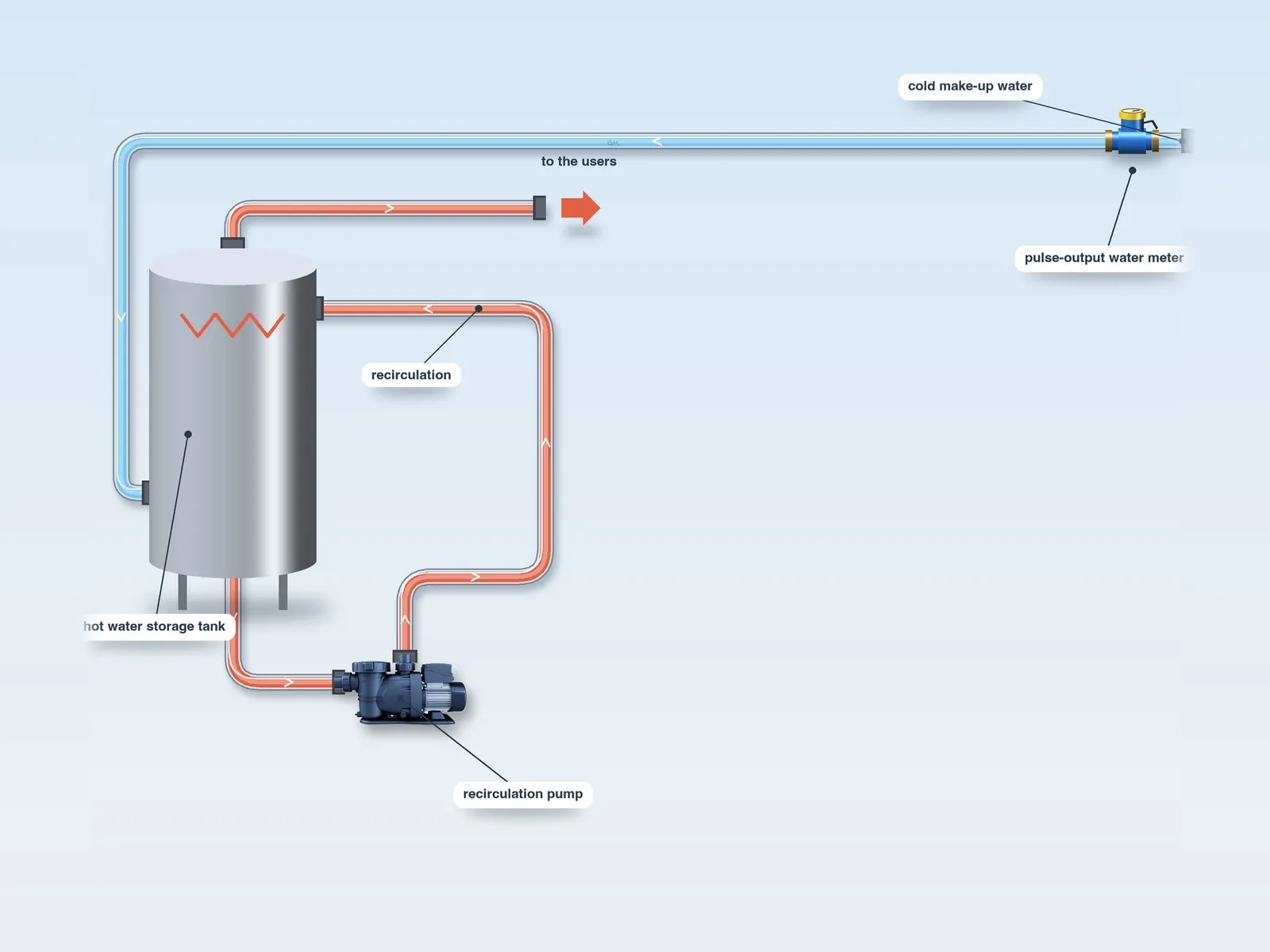
The pulse-output water meter measures the cold make-up water.
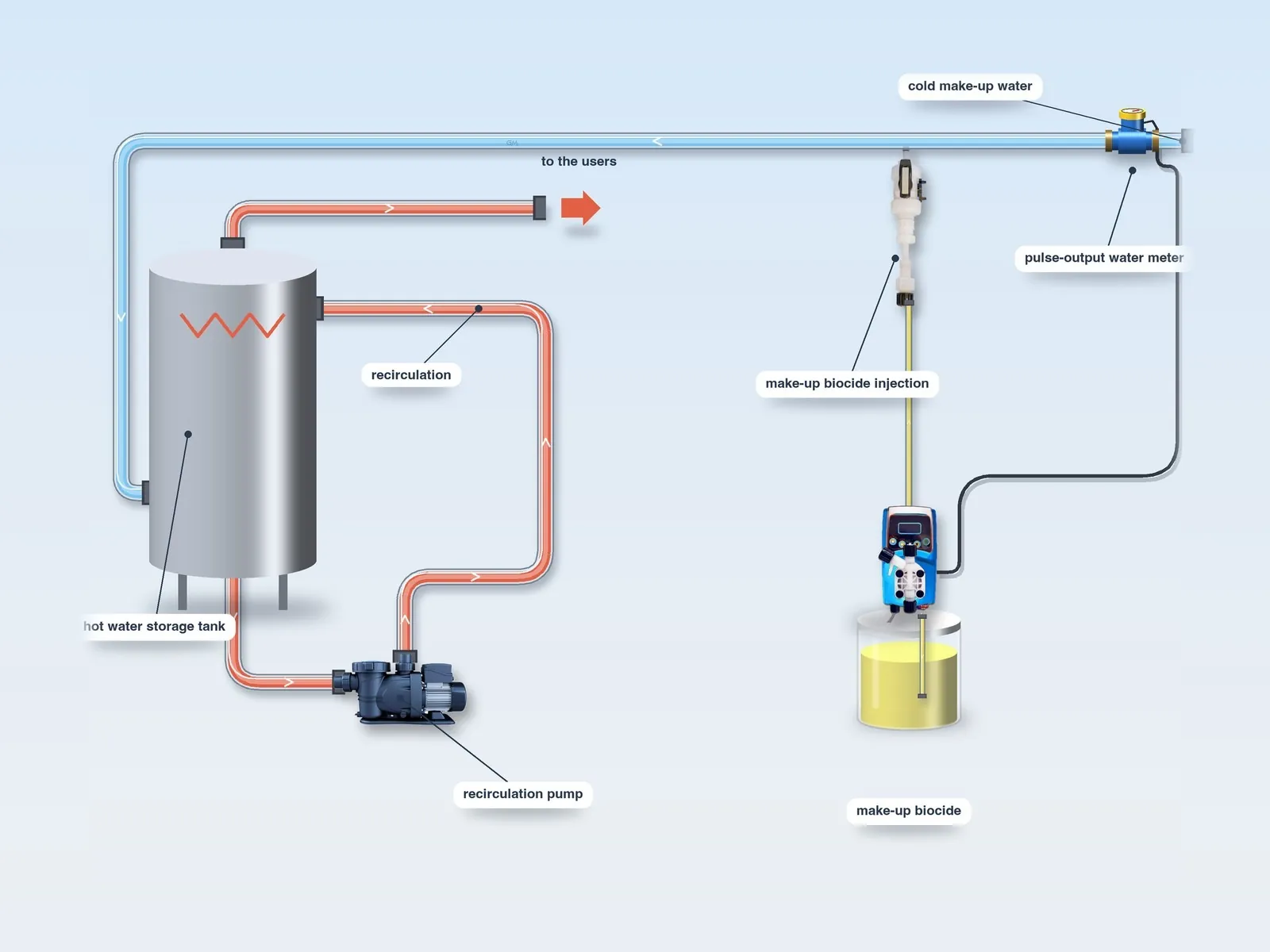
A pump injects the biocide into the make-up water in proportion to the volume measured by the water meter: the incoming water is disinfected immediately.
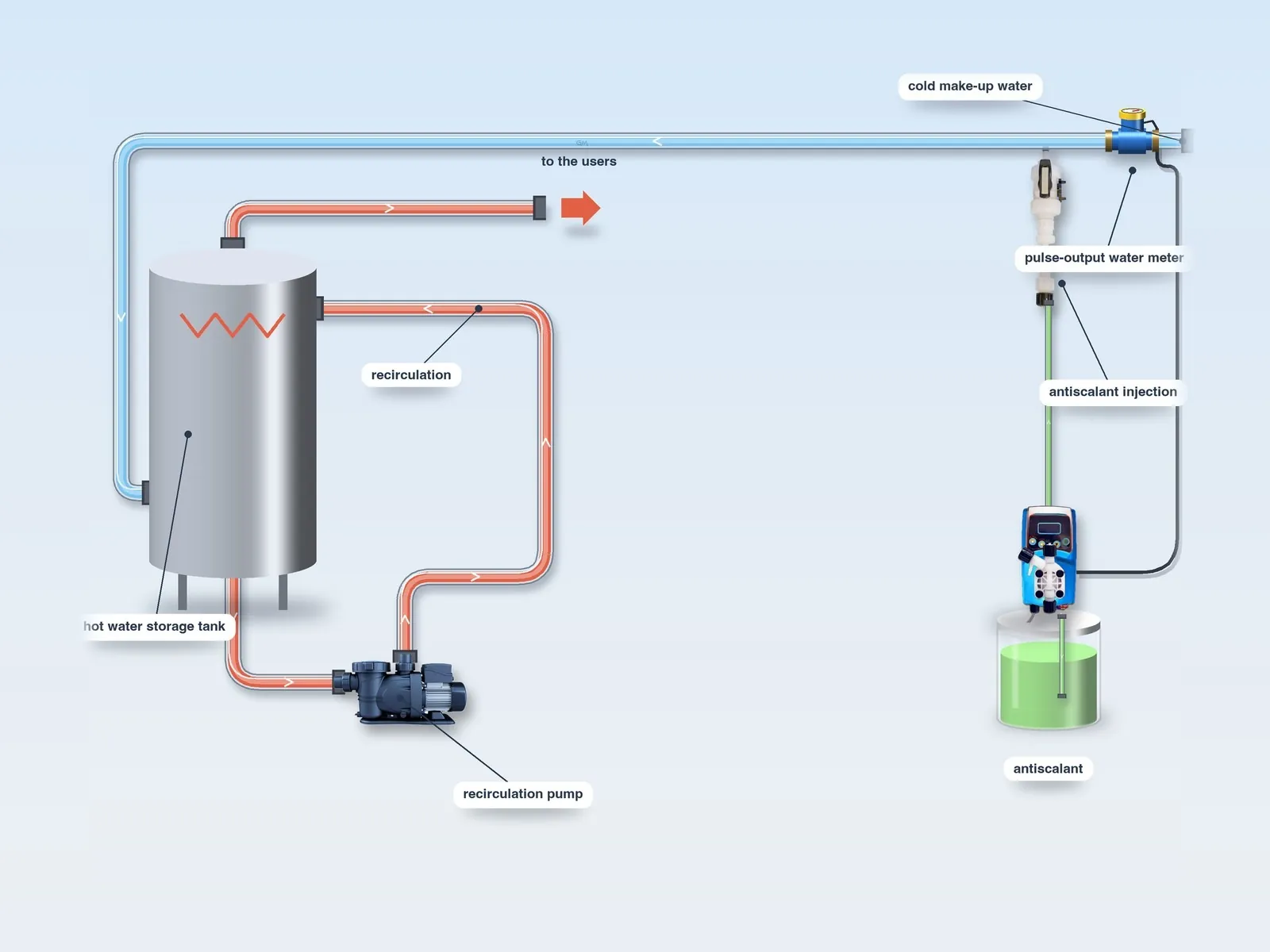
A second pump doses the antiscalant, likewise in proportion to the make-up water.
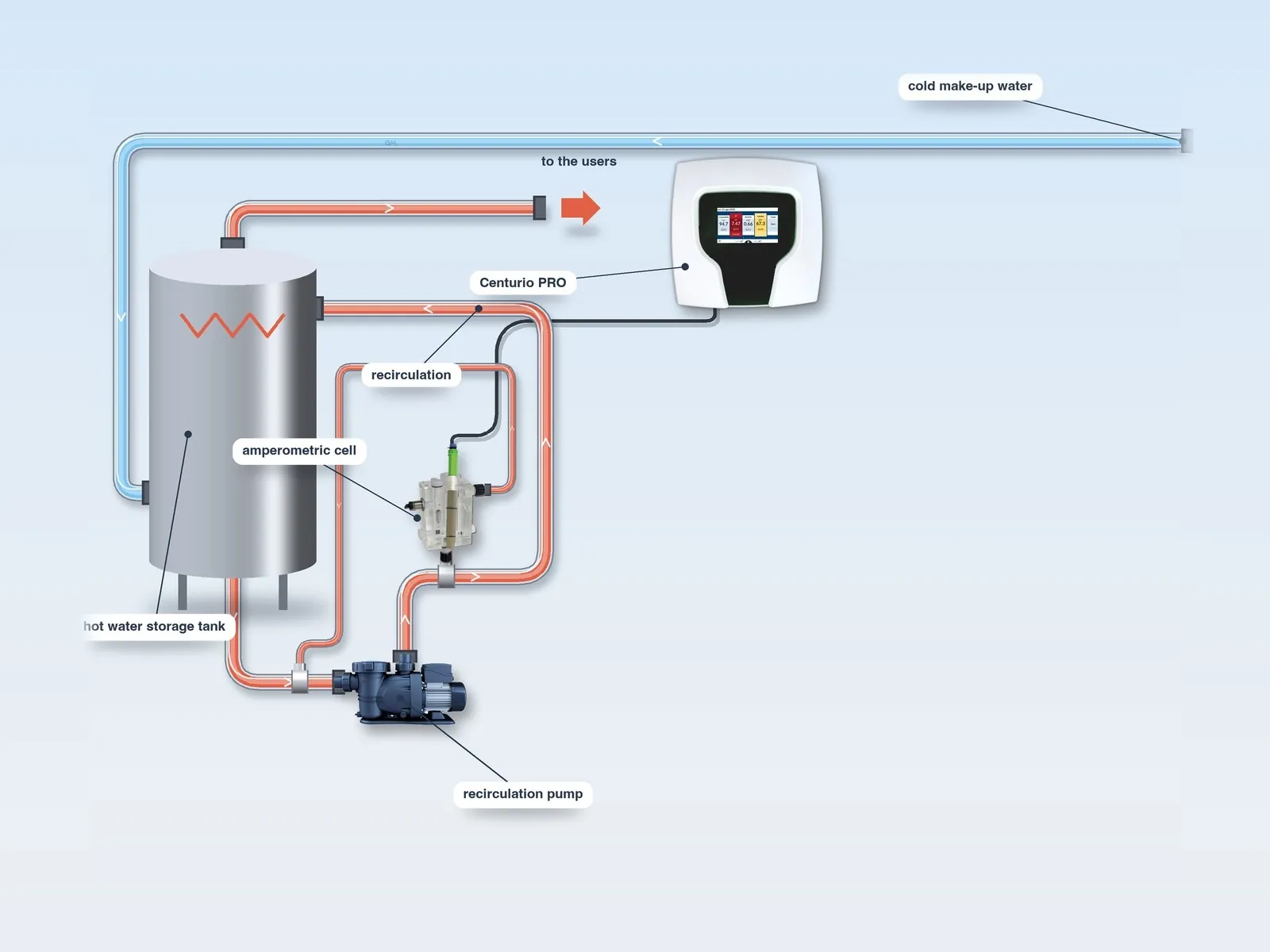
The sample taken from the delivery of the recirculation pump flows through the probe holder with the hot water cell and returns to the pump suction.
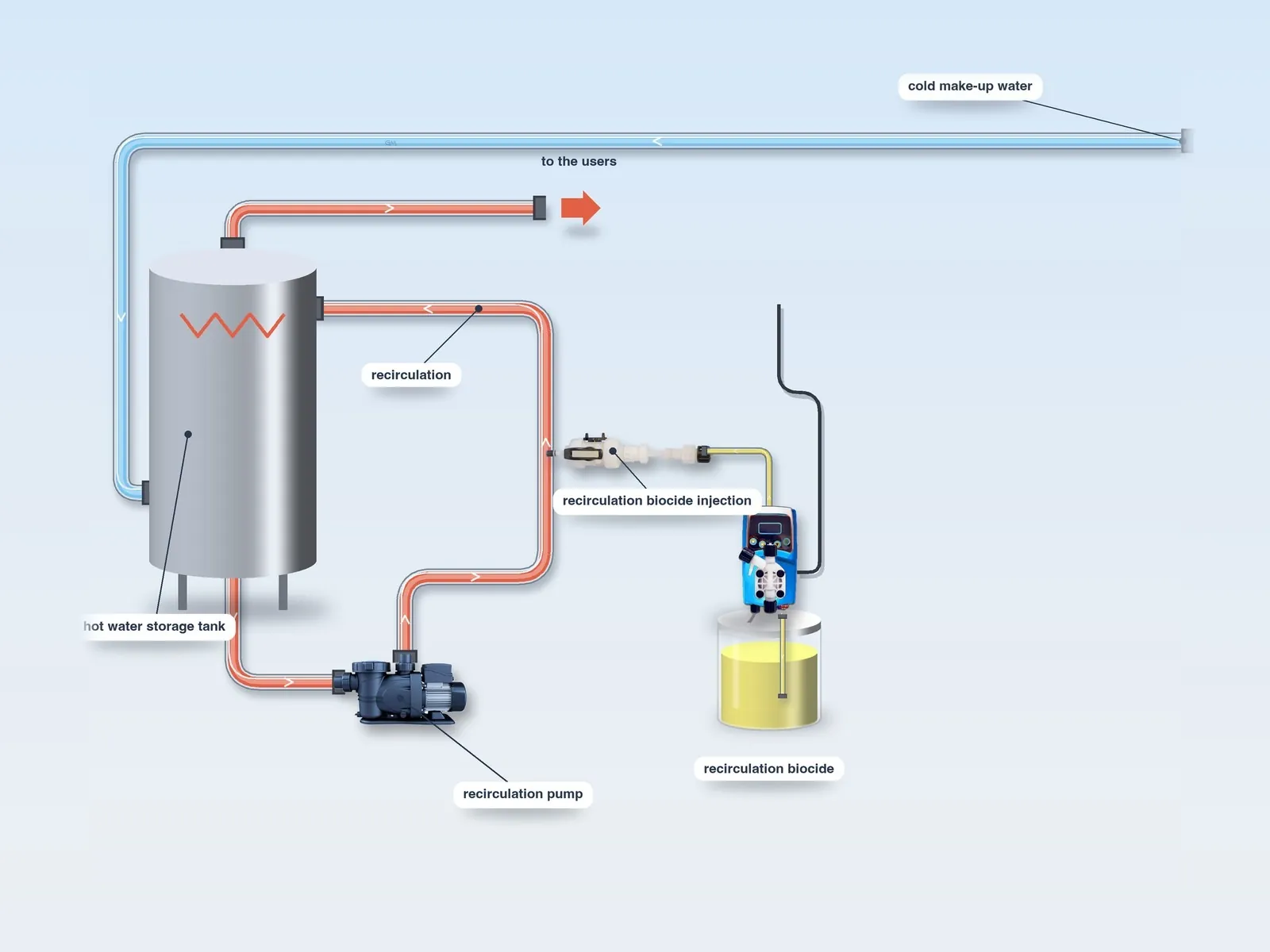
The residual control pump, driven by the cell measurement, maintains the biocide concentration in the recirculation even when no water is drawn.
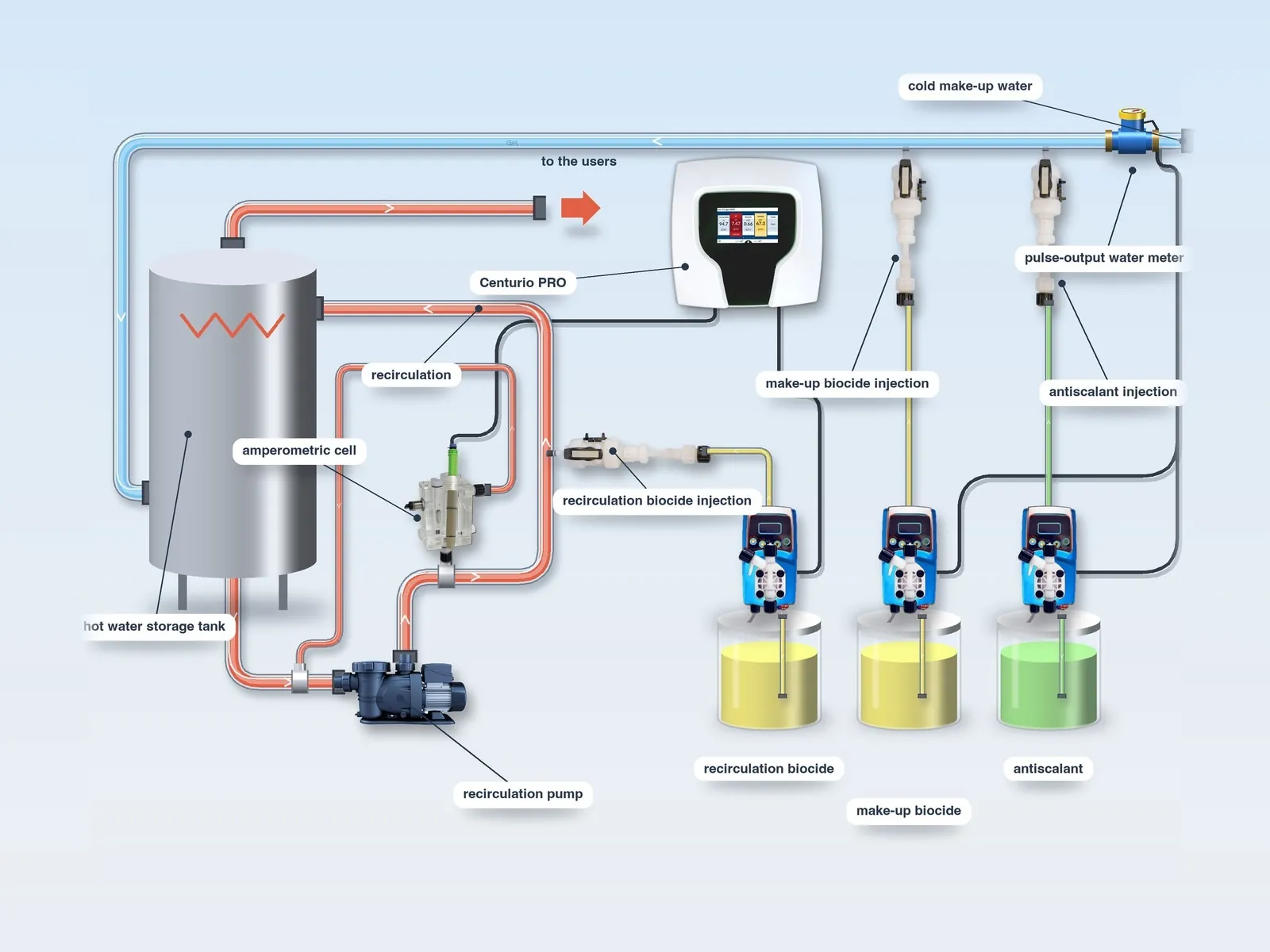
The complete domestic hot water plant with the Centurio PRO.
A single controller monitors all the parameters that determine the suitability of water for human consumption and precisely regulates the dosing of the disinfectant.
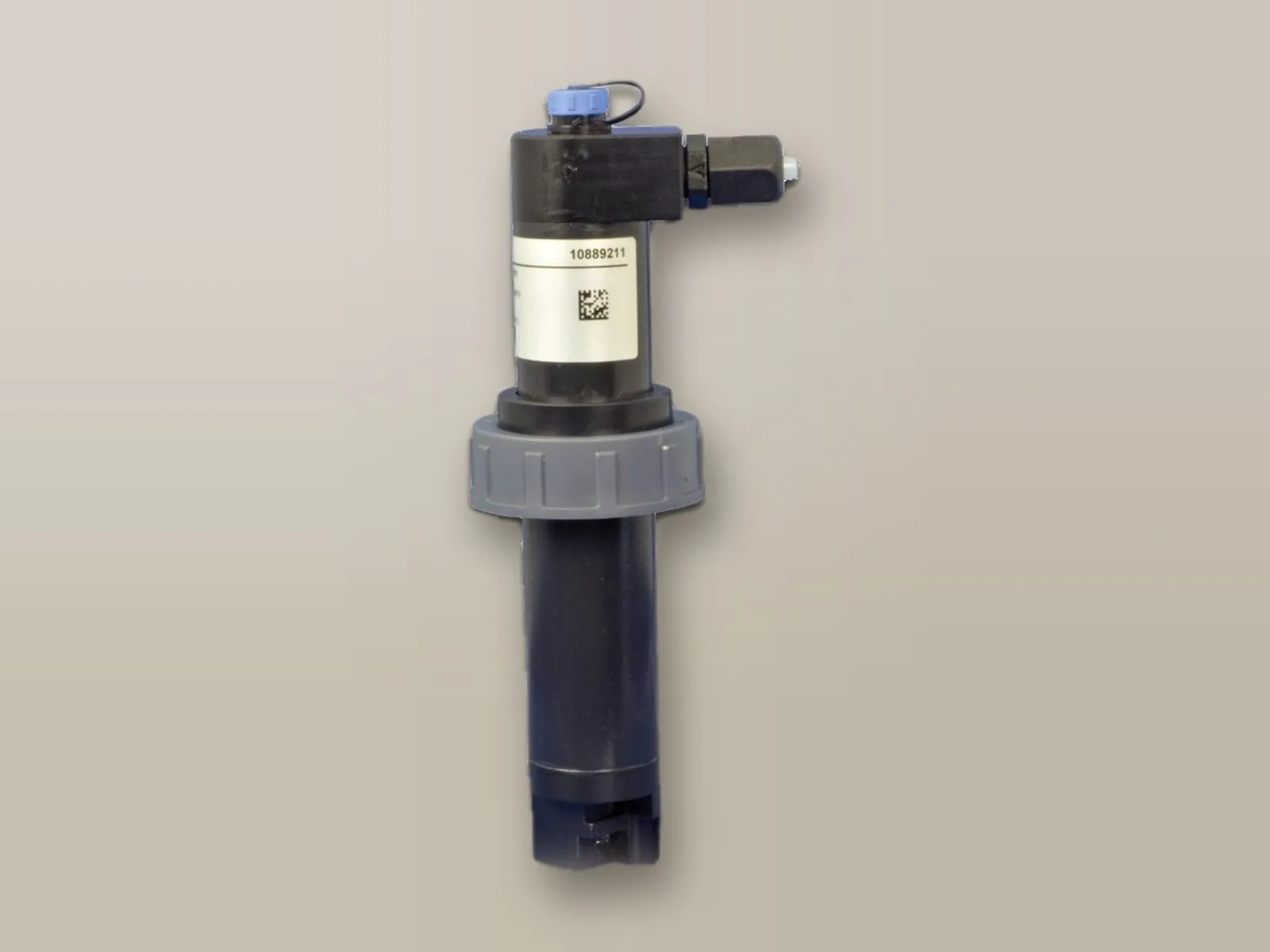
Turbidity increases with the quantity of suspended particles (clay, silt, very fine sand, bacteria, algae, plant residues). The probe emits a defined quantity of light and measures the fraction absorbed by the particles; when turbidity is too high, the event is signalled and the filling of the tank is stopped.
Turbidity probe →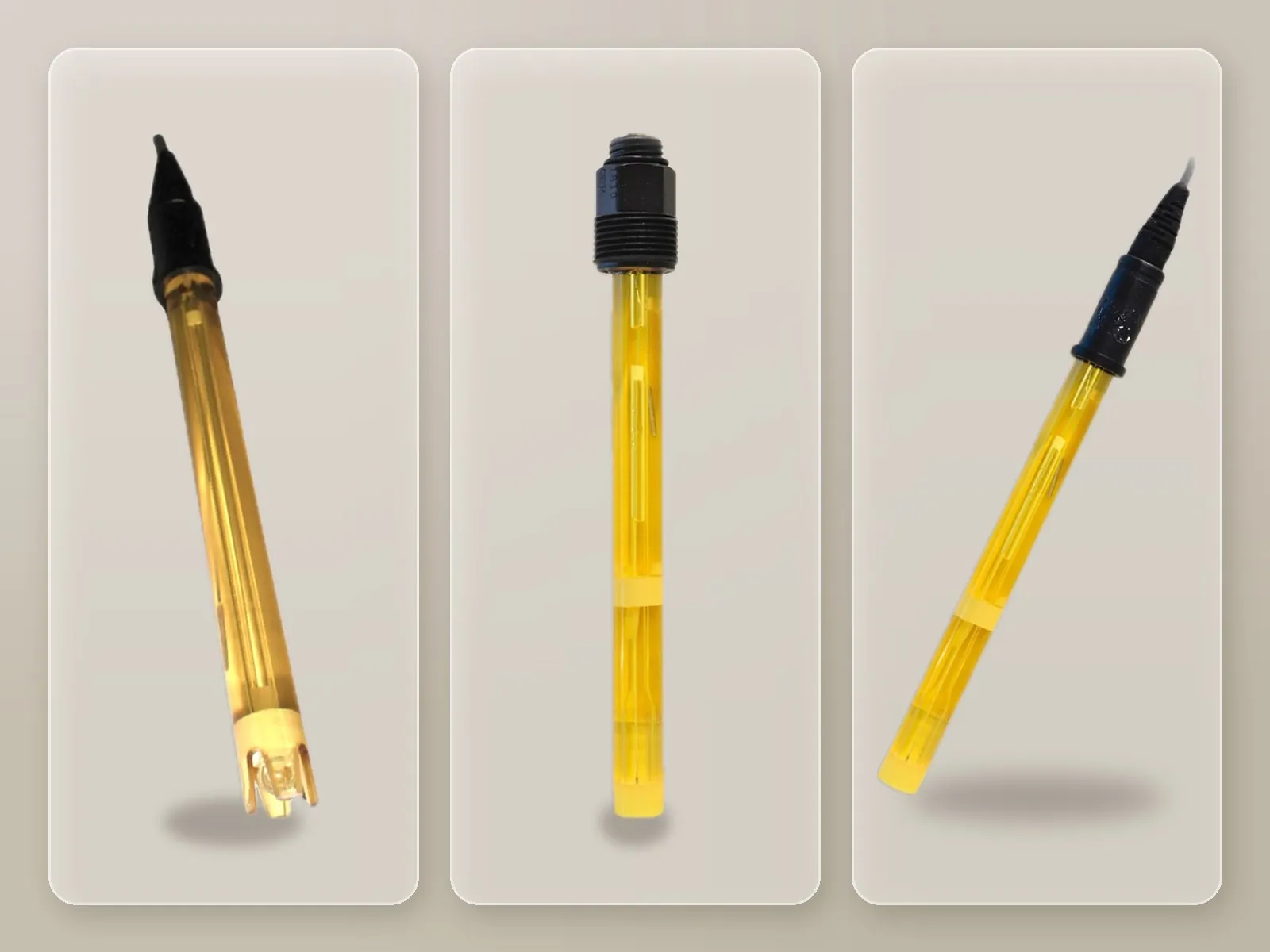
It must be kept between 6.5 and 9.5, also to optimise the effectiveness of chlorine-based disinfectants.
pH electrodes →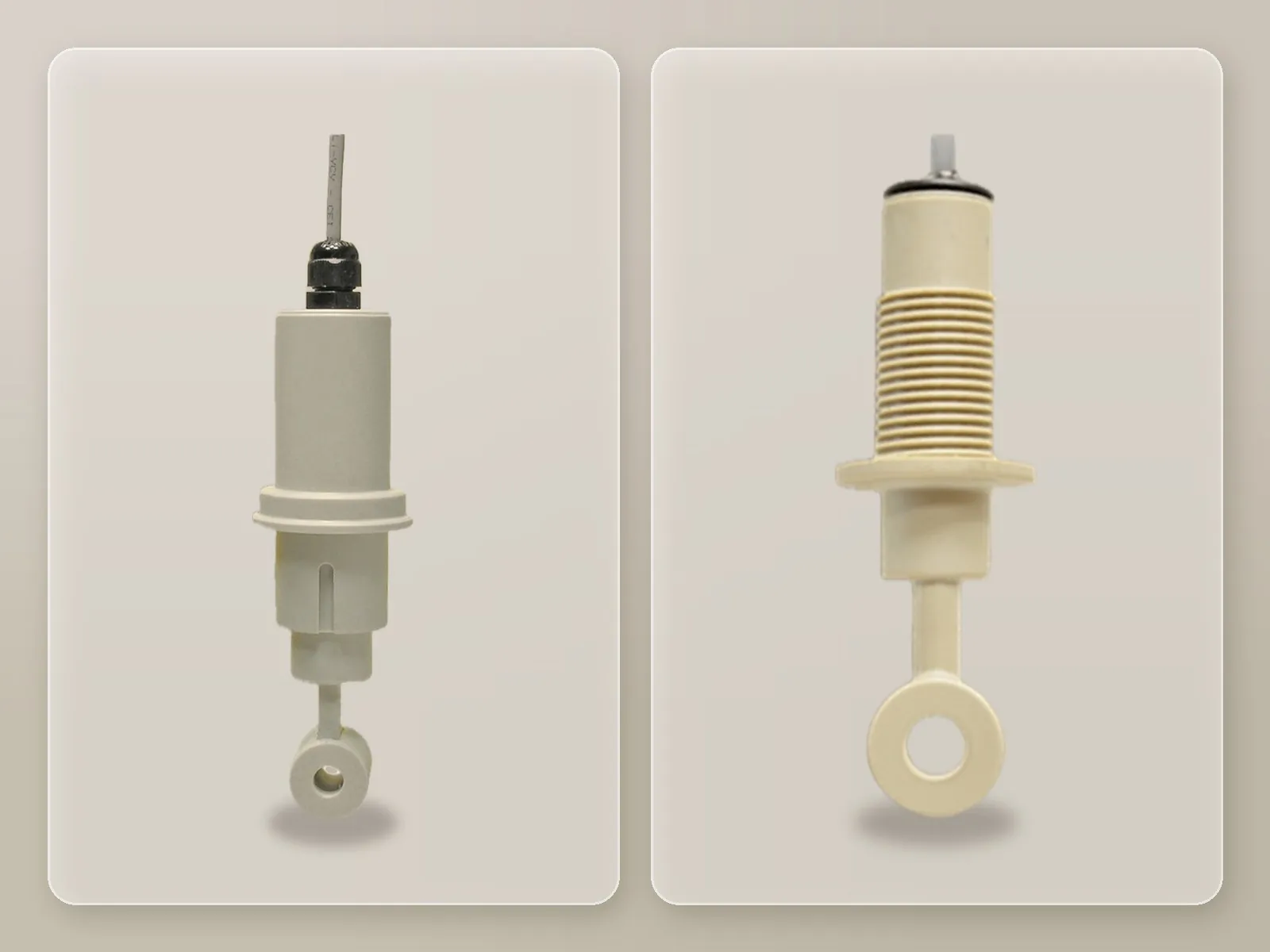
High salinity increases the tendency to form deposits (for example limescale) and the corrosiveness of the water towards the installations. For water intended for human consumption the maximum value is 2,500 µS/cm.
Inductive probe →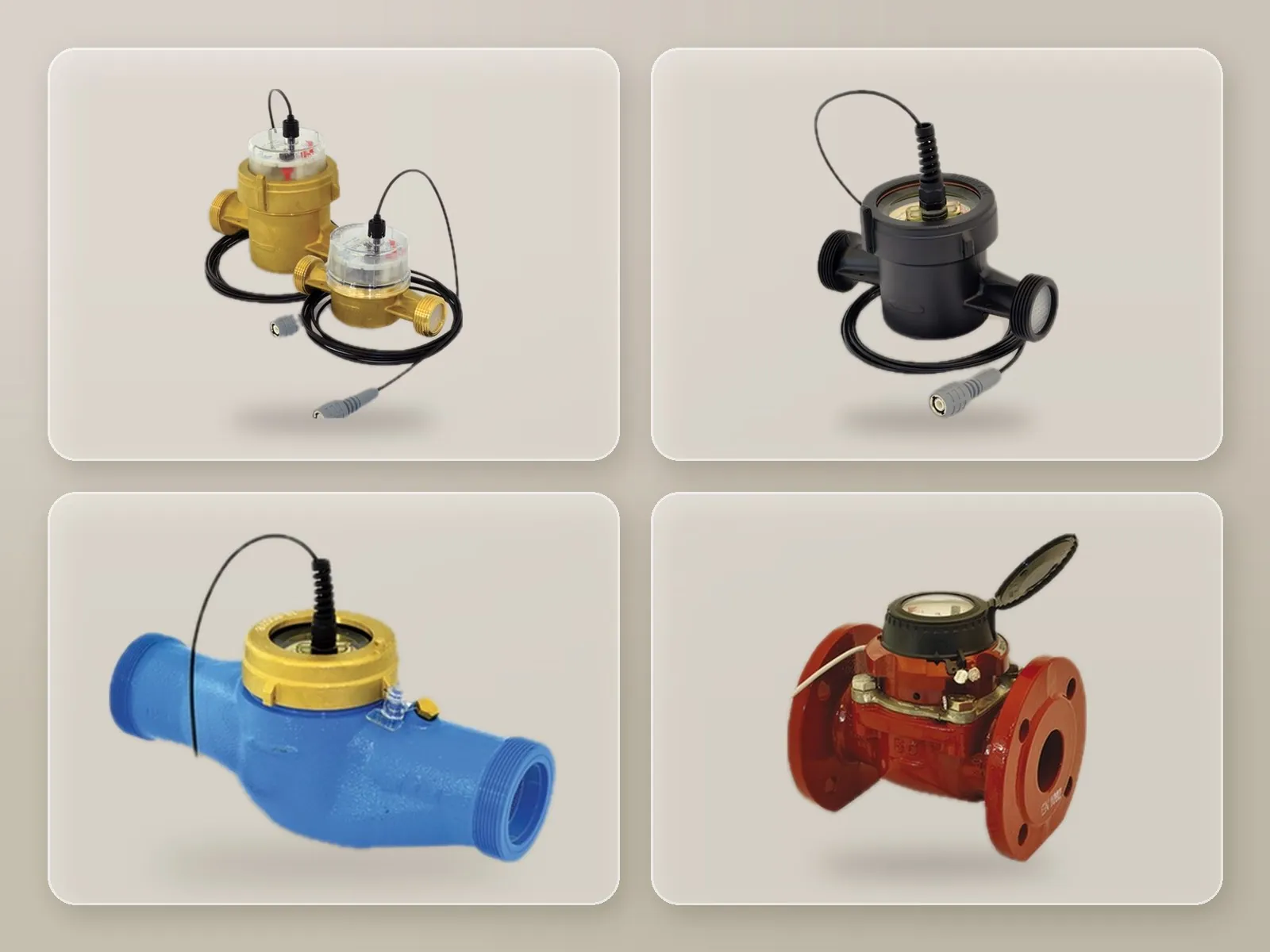
The pulse-output water meter measures the volume of water fed into the tank and allows a pre-dosing of the disinfectant, which immediately eliminates most of the bacterial load and leaves fine regulation to the probe.
Water meters →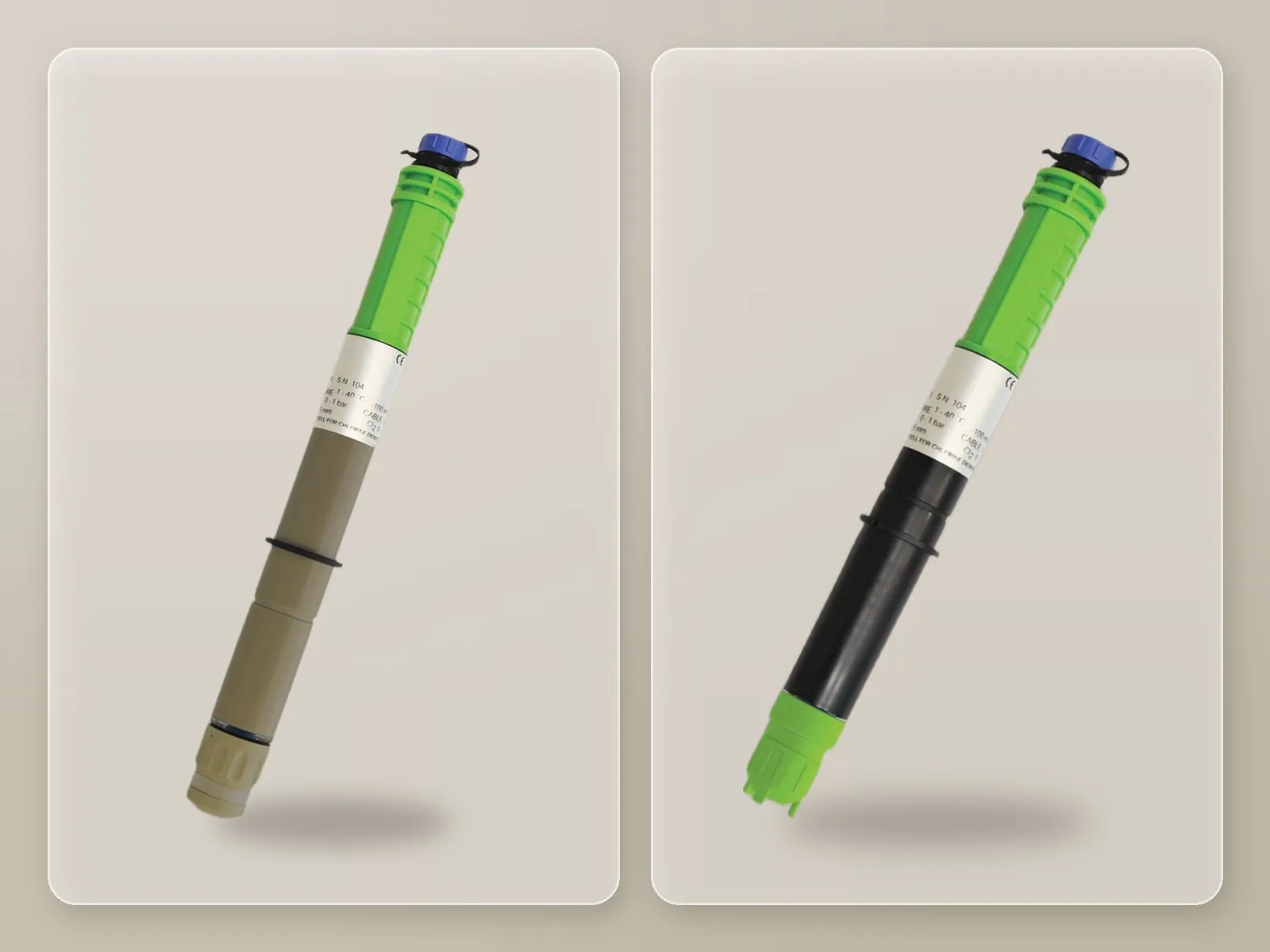
The chlorine demand increases with the bacterial load: since this varies over time, the system automatically adjusts the dosing according to the measured free chlorine.
SCL cells →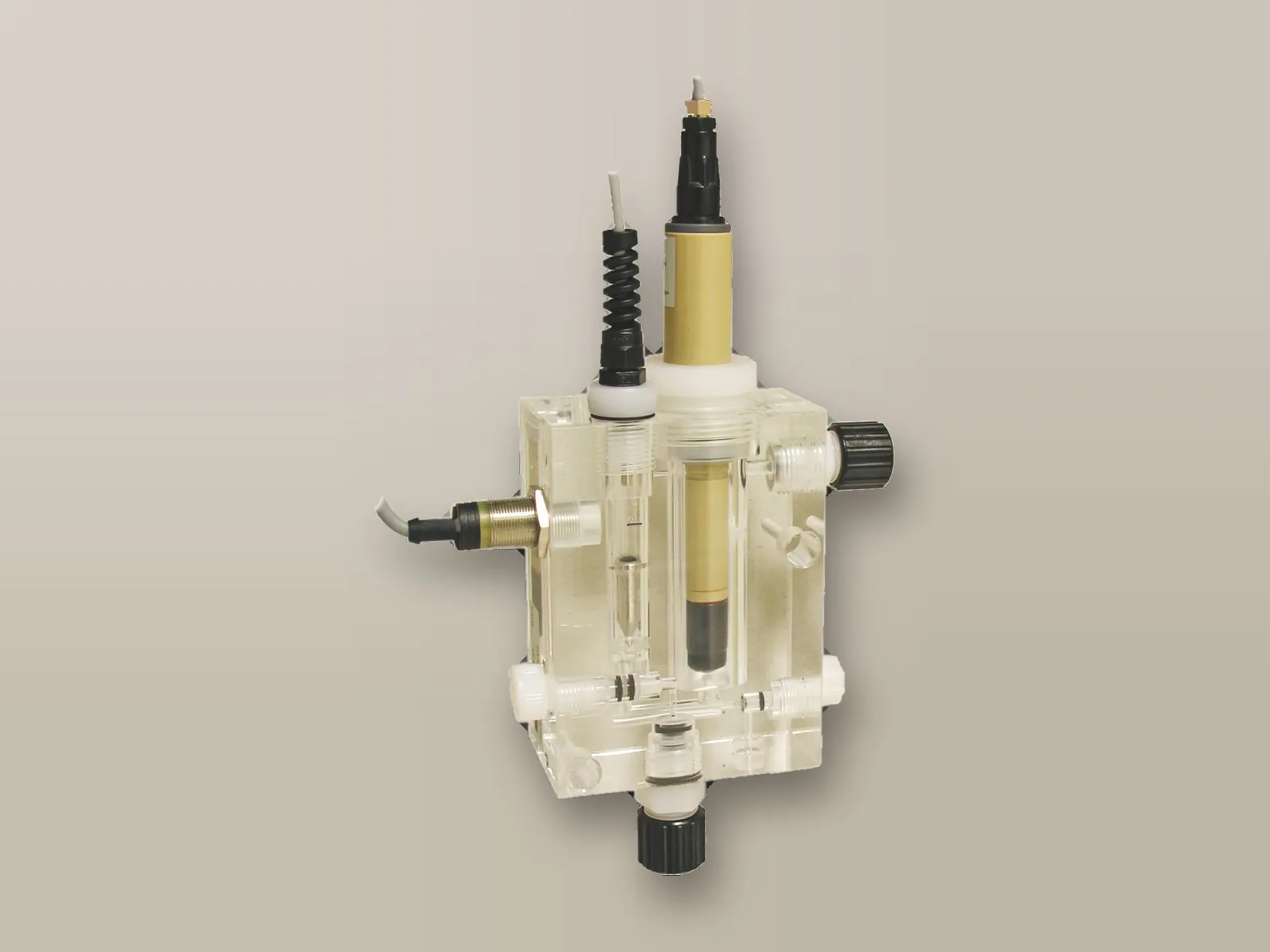
The water is sent to the probe holder by a small submersible pump or, if the height of the tank is sufficient, by the pressure of the water column.
Probe holders →Dosing proportional to the water meter immediately disinfects the incoming water; residual control maintains the disinfectant concentration even when no water is drawn, compensating for its decomposition due to temperature.
Pulse-output water meter on the cold make-up water.
The first pump doses the biocide, the second the inhibitor (polyphosphate), in proportion to the volume measured by the water meter.
The biocide probe measures the concentration in the hot water and controls the residual control pump.
Flow sensor and temperature probe on the recirculation.
Legislation, treatments and systems: anti-Legionella.
The pump frequency is reduced as the set point is approached. For example, for pH: pump at maximum frequency at 8.00 and stopped at 7.00; for chlorine: maximum frequency at 0.50 mg/l and stop at 1.00 mg/l.
With the amperometric cell on the recirculation, the flow sensor (which stops dosing when there is no circulation) and the temperature probe, it maintains the disinfectant at the set value even when no water is drawn.
With pulse-output water meters, the product concentration, the ppm to be dosed and the volume of each pump injection are set.
Two inputs for pulse-output water meters, for example on inlet and outlet: dosing according to the flow rate and measurement of water volumes.
Water meters →Six timed outputs with weekly or daily timers, for dosing or loads of any kind.
Eight alarm inputs (product levels, valve limit switches…), remote start and stop, input for the flow sensor.
Example for drinking water: the free chlorine to be maintained is set, for example 0.2 mg/l; the action of the disinfectant requires a contact time of no less than 20 minutes. The dosed chlorine is first consumed by the bacterial load: if the reading falls, for example from 0.2 to 0.15 mg/l, the pump starts; if the value continues to decrease, owing to the inflow of new or heavily contaminated water, the pump frequency increases until it reaches its maximum when the free chlorine reading is 0.0 mg/l.
Changing the probe changes the measured parameter: a single controller for all the parameters of the plant. The probes are installed in flow-through probe holders (approximately 30 l/h of sample water), in-line or immersion; the data sheets are further down.
Up to 10 freely configurable channels, 6 physical and 4 logical, in addition to temperature, which is always present.
2 ON/OFF set points, 2 proportional set points, one 0-4/20 mA current output and one temperature set point.
Thanks to the 4/20 mA inputs, third-party measuring probes can be connected, such as pressure transducers, radar level meters or other process instruments; set points and alarm thresholds can be set for each acquired value.
Closed membrane amperometric cells for cold water, or membrane-free three-electrode cells with ball self-cleaning for hot and pressurised water; resolution 0.001 mg/l.
SCL cells →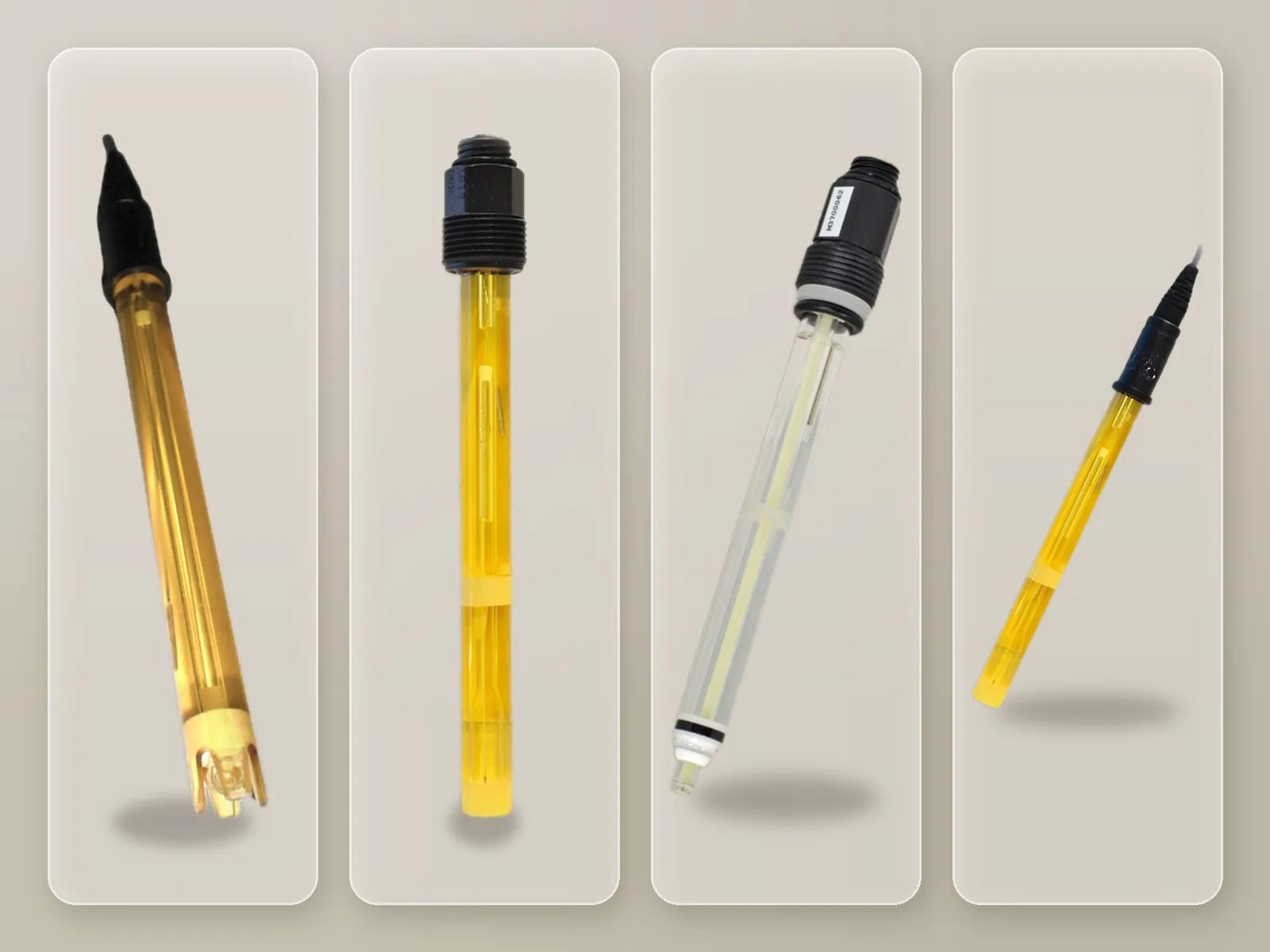
Double-junction combination probes with self-cleaning head, for immersion, in-line or by-pass installation.
Redox electrodes → Not subject to the polarisation typical of conductive probes; the PEEK body also ensures resistance to fouling.
Inductive probes → Measuring probe based on the nephelometric principle, with light scattered at 90°, PVC body and abrasion-resistant sapphire glass optics, water-jet self-cleaning; supplied already calibrated.
Turbidity probe →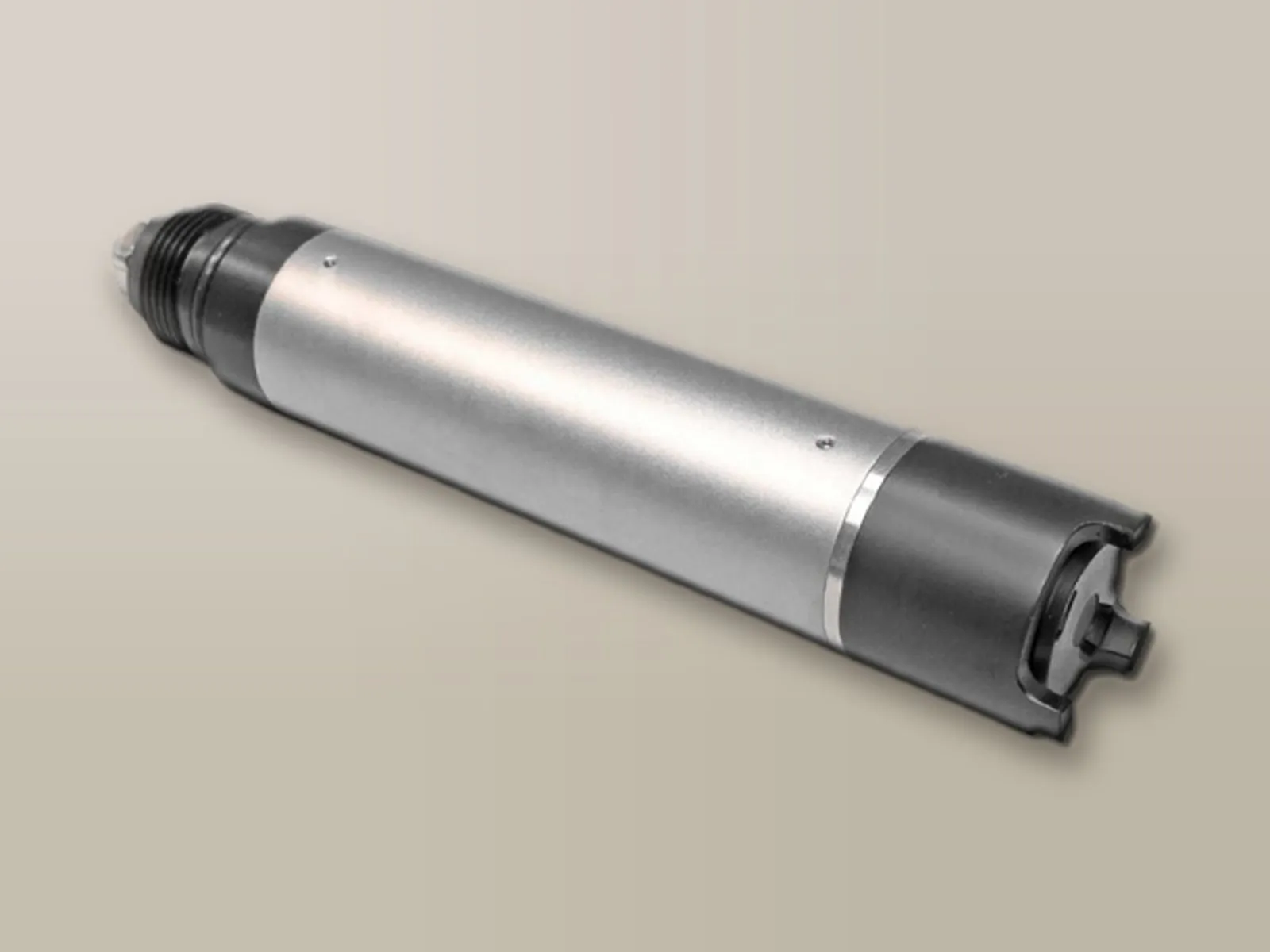
Optical fluorescence probe, measuring range 0 – 20 mg/l: detection does not consume oxygen and allows measurement even in still water, with reduced maintenance.
Oxygen probe →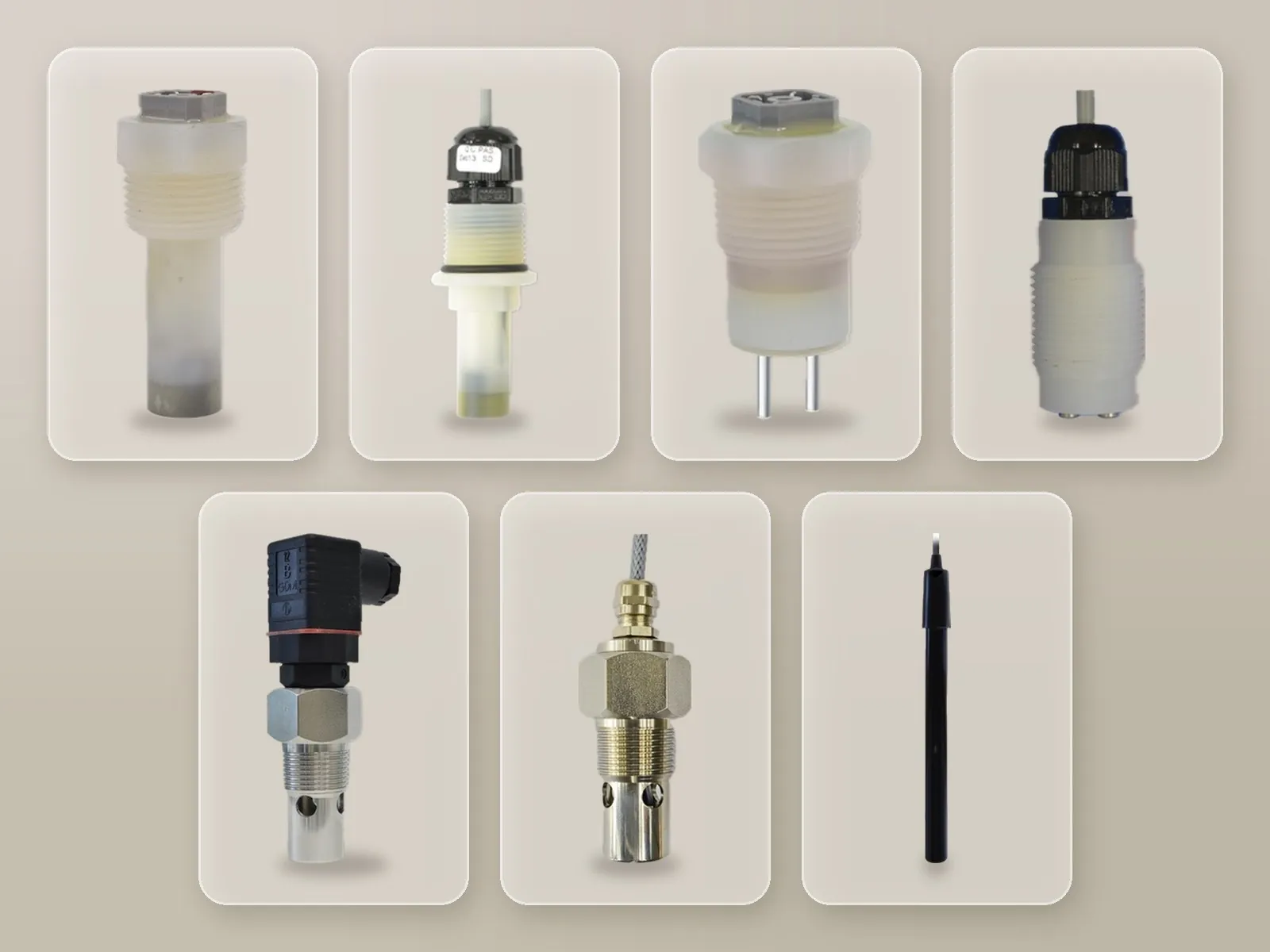
Conductive-principle probes in four series, with graphite, stainless steel or platinum electrodes and automatic temperature compensation on all models.
Conductive probes →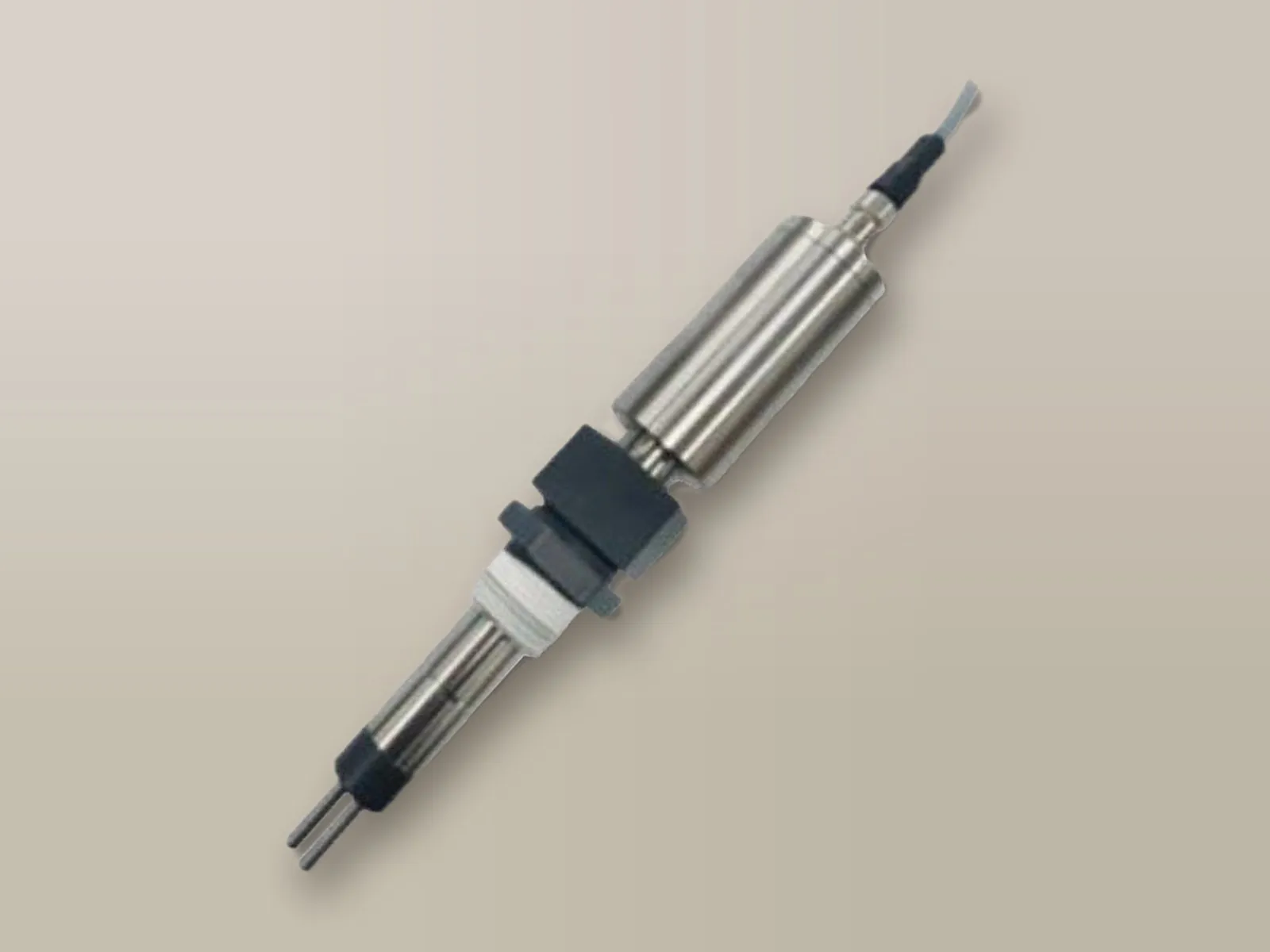
The E-CORR probe continuously measures the corrosion rate of the pipework, with recording of the values.
Corrosion probe →| Electrode | Pressure | Connection | Body | Minimum conductivity | Junction | Temperature | Cable | Diameter | Notes |
|---|---|---|---|---|---|---|---|---|---|
| EPHS | 7 bar (3.5 bar) | BNC | Epoxy | 100 µS | – | 70 °C (80 °C) | 0.8 m | 12 mm | – |
| EPHM | 7 bar (3.5 bar) | BNC | Epoxy | 100 µS | – | 70 °C (80 °C) | 4.5 m | 12 mm | – |
| EPHL | 7 bar (3.5 bar) | BNC | Epoxy | 100 µS | – | 70 °C (80 °C) | 15 m | 12 mm | – |
| EPHSN6 | 7 bar (3.5 bar) | SN6 with PG13.5 thread | Epoxy | 100 µS | – | 70 °C (80 °C) | 1 – 100 m | 12 mm | – |
| EPHMD/100 | 7 bar | BNC | Epoxy | 100 µS | Double | 100 °C | 4.5 m | 12 mm | – |
| EPHM/D | 7 bar (3.5 bar) | BNC | Epoxy | 100 µS | Double | 70 °C (80 °C) | 4.5 m | 12 mm | – |
| EPHM/D/SN6 | 7 bar (3.5 bar) | SN6 with PG13.5 thread | Epoxy | 100 µS | Double | 70 °C (80 °C) | 1 – 100 m | 12 mm | – |
| EPHMD/LI | 7 bar (3.5 bar) | SN6 with PG13.5 thread | Epoxy | 3 µS | Double | 70 °C (80 °C) | 1 – 100 m | 12 mm | For low-conductivity water |
| EPHSC | 7 bar (3.5 bar) | BNC | Epoxy | 100 µS | Double | 70 °C (80 °C) | 4.5 m | 12 mm | Self-cleaning |
| EPHSC/SN6 | 7 bar (3.5 bar) | SN6 with PG13.5 thread | Epoxy | 100 µS | Double | 70 °C (80 °C) | 1 – 100 m | 12 mm | Self-cleaning |
| EPHM/HF | 7 bar (3.5 bar) | BNC | Epoxy | 100 µS | Double | 70 °C (80 °C) | 4.5 m | 12 mm | Resistant to 1% hydrofluoric acid |
| EPHSN6 GK | 10 bar | SN6 | Glass | 150 µS | – | −5 / 135 °C | 1 – 100 m | 12 mm | High temperature |
All models: combination electrode, range 0 – 14 pH, resolution 0.01.
| Electrode | Range | Pressure | Connection | Body | Minimum conductivity | Junction | Temperature | Cable | Diameter | Notes |
|---|---|---|---|---|---|---|---|---|---|---|
| ERhS | ± 1,000 mV | 7 bar (3.5 bar) | BNC | Epoxy | 100 µS | – | 70 °C (80 °C) | 0.8 m | 12 mm | – |
| ERhM | ± 1,000 mV | 7 bar (3.5 bar) | BNC | Epoxy | 100 µS | – | 70 °C (80 °C) | 4.5 m | 12 mm | – |
| ERhL | ± 1,000 mV | 7 bar (3.5 bar) | BNC | Epoxy | 100 µS | – | 70 °C (80 °C) | 15 m | 12 mm | – |
| ERhHLB SN6 | ± 1,500 mV | 6 bar | SN6 with PG13.5 thread | Glass | 100 µS | – | 80 °C | 10 m | 12 mm | High linearity and sensitivity, for low chlorine concentrations |
| ERhSN6 | ± 1,000 mV | 7 bar | SN6 with PG13.5 thread | Epoxy | 100 µS | – | 100 °C | 1 – 100 m | 12 mm | – |
| ERhMD/100 | ± 1,000 mV | 7 bar | BNC | Epoxy | 100 µS | Double | 100 °C | 4.5 m | 12 mm | – |
| ERhM/D | ± 1,000 mV | 7 bar (3.5 bar) | BNC | Epoxy | 100 µS | Double | 70 °C (80 °C) | 4.5 m | 12 mm | – |
| ERhSC | ± 1,000 mV | 7 bar (3.5 bar) | BNC | Epoxy | 100 µS | Double | 70 °C (80 °C) | 4.5 m | 12 mm | Self-cleaning |
| ERhSC/SN6 | ± 1,000 mV | 7 bar (3.5 bar) | SN6 with PG13.5 thread | Epoxy | 100 µS | Double | 70 °C (80 °C) | 1 – 100 m | 12 mm | Self-cleaning |
All models: combination electrode, resolution 1 mV.
PVDF body, graphite electrodes.
| Model | Mounting | Connection | Range | K factor | Temperature compensation |
|---|---|---|---|---|---|
| ECDC/1 | In-line / by-pass | R3/4" | 0 – 20 mS | 1 | – |
| ECDCC/1 | In-line / by-pass | R3/4" | 0 – 20 mS | 1 | NTC 10K |
| ECDCCPT/1 | In-line / by-pass | R3/4" | 0 – 20 mS | 1 | PT100 |
| ECDC/10 | In-line / by-pass | R3/4" | 0 – 200 mS | 10 | – |
| ECDCC/10 | In-line / by-pass | R3/4" | 0 – 200 mS | 10 | NTC 10K |
| ECDCCPT/10 | In-line / by-pass | R3/4" | 0 – 200 mS | 10 | PT100 |
| ECDCIM/1 | Immersion | G1/2" | 0 – 20 mS | 1 | – |
| ECDCCIM/1 | Immersion | G1/2" | 0 – 20 mS | 1 | NTC 10K |
| ECDCCIMPT/1 | Immersion | G1/2" | 0 – 20 mS | 1 | PT100 |
| ECDCIM/10 | Immersion | G1/2" | 0 – 200 mS | 10 | – |
| ECDCCIM/10 | Immersion | G1/2" | 0 – 200 mS | 10 | NTC 10K |
| ECDCCIMPT/10 | Immersion | G1/2" | 0 – 200 mS | 10 | PT100 |
Operating temperature 1 – 60 °C (100 °C at 2 bar), operating pressure 7 bar (2 bar at 100 °C).
PVDF body, stainless steel electrodes.
| Model | Mounting | Connection | Range | K factor | Temperature compensation |
|---|---|---|---|---|---|
| ECDI/1 | In-line / by-pass | R3/4" | 0 – 5 mS | 1 | – |
| ECDIC/1 | In-line / by-pass | R3/4" | 0 – 5 mS | 1 | NTC 10K |
| ECDICPT/1 | In-line / by-pass | R3/4" | 0 – 5 mS | 1 | PT100 |
| ECDI/01 | In-line / by-pass | R3/4" | 0 – 200 µS | 0.1 | – |
| ECDIC/01 | In-line / by-pass | R3/4" | 0 – 200 µS | 0.1 | NTC 10K |
| ECDICPT/01 | In-line / by-pass | R3/4" | 0 – 200 µS | 0.1 | PT100 |
| ECDIIM/1 | Immersion | G1/2" | 0 – 5 mS | 1 | – |
| ECDICIM/1 | Immersion | G1/2" | 0 – 5 mS | 1 | NTC 10K |
| ECDICPTIM/1 | Immersion | G1/2" | 0 – 5 mS | 1 | PT100 |
| ECDIIM/01 | Immersion | G1/2" | 0 – 200 µS | 0.1 | – |
| ECDIIM/02 | Immersion | G1/2" | 0 – 500 µS | 0.2 | – |
| ECDICIM/01 | Immersion | G1/2" | 0 – 200 µS | 0.1 | NTC 10K |
| ECDICPTIM/01 | Immersion | G1/2" | 0 – 200 µS | 0.1 | PT100 |
Operating temperature 1 – 60 °C (100 °C at 2 bar), operating pressure 7 bar (2 bar at 100 °C).
Epoxy body, platinum electrodes, diameter 12 mm.
| Model | Mounting | Range | K factor | Temperature compensation |
|---|---|---|---|---|
| ECDHL/1 | In-line / by-pass | 0.2 – 20 mS | 1 | – |
| ECDHLC/1 | In-line / by-pass | 0.2 – 20 mS | 1 | NTC 10K |
| ECDHLCPT/1 | In-line / by-pass | 0.2 – 20 mS | 1 | PT100 |
| ECDHL/01 | In-line / by-pass | 0 – 200 µS | 0.1 | – |
| ECDHLC/01 | In-line / by-pass | 0 – 200 µS | 0.1 | NTC 10K |
| ECDHLCPT/01 | In-line / by-pass | 0 – 200 µS | 0.1 | PT100 |
| ECDHL/10 | In-line / by-pass | 20 – 200 mS | 10 | – |
| ECDHLC/10 | In-line / by-pass | 20 – 200 mS | 10 | NTC 10K |
| ECDHLCPT/10 | In-line / by-pass | 20 – 200 mS | 10 | PT100 |
Operating temperature 1 – 70 °C, operating pressure 7 bar.
Stainless steel body and electrodes, R3/4" connection, in-line or by-pass mounting.
| Model | Range | K factor | Temperature compensation | Operating temperature |
|---|---|---|---|---|
| EICDC/1 | 0 – 20 mS | 1 | NTC 10K | 1 – 130 °C |
| EICDCPT/1 | 0 – 20 mS | 1 | PT100 | 1 – 130 °C |
| EICDC/01 | 0 – 200 µS | 0.1 | NTC 10K | 1 – 130 °C |
| EICDCPT/01 | 0 – 200 µS | 0.1 | PT100 | 1 – 130 °C |
| EICDC/001 | 0 – 20 µS | 0.01 | NTC 10K | 1 – 130 °C |
| EICDCPT/001 | 0 – 20 µS | 0.01 | PT100 | 1 – 130 °C |
| EICDCHPT/1 | 0 – 20 mS | 1 | PT100 | 1 – 200 °C |
| EICDCHPT/01 | 0 – 200 µS | 0.1 | PT100 | 1 – 200 °C |
| EICDCHPT/001 | 0 – 20 µS | 0.01 | PT100 | 1 – 200 °C |
Operating pressure 15 bar.
| ECDINDPT | ECDSINDPT | |
|---|---|---|
| Measuring range | 0.3 – 3 mS 0.3 – 30 mS 0.3 – 300 mS | 0.3 – 10 mS |
| Measuring system | Inductive | Inductive |
| Body | PEEK | PEEK |
| Mounting | In-line / by-pass / immersion | In-line / by-pass / immersion |
| Temperature compensation | PT100 | PT100 |
| Operating temperature | 1 – 85 °C (100 °C for temporary measurement) | 1 – 85 °C (100 °C for temporary measurement) |
| Operating pressure | 8 bar | 8 bar |
| SCL3N/0.5 | SCL3N/2 | SCL3N/20 | SCL18/0.5 | SCL18/2 | SCL18/20 | SCL3S/20 | |
|---|---|---|---|---|---|---|---|
| Measuring range | 0 – 0.5 mg/l | 0 – 2 mg/l | 0 – 20 mg/l | 0 – 0.5 mg/l | 0 – 2 mg/l | 0 – 20 mg/l | 0 – 20 mg/l |
| Resolution | 0.001 | 0.001 | 0.01 | 0.001 | 0.001 | 0.01 | 0.01 |
| Free chlorine | Inorganic | Inorganic | Inorganic | Inorganic | Inorganic | Inorganic | Organic and inorganic |
| Water | Fresh | Fresh | Fresh | Fresh | Fresh | Fresh | Fresh or salt |
| Electrodes | 2 | 2 | 2 | 3 | 3 | 3 | 2 |
| Selective membrane | Yes | Yes | Yes | No | No | No | Yes |
| Automatic compensation | pH and temperature | pH and temperature | pH and temperature | pH and temperature | pH and temperature | pH and temperature | Temperature |
| Self-cleaning | – | – | – | Yes | Yes | Yes | – |
| Operating pH | 5 – 9.5 | 5 – 9.5 | 5 – 9.5 | 5 – 9 | 5 – 9 | 5 – 9 | 5.5 – 9.5 |
| Operating temperature | 1 – 40 °C | 1 – 40 °C | 1 – 40 °C | 5 – 70 °C | 5 – 70 °C | 5 – 70 °C | 5 – 45 °C |
| Operating pressure | 1 bar | 1 bar | 1 bar | 8 bar | 8 bar | 8 bar | 1 bar |
| Water flow | 30 l/h | 30 l/h | 30 l/h | 40 l/h | 40 l/h | 40 l/h | 30 l/h |
| SCL2/0.5 | SCL2/2 | SCL2/20 | SCL17/0.5 | SCL17/2 | SCL17/20 | |
|---|---|---|---|---|---|---|
| Measuring range | 0 – 0.5 mg/l | 0 – 2 mg/l | 0 – 20 mg/l | 0 – 0.5 mg/l | 0 – 2 mg/l | 0 – 20 mg/l |
| Resolution | 0.001 | 0.001 | 0.01 | 0.001 | 0.001 | 0.01 |
| Electrodes | 2 | 2 | 2 | 3 | 3 | 3 |
| Selective membrane | Yes | Yes | Yes | No | No | No |
| Self-cleaning | – | – | – | Yes | Yes | Yes |
| Operating pH | 1 – 6 | 1 – 6 | 1 – 6 | 5 – 9 | 5 – 9 | 5 – 9 |
| Operating temperature | 1 – 40 °C | 1 – 40 °C | 1 – 40 °C | 5 – 70 °C | 5 – 70 °C | 5 – 70 °C |
| Operating pressure | 1 bar | 1 bar | 1 bar | 8 bar | 8 bar | 8 bar |
| Water flow | 30 l/h | 30 l/h | 30 l/h | 40 l/h | 40 l/h | 40 l/h |
Automatic temperature compensation on all models.
| SCL8/2 | SCL8/20 | SBR/20 | SCL9 | SCL11/200 | SCL11/2000 | SCL10 | SCT | |
|---|---|---|---|---|---|---|---|---|
| Measurement | Total chlorine | Total chlorine | Bromine | Hydrogen peroxide | Peracetic acid | Peracetic acid | Ozone | Chlorites |
| Measuring range | 0 – 2 mg/l | 0 – 20 mg/l | 0 – 20 mg/l | 0 – 200 mg/l | 0 – 200 mg/l | 0 – 2,000 mg/l | 0 – 20 mg/l | 0 – 2 mg/l |
| Resolution | 0.001 | 0.01 | 0.01 | 0.1 | 0.1 | 1 | 0.01 | 0.001 |
| Operating pH | 4 – 12 | 4 – 12 | 6.5 – 9.5 | 1 – 11 | 1 – 6 | 1 – 6 | 2 – 11 | 5.5 – 9.5 |
| Operating pressure | 1 bar | 1 bar | 0.5 bar | 1 bar | 1 bar | 1 bar | 1 bar | 1 bar |
All models: 2 electrodes, selective membrane, automatic temperature compensation, operating temperature 1 – 40 °C, water flow 30 l/h.
| ECL6 | ECL6/E | ECL7 | ECL12 | ECL12/E | ECL20 | ECL21 | |
|---|---|---|---|---|---|---|---|
| Water | Fresh | Fresh | Fresh | Sea | Sea | Fresh | Sea |
| Flow stabiliser | Yes | Yes | Yes | Yes | Yes | – | – |
| Flow sensor and regulation | Yes | Yes | Yes | Yes | Yes | – | – |
| Probe holder for | Temperature, pH, Redox | Temperature | Temperature, pH, Redox (PG13.5) | Temperature, pH, Redox | Temperature | – | – |
All models: amperometric system, range 0 – 10 mg/l, resolution 0.01, organic and inorganic free chlorine, operating temperature 1 – 40 °C, pressure 0.4 – 5 bar, water flow 40 l/h.
| ETORB2 | |
|---|---|
| Measuring range | 0/40 NTU – 0/400 NTU – 0/4,000 NTU |
| Measurement error | ± 5% of reading |
| Measuring system | NIR scattered light at 90°, nephelometric principle |
| Body | PVC |
| Optical window | Sapphire glass |
| Automatic compensation | Temperature |
| Self-cleaning | Yes (water jet, max 1 bar) |
| Operating temperature | 0 – 40 °C |
| Operating pressure | 2 bar |
| EOLUM | |
|---|---|
| Measuring range | 0 – 20 mg/l |
| Resolution | 0.01 |
| Measuring system | Fluorescence |
| Automatic compensation | Temperature and pressure |
| Operating temperature | −5 / +50 °C |
| Operating pressure | 10 bar |
| Body | Stainless steel |
| ETRC2 | |
|---|---|
| Measuring range | 0 – 300 ppb of PTSA |
| Error | ± 1 ppb or 5% of reading |
| Sensitivity | 1 ppb |
| Linearity | 0.99 r² |
| Signal source | LED |
| Detection | Photodiode |
| Response time | 5 seconds |
| Sample pressure | 100 psi (approx. 7 bar) |
| Sample temperature | 4 – 40 °C |
| Ambient temperature | 4 – 49 °C |
| Output | 4-20 mA and RS-485 Modbus RTU |
| Power supply | 24 VDC (± 2 V), 65 mA |
| Body | PVC |
| E-CORR COLD | E-CORR HOT | |
|---|---|---|
| General corrosion | 0.001 – 10 MPY | 0.001 – 995 MPY |
| Localised corrosion | index 0 – 100 | index 0 – 100 |
| Resolution | 0.001 MPY | 0.001 MPY or 1% of reading |
| Conductivity compensation | 10 – 10,000 µS/cm | 10 – 50,000 µS/cm |
| Reading interval | 1, 2, 5 or 20 min | 3 – 1,440 min |
| Alloy factor | 0 – 3 | 0 – 3 |
| Operating temperature | −10 / +50 °C | −10 / +240 °C |
| Operating pressure | 7 bar | 34.5 bar |
| Power supply | 24 VDC, 2 W | 24 VDC, 2 W |
| Outputs | 2 × 4/20 mA (general and localised), RS485 | 2 × 4/20 mA (general and localised), RS485 Modbus |
| Installation | In-line, NPT threaded connection | In-line, 3/4" NPT or BSP connection |
| Body | AISI 304 | Titanium and PEEK |
| Dimensions | 281.5 mm, Ø 23 / 43 mm | 280 mm, Ø 52 mm |
| Weight | 687 g | 1,150 g |
| Cable | 1.5 m, extensions available | 1.5 m, extensions available |
| Protection | IP65 | IP68 |
| ETENTC | ETEPT | |
|---|---|---|
| Measuring range | 0 – 100 °C | 0 – 100 °C |
| Resolution | 0.1 | 0.1 |
| Sensor | NTC 10 kΩ | PT100 |
| Pressure | 10 bar | 10 bar |
| Body | PVDF | PVDF |
| Thread | 1/2" | 1/2" |
Controller, pumps, probe holder and accessories are supplied pre-assembled on a panel, in a box or on a skid, with configurable dimensions.
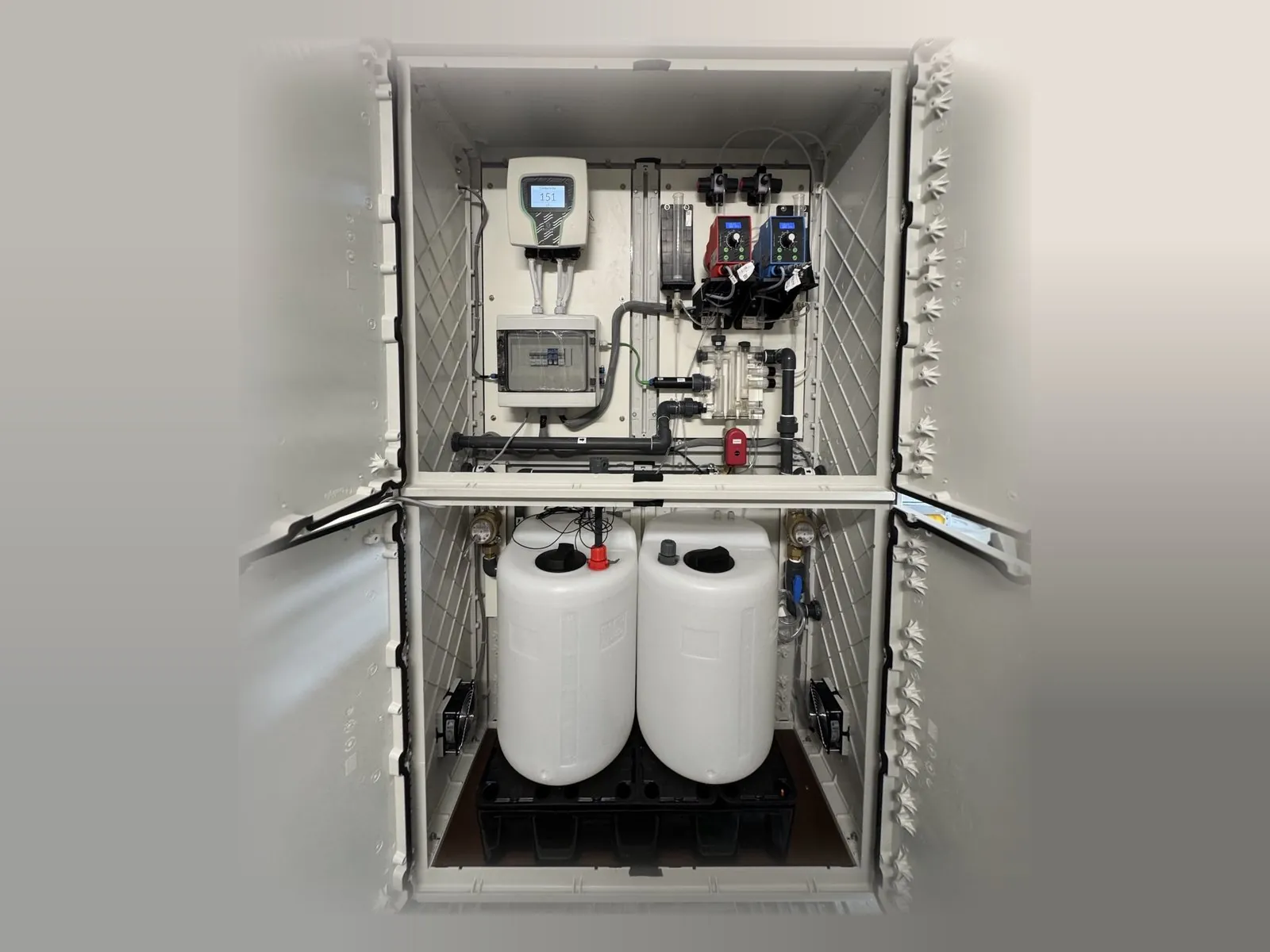
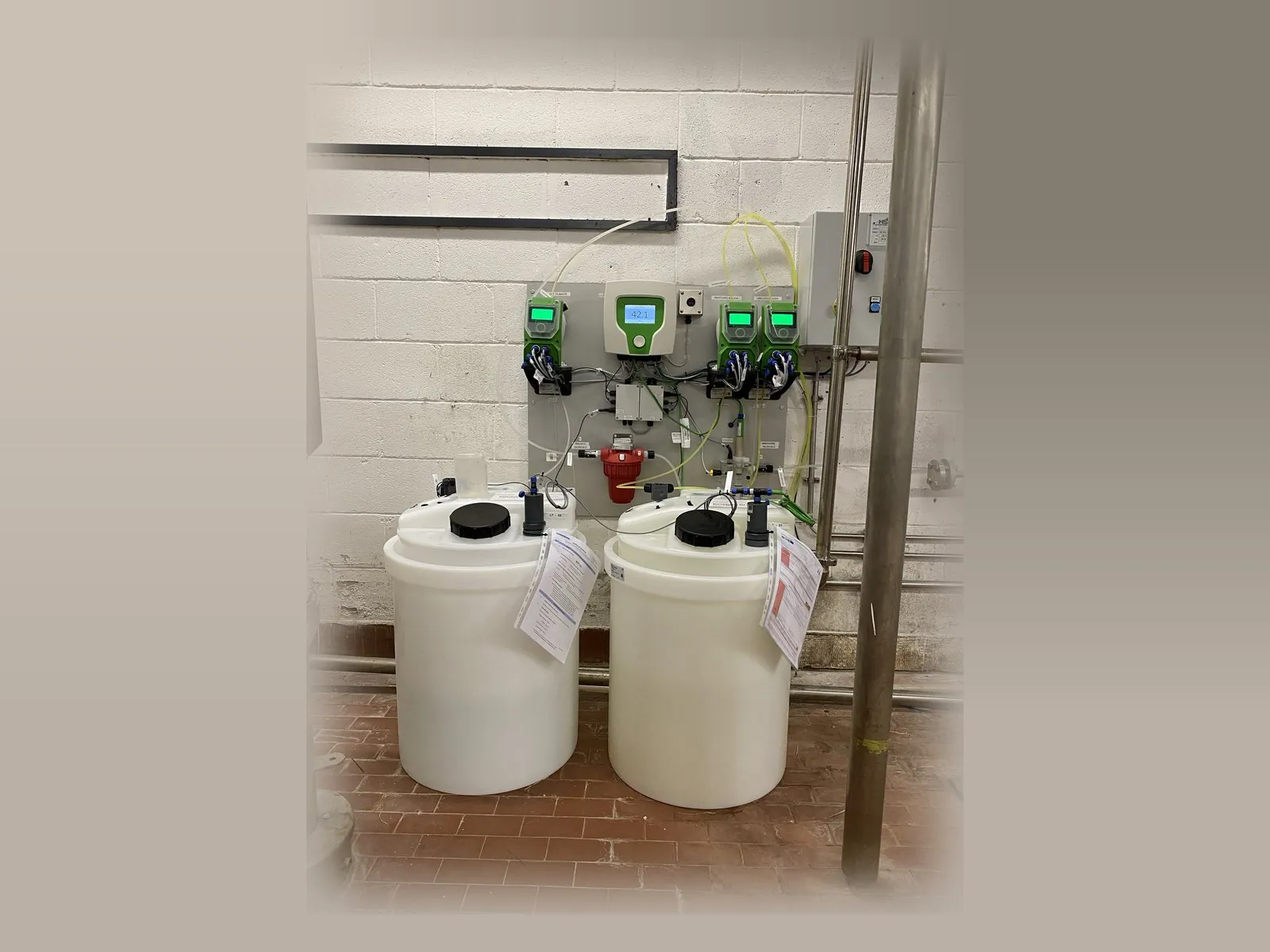
Settings, set points, timers, data log and graphs are accessible from the controller, remotely or via USB stick.
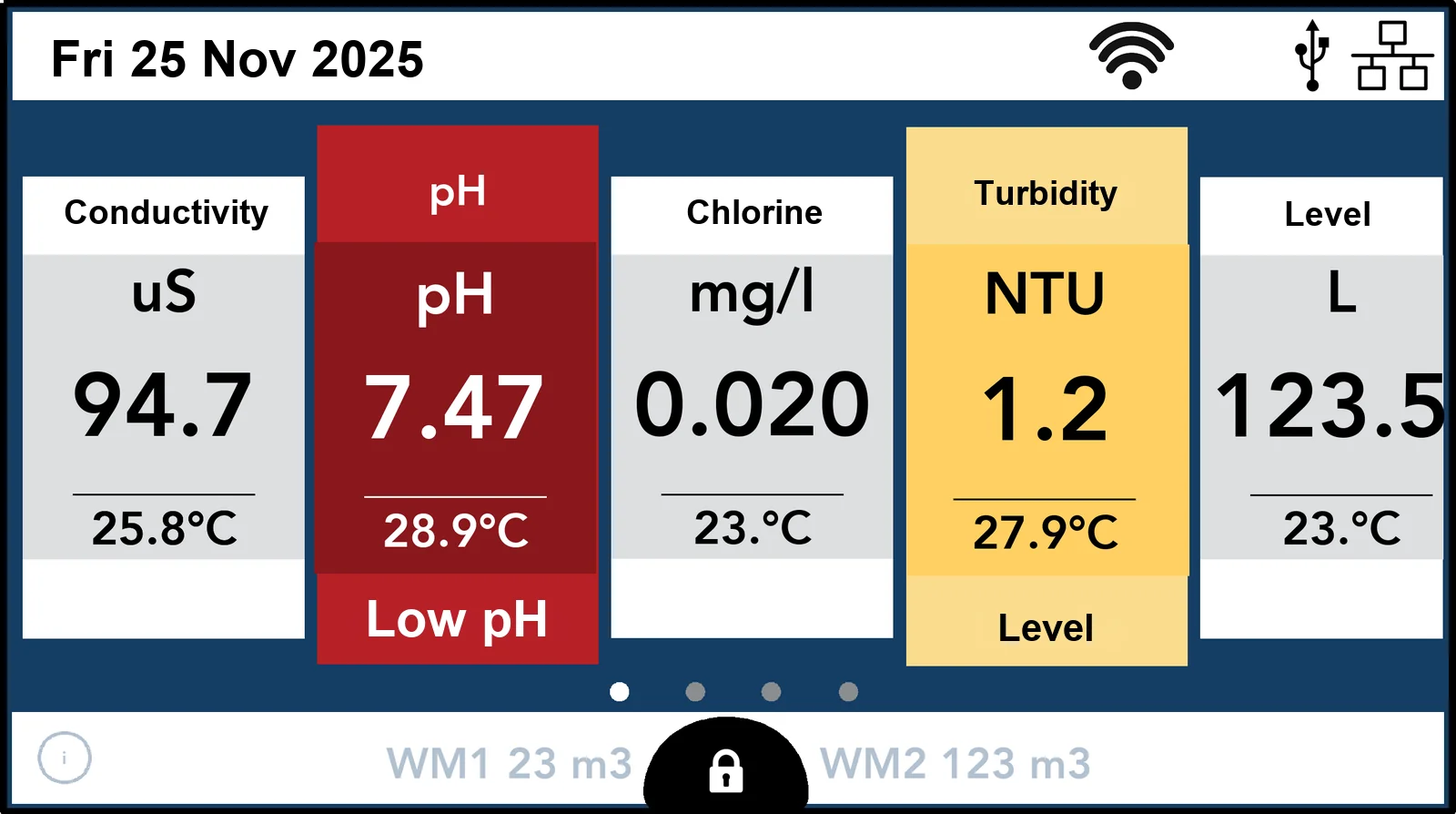
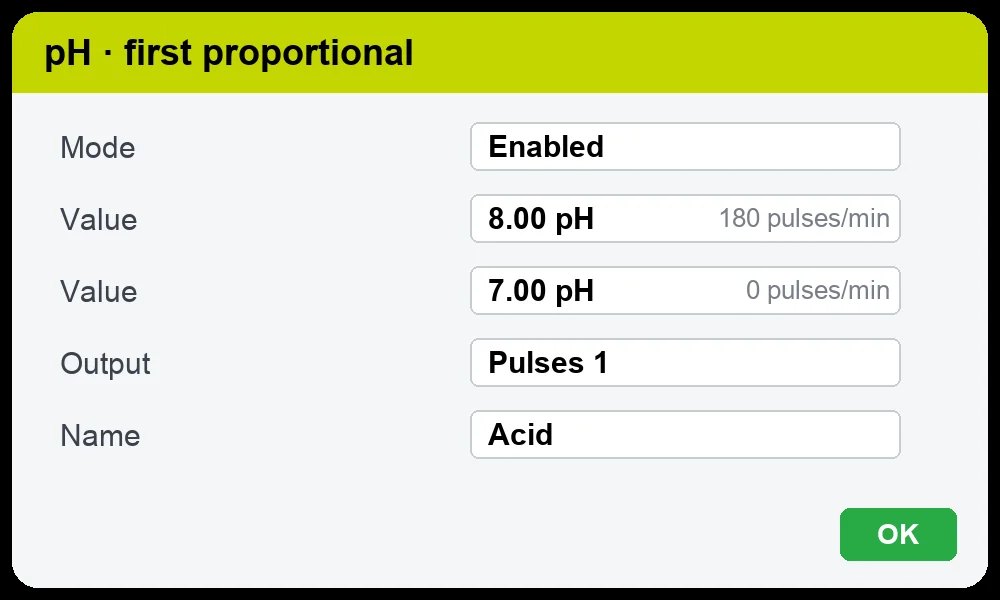
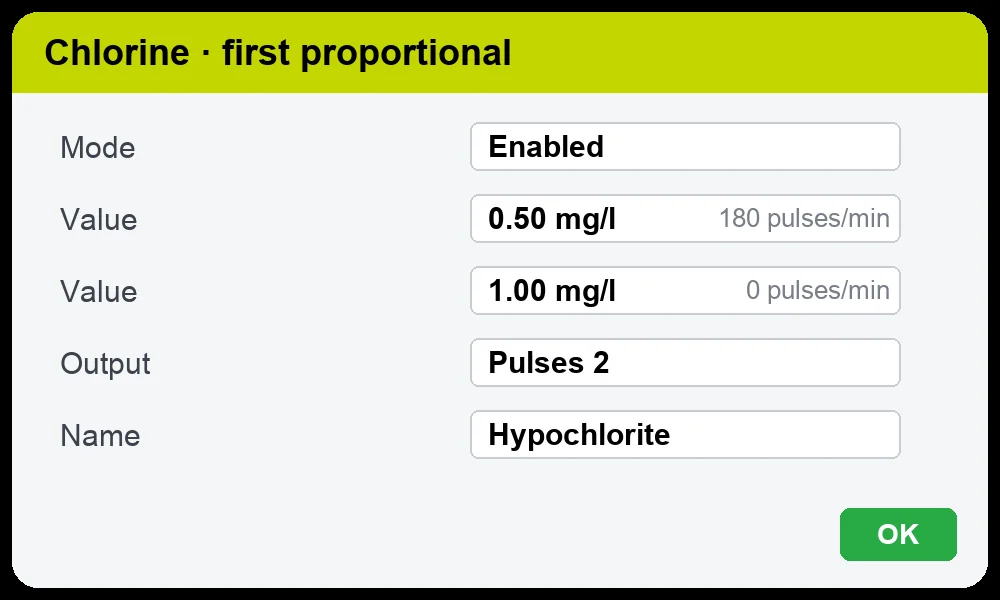
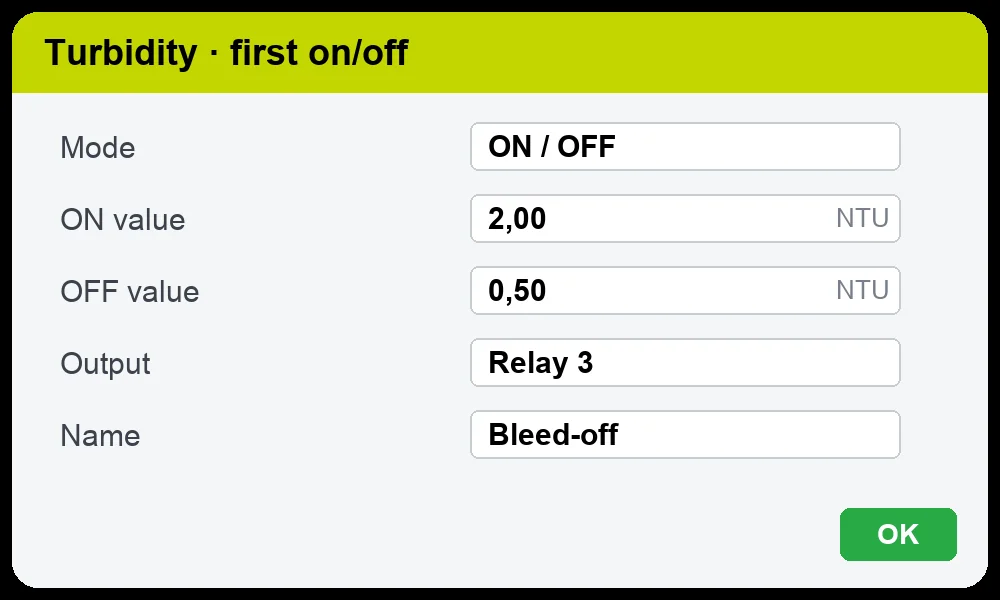
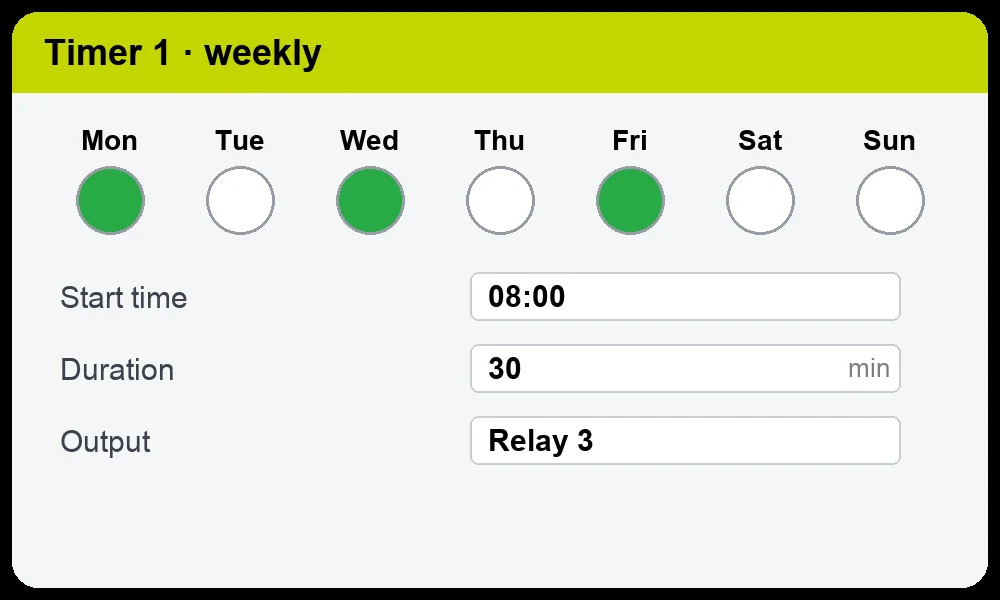
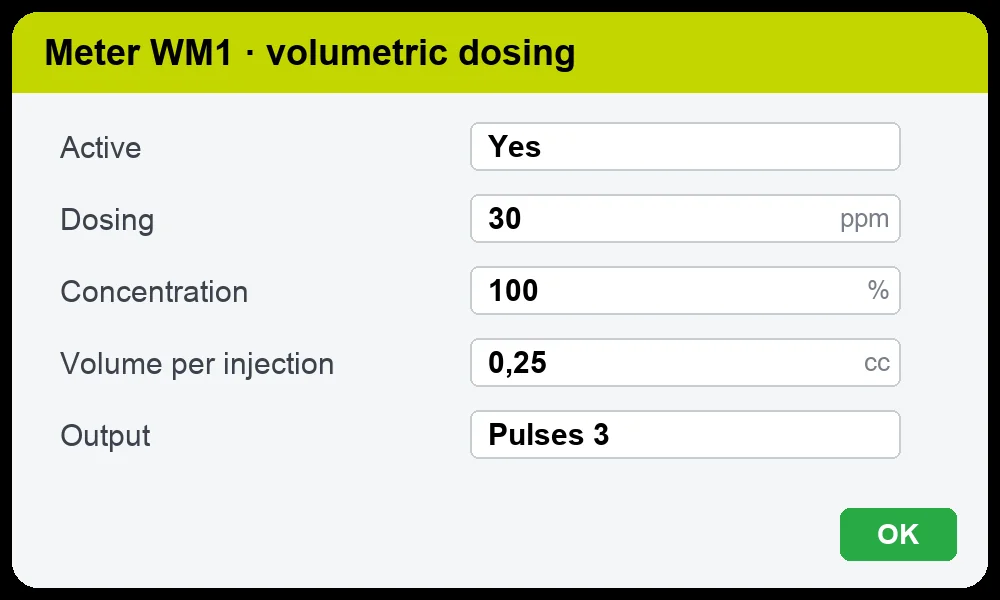
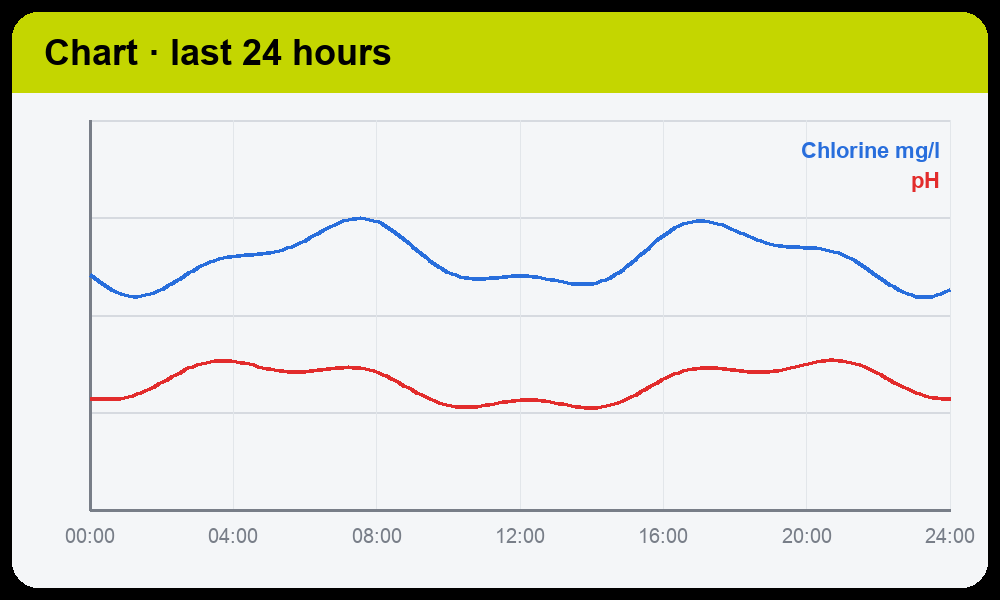
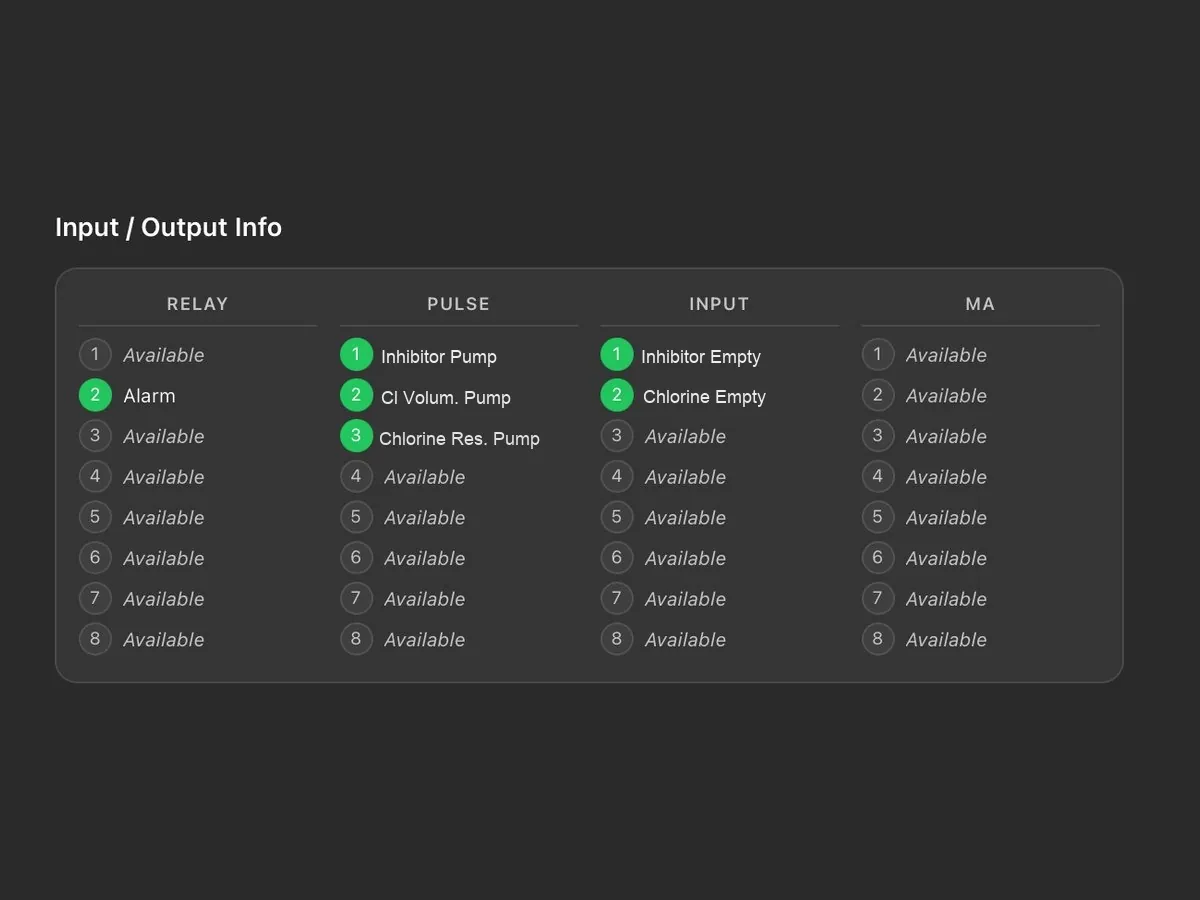
Inputs, outputs, control modes and alarms of the controller.
Ethernet, Wi-Fi, Modbus RTU, Modbus TCP/IP and current outputs are standard on all Centurio controllers; the 4G modem is available on request. From the web portal it is possible to read the measurements, modify set points, dosing and alarms, receive alarm notifications and download the data; the software is updated online.
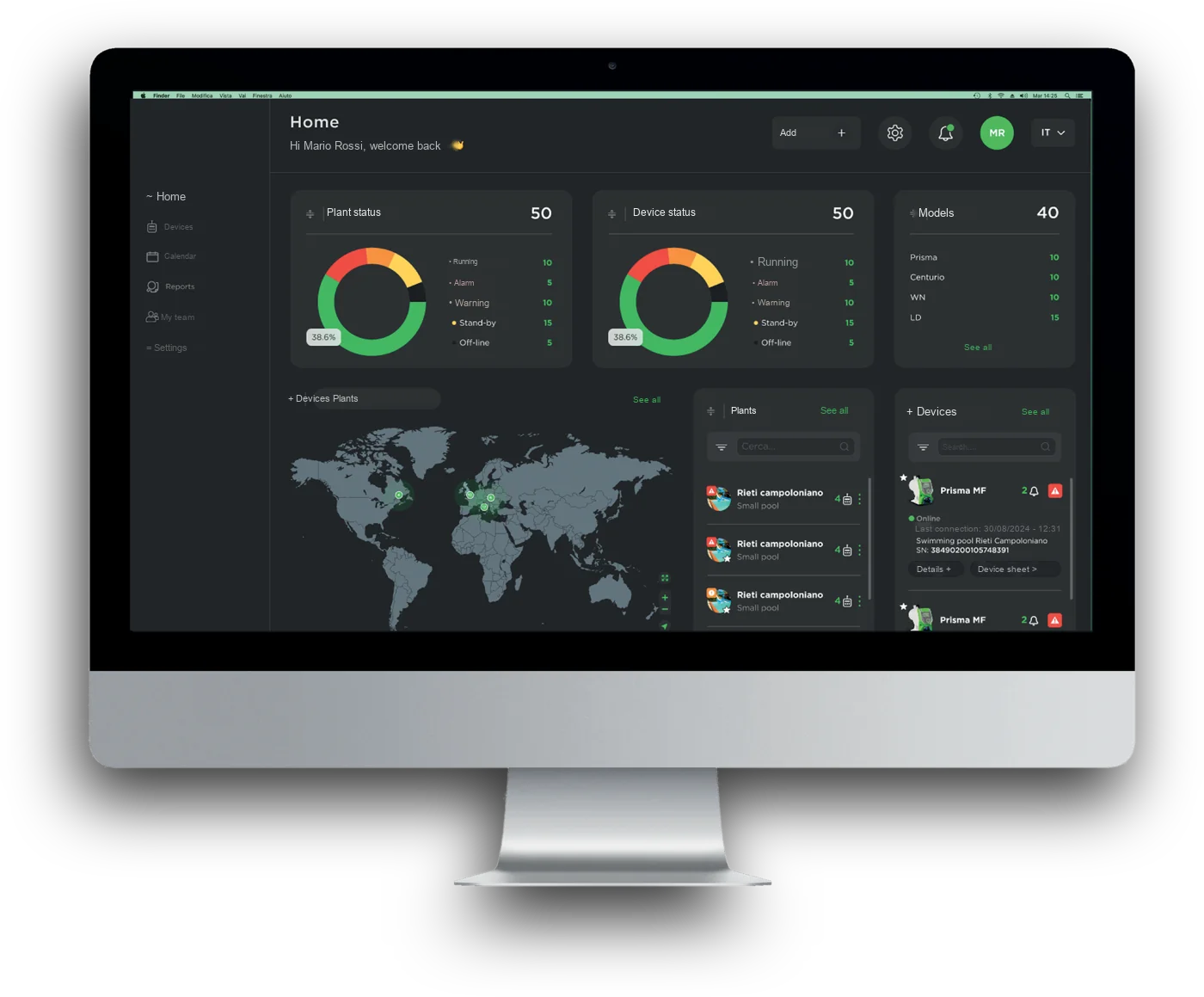
Connection to the web portal via network cable: measurements, set points, dosing and alarms accessible from PC, tablet and smartphone.
Wireless connection to the web portal, with the same functions as the cable connection.

Download of the logged data to a USB memory stick, for archiving and analysis with a spreadsheet.
Integration into your PLC via serial port.
Integration into your PLC or SCADA via Ethernet network.

Current signal proportional to the measured value, for remote monitoring or for controlling pumps and other instrumentation.
Connection via the cellular network for installations without a local network, with alarm notification by SMS or e-mail.
A single account brings together all registered installations, each with its own devices: the web portal, free of charge and with no subscription, can be accessed from PC, Mac, tablet and smartphone and allows every parameter to be both viewed and changed, with an encrypted connection and protected access.
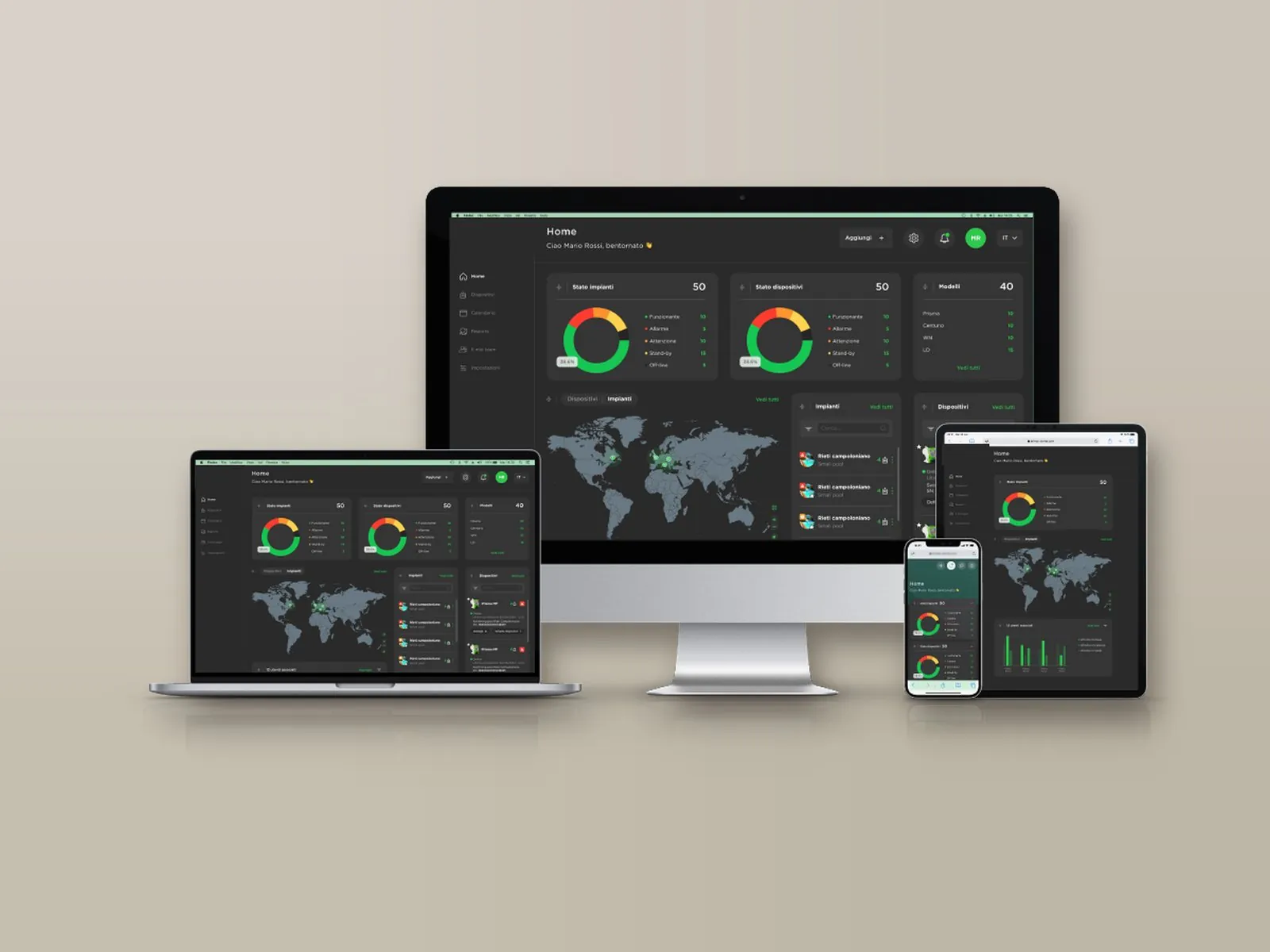
On a single screen: probe readings, chemical levels, pump activation thresholds and active alarms, with the status of installations and devices (normal, warning, alarm, standby, not connected).
Installations appear on an interactive map with their status and open with a click; for each one, the local weather conditions and temperature are also shown.
Archive of measurements and alarms, available for consultation at any time with charts and numerical reports exportable in Excel format.
Alarm thresholds for readings, dosing, faulty probe and out-of-range readings, with notification by e-mail or SMS depending on the communication system; a warning is also issued when an installation remains disconnected beyond the set time.
Remote modification of the set points, of the dosing pump activation thresholds and of the corresponding hourly flow rate.
Status of relays, pulse outputs, digital inputs and current outputs, with the name assigned to each connection.
Tasks are scheduled by installation or by device and assigned to technicians; a reminder is sent by e-mail two days before the due date. Each task is shown as scheduled, due, overdue or completed.
The main account has full access and creates the technicians’ accounts, each enabled only for the assigned installations and devices; the last login and activity of each technician are visible.
Reports on devices, tasks and technicians, downloadable in PDF or CSV with the customer’s logo; the log keeps the history of operations and disconnections.
Logo, main colour and light or dark theme; the tiles on the main screen can be rearranged by dragging them. Two installations can be displayed side by side for comparison.
Each device is added through a guided procedure: the model is recognised automatically and associated with the installation, together with the technician to be contacted.
As an alternative to the portal, the Modbus RTU or TCP/IP port allows integration into the plant supervision system.
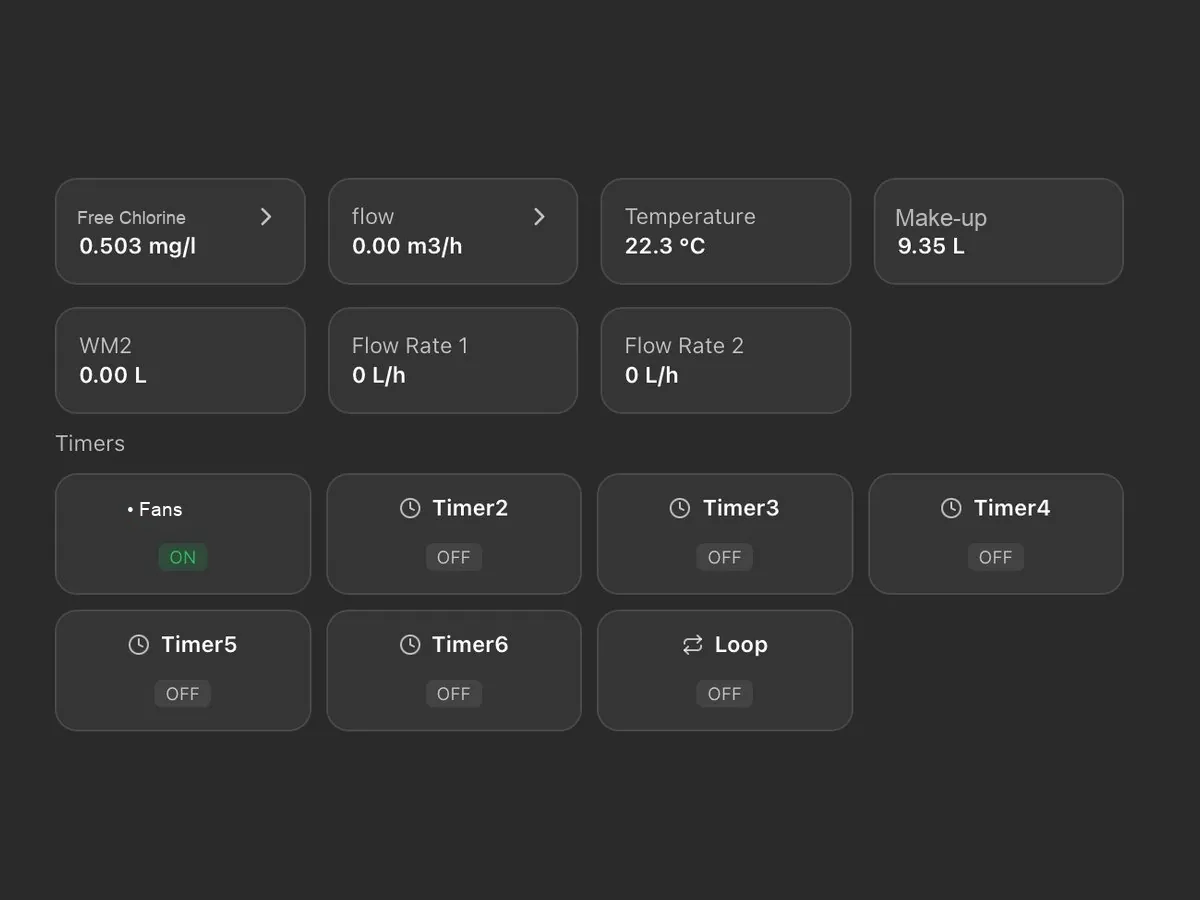
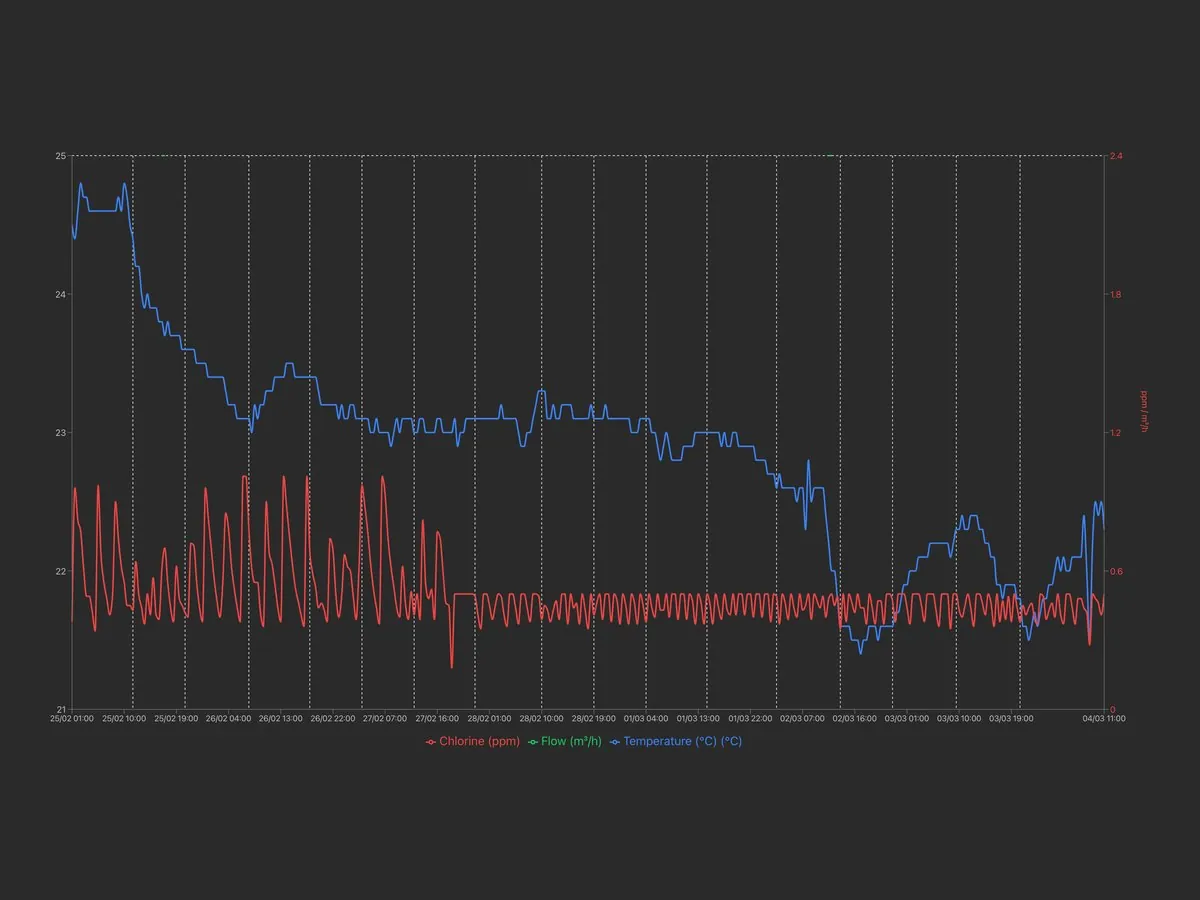
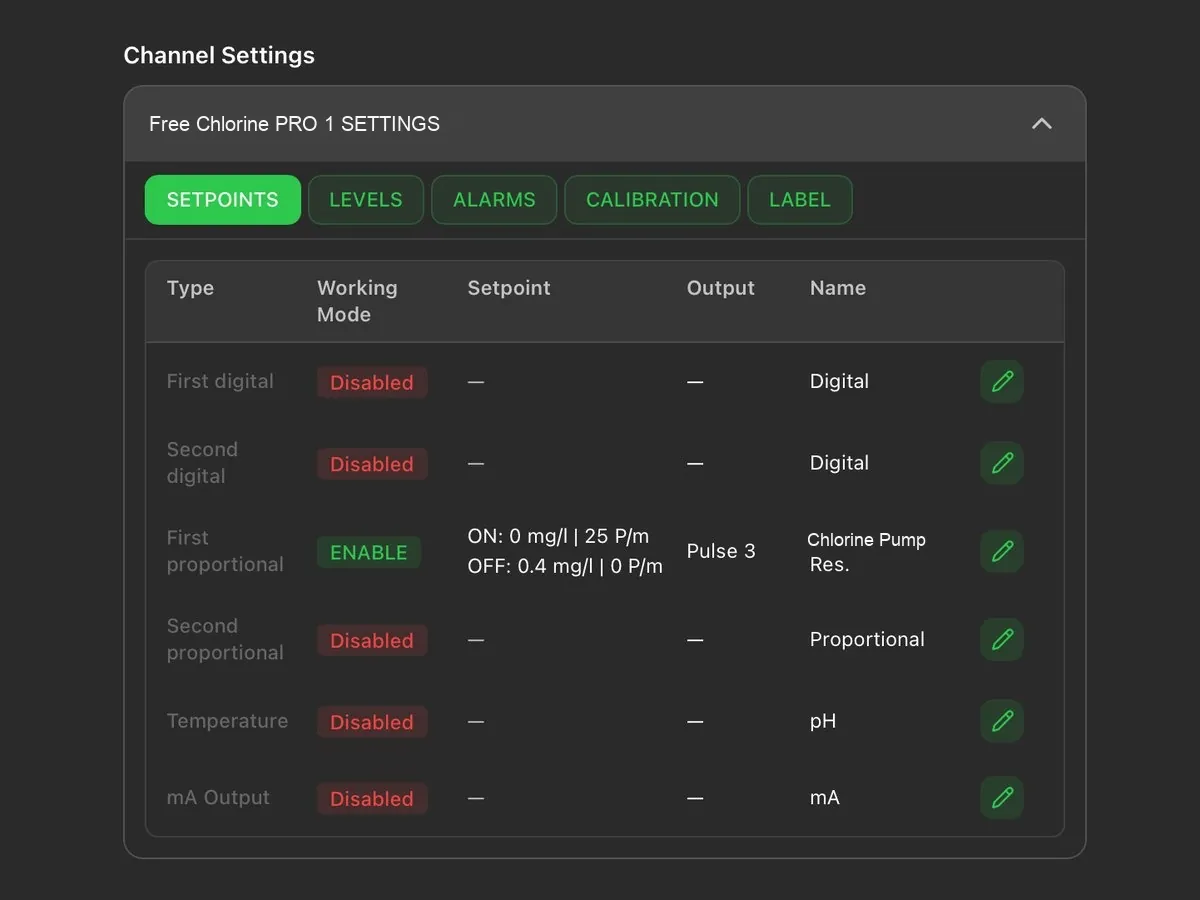
The same controller, with software and equipment dedicated to individual applications.
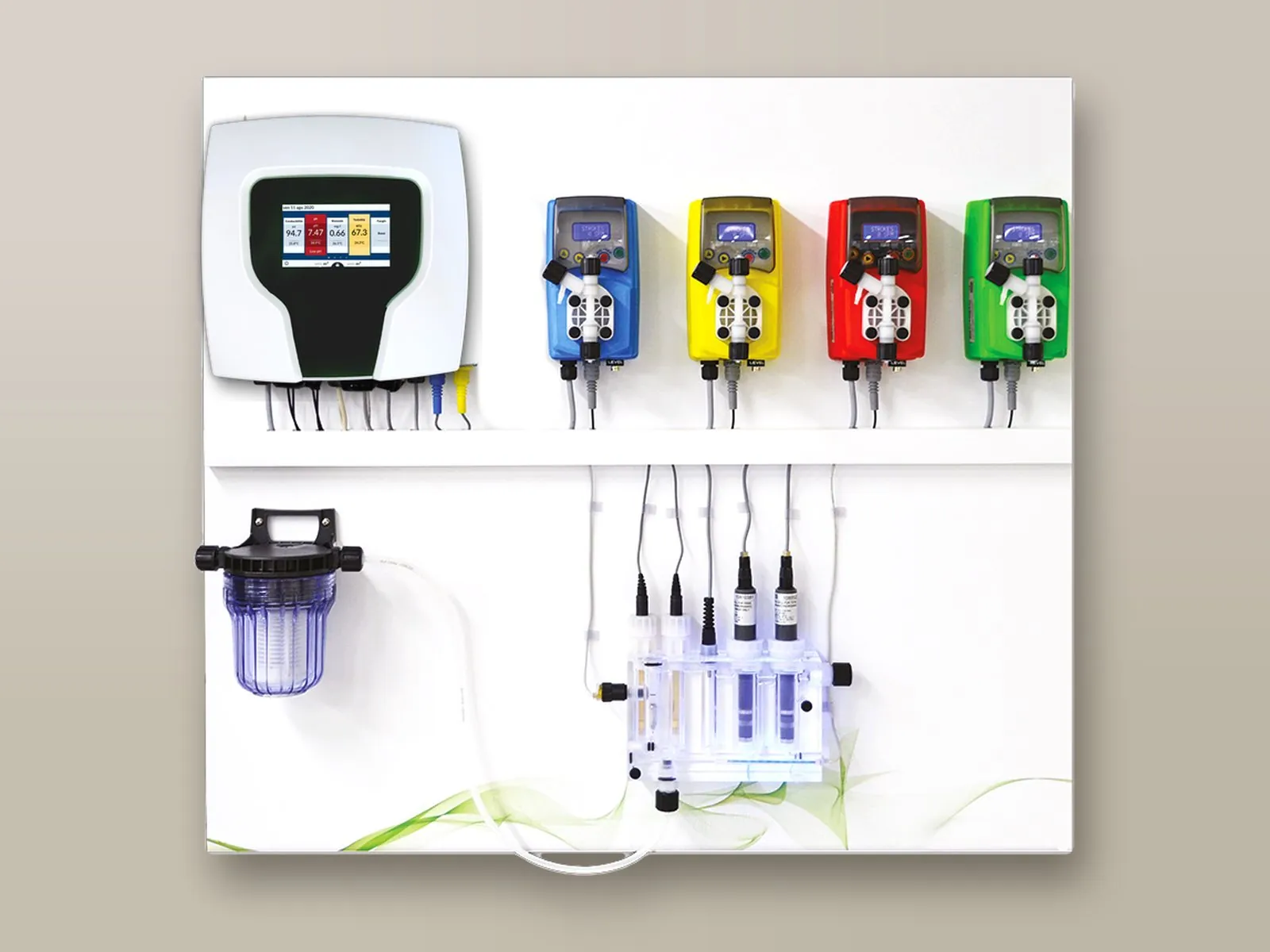
For public swimming pools: free, total and combined chlorine, pH, Redox and temperature; make-up water, drain, dechlorination, flocculant and pool loads.
Centurio POOL →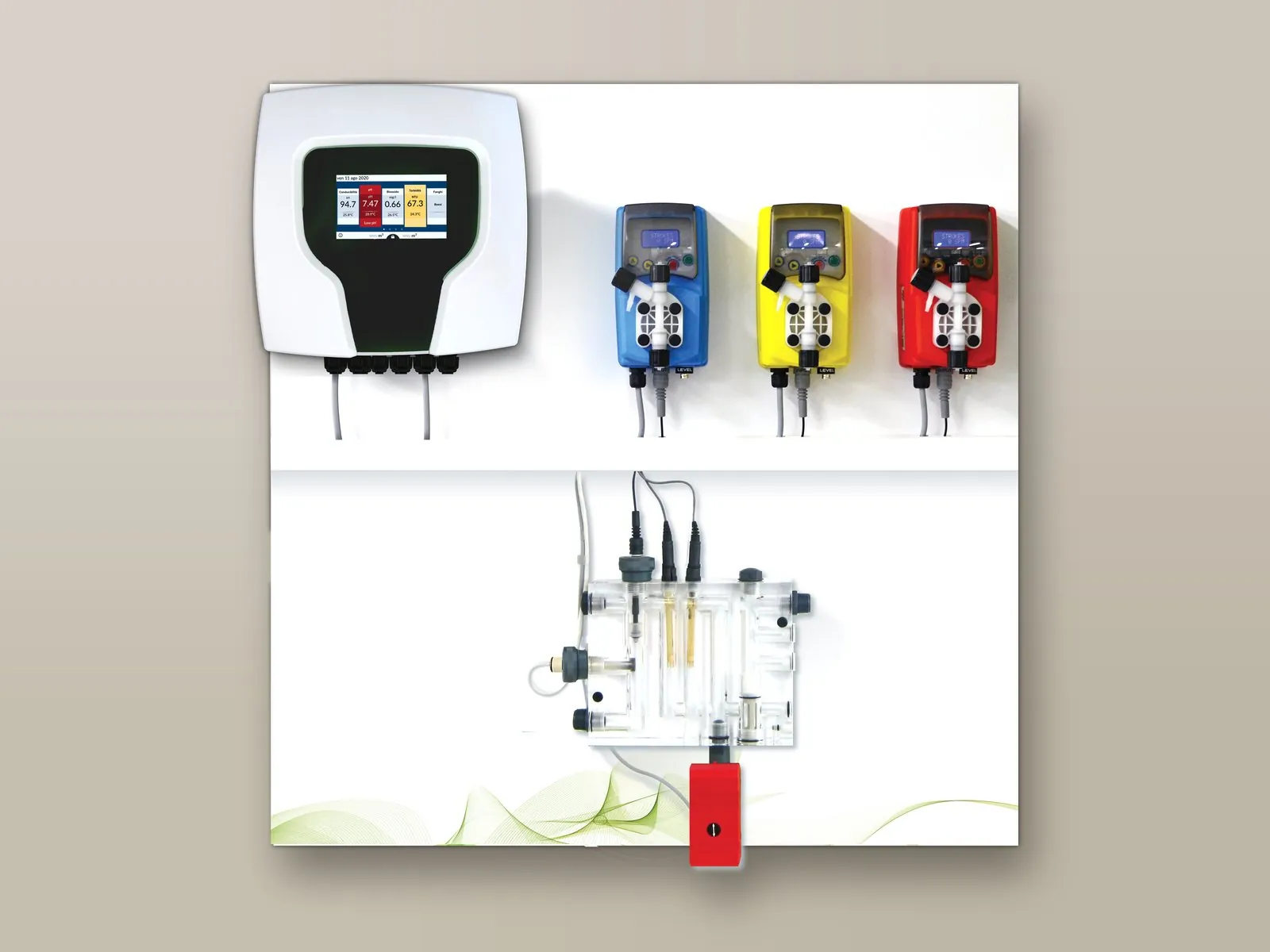
For cooling towers: conductivity and bleed-off, inhibitor, two biocides, pH, Redox, tracer and corrosion.
Cooling towers → For domestic hot water: biocide with residual control and proportional to the water meter, inhibitor and sampling from the recirculation.
Anti-Legionella →Accessories available on request to adapt the system to the requirements of the installation.
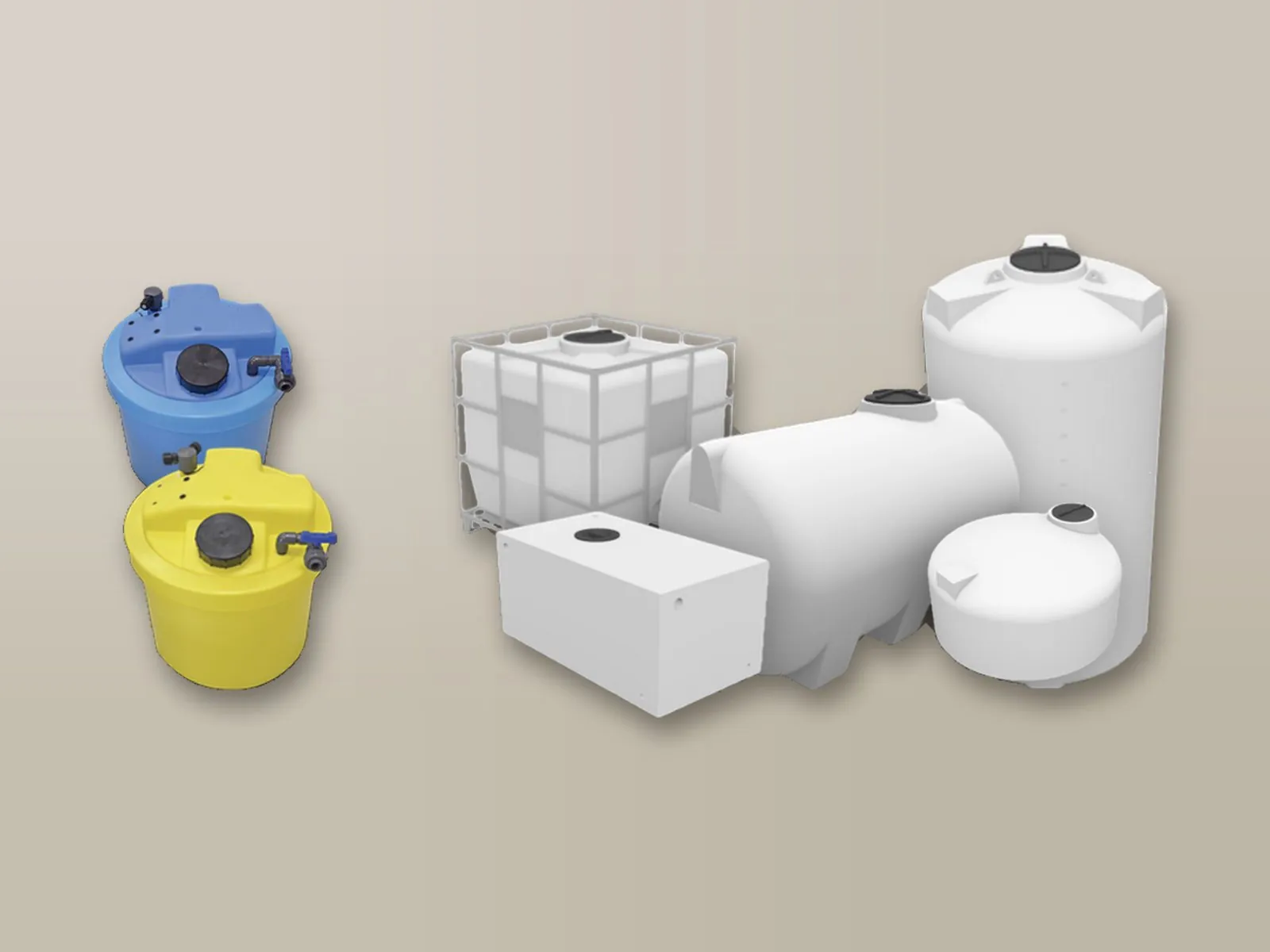
PE tanks for the chemical, with safety bund.
Details → Enables dosing proportional to the volume of water actually treated.
Details →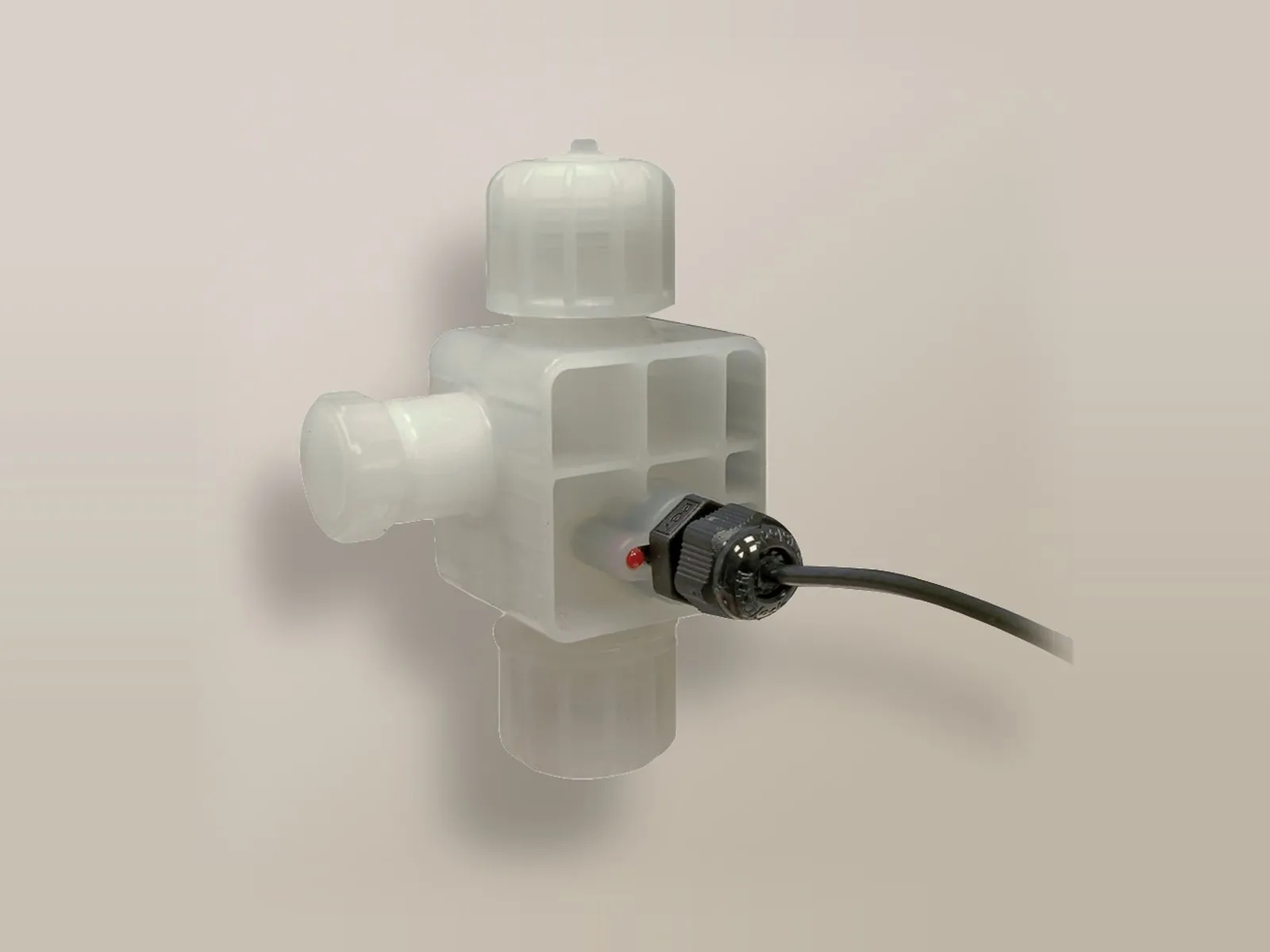
Installed on the pump delivery line, it verifies that dosing actually takes place.
Details →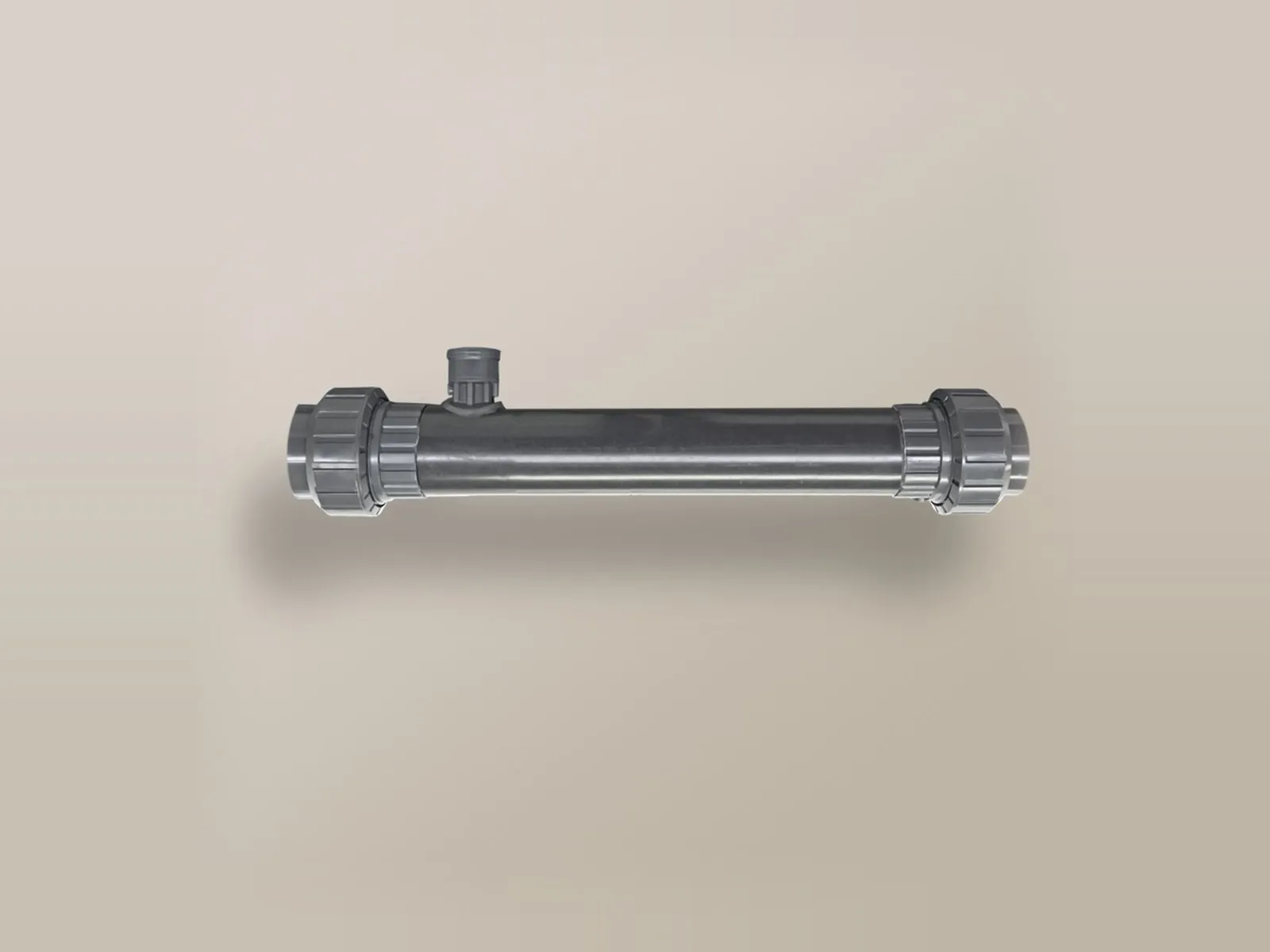
Ensures the chemical is mixed with the water and protects the pipe from direct contact.
Details →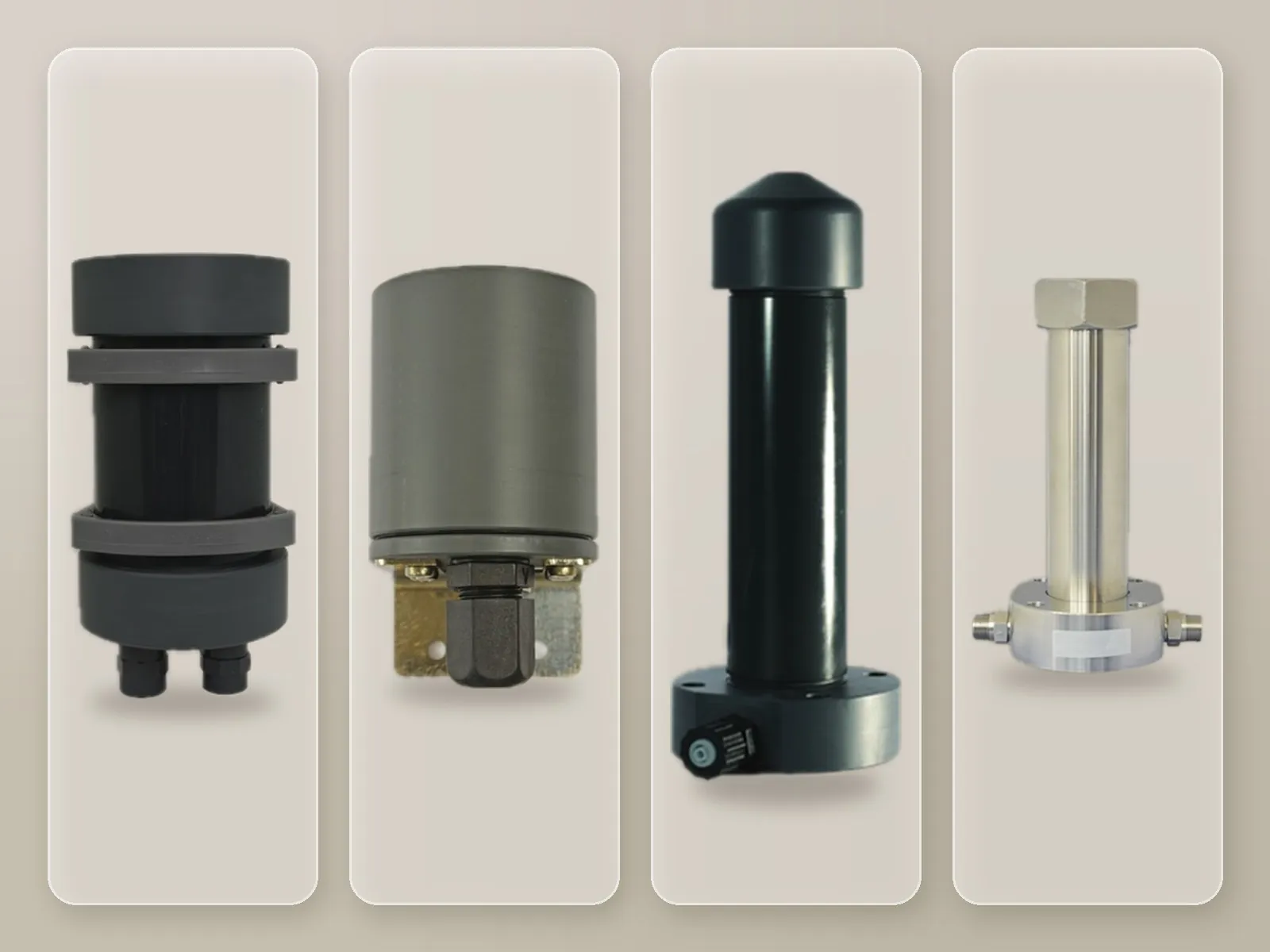
Attenuates the pulsations generated by the dosing pump.
Details →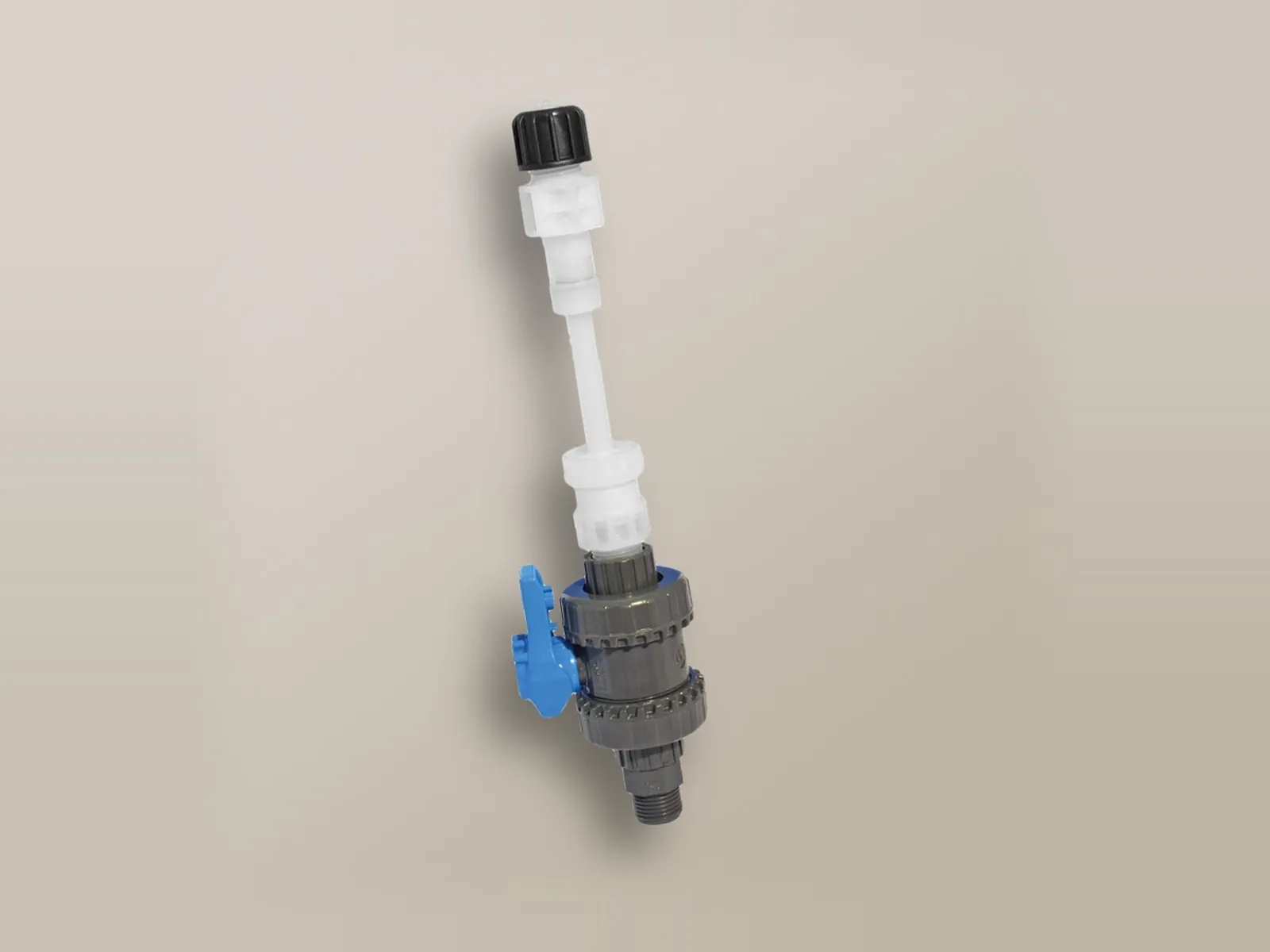
Injects the chemical into the centre of the pipe.
Details →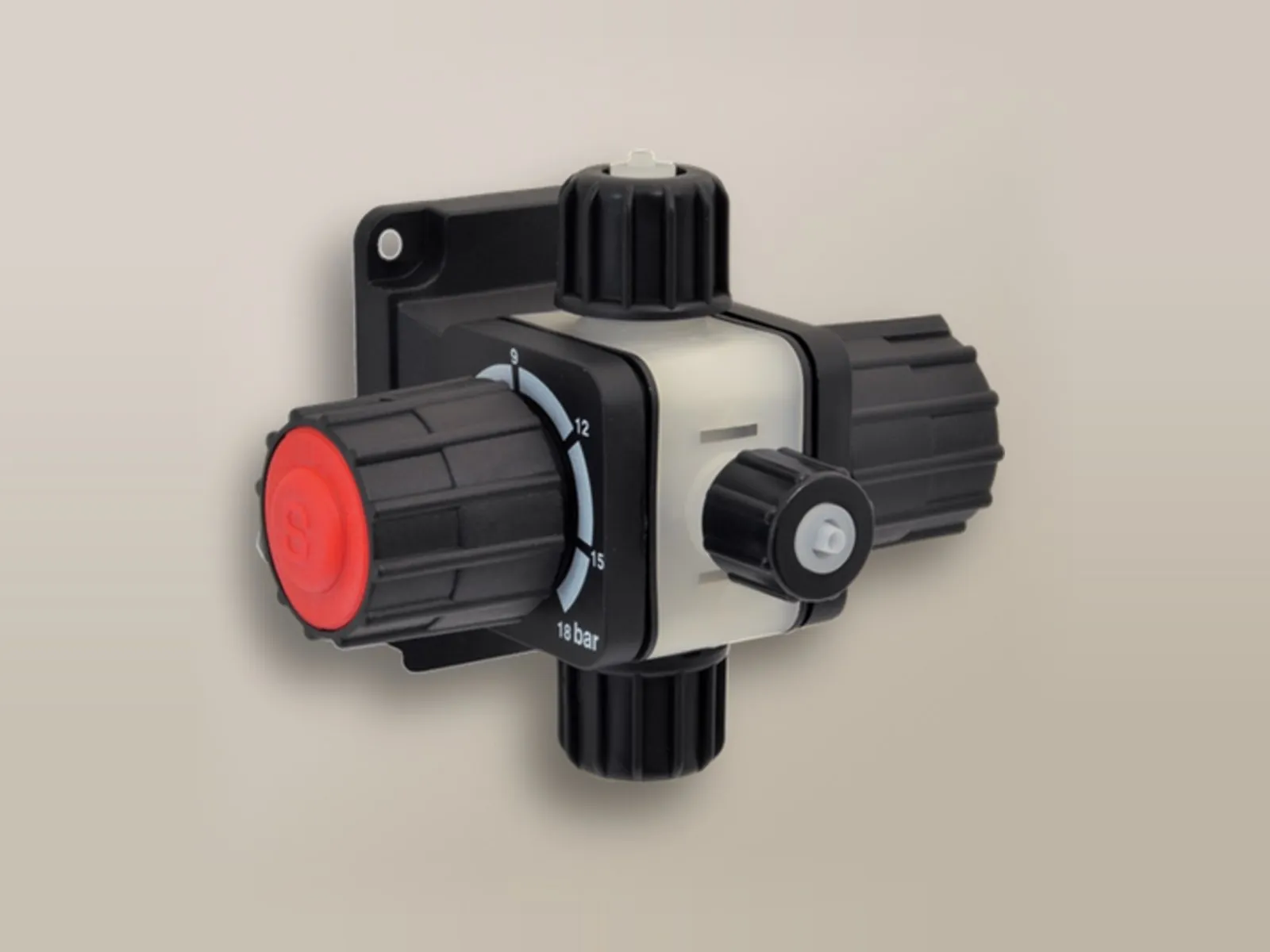
Pressure, safety and anti-siphon functions combined in a single valve.
Details →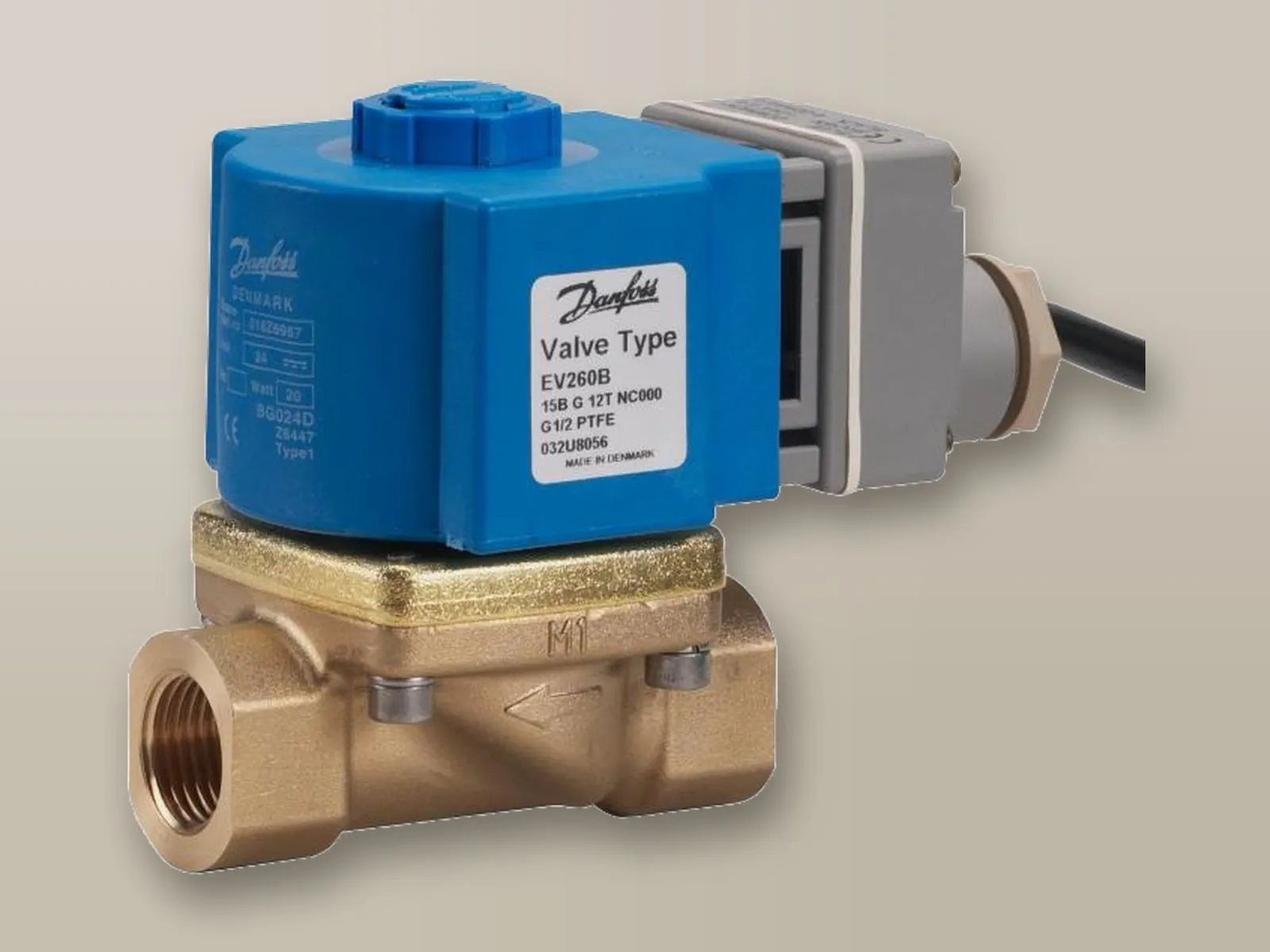
Operated by the controller according to the measured value.
For chlorine and other disinfectants the basic solution is the dosing station; to dose according to the concentration actually present in the water, measuring controllers are used.
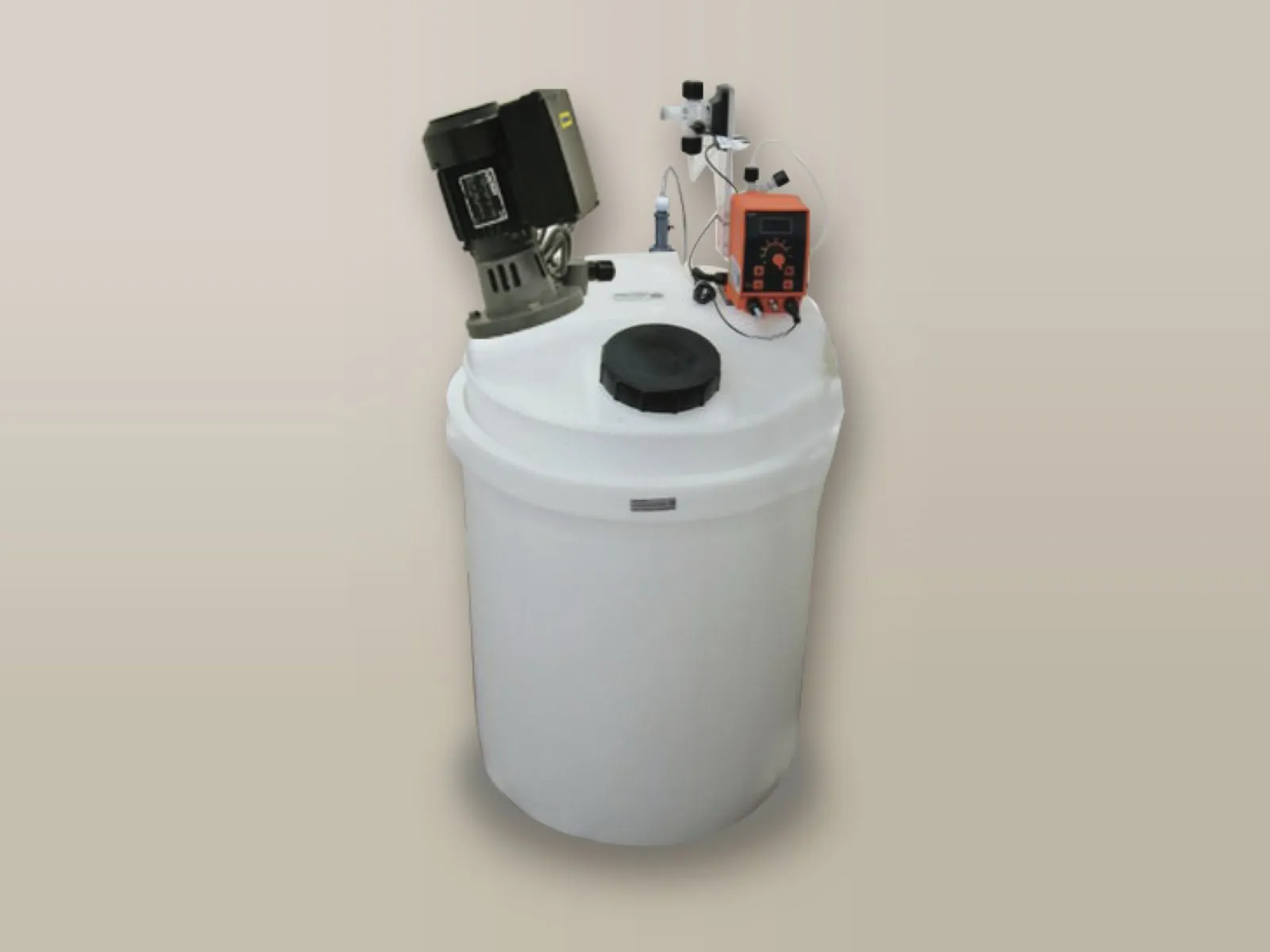
The simplest solution: the pump doses at a constant rate or in proportion to the volume of water measured by the pulse-output water meter.
Details →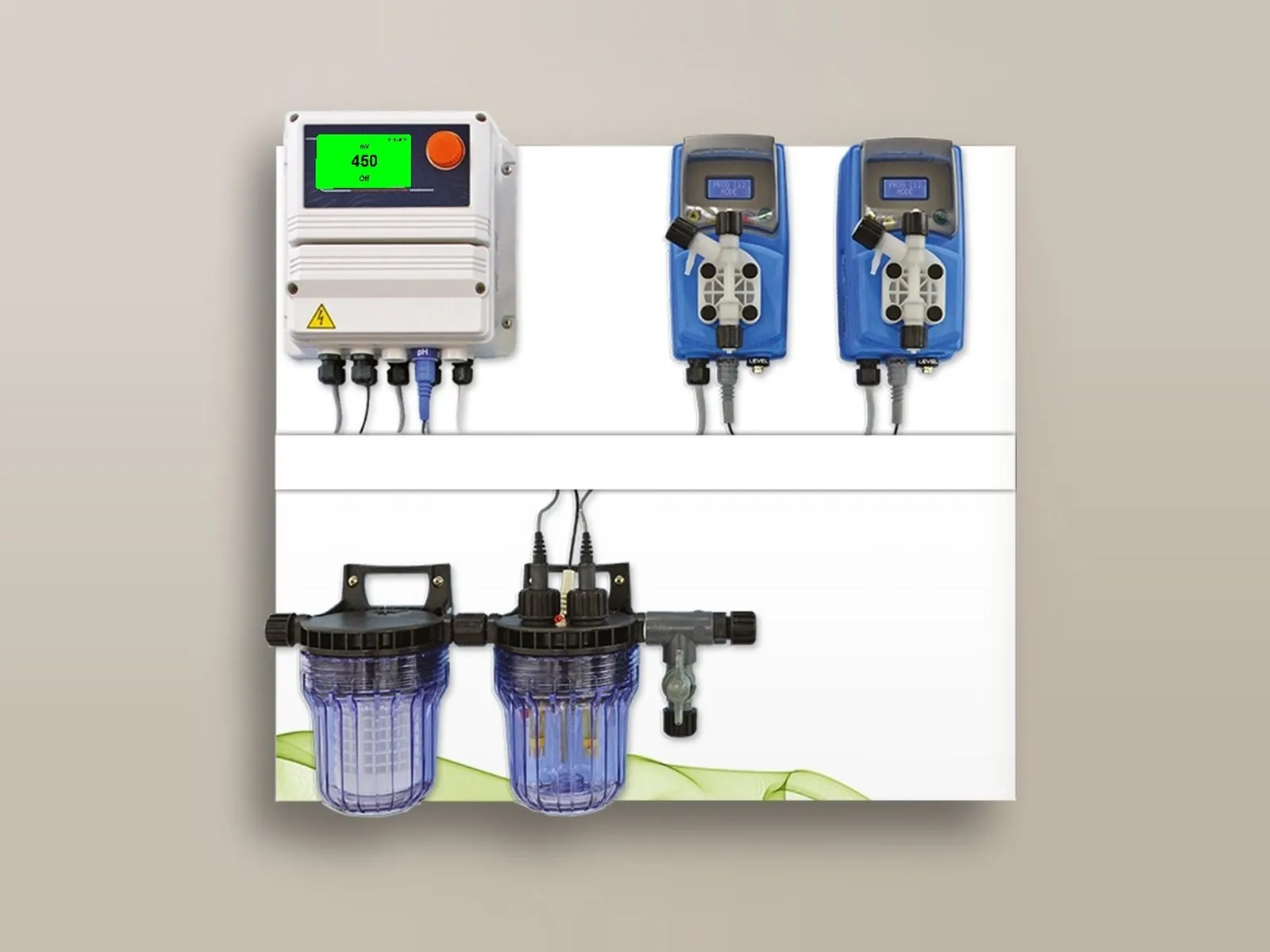
Dosing based on the Redox potential of the water: an economical solution, based on an indirect measurement.
Details →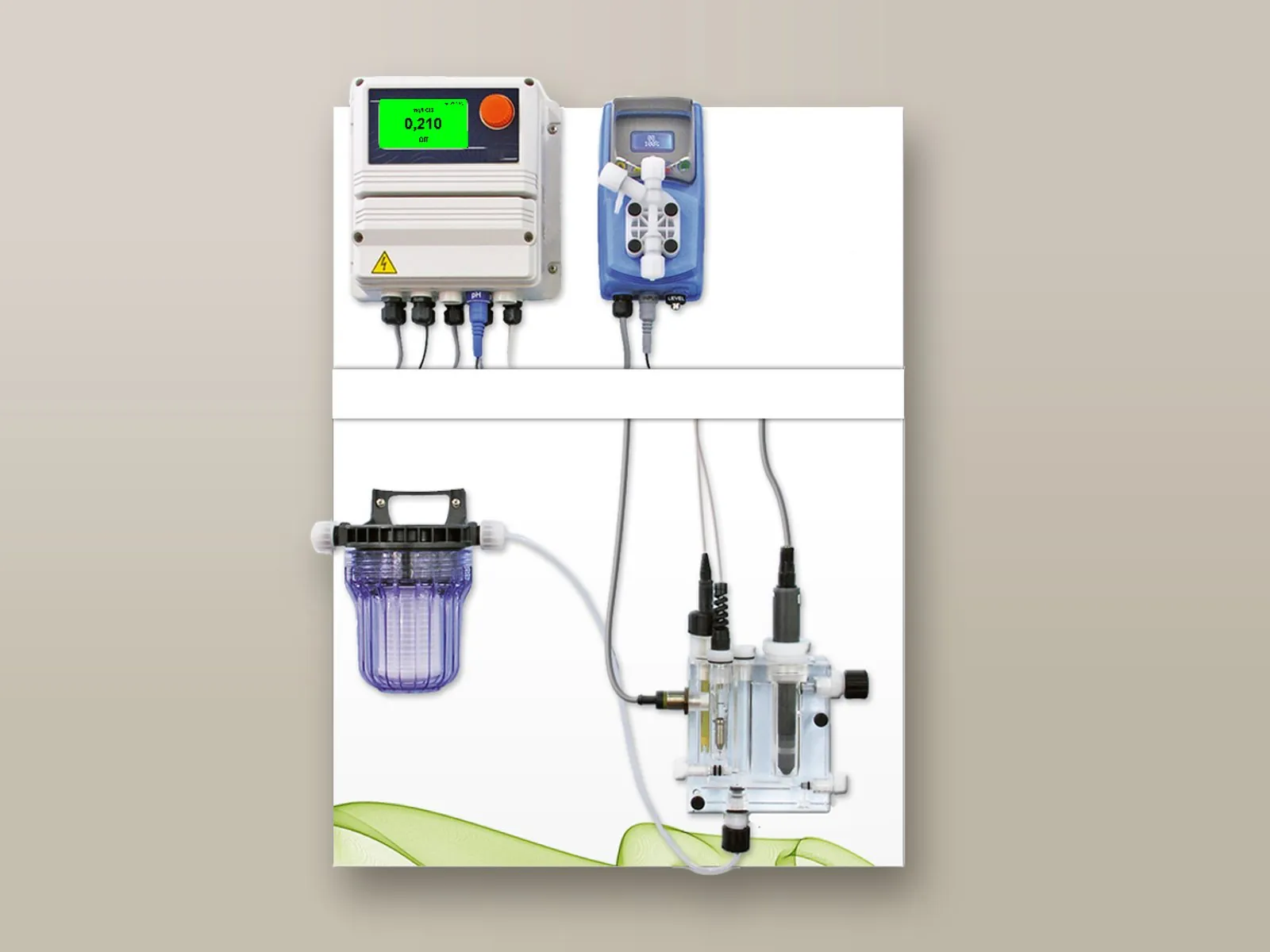
The amperometric cell directly measures the disinfectant concentration in mg/l, ensuring maximum dosing accuracy.
Details →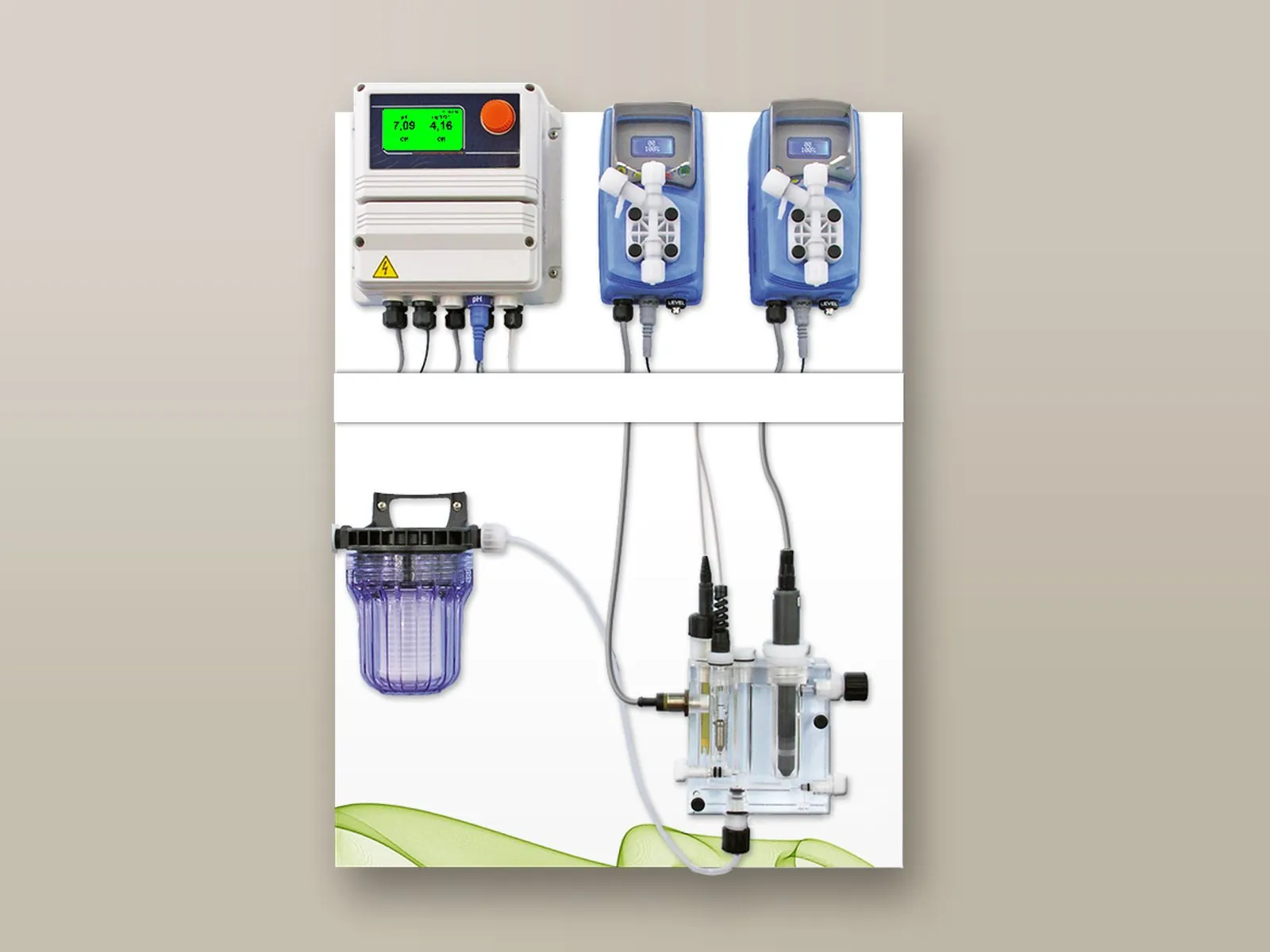
Simultaneous management of two parameters, for example pH and chlorine, with a single controller.
Details → Management of up to 10 parameters and of all the pumps in the installation, with touch screen and remote control as standard.
Tell us the parameters to be monitored and the characteristics of the plant: we will propose probes, pumps and accessories and supply the system assembled on a panel, in a box or on a skid.
Call or write to us: a technician will reply with a tailored proposal of controllers, pumps, probes and accessories.