Continuous measurement
The amperometric cell, installed in a flow-through probe holder, continuously analyses the water in the storage tank and also detects its temperature.
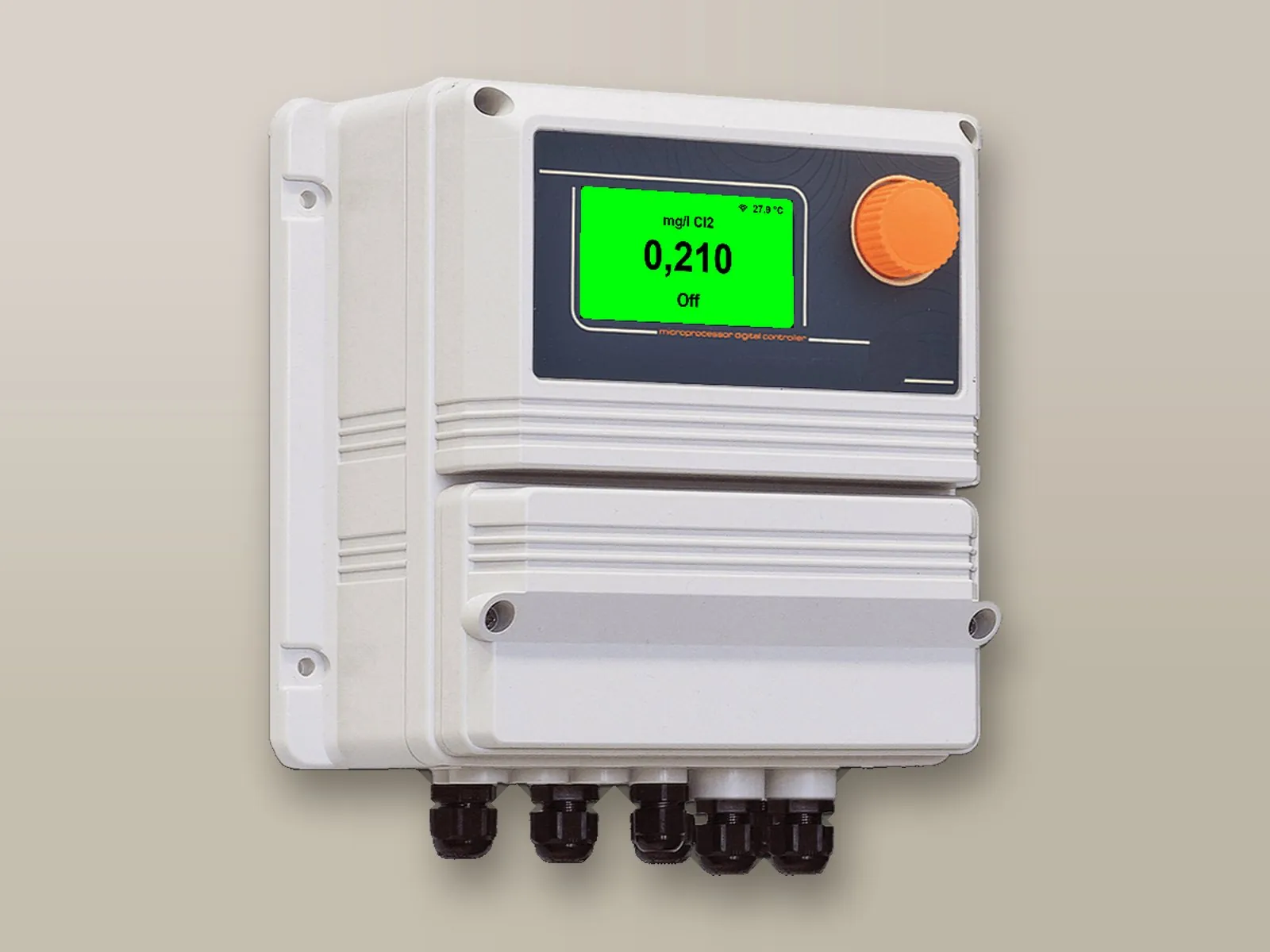
The LDsCL system continuously measures the residual disinfectant in the water by means of an amperometric cell and controls the dosing pump in proportion to the measured value, until the set value (set point) is reached. A single controller for chlorine, chlorine dioxide, bromine, hydrogen peroxide, peracetic acid, ozone and chlorites.
The disinfectant concentration to be maintained in the water is set (set point; for free chlorine typically 0.2 mg/l). The system maintains it automatically and continuously.
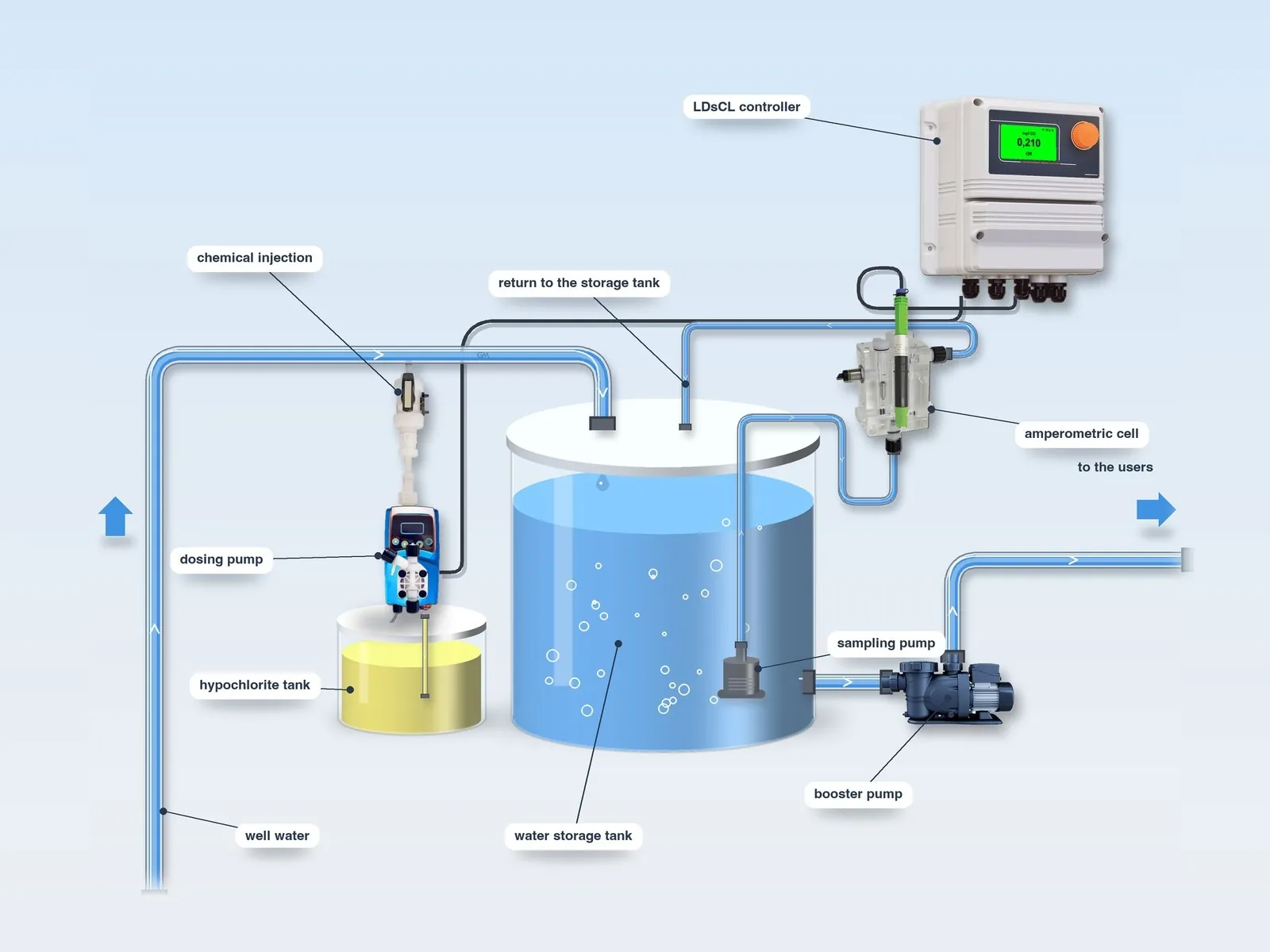
The amperometric cell, installed in a flow-through probe holder, continuously analyses the water in the storage tank and also detects its temperature.
When the value falls below the set point, the controller activates the dosing pump, at a frequency that increases the further the reading is from the set point; when the set point is reached, the pump is stopped.
The water entering the storage tank immediately comes into contact with the disinfectant, while the pump restores the set value. The constant presence of chlorine eliminates bacteria and biofilm.
The action of the disinfectant requires a contact time appropriate to the organisms present, and in any case no less than 20 minutes. By adding a pulse-output water meter and a dosing pump connected to it, dosing also becomes proportional to the volume of water treated; the controller can also drive solenoid valves or other equipment according to the measured value.
Raw water from wells and springs, private and from public water supply networks; storage tanks.
Insight: well water →Domestic water circuits, including hot water, as anti-Legionella treatment.
Anti-Legionella →Process and washing water, including in the food industry (peracetic acid, peroxide, ozone).
Municipal and industrial wastewater.
Free and total chlorine, bromine, peroxide and ozone (together with chlorine).
Disinfection with bromine or chlorine dioxide.
Sodium hypochlorite, commonly referred to as chlorine, is the reference disinfectant for the hygienic and sanitary control of drinking water: it inactivates bacteria at molecular level and makes water fit for human consumption.
Insight: well water →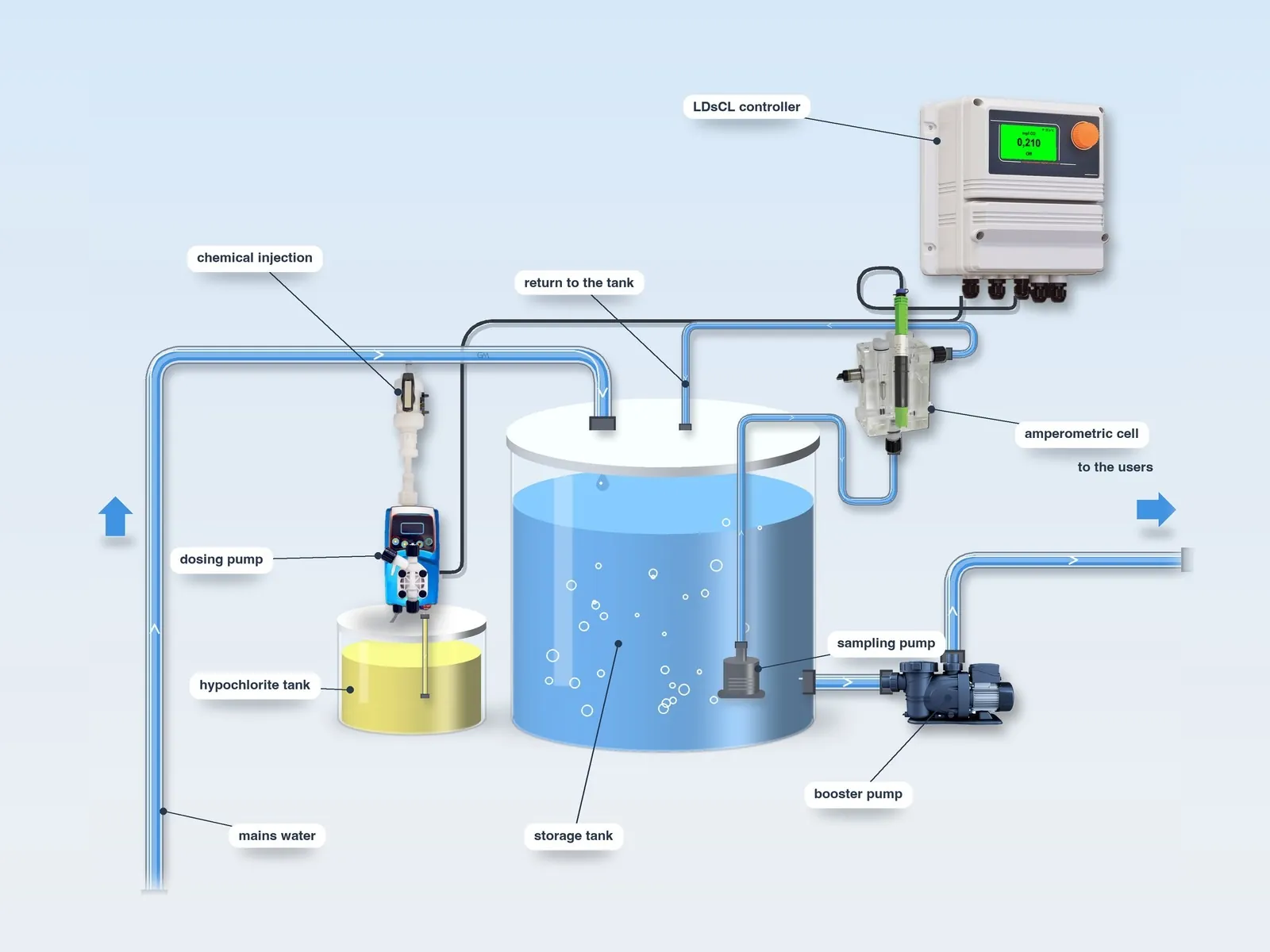
Chlorine requires a contact time: without a storage tank, the water supplied contains chlorine but is not completely disinfected.
The dosed chlorine is first consumed by the bacterial load. If the reading falls, for example from 0.2 to 0.15 mg/l, the pump starts; if the value continues to decrease, owing to the inflow of new or heavily contaminated water, the pump frequency increases until it reaches its maximum when the free chlorine reading is 0.0 mg/l.
The continuous and constant presence of chlorine in the water eliminates bacteria and biofilm and prevents their proliferation.
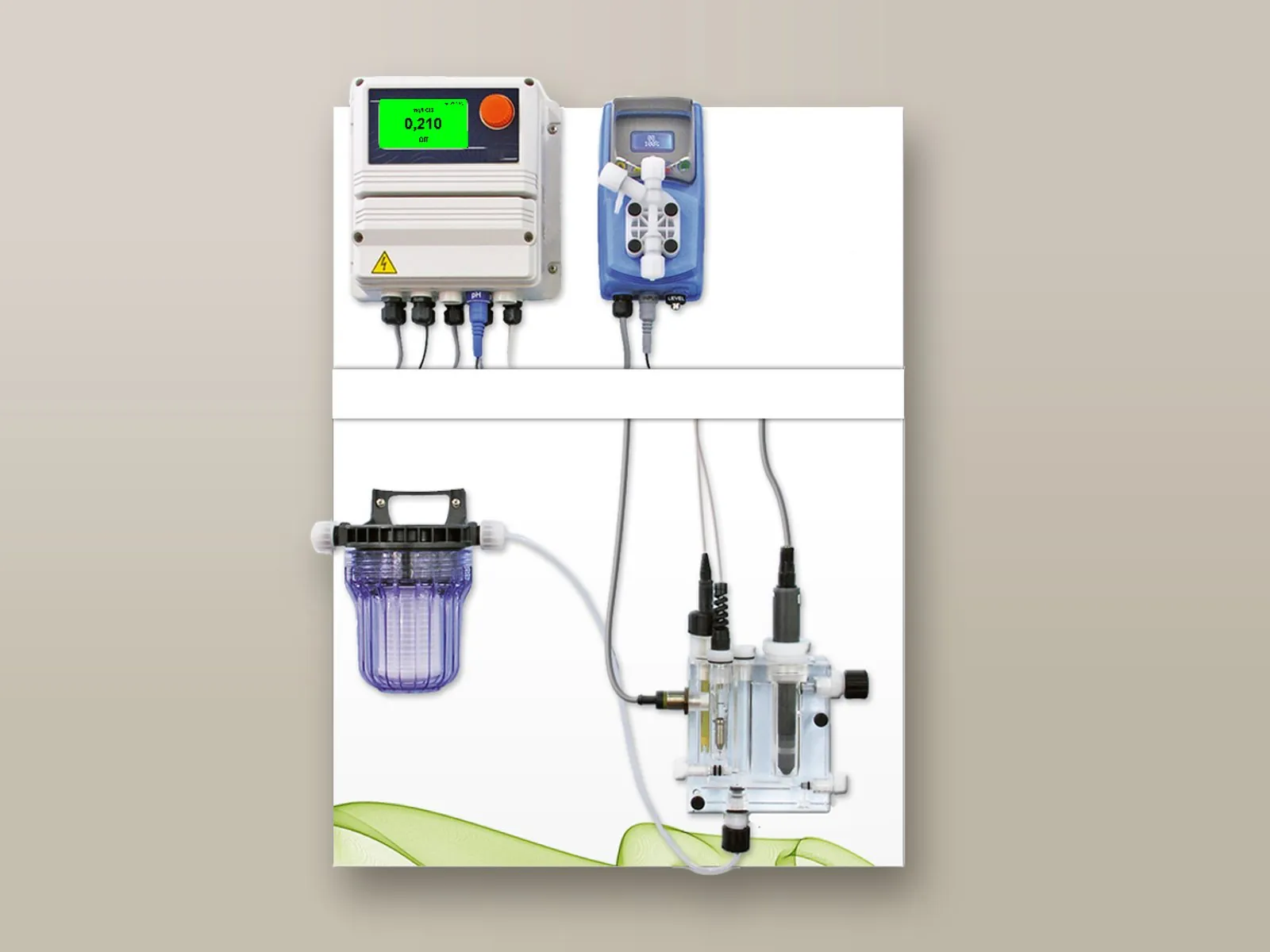
The system is supplied pre-assembled on a panel. As an alternative to the wall-mounted controller, panel-mount controllers for installation in an electrical cabinet are available.
It acquires the values measured by the cell and activates the dosing pump until the set point is reached.
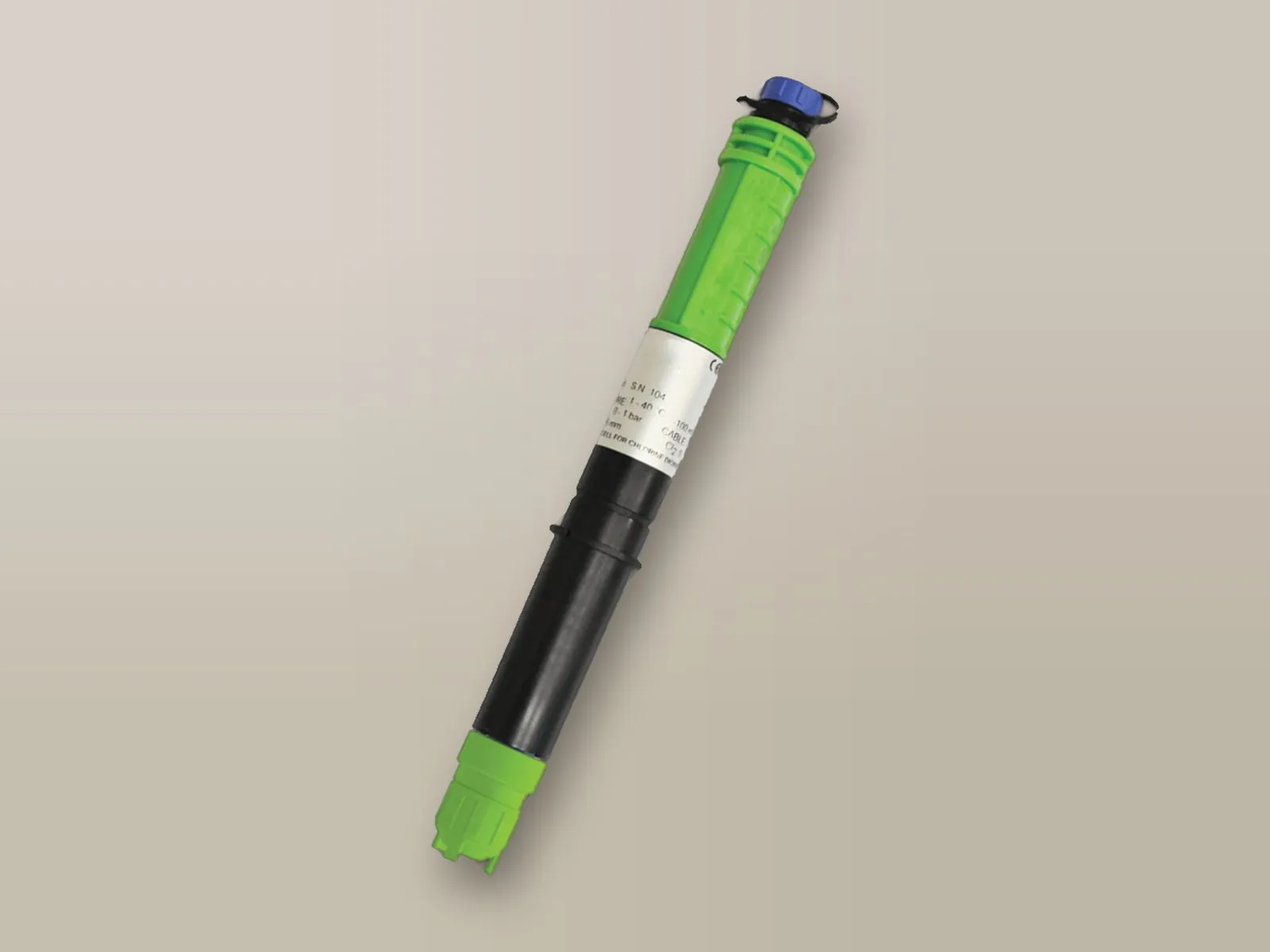
Specific to the oxidant to be measured, with automatic temperature compensation.
The cells →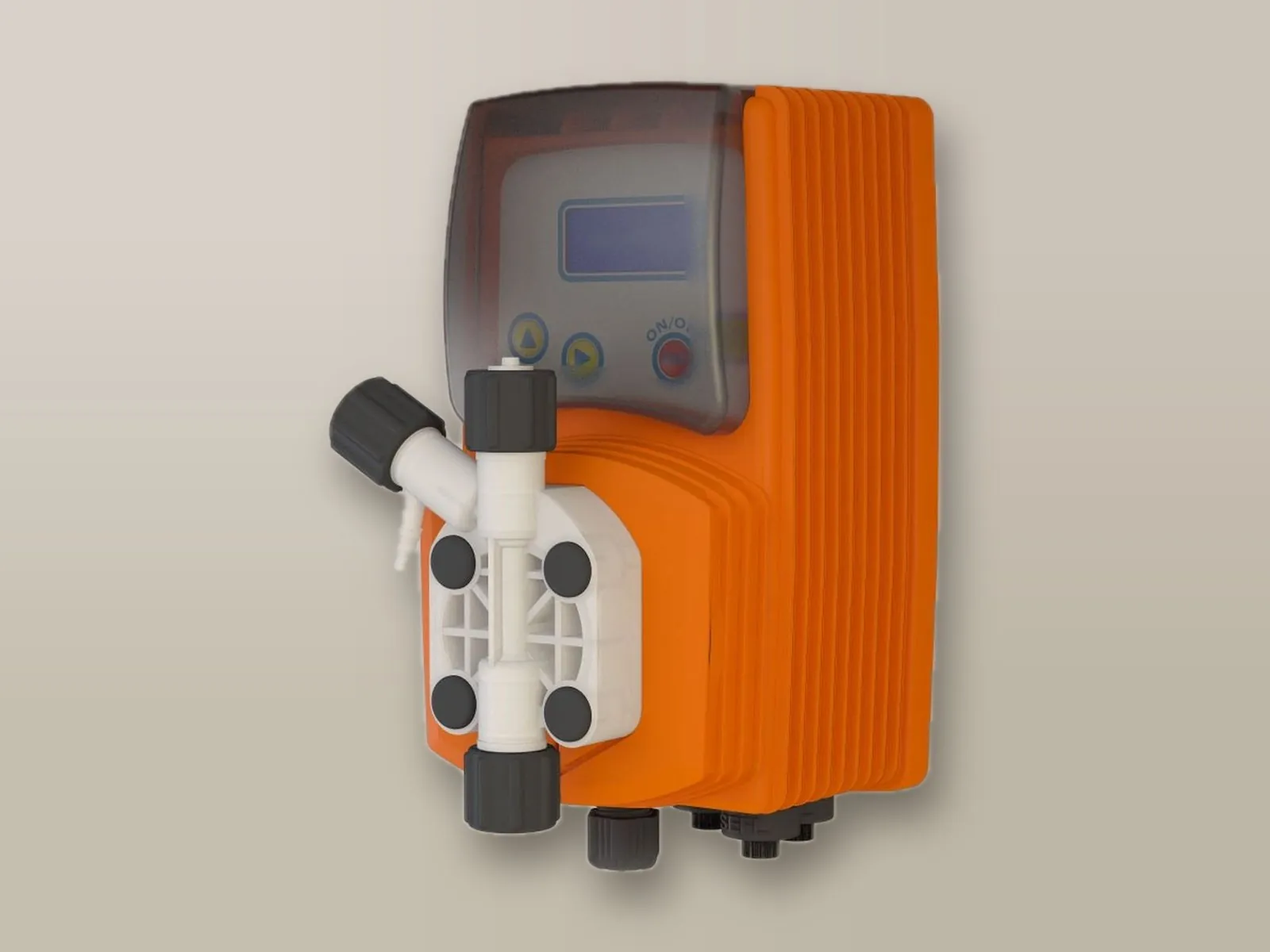
Solenoid diaphragm pump with self-venting head and PVDF (or PP) wetted parts, with flow rate and back pressure defined at the time of ordering (VMS or KMS series, up to 18 l/h and 20 bar). For larger volumes, stepper motor or motor-driven pumps are used, up to 1,000 l/h or up to 100 bar; additional pumps can dose activators and film-forming inhibitors.
The pumps →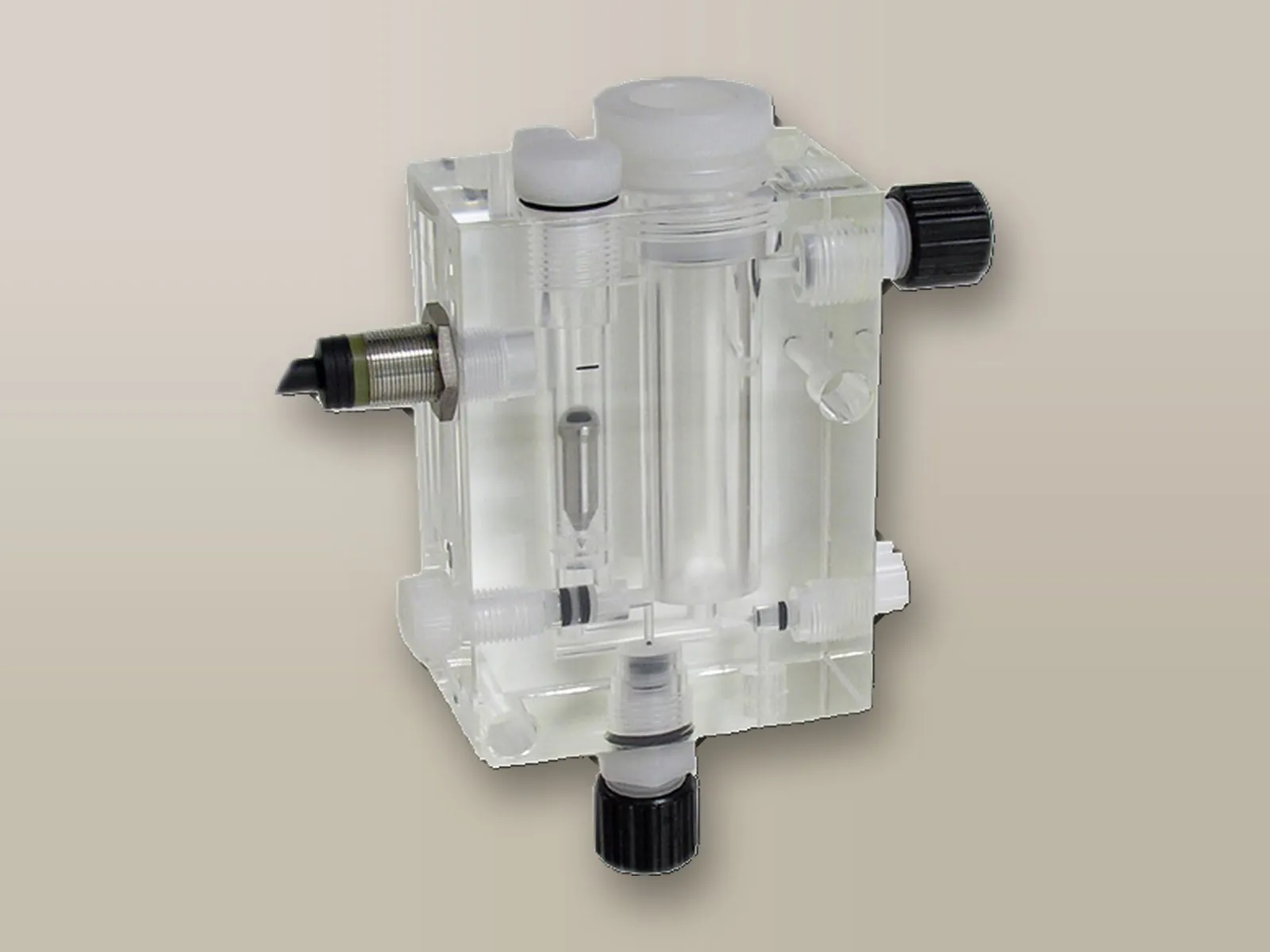
PEF1-E in PMMA, with flow rate adjustment and SEPR proximity sensor that stops dosing when there is no flow. A 5" filter with washable 60 µm PET cartridges or 100 µm string-wound cartridges (maximum 5 bar) is installed upstream.
Probe holders →The controller is common to all versions; what varies is the amperometric cell, fitted with a selective membrane for the individual oxidant.
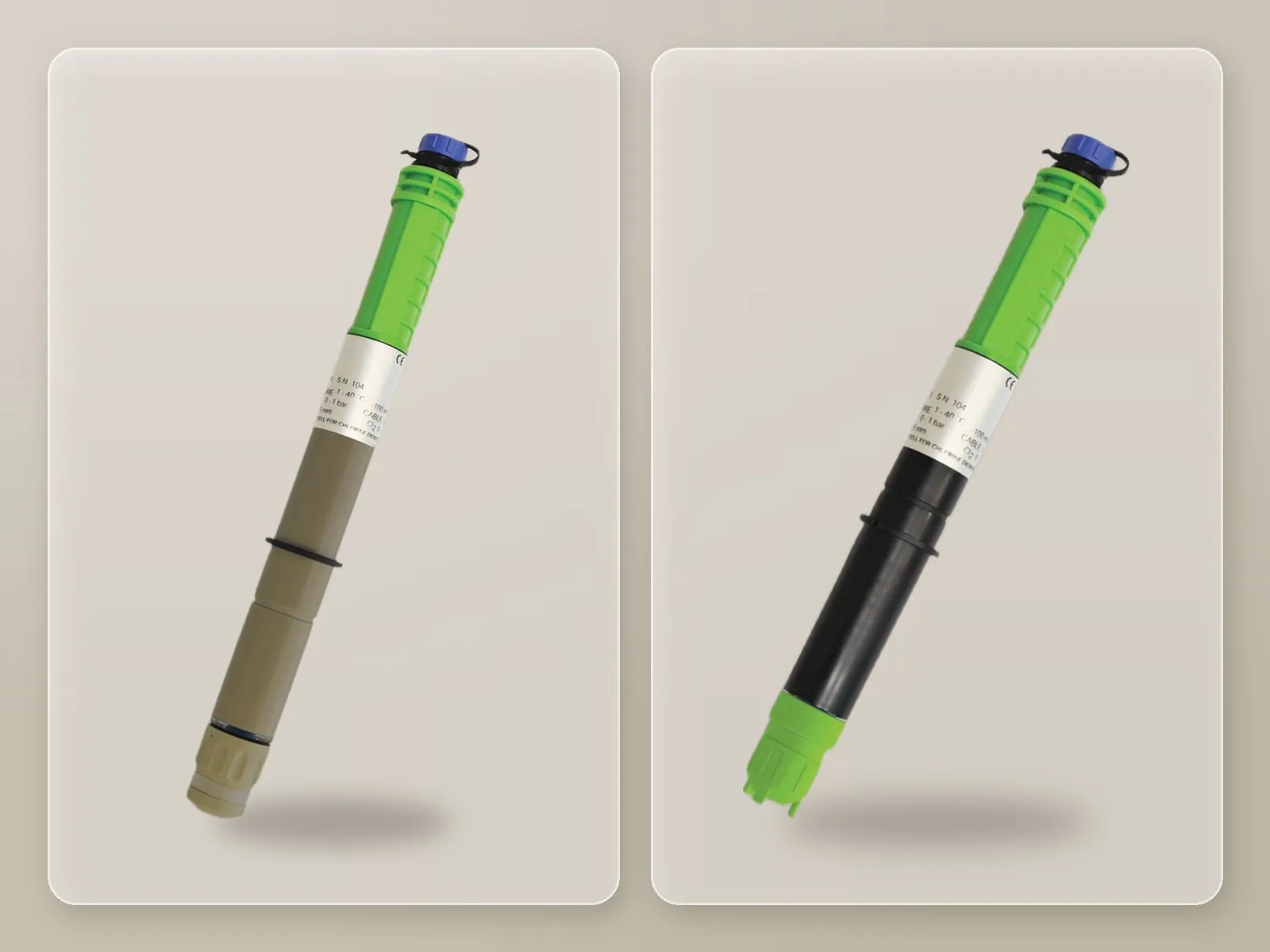
For measuring the concentration of hypochlorous acid in drinking water, water supply networks, hot and cold domestic water circuits and process water. The closed cell automatically compensates for pH and temperature; the ECL open cell allows free chlorine to be measured in swimming pools.
SCL3N · SCL3SClosed membrane cell, for cold water.
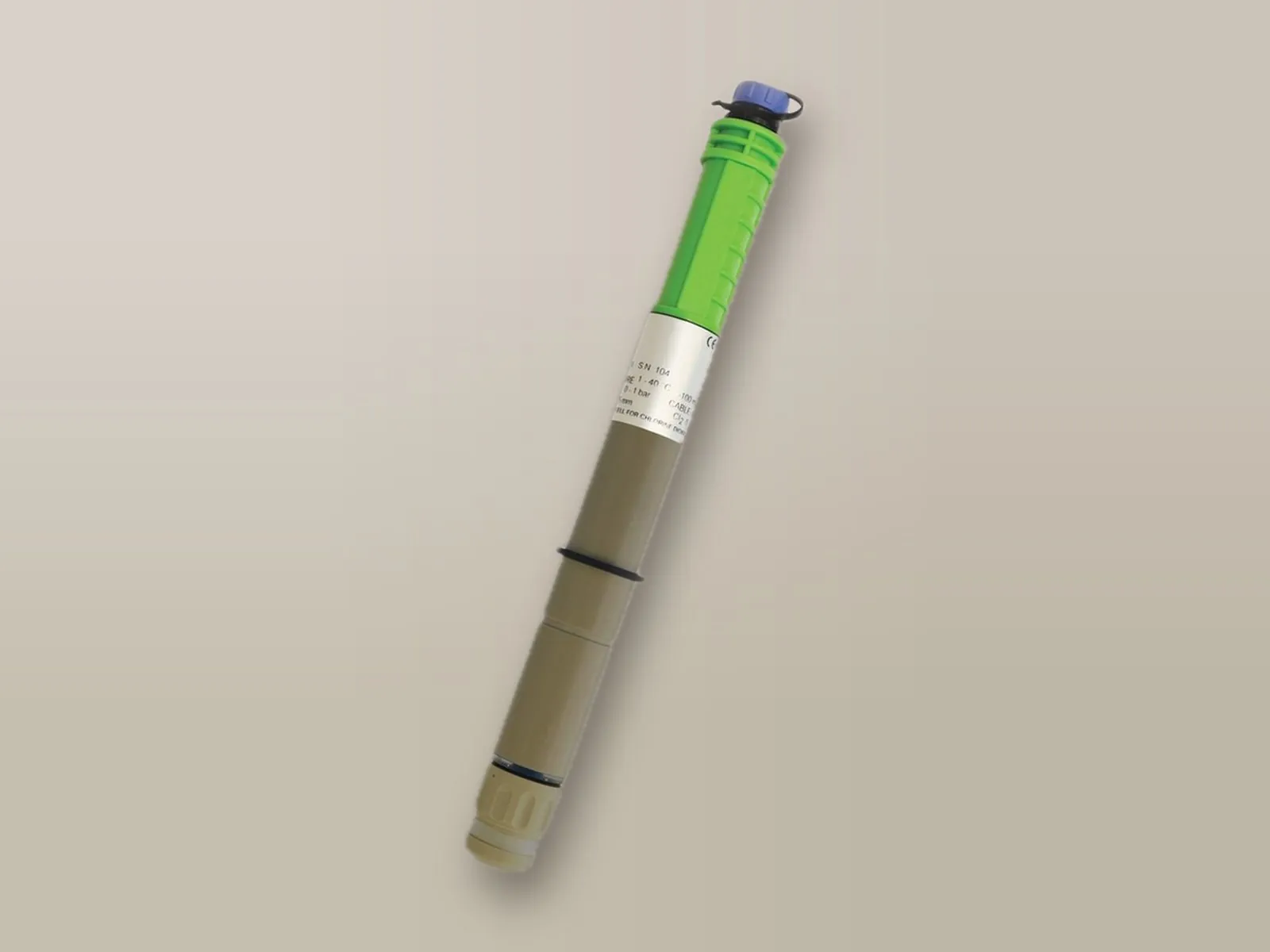 SCL18Self-cleaning 3-electrode cell, for hot water up to 70 °C.
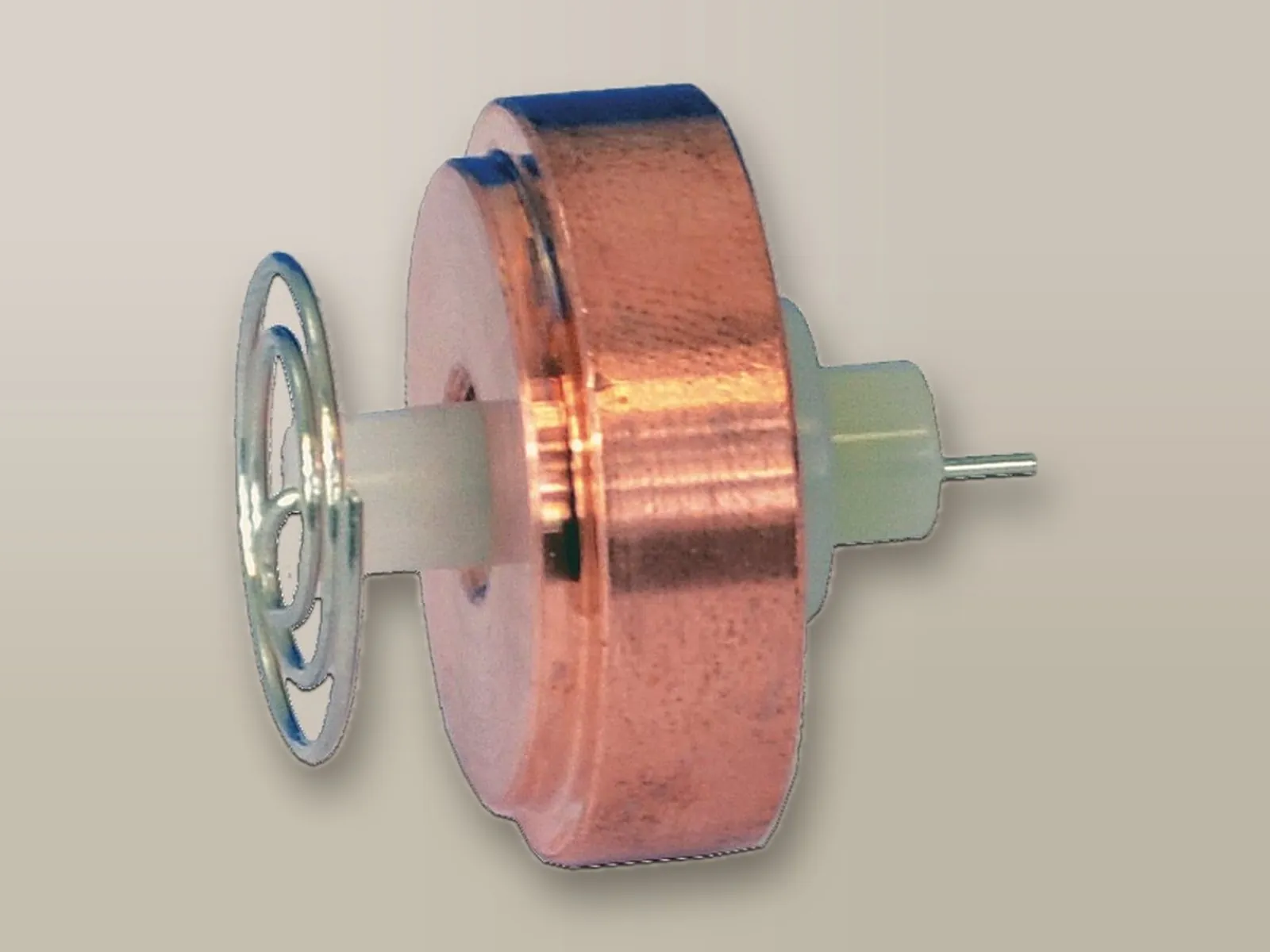 ECLOpen cell, for swimming pools.
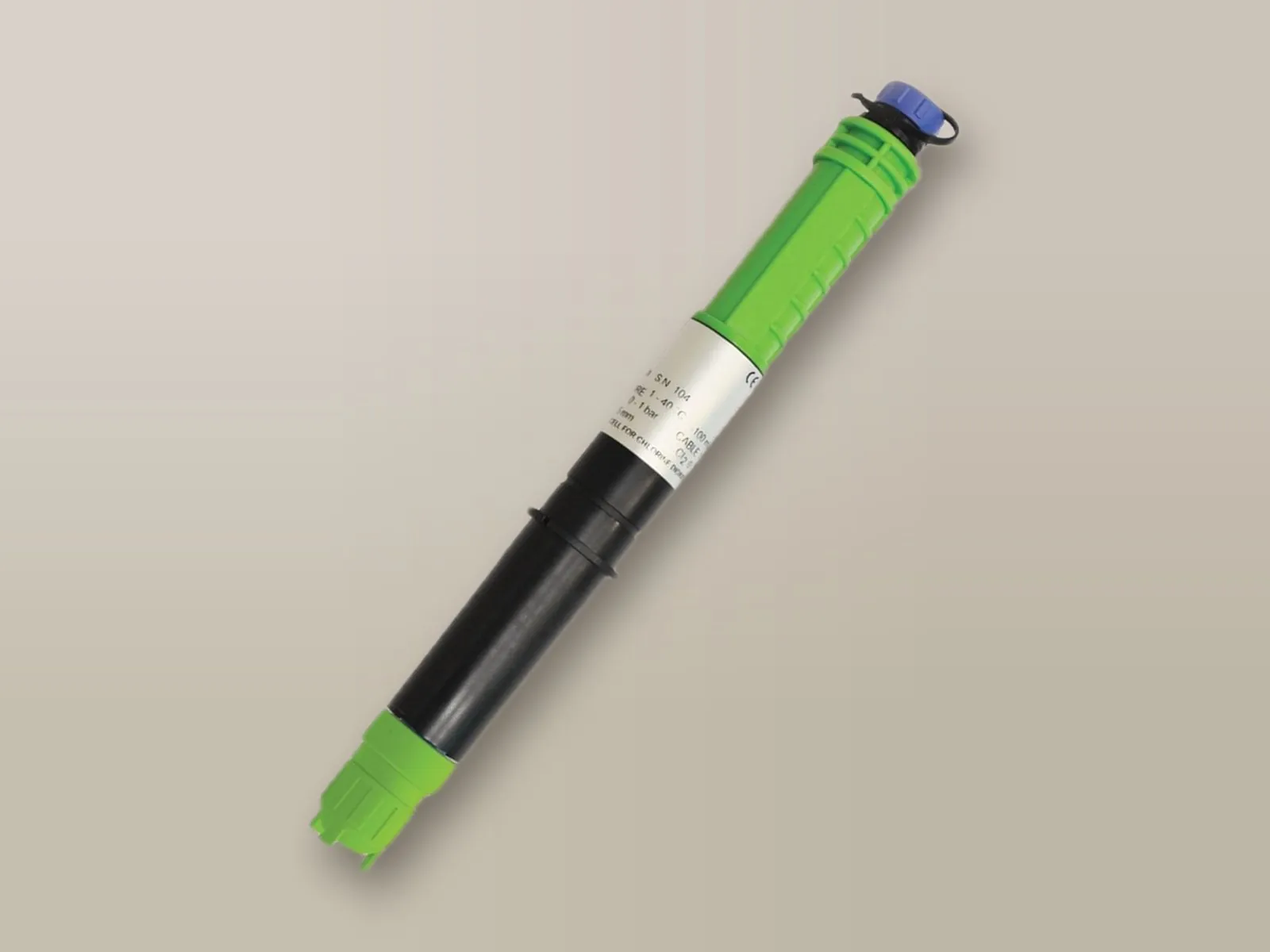
For measuring total chlorine, the sum of free chlorine and combined chlorine (monochloramines, dichloramines and trichloramines). From the measurement of total chlorine and free chlorine, for example with a two-channel controller, combined chlorine is obtained by difference.
SCL8Closed cell with selective membrane.
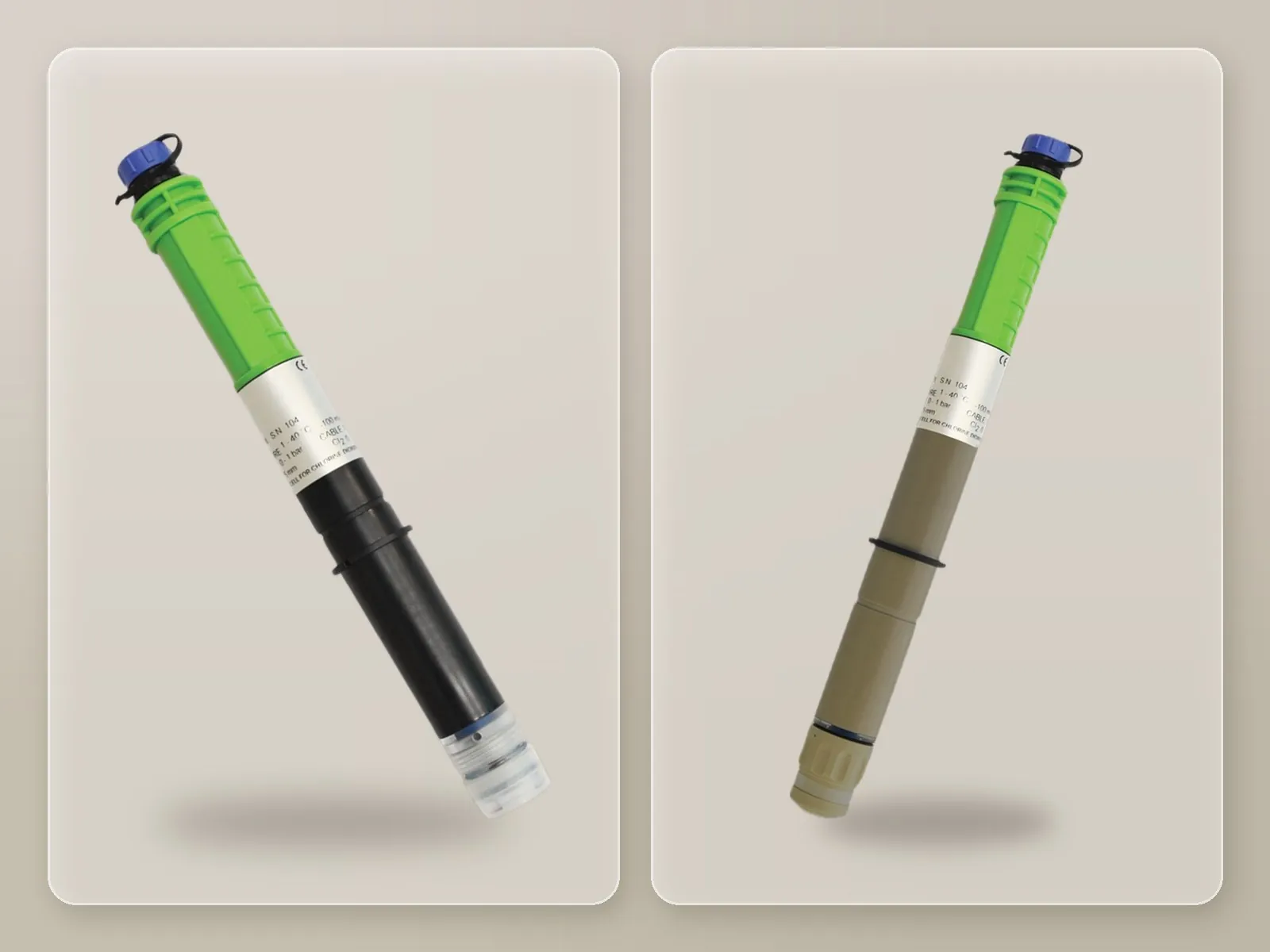
For measuring chlorine dioxide, stabilised or generated on site, in drinking water and domestic hot water circuits, including as anti-Legionella treatment. Dosing pumps for activators and film-forming inhibitors can be added.
SCL2Closed membrane cell, for cold water.
SCL17Self-cleaning cell for hot water up to 70 °C.
For measuring hypobromous acid in swimming pools, spas and cooling towers.
SBRClosed cell with bromine-selective membrane.
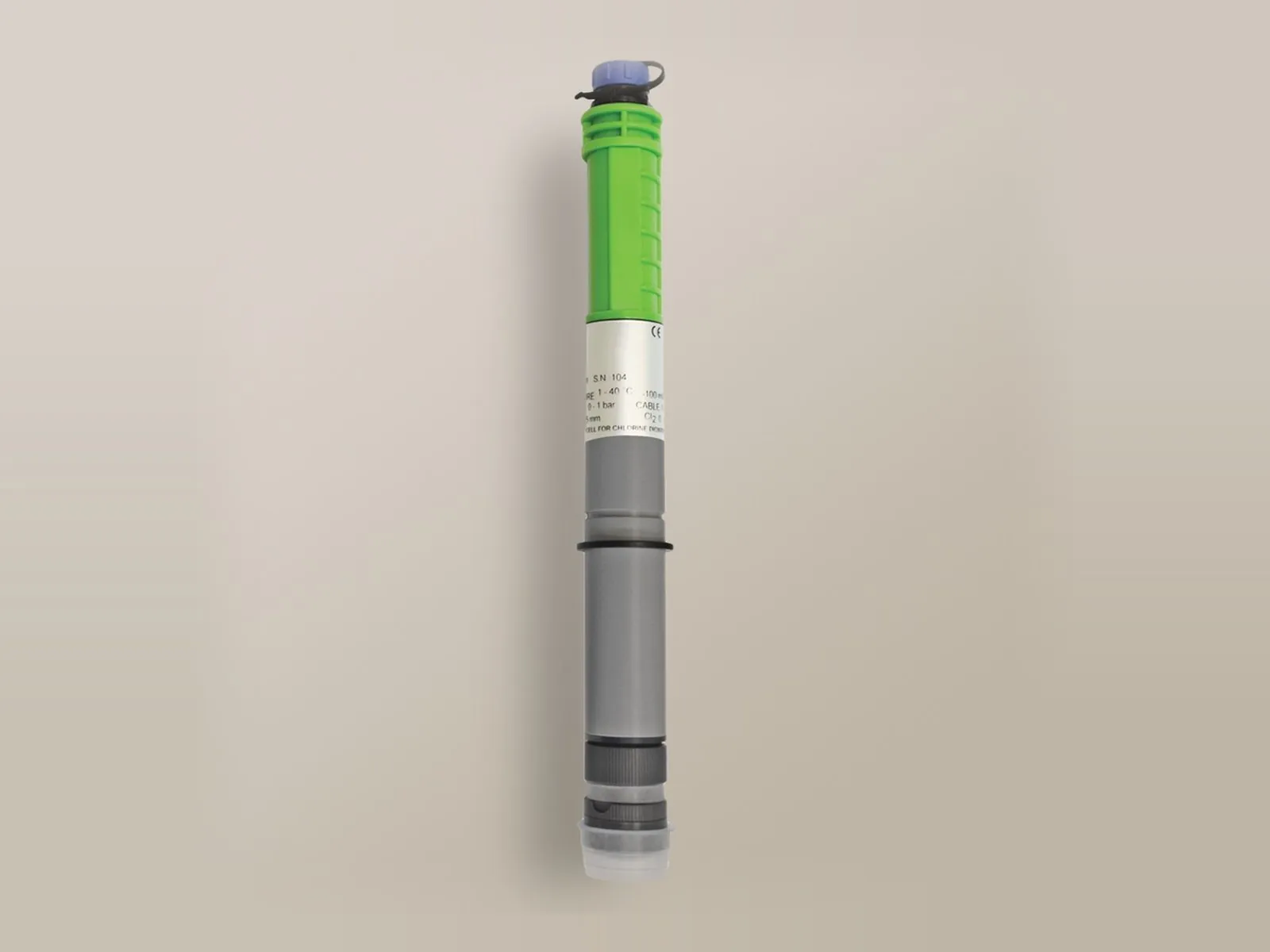
For measuring hydrogen peroxide in domestic water circuits, process water, swimming pools and wastewater.
SCL9Closed cell with selective membrane.
For measuring peracetic acid (PAA) in industrial process and washing water and in wastewater.
SCL11Closed cell with selective membrane.
For measuring ozone in water supply networks, drinking water treatment, the food industry and swimming pools. Ozone is generated on site and rapidly decomposes into oxygen: the controller starts and stops the ozone generator, or opens and closes a solenoid valve, until the set point is reached.
SCL10Closed cell with selective membrane.
For measuring chlorites, by-products of disinfection with chlorine dioxide, whose legal limit is 0.2 mg/l: when the threshold is exceeded, the controller generates an alarm, stops the dosing of chlorine dioxide or drives a solenoid valve.
SCTClosed cell with a membrane that excludes free chlorine, chlorine dioxide and chlorates.
SCL closed or ECL open amperometric cells are connected to the LDsCL controller, giving rise to the different versions.
Insight: Redox, open cell and closed cell → The electrodes are protected by a selective membrane that allows only the oxidant of interest to be measured, without interference from other substances. Automatic temperature compensation (and pH compensation for free chlorine), resolution down to 0.001 mg/l.
SCL cells → Membrane-free, with 3 electrodes (two measuring and one reference), with ball self-cleaning: suitable up to 70 °C and less sensitive to fouling. For free chlorine (SCL18) and chlorine dioxide (SCL17).
SCL17 and SCL18 → Direct measurement of free chlorine in mg/l in swimming pool water, including seawater.
ECL cells →The cell consists of an electronic section and a galvanic section.
Insight: Redox, open cell and closed cell →The measuring electrodes are protected from direct contact with the water by a semi-permeable membrane: only the specific oxidant is measured, without interference from other substances that could alter the measurement.
The electrodes of the galvanic section detect the electric current generated by the dissociation of the oxidant.
The cell electronics compensate the reading for temperature (and, where applicable, pH) and send the signal to the controller, which shows the concentration in mg/l on the display.
Amperometric measurement with selective membrane and automatic temperature compensation; cell installed in by-pass, in a flow-through probe holder.
| Parameter | Range | Resolution | Cell | Compensation |
|---|---|---|---|---|
| Free chlorine | 0 – 0.5 mg/l 0 – 2 mg/l 0 – 20 mg/l | 0.001 mg/l 0.001 mg/l 0.01 mg/l | SCL3N, SCL3S, SCL18 · ECL | pH and temperature |
| Total chlorine | 0 – 2 mg/l 0 – 20 mg/l | 0.001 mg/l 0.01 mg/l | SCL8 | Temperature |
| Chlorine dioxide | 0 – 0.5 mg/l 0 – 2 mg/l 0 – 20 mg/l | 0.001 mg/l 0.001 mg/l 0.01 mg/l | SCL2, SCL17 | Temperature |
| Bromine | 0 – 20 mg/l | 0.01 mg/l | SBR | Temperature |
| Hydrogen peroxide | 0 – 200 mg/l | 0.1 mg/l | SCL9 | Temperature |
| Peracetic acid | 0 – 200 mg/l 0 – 2,000 mg/l | 0.1 mg/l 1 mg/l | SCL11 | Temperature |
| Ozone | 0 – 2 mg/l 0 – 20 mg/l | 0.001 mg/l 0.01 mg/l | SCL10 | Temperature |
| Chlorites | 0 – 2 mg/l | 0.001 mg/l | SCT | Temperature |
| Temperature | 0 – 100 °C | 0.1 °C | – | – |
| SCL3N/0.5 | SCL3N/2 | SCL3N/20 | SCL18/0.5 | SCL18/2 | SCL18/20 | SCL3S/20 | |
|---|---|---|---|---|---|---|---|
| Measuring range | 0 – 0.5 mg/l | 0 – 2 mg/l | 0 – 20 mg/l | 0 – 0.5 mg/l | 0 – 2 mg/l | 0 – 20 mg/l | 0 – 20 mg/l |
| Resolution | 0.001 | 0.001 | 0.01 | 0.001 | 0.001 | 0.01 | 0.01 |
| Free chlorine | Inorganic | Inorganic | Inorganic | Inorganic | Inorganic | Inorganic | Organic and inorganic |
| Water | Fresh | Fresh | Fresh | Fresh | Fresh | Fresh | Fresh or salt |
| Electrodes | 2 | 2 | 2 | 3 | 3 | 3 | 2 |
| Selective membrane | Yes | Yes | Yes | No | No | No | Yes |
| Automatic compensation | pH and temperature | pH and temperature | pH and temperature | pH and temperature | pH and temperature | pH and temperature | Temperature |
| Self-cleaning | – | – | – | Yes | Yes | Yes | – |
| Operating pH | 5 – 9.5 | 5 – 9.5 | 5 – 9.5 | 5 – 9 | 5 – 9 | 5 – 9 | 5.5 – 9.5 |
| Operating temperature | 1 – 40 °C | 1 – 40 °C | 1 – 40 °C | 5 – 70 °C | 5 – 70 °C | 5 – 70 °C | 5 – 45 °C |
| Operating pressure | 1 bar | 1 bar | 1 bar | 8 bar | 8 bar | 8 bar | 1 bar |
| Water flow | 30 l/h | 30 l/h | 30 l/h | 40 l/h | 40 l/h | 40 l/h | 30 l/h |
| SCL2/0.5 | SCL2/2 | SCL2/20 | SCL17/0.5 | SCL17/2 | SCL17/20 | |
|---|---|---|---|---|---|---|
| Measuring range | 0 – 0.5 mg/l | 0 – 2 mg/l | 0 – 20 mg/l | 0 – 0.5 mg/l | 0 – 2 mg/l | 0 – 20 mg/l |
| Resolution | 0.001 | 0.001 | 0.01 | 0.001 | 0.001 | 0.01 |
| Electrodes | 2 | 2 | 2 | 3 | 3 | 3 |
| Selective membrane | Yes | Yes | Yes | No | No | No |
| Self-cleaning | – | – | – | Yes | Yes | Yes |
| Operating pH | 1 – 6 | 1 – 6 | 1 – 6 | 5 – 9 | 5 – 9 | 5 – 9 |
| Operating temperature | 1 – 40 °C | 1 – 40 °C | 1 – 40 °C | 5 – 70 °C | 5 – 70 °C | 5 – 70 °C |
| Operating pressure | 1 bar | 1 bar | 1 bar | 8 bar | 8 bar | 8 bar |
| Water flow | 30 l/h | 30 l/h | 30 l/h | 40 l/h | 40 l/h | 40 l/h |
Automatic temperature compensation on all models.
| SCL8/2 | SCL8/20 | SBR/20 | SCL9 | SCL11/200 | SCL11/2000 | SCL10 | SCT | |
|---|---|---|---|---|---|---|---|---|
| Measurement | Total chlorine | Total chlorine | Bromine | Hydrogen peroxide | Peracetic acid | Peracetic acid | Ozone | Chlorites |
| Measuring range | 0 – 2 mg/l | 0 – 20 mg/l | 0 – 20 mg/l | 0 – 200 mg/l | 0 – 200 mg/l | 0 – 2,000 mg/l | 0 – 20 mg/l | 0 – 2 mg/l |
| Resolution | 0.001 | 0.01 | 0.01 | 0.1 | 0.1 | 1 | 0.01 | 0.001 |
| Operating pH | 4 – 12 | 4 – 12 | 6.5 – 9.5 | 1 – 11 | 1 – 6 | 1 – 6 | 2 – 11 | 5.5 – 9.5 |
| Operating pressure | 1 bar | 1 bar | 0.5 bar | 1 bar | 1 bar | 1 bar | 1 bar | 1 bar |
All models: 2 electrodes, selective membrane, automatic temperature compensation, operating temperature 1 – 40 °C, water flow 30 l/h.
| ECL6 | ECL6/E | ECL7 | ECL12 | ECL12/E | ECL20 | ECL21 | |
|---|---|---|---|---|---|---|---|
| Water | Fresh | Fresh | Fresh | Sea | Sea | Fresh | Sea |
| Flow stabiliser | Yes | Yes | Yes | Yes | Yes | – | – |
| Flow sensor and regulation | Yes | Yes | Yes | Yes | Yes | – | – |
| Probe holder for | Temperature, pH, Redox | Temperature | Temperature, pH, Redox (PG13.5) | Temperature, pH, Redox | Temperature | – | – |
All models: amperometric system, range 0 – 10 mg/l, resolution 0.01, organic and inorganic free chlorine, operating temperature 1 – 40 °C, pressure 0.4 – 5 bar, water flow 40 l/h.
Controller, dosing pumps, filter and probe holder are supplied mounted on a panel, to be connected in by-pass to the water circuit to be treated: the photo shows a panel with LDsCL controller, three dosing pumps, filter and amperometric cell in the flow-through probe holder.
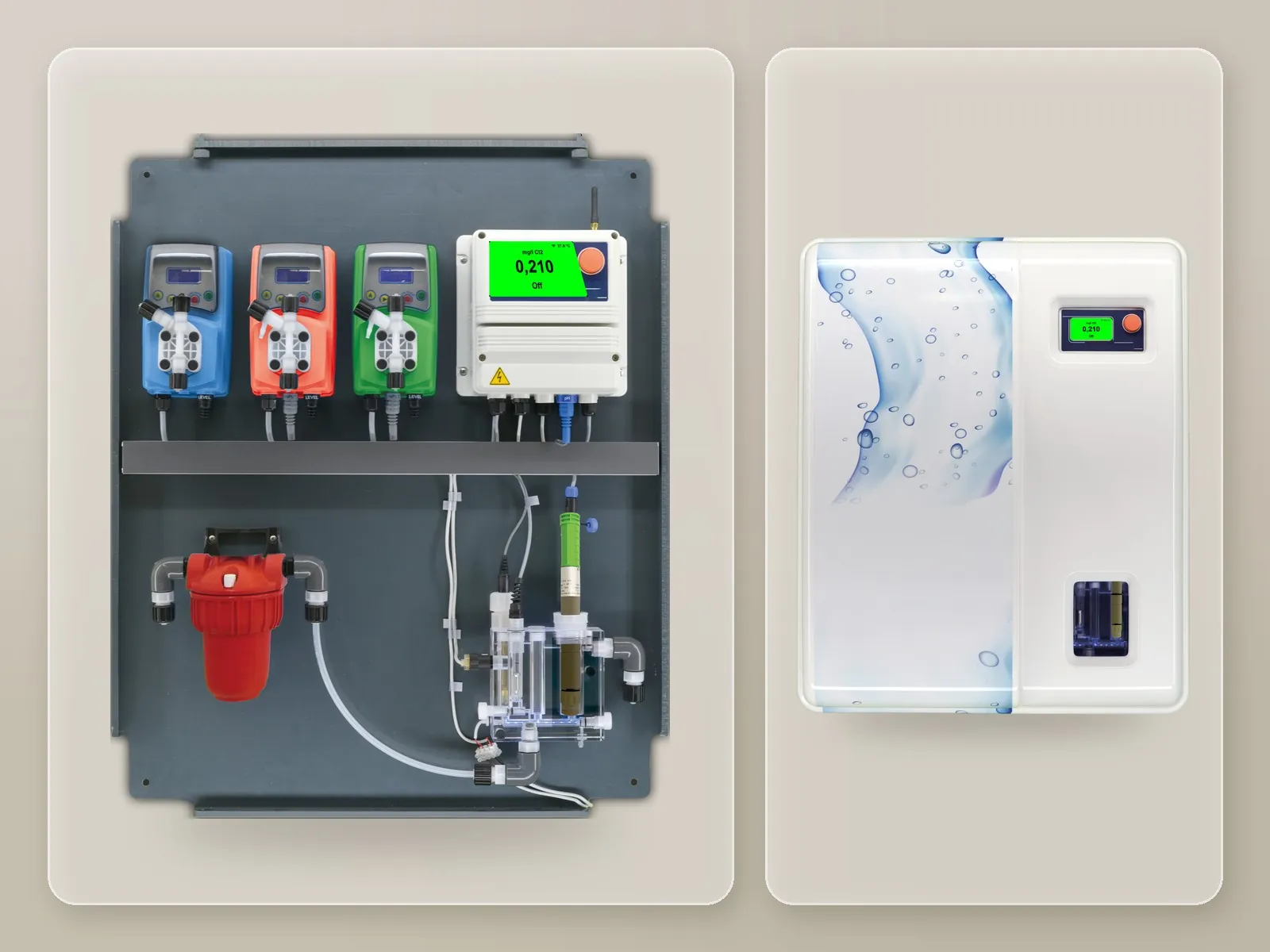
In domestic hot water circuits, the system doses chlorine or chlorine dioxide into the cold make-up water and controls the residual on the hot recirculation by means of the SCL18 and SCL17 self-cleaning cells. Where necessary, pumps for film-forming inhibitors and activators are added.
Legionella: risks, legislation and treatments →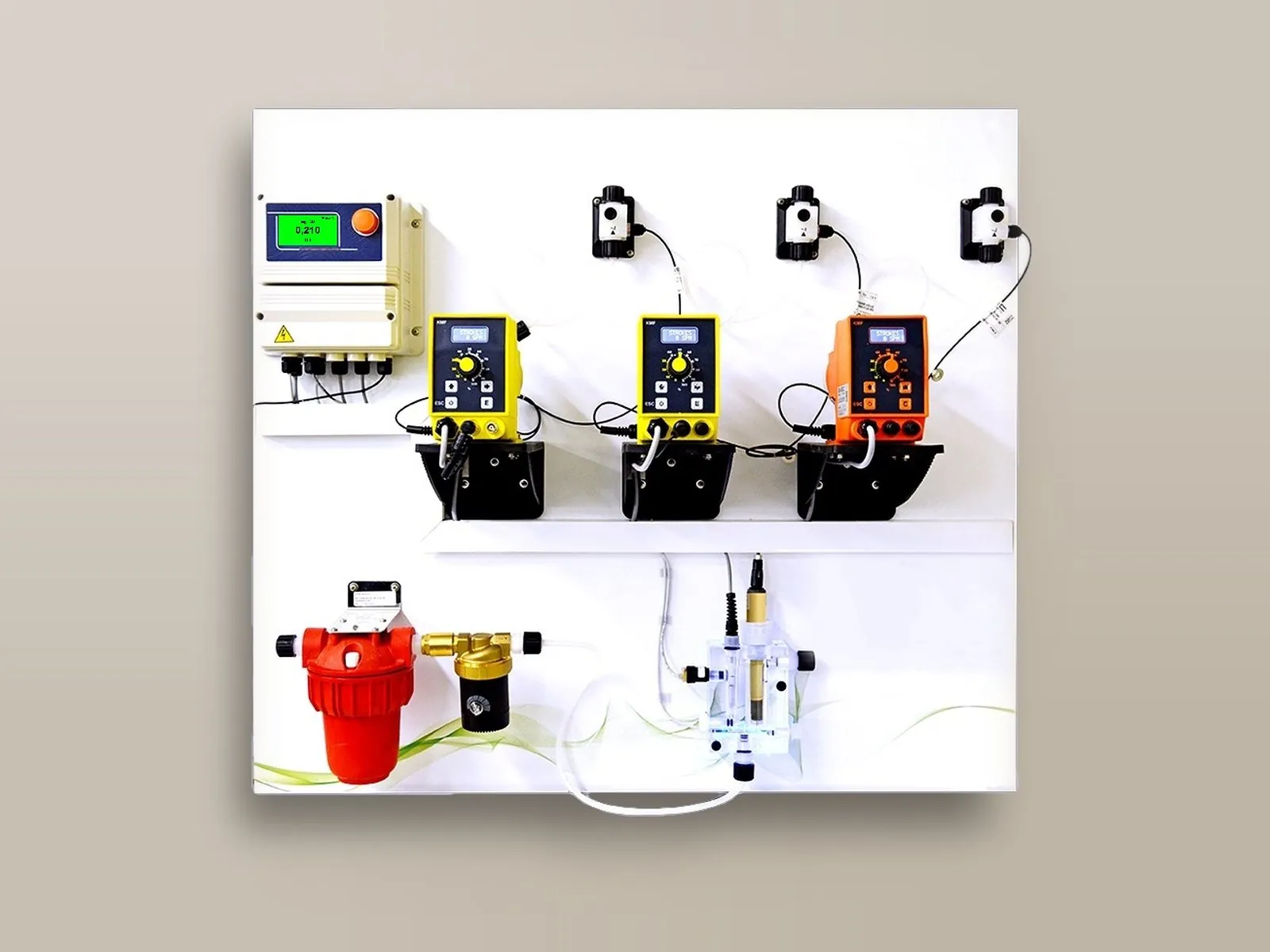
LDsCL controller, pumps for disinfectant, make-up product and film-forming inhibitor, filter and probe holder.
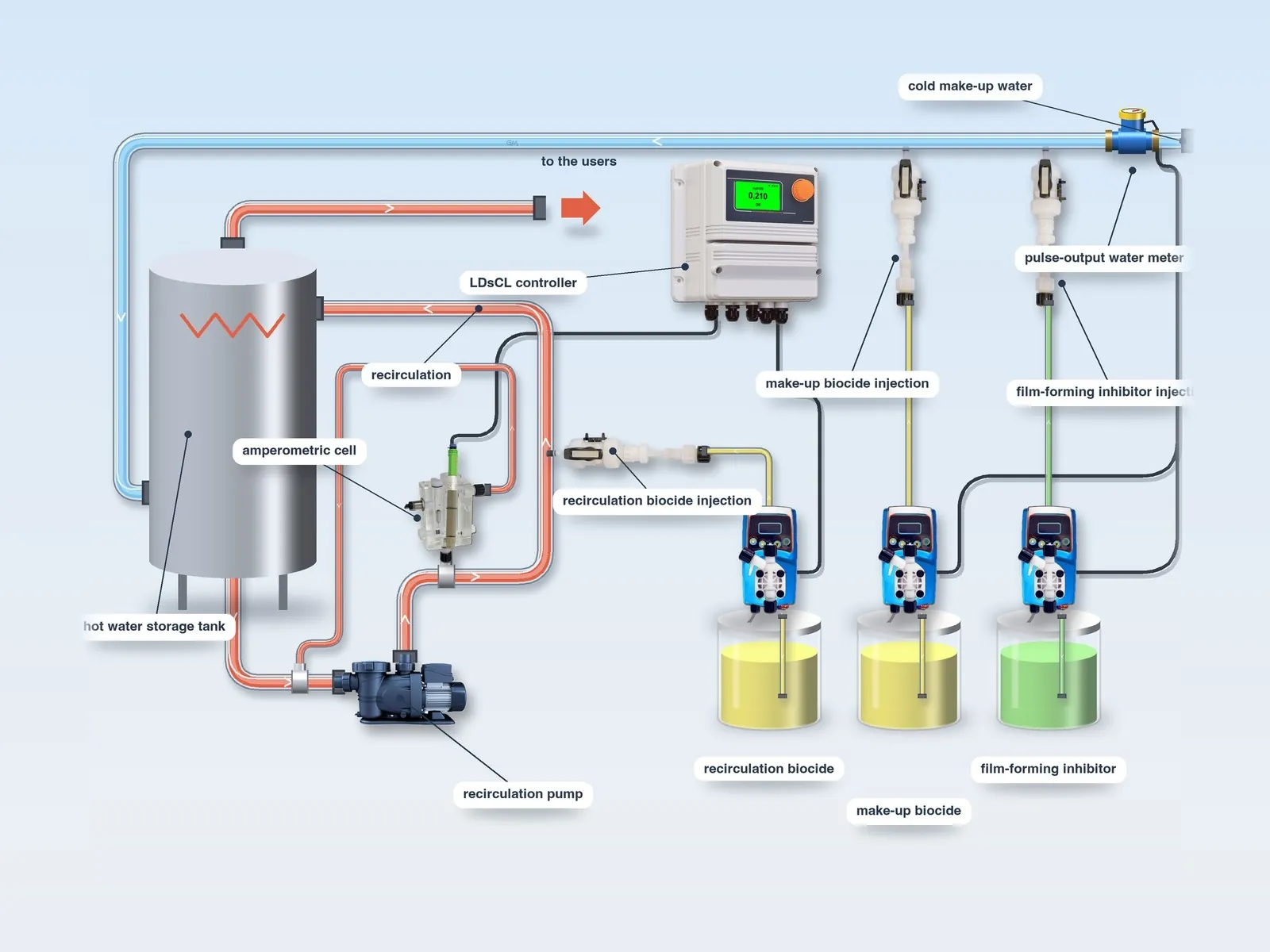
Dosing on the circuit, on the make-up water and of the film-forming inhibitor.
It acquires the measurement from the probe and drives the dosing pump in proportion to the value detected. It is supplied pre-assembled on a panel, ready for connection.
Multicolour backlit display that indicates the different operating states by changing colour. Programming via a single knob.
Proportional, ON/OFF, PWM and PID dosing, with delayed dosing start.
Permanent data storage and a system log viewable on the display; the internal log can be exported to a USB memory stick for processing with a spreadsheet.
Chemical level, no flow, maximum dosing time exceeded, probe failure, out-of-range reading; acoustic or visual signalling via the alarm output.
The dosing pump, with flow rate and back-pressure defined at the time of ordering, is connected to the pulse output (and/or 0-4/20 mA) and operates in proportional or ON/OFF mode. A pre-calibrated injection valve and a magnetic level probe with coaxial foot filter, which stops the pump when the chemical runs out, are supplied as standard.
By changing colour, the controller’s backlit display indicates the different operating states, which can be recognised even from a distance.
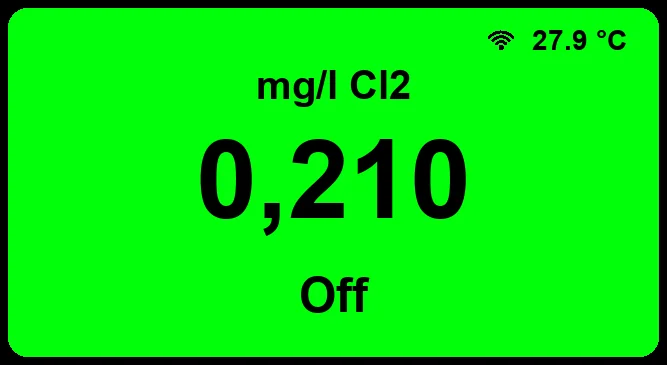
Measurement and dosing according to the set parameters.
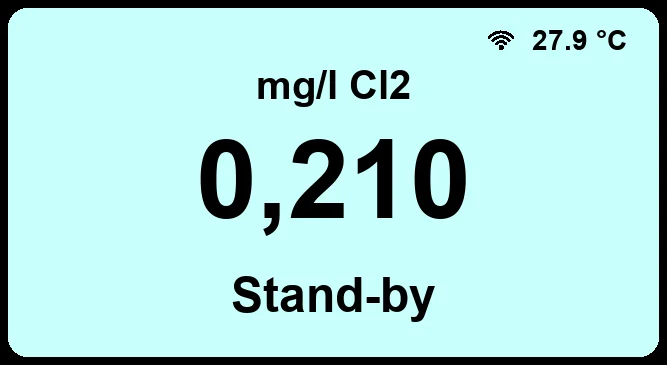
Controller in stand-by.
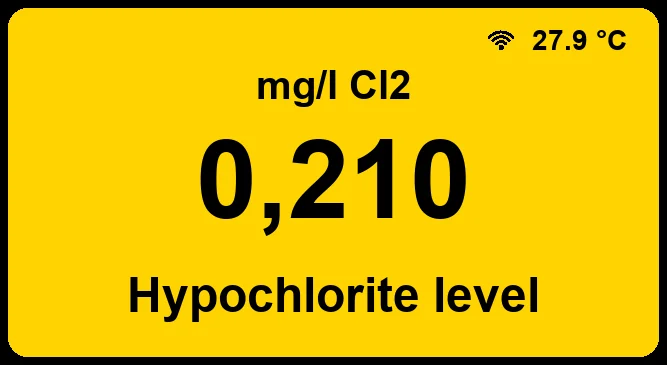
Warning signal, for example the chemical level.
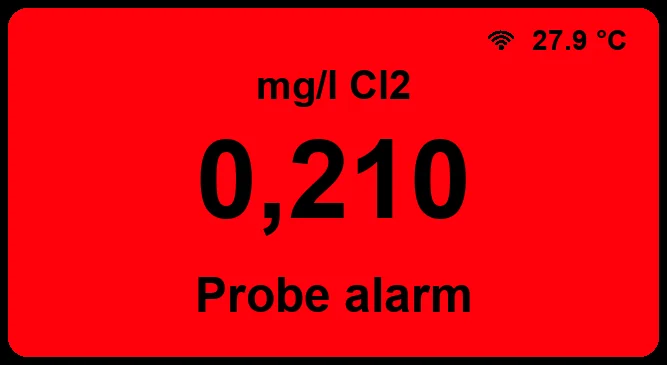
Alarm signal, for example from the probe.
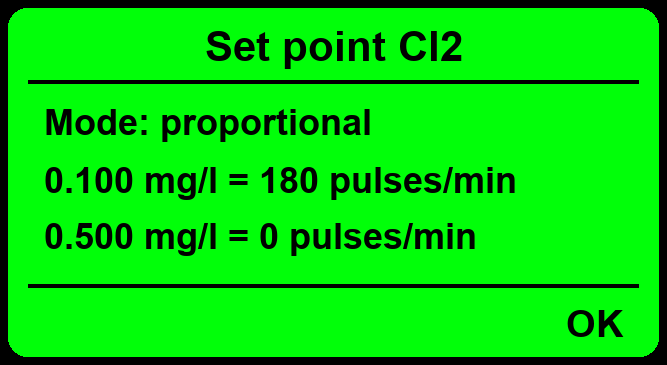
Inputs, outputs, control modes and alarms of the controller.
The controllers can be remotely controlled bidirectionally (read and write) from the web portal, from PC, tablet and smartphone: viewing of measurements, modification of set points, dosing and alarms, receipt of alarms and download of logs. Alternatively, integration into your PLC via Modbus is possible.
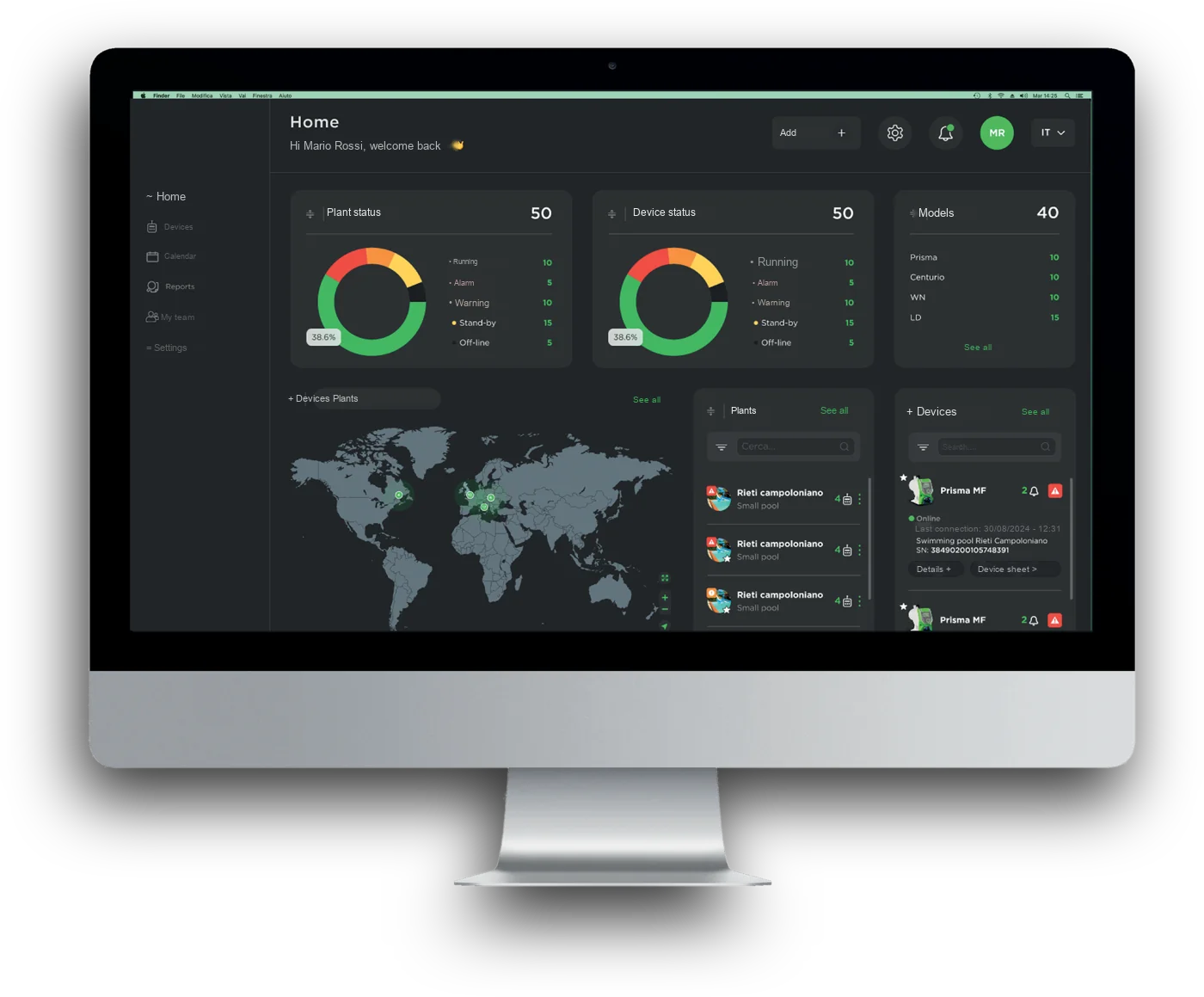
Connection to the web portal via network cable: measurements, set points, dosing and alarms accessible from PC, tablet and smartphone.
Wireless connection to the web portal, with the same functions as the cable connection.
Connection via the cellular network for installations without a local network, with alarm notification by SMS or e-mail.
Integration into your PLC via serial port.

Current signal proportional to the measured value, for remote monitoring or for controlling pumps and other instrumentation.
One communication type at a time: Ethernet, Wi-Fi, 4G or Modbus RTU (built into the standard versions, optional on the PLUS versions). 4/20 mA outputs and meter input standard on the PLUS versions, optional on the standard versions.
A single account brings together all registered installations, each with its own devices: the web portal, free of charge and with no subscription, can be accessed from PC, Mac, tablet and smartphone and allows every parameter to be both viewed and changed, with an encrypted connection and protected access.
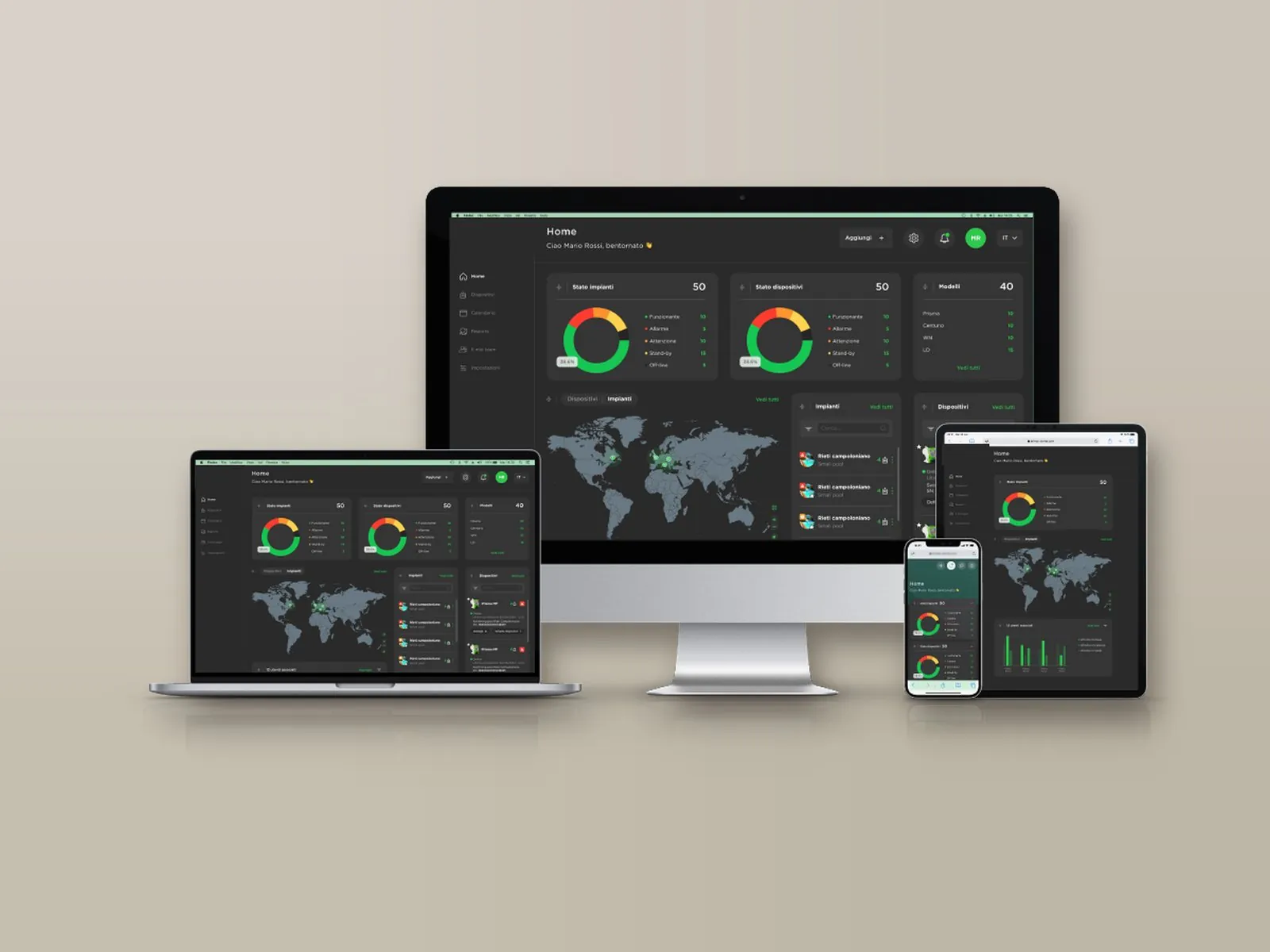
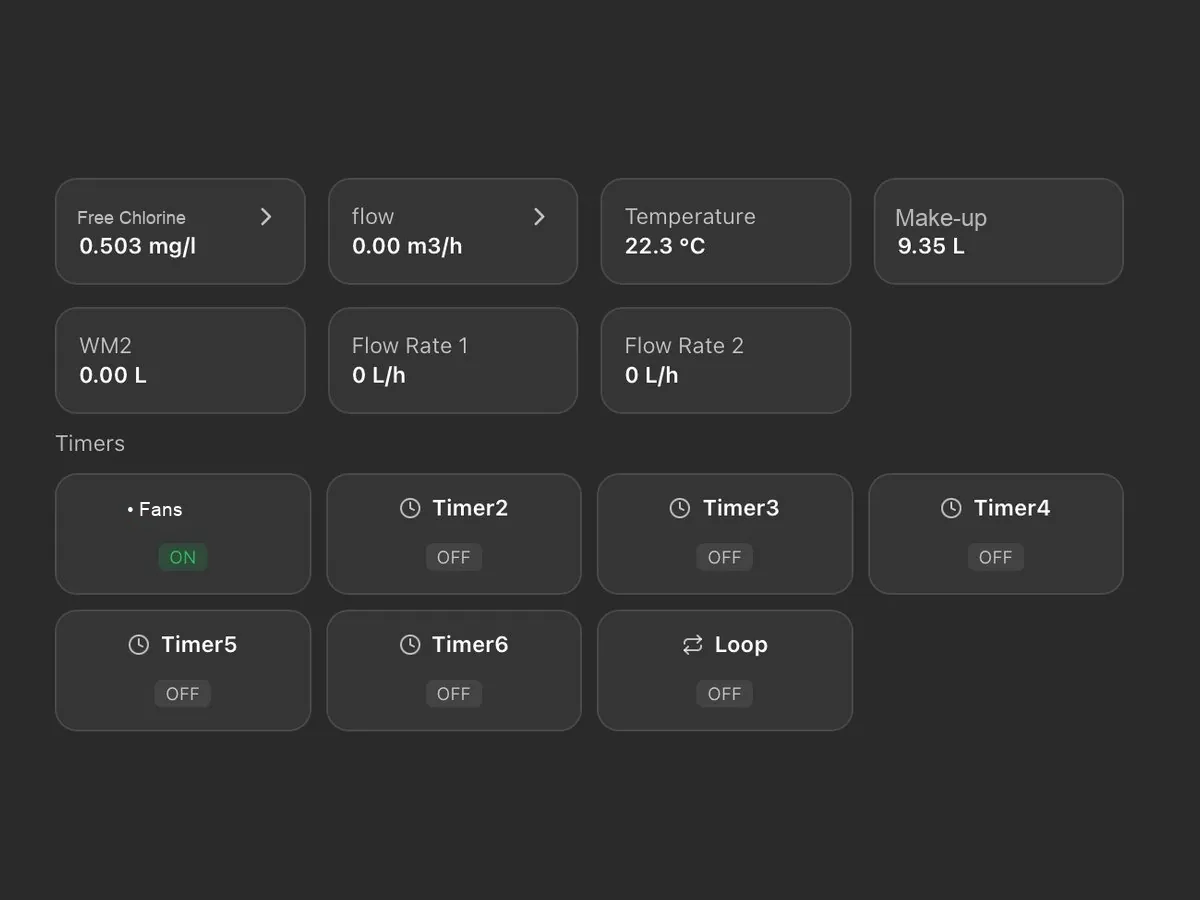
On a single screen: probe readings, chemical levels, pump activation thresholds and active alarms, with the status of installations and devices (normal, warning, alarm, standby, not connected).
Installations appear on an interactive map with their status and open with a click; for each one, the local weather conditions and temperature are also shown.
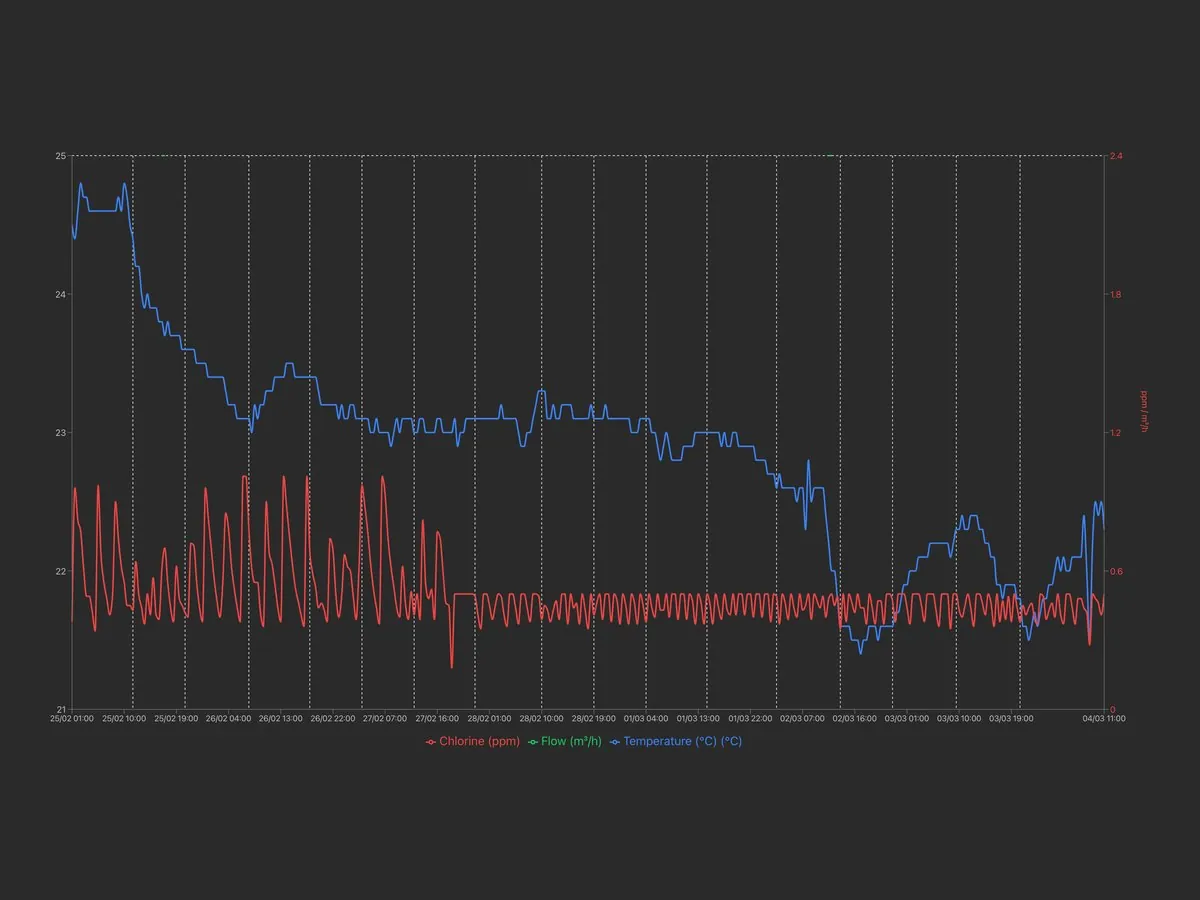
Archive of measurements and alarms, available for consultation at any time with charts and numerical reports exportable in Excel format.
Alarm thresholds for readings, dosing, faulty probe and out-of-range readings, with notification by e-mail or SMS depending on the communication system; a warning is also issued when an installation remains disconnected beyond the set time.
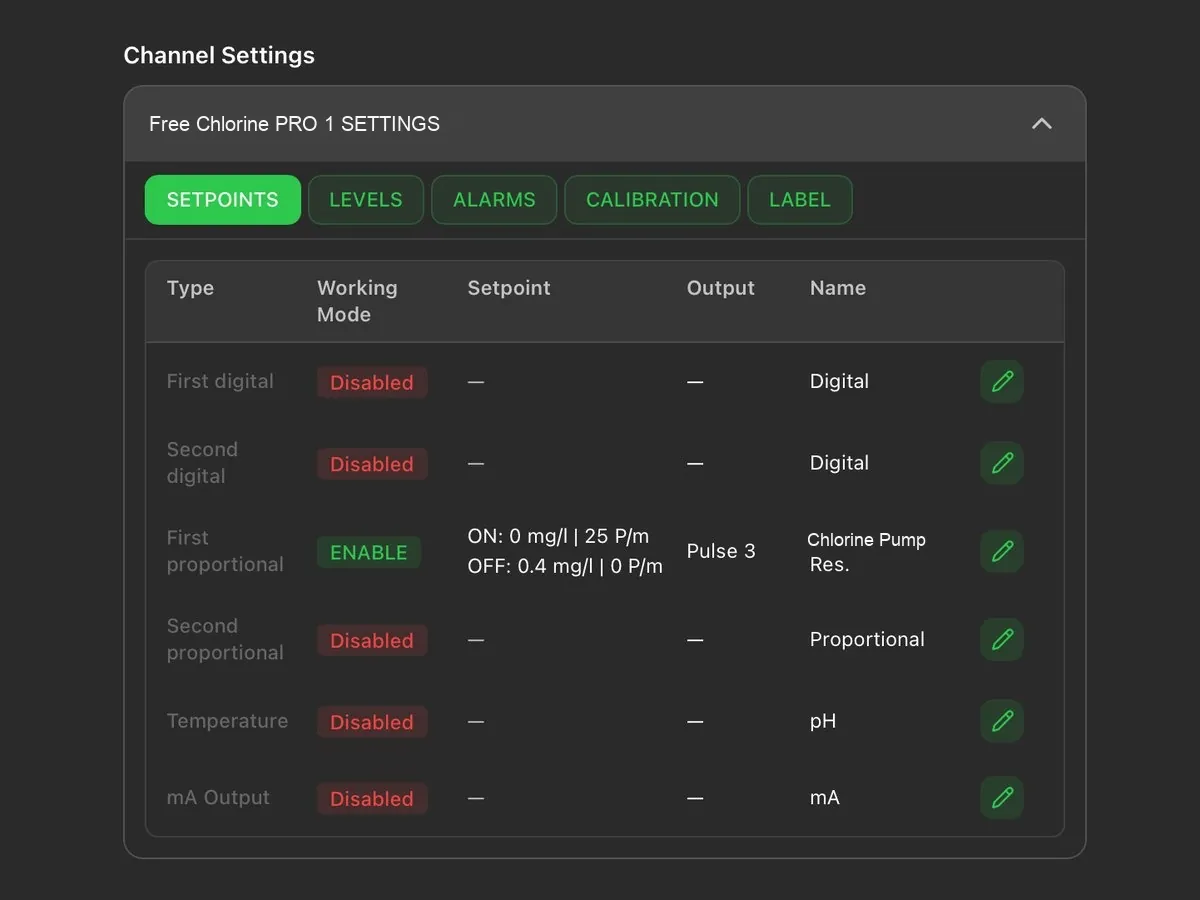
Remote modification of the set points, of the dosing pump activation thresholds and of the corresponding hourly flow rate.
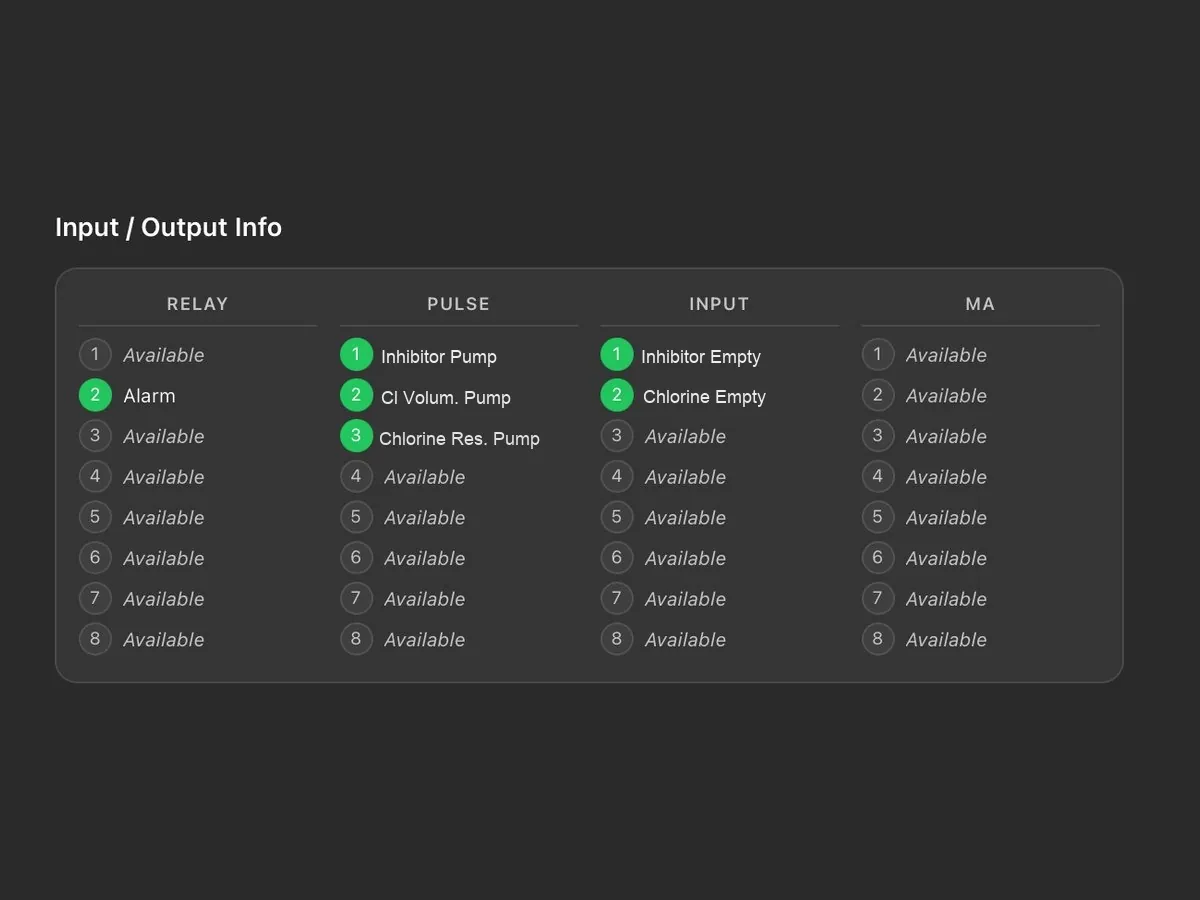
Status of relays, pulse outputs, digital inputs and current outputs, with the name assigned to each connection.
Tasks are scheduled by installation or by device and assigned to technicians; a reminder is sent by e-mail two days before the due date. Each task is shown as scheduled, due, overdue or completed.
The main account has full access and creates the technicians’ accounts, each enabled only for the assigned installations and devices; the last login and activity of each technician are visible.
Reports on devices, tasks and technicians, downloadable in PDF or CSV with the customer’s logo; the log keeps the history of operations and disconnections.
Logo, main colour and light or dark theme; the tiles on the main screen can be rearranged by dragging them. Two installations can be displayed side by side for comparison.
Each device is added through a guided procedure: the model is recognised automatically and associated with the installation, together with the technician to be contacted.
As an alternative to the portal, the Modbus RTU or TCP/IP port allows integration into the plant supervision system.
Accessories available on request to adapt the system to the requirements of the installation.
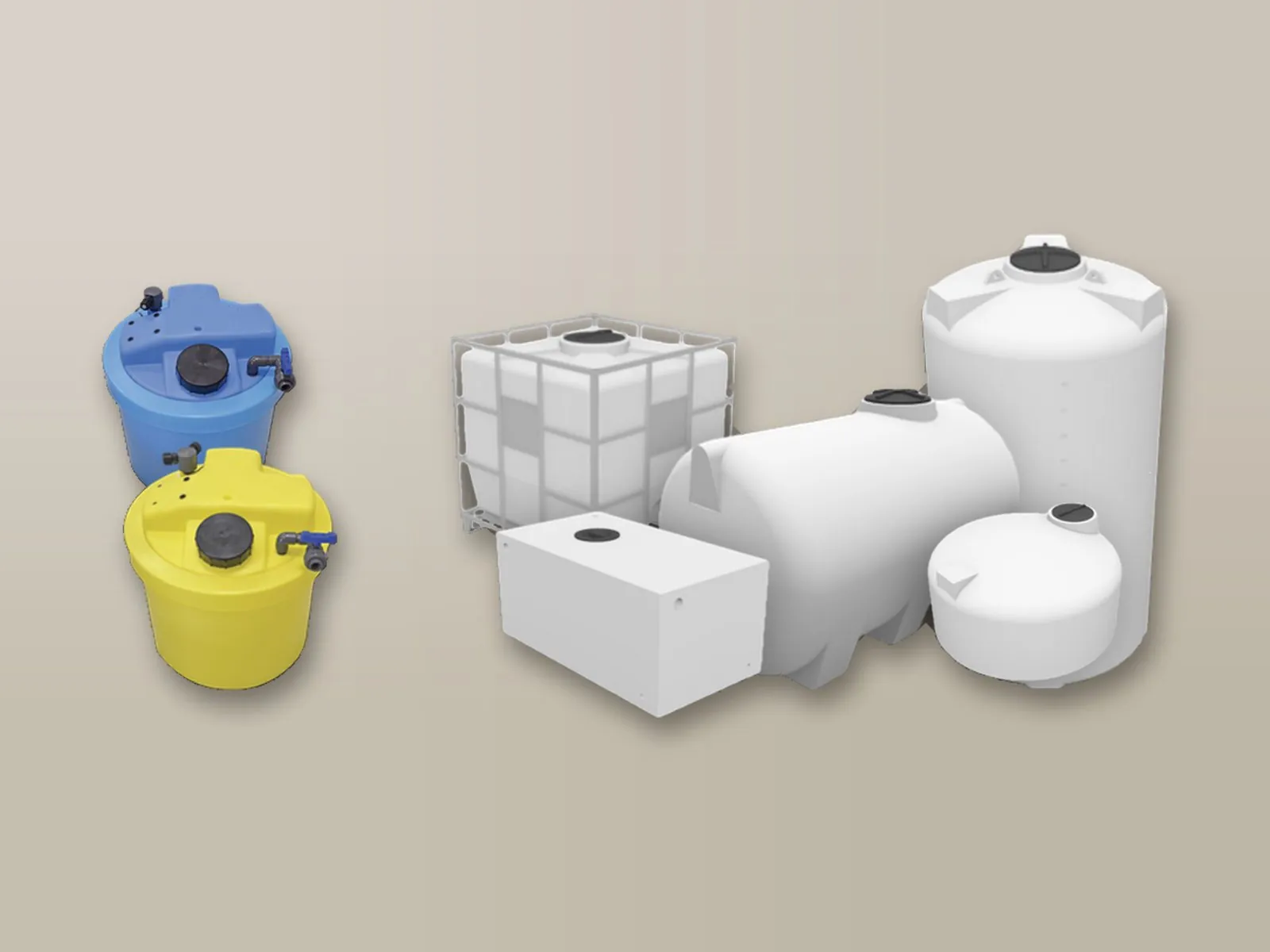
PE tanks for the chemical, with safety bund.
Details →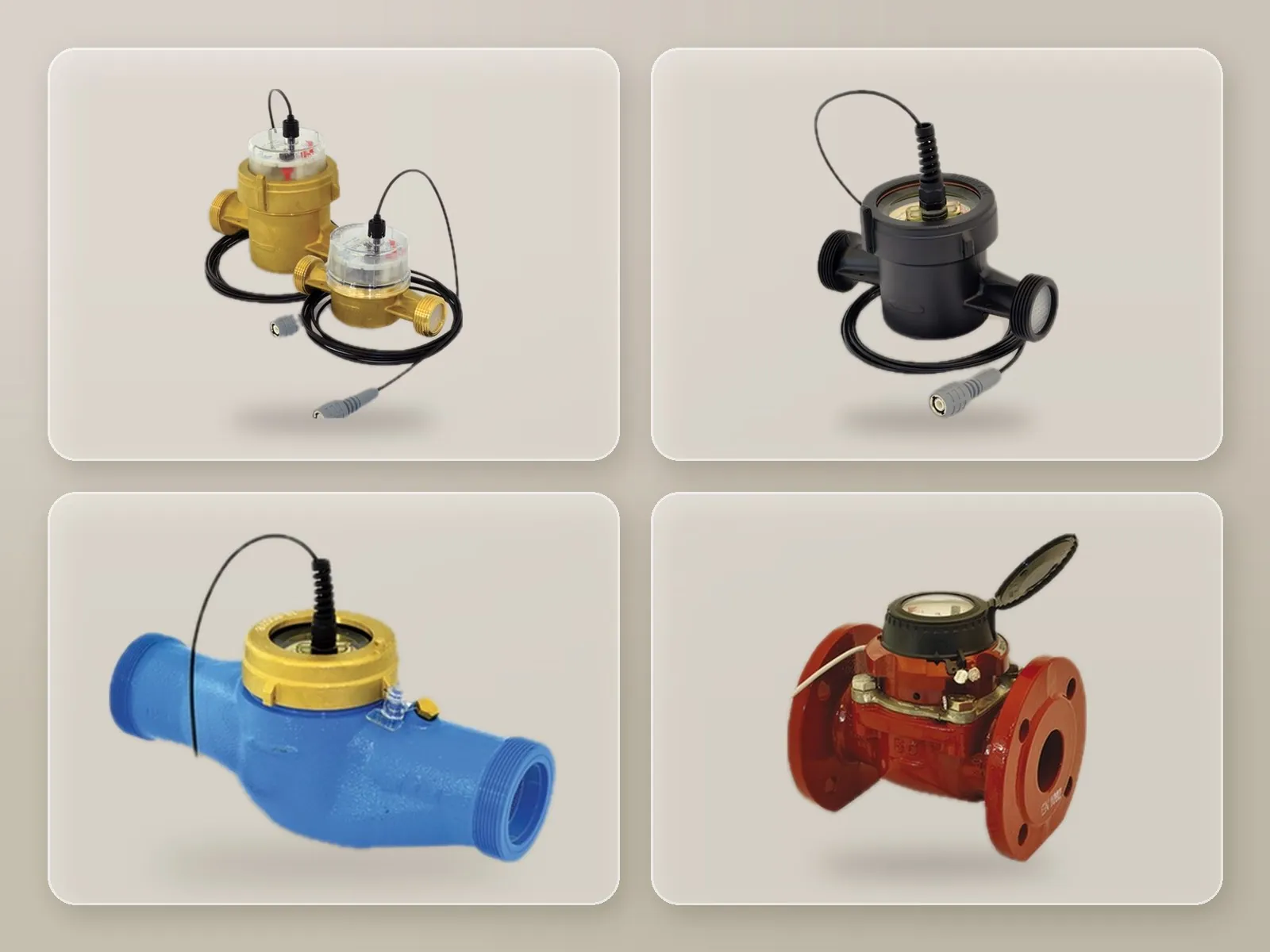
Enables dosing proportional to the volume of water actually treated.
Details →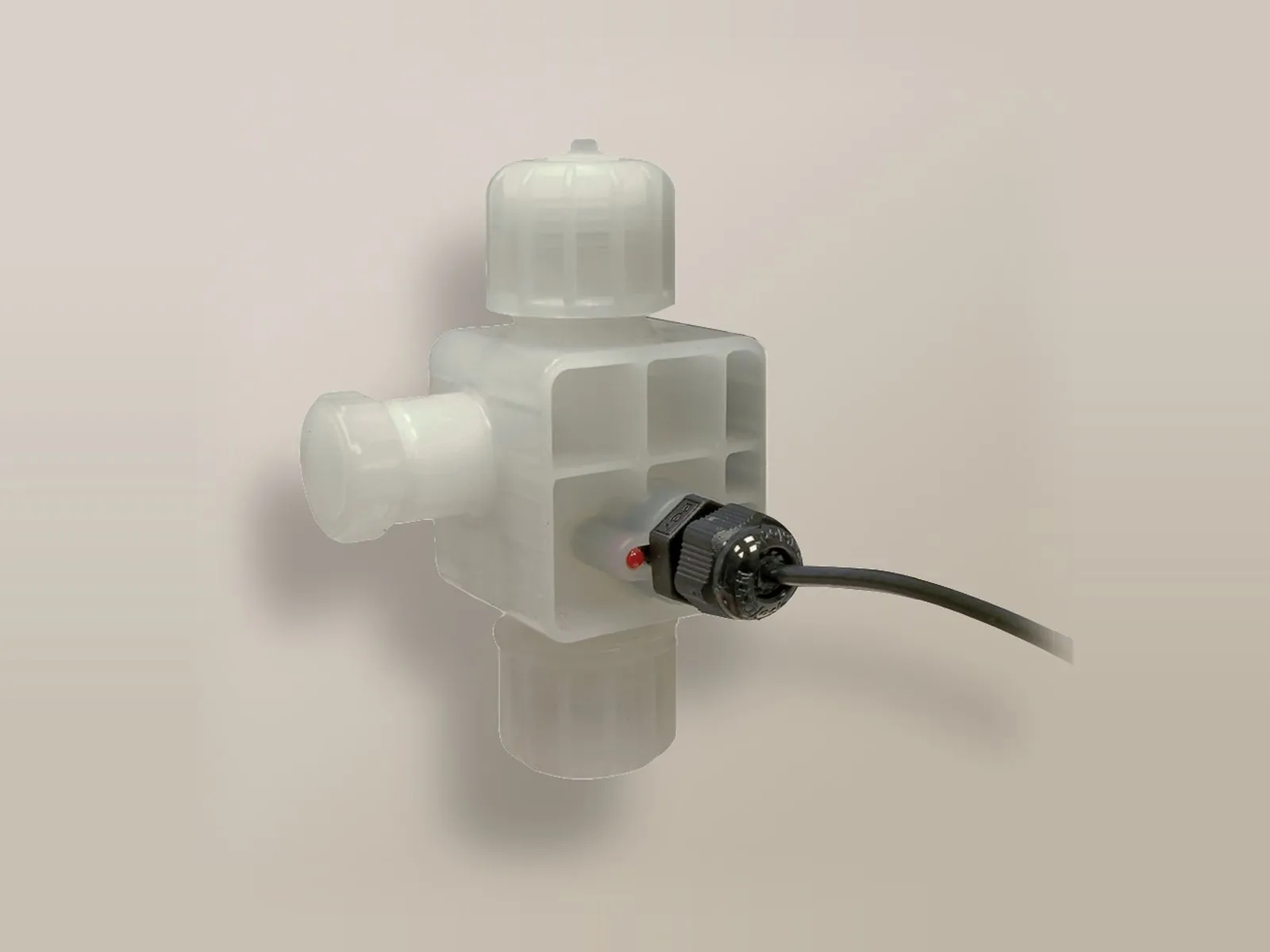
Installed on the pump delivery line, it verifies that dosing actually takes place.
Details →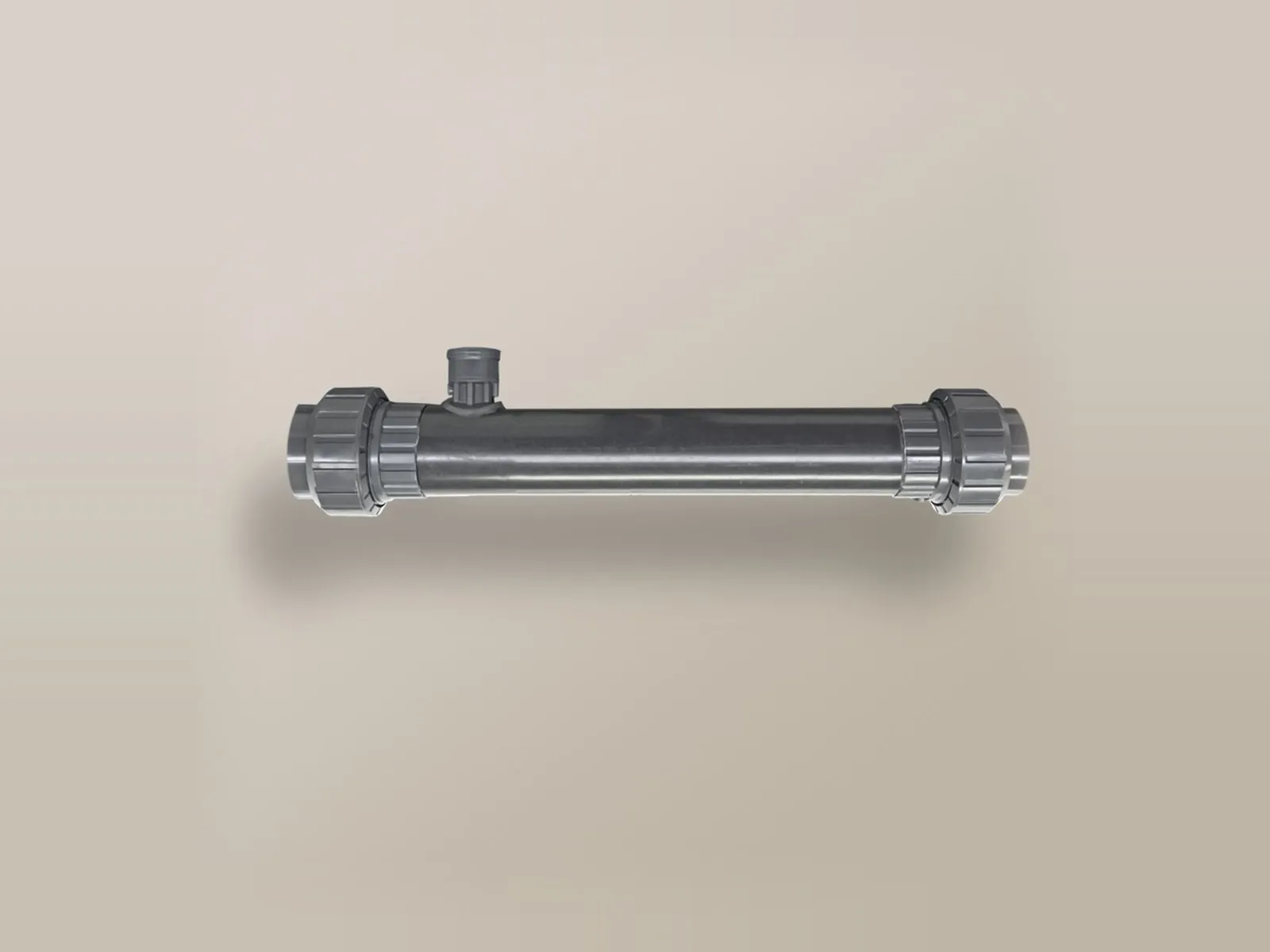
Ensures the chemical is mixed with the water and protects the pipe from direct contact.
Details →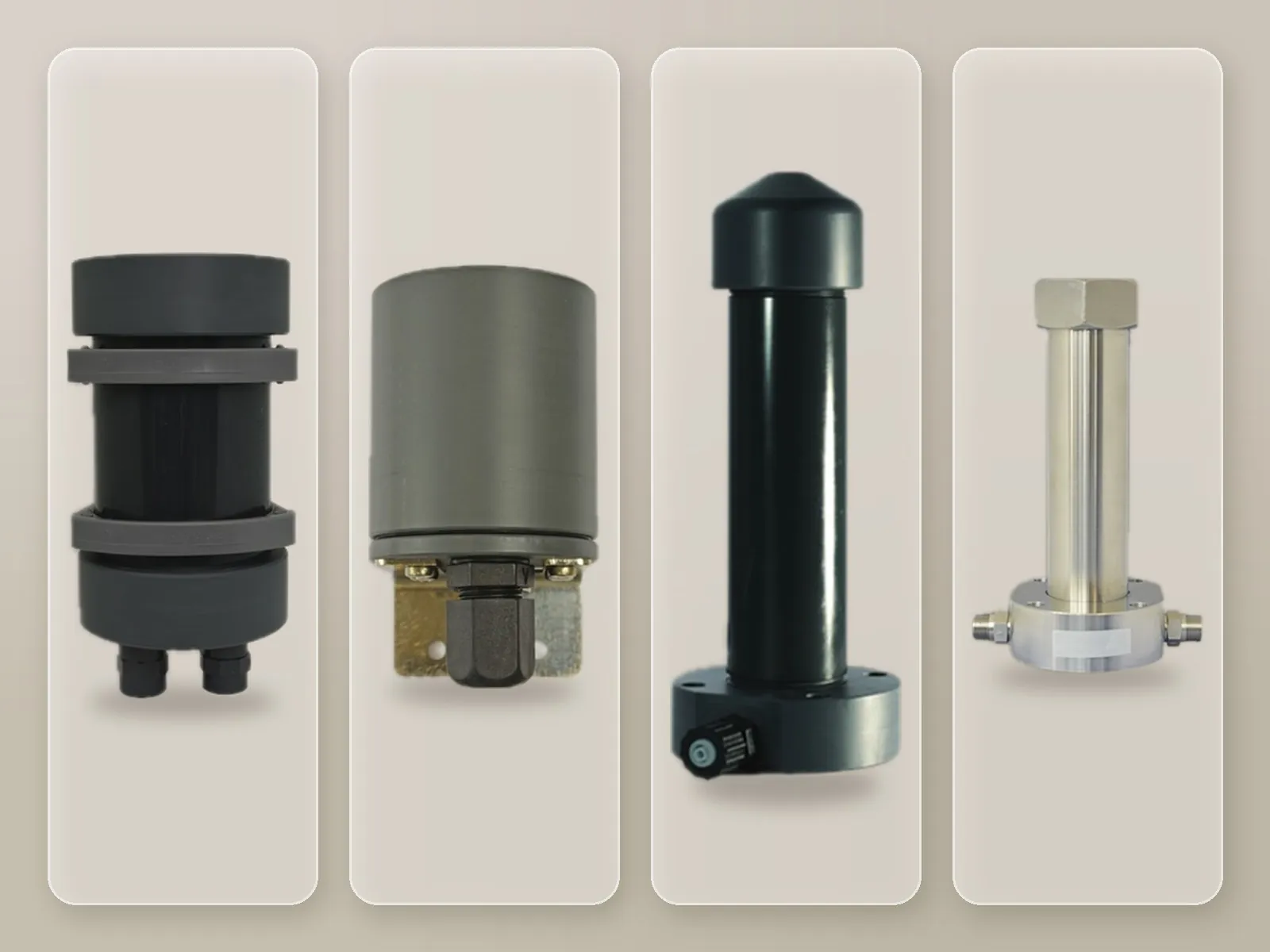
Attenuates the pulsations generated by the dosing pump.
Details →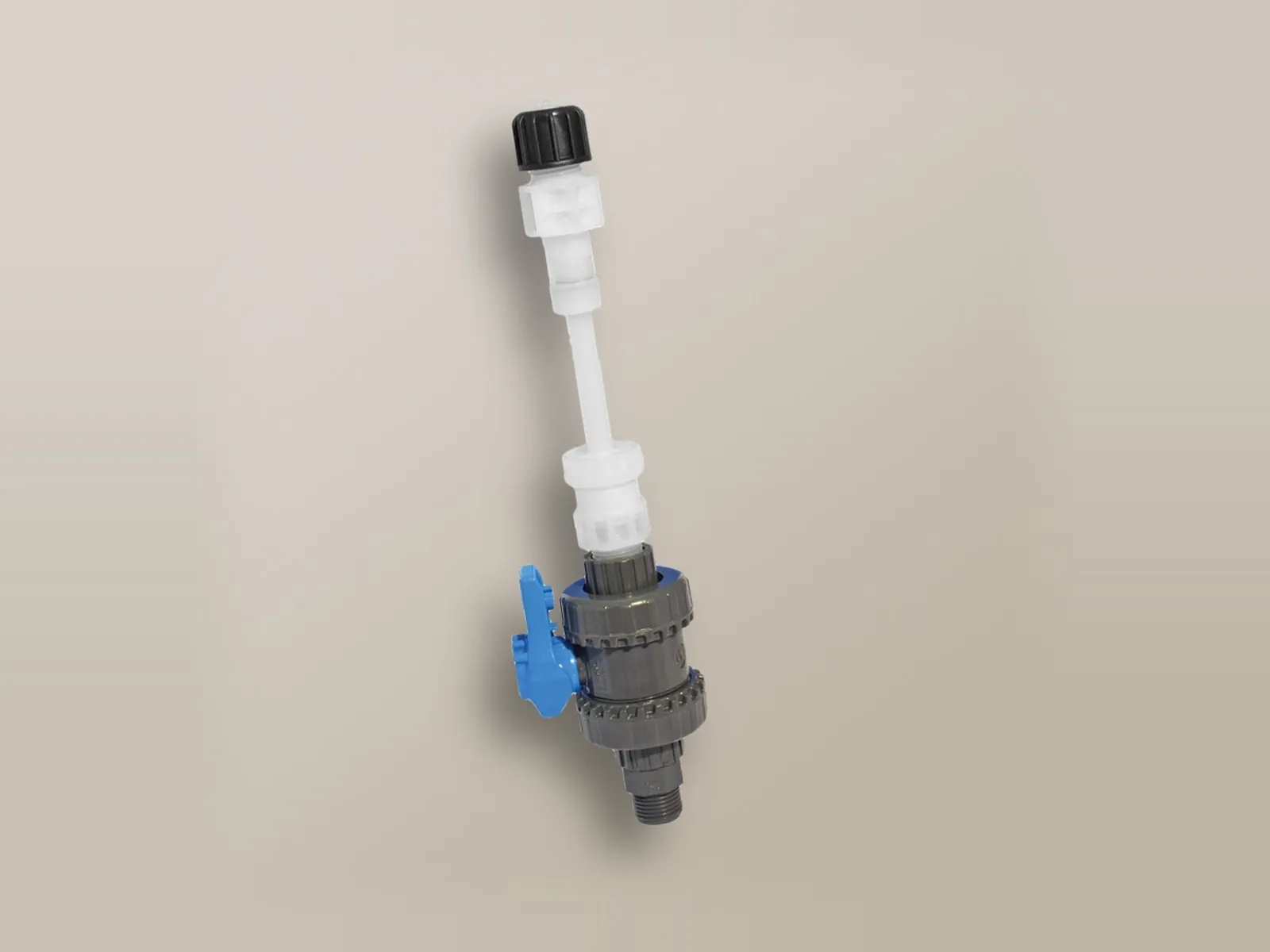
Injects the chemical into the centre of the pipe.
Details →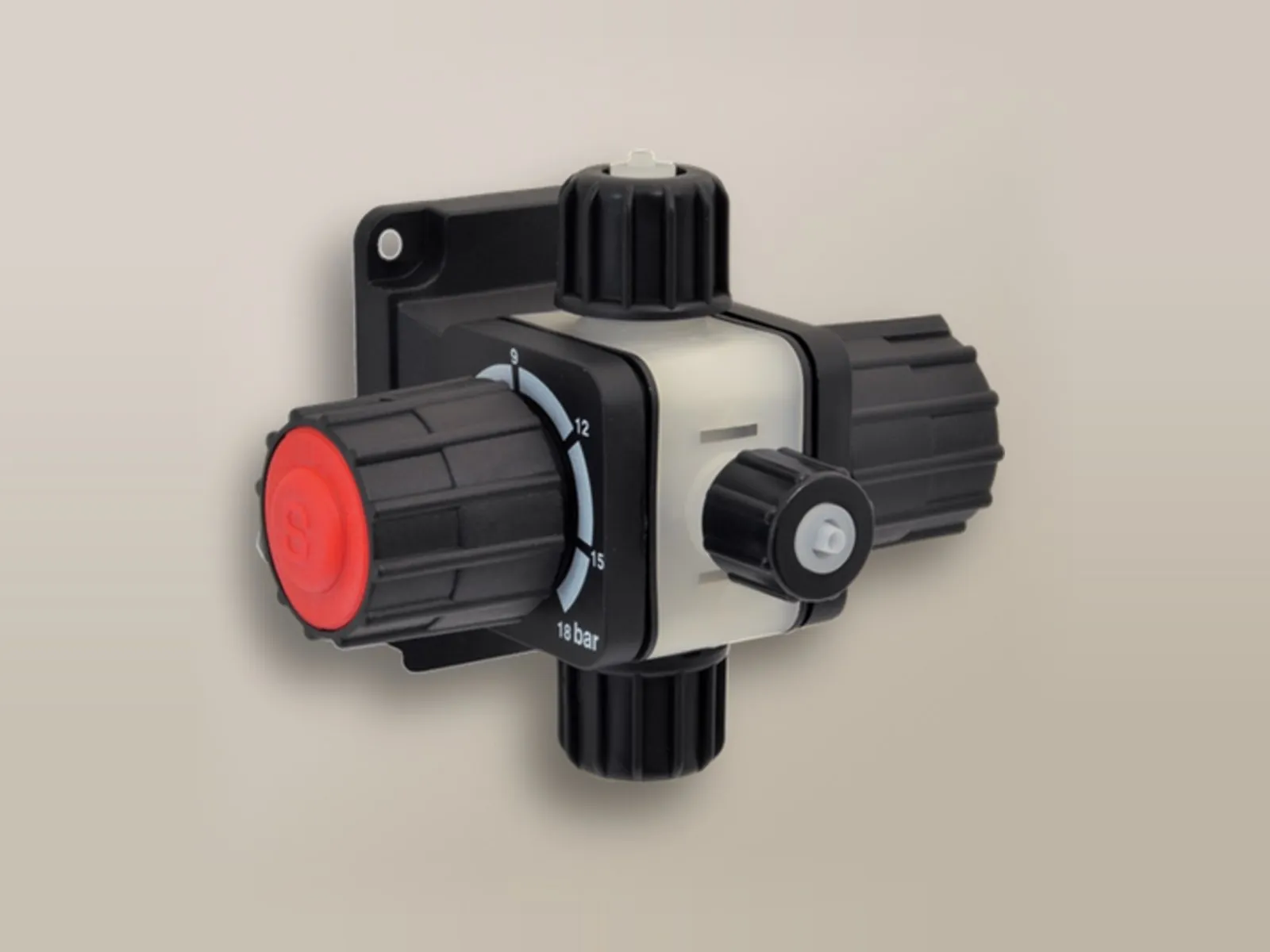
Pressure, safety and anti-siphon functions combined in a single valve.
Details →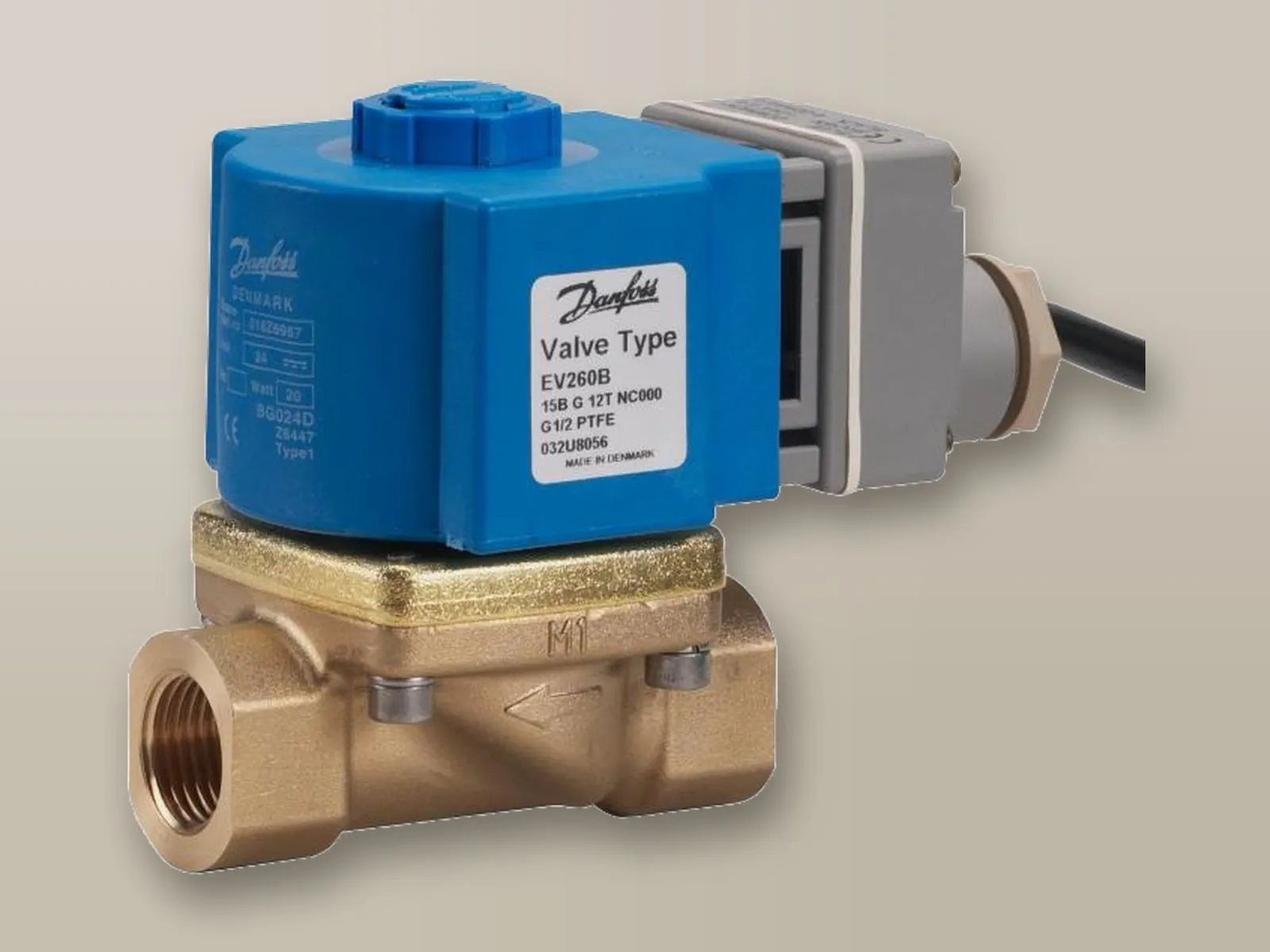
Operated by the controller according to the measured value.
For chlorine and other disinfectants the basic solution is the dosing station; to dose according to the concentration actually present in the water, measuring controllers are used.
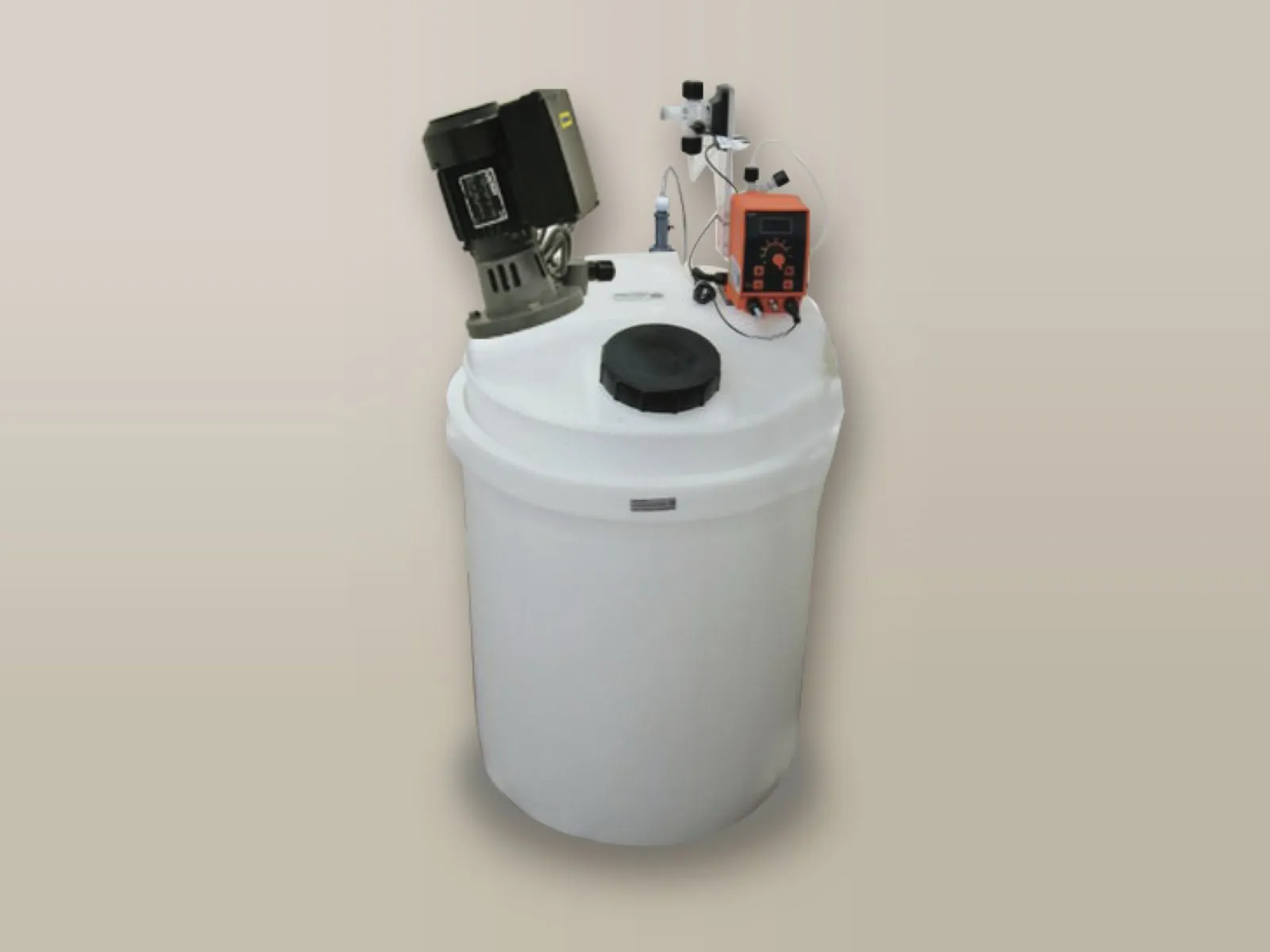
The simplest solution: the pump doses at a constant rate or in proportion to the volume of water measured by the pulse-output water meter.
Details →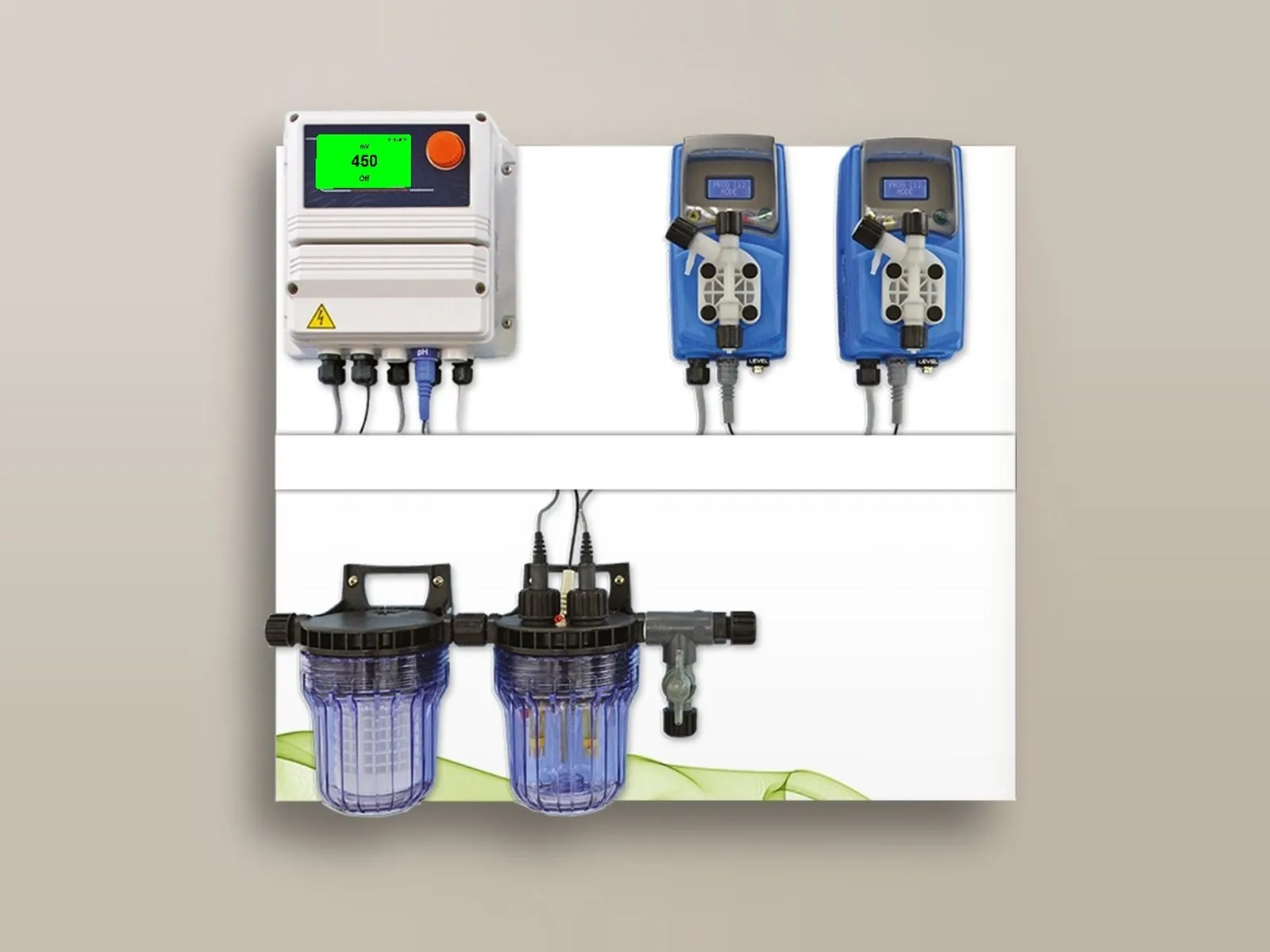
Dosing based on the Redox potential of the water: an economical solution, based on an indirect measurement.
Details → The amperometric cell directly measures the disinfectant concentration in mg/l, ensuring maximum dosing accuracy.
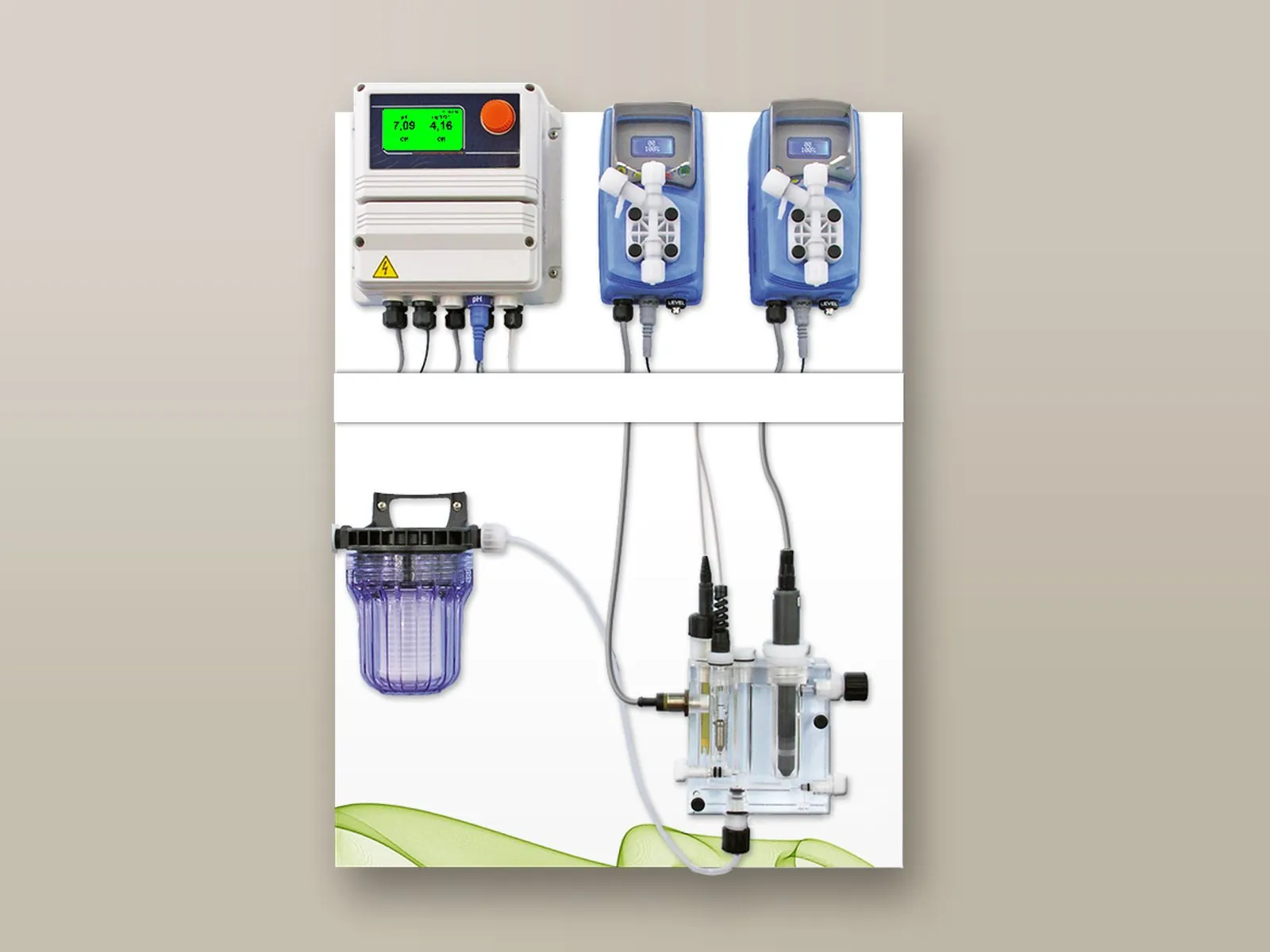
Simultaneous management of two parameters, for example pH and chlorine, with a single controller.
Details →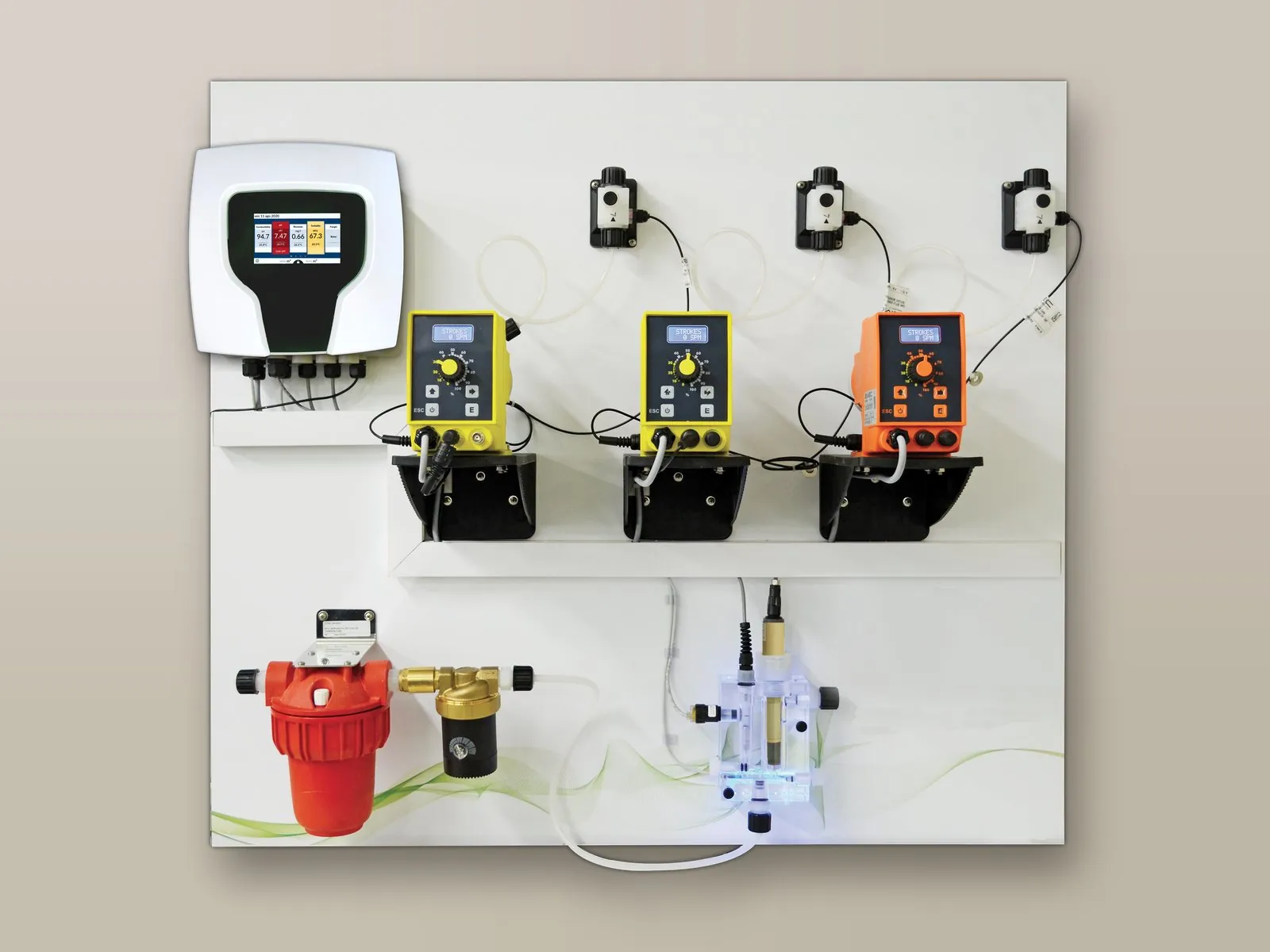
Management of up to 10 parameters and of all the pumps in the installation, with touch screen and remote control as standard.
Details →Tell us the product to be dosed, the volumes of water treated and the characteristics of the plant: we will propose the most suitable cell, pump and accessories.
Call or write to us: a technician will reply with a tailored proposal of controllers, pumps, probes and accessories.