1
Filtration
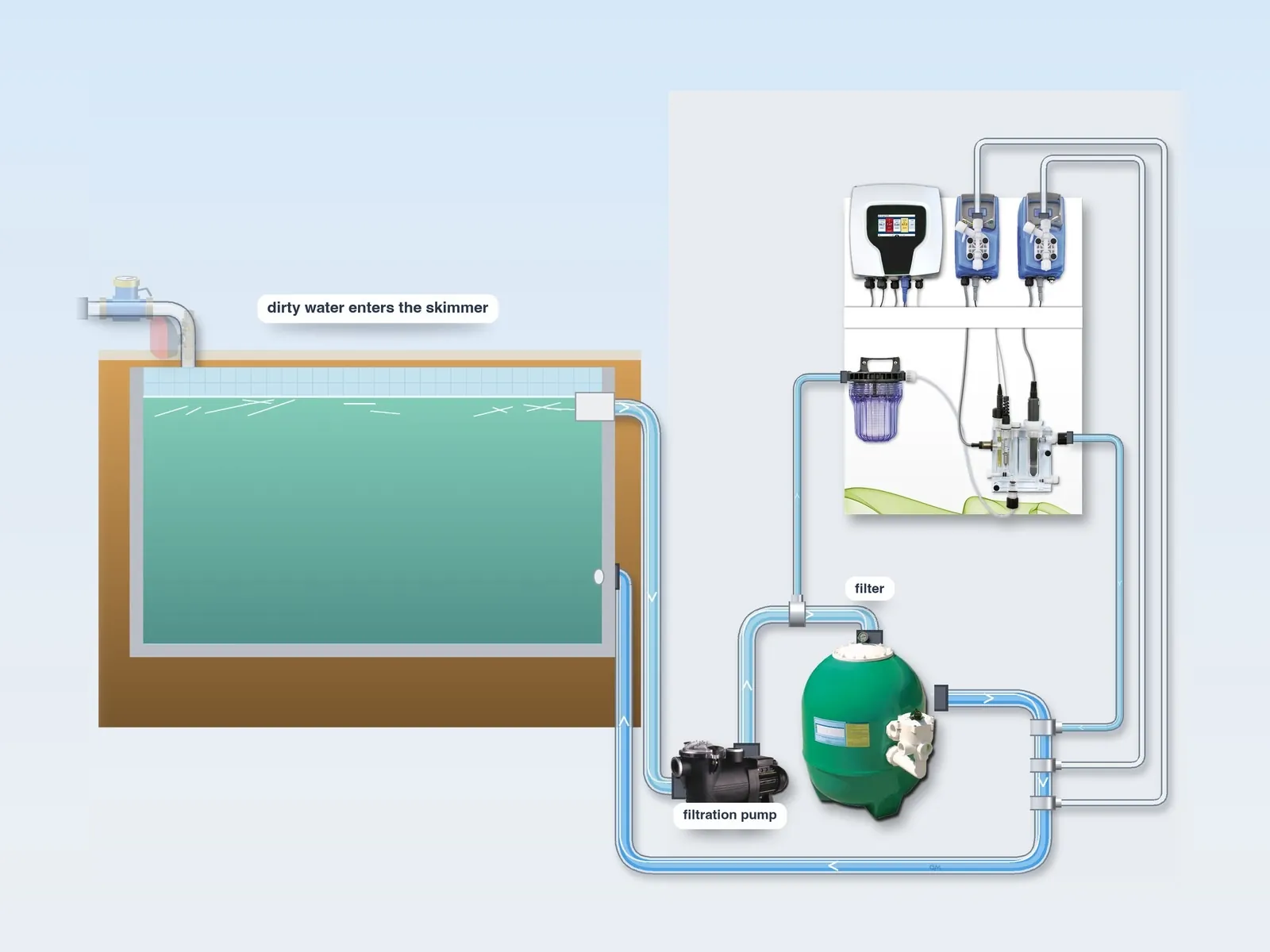
The circulation pump sends the water to the filters, with recirculation times that depend on the depth and use of each area of the pool.
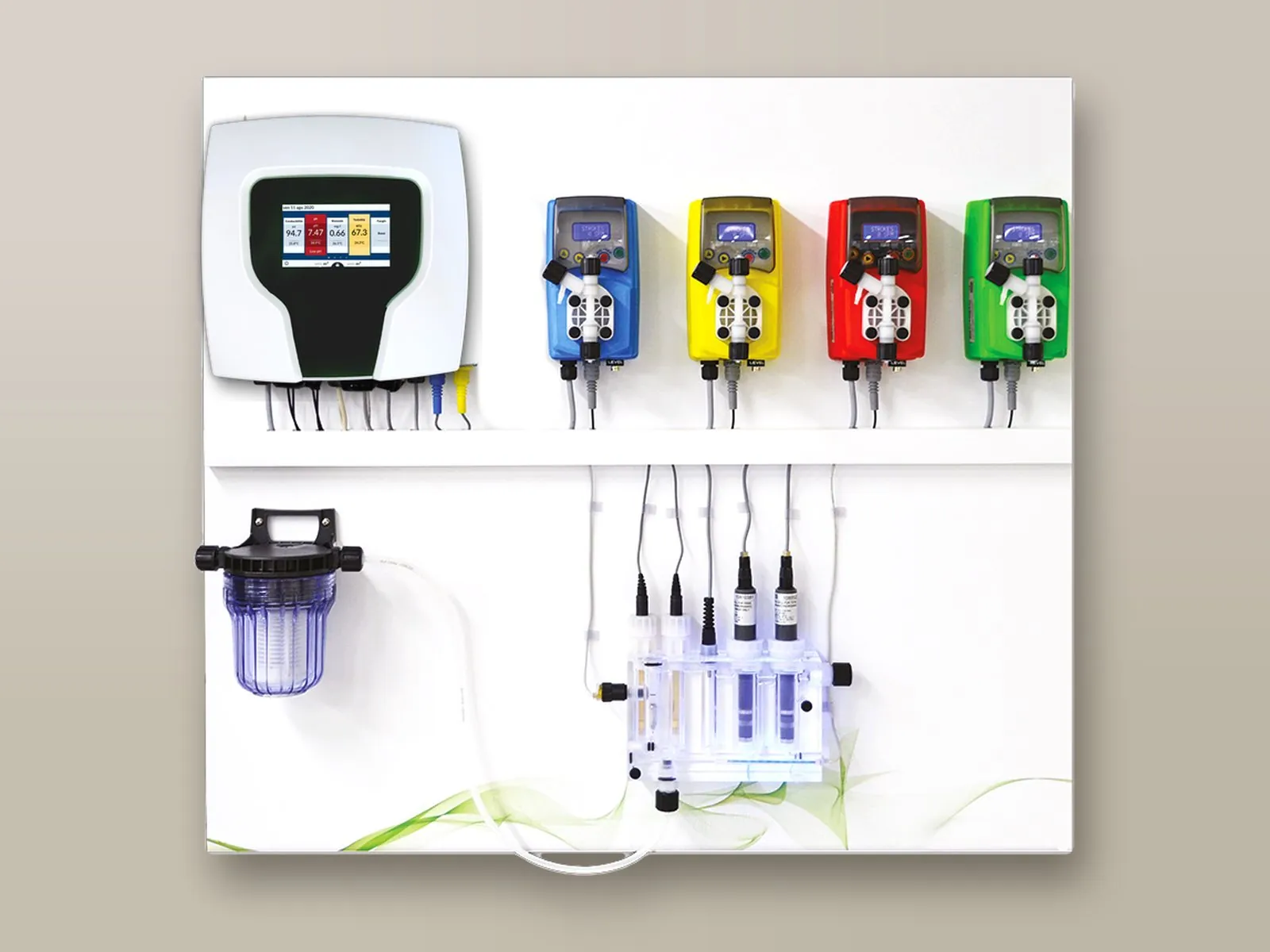
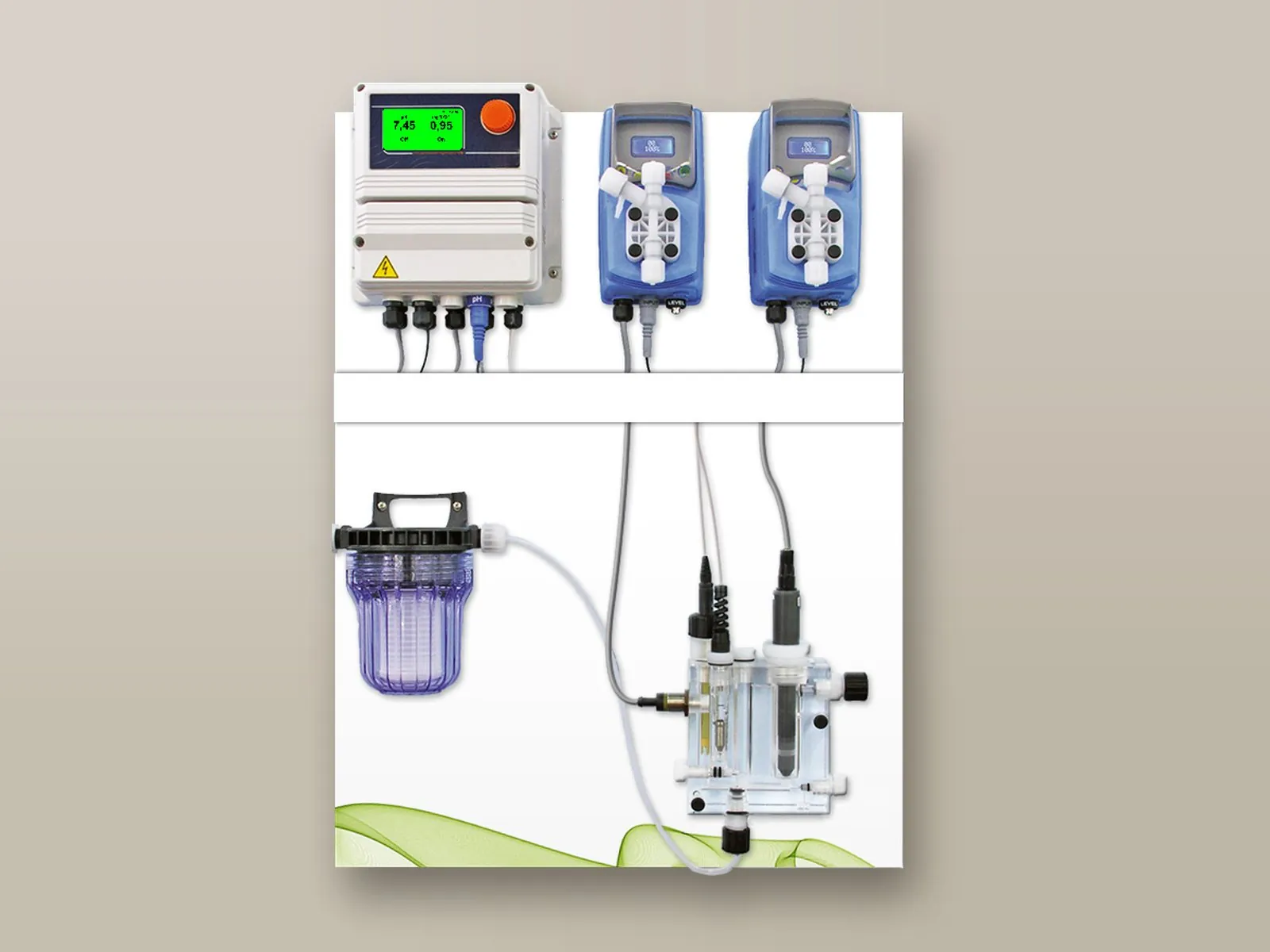
In type 1, 2 and 3 swimming pools, UNI 10637:2024 (Italian standard) requires automatic measurement and control of free chlorine and pH and does not allow the chlorine value to be derived from the Redox potential. The systems measure free chlorine directly in mg/l with an amperometric cell: up to 150 m³ the WDpHCl, with integrated pumps; above 150 m³ the LDpHCl, with pumps sized for the pool; for complete management of the plant, the Centurio POOL.
The plant operates continuously, 24 hours a day: the water is filtered, analysed and disinfected in the plant room before returning to the pool.
Insight: swimming pool water →
The circulation pump sends the water to the filters, with recirculation times that depend on the depth and use of each area of the pool.
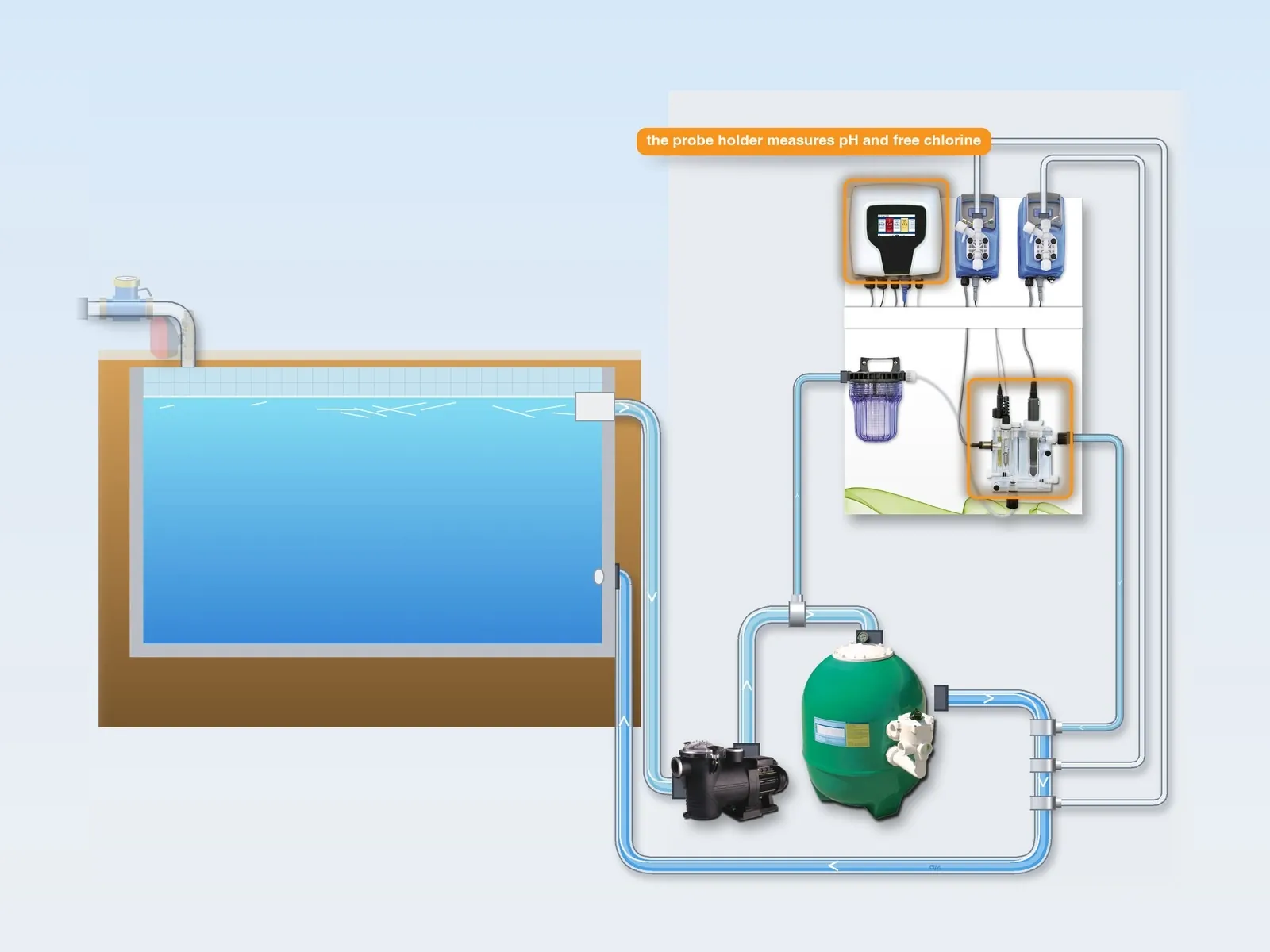
A water sample flows through the probe holder, where free chlorine and pH are measured with the resolution required for comparison with the legal values.
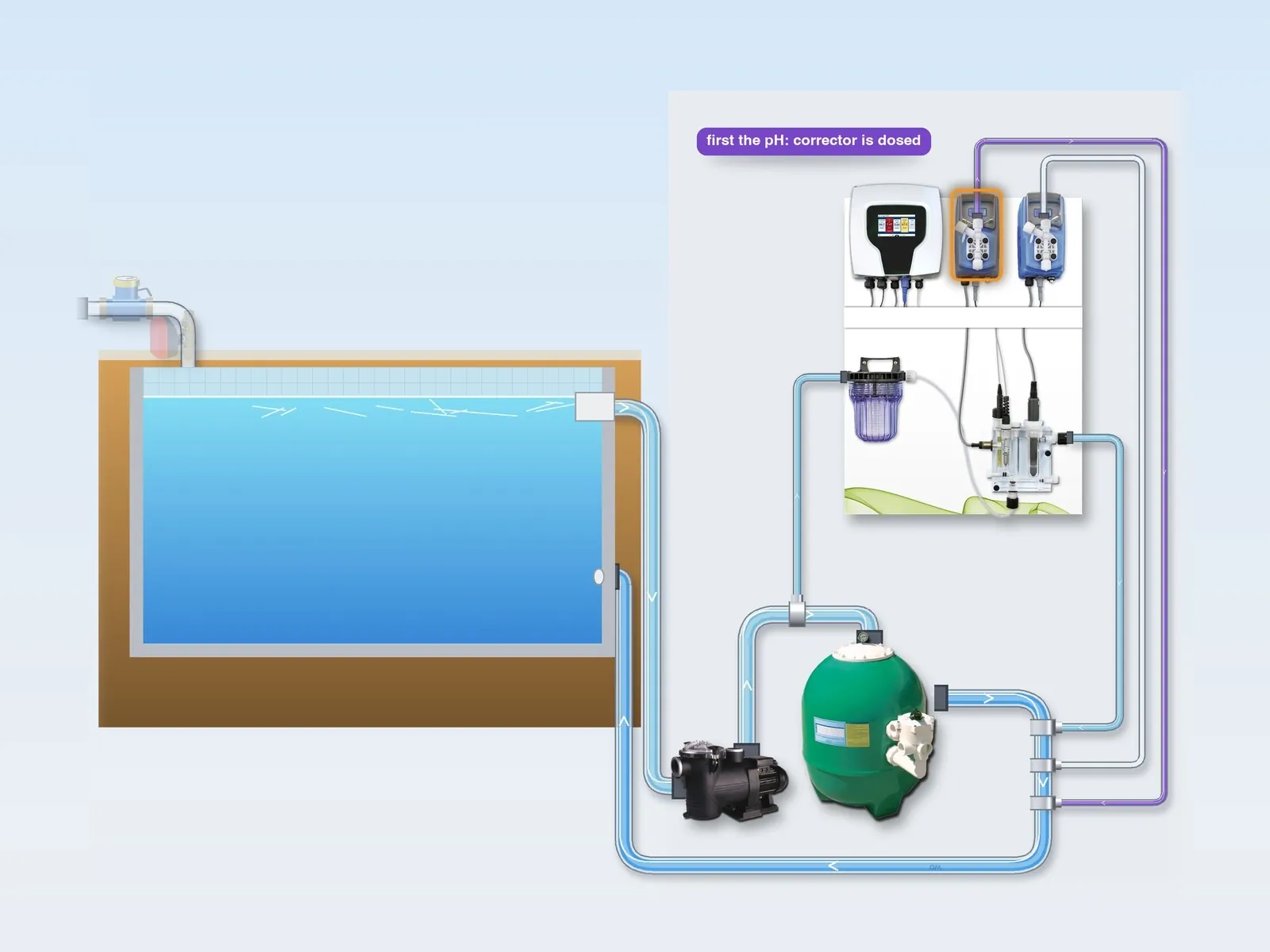
The pH is controlled automatically: the corrector is injected in solution into the circulation system, downstream of the filter.
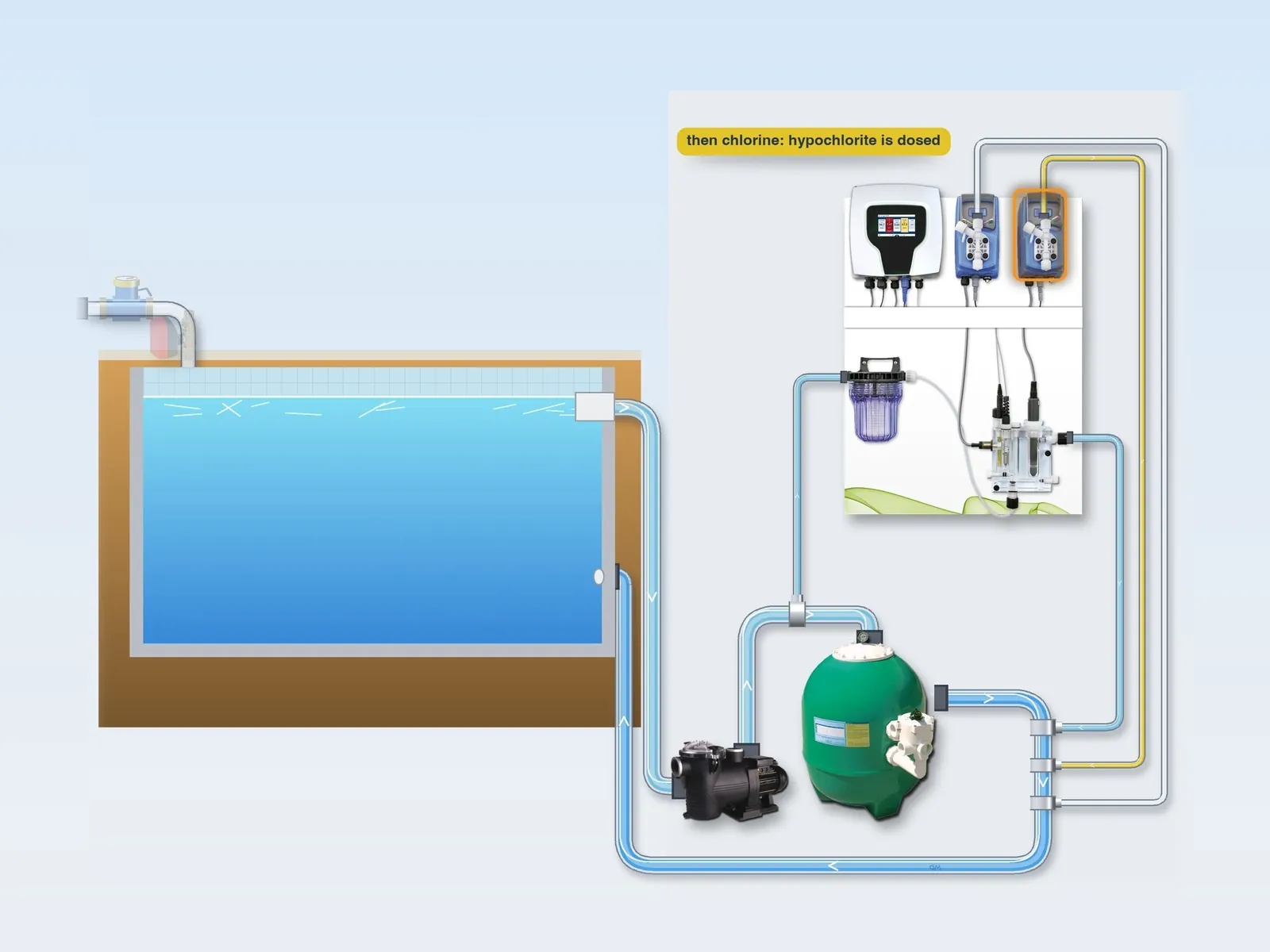
Hypochlorite is dosed only in solution into the system, never into the pool while it is open to the public, with pumps interlocked with the circulation.
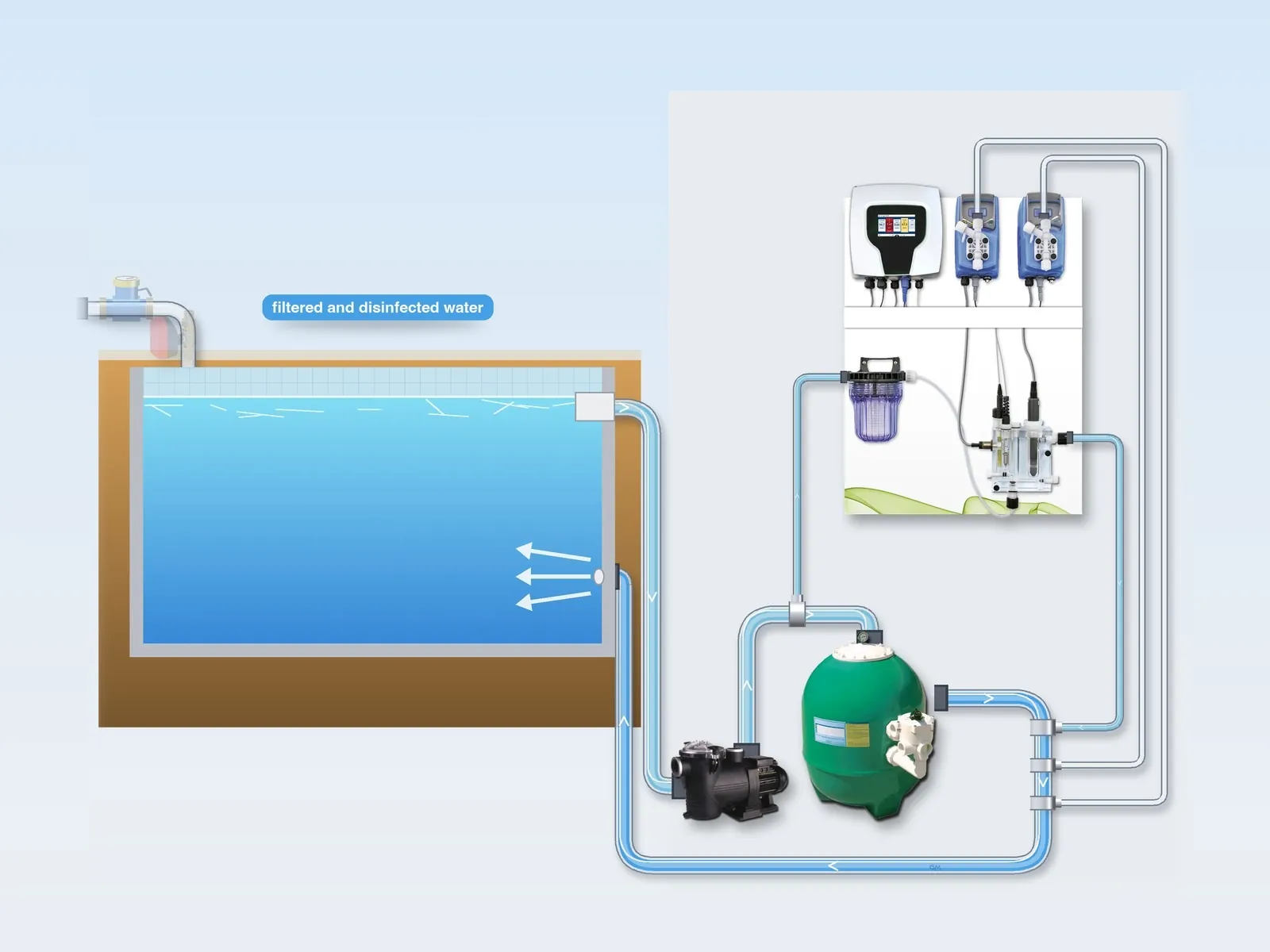
The filtered and disinfected water returns to the pool, where free chlorine and pH remain within the set values.
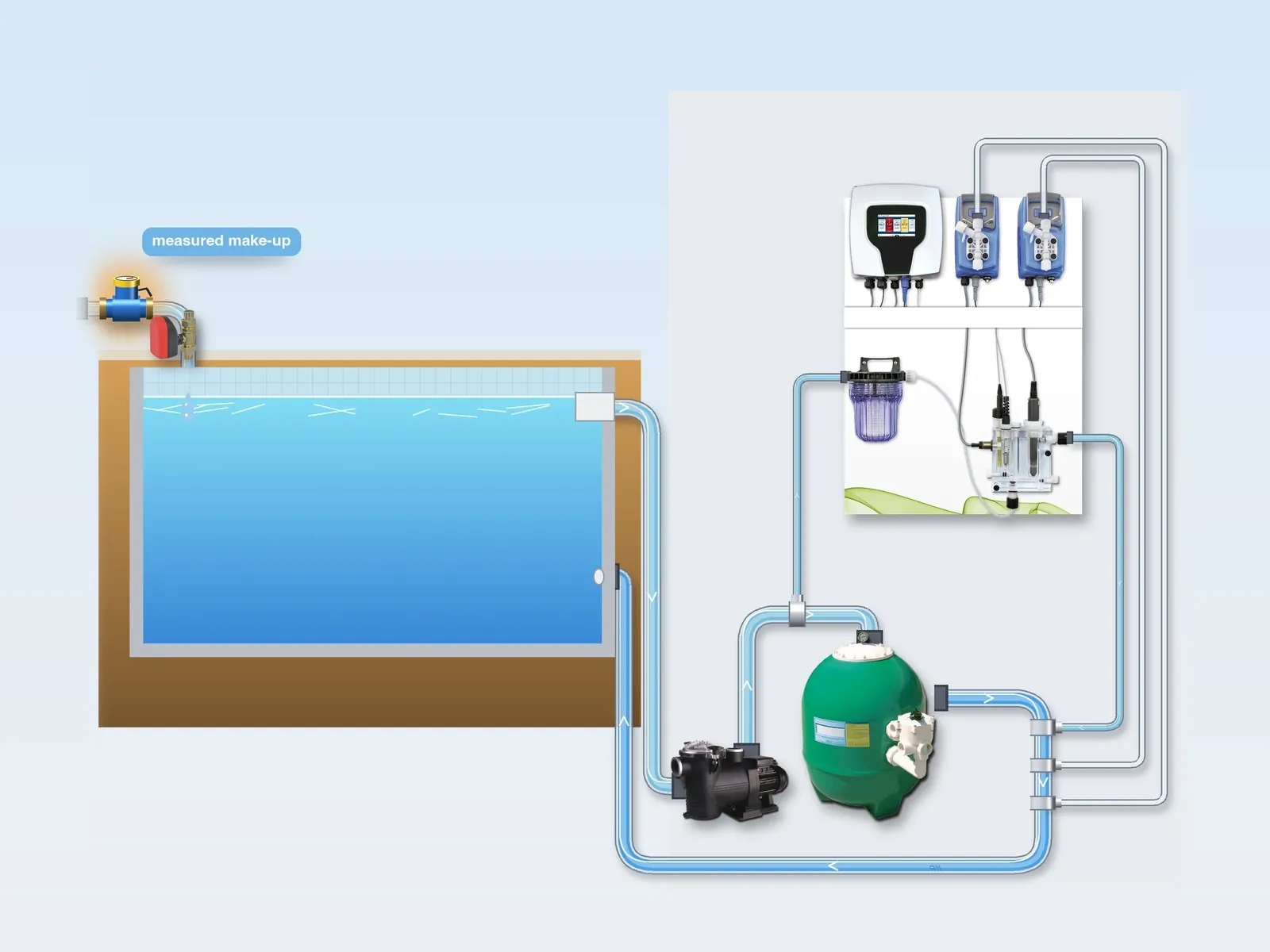
The daily water renewal, of at least 30 litres per bather, is measured by the water meter and logged: with the Centurio POOL the volume is counted by the controller.
The treatment system is installed in the plant room, downstream of the filtration: the probes analyse a water sample and injection takes place on the delivery pipe to the pool.
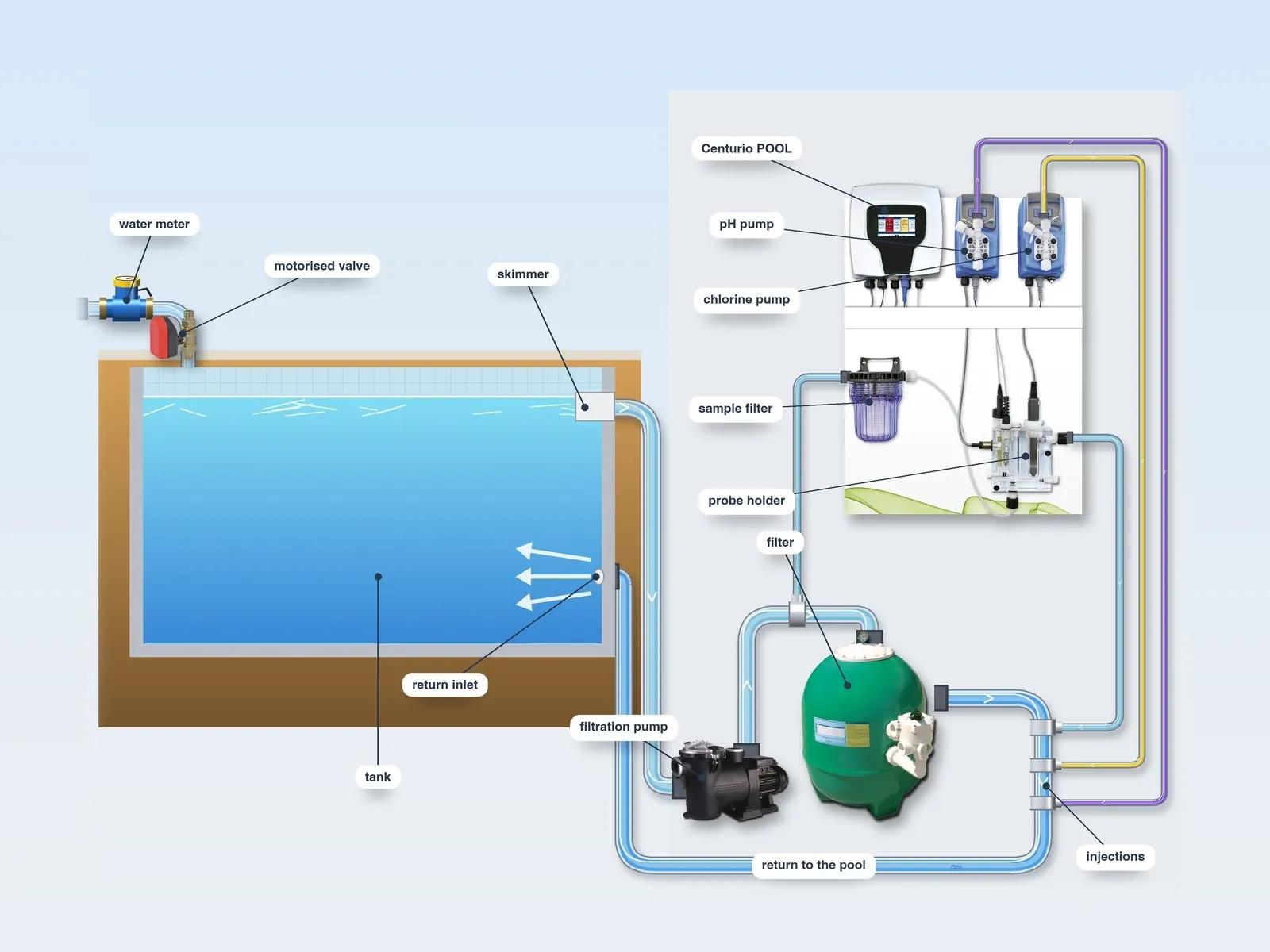
Each pool must have its own automatic system for measuring, controlling and dosing the disinfectant and must control the pH automatically.
Insight: UNI 10637:2024 in brief →Free active chlorine between 0.7 and 1.5 mg/l, combined chlorine up to 0.4 mg/l, pH between 6.5 and 7.5, measured with a DPD photometer or an amperometric meter with a resolution of at least 0.1 mg/l.
Permitted for monitoring organic pollution and as a supplement to the chlorine probe; it is not permitted to derive the chlorine value from it.
The dosing pumps are interlocked with the circulation, so that they do not dose when there is no flow; the tanks ensure at least 24 hours of autonomy.
Automatic logging of the values is recommended; the daily water renewal must be measured with the water meter and recorded.
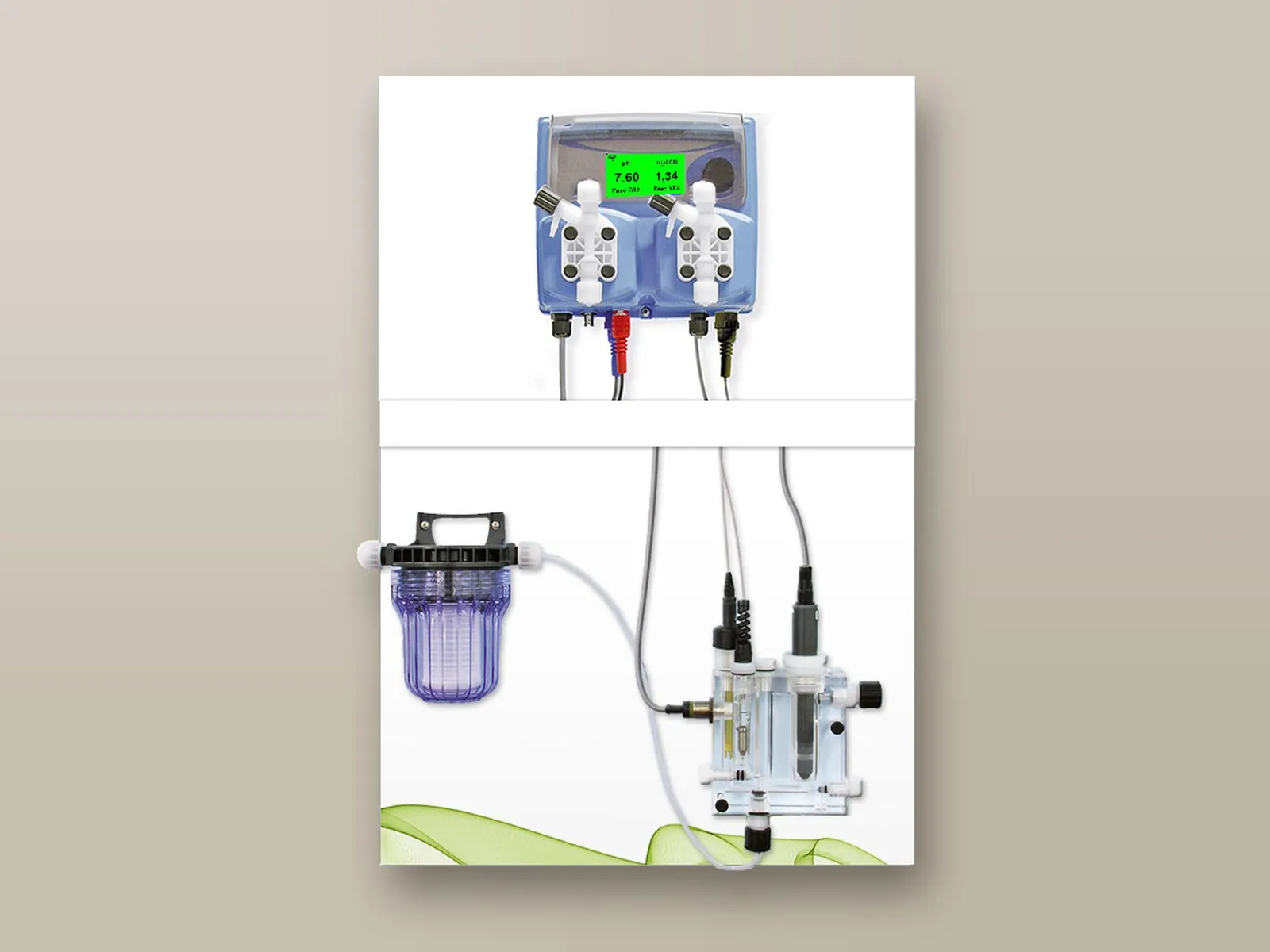
Controller and two solenoid dosing pumps in a single unit, with probe holder, cell and sample filter pre-assembled on a panel: for type 2 pools up to 150 m³, such as those of hotels, campsites and residential complexes.
Two-channel controller with colour display and external dosing pumps, selected according to the pool volume and interlocked with the circulation; it also manages flocculant dosing.
Quiet version with peristaltic pumps: WNpHCl.
The same systems with the ECL6 open cell, 0 – 10 mg/l range, also accepted by the standard as an amperometric meter.
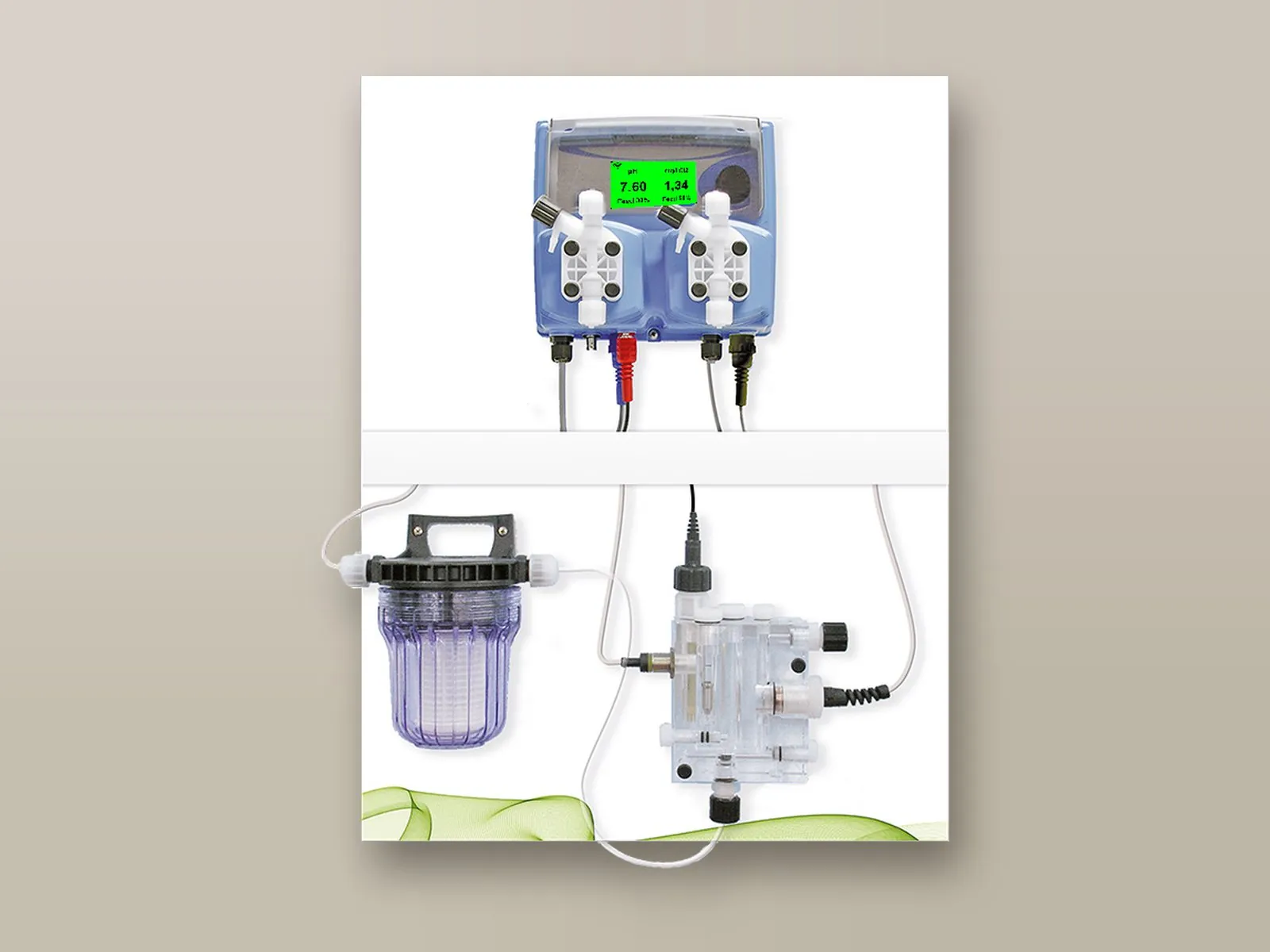
With the two pumps integrated in the controller.
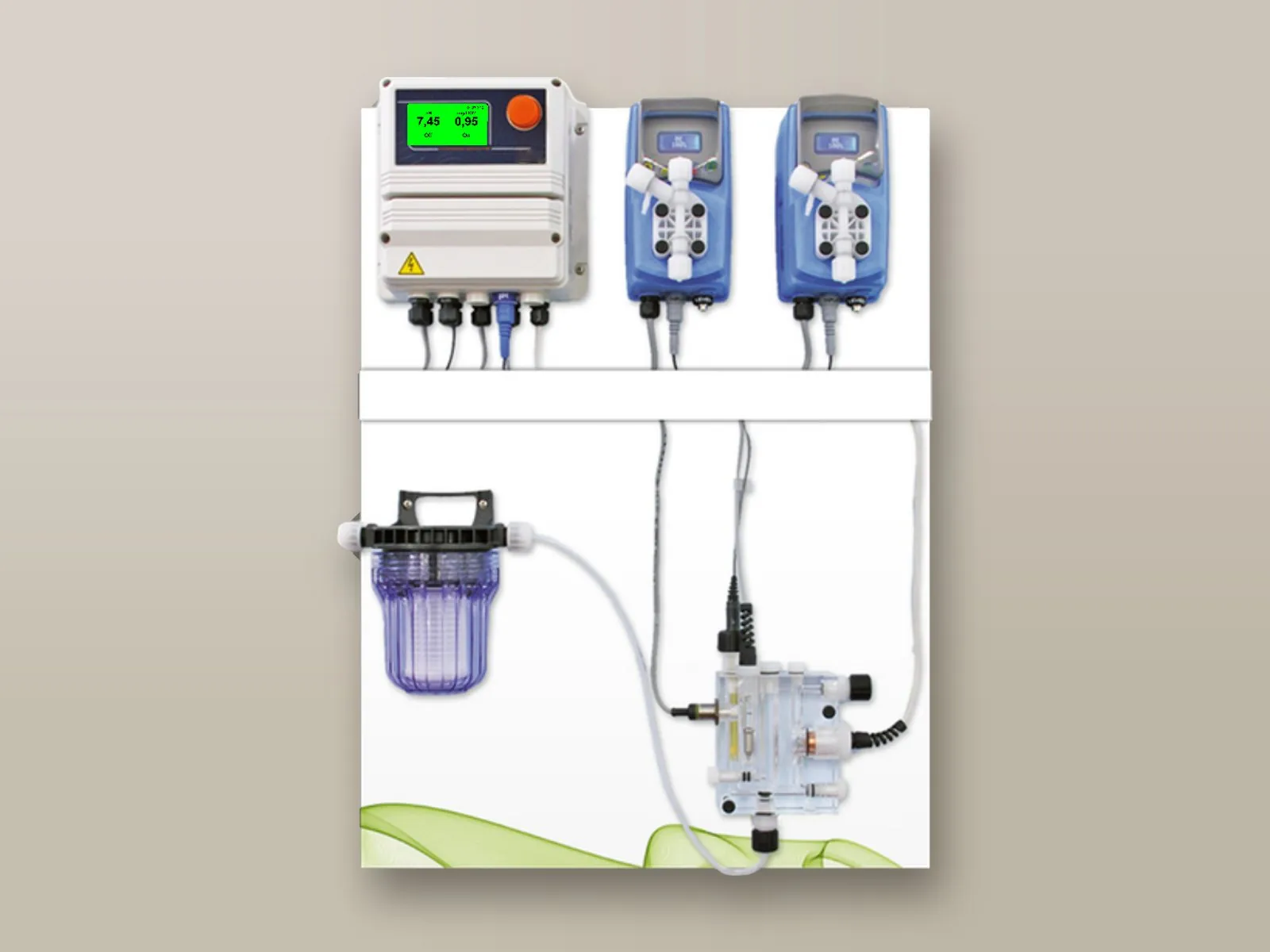
With external pumps sized for the pool.
For type 1 pools and for plants with greater requirements: a single controller measures free, total and combined chlorine, pH and Redox, logs the make-up and discharged water and controls dosing, filtration, heating and lighting.
Up to 10 measuring channels, touch screen, 6 timed outputs; Ethernet, Wi-Fi and Modbus as standard. The worthy successor to the MAX5.
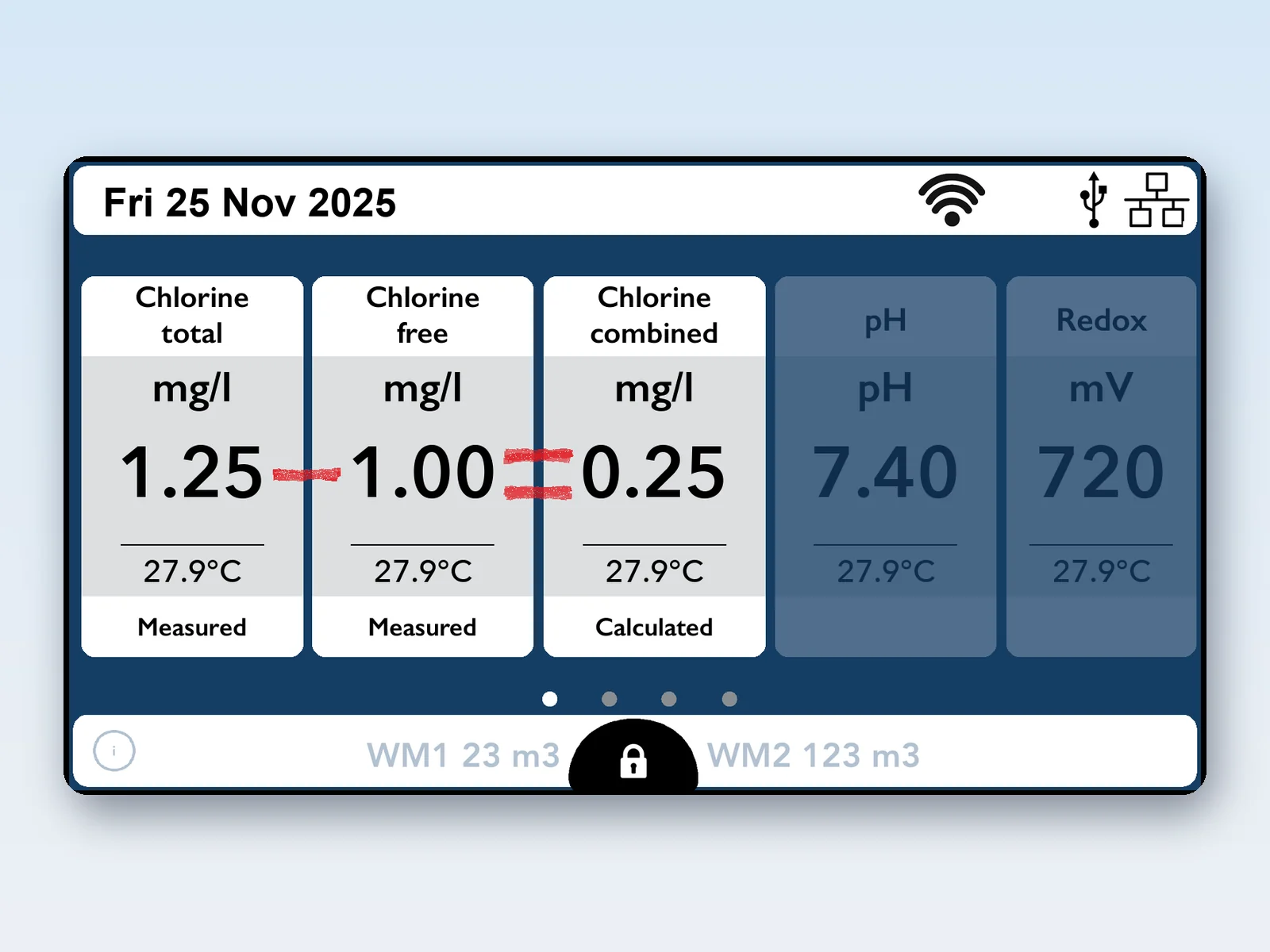
Two closed cells measure free and total chlorine: the controller calculates combined chlorine from the difference, to be kept within 0.4 mg/l. Two water meters measure make-up and discharge.
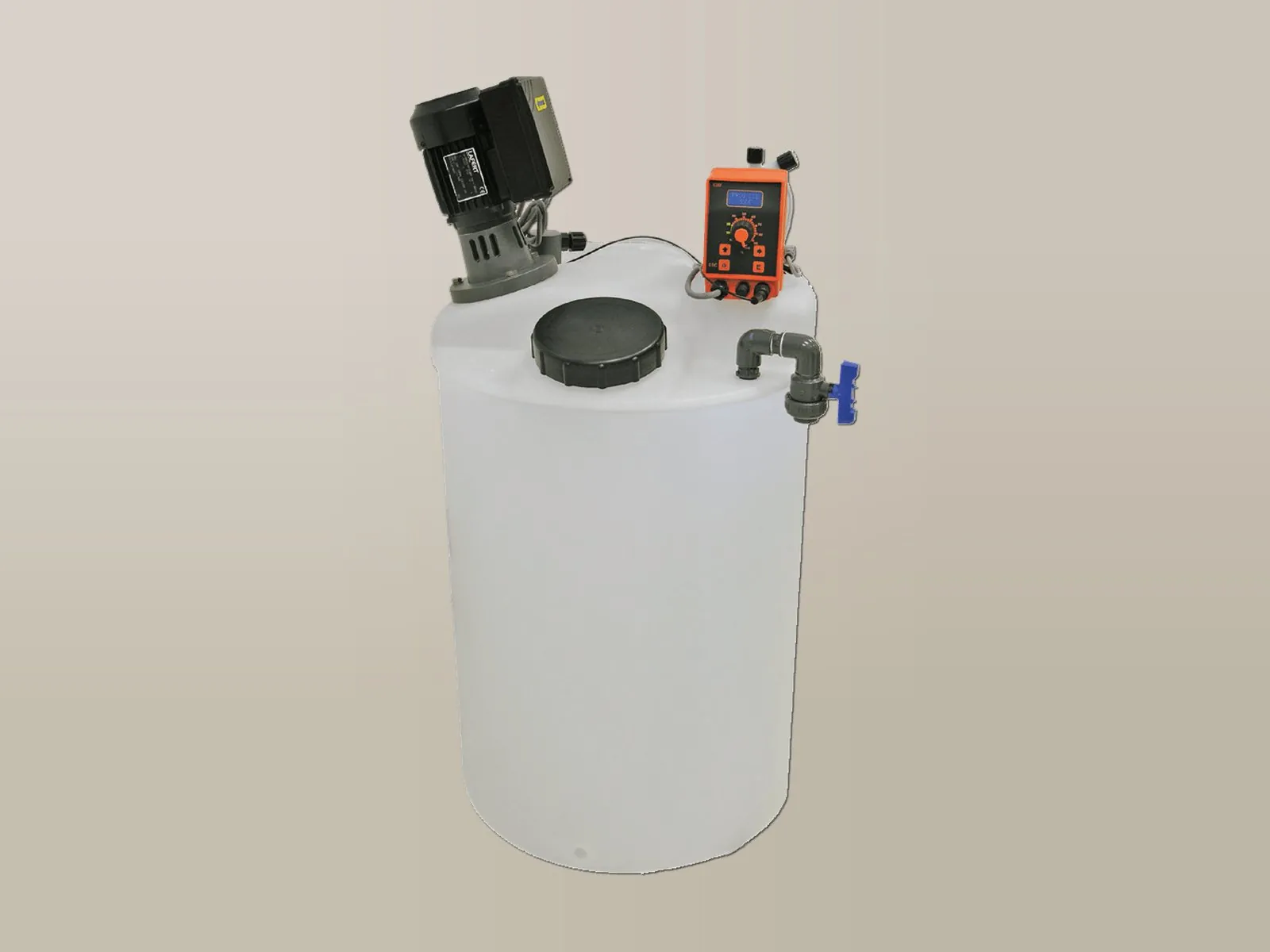
Backwash and drain-down water is brought within the chlorine limits set for the receiving body: constant dosing activated by a water presence sensor or dosing proportional to the volume measured by the water meter.
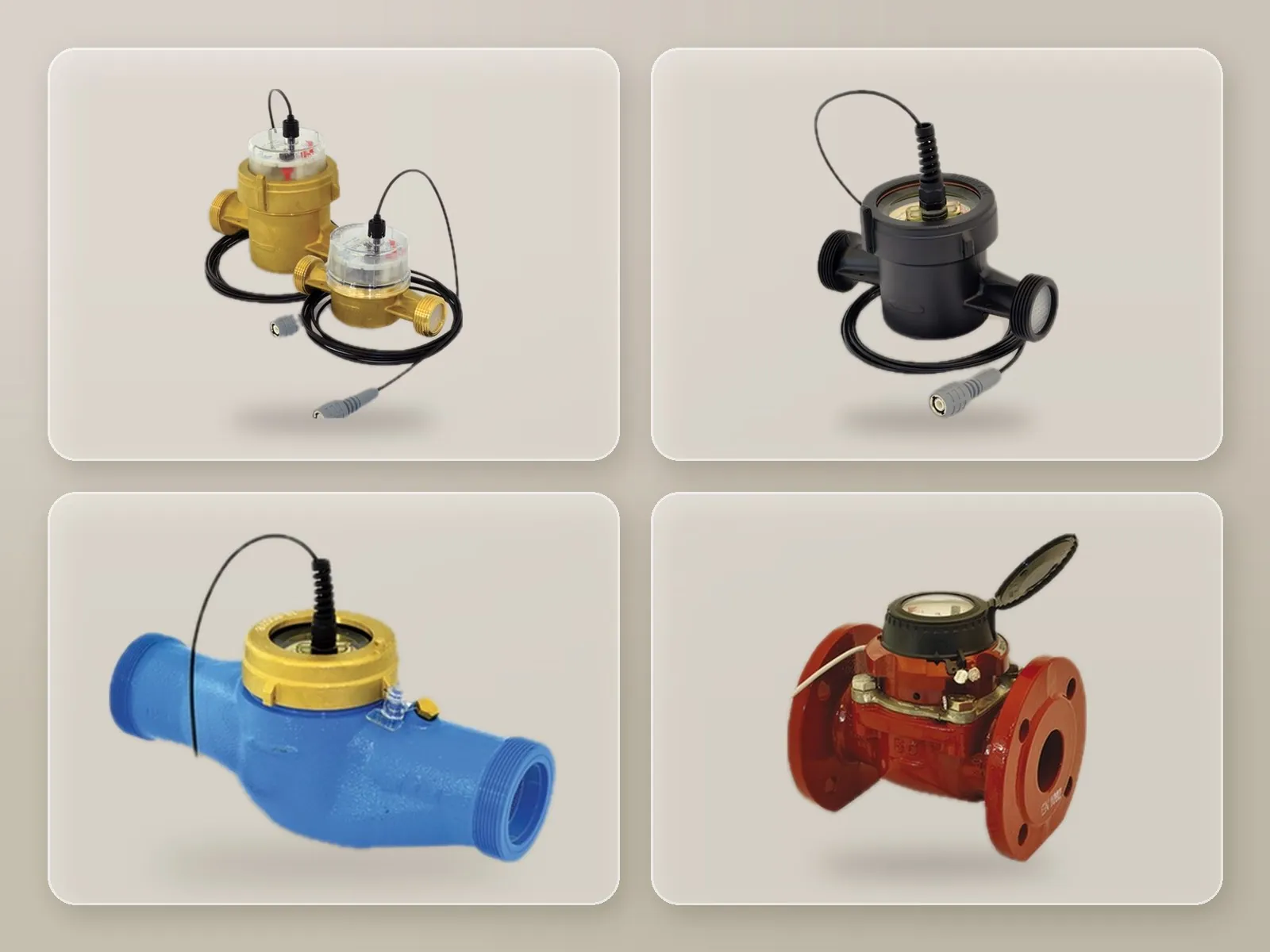
A dosing pump injects the antifungal agent into the footbath supply pipe, in proportion to the volume measured by the pulse-output water meter.
The pool volume determines the controller; the desired management determines the chlorine measurement or the multi-parameter system.
Answer the questions: the recommended system appears below.
Free chlorine measured directly in mg/l, unaffected by combined chlorine and stabiliser.
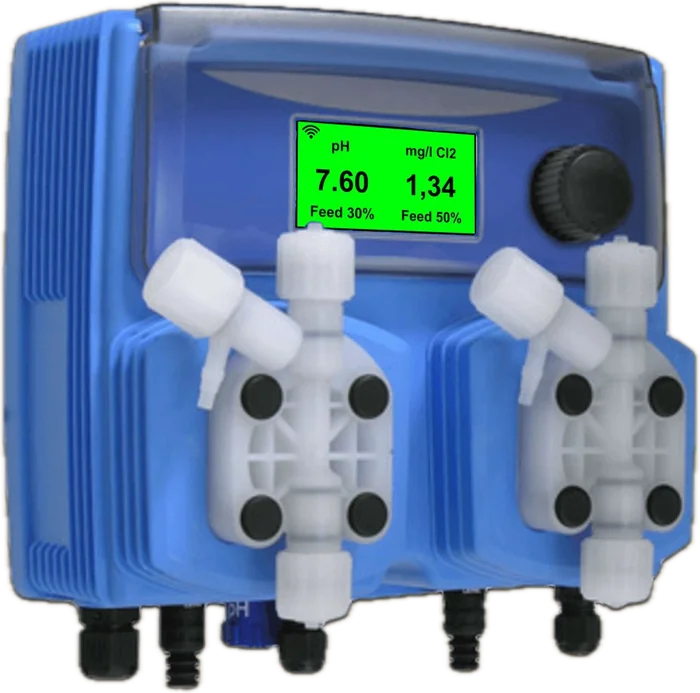
With the two integrated dosing pumps: pH corrector and hypochlorite.
The pump →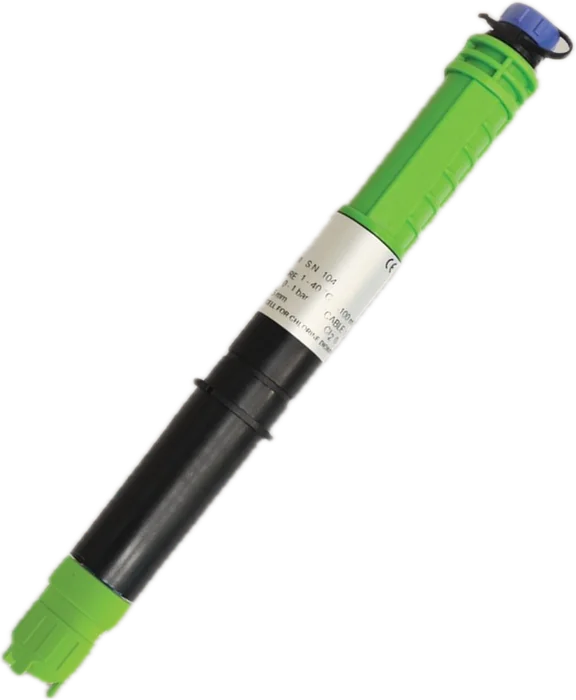
Free chlorine in mg/l, selective membrane, 0.01 mg/l resolution.
SCL cells →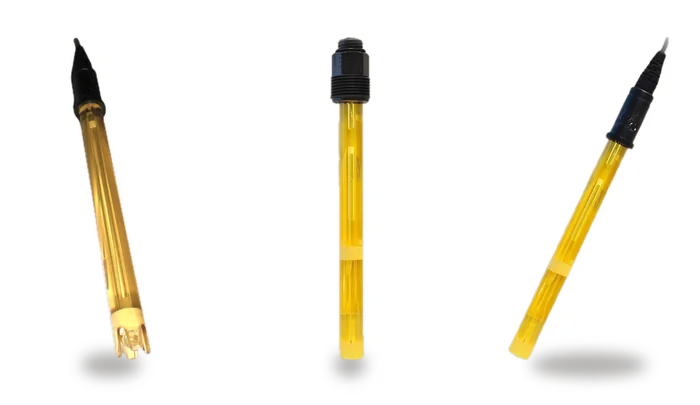
EPHS combination electrode, 0 – 14 pH.
pH electrodes →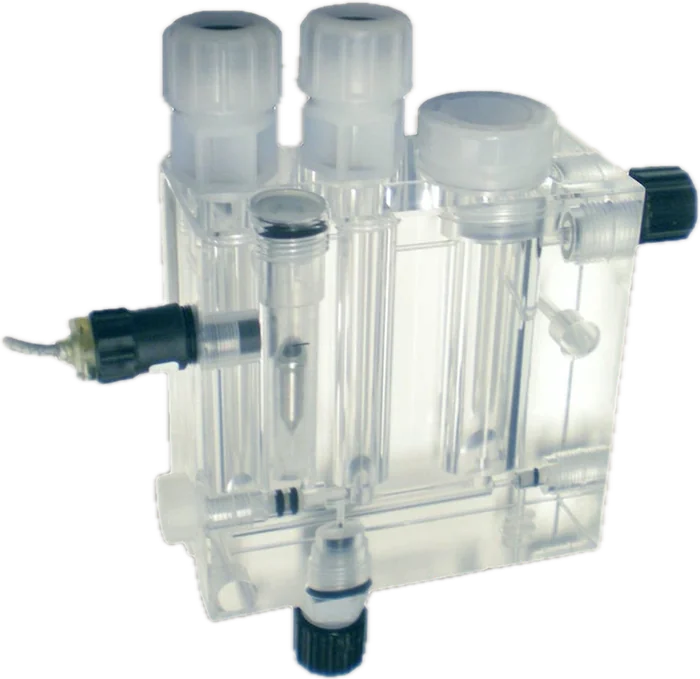
Flow-through probe holder with flow sensor, 50 µm sample filter.
Probe holders →Free chlorine measured directly in mg/l, with dosing pumps sized for the pool volume.
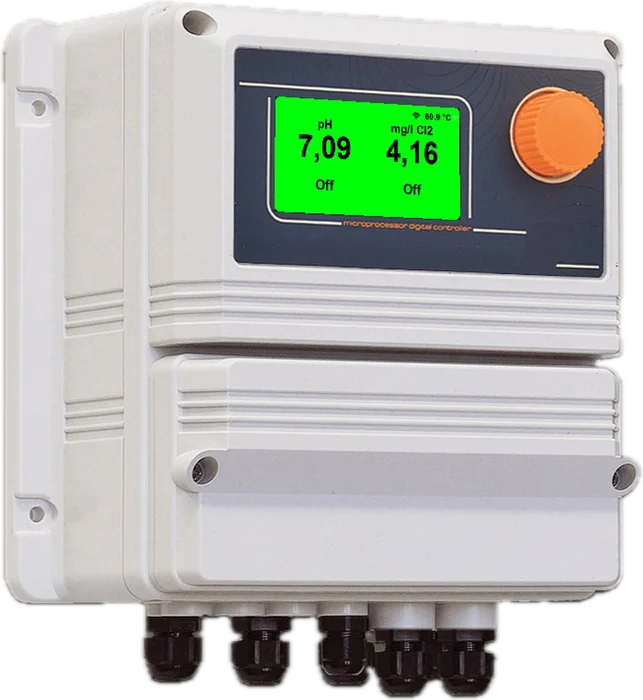
Two-channel controller with colour display: it controls the external pumps.
The controller →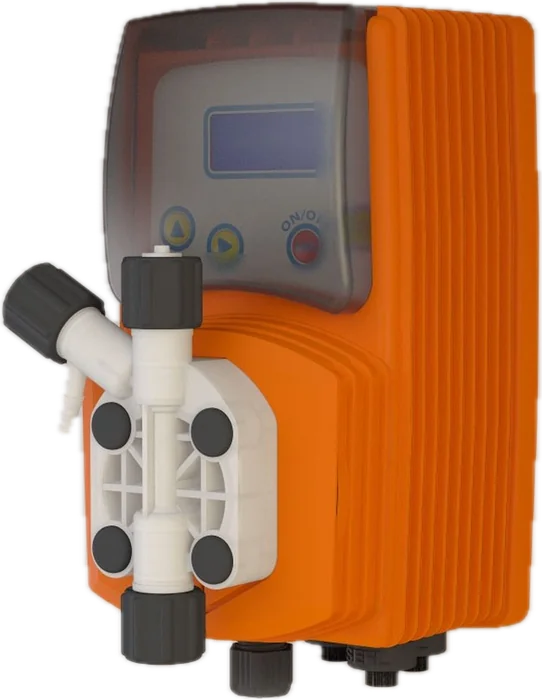
Flow rate selected according to the pool volume, interlocked with the circulation.
V and VMS pumps →Dosing proportional to the measured free chlorine.
V and VMS pumps →Free chlorine in mg/l, selective membrane, 0.01 mg/l resolution.
SCL cells →EPHS combination electrode, 0 – 14 pH.
pH electrodes →Flow-through probe holder with flow sensor, 50 µm sample filter.
Probe holders →Free chlorine in mg/l with the open cell, to be compared periodically with the DPD photometer.
With the two integrated dosing pumps: pH corrector and hypochlorite.
The pump →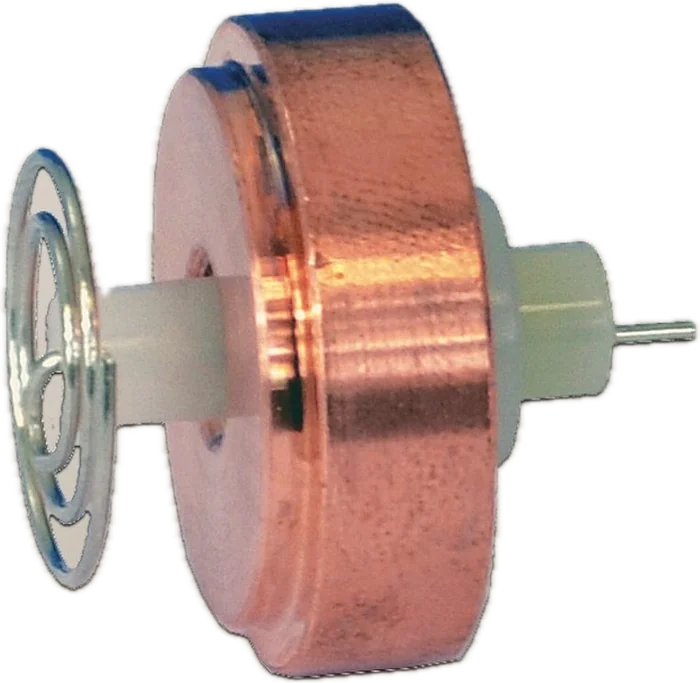
Free chlorine 0 – 10 mg/l, periodic calibration.
ECL6 cell →EPHS combination electrode, 0 – 14 pH.
pH electrodes →Flow-through probe holder with flow sensor, 50 µm sample filter.
Probe holders →Free chlorine in mg/l with the open cell and pumps sized for the pool.
Two-channel controller with colour display: it controls the external pumps.
The controller →Flow rate selected according to the pool volume, interlocked with the circulation.
V and VMS pumps →Dosing proportional to the measured free chlorine.
V and VMS pumps →Free chlorine 0 – 10 mg/l, periodic calibration.
ECL6 cell →EPHS combination electrode, 0 – 14 pH.
pH electrodes →Flow-through probe holder with flow sensor, 50 µm sample filter.
Probe holders →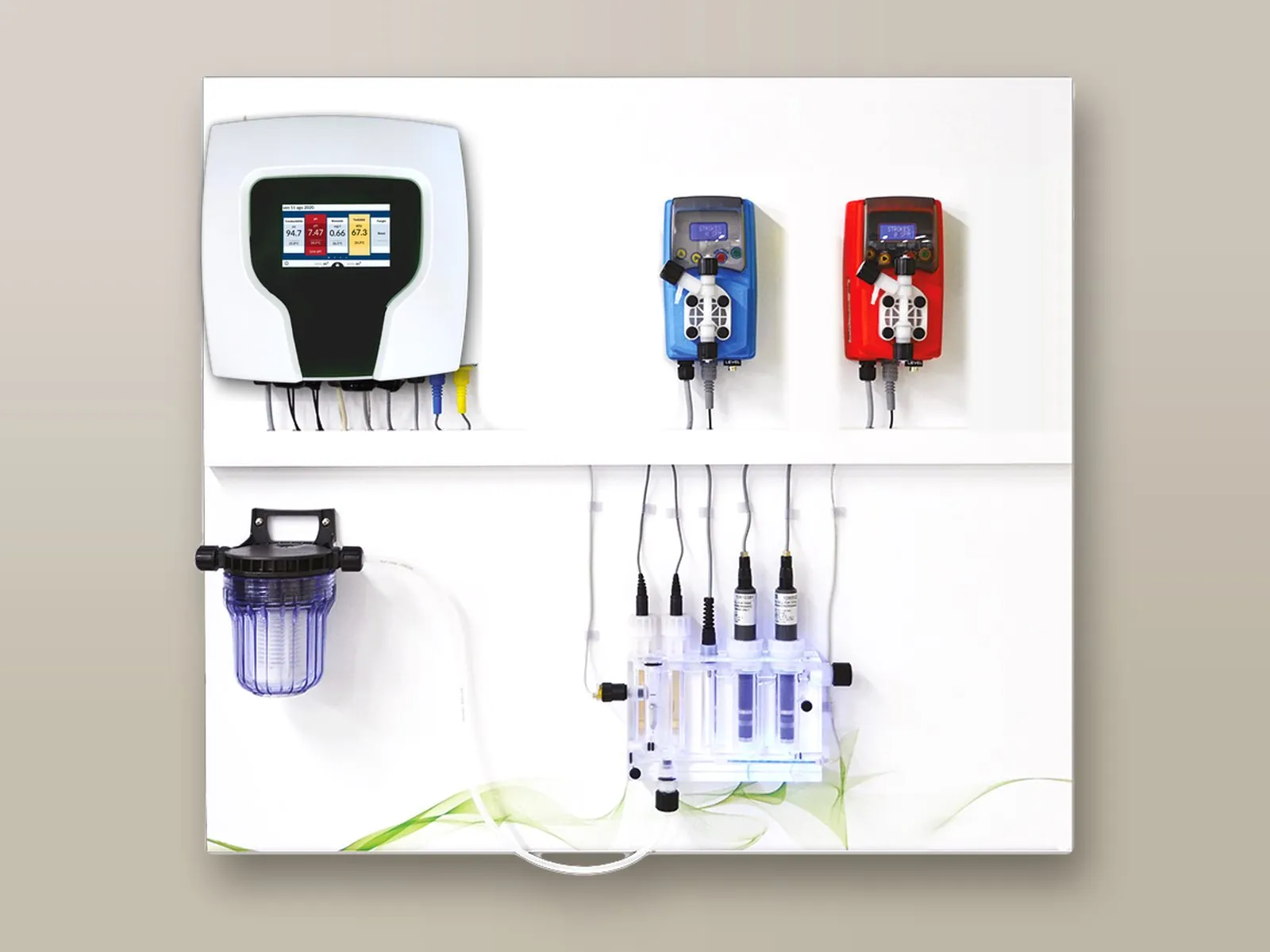
All the pool parameters: free, total and combined chlorine, pH and Redox, measured make-up and discharge, dechlorination and flocculant.
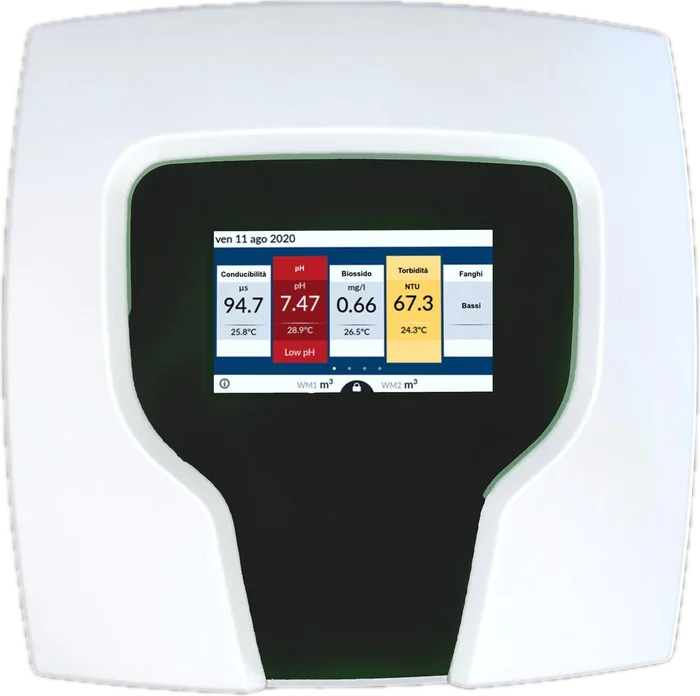
Multi-parameter controller with touch screen, up to 10 measuring channels.
The Centurio POOL →Two closed cells: the controller calculates combined chlorine from the difference.
SCL cells →Redox supplements the amperometric measurement as additional information.
pH electrodes →With flow sensor, which stops dosing when there is no circulation.
Probe holders →pH corrector, hypochlorite, flocculant and algicide.
V and VMS pumps →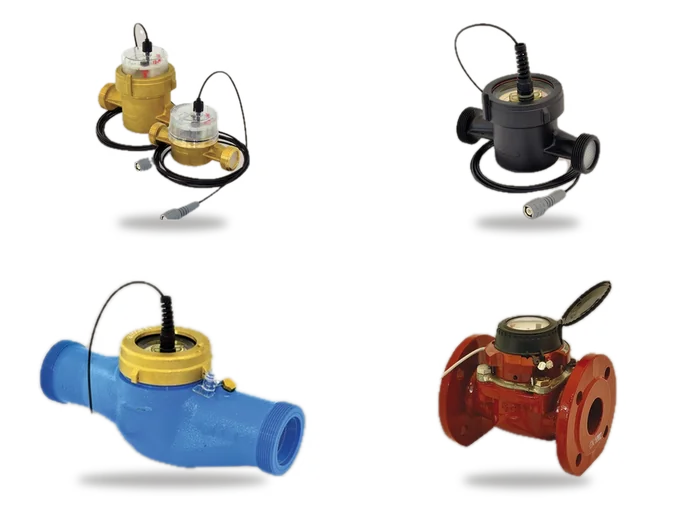
They measure the make-up and discharged water, so that the water renewal is logged.
Water meters →All the pool parameters: free, total and combined chlorine, pH and Redox, measured make-up and discharge, dechlorination and flocculant, with pumps sized for the pool.
Multi-parameter controller with touch screen, up to 10 measuring channels.
The Centurio POOL →Two closed cells: the controller calculates combined chlorine from the difference.
SCL cells →Redox supplements the amperometric measurement as additional information.
pH electrodes →With flow sensor, which stops dosing when there is no circulation.
Probe holders →pH corrector, hypochlorite, flocculant and algicide.
V and VMS pumps →They measure the make-up and discharged water, so that the water renewal is logged.
Water meters →In water, hypochlorite splits into hypochlorous acid and hypochlorite ion, in proportions that depend on the pH: this is why the standard requires automatic control of both and the systems give priority to pH control.
With a pH close to 7.2 – 7.4, hypochlorous acid prevails, the fastest and most effective form: with the same amount of chlorine dosed, disinfection is greater even at peak times.
The nitrogenous substances introduced by bathers react with chlorine and form chloramines, which cause irritation and the characteristic odour: combined chlorine must be kept within 0.4 mg/l and the Centurio POOL measures it continuously.
pH corrector and liquid sodium hypochlorite are injected in solution into the circulation system, with the corrector downstream of the filter, and never into the pool while it is open to the public.
The systems are supplied pre-assembled and tested, with controller, pumps, probe holder and sample filter already connected.
The injection points are on the delivery line, downstream of the filtration, with an injection valve or lance; the probes analyse a sample in the flow-through probe holder.
Probe holders →The flow sensor of the probe holder stops dosing when there is no circulation; the controller remains powered and continues measuring in stand-by.
At least 24 hours of autonomy and containment systems; in type 1 pools the chemicals are kept in a separate, ventilated room.
Tanks →| Parameter | Value |
|---|---|
| Temperature, indoor pools | 24 – 30 °C |
| Temperature, indoor pools for children | 26 – 32 °C |
| Temperature, outdoor pools | 18 – 30 °C |
| pH, chlorine disinfection | 6.5 – 7.5 |
| pH, stabilised chlorine | 6.9 – 7.7 |
| Active free chlorine | 0.7 – 1.5 mg/l |
| Active combined chlorine | up to 0.4 mg/l |
| Stabilised chlorine: free chlorine | 1.5 – 3.0 mg/l |
| Stabilised chlorine: cyanuric acid | 30 – 60 mg/l |
| Turbidity | 2.5 mg/l of SiO₂ |
| Coarse solids | absent |
Values from the State-Regions Agreement of 16 January 2003 (Annex 1, Table A2), to which UNI 10637:2024 (Italian standard) refers for pool water requirements; the requirements must be met at every point of the pool.
Insight: UNI 10637:2024 in brief →| Electrode | Pressure | Connection | Body | Minimum conductivity | Junction | Temperature | Cable | Diameter | Notes |
|---|---|---|---|---|---|---|---|---|---|
| EPHS | 7 bar (3.5 bar) | BNC | Epoxy | 100 µS | – | 70 °C (80 °C) | 0.8 m | 12 mm | – |
| EPHM | 7 bar (3.5 bar) | BNC | Epoxy | 100 µS | – | 70 °C (80 °C) | 4.5 m | 12 mm | – |
| EPHL | 7 bar (3.5 bar) | BNC | Epoxy | 100 µS | – | 70 °C (80 °C) | 15 m | 12 mm | – |
| EPHSN6 | 7 bar (3.5 bar) | SN6 with PG13.5 thread | Epoxy | 100 µS | – | 70 °C (80 °C) | 1 – 100 m | 12 mm | – |
| EPHMD/100 | 7 bar | BNC | Epoxy | 100 µS | Double | 100 °C | 4.5 m | 12 mm | – |
| EPHM/D | 7 bar (3.5 bar) | BNC | Epoxy | 100 µS | Double | 70 °C (80 °C) | 4.5 m | 12 mm | – |
| EPHM/D/SN6 | 7 bar (3.5 bar) | SN6 with PG13.5 thread | Epoxy | 100 µS | Double | 70 °C (80 °C) | 1 – 100 m | 12 mm | – |
| EPHMD/LI | 7 bar (3.5 bar) | SN6 with PG13.5 thread | Epoxy | 3 µS | Double | 70 °C (80 °C) | 1 – 100 m | 12 mm | For low-conductivity water |
| EPHSC | 7 bar (3.5 bar) | BNC | Epoxy | 100 µS | Double | 70 °C (80 °C) | 4.5 m | 12 mm | Self-cleaning |
| EPHSC/SN6 | 7 bar (3.5 bar) | SN6 with PG13.5 thread | Epoxy | 100 µS | Double | 70 °C (80 °C) | 1 – 100 m | 12 mm | Self-cleaning |
| EPHM/HF | 7 bar (3.5 bar) | BNC | Epoxy | 100 µS | Double | 70 °C (80 °C) | 4.5 m | 12 mm | Resistant to 1% hydrofluoric acid |
| EPHSN6 GK | 10 bar | SN6 | Glass | 150 µS | – | −5 / 135 °C | 1 – 100 m | 12 mm | High temperature |
All models: combination electrode, range 0 – 14 pH, resolution 0.01.
| SCL3N/0.5 | SCL3N/2 | SCL3N/20 | SCL18/0.5 | SCL18/2 | SCL18/20 | SCL3S/20 | |
|---|---|---|---|---|---|---|---|
| Measuring range | 0 – 0.5 mg/l | 0 – 2 mg/l | 0 – 20 mg/l | 0 – 0.5 mg/l | 0 – 2 mg/l | 0 – 20 mg/l | 0 – 20 mg/l |
| Resolution | 0.001 | 0.001 | 0.01 | 0.001 | 0.001 | 0.01 | 0.01 |
| Free chlorine | Inorganic | Inorganic | Inorganic | Inorganic | Inorganic | Inorganic | Organic and inorganic |
| Water | Fresh | Fresh | Fresh | Fresh | Fresh | Fresh | Fresh or salt |
| Electrodes | 2 | 2 | 2 | 3 | 3 | 3 | 2 |
| Selective membrane | Yes | Yes | Yes | No | No | No | Yes |
| Automatic compensation | pH and temperature | pH and temperature | pH and temperature | pH and temperature | pH and temperature | pH and temperature | Temperature |
| Self-cleaning | – | – | – | Yes | Yes | Yes | – |
| Operating pH | 5 – 9.5 | 5 – 9.5 | 5 – 9.5 | 5 – 9 | 5 – 9 | 5 – 9 | 5.5 – 9.5 |
| Operating temperature | 1 – 40 °C | 1 – 40 °C | 1 – 40 °C | 5 – 70 °C | 5 – 70 °C | 5 – 70 °C | 5 – 45 °C |
| Operating pressure | 1 bar | 1 bar | 1 bar | 8 bar | 8 bar | 8 bar | 1 bar |
| Water flow | 30 l/h | 30 l/h | 30 l/h | 40 l/h | 40 l/h | 40 l/h | 30 l/h |
| ECL6 | ECL6/E | ECL7 | ECL12 | ECL12/E | ECL20 | ECL21 | |
|---|---|---|---|---|---|---|---|
| Water | Fresh | Fresh | Fresh | Sea | Sea | Fresh | Sea |
| Flow stabiliser | Yes | Yes | Yes | Yes | Yes | – | – |
| Flow sensor and regulation | Yes | Yes | Yes | Yes | Yes | – | – |
| Probe holder for | Temperature, pH, Redox | Temperature | Temperature, pH, Redox (PG13.5) | Temperature, pH, Redox | Temperature | – | – |
All models: amperometric system, range 0 – 10 mg/l, resolution 0.01, organic and inorganic free chlorine, operating temperature 1 – 40 °C, pressure 0.4 – 5 bar, water flow 40 l/h.
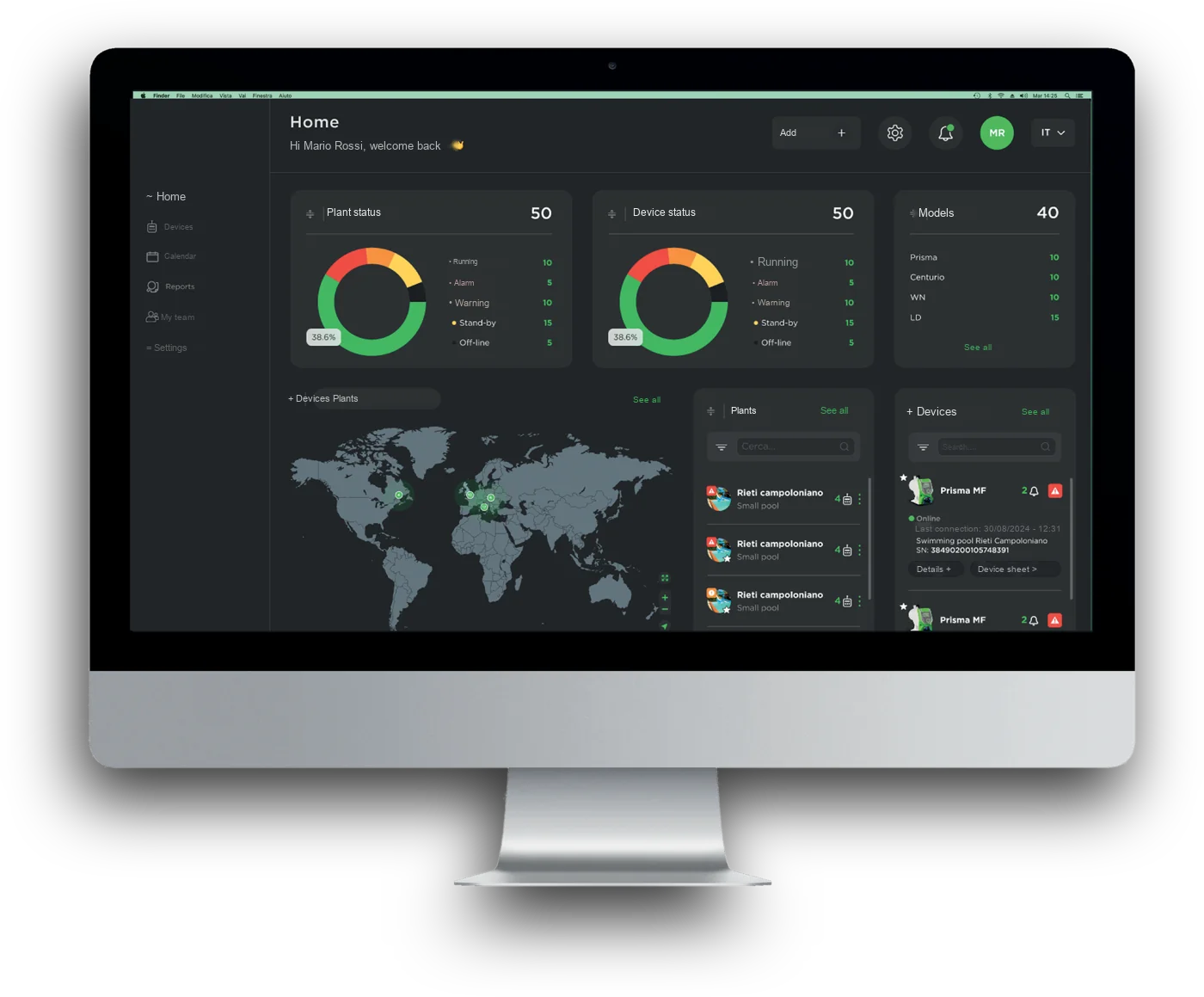
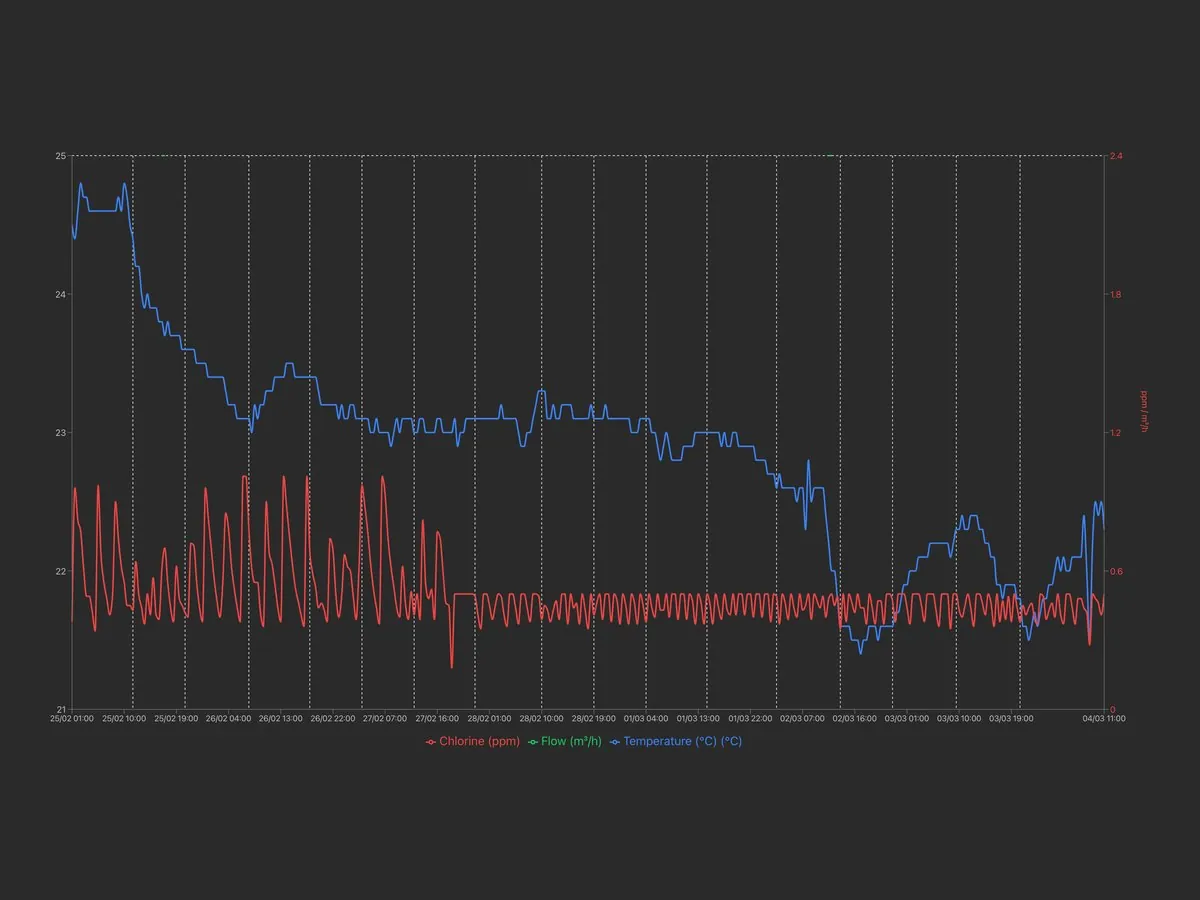
Controllers and pumps can be remotely monitored and controlled via Wi-Fi, Ethernet or 4G from the web portal, free of charge and with no subscription: set points, dosing and alarms can be changed, alarm notifications received and logged data downloaded, which is also useful for the inspection log. Alternatively, integration into a PLC is via Modbus RTU or TCP/IP.
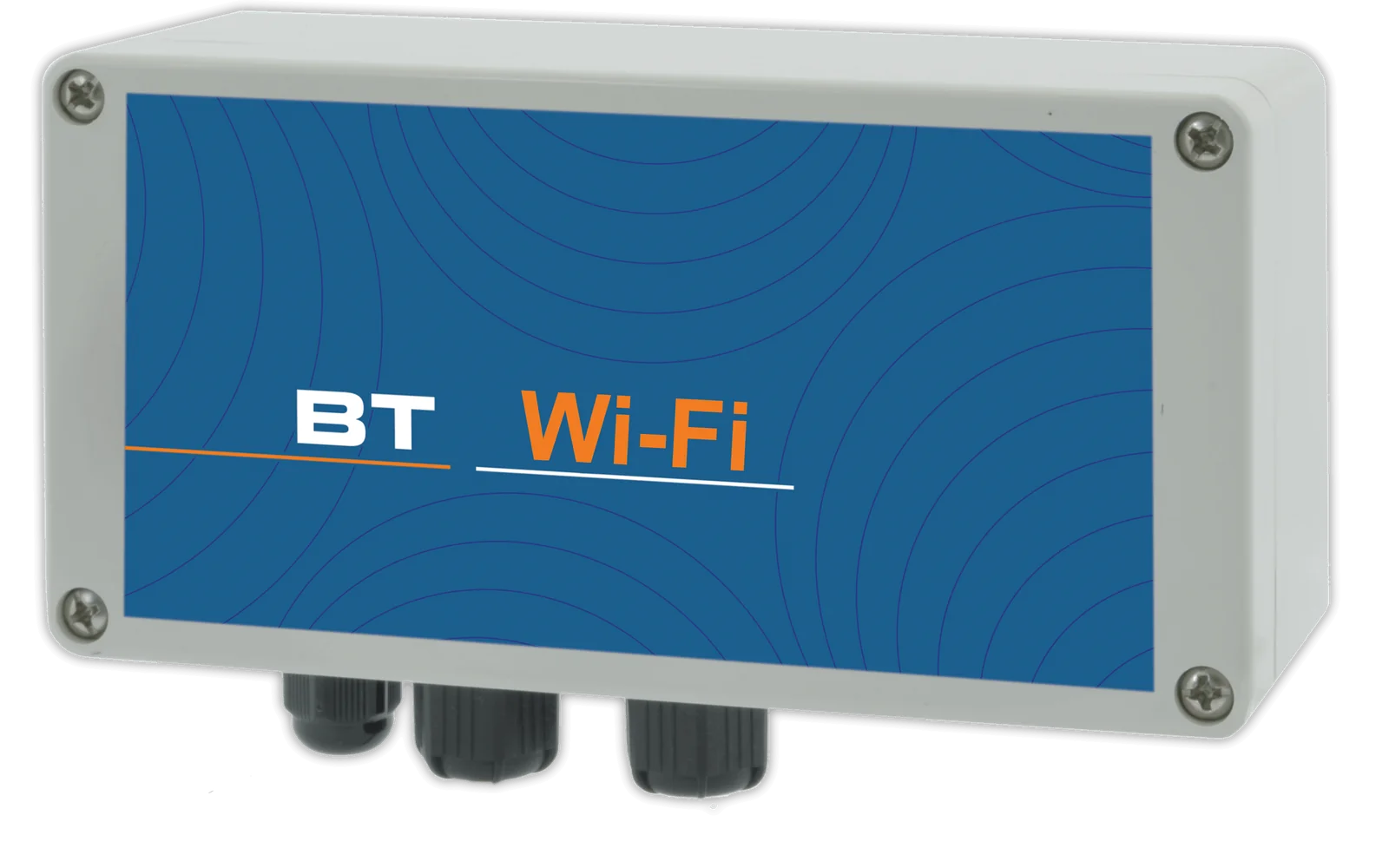
Wireless connection to the web portal, with the same functions as the cable connection.
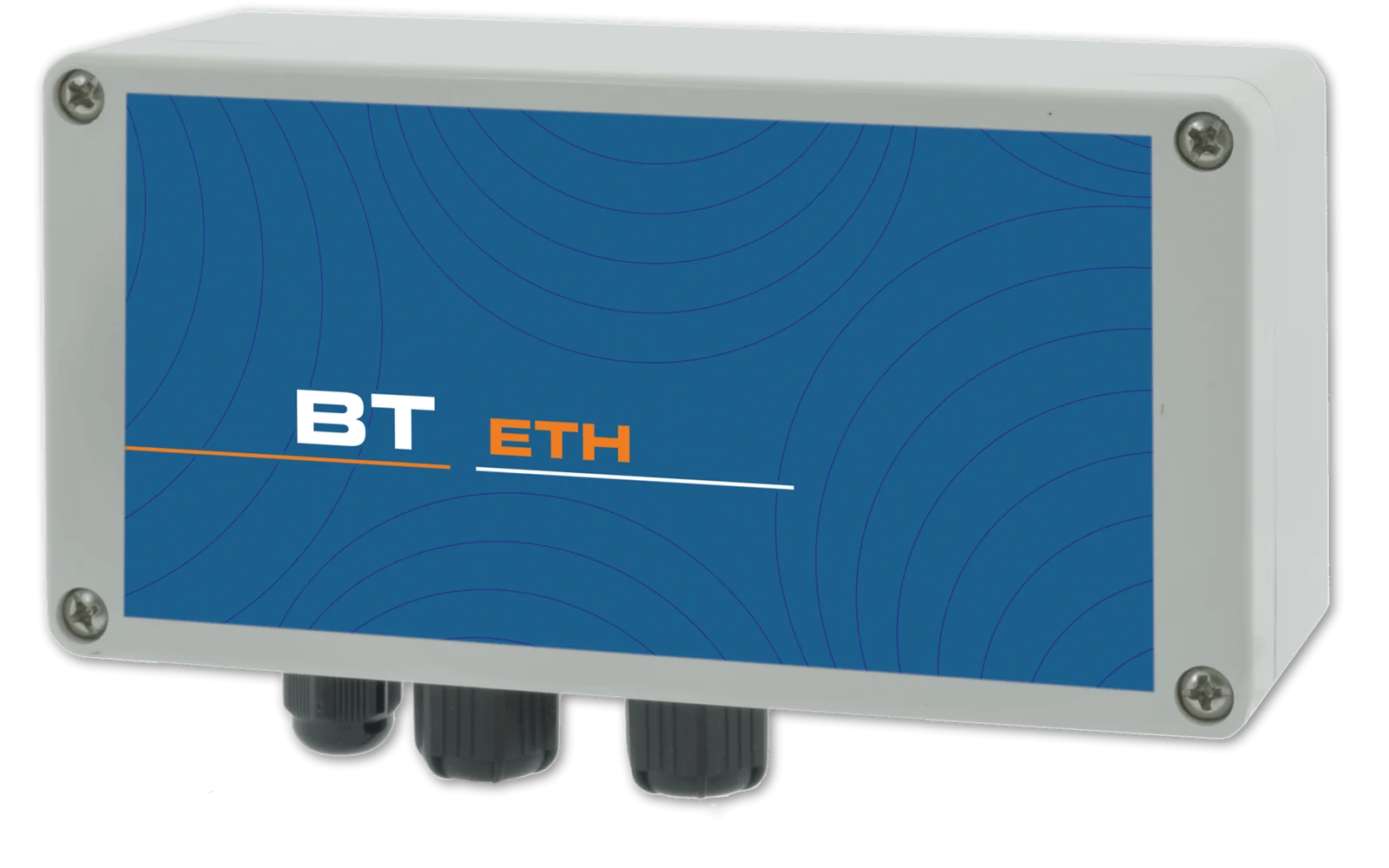
Connection to the web portal via network cable: measurements, set points, dosing and alarms accessible from PC, tablet and smartphone.
Connection via the cellular network for installations without a local network, with alarm notification by SMS or e-mail.
Integration into your PLC via serial port.
Integration into your PLC or SCADA via Ethernet network.
A single account brings together all registered installations, each with its own devices: the web portal, free of charge and with no subscription, can be accessed from PC, Mac, tablet and smartphone and allows every parameter to be both viewed and changed, with an encrypted connection and protected access.
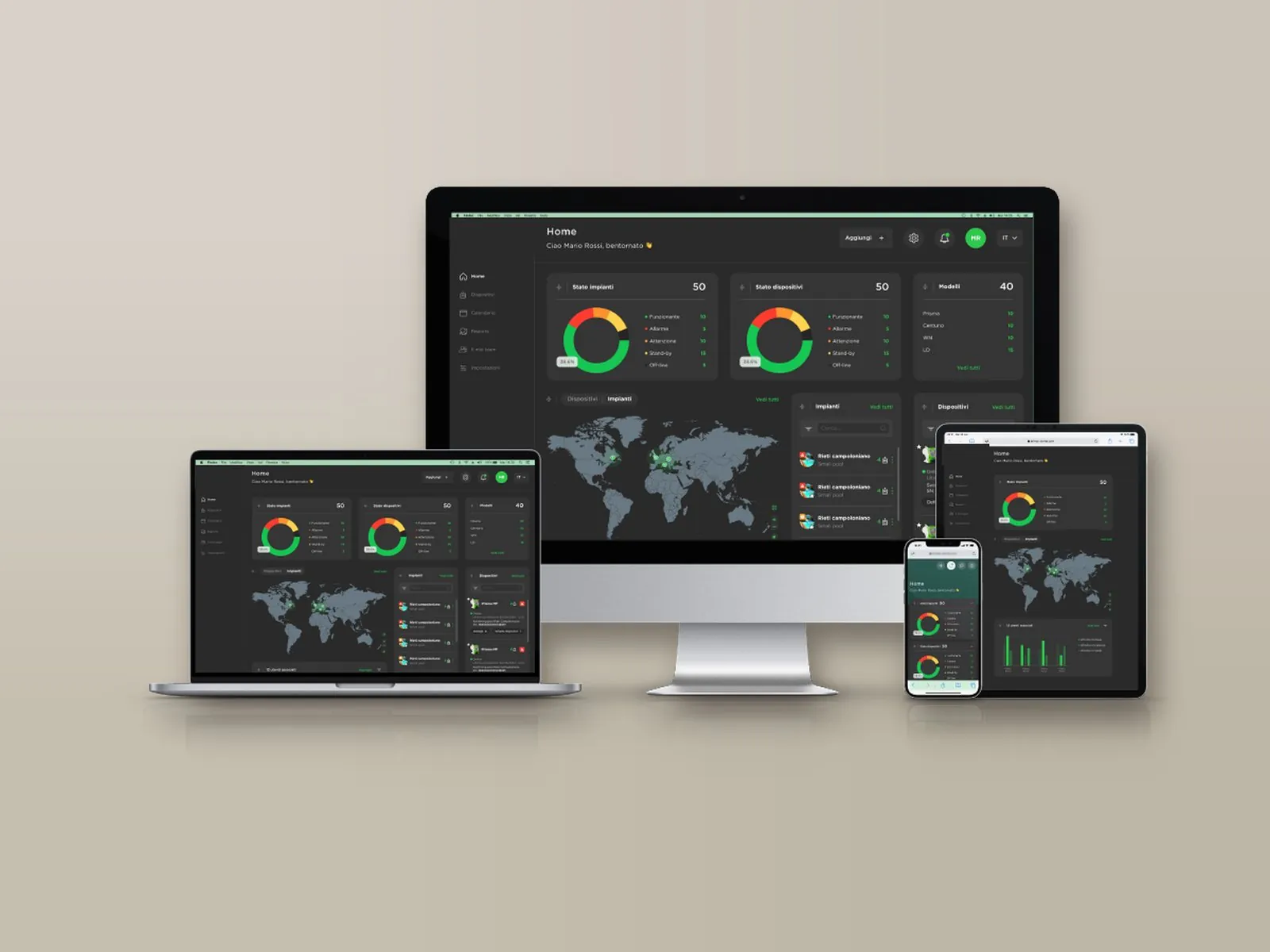
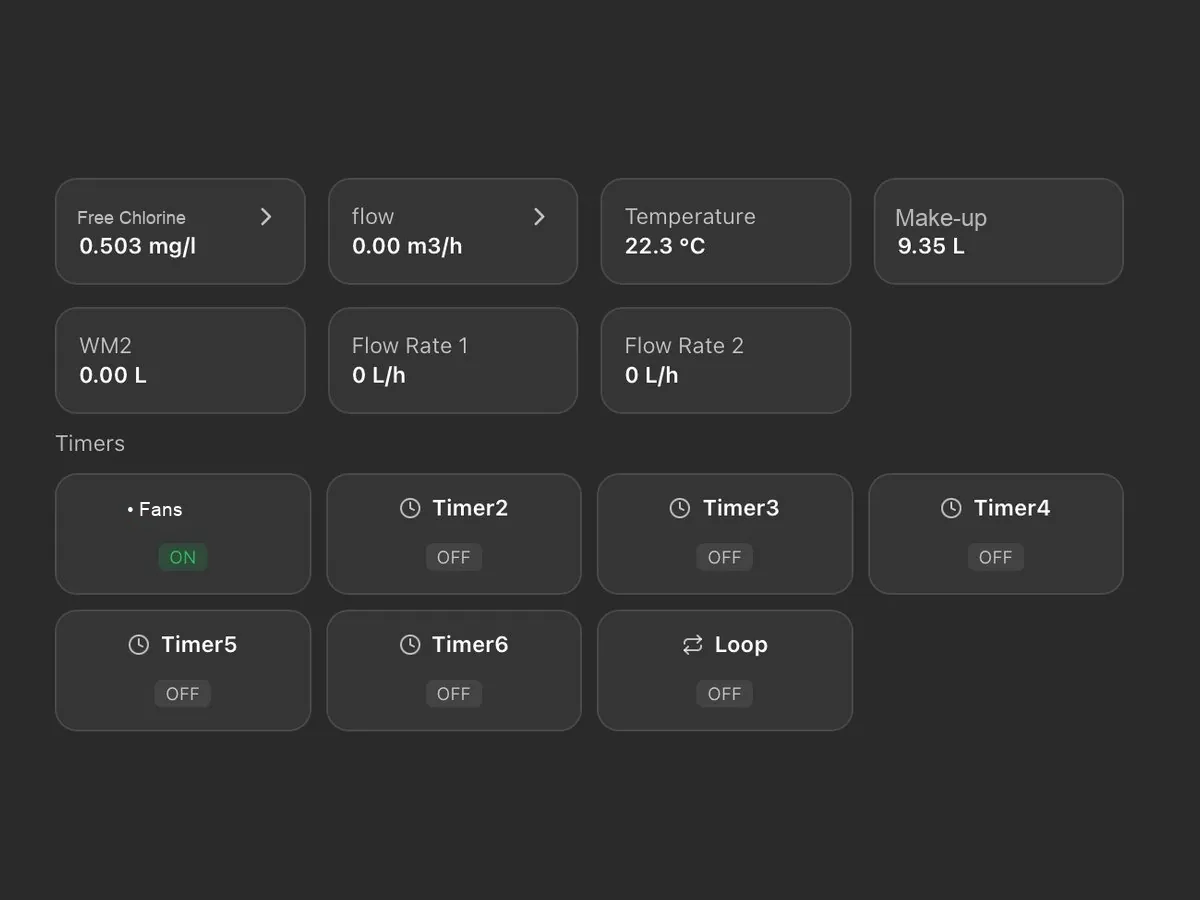
On a single screen: probe readings, chemical levels, pump activation thresholds and active alarms, with the status of installations and devices (normal, warning, alarm, standby, not connected).
Installations appear on an interactive map with their status and open with a click; for each one, the local weather conditions and temperature are also shown.
Archive of measurements and alarms, available for consultation at any time with charts and numerical reports exportable in Excel format.
Alarm thresholds for readings, dosing, faulty probe and out-of-range readings, with notification by e-mail or SMS depending on the communication system; a warning is also issued when an installation remains disconnected beyond the set time.
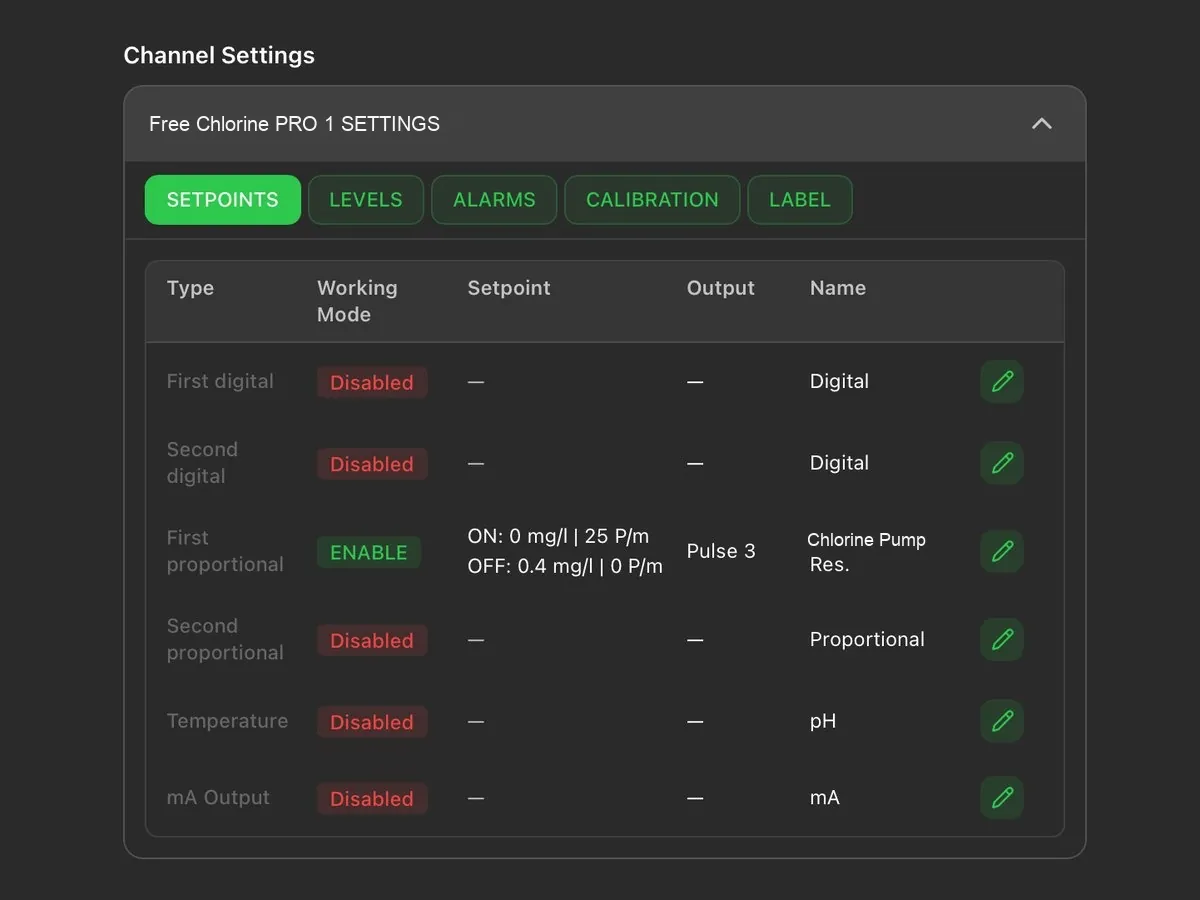
Remote modification of the set points, of the dosing pump activation thresholds and of the corresponding hourly flow rate.
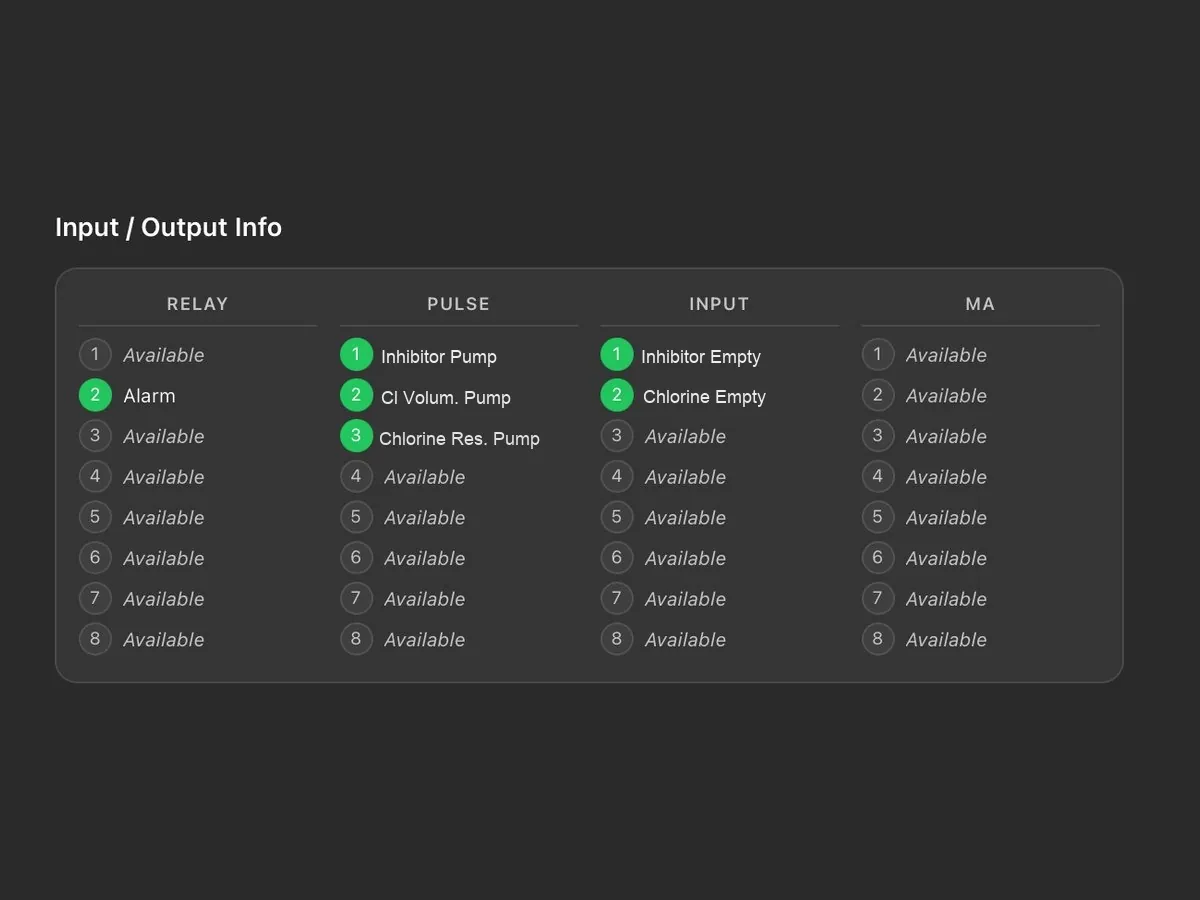
Status of relays, pulse outputs, digital inputs and current outputs, with the name assigned to each connection.
Tasks are scheduled by installation or by device and assigned to technicians; a reminder is sent by e-mail two days before the due date. Each task is shown as scheduled, due, overdue or completed.
The main account has full access and creates the technicians’ accounts, each enabled only for the assigned installations and devices; the last login and activity of each technician are visible.
Reports on devices, tasks and technicians, downloadable in PDF or CSV with the customer’s logo; the log keeps the history of operations and disconnections.
Logo, main colour and light or dark theme; the tiles on the main screen can be rearranged by dragging them. Two installations can be displayed side by side for comparison.
Each device is added through a guided procedure: the model is recognised automatically and associated with the installation, together with the technician to be contacted.
As an alternative to the portal, the Modbus RTU or TCP/IP port allows integration into the plant supervision system.
Systems are supplied pre-assembled and tested, in the form best suited to the plant room: on a panel, in a cabinet or on a skid (with cover, in a box or on a frame), also tailor-made. Some examples.
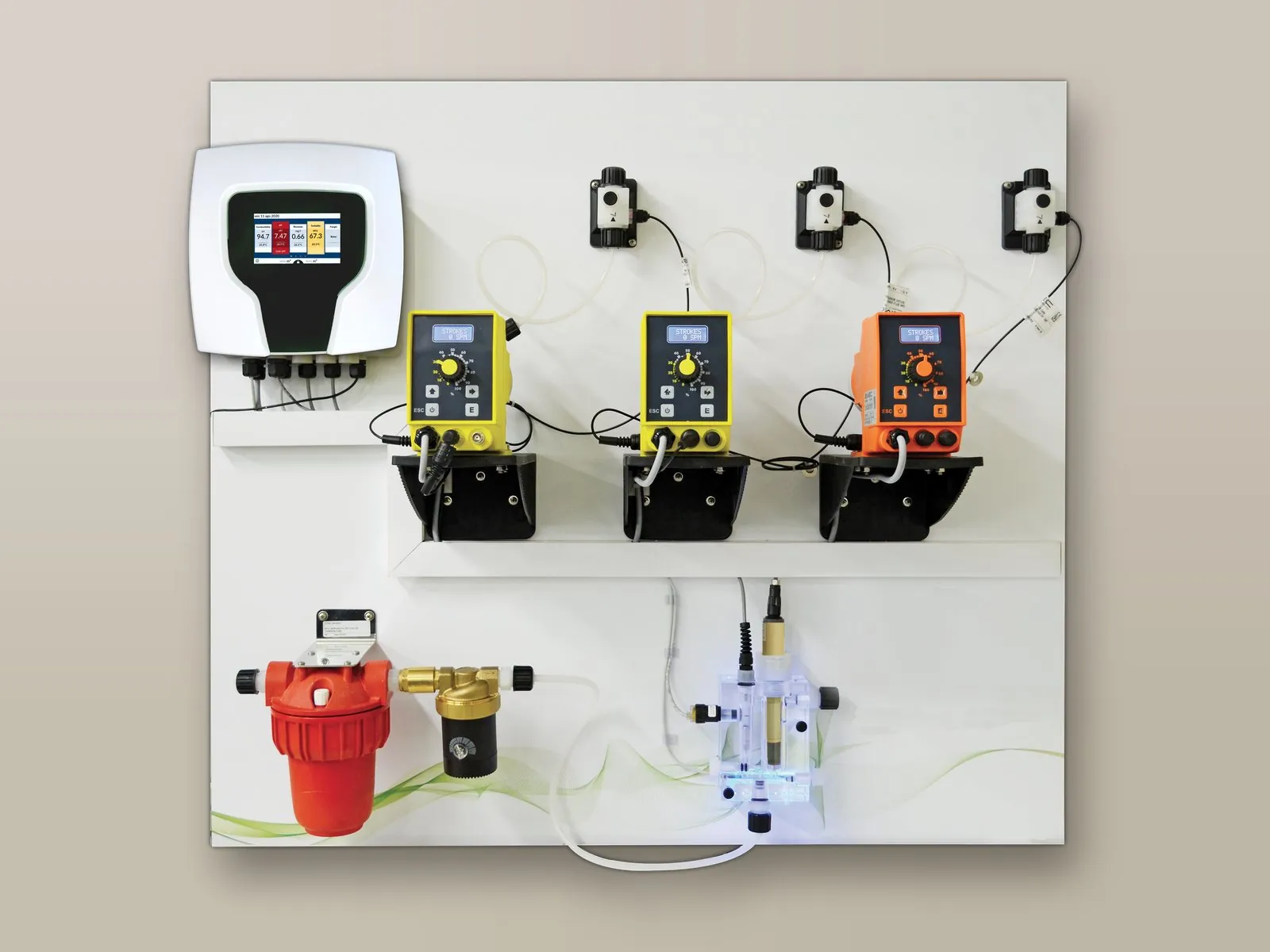
Controller, pumps, probe holder and accessories mounted and wired on a wall panel.
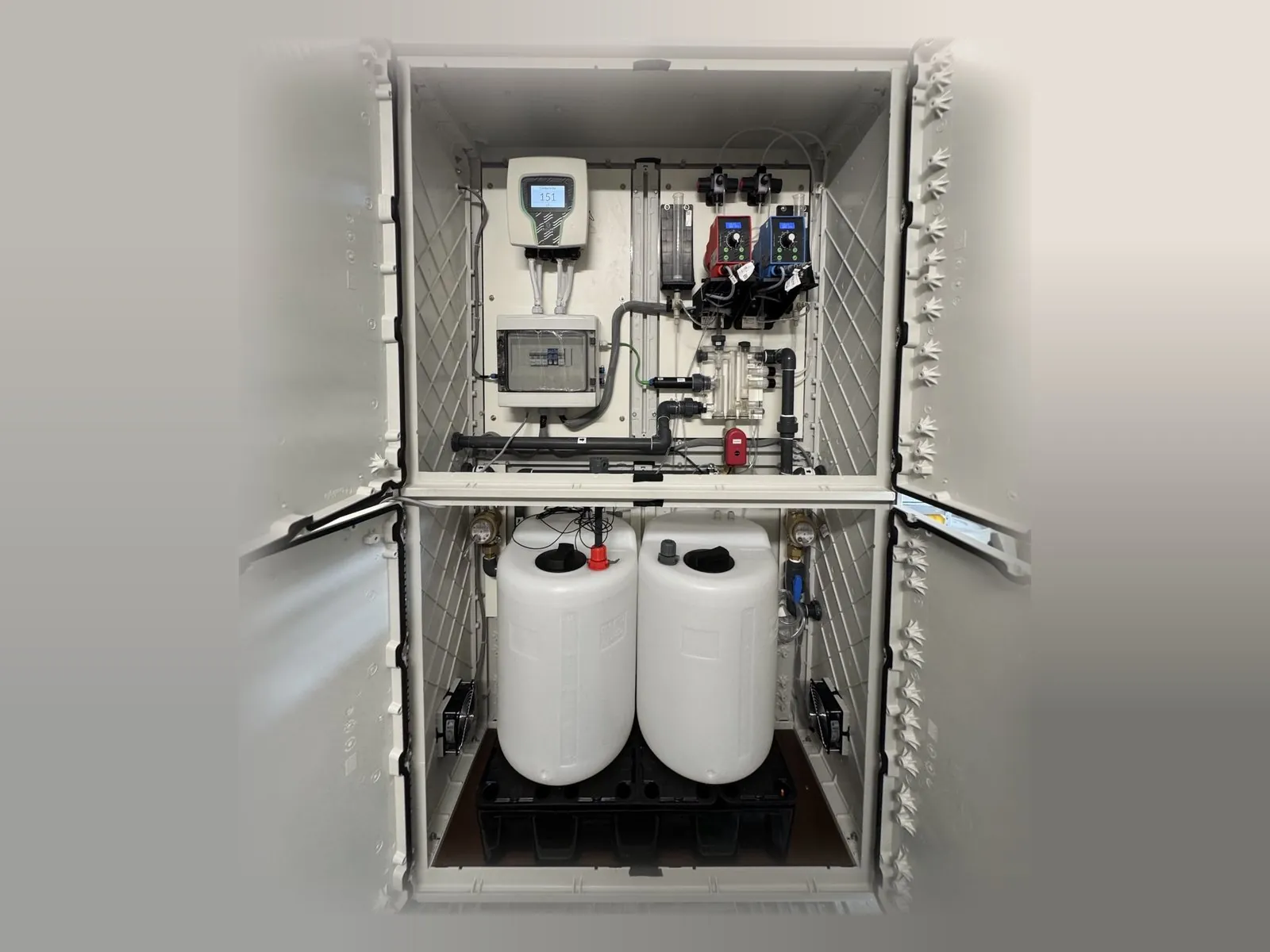
System panel and chemical tanks housed in a single cabinet.
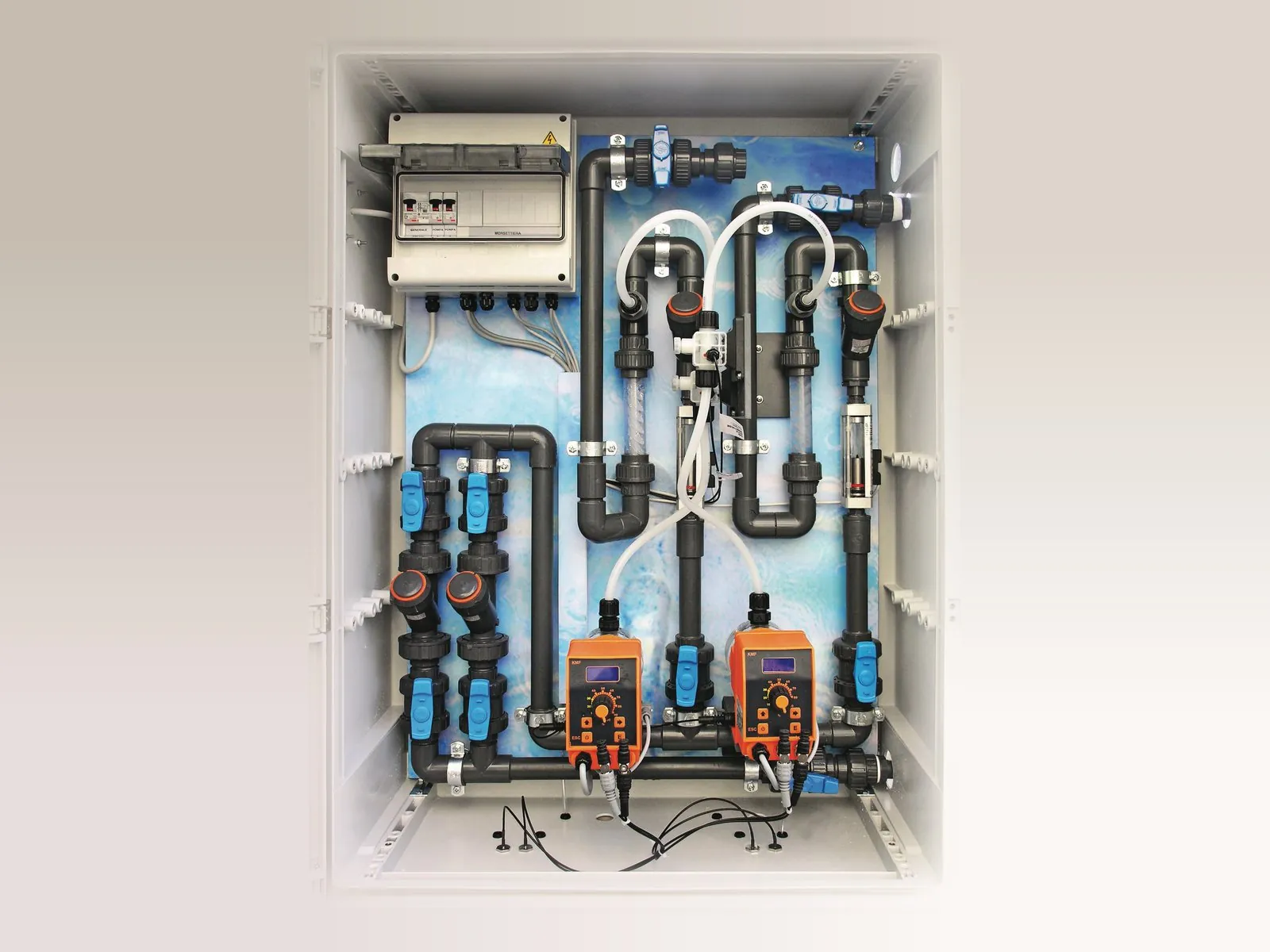
Pipework, pumps and electrical panel in a wall cabinet with door.
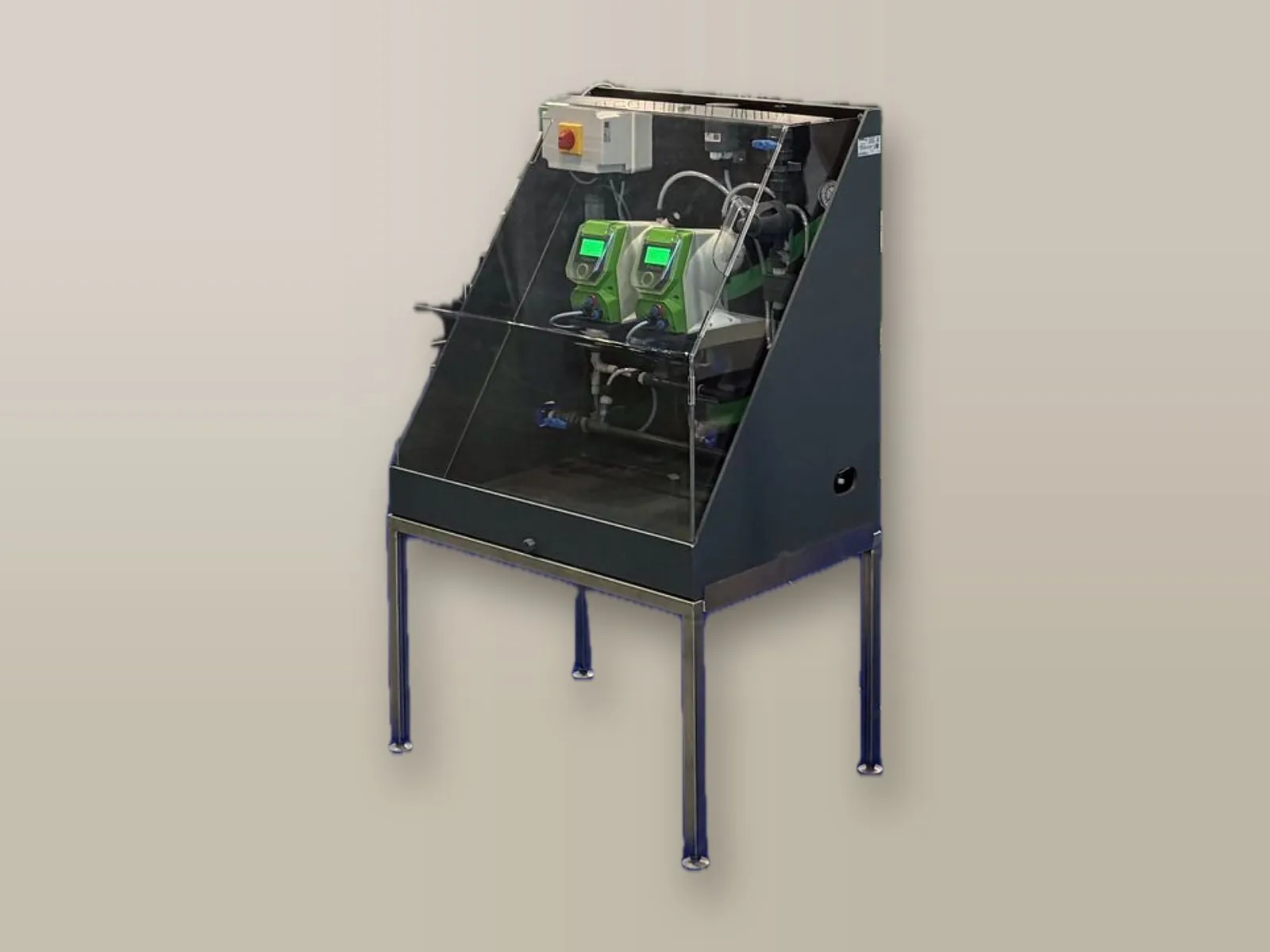
Skid with raised stainless steel frame and protective PMMA cover.
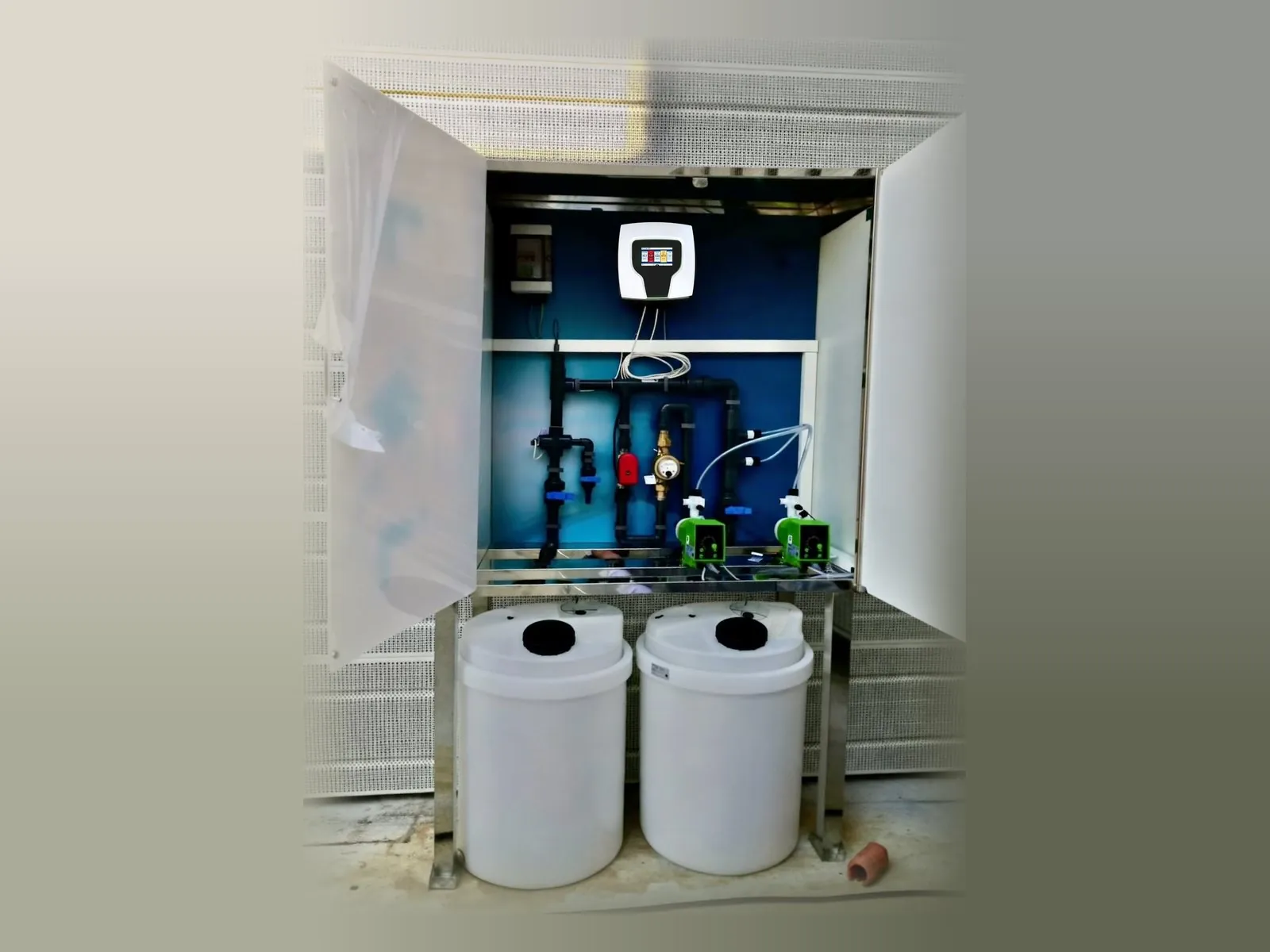
Skid enclosed in a box with door, with the chemical tanks at the base.
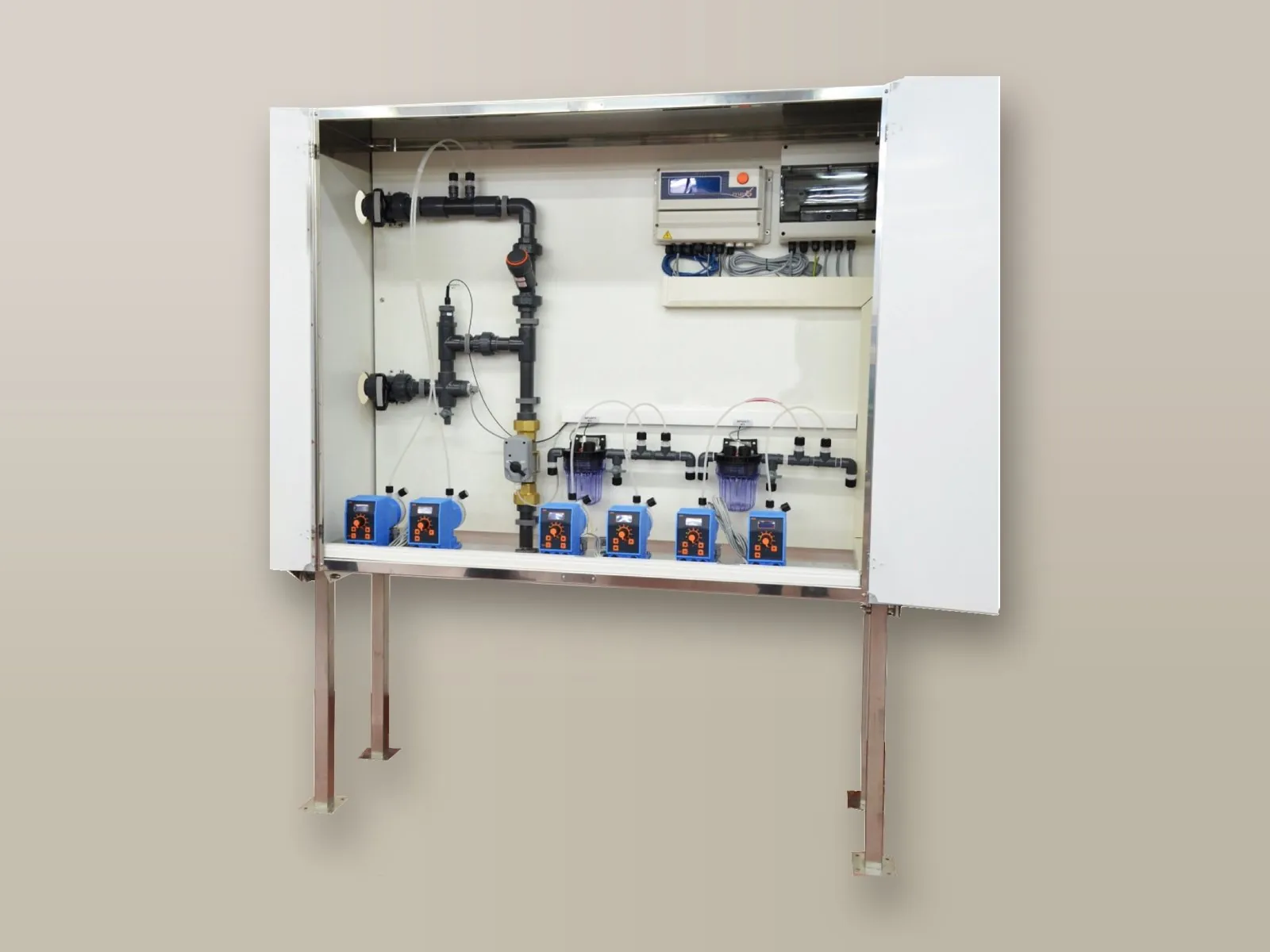
Skid on a frame with doors, pre-assembled and ready for connection.
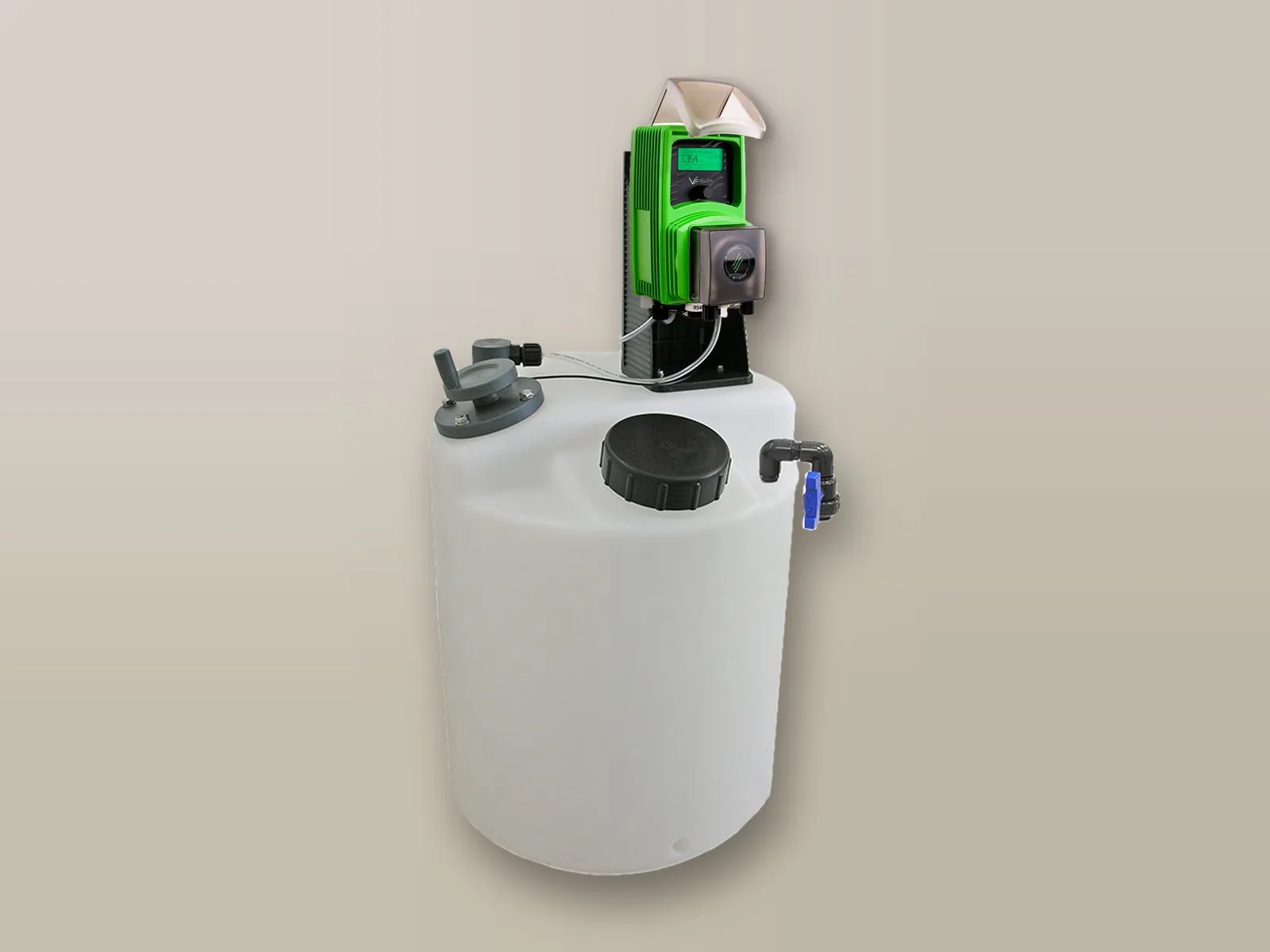
Dosing pump mounted directly on the tank: the most compact solution.
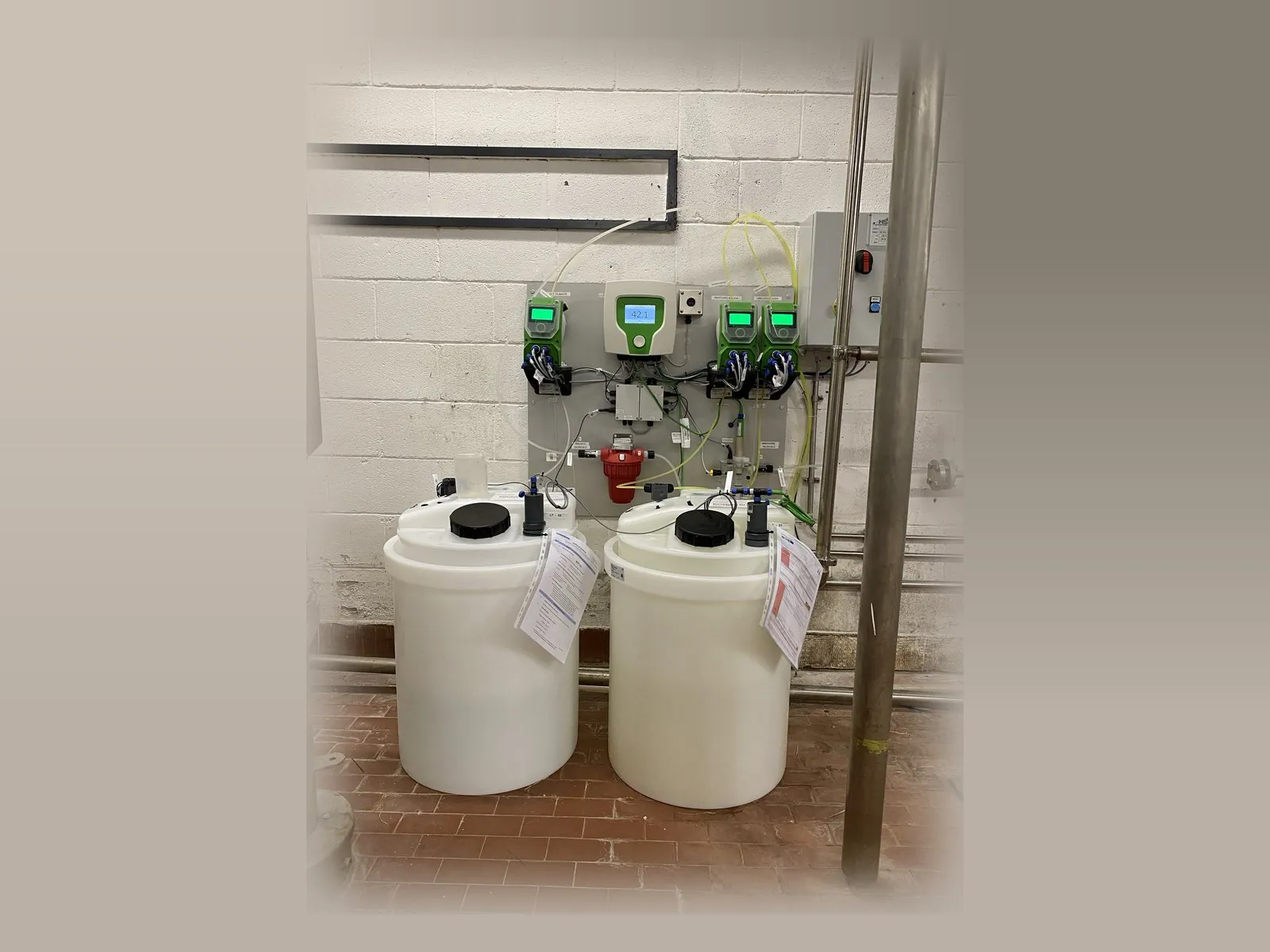
Wall installation in the plant room, with the chemical tanks on the floor.
Pumps, controllers or components supplied by the customer can also be fitted, with custom dimensions, back panel and electrical panel. Dosing stations and skids →
For chlorine and other disinfectants the basic solution is the dosing station; to dose according to the concentration actually present in the water, measuring controllers are used.
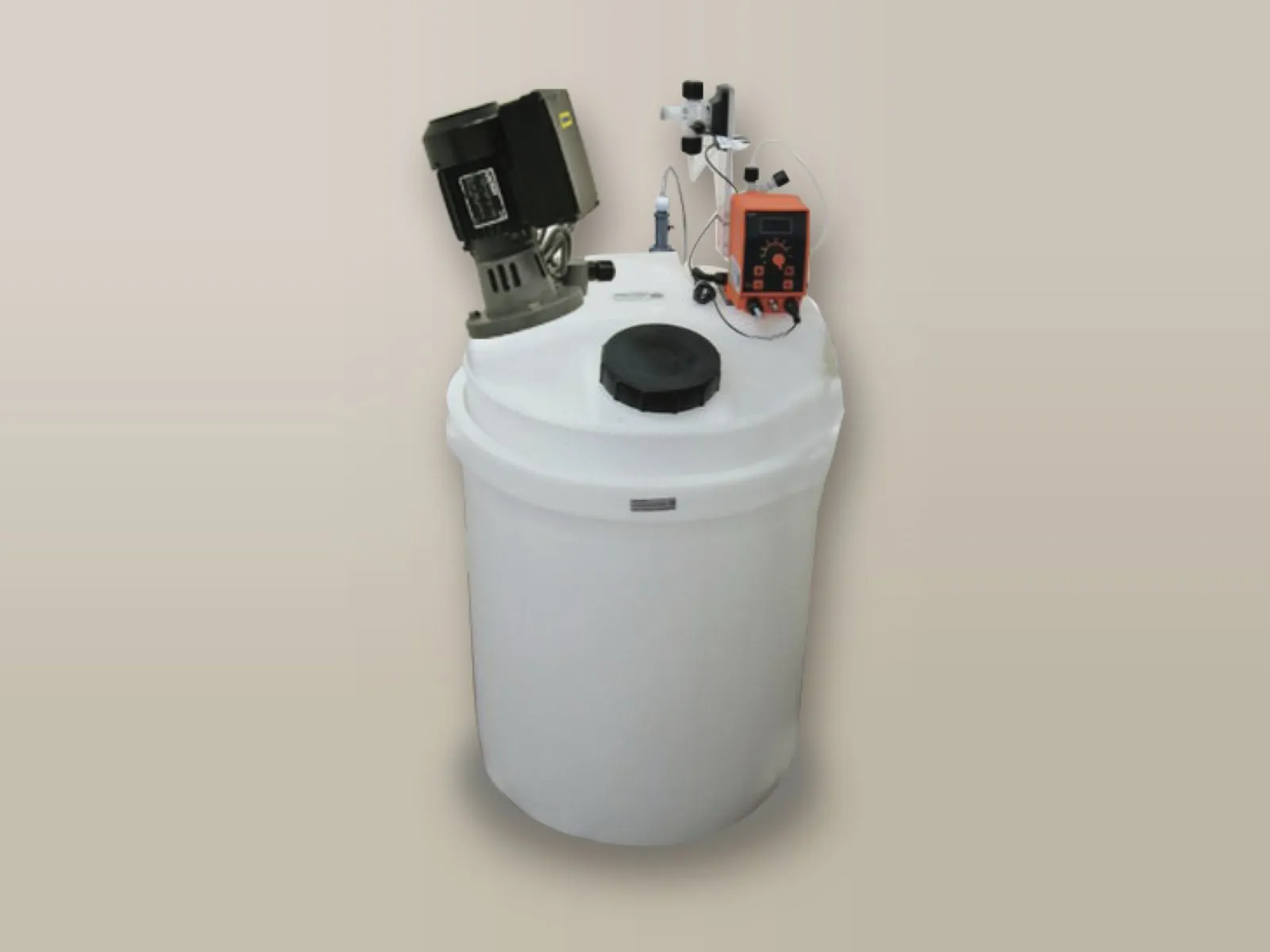
The simplest solution: the pump doses at a constant rate or in proportion to the volume of water measured by the pulse-output water meter.
Details →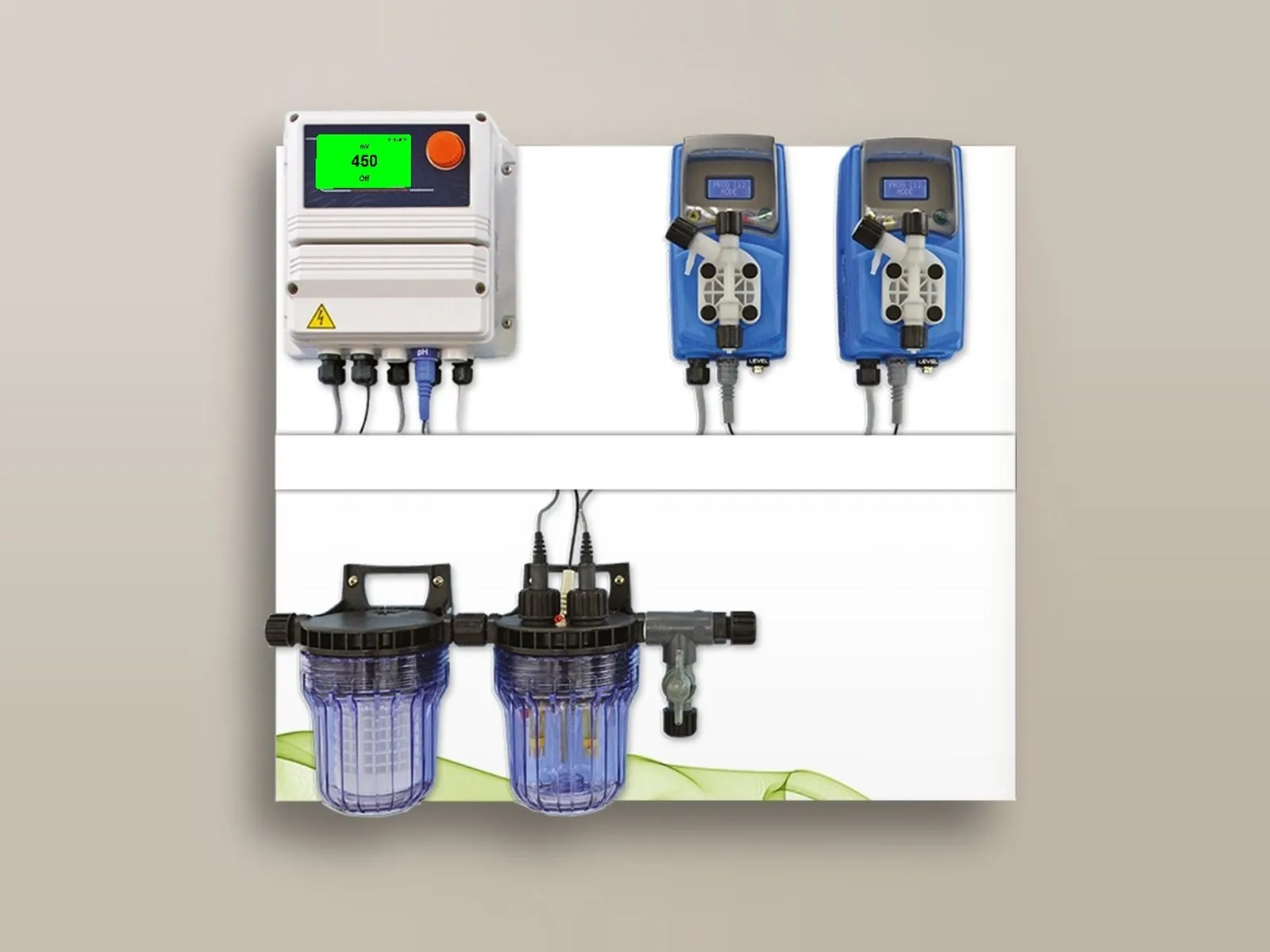
Dosing based on the Redox potential of the water: an economical solution, based on an indirect measurement.
Details →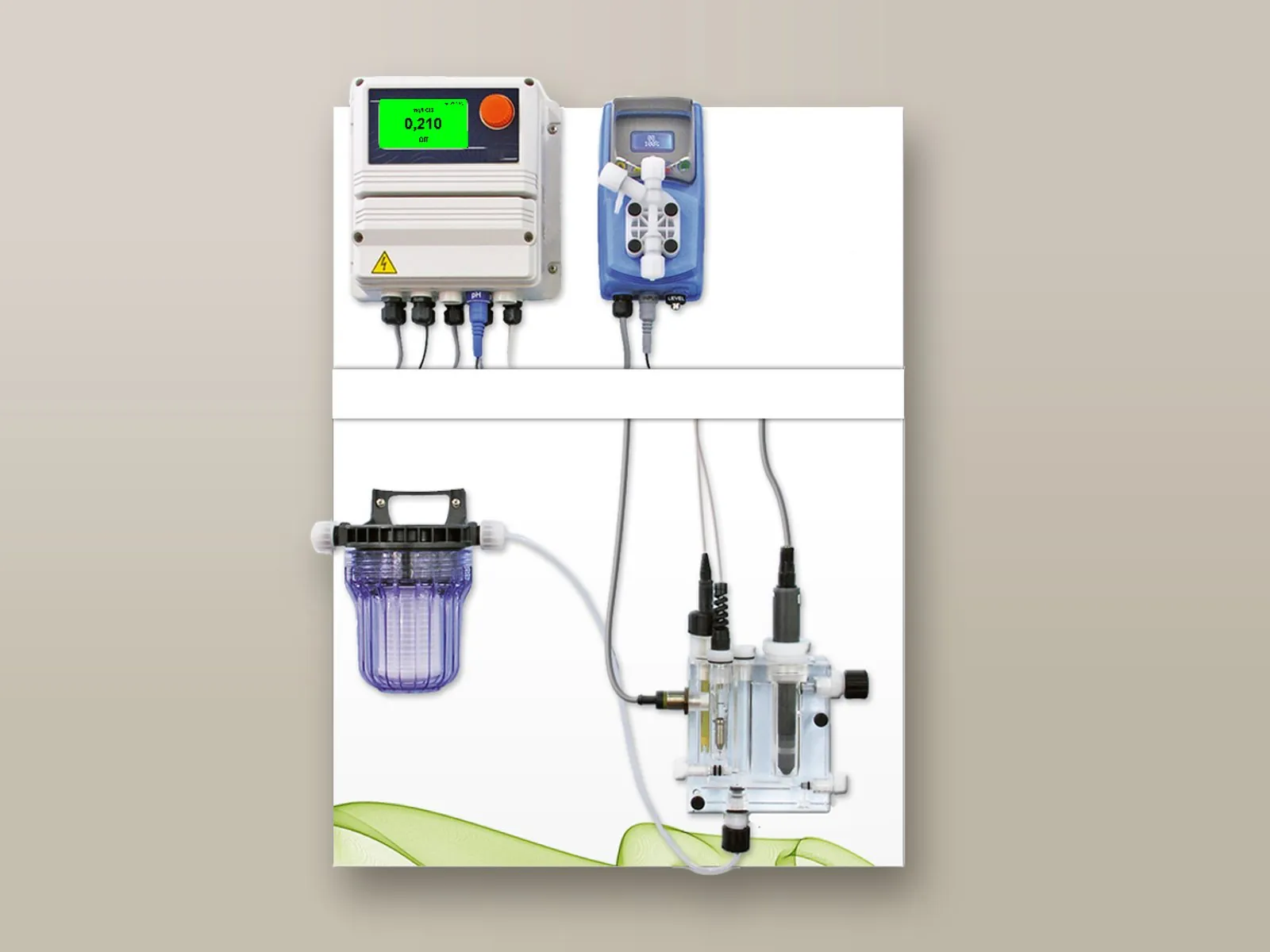
The amperometric cell directly measures the disinfectant concentration in mg/l, ensuring maximum dosing accuracy.
Details →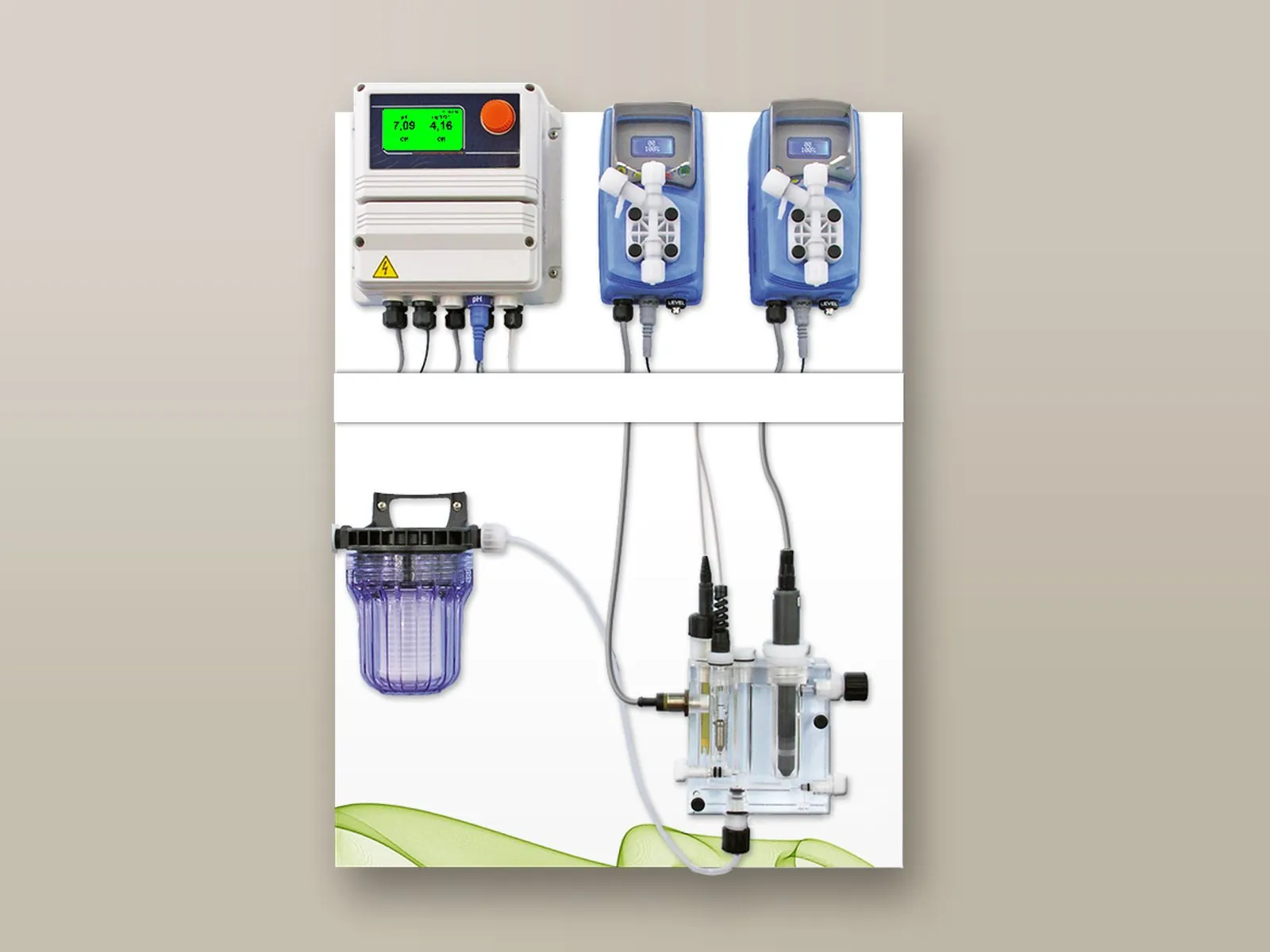
Simultaneous management of two parameters, for example pH and chlorine, with a single controller.
Details → Management of up to 10 parameters and of all the pumps in the installation, with touch screen and remote control as standard.
Details →Tell us the pool volume, the type of use and the characteristics of the plant room: we will propose the most suitable system, probes and accessories.
Call or write to us: a technician will reply with a tailored proposal of controllers, pumps, probes and accessories.