SCL2 cell
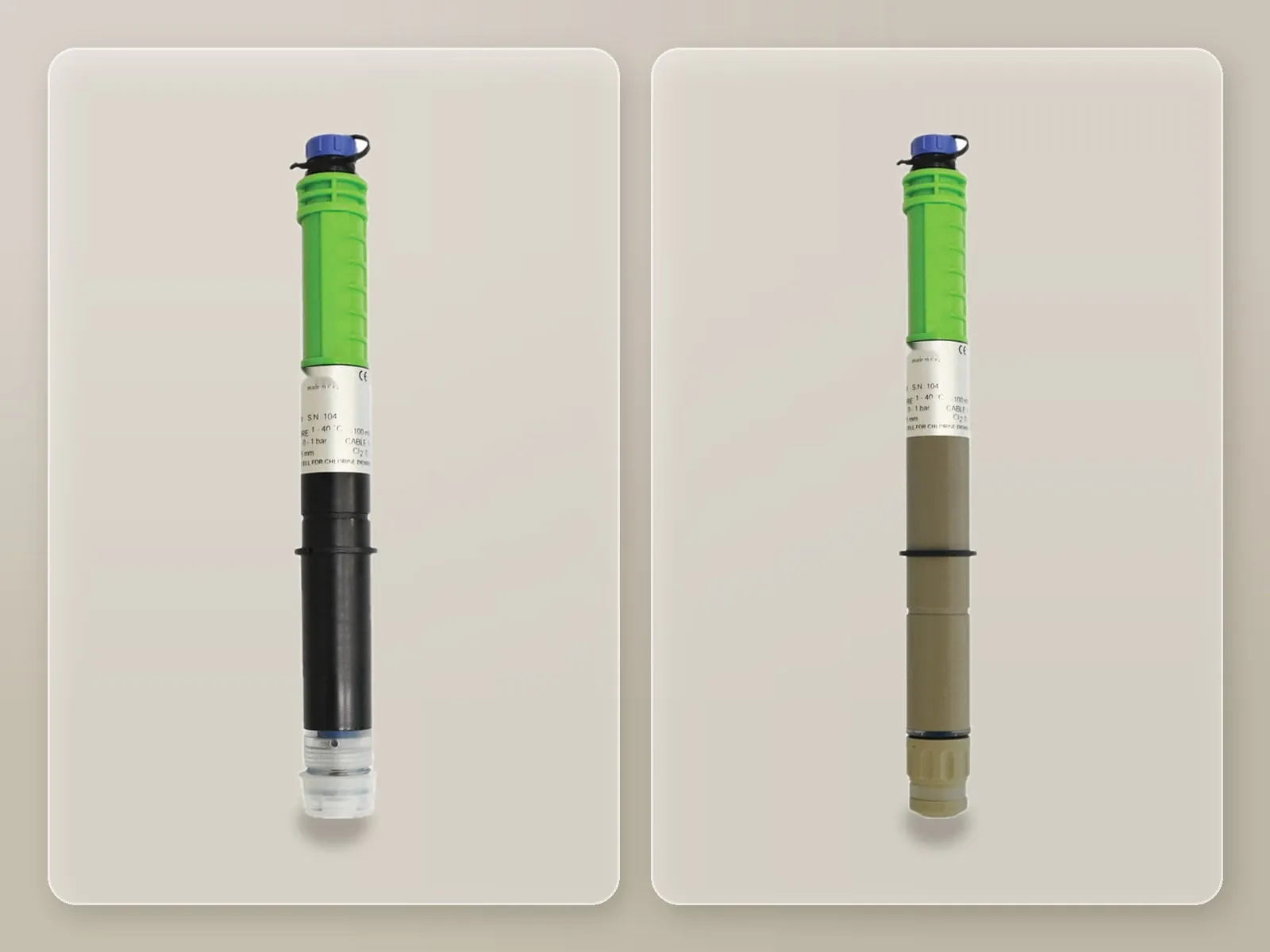
It is a closed amperometric cell with selective membrane, which measures chlorine dioxide only, without interference from other substances.
The system continuously measures the residual chlorine dioxide with an amperometric cell and controls the dosing pump in proportion to the measured value, up to the set point. It doses stabilised chlorine dioxide, activated at the user’s premises, and also measures the residual when chlorine dioxide is produced on site by the LOTUS AIR generator; in domestic hot water it uses the self-cleaning SCL17 cell.
The system measures and doses chlorine dioxide with the SCL2 amperometric cell: chlorine dioxide is very effective against biofilm, independent of pH, and it does not change the smell or taste of the water.
Learn more: chlorine dioxide →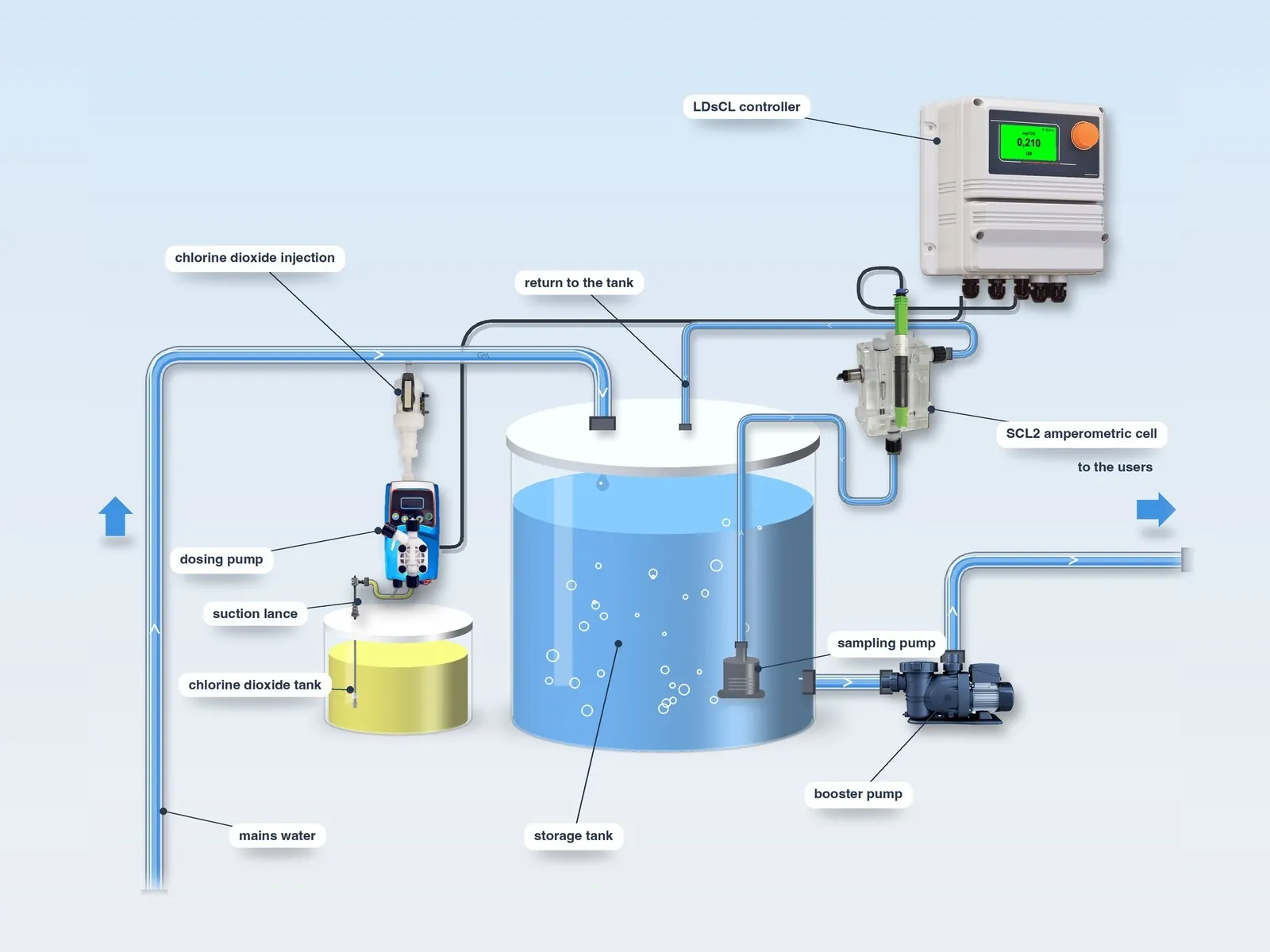
It is a closed amperometric cell with selective membrane, which measures chlorine dioxide only, without interference from other substances.
The concentration to be maintained is typically between 0.1 and 1.0 mg/l, depending on the installation, the water and the level of contamination.
In domestic hot water circuits the self-cleaning SCL17 cell, without membrane, is used.
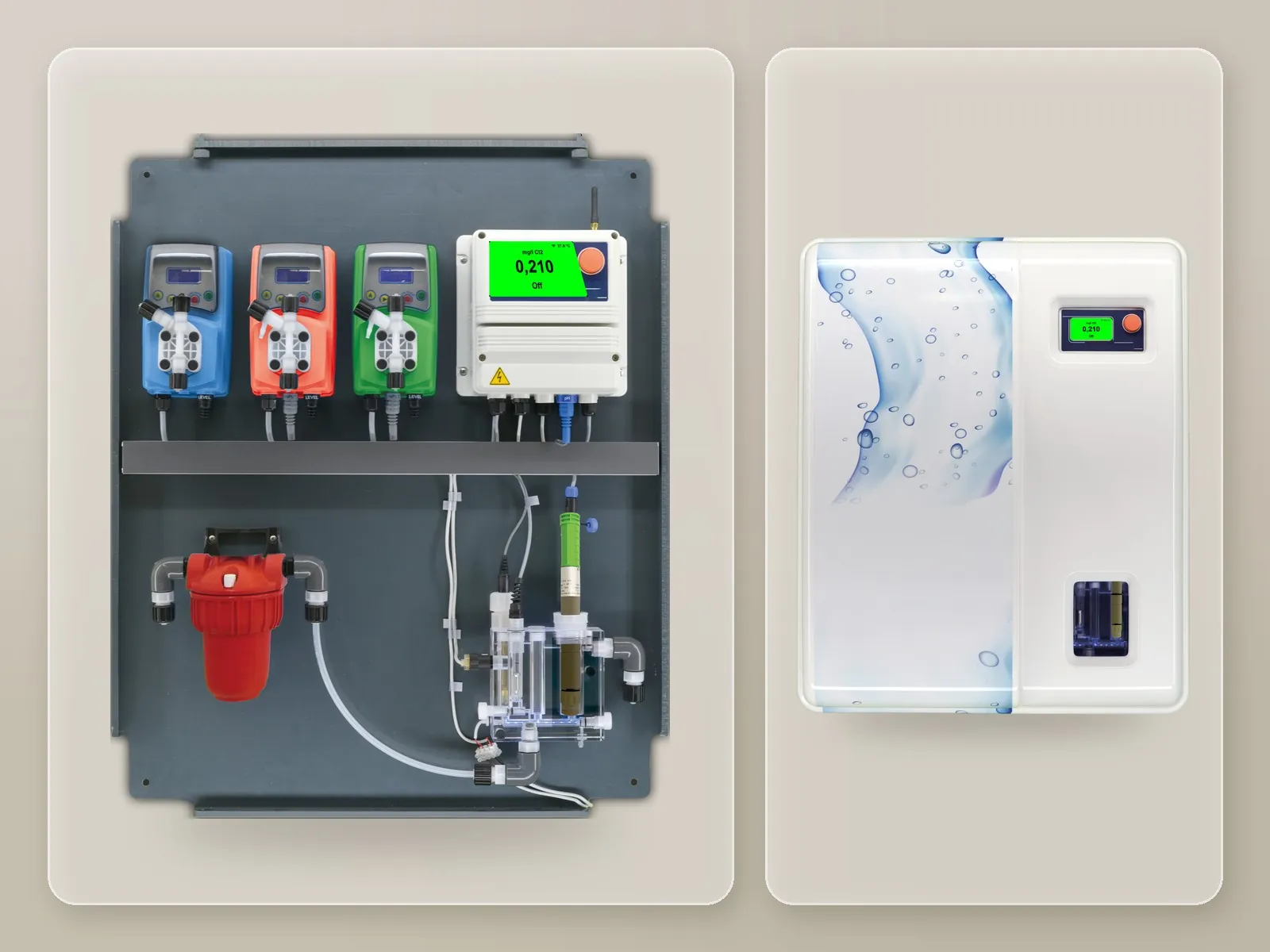
The system is supplied pre-assembled on a panel, ready for connection to the installation.
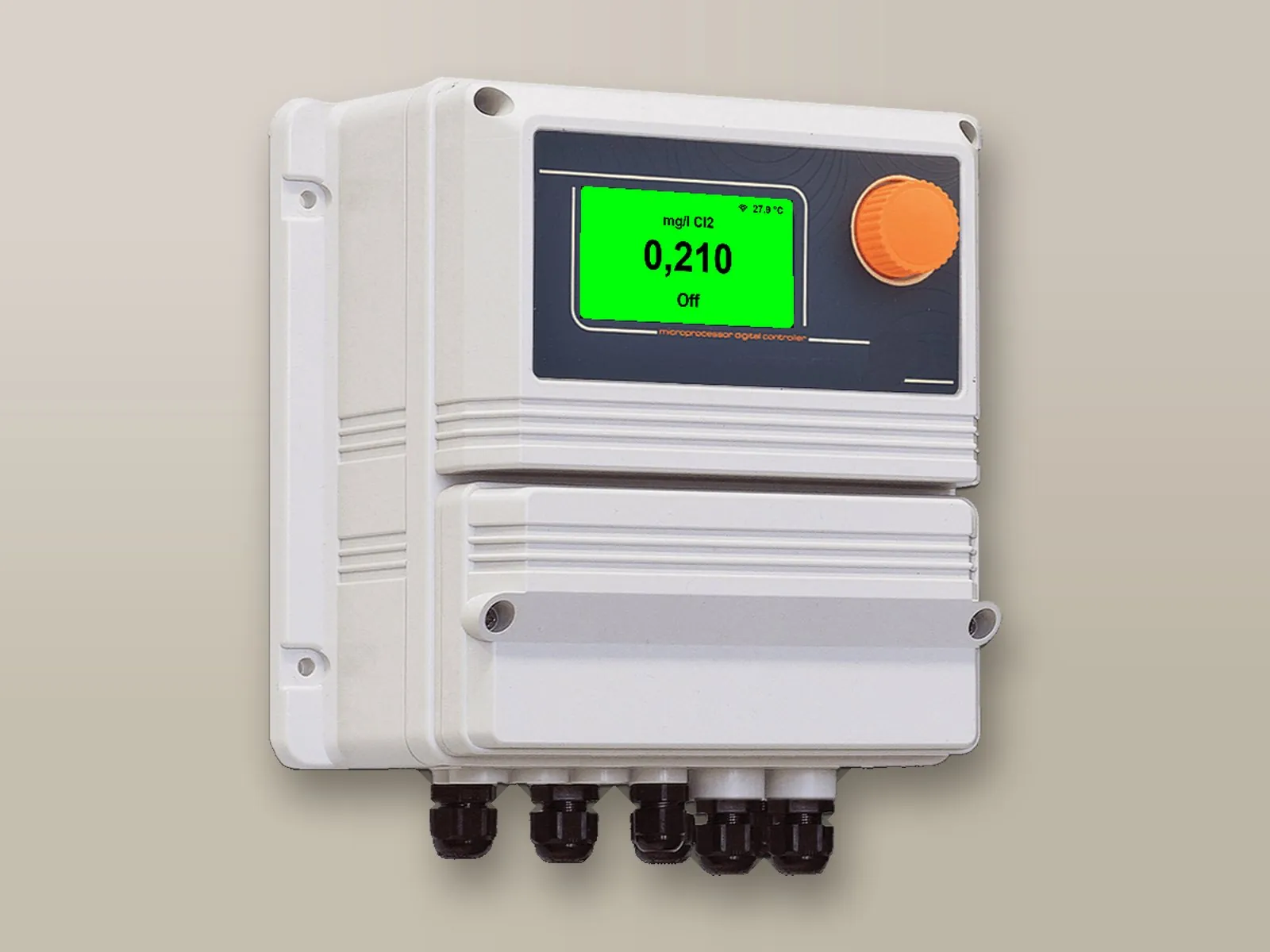
It acquires the chlorine dioxide measurement from the cell and controls the dosing pump in proportion to the measured value.
The controller → The SCL2 closed amperometric cell, with selective membrane, is intended for cold water; the self-cleaning SCL17 cell for domestic hot water.
The cells →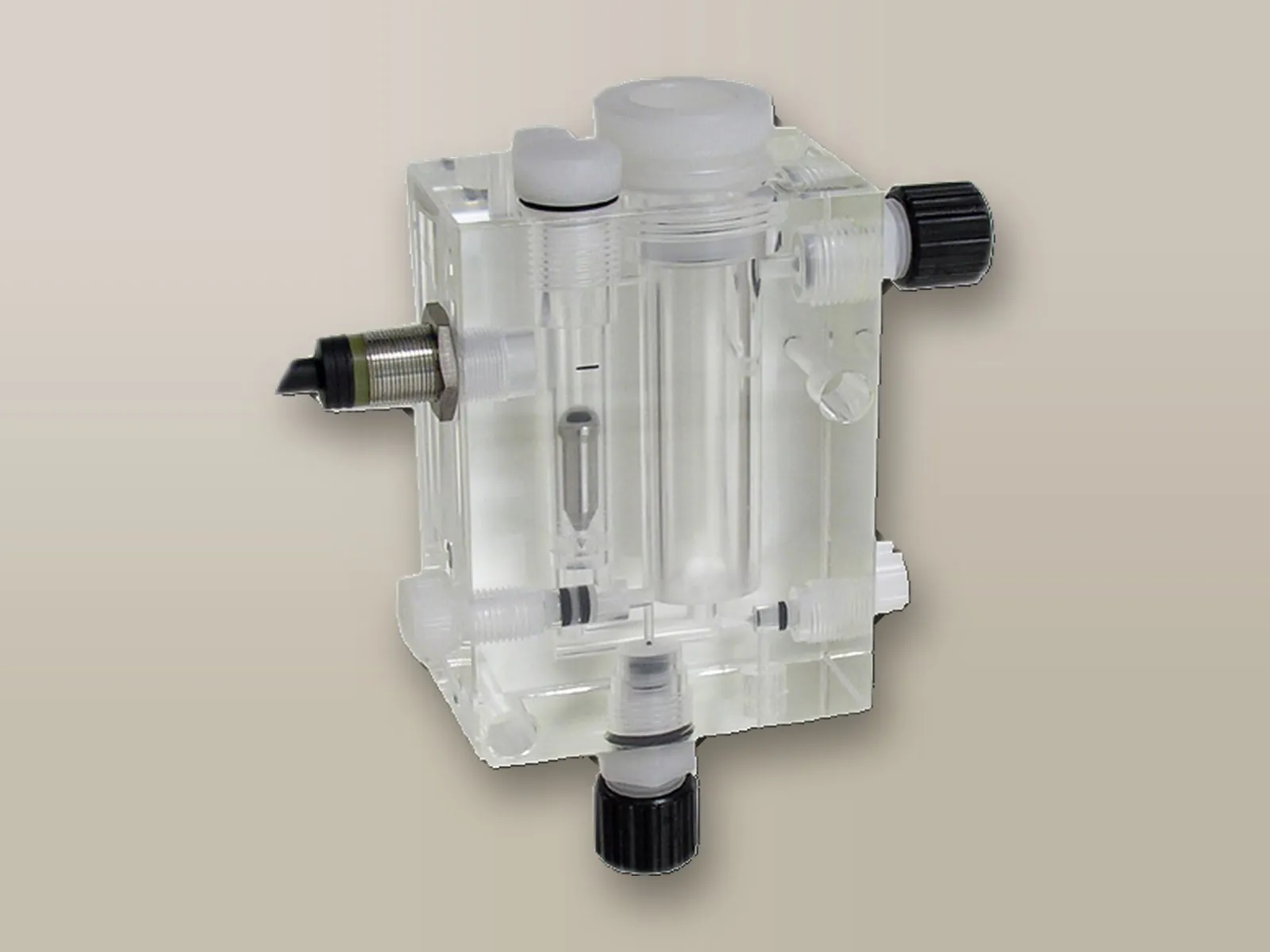
It is made of PMMA, with sample flow rate adjustment and flow sensor, which stops dosing when there is no circulation. A filter with washable cartridge is installed upstream.
Probe holders →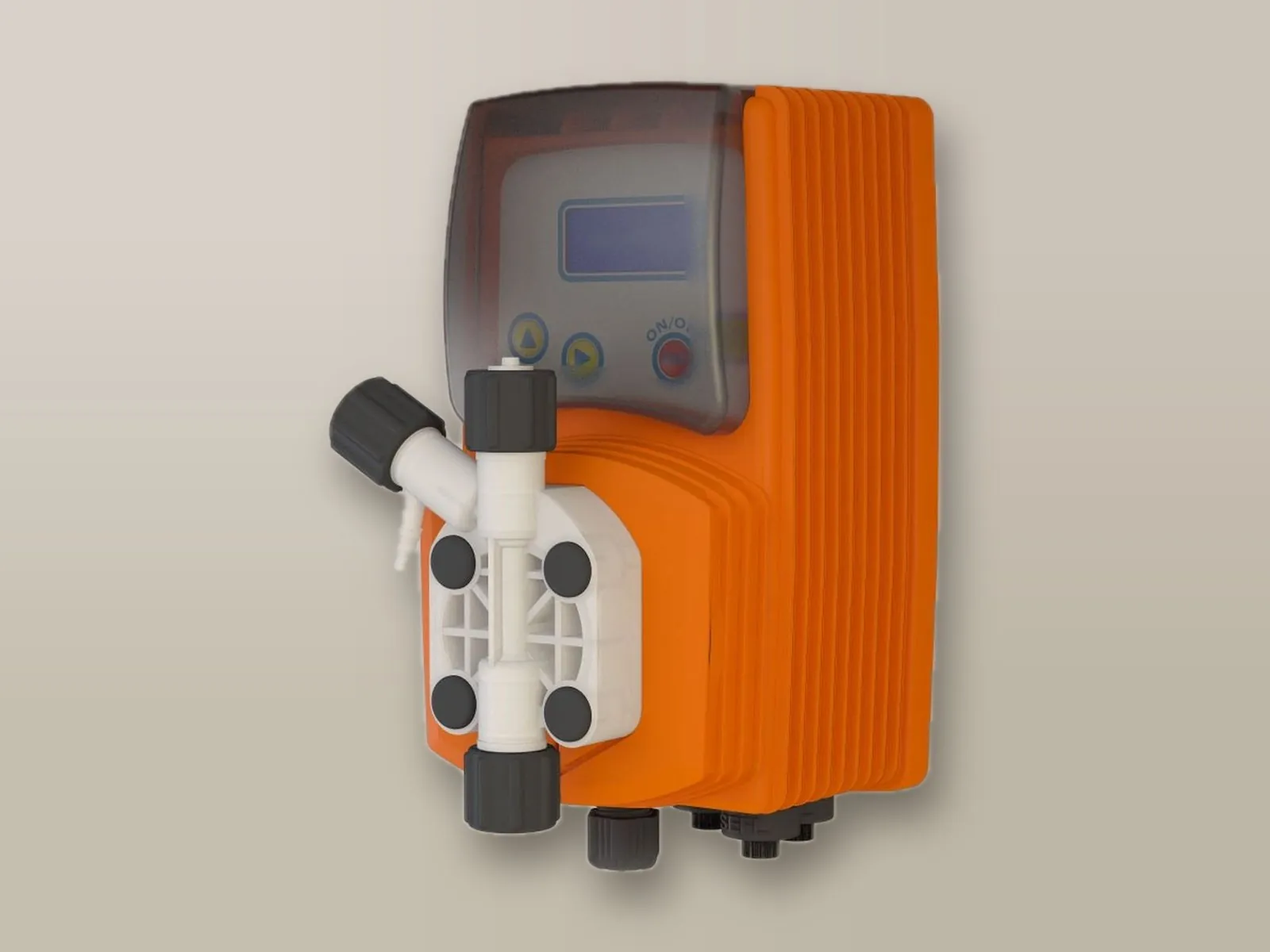
It is a solenoid diaphragm pump with self-venting head, with flow rate and back pressure defined at the time of ordering; additional pumps can dose activators and film-forming inhibitors.
Dosing pumps →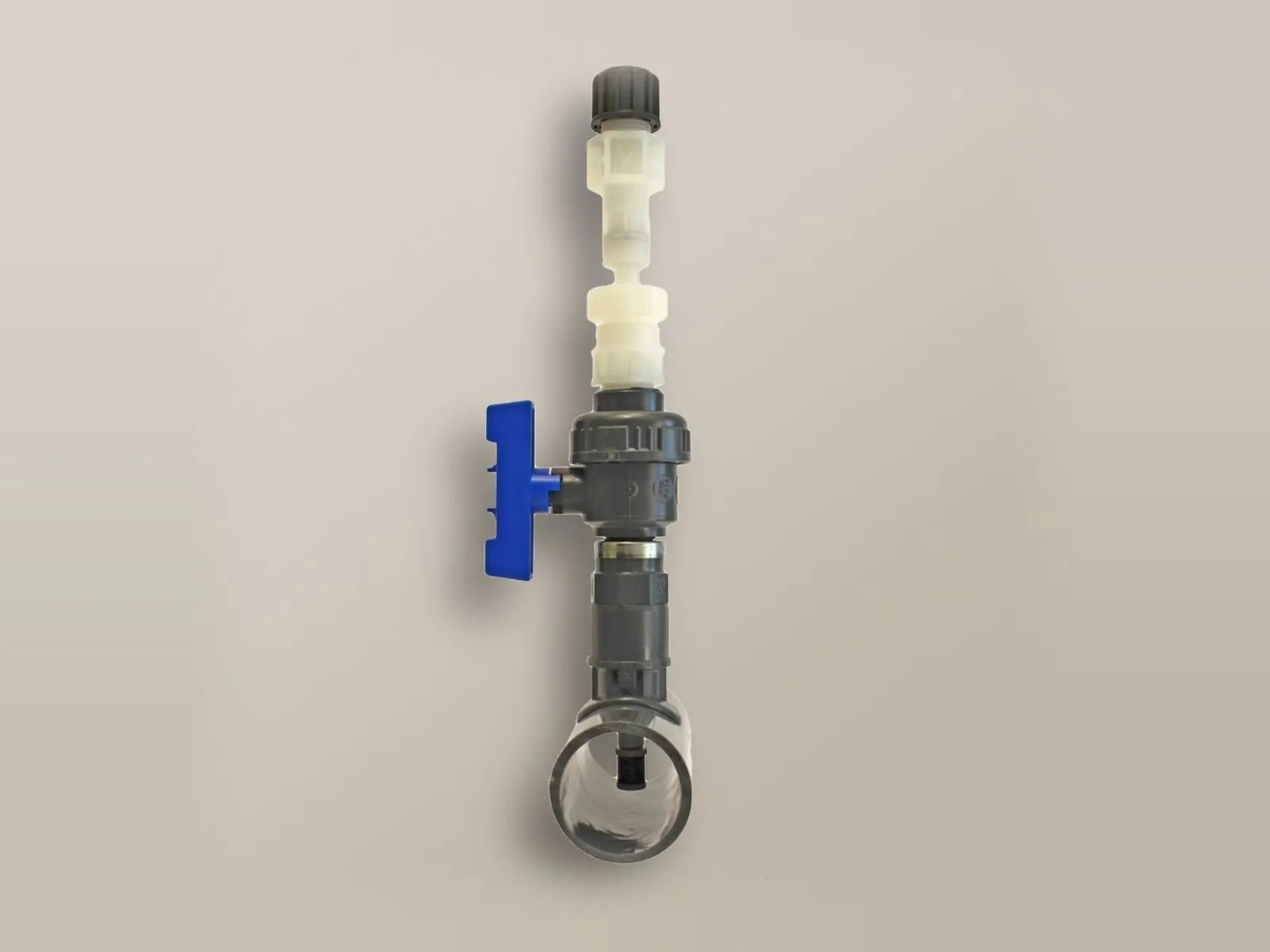
It introduces the product into the centre of the pipe, improving mixing, and it can be withdrawn with the pipe under pressure.
Lances →The sampling pump sends the water from the tank to the probe holder, where the cell measures the chlorine dioxide; the water then returns to the tank.
When the value falls below the set point, the controller activates the dosing pump, at a frequency that increases the further the reading is from it; at the set point the pump is stopped.
By adding a pulse-output water meter, dosing also becomes proportional to the volume of water treated.
The controller signals out-of-range readings, a faulty probe, the product level and no flow in the probe holder.
As an alternative to stabilised chlorine dioxide, where water consumption justifies it, chlorine dioxide can be produced directly in the installation using the LOTUS AIR generator. In both cases the amperometric cell measures the residual in the water.
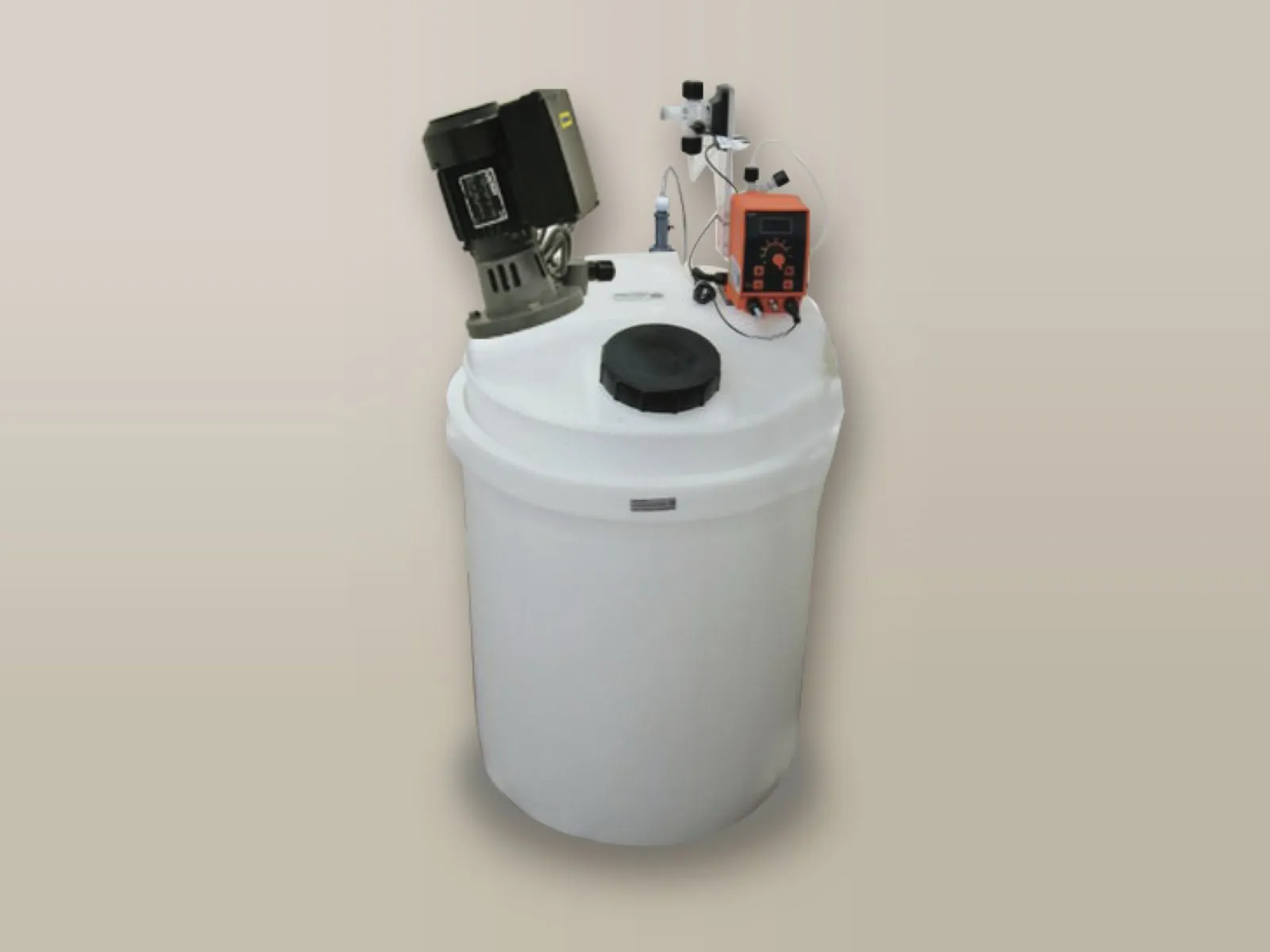
Chlorine dioxide is stabilised to allow storage and transport; at the user’s premises it must be activated with a second product and is dosed with a dosing station or with this system.
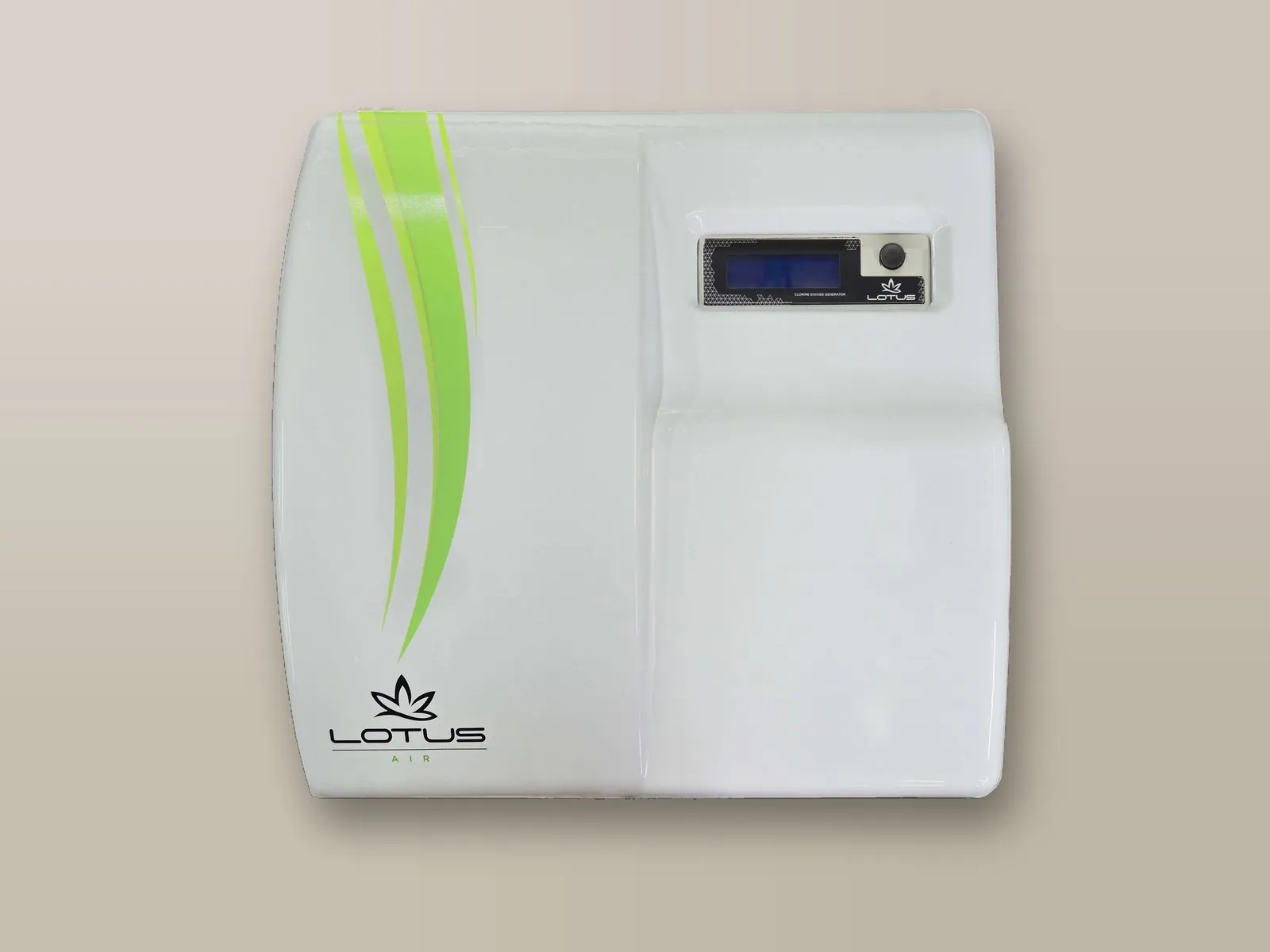
The LOTUS AIR generator combines hydrochloric acid (HCl 9%) and sodium chlorite (NaClO2 7.5%) in a reactor at ambient pressure; it produces, doses and measures chlorine dioxide.
With the LDCLCL dual-channel controller, chlorine dioxide and chlorites, the by-products of its reaction, are measured simultaneously: a single controller adjusts the chlorine dioxide dosing and monitors the chlorite threshold.
The dedicated amperometric cell measures chlorine dioxide and the controller drives the dosing pump in proportion to the measured value.
The closed SCT cell continuously measures chlorites and the controller signals when the set threshold is exceeded.
Both measurements are shown on the same display and each channel has its own set points and outputs, with independent control loops.
The system is used on water from wells and springs, private and from public water supply networks, and in storage tanks.
Drinking water systems →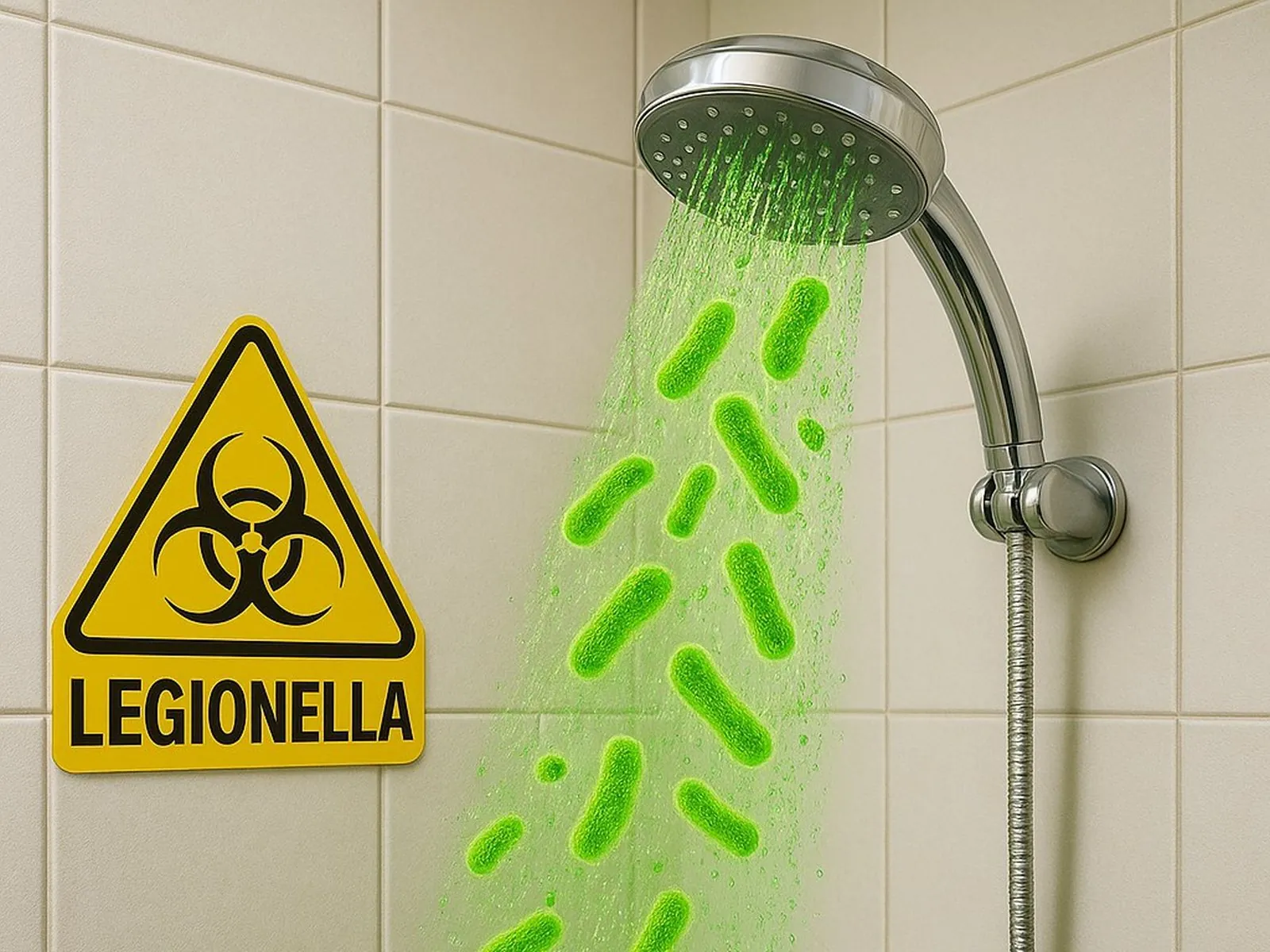
In domestic water circuits, including hot water, chlorine dioxide is used as an anti-Legionella treatment.
Anti-Legionella →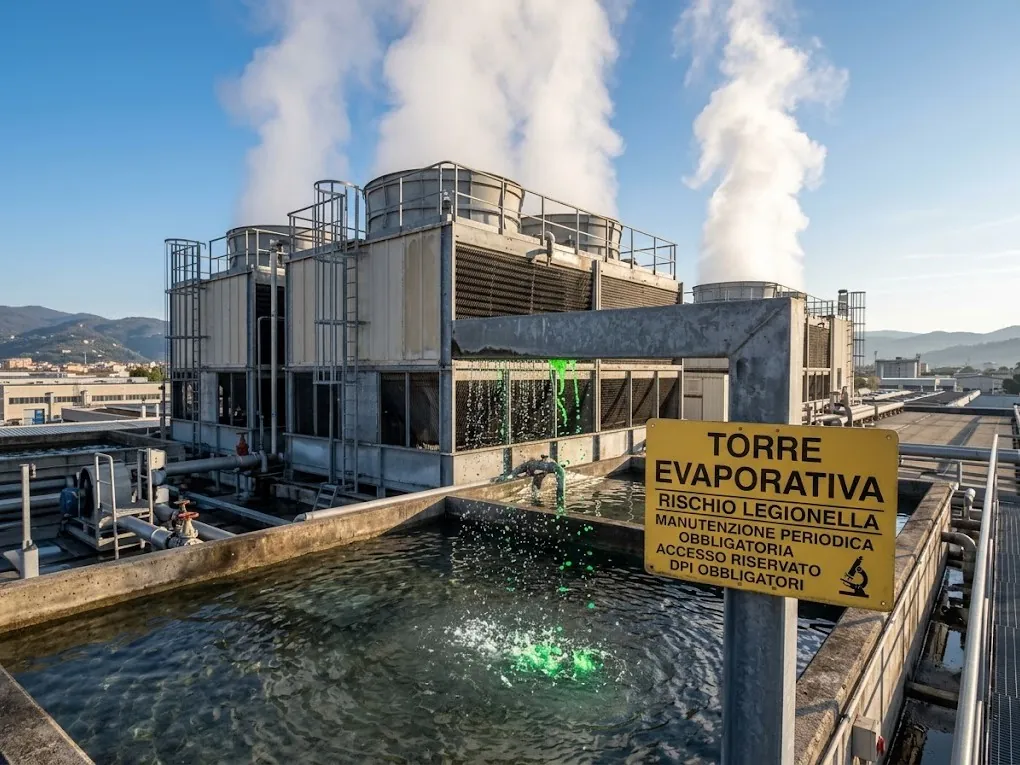
In cooling circuits chlorine dioxide is used as an oxidising biocide, maintained with a measurable residual.
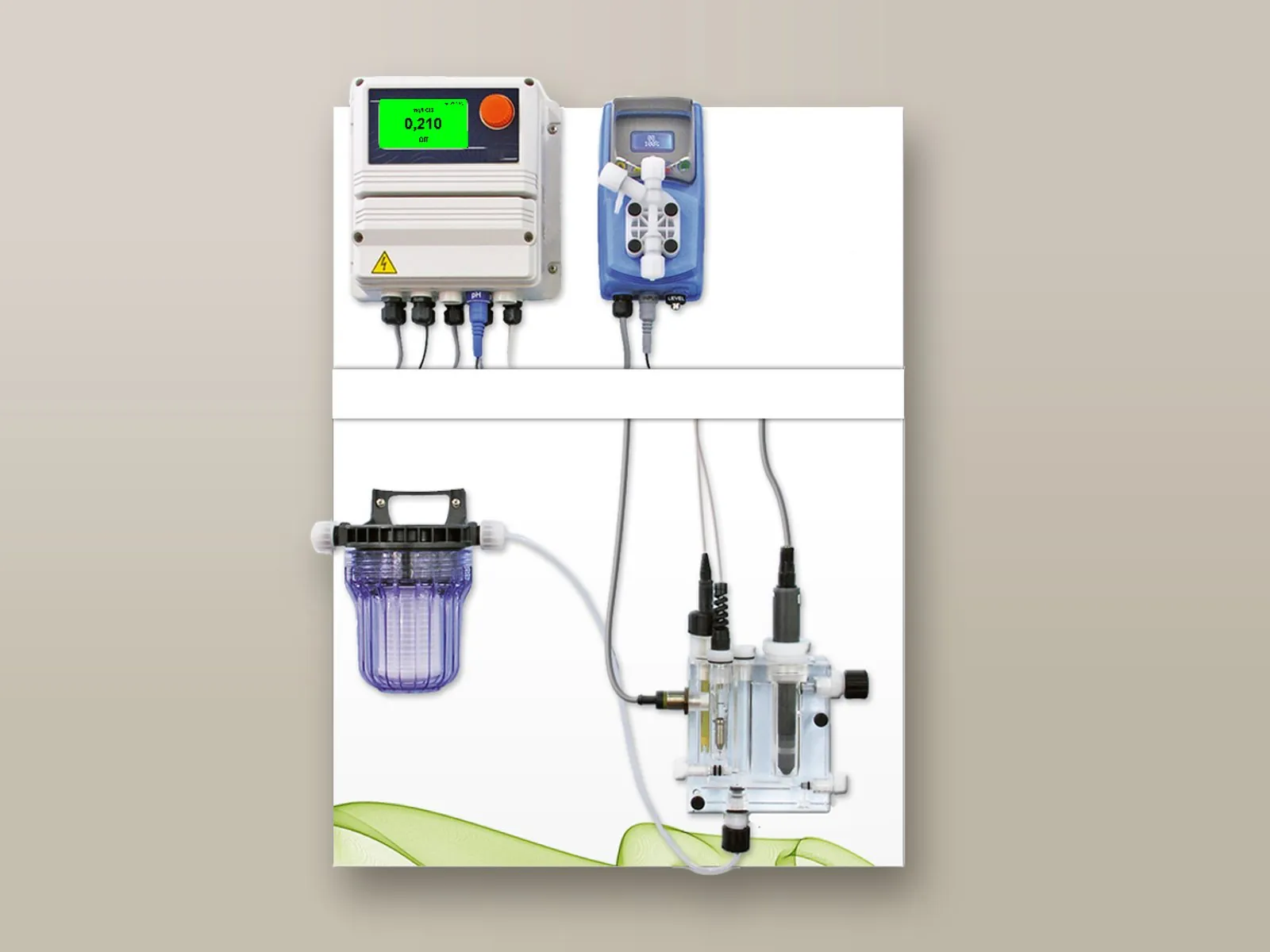
Cooling towers →Controller, dosing pumps, filter and probe holder are supplied mounted on a panel, to be connected in a bypass line to the water circuit to be treated: the photo shows a panel with LDsCL controller, three dosing pumps, filter and amperometric cell in the flow-through probe holder.
Accessories available on request to adapt the system to the requirements of the installation.
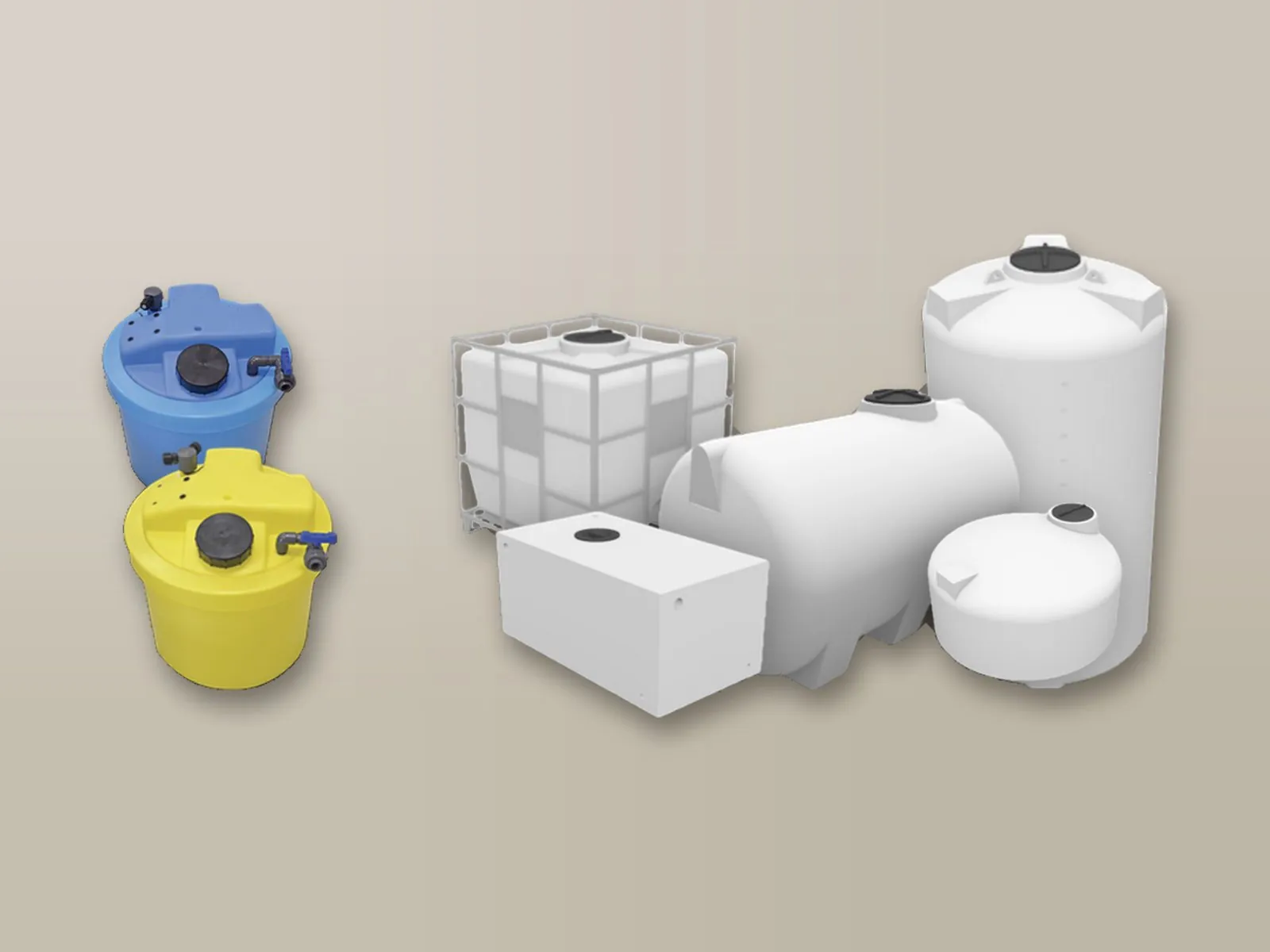
PE tanks for the chemical, with safety bund.
Details →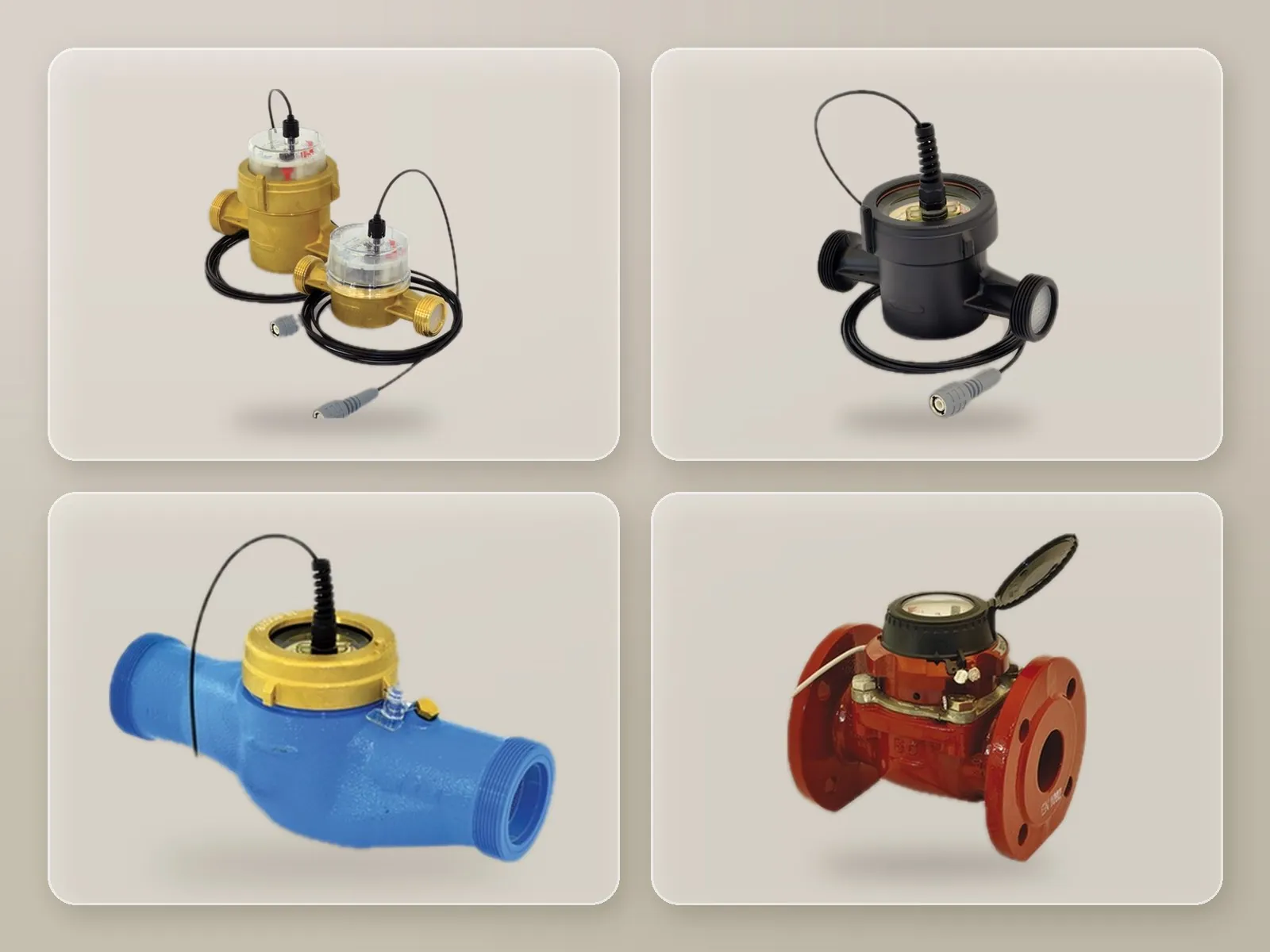
Enables dosing proportional to the volume of water actually treated.
Details →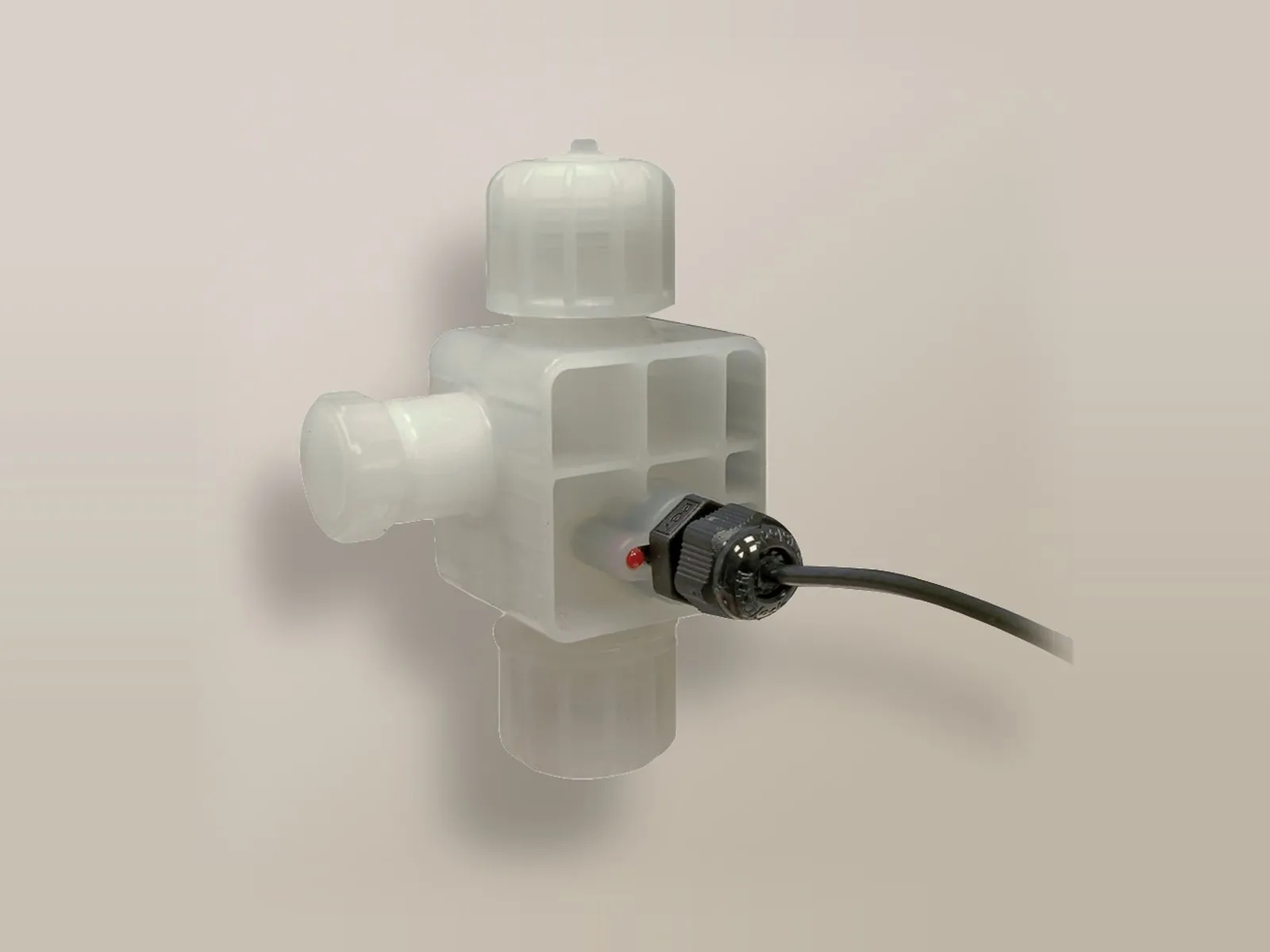
Installed on the pump delivery line, it verifies that dosing actually takes place.
Details →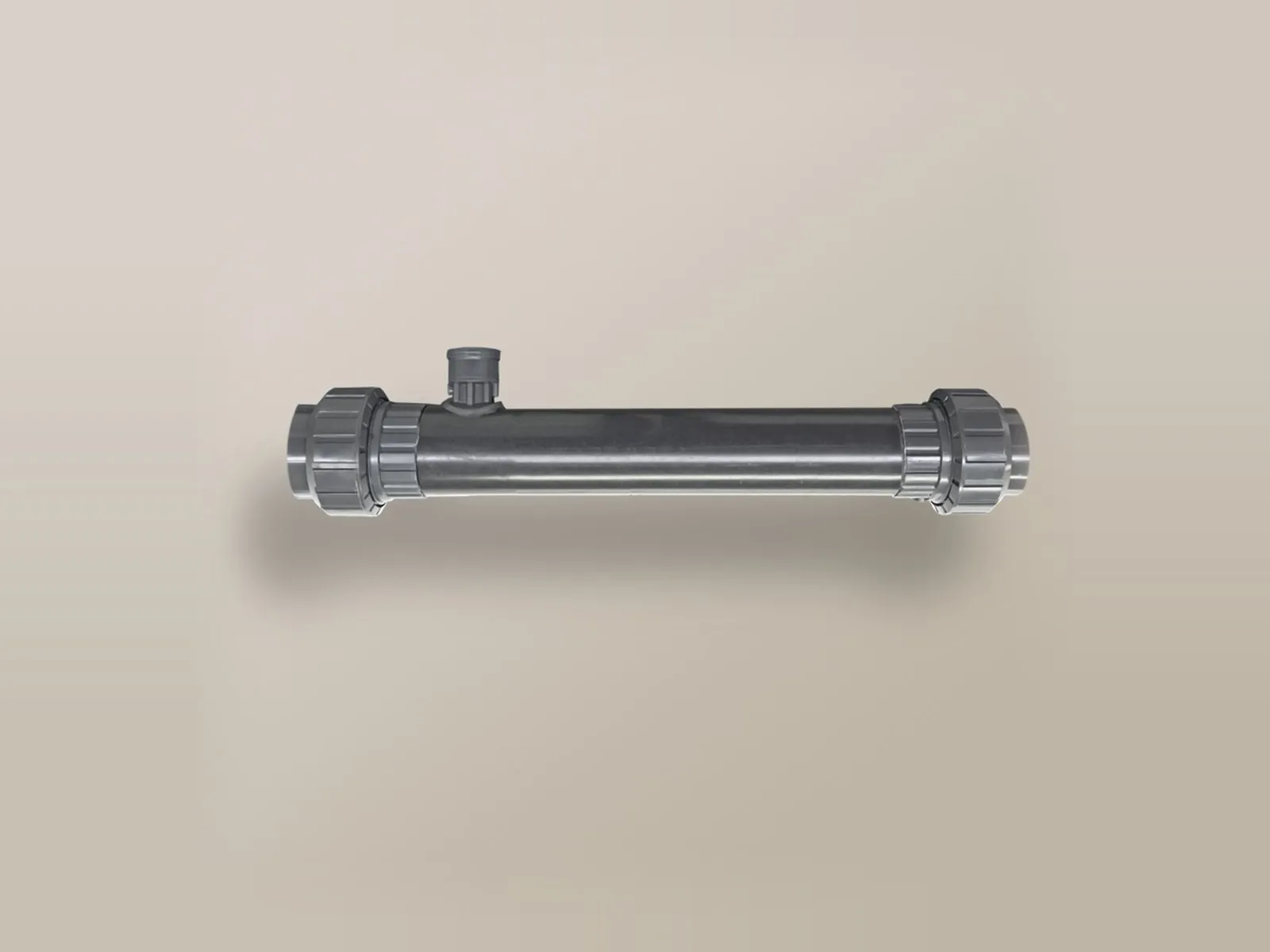
Ensures the chemical is mixed with the water and protects the pipe from direct contact with it.
Details →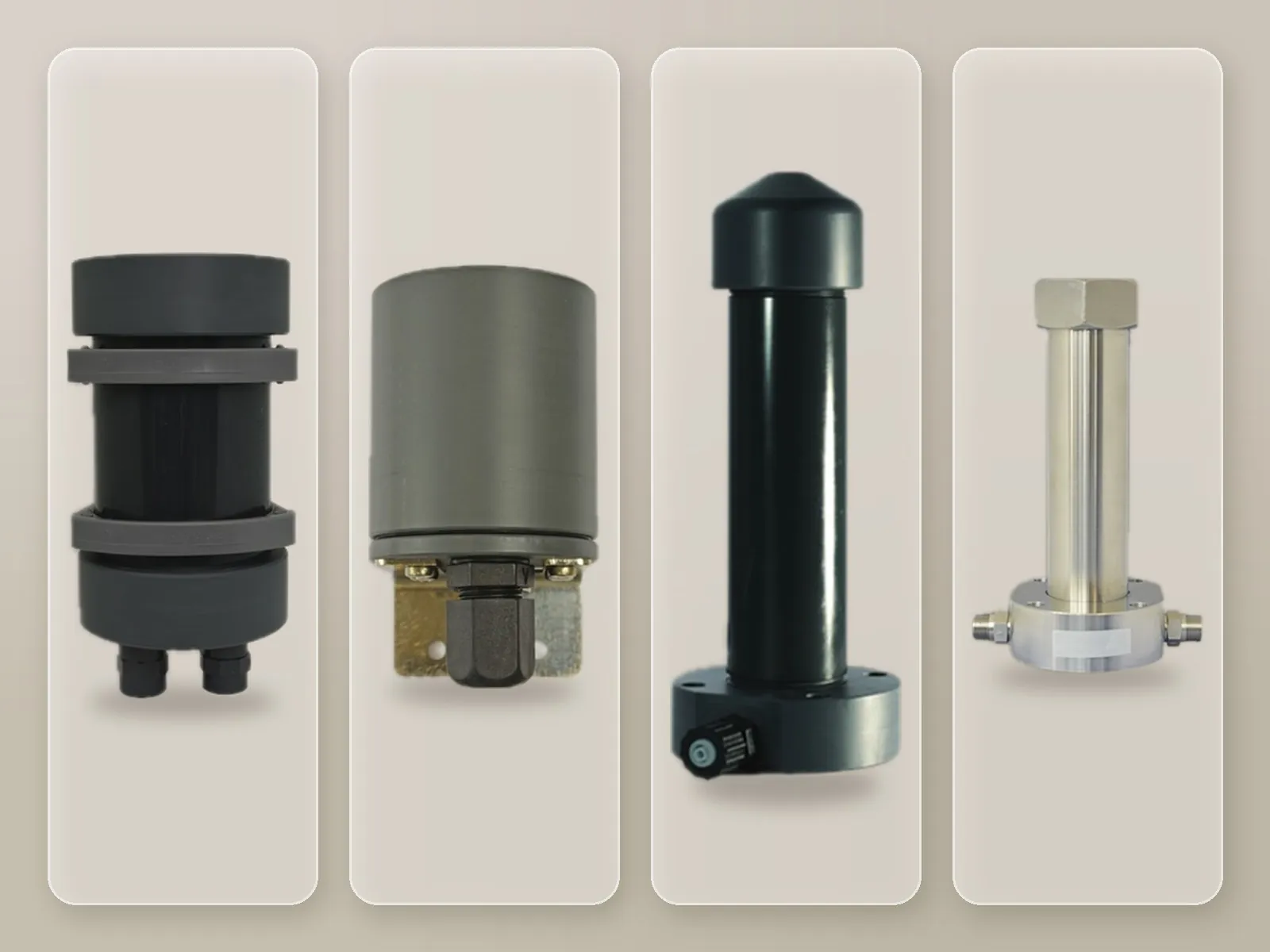
Attenuates the pulsations generated by the dosing pump.
Details →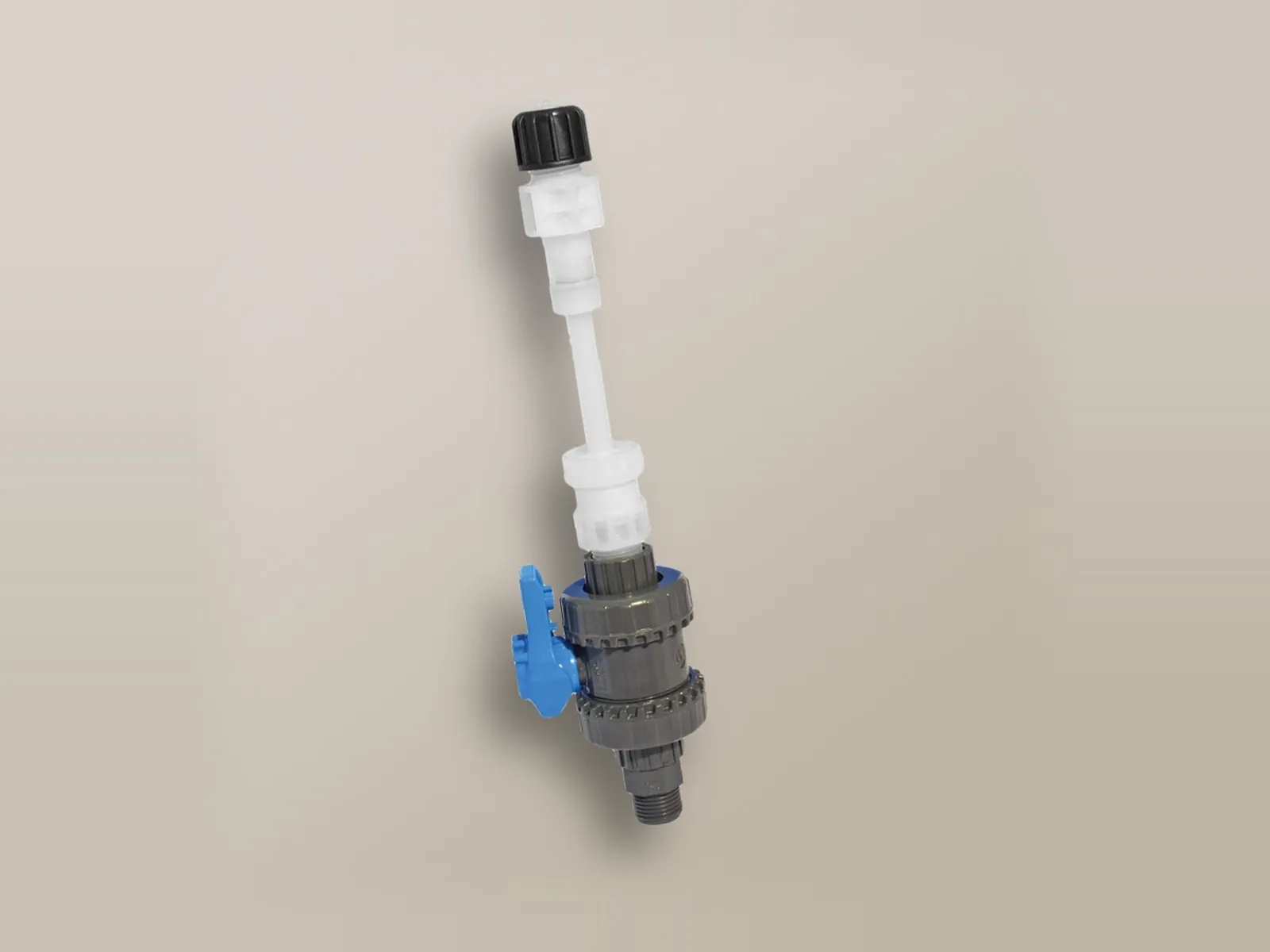
Injects the chemical into the centre of the pipe.
Details →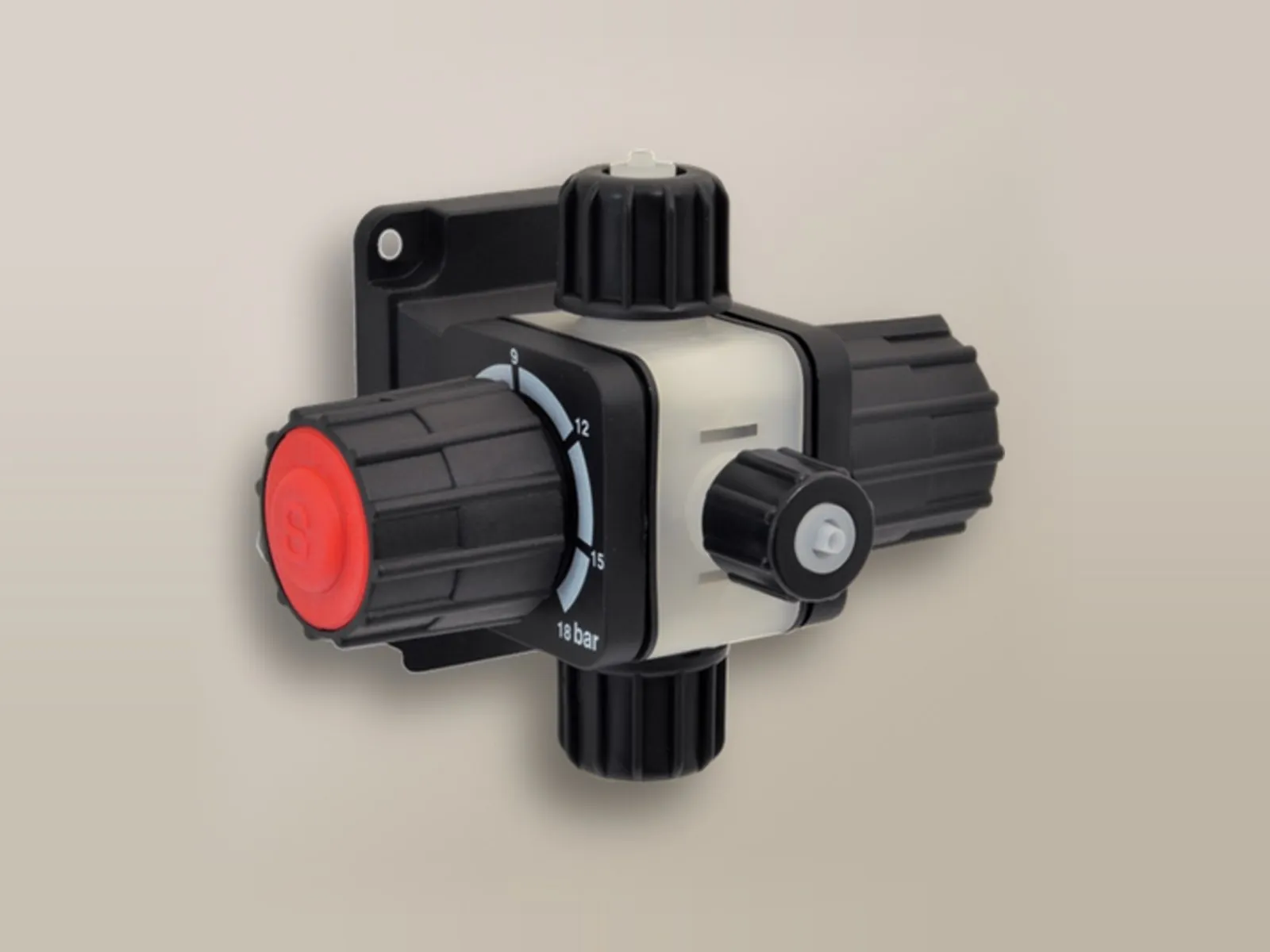
Pressure, safety and anti-siphon functions combined in a single valve.
Details →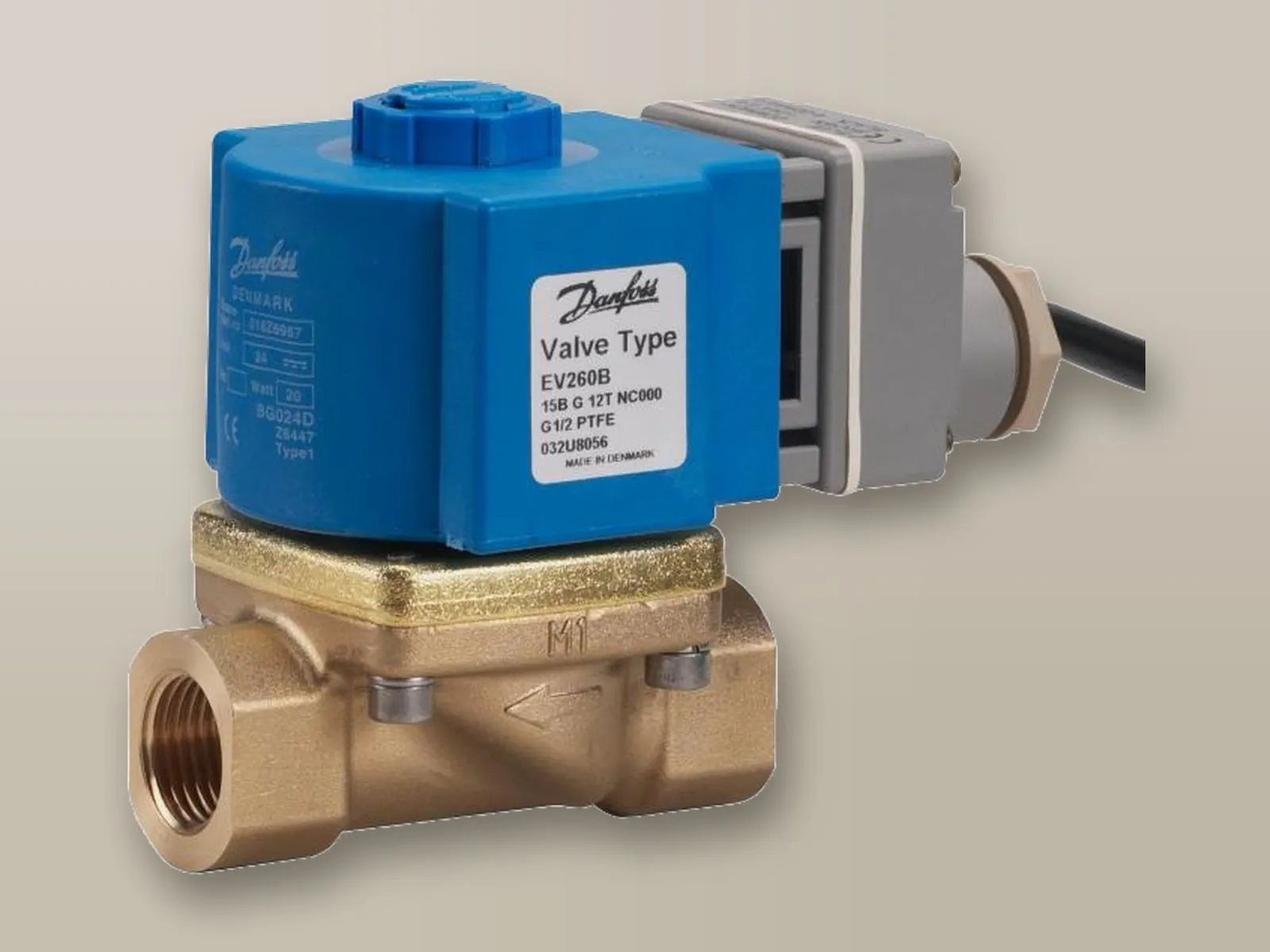
Operated by the controller according to the measured value.
Systems are supplied pre-assembled and tested, in the form best suited to the plant room: on a panel, in a cabinet or on a skid (with cover, in a box or on a frame), or custom-built. Some examples are shown below.
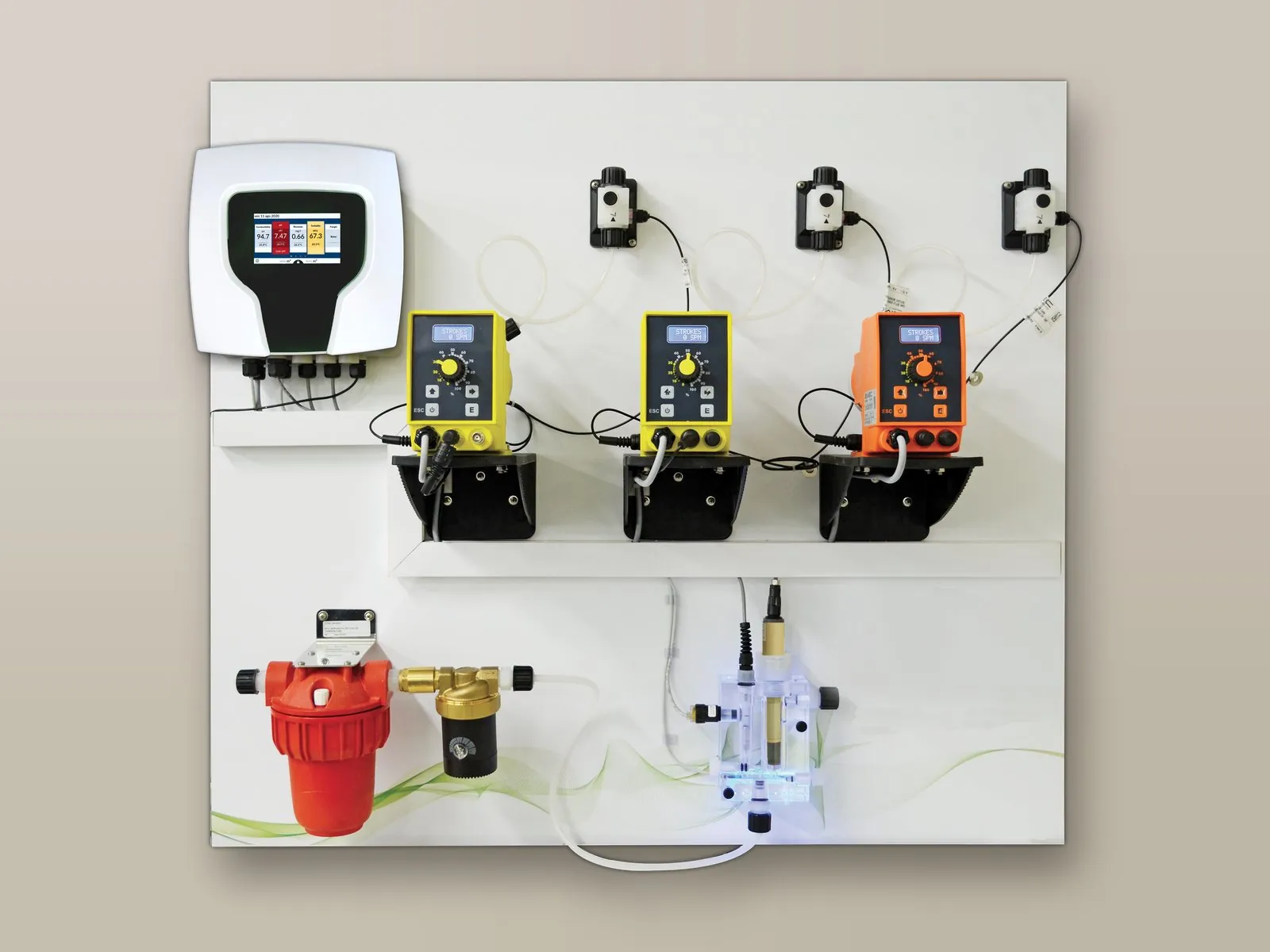
Controller, pumps, probe holder and accessories mounted and wired on a wall panel.
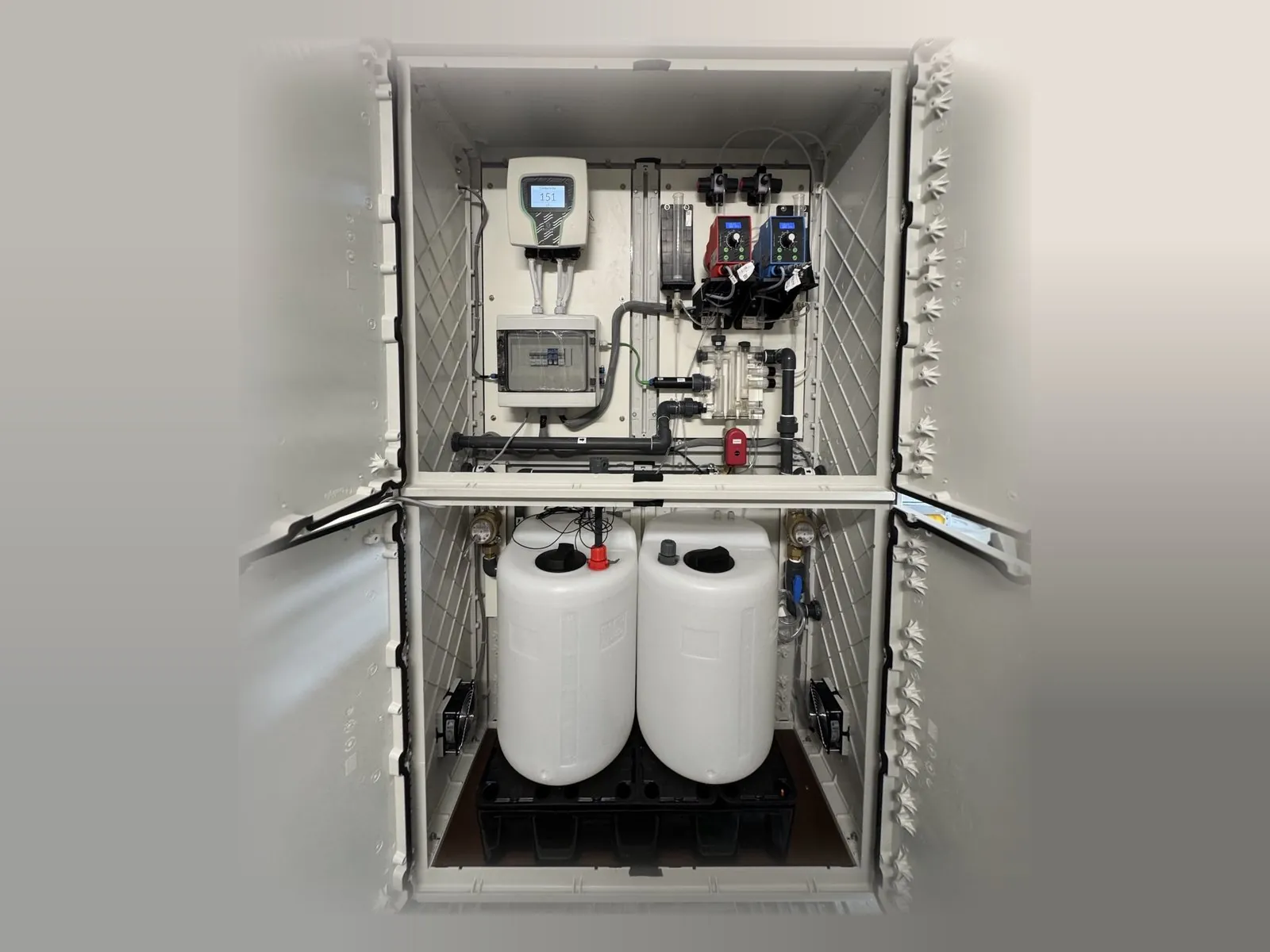
System panel and chemical tanks housed in a single cabinet.
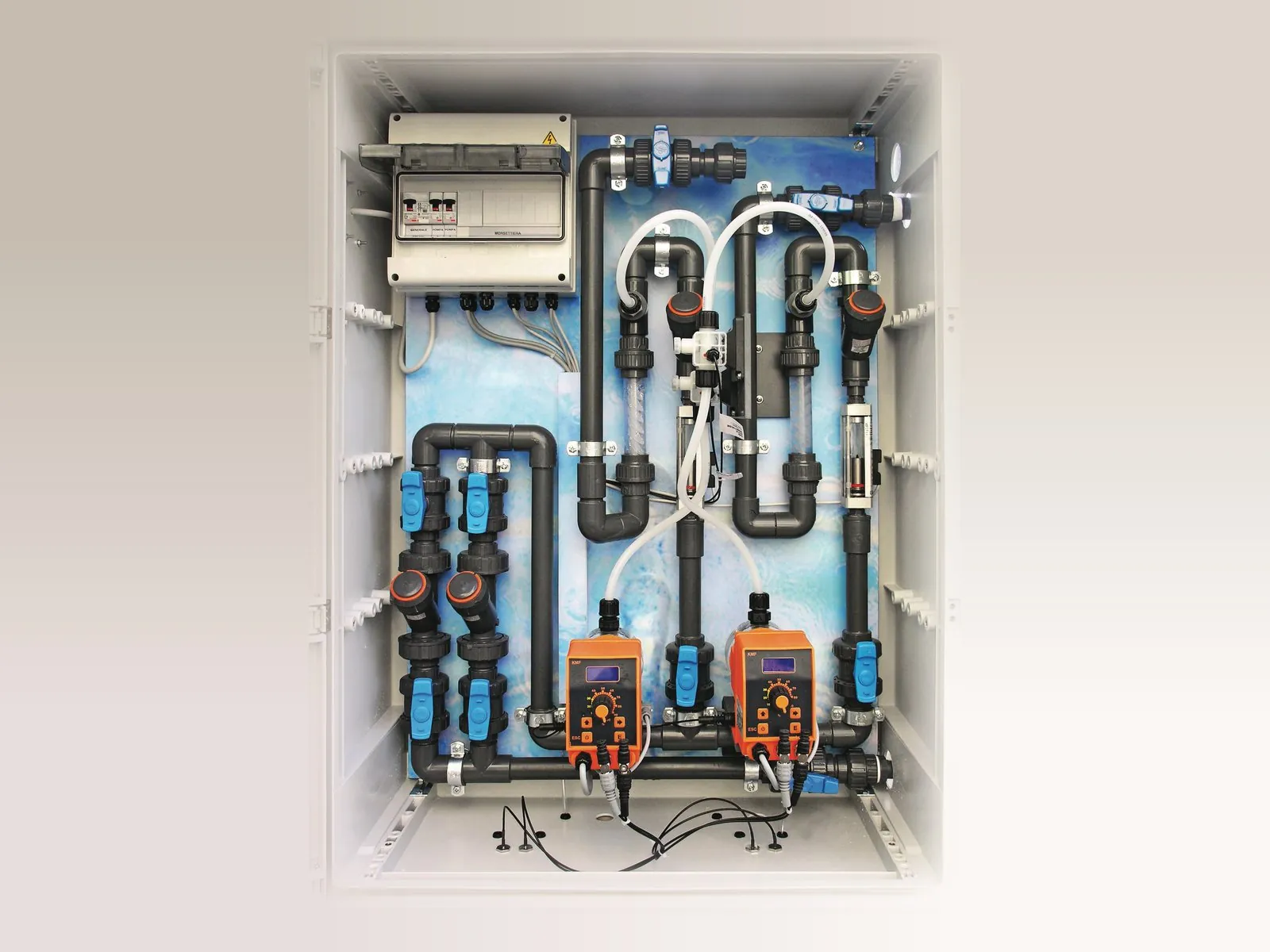
Pipework, pumps and electrical panel in a wall cabinet with door.
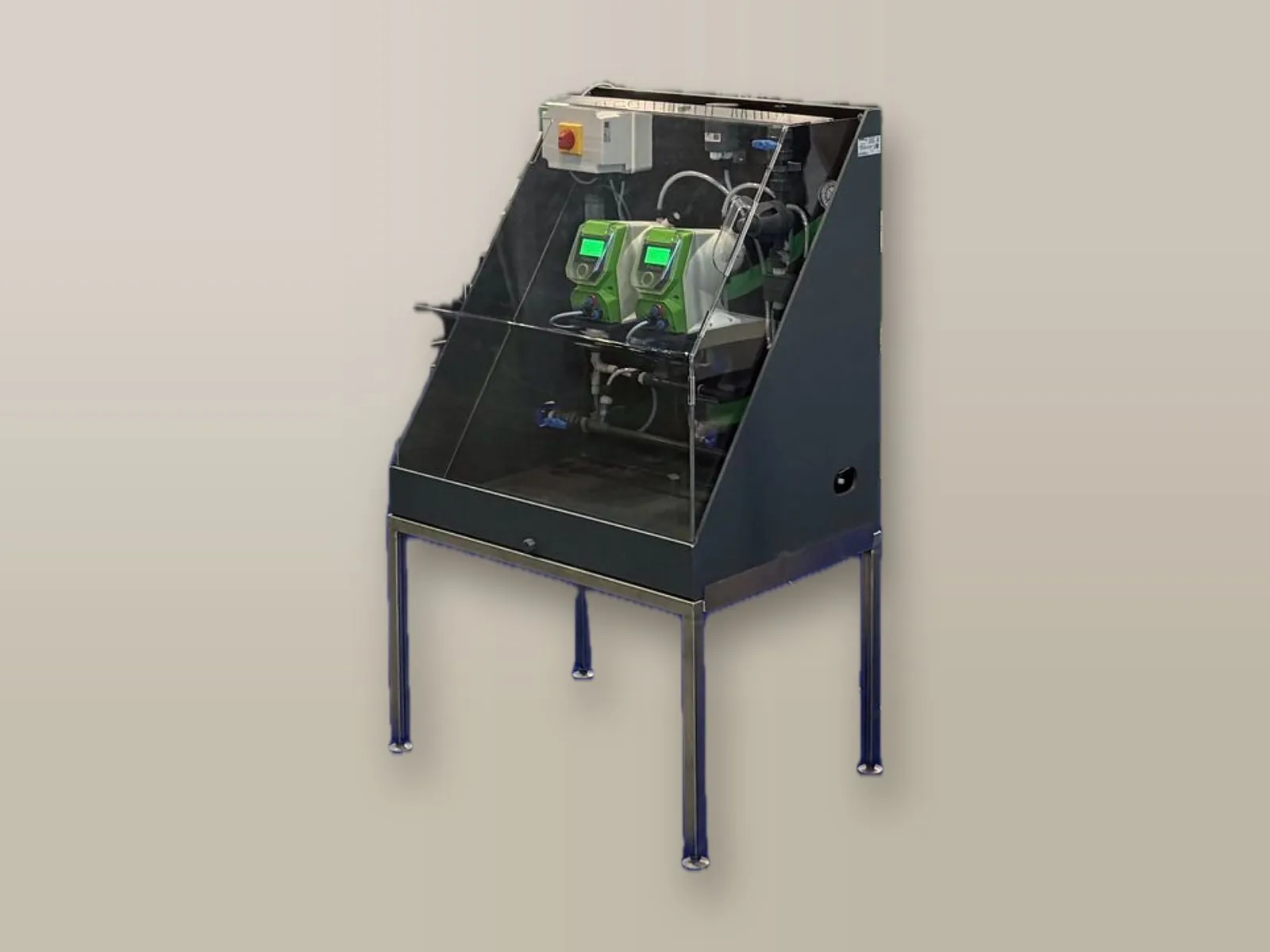
Skid with raised stainless steel frame and protective PMMA cover.
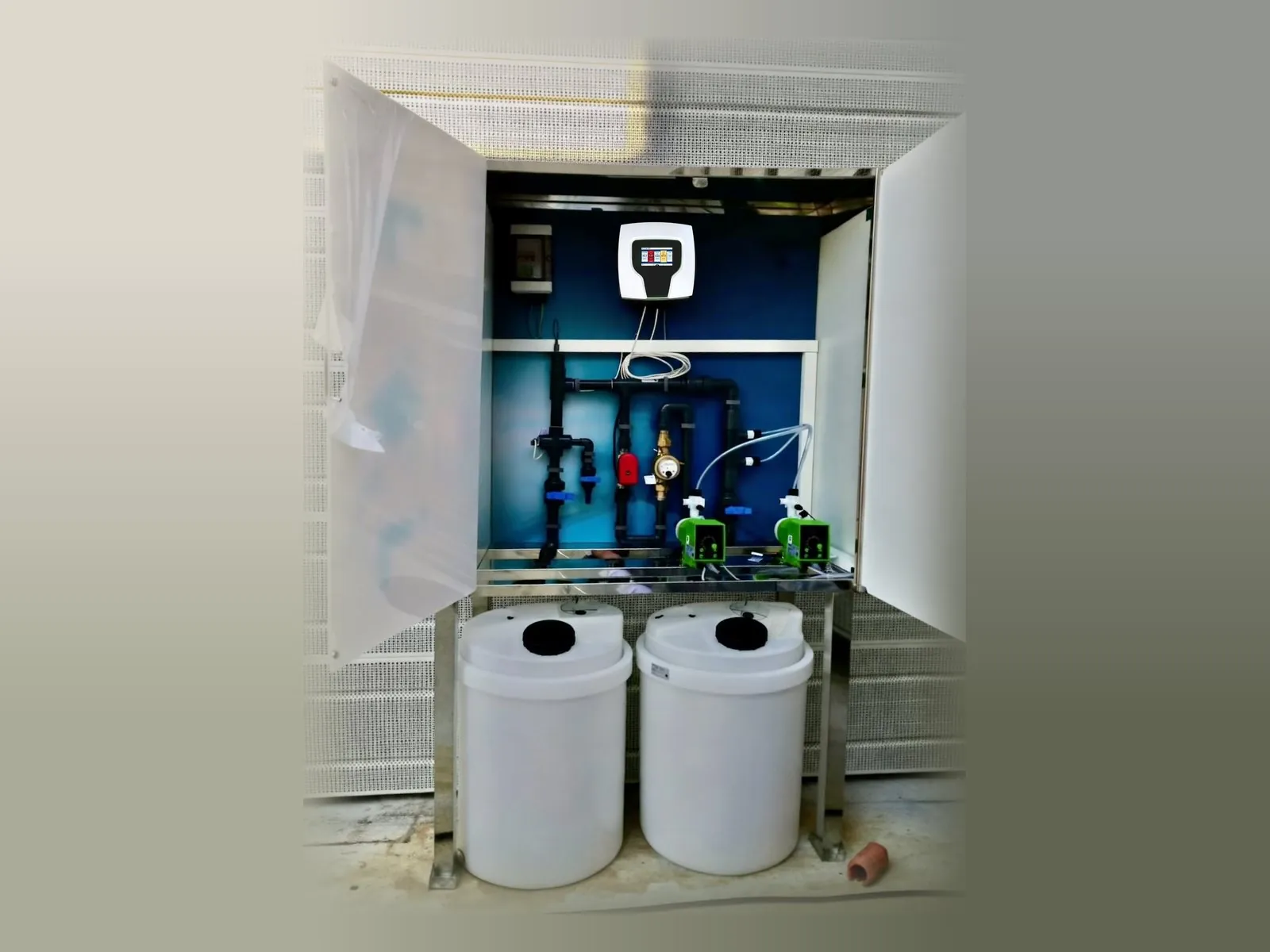
Skid enclosed in a box with door, with the chemical tanks at the base.
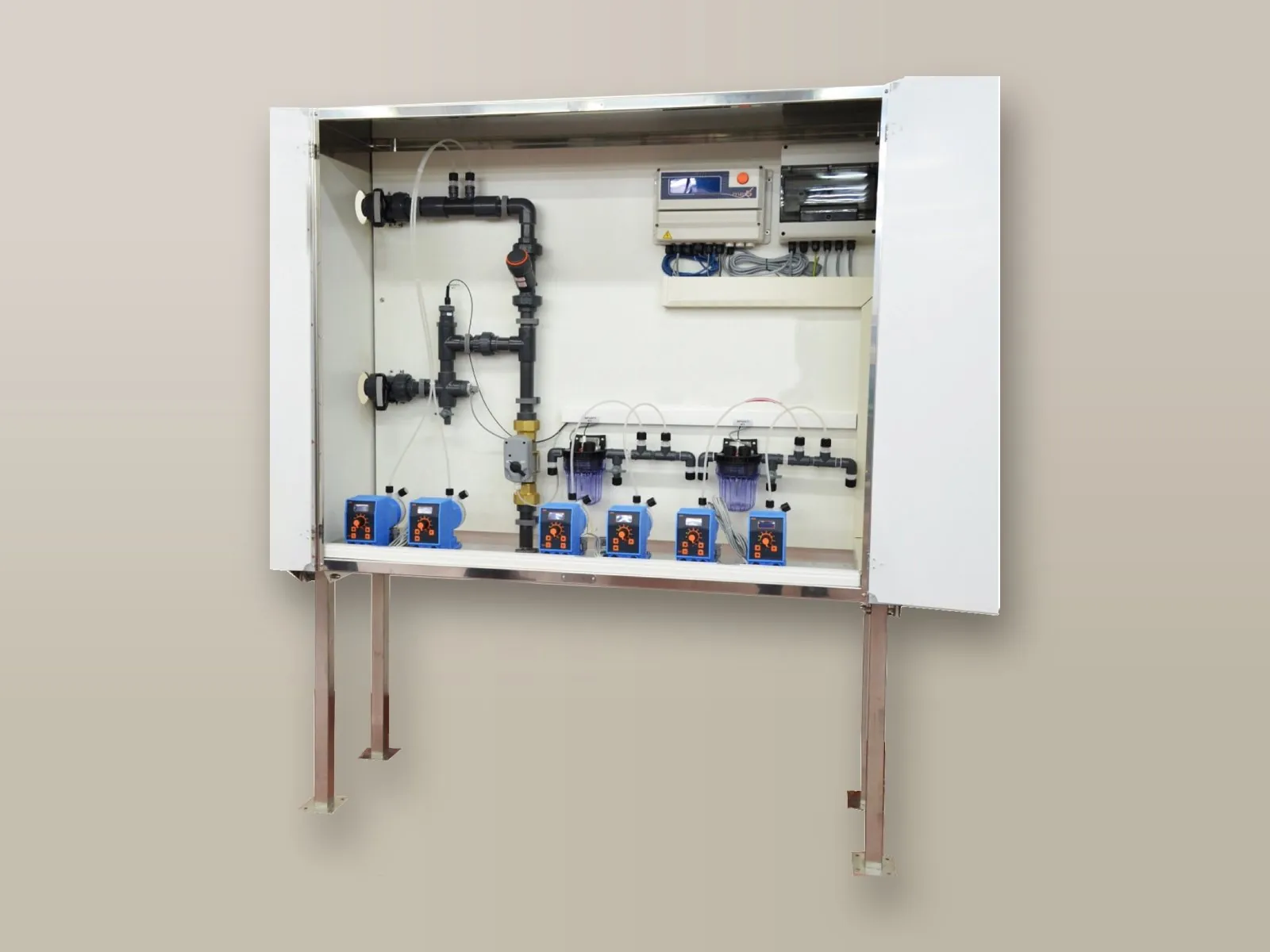
Skid on a frame with doors, pre-assembled and ready for connection.
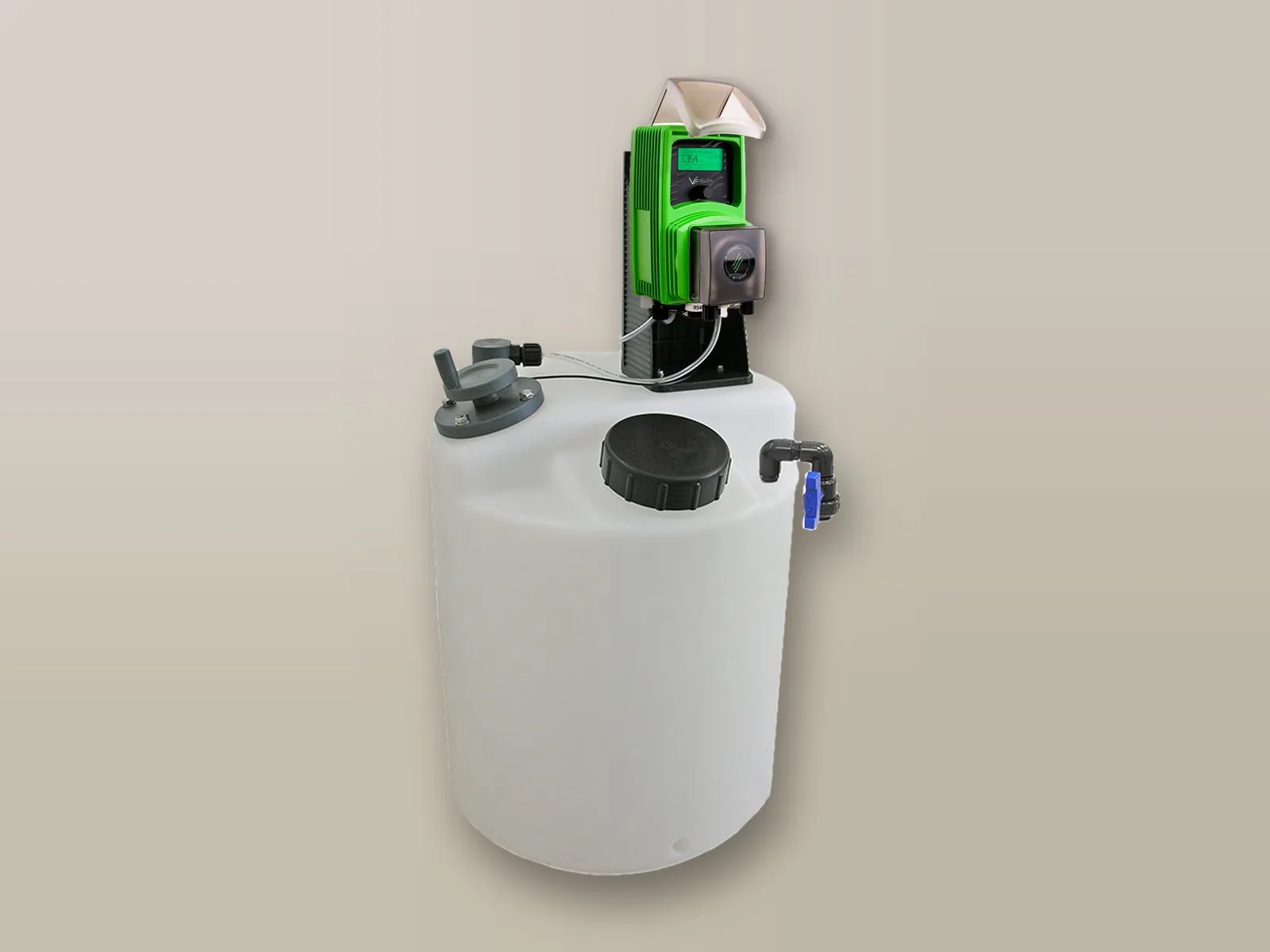
Dosing pump mounted directly on the tank: the most compact solution.
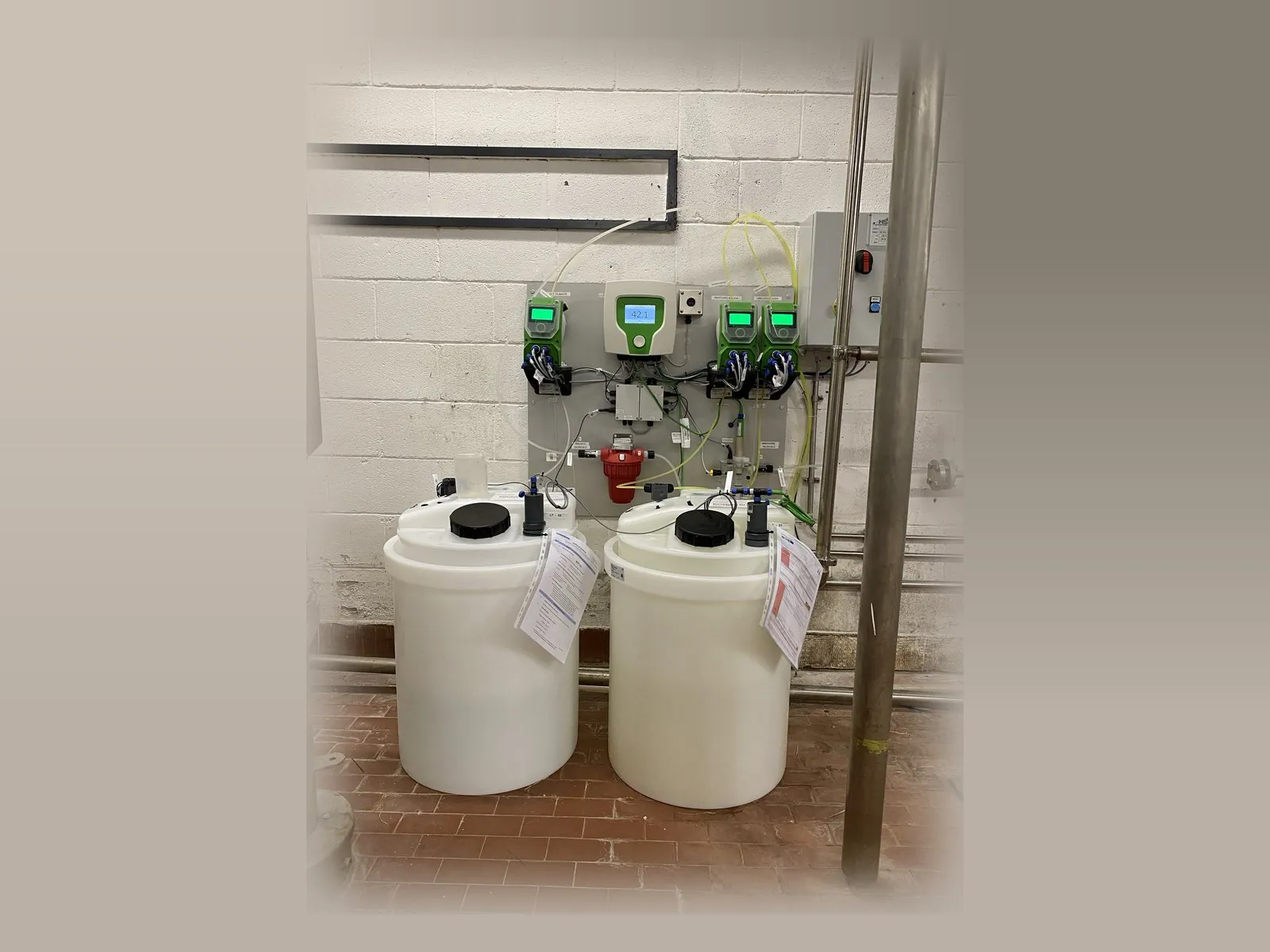
Wall installation in the plant room, with the chemical tanks on the floor.
Pumps, controllers or components supplied by the customer can also be fitted, with custom dimensions, back panel and electrical panel. Dosing stations and skids →
Measuring ranges, resolution, cell and controller characteristics, display and remote control are described on the controller page.
For chlorine and other disinfectants the basic solution is the dosing station; to dose according to the concentration actually present in the water, measuring controllers are used.
The simplest solution: the pump doses at a constant rate or in proportion to the volume of water measured by the pulse-output water meter.
Details →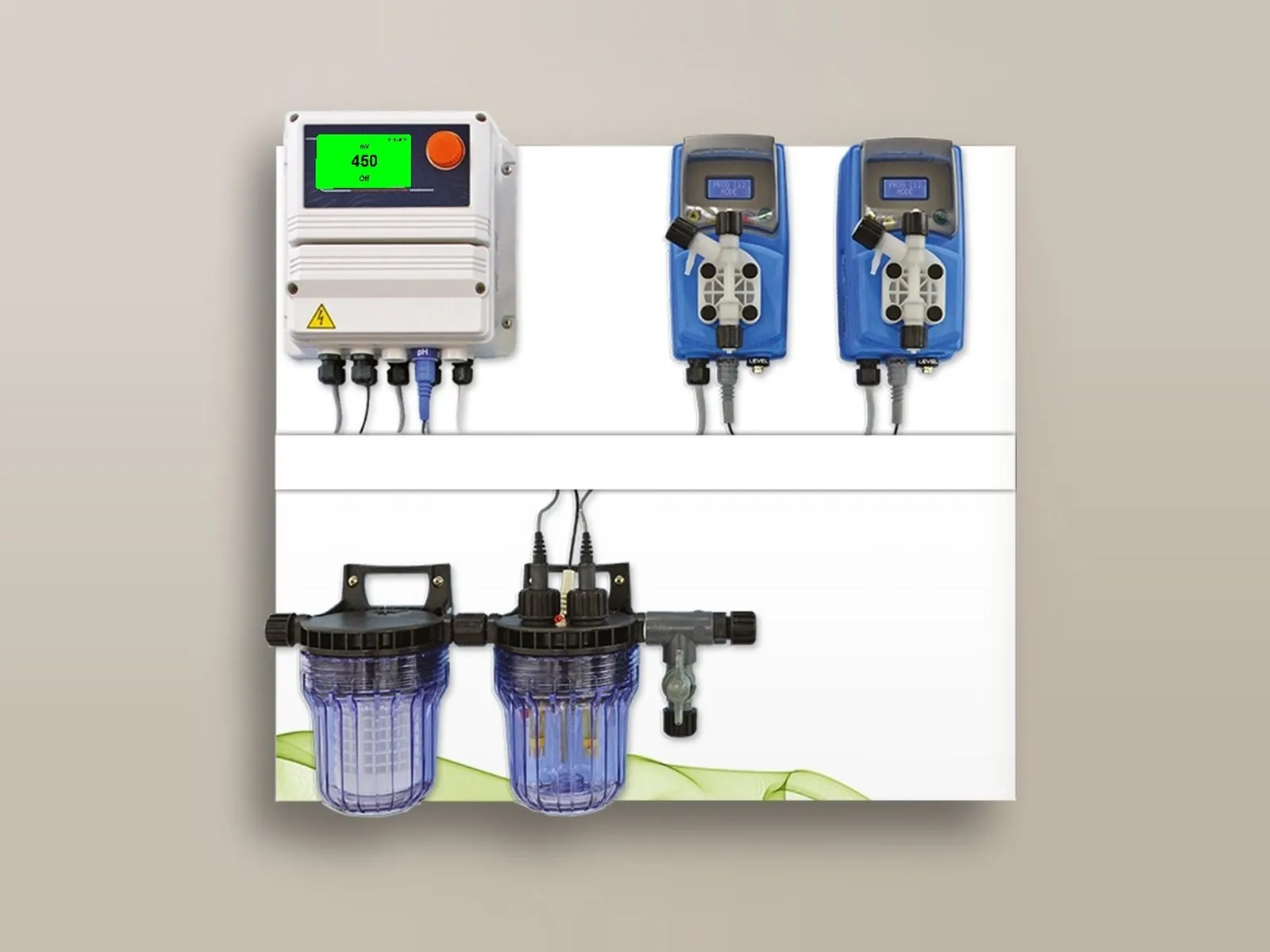
Dosing based on the Redox potential of the water: an economical solution, based on an indirect measurement.
Details → The amperometric cell directly measures the disinfectant concentration in mg/l, ensuring maximum dosing accuracy.
Details →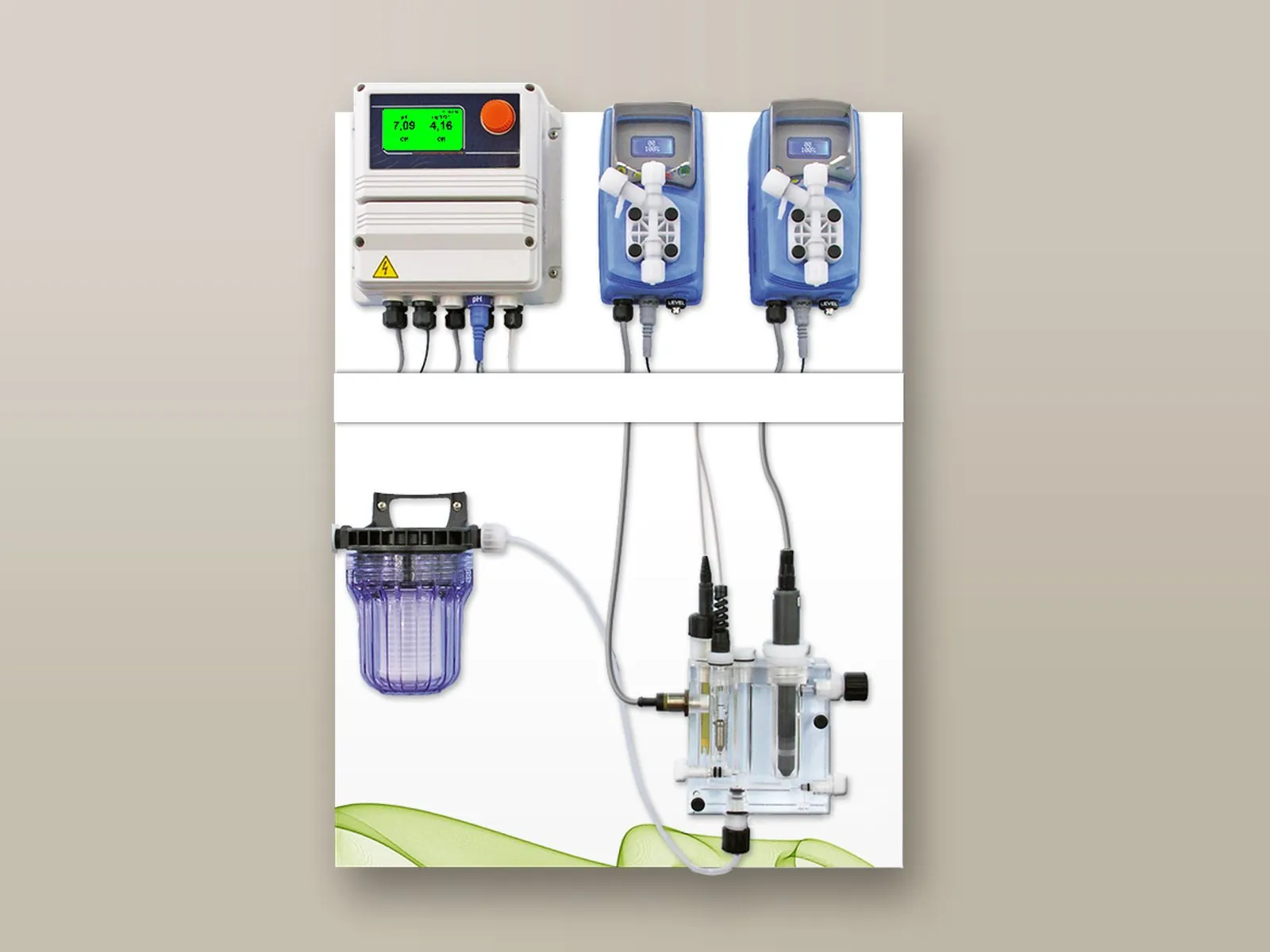
Simultaneous management of two parameters, for example pH and chlorine, with a single controller.
Details → Management of up to 10 parameters and of all the pumps in the installation, with touch screen and remote control as standard.
Details → Chlorine dioxide generator: it produces the disinfectant on site from the precursors and doses it in proportion to the water meter or to the measured residual.
Details →The controllers support two-way remote access (read and write) through the web portal from a PC, tablet or smartphone: measurements can be viewed, set points, dosing and alarms changed, alarms received and logs downloaded. Alternatively, they can be integrated into your PLC via Modbus.
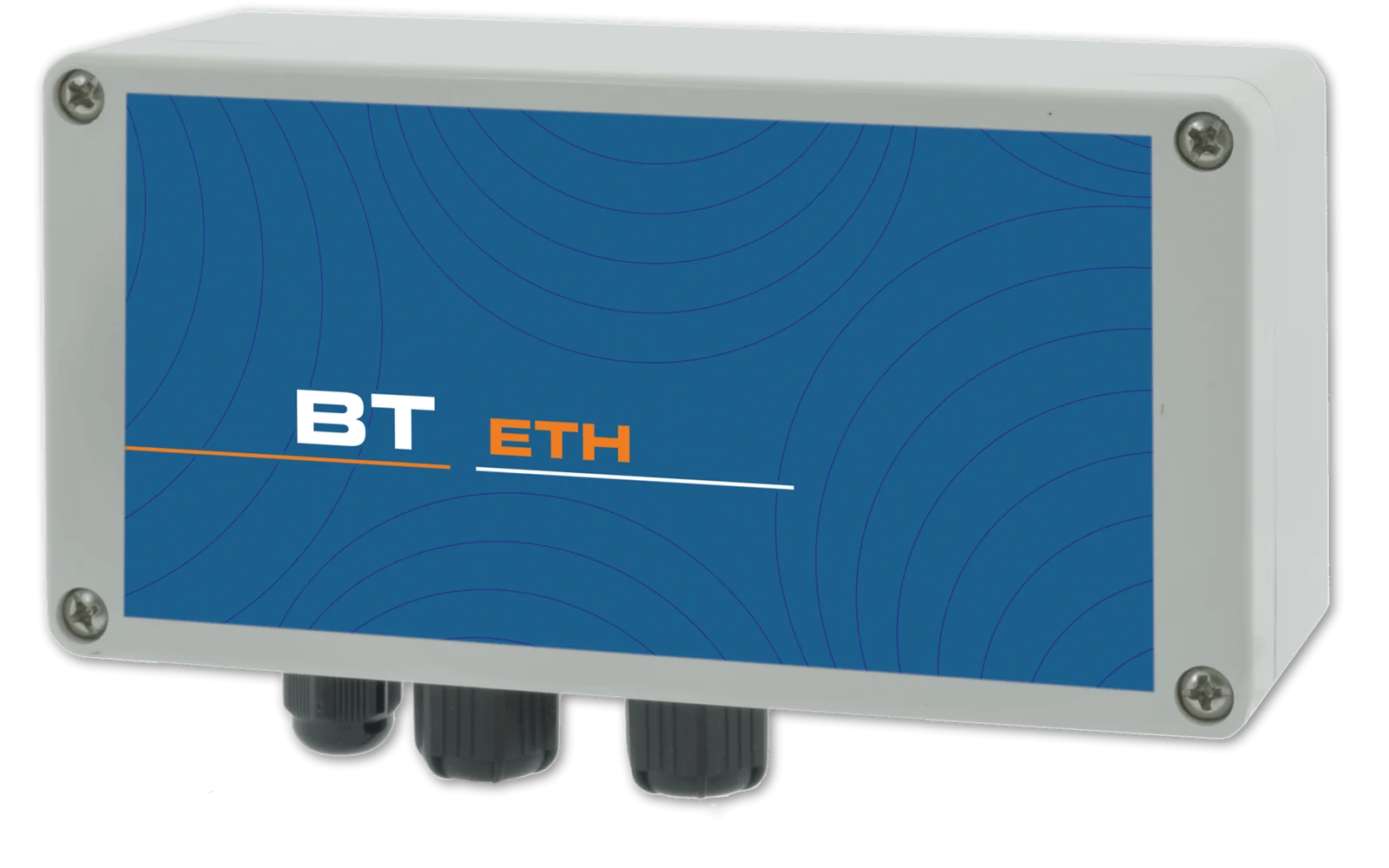
Connection to the web portal via network cable: measurements, set points, dosing and alarms accessible from a PC, tablet or smartphone.
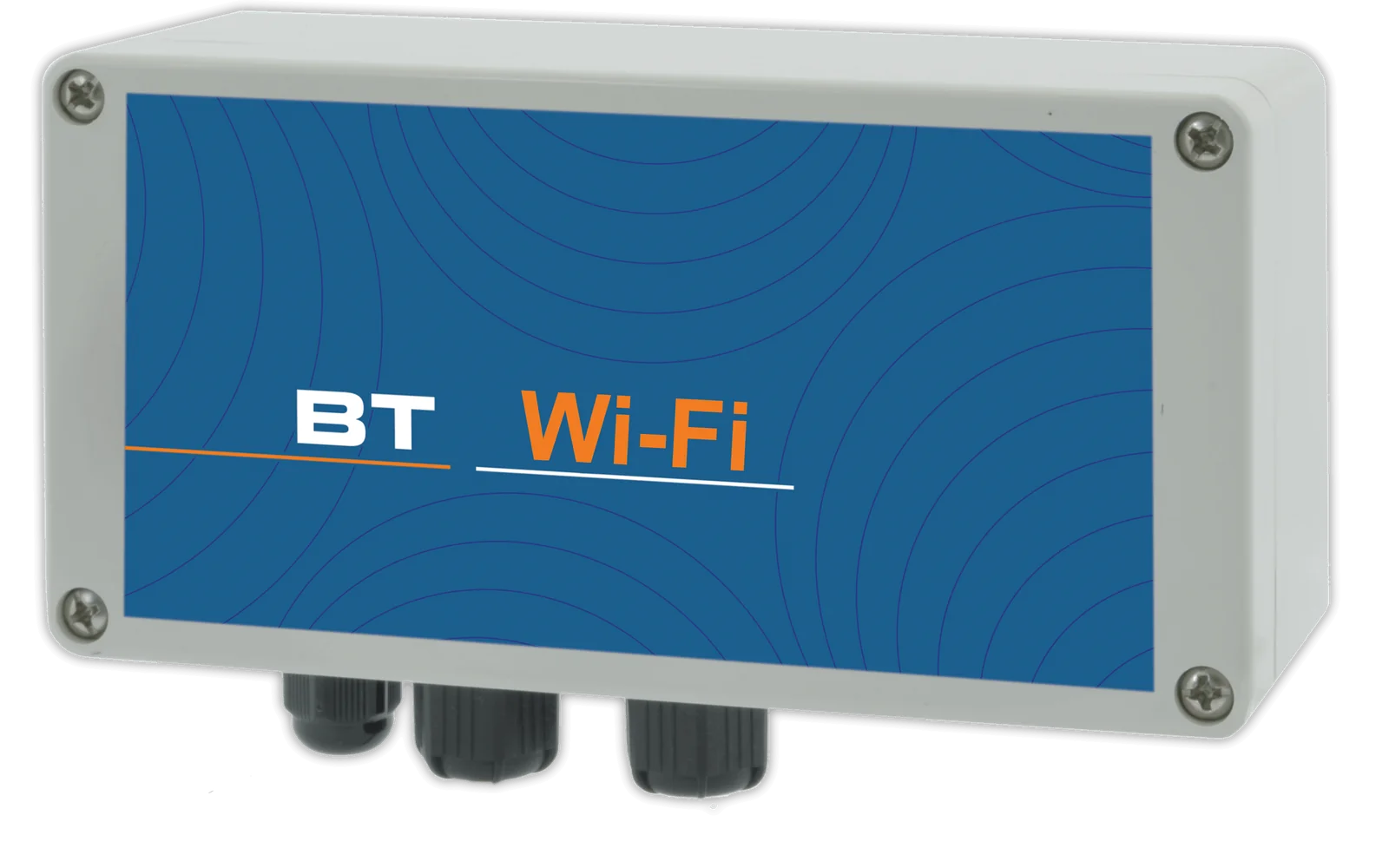
Wireless connection to the web portal, with the same functions as the cable connection.
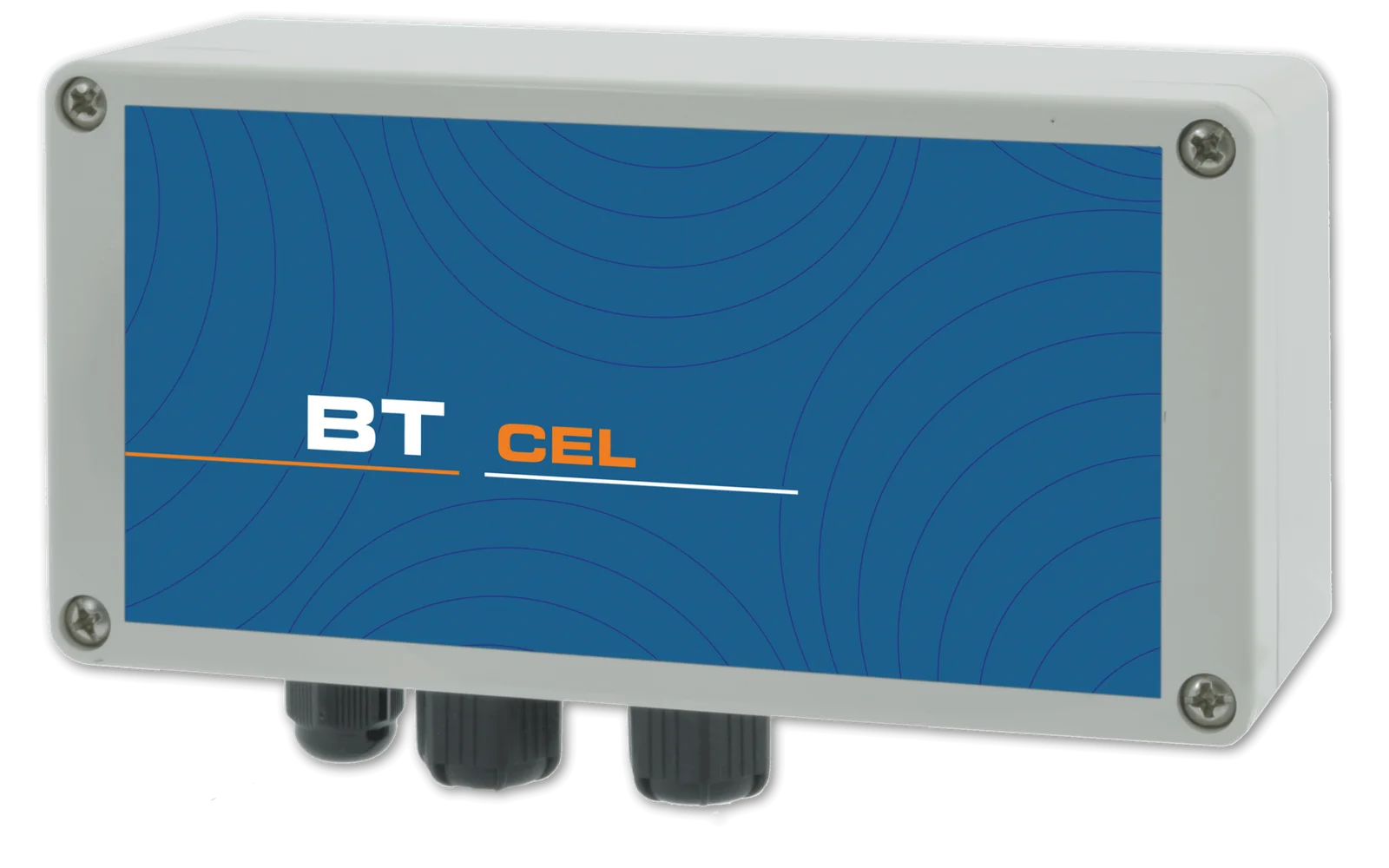
Connection via the 4G network for installations without a local network, with alarm notification by SMS or e-mail.
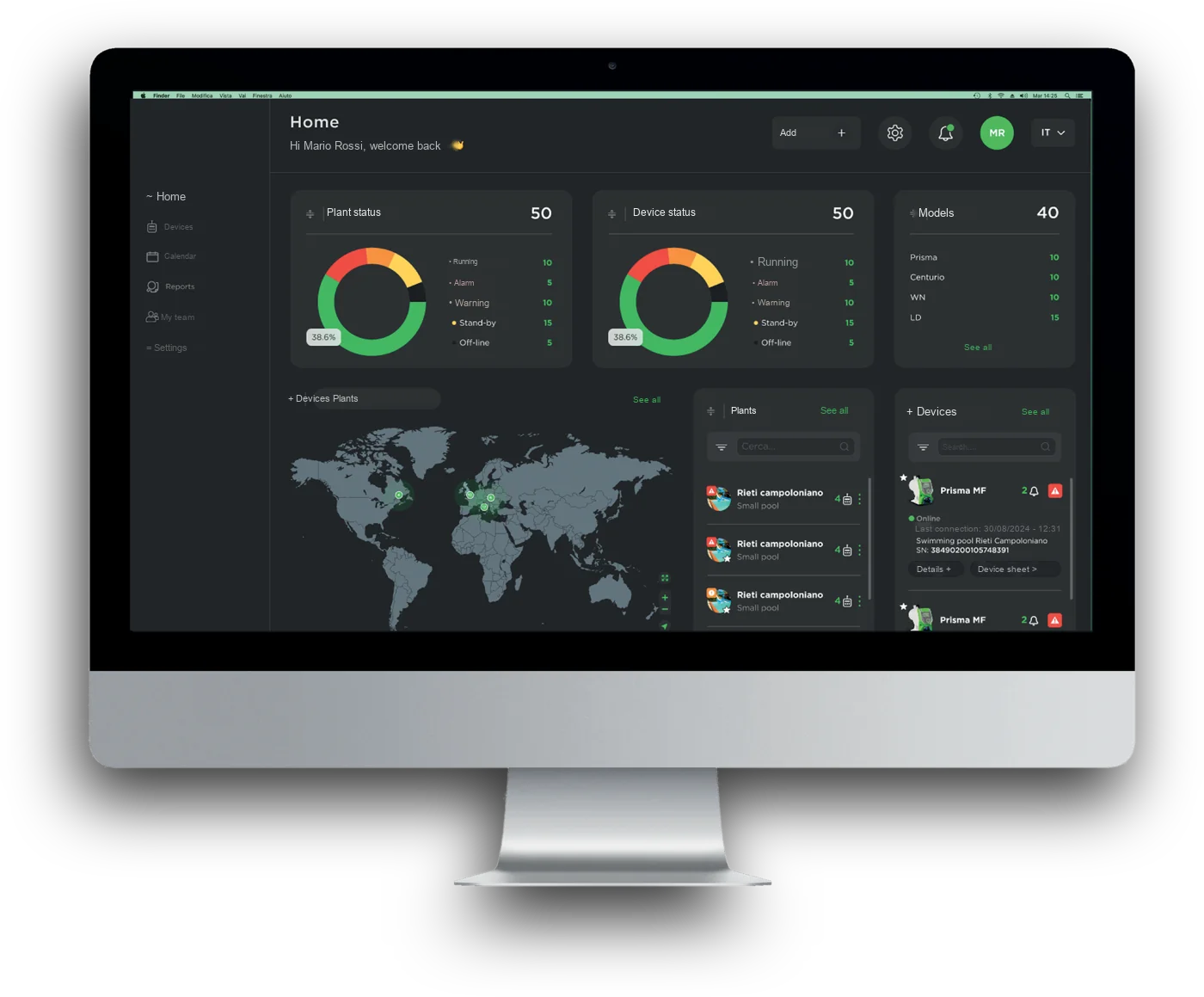 Web portalPC, tablet and smartphone
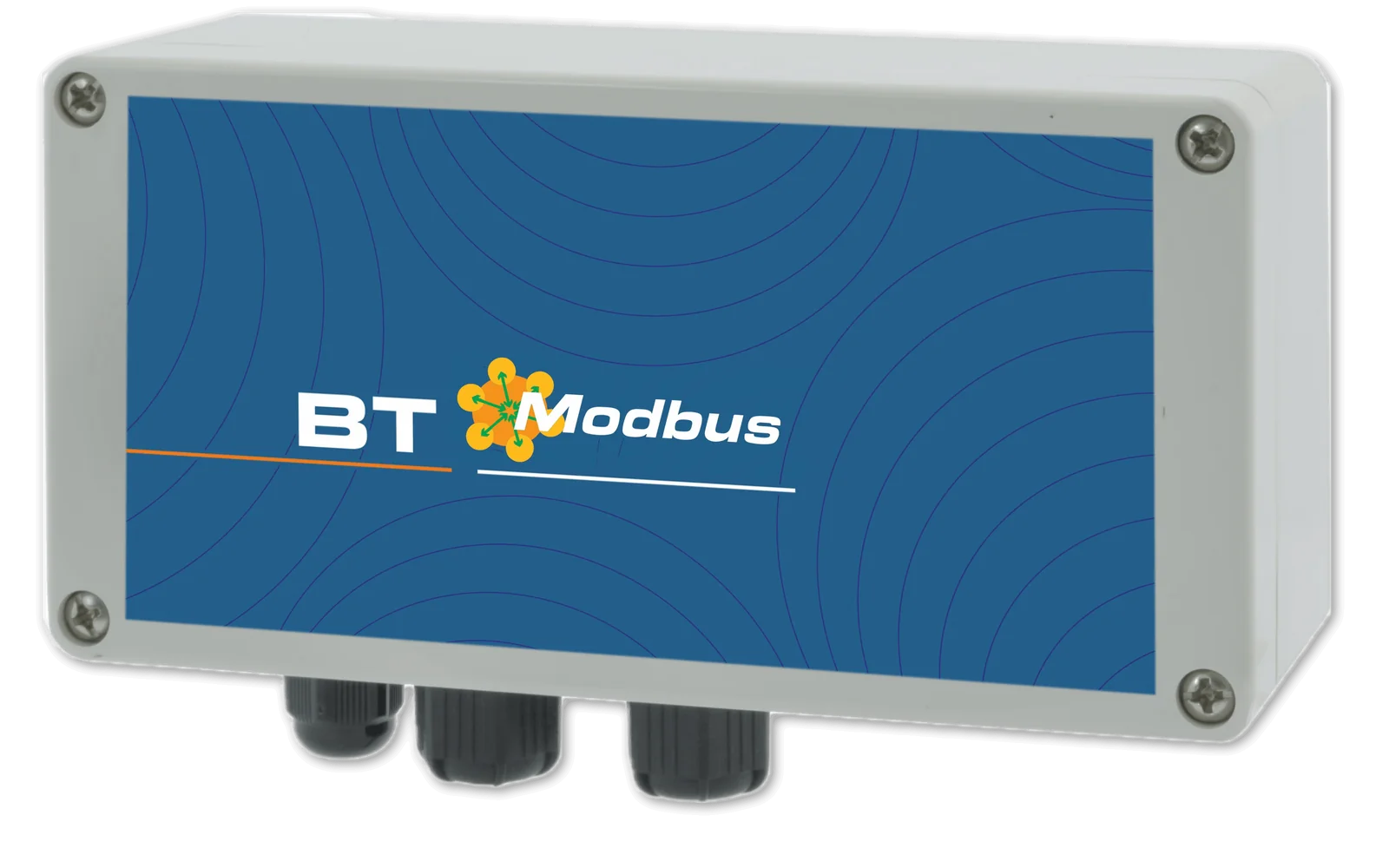
Integration into your PLC via serial port.

Current signal proportional to the measured value, for remote monitoring or for controlling pumps and other instrumentation.

Download of the logged data to a USB memory stick, for archiving and analysis with a spreadsheet.
One communication type at a time: Ethernet, Wi-Fi, 4G or Modbus RTU (built into the BASIC versions, optional on the PLUS versions). 0-4/20 mA current loop outputs standard on the PLUS versions, optional on the BASIC versions; meter input on the PLUS versions only.
A single account brings together all registered installations, each with its own devices: the web portal, free of charge and with no subscription, can be accessed from a PC, Mac, tablet or smartphone and allows every parameter to be both viewed and changed, with an encrypted connection and protected access.
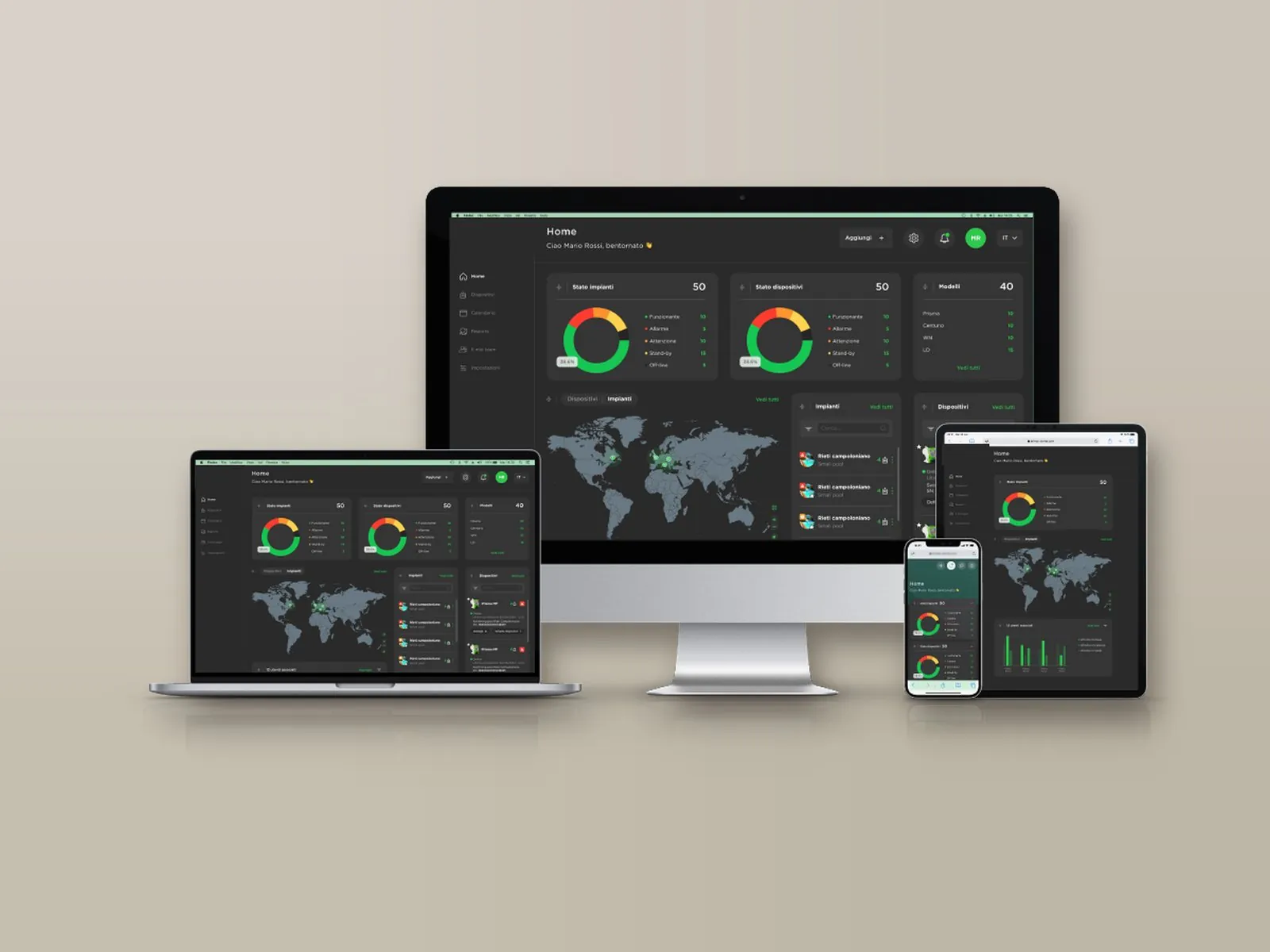
On a single screen: probe readings, chemical levels, pump activation thresholds and active alarms, with the status of installations and devices (normal, warning, alarm, standby, not connected).
Installations appear on an interactive map with their status and open with a click; for each one, the local weather conditions and temperature are also shown.
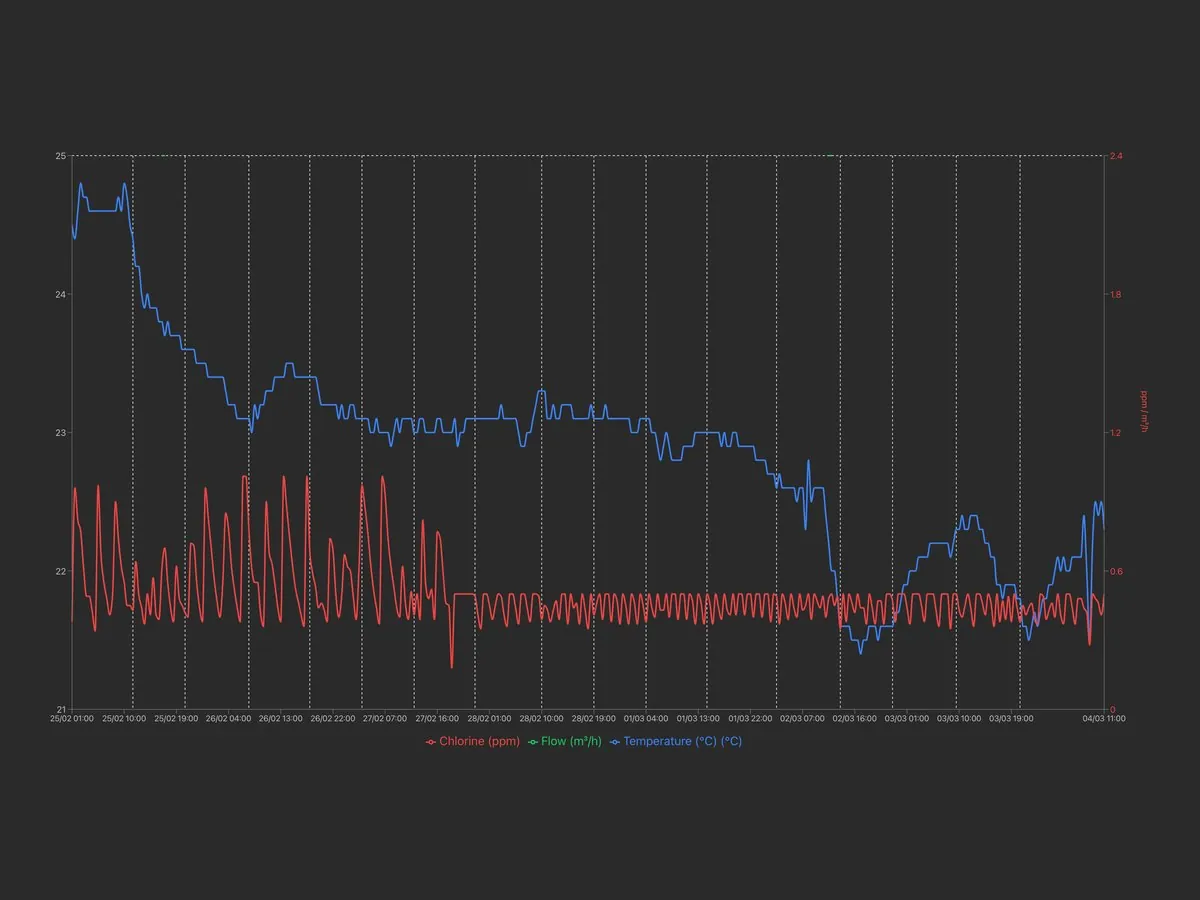
Archive of measurements and alarms, available for consultation at any time with charts and numerical reports exportable in Excel format.
Alarm thresholds for readings, dosing, faulty probe and out-of-range readings, with notification by e-mail or SMS depending on the communication system; a warning is also issued when an installation remains disconnected beyond the set time.
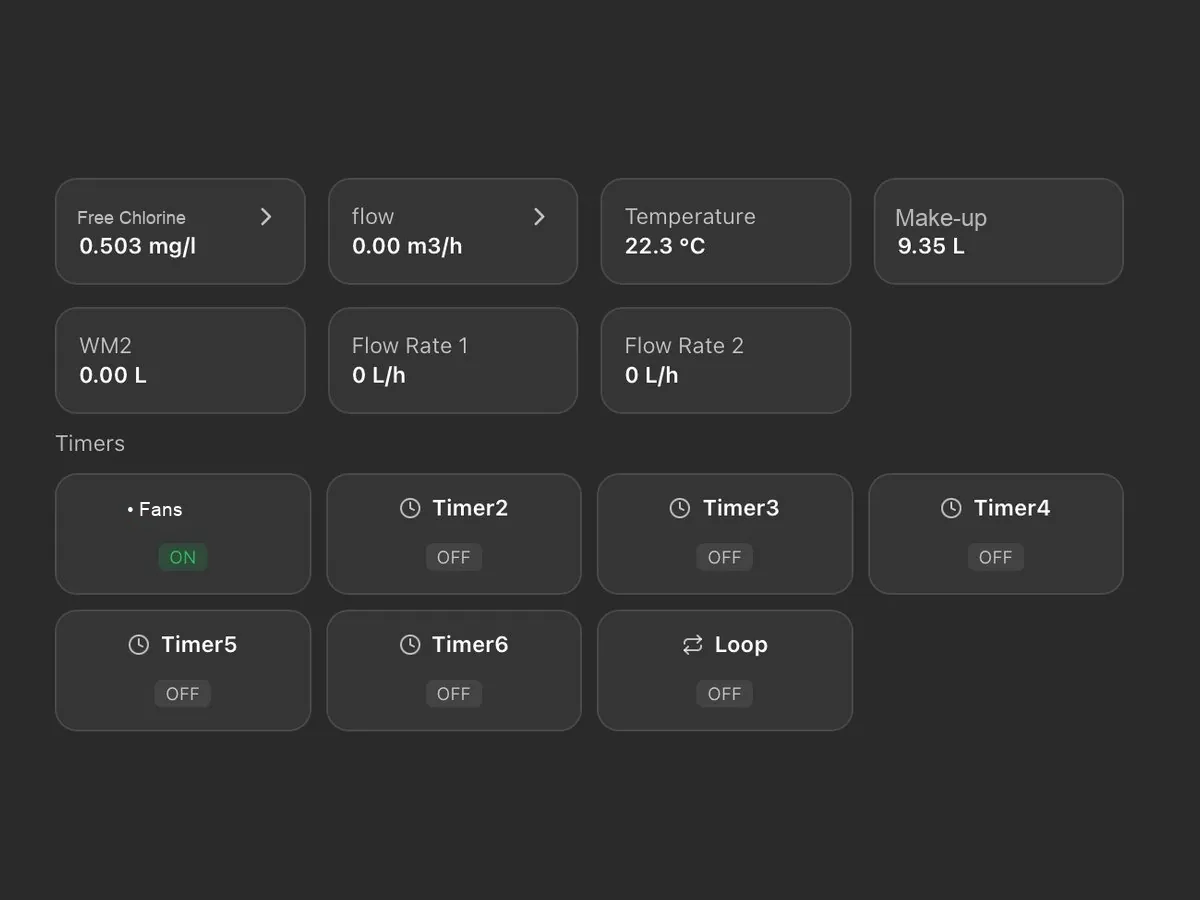
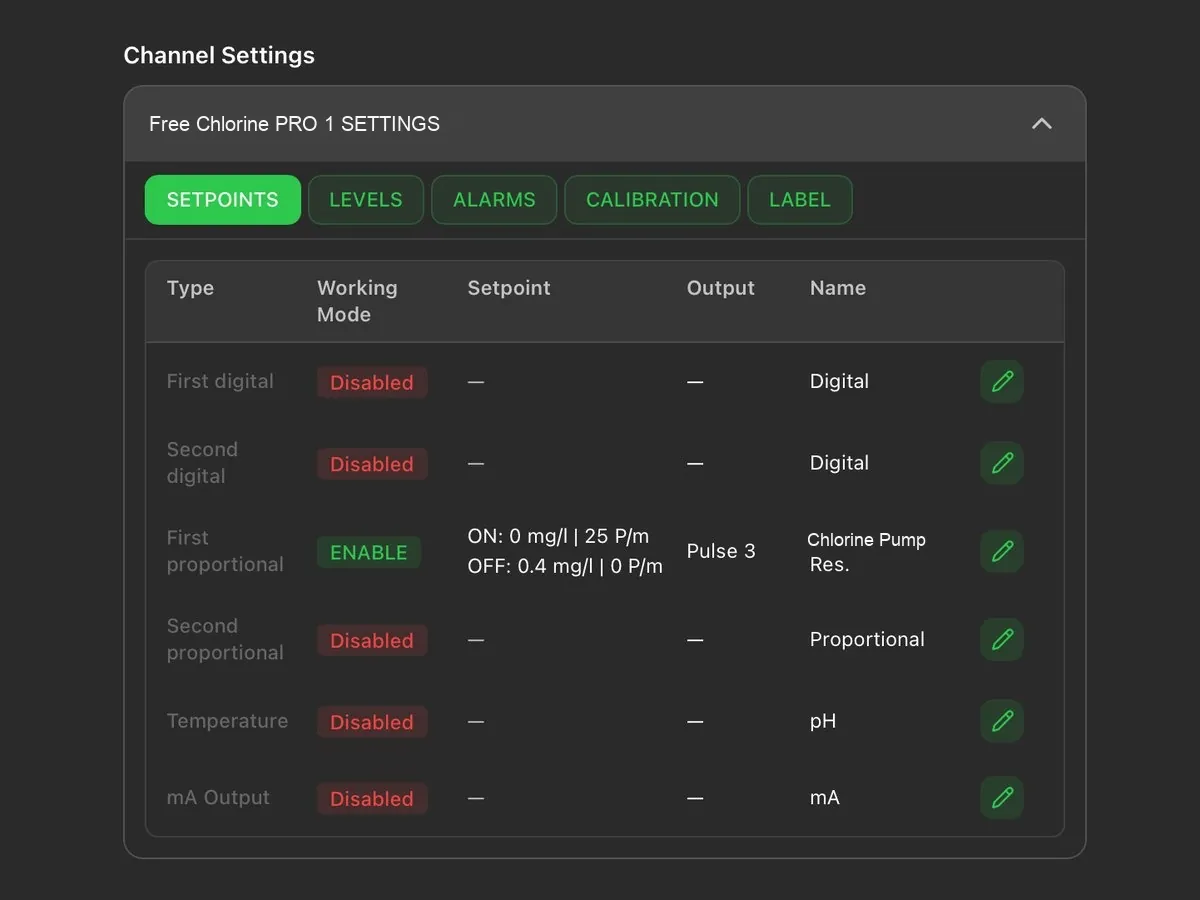
Remote modification of the set points, of the dosing pump activation thresholds and of the corresponding hourly flow rate.
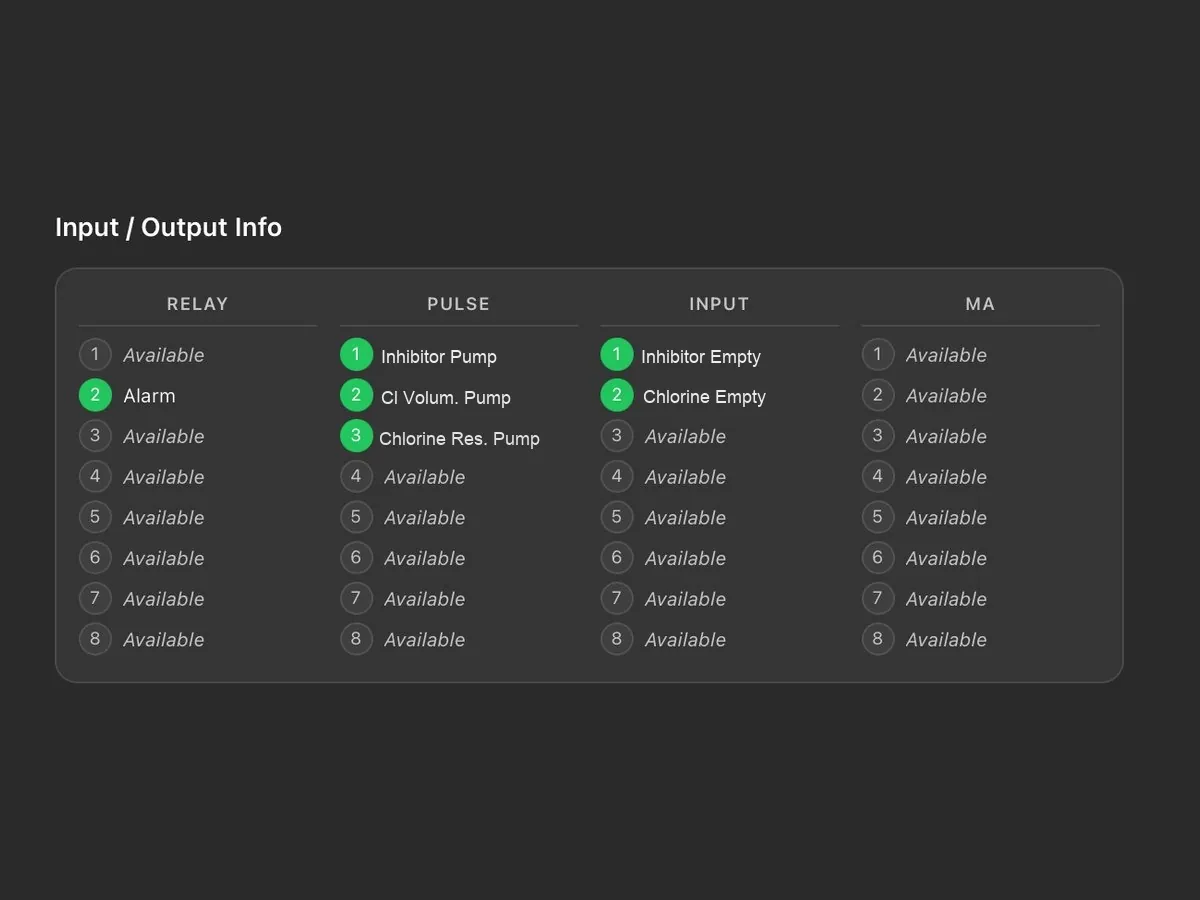
Status of relays, pulse outputs, digital inputs and current outputs, with the name assigned to each connection.
Tasks are scheduled by installation or by device and assigned to technicians; a reminder is sent by e-mail two days before the due date. Each task is shown as scheduled, due, overdue or completed.
The main account has full access and creates the technicians’ accounts, each enabled only for the assigned installations and devices; the last login and activity of each technician are visible.
Reports on devices, tasks and technicians, downloadable in PDF or CSV with the customer’s logo; the log keeps the history of operations and disconnections.
Logo, main colour and light or dark theme; the tiles on the main screen can be rearranged by dragging them. Two installations can be displayed side by side for comparison.
Each device is added through a guided procedure: the model is recognised automatically and associated with the installation, together with the technician to be contacted.
As an alternative to the portal, the Modbus RTU port allows integration into the plant supervision system.
Describe your plant and the flow rate of water to be treated: we will size the controller, pumps and accessories.
Call or write to us: a technician will reply with a tailored proposal of controllers, pumps, probes and accessories.