Skip to content
Generation and dosing

LOTUS AIR

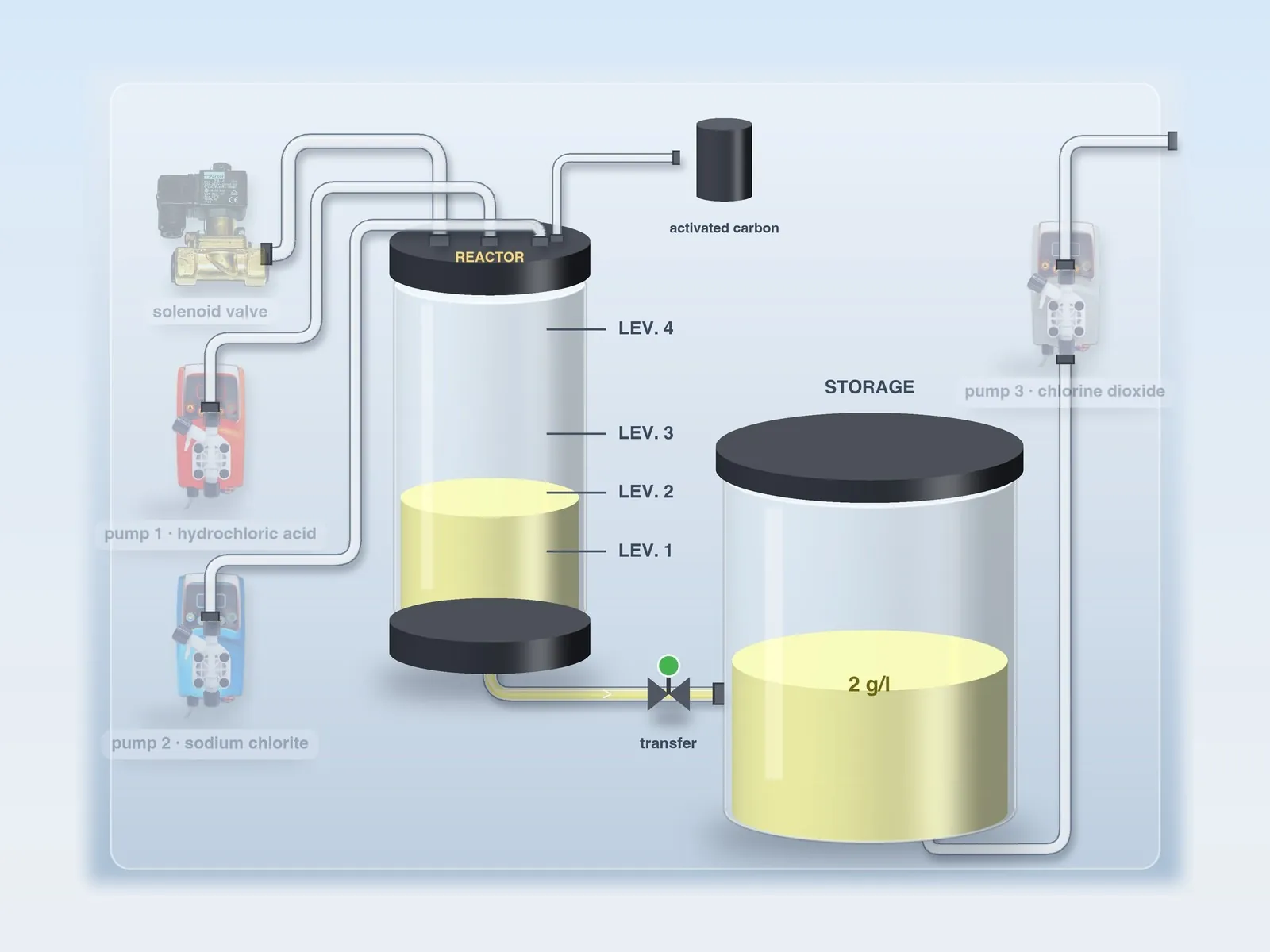
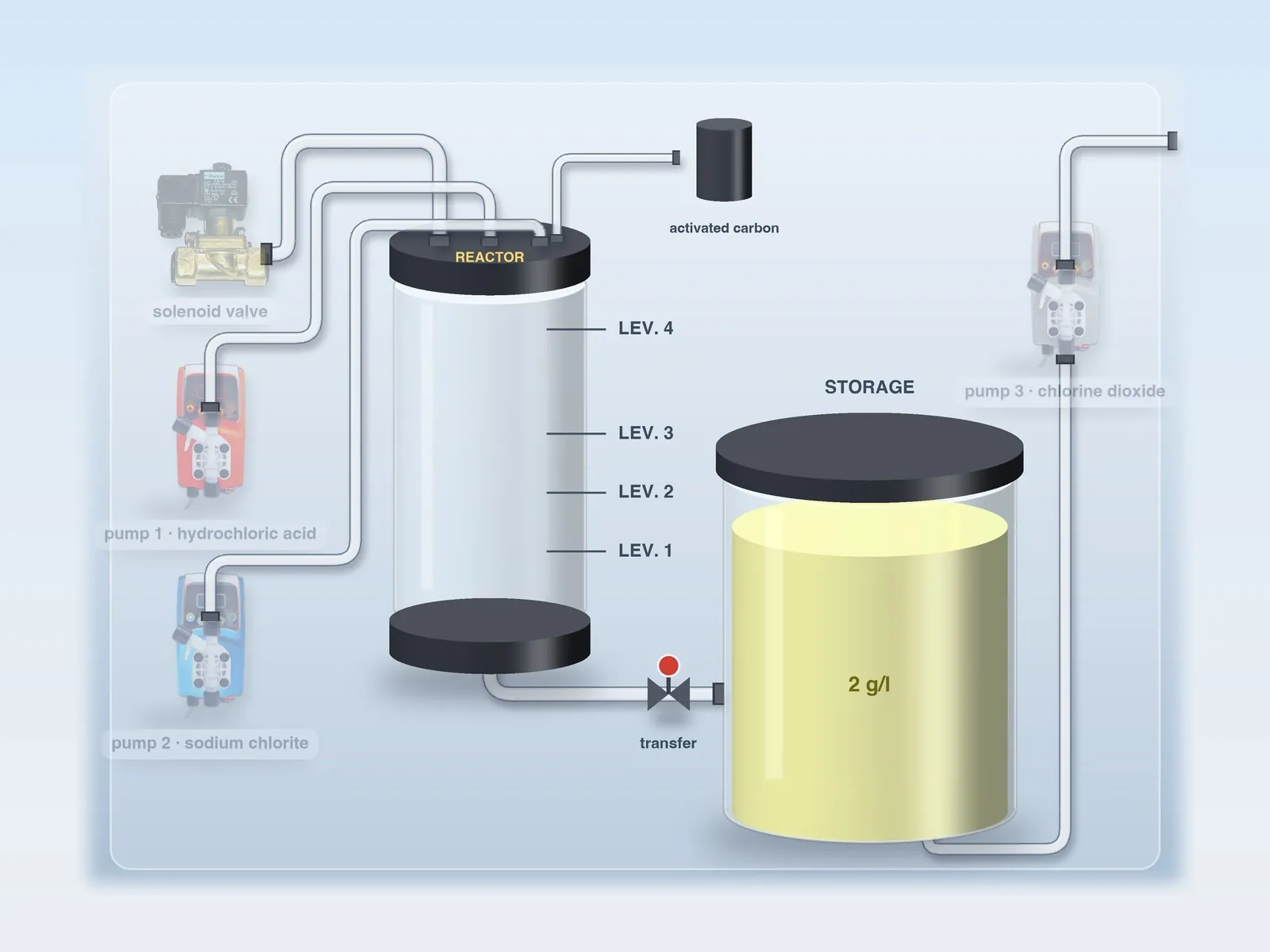
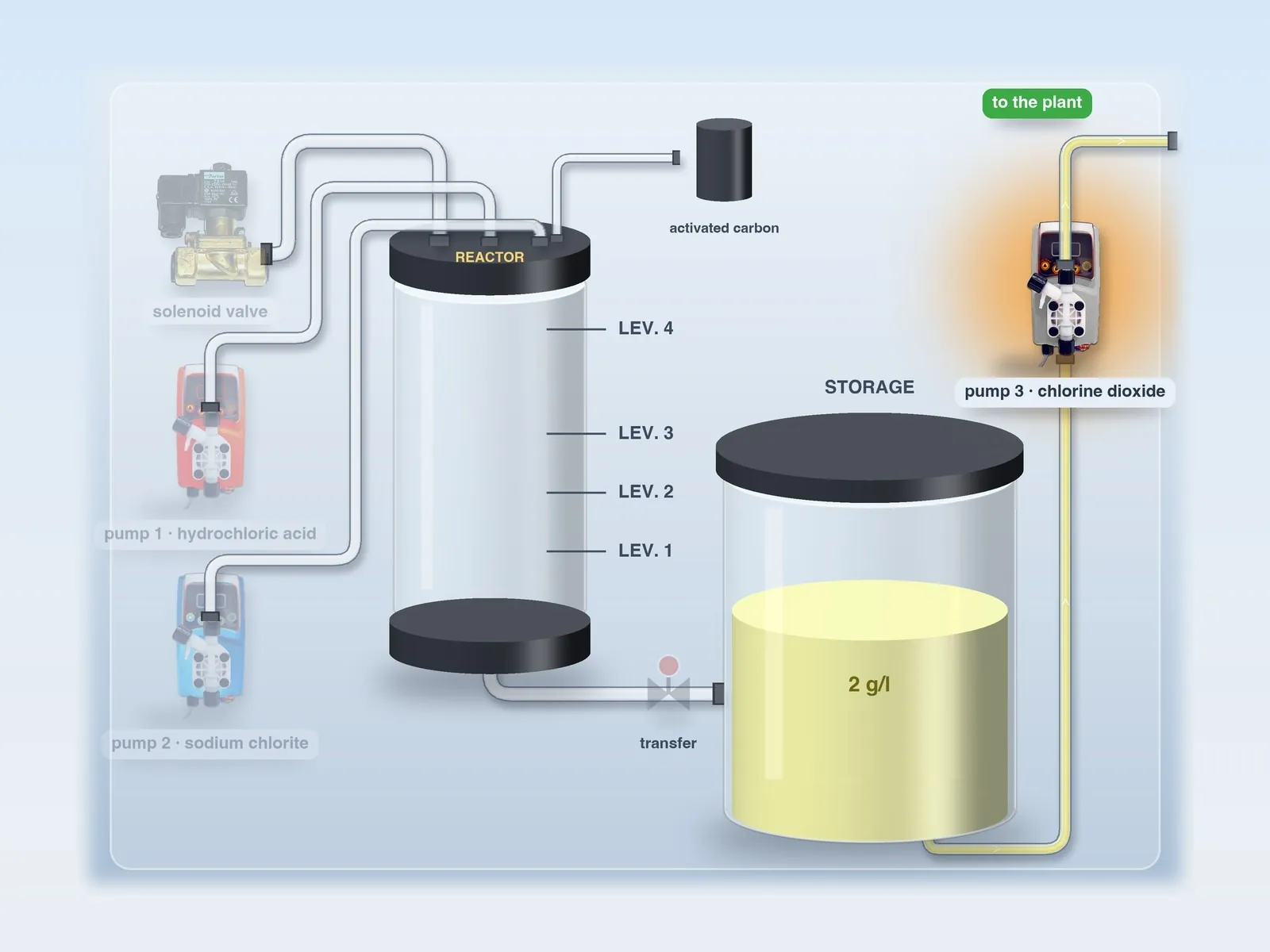
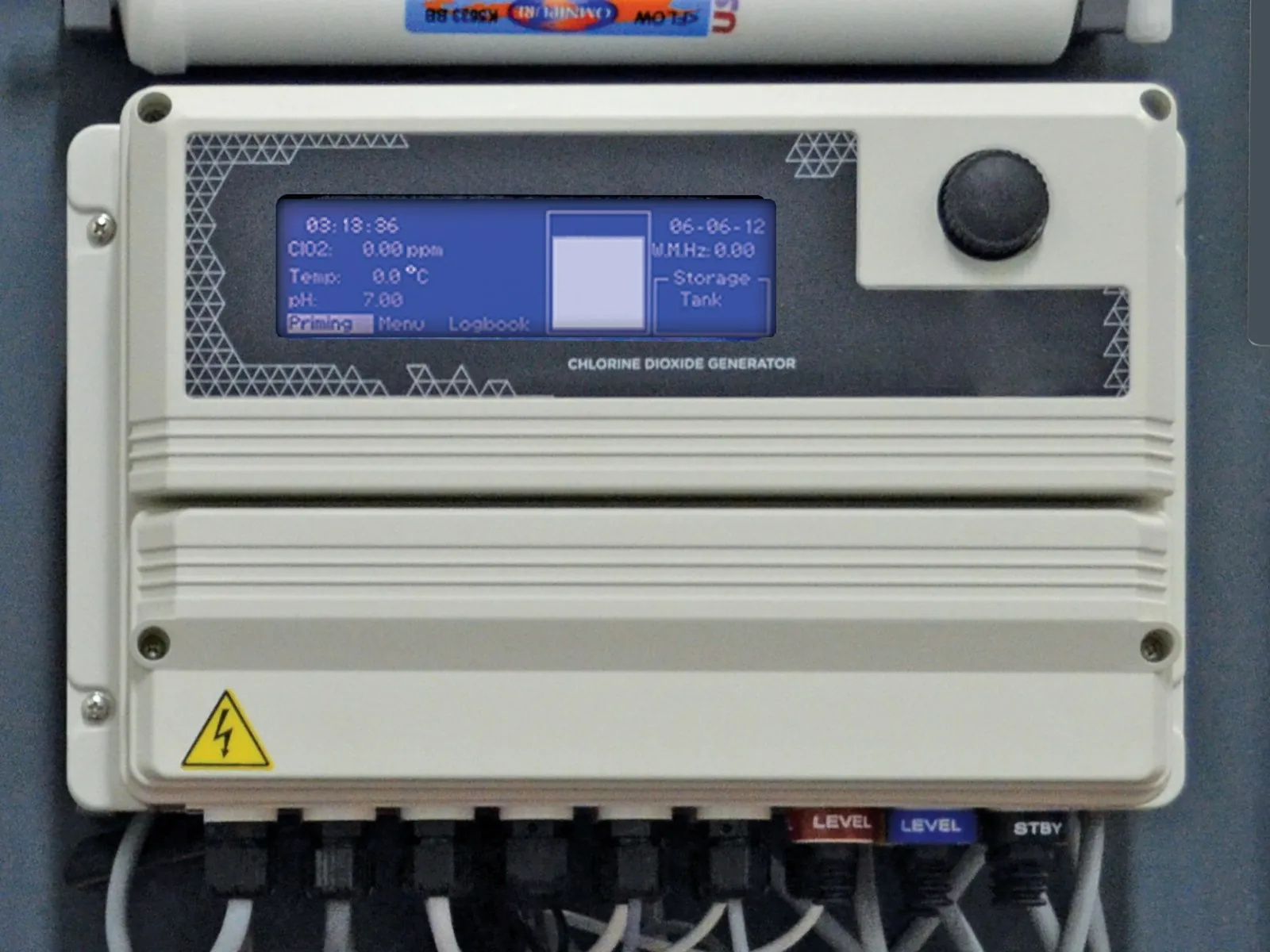
The LOTUS AIR generator produces concentrated chlorine dioxide on site, in an automatic cycle and under safe conditions, from two precursors: hydrochloric acid and sodium chlorite. The product is transferred to an integrated storage tank, from which it is drawn by one or more dosing pumps.

  • Generated on site: 10, 30 or 60 g/h
  • Reaction at ambient pressure
  • Fresh product: reduced chlorites and chlorates
  • Water meter, measured residual, 4/20 mA, Redox
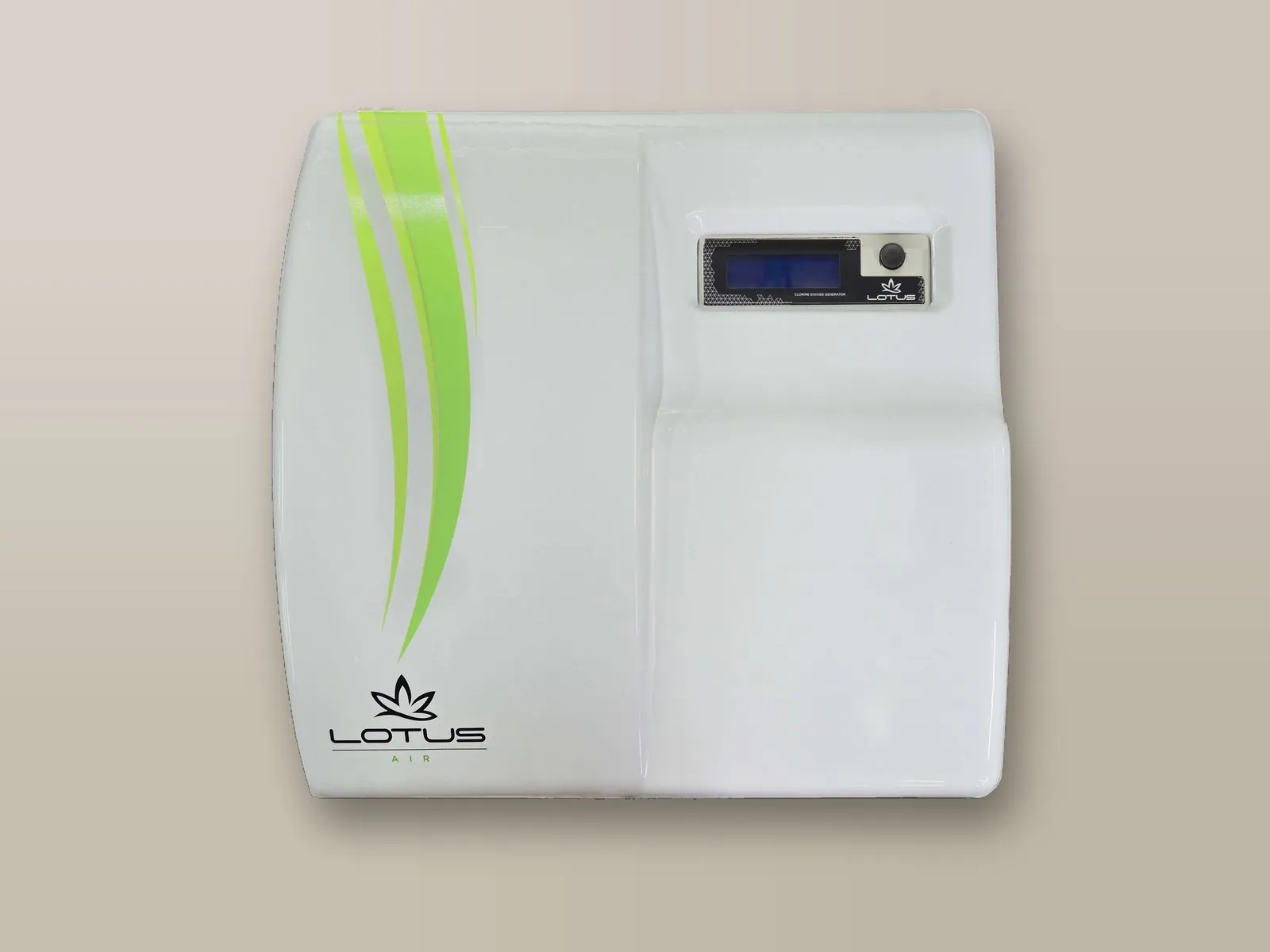
LOTUS AIR chlorine dioxide generator, closed
LOTUS AIR
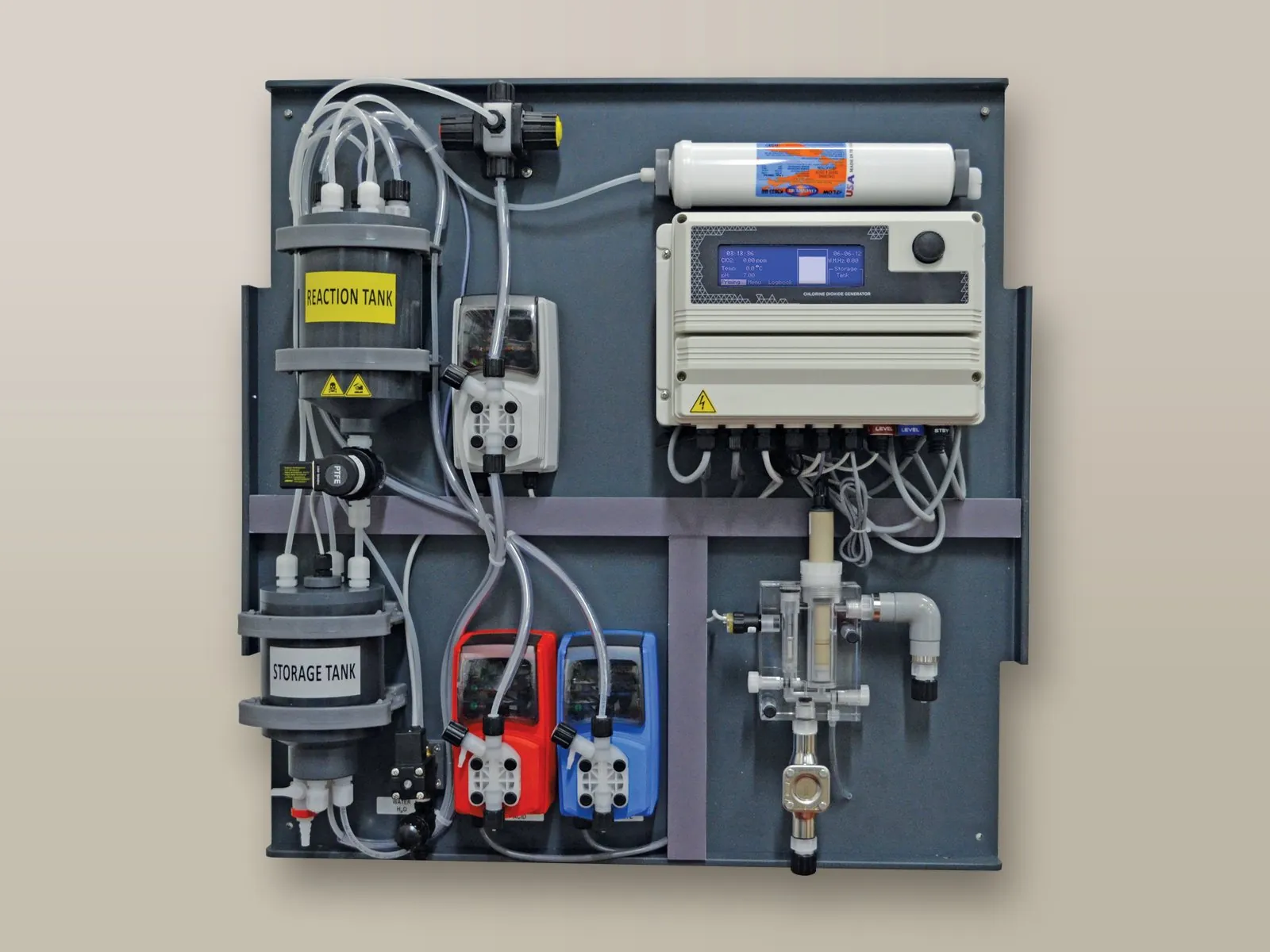
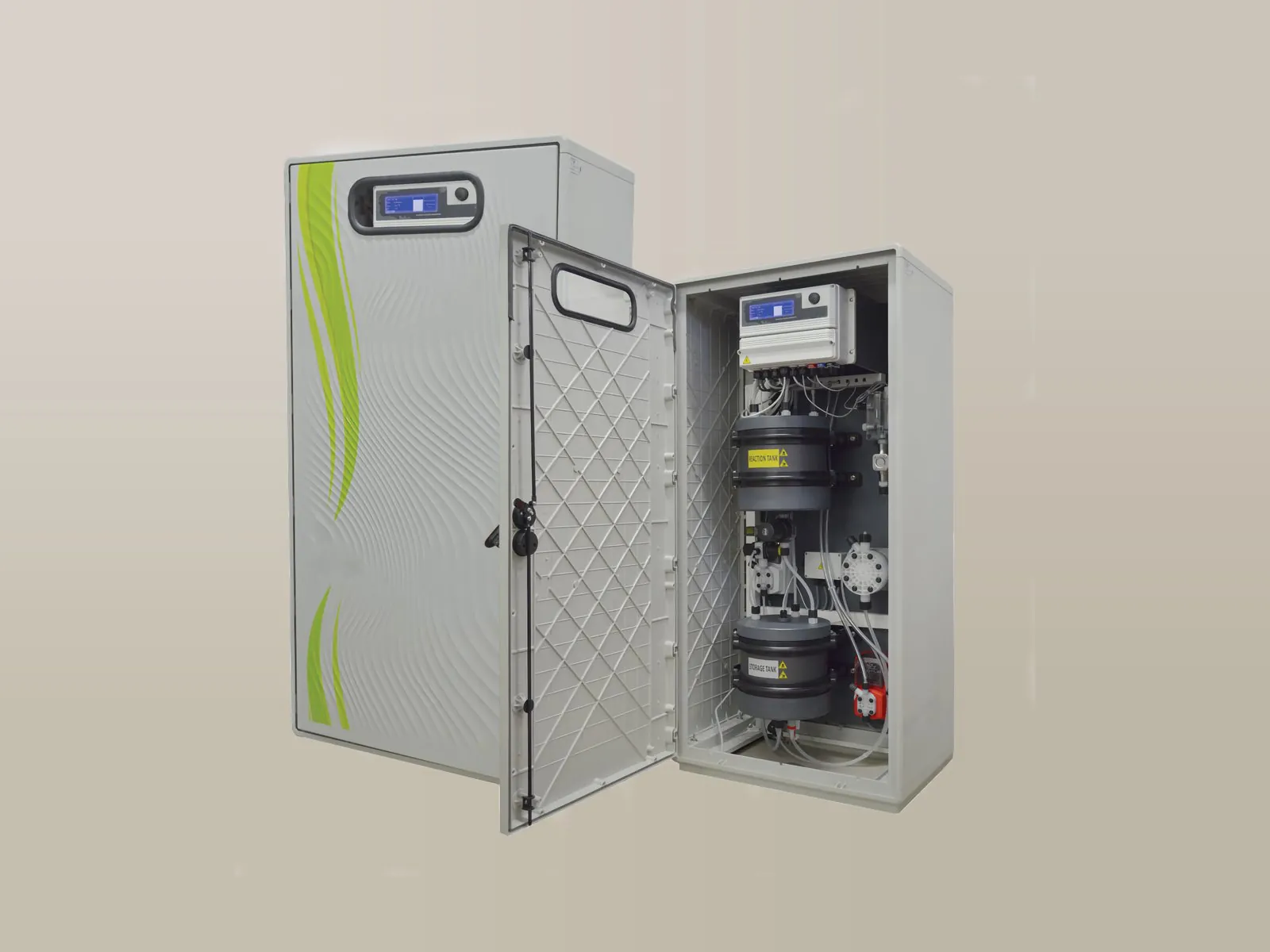
LOTUS AIR generator in an open cabinet with reactor, pumps and controller
Open
10 – 60g/hChlorine dioxide produced
2g/lConcentration
15minReaction
1lReactor
Chlorine dioxide

Why chlorine dioxide

A highly effective oxidant and disinfectant: it acts on all organic species, including Legionella and biofilm, and oxidises iron and manganese. It is used in water supply network storage tanks, in hot water systems of hotels, hospitals and swimming pools, in industry (washing of bottles, fruit and vegetables, cooling towers), in livestock farming and in agriculture.

Insight: the disinfectants used →

Rapid and persistent action

It exerts its disinfecting action in approximately 5 minutes of contact and remains in solution for a long time, reaching even the most remote or stagnant areas of the system, with a residual effectiveness greater than that of other disinfectants.

Action on biofilm

It destroys biofilm, which offers shelter and nourishment to bacteria such as Legionella, and counteracts its re-formation, with an effectiveness considerably greater than that of sodium hypochlorite.

No halogenated by-products

It does not alter the odour, taste or colour of the water, is active between pH 4 and 10, does not form trihalomethanes or organohalogen compounds and does not react with ammonia, thus avoiding the formation of chloramines.

Recommended concentration against Legionella: 0.1 – 1.0 mg/l, depending on the system, the water and the level of contamination. In the event of high contamination, a temporary flushing of the network with 5 – 10 mg/l (shock treatment) is possible, prohibiting the use of hot water and subsequently bringing the concentration back to operating values.

Generated on site

Difference between stabilised and generated on site

Chlorine dioxide is an unstable compound, subject to rapid degradation: it is used in stabilised form or generated directly at the point of use.

Insight: chlorine dioxide →

Stabilised

Stabilised chlorine dioxide is activated by the user with a second product and must be used within approximately 30 days, with decreasing effectiveness; after the container has been opened, chlorites and chlorates may form. It is dosed with dosing stations or with the LDsCL system.

LDsCL system →

Generated on site with LOTUS

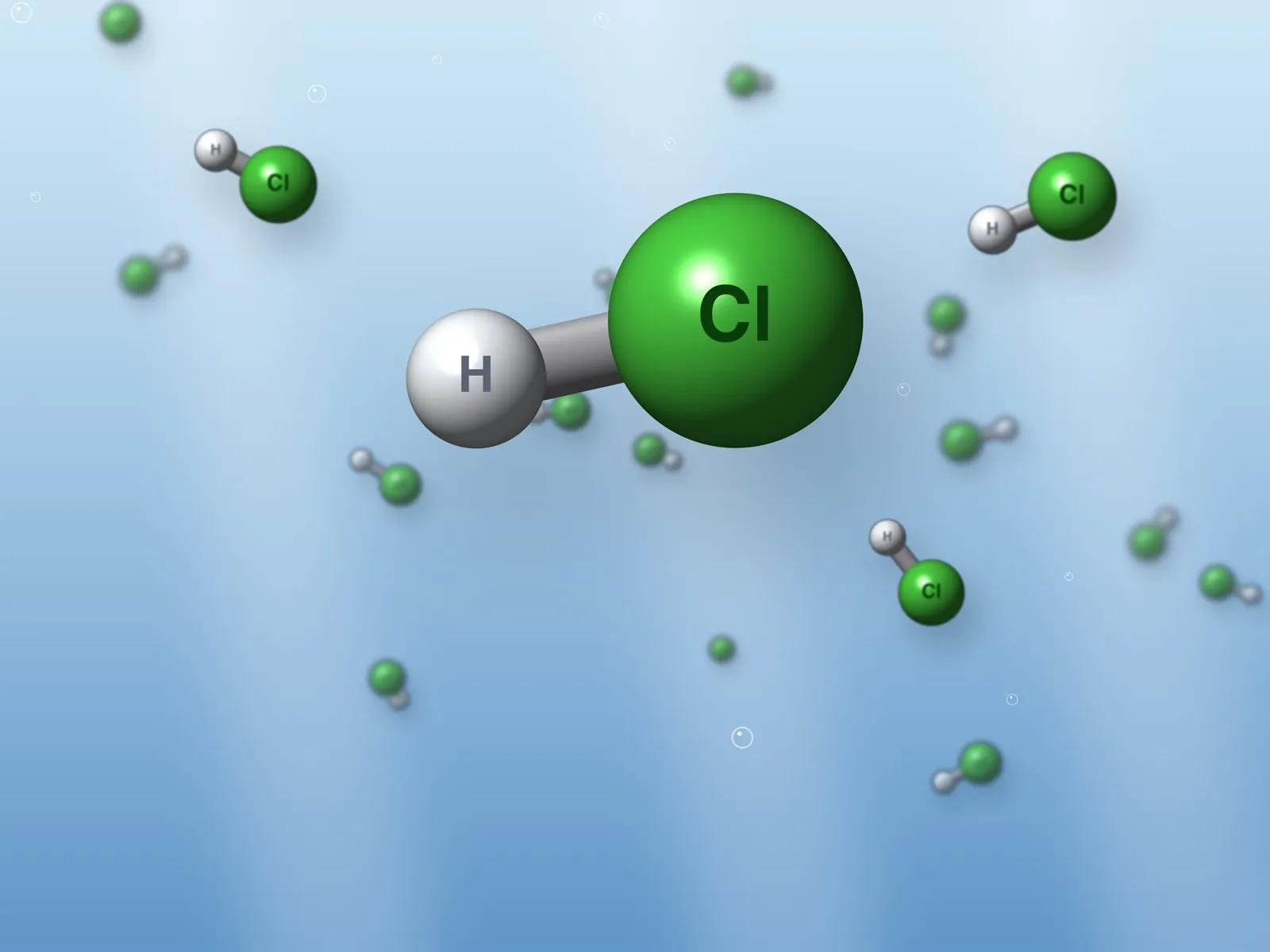
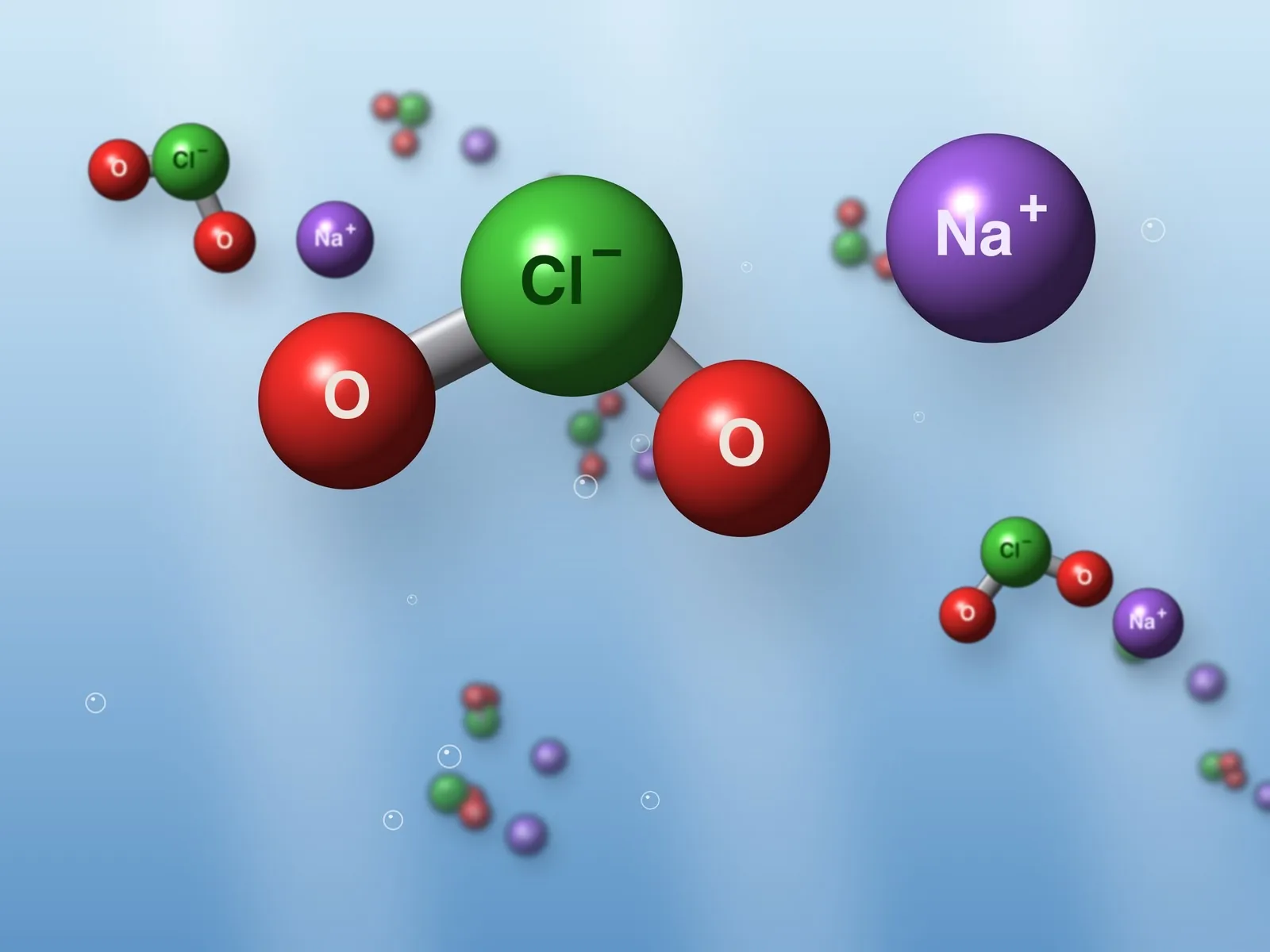
The precursors, hydrochloric acid (HCl 9%) and sodium chlorite (NaClO2 7.5%), cost considerably less than stabilised chlorine dioxide; generation in small quantities ensures an always fresh product, with virtually no by-products.

LOTUS systems, examined by INAIL (Italian National Institute for Insurance against Accidents at Work) technicians, have received an opinion of suitability for the safe management of water systems and for the prevention of Legionella: their installation constitutes an improvement in workplace safety and hygiene conditions and makes it possible to benefit from a reduction of up to 28% in the annual INAIL premium.

Reaction

Formation of chlorine dioxide

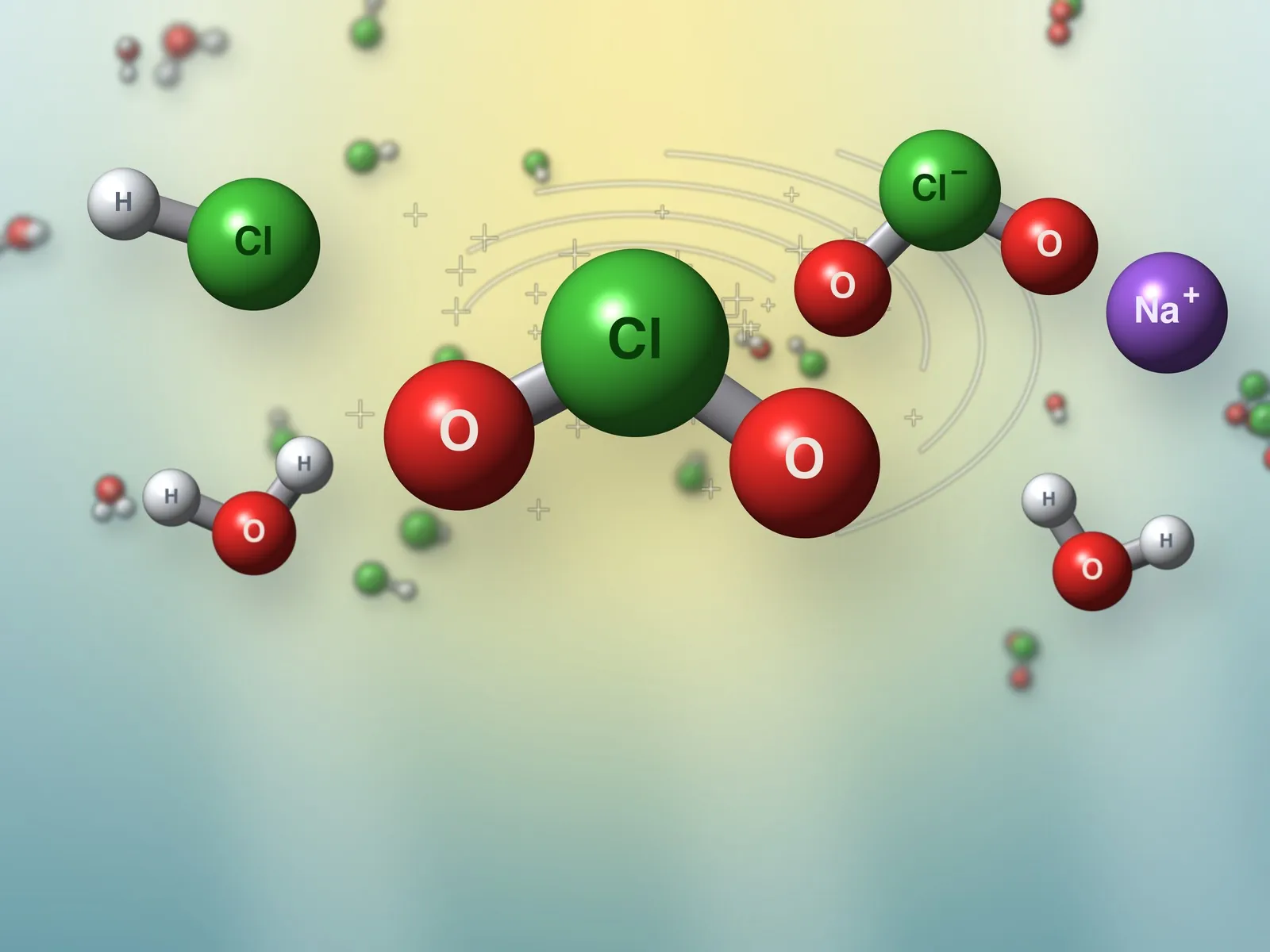
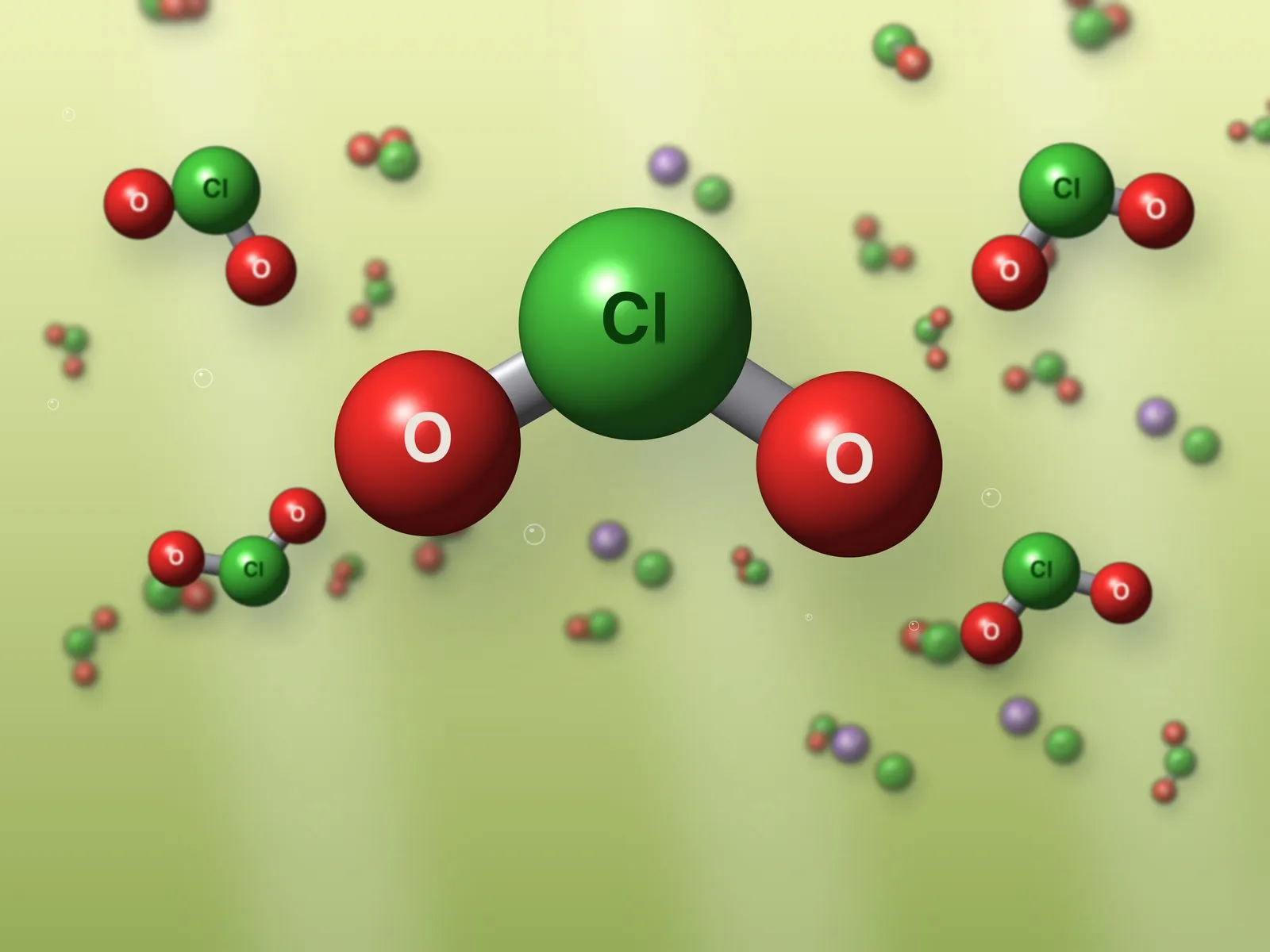
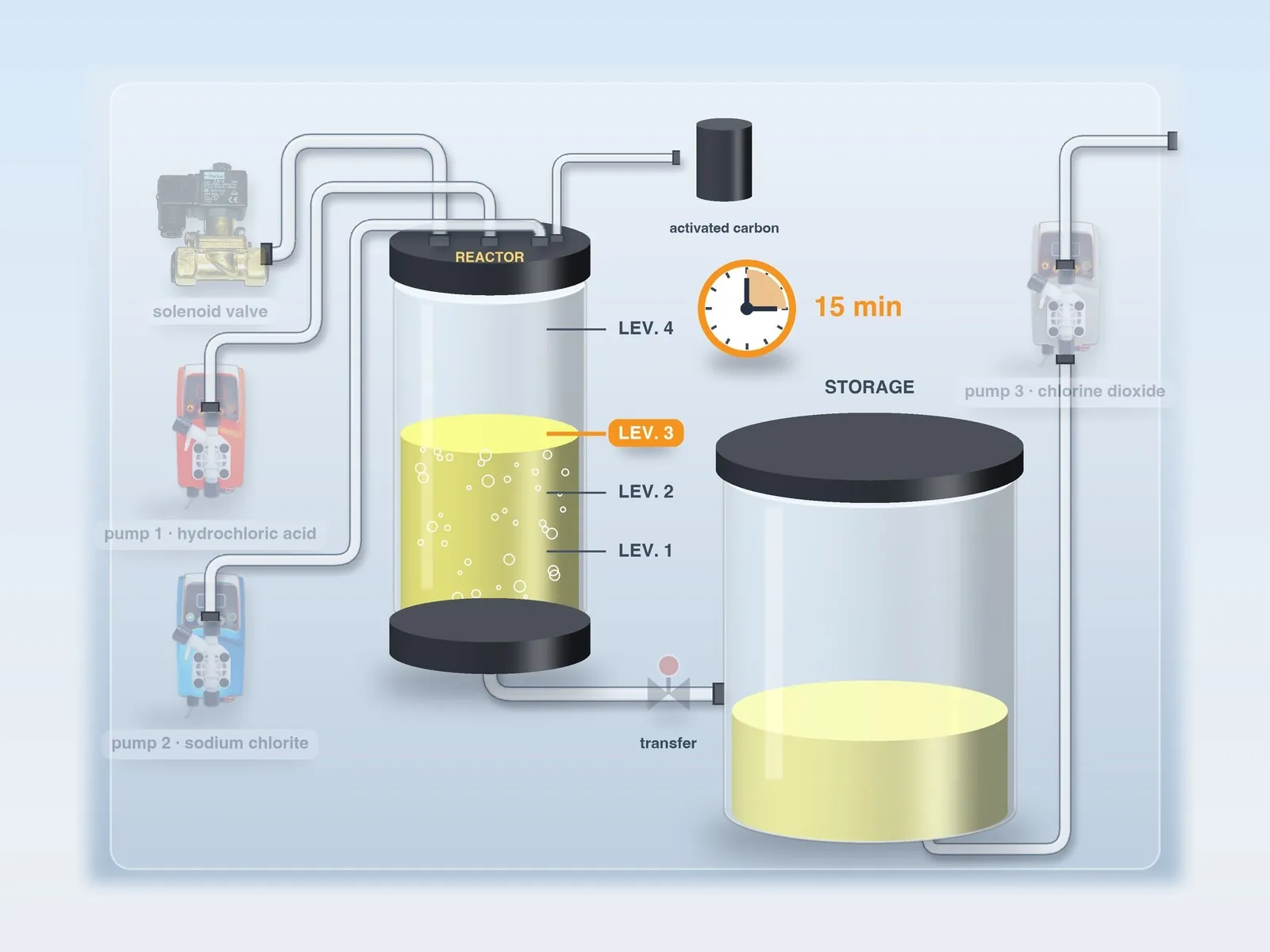
Inside the reactor, the water and the two precursors react, forming chlorine dioxide.

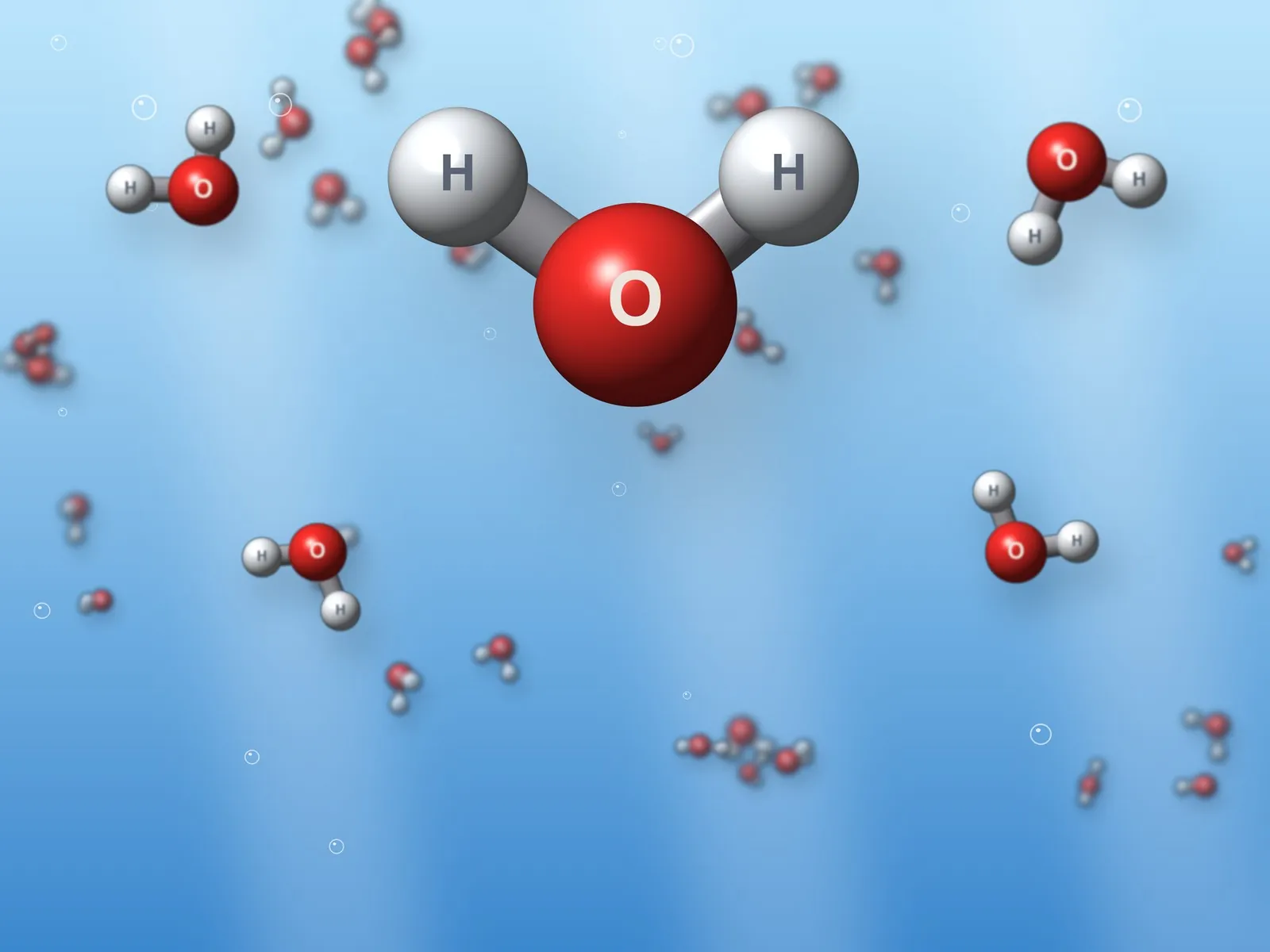
Illustration: H2O water molecules
1

Water

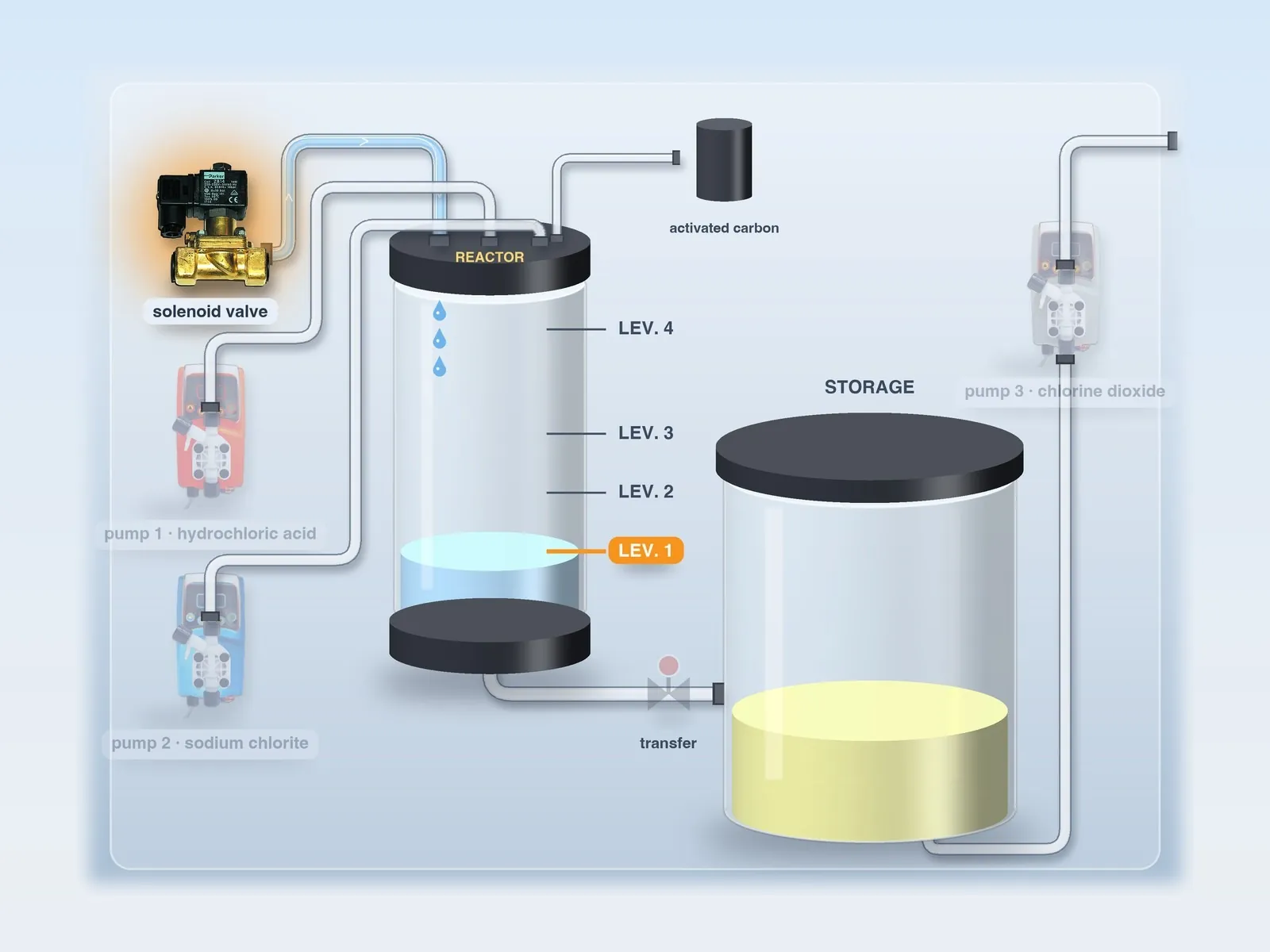
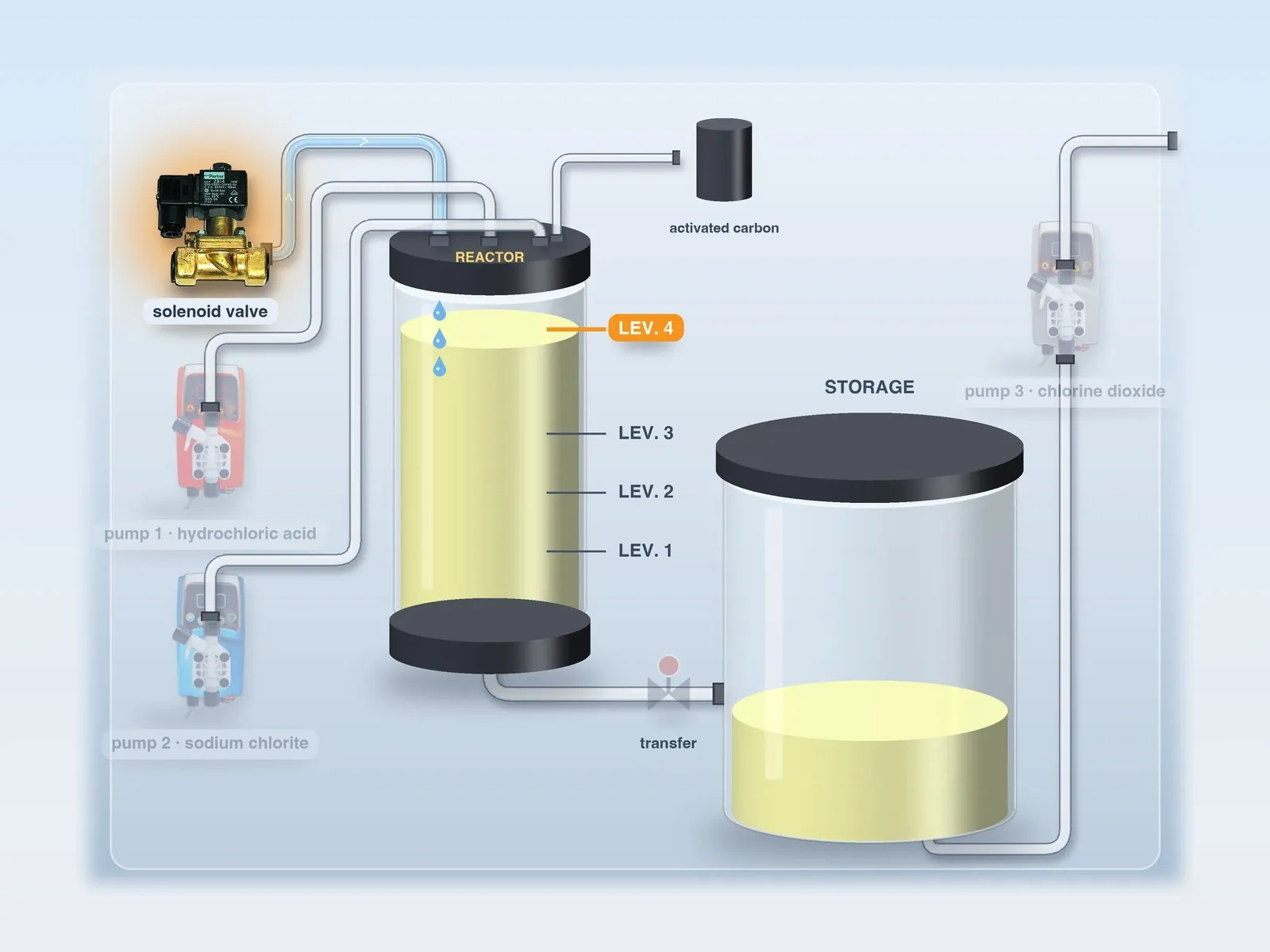
Water, free of free chlorine, is introduced first: the solenoid valve feeds it into the reactor, where the reaction takes place.

The reaction: 5 NaClO2 + 4 HCl → 4 ClO2 + 5 NaCl + 2 H2O.

Generation

Generation cycle

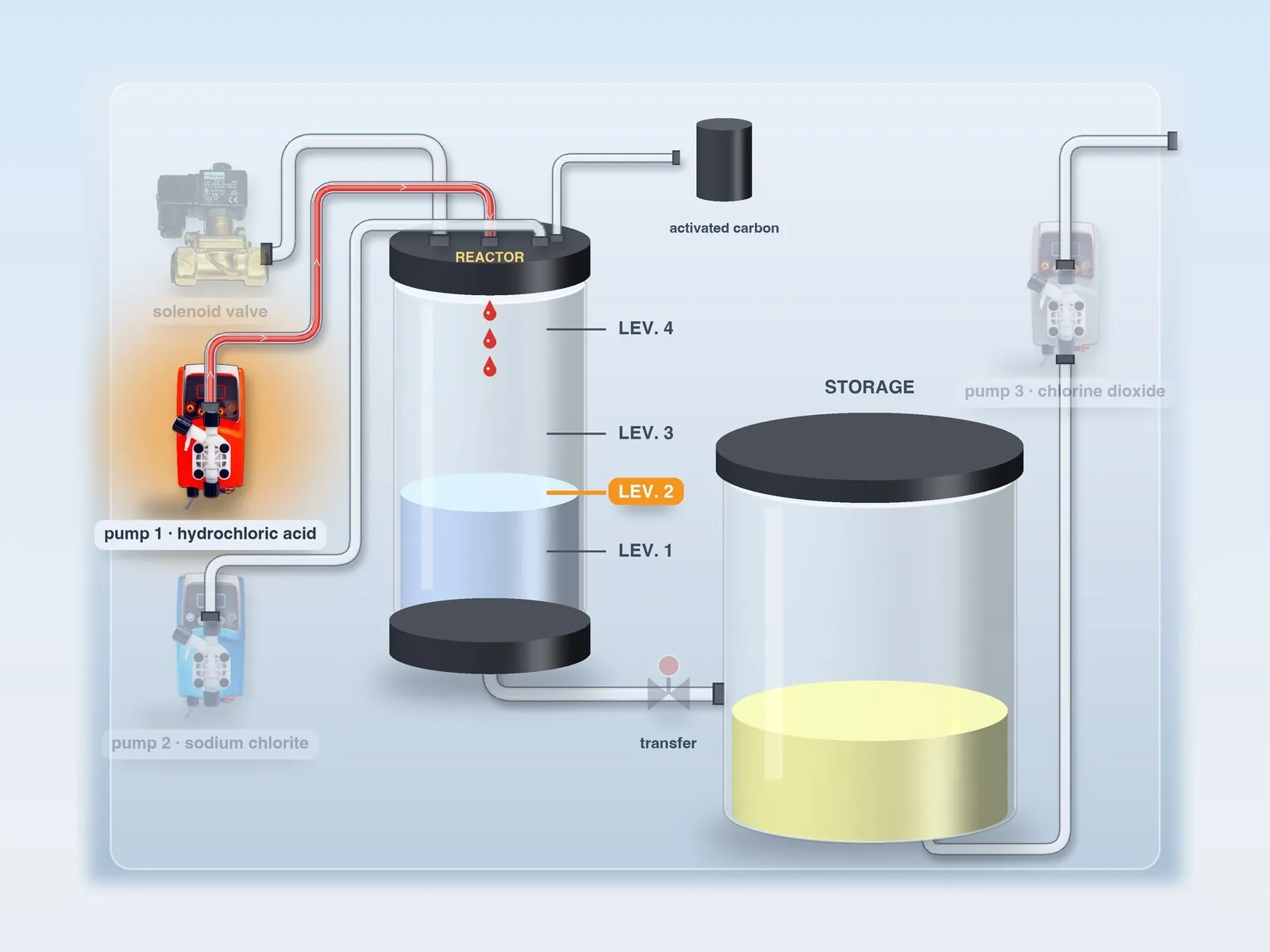
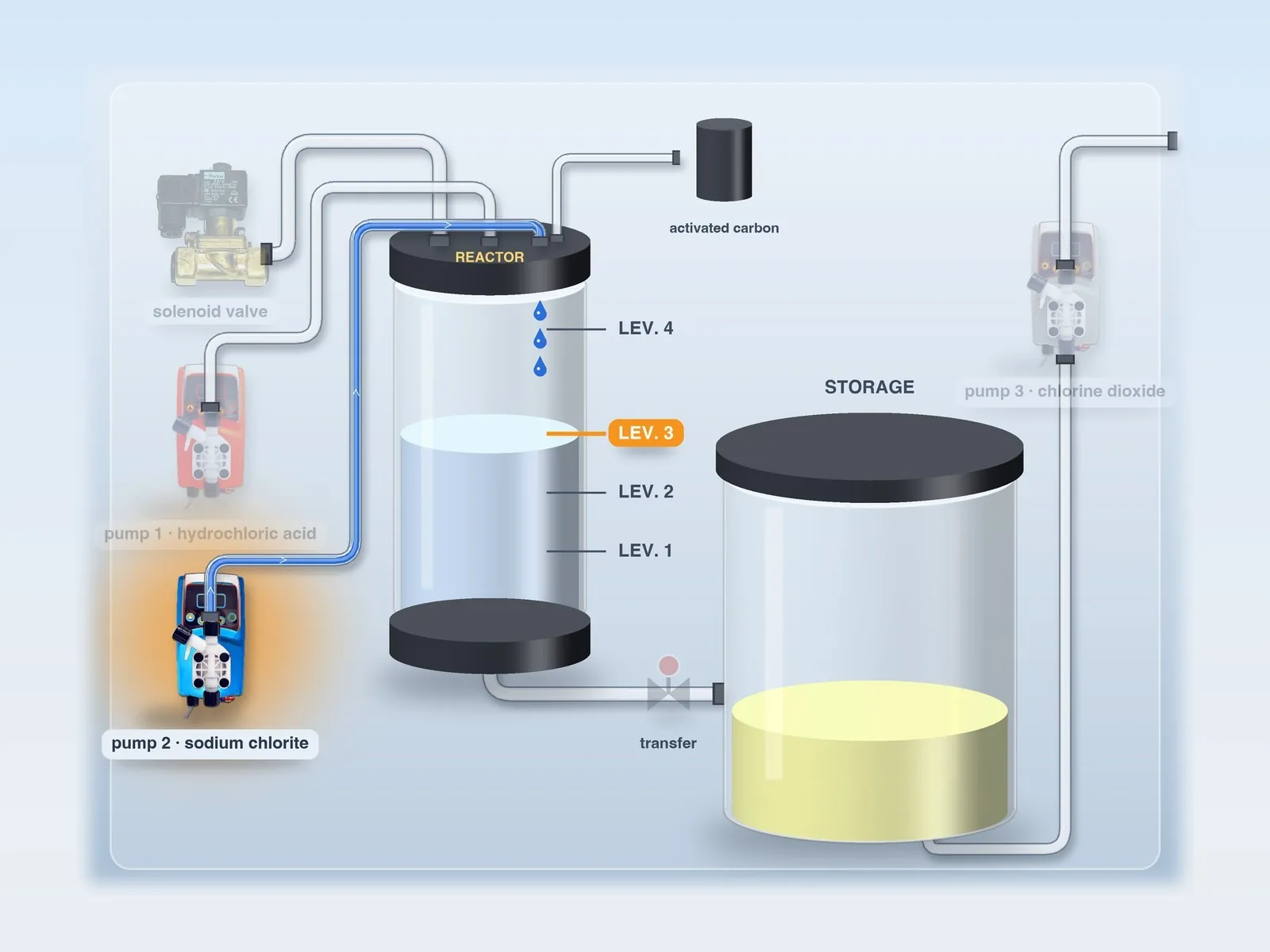
Fully automatic cycles in a 1-litre reactor at ambient pressure, which can be emptied by opening a tap. The reaction is continuously monitored: in the event of an anomaly the controller empties the reactor and generates an alarm.

LOTUS diagram: the solenoid valve fills the reactor with water up to level 1
1

Water

The solenoid valve fills the reaction tank with water up to level 1.

Components

LOTUS AIR components

LOTUS AIR components: controller, precursor and chlorine dioxide pumps, tanks, sampling cell

Integrated cabinet

Reaction tank, transfer valve, storage tank, emptying valve (discharges the chlorine dioxide in the event of an anomaly), dilution water solenoid valve (water free of free chlorine), pumps for hydrochloric acid, sodium chlorite and chlorine dioxide, stainless steel sampling cell with amperometric probe, controller, multifunction valve (pressure, safety, anti-siphon and drain) and activated carbon filter for the reaction gas.

Chlorine dioxide in air sensor

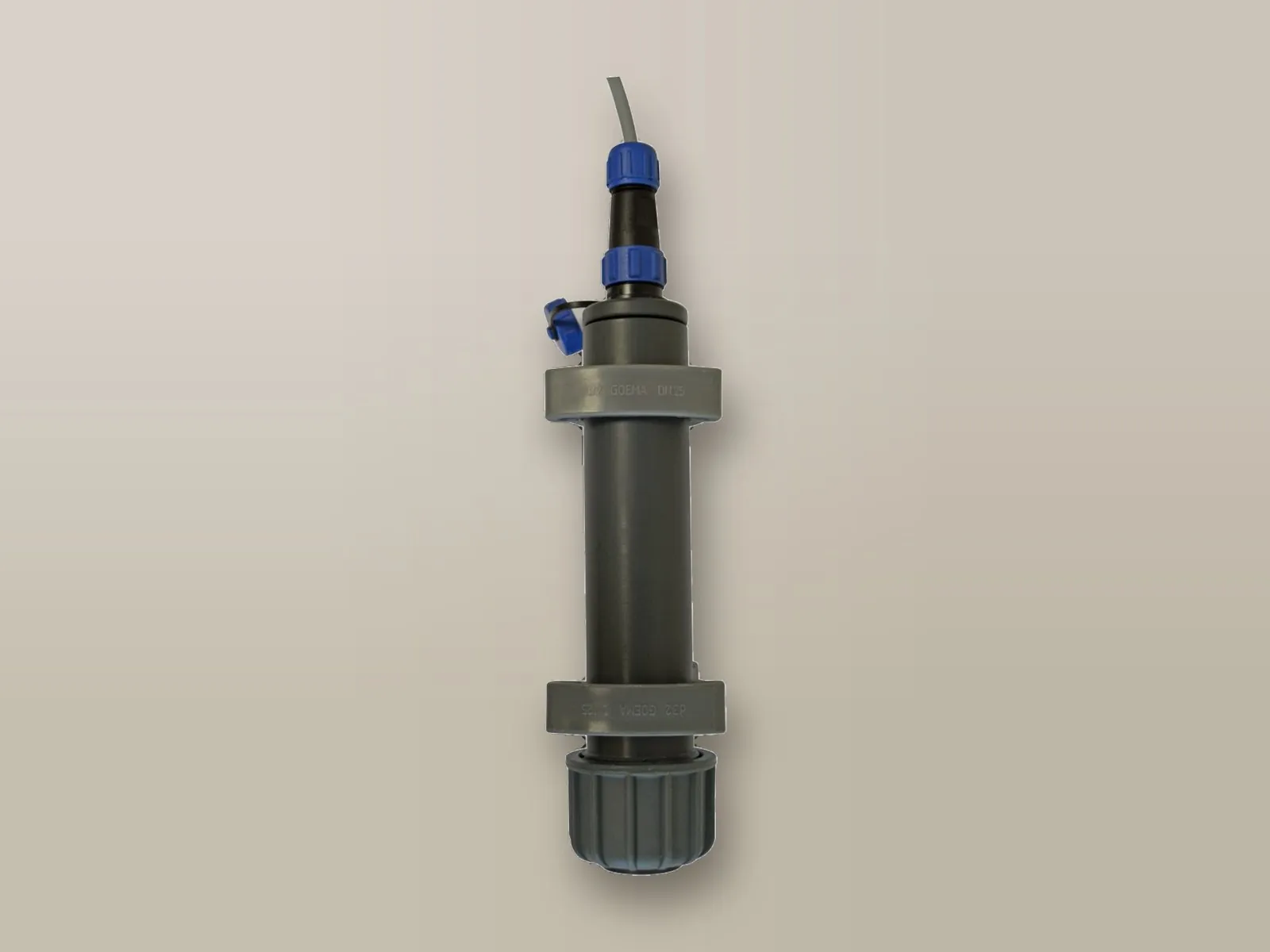
Chlorine dioxide in air sensor

It monitors the chlorine dioxide concentration in the air of the room: when the set point is exceeded, it generates an alarm and stops generation and dosing. Measuring range 0.03 – 5.00 ppm; capsule replacement every 2 years.

Dosing

Dosing modes

LOTUS AIR generator

Constant

Dosing of a constant, preset quantity of chlorine dioxide.

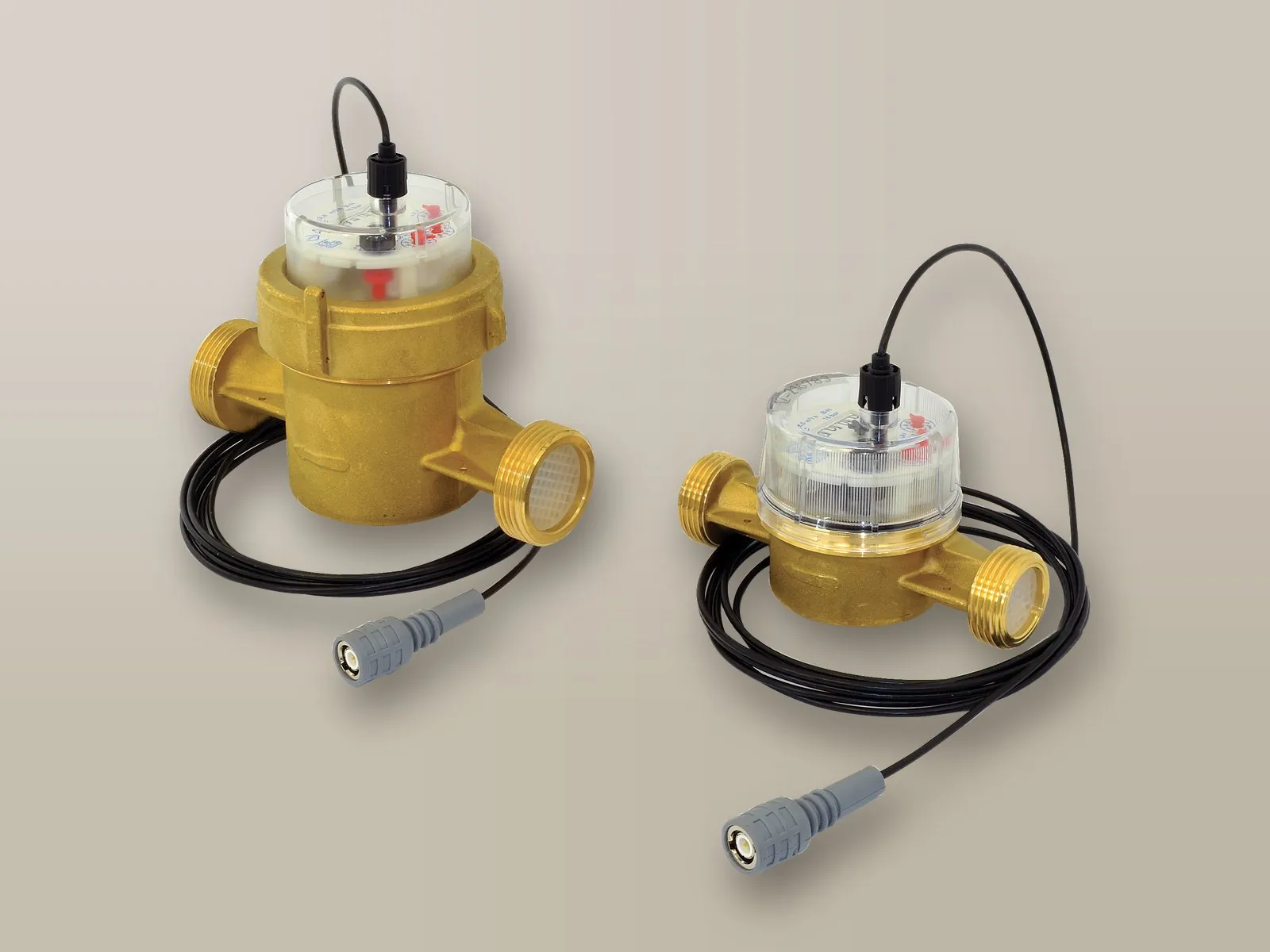
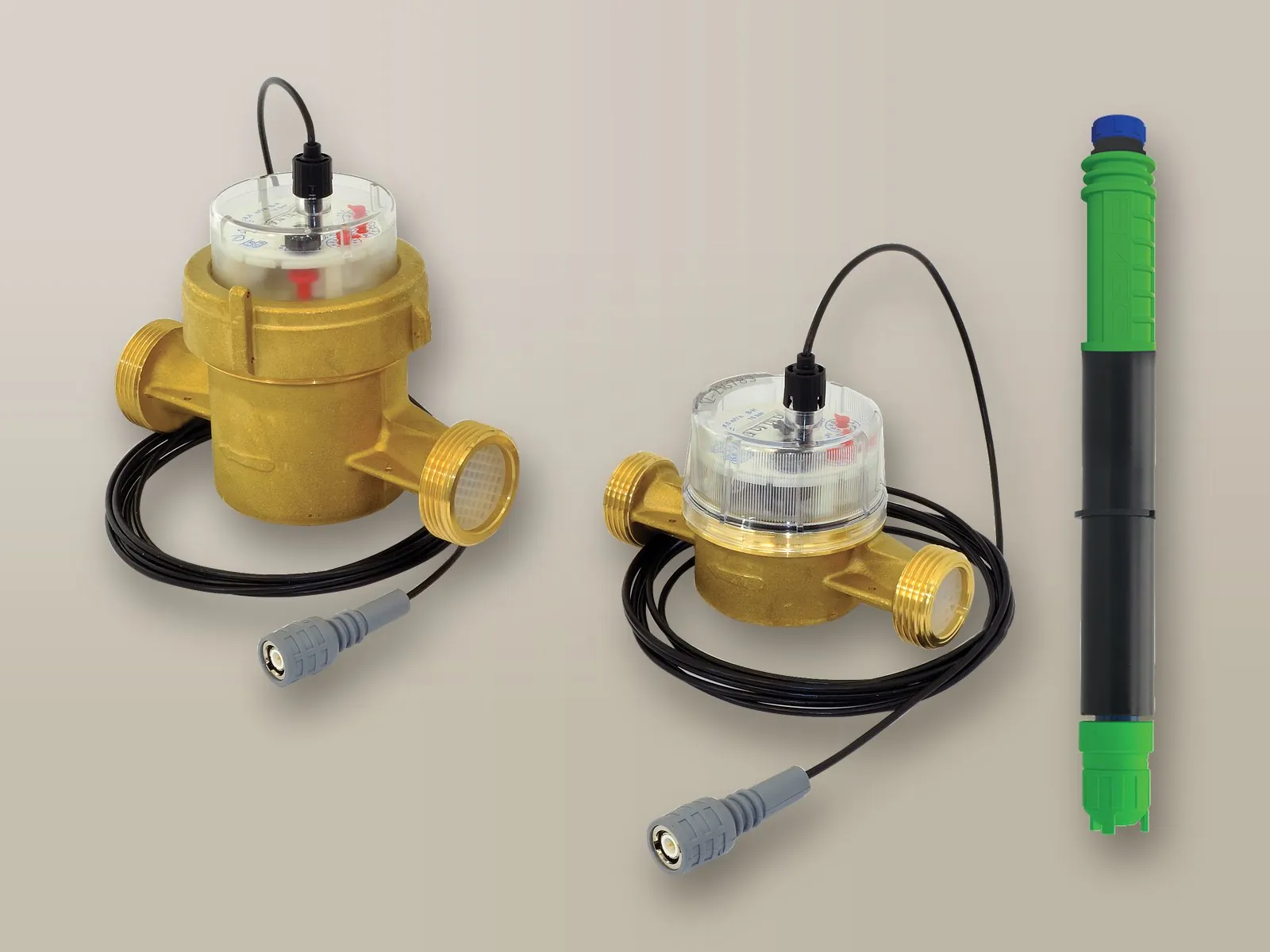
Turbine pulse-output water meters

Proportional to the water meter

The quantity to be dosed is set for each litre measured by the pulse-output water meter (turbine or Woltmann, from 1/2" to 8").

Water meters →
LOTUS AIR controller

Proportional to the 4/20 mA signal

In proportion to the signal from a water meter, a PLC or other equipment.

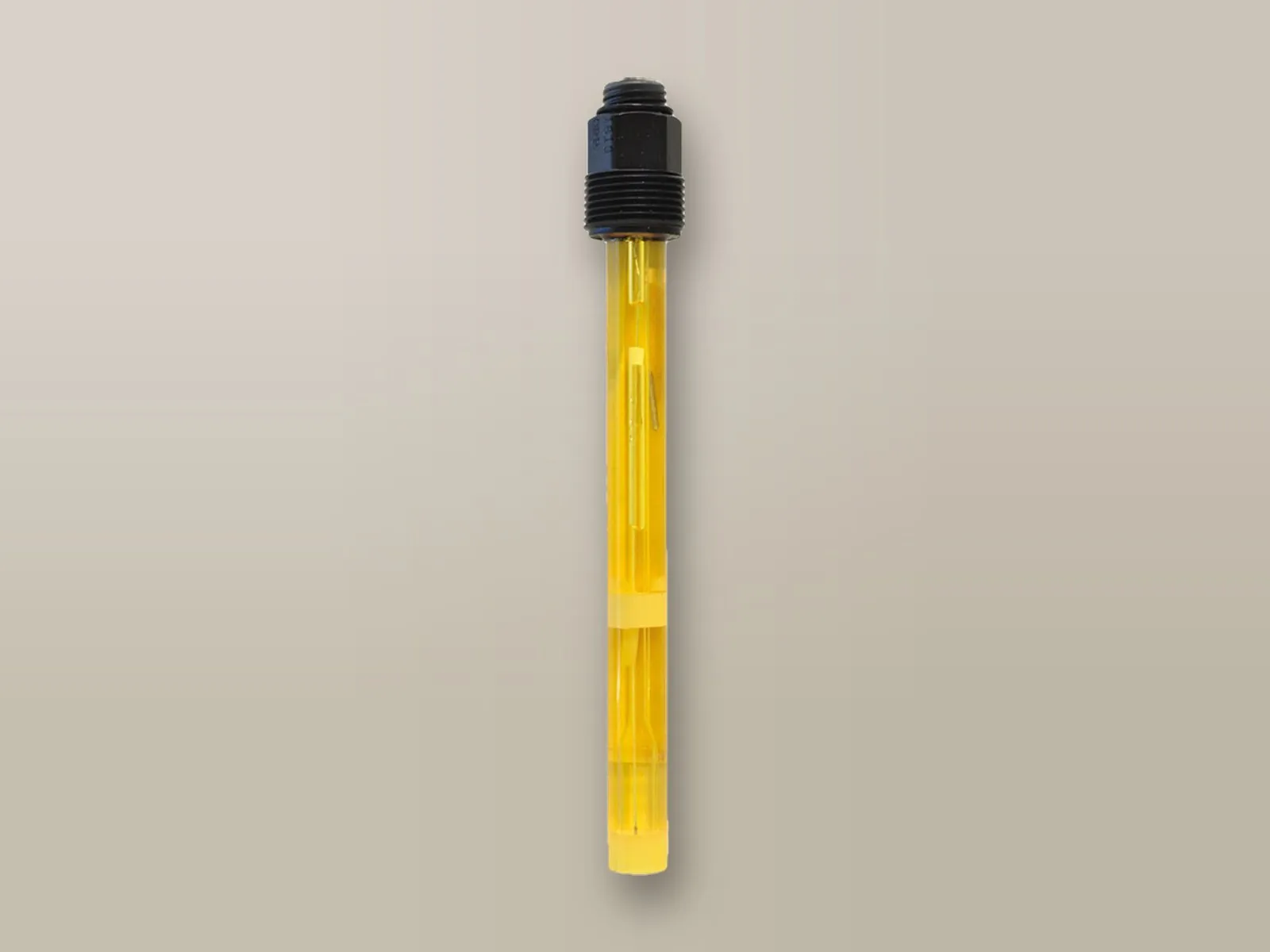
Redox electrode

Proportional to Redox

The set point is set in mV; the Redox electrode regulates dosing until the set value is reached.

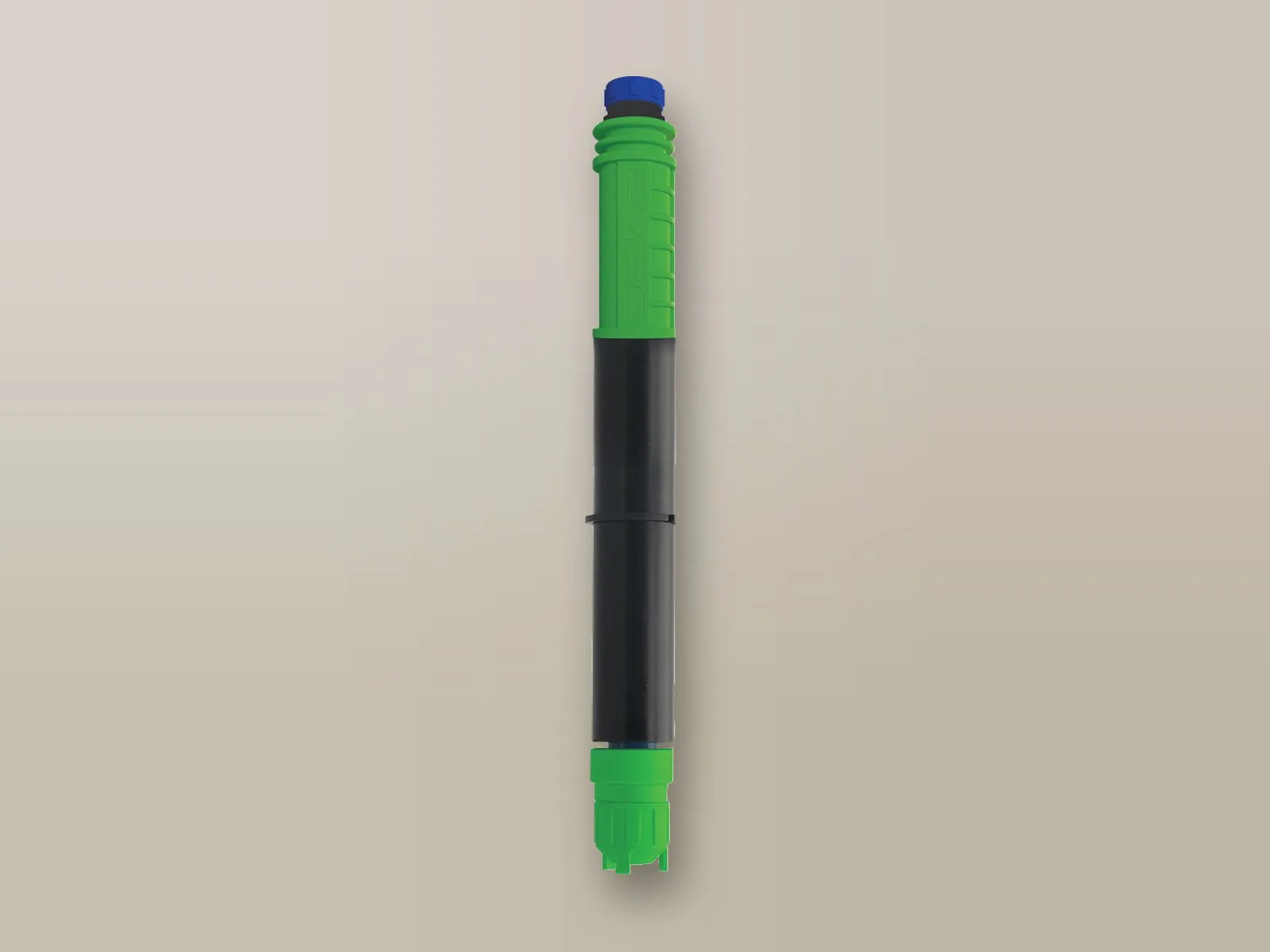
Chlorine dioxide measuring probe

Proportional to residual chlorine dioxide

The residual is set in mg/l: the self-cleaning 3-electrode amperometric cell, temperature-compensated and also suitable for hot water, regulates dosing.

SCL17 cell →
Pulse-output water meters and chlorine dioxide measuring probe

Proportional to the water meter and the residual

The water meter installed on the make-up line controls a pre-dosing; the cell on the circuit activates a second pump for fine correction up to the set point. The water meter can also control a pump for the film-forming inhibitor.

Diagrams

Installation diagrams

Typical plant configurations, from the simplest to the most complete.

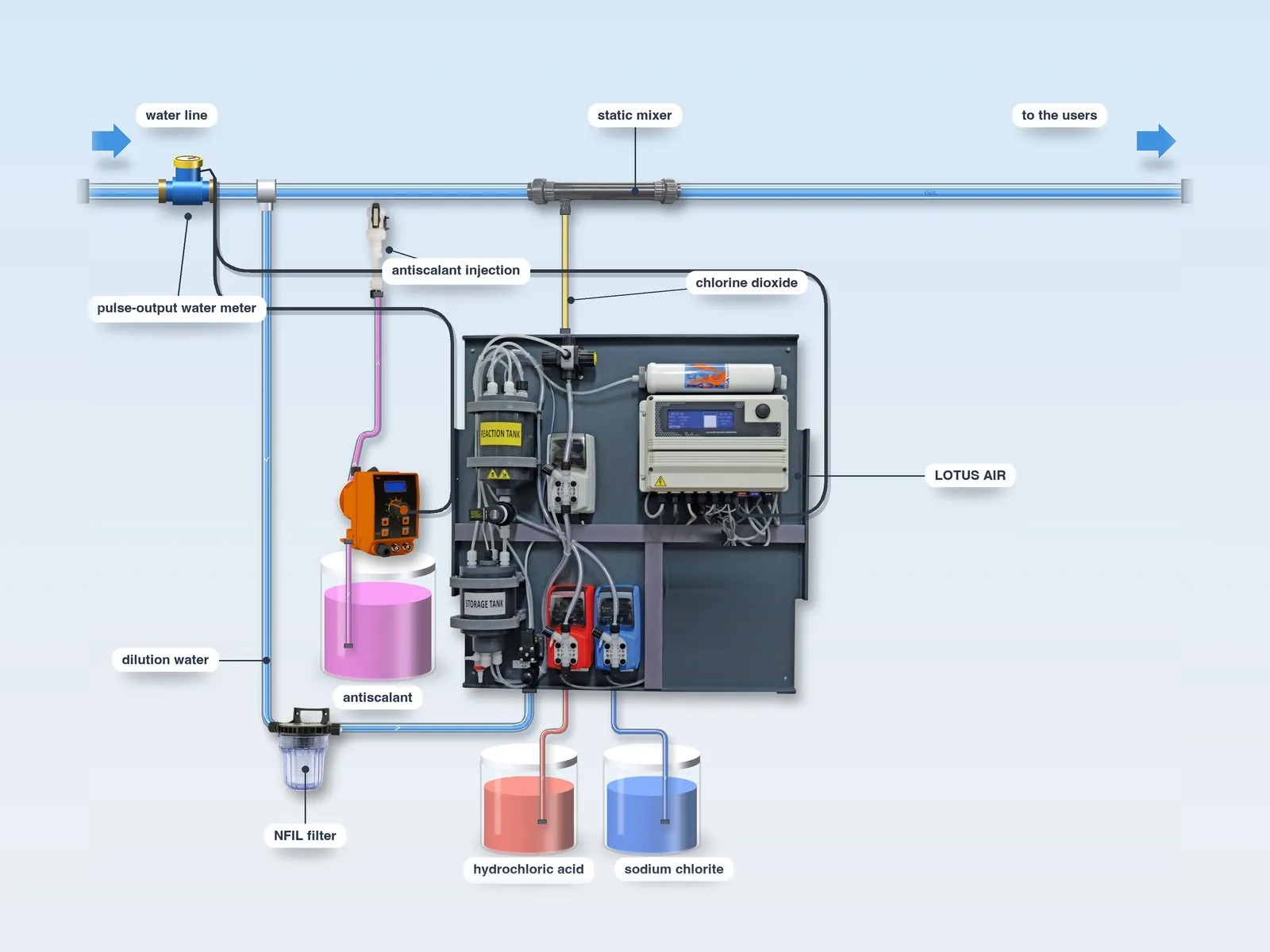
Diagram: pulse-output water meter on the line, LOTUS AIR, static mixer, antiscalant pump and tank, precursor tanks

Dosing with water meter

The pulse-output water meter installed on the line controls chlorine dioxide dosing in proportion to the volume of water; injection takes place in the static mixer; a dedicated pump also doses the antiscalant.

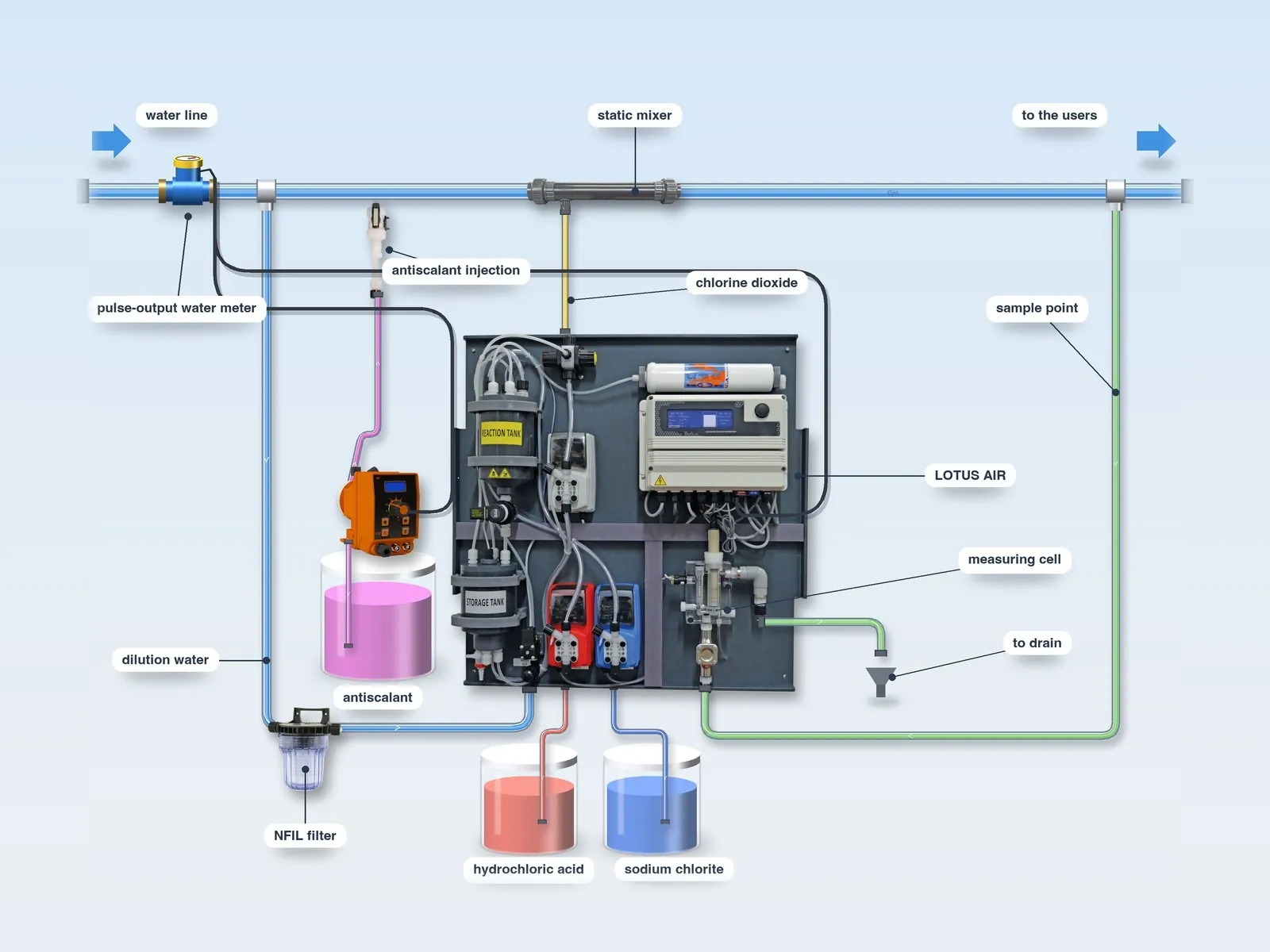
Diagram: dosing proportional to the water meter with sampling downstream and chlorine dioxide measuring cell on the LOTUS AIR

Dosing with water meter and measurement

Measurement of the residual chlorine dioxide is added to proportional dosing: the water sampled downstream of the injection point passes through the LOTUS measuring cell and is conveyed to the drain.

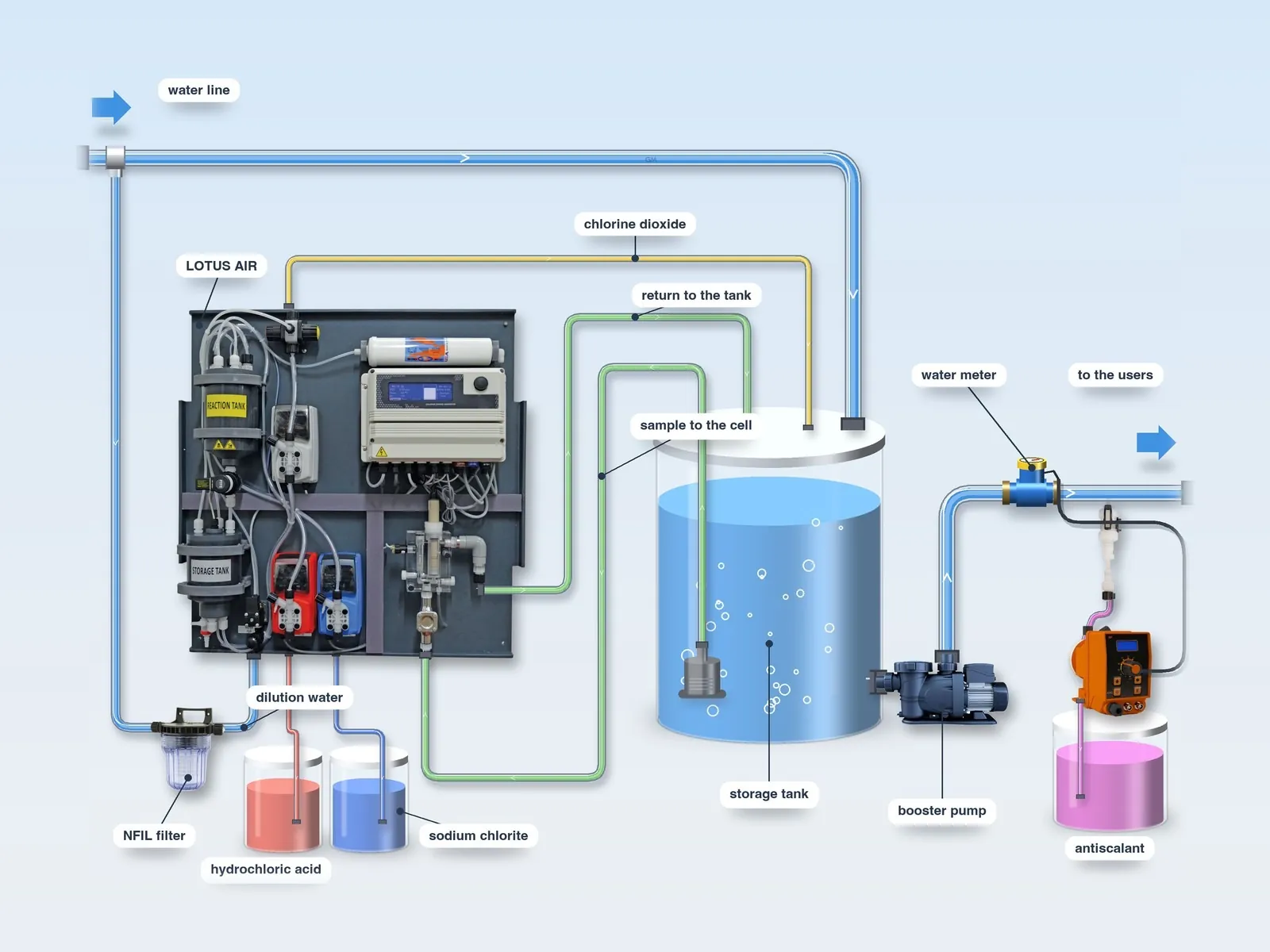
Diagram: chlorine dioxide dosing into the storage tank with measurement, booster pump, water meter and antiscalant pump towards the points of use

With storage tank

Chlorine dioxide is dosed into the storage tank, where the measurement keeps its concentration constant; downstream of the booster pump, the water meter controls antiscalant dosing on the line to the points of use.

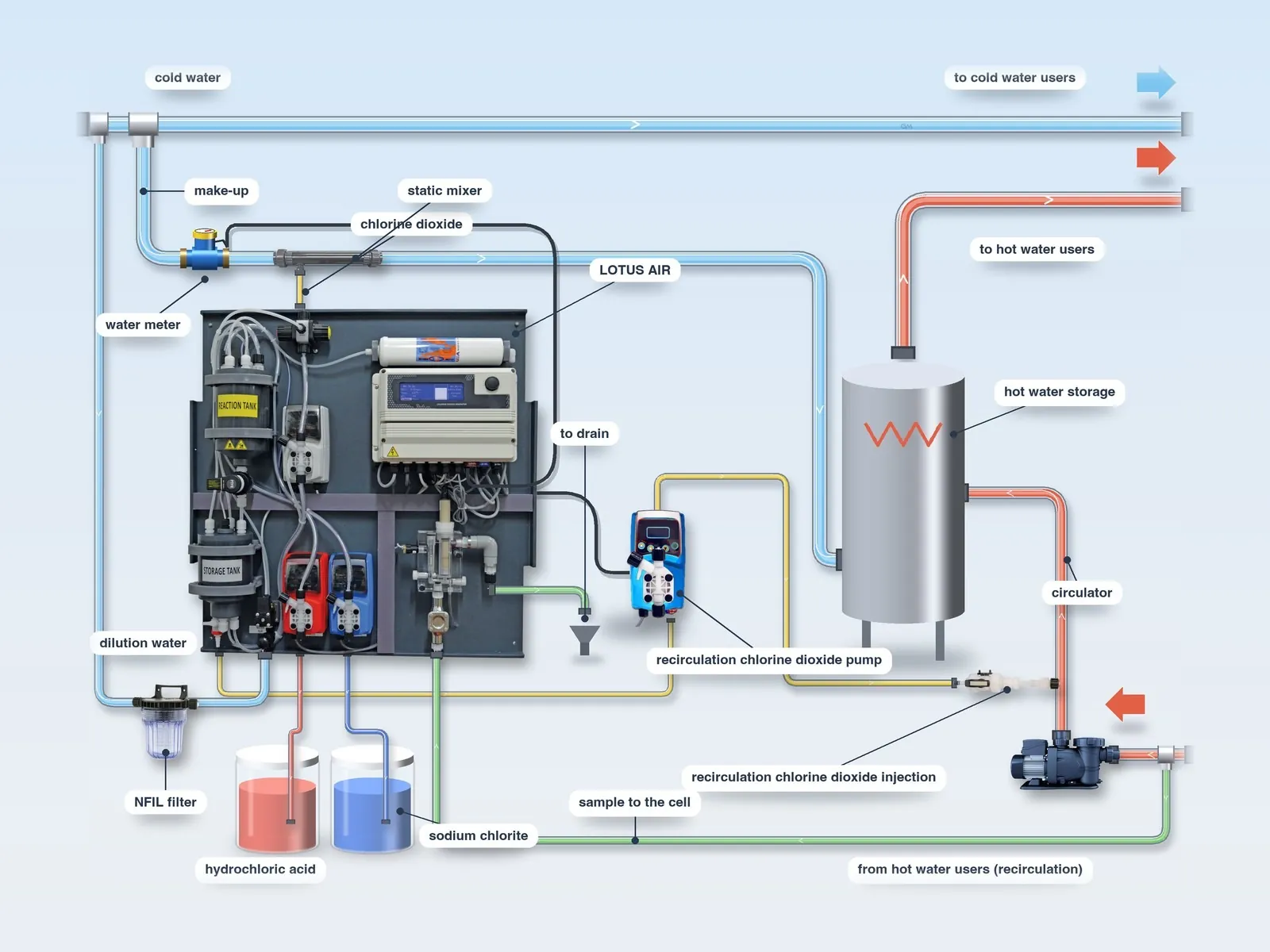
Diagram: chlorine dioxide dosing on the cold water with water meter and, with a second pump, on the recirculation of the hot water storage

Multipoint dosing

The LOTUS doses chlorine dioxide into the incoming cold water in proportion to the water meter and, by means of a second pump controlled by the measurement, into the recirculation of the hot water storage.

Technical data

Technical data

LOTUS AIR 10LOTUS AIR 30LOTUS AIR 60
Maximum chlorine dioxide output10 g/h30 g/h60 g/h
Maximum daily output240 g720 g1,440 g
Chlorine dioxide concentration2 g/l2 g/l2 g/l
Maximum consumption per reagent0.25 l/h0.75 l/h1.5 l/h
Maximum dilution water pressure2 bar3 bar3 bar
Maximum operating pressure8 bar5 bar5 bar
ReagentsHCl 9% and NaClO2 7.5%HCl 9% and NaClO2 7.5%HCl 9% and NaClO2 7.5%
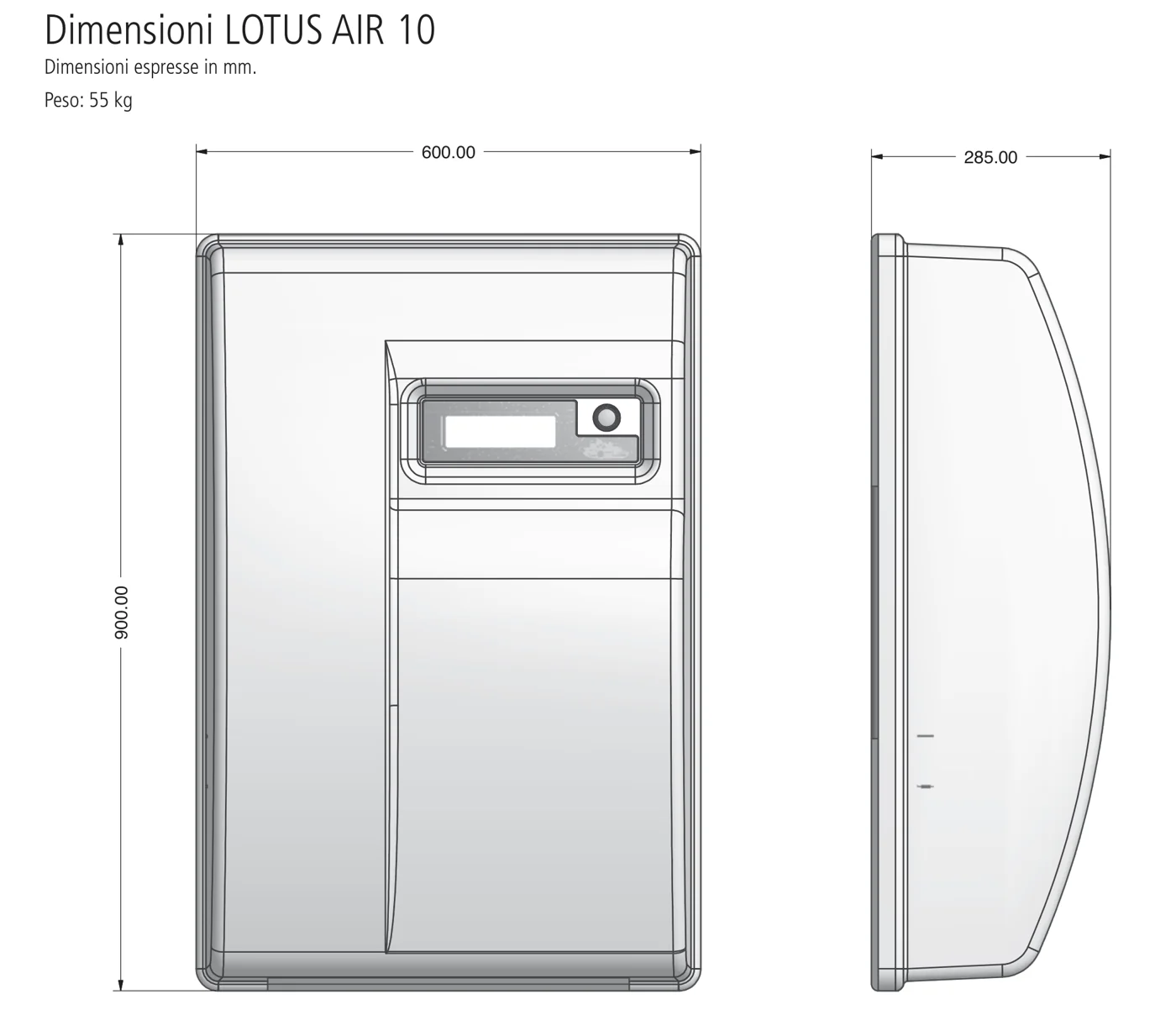
Dimensions (W × H × D)600 × 900 × 285 mm685 × 1,390 × 460 mm685 × 1,390 × 460 mm
Weight55 kg85 kg85 kg

For pressures above the maximum operating pressure, an external pump is used. Operating temperature 0 – 45 °C.

Inputs

  • Temperature
  • Flow sensor
  • Stand-by
  • Pulse-output water meter
  • Chlorine dioxide probe
  • 2 precursor levels
  • Chlorine dioxide in air sensor

Outputs

  • Acid, chlorite and chlorine dioxide pumps
  • 2 × 4/20 mA outputs
  • Alarm

Alarms

  • No flow in the cell
  • Chemicals run out
  • Maximum and minimum measurement
  • Maximum dosing time
  • Faulty electrode
  • Chlorine dioxide in air
Remote control

System remote control

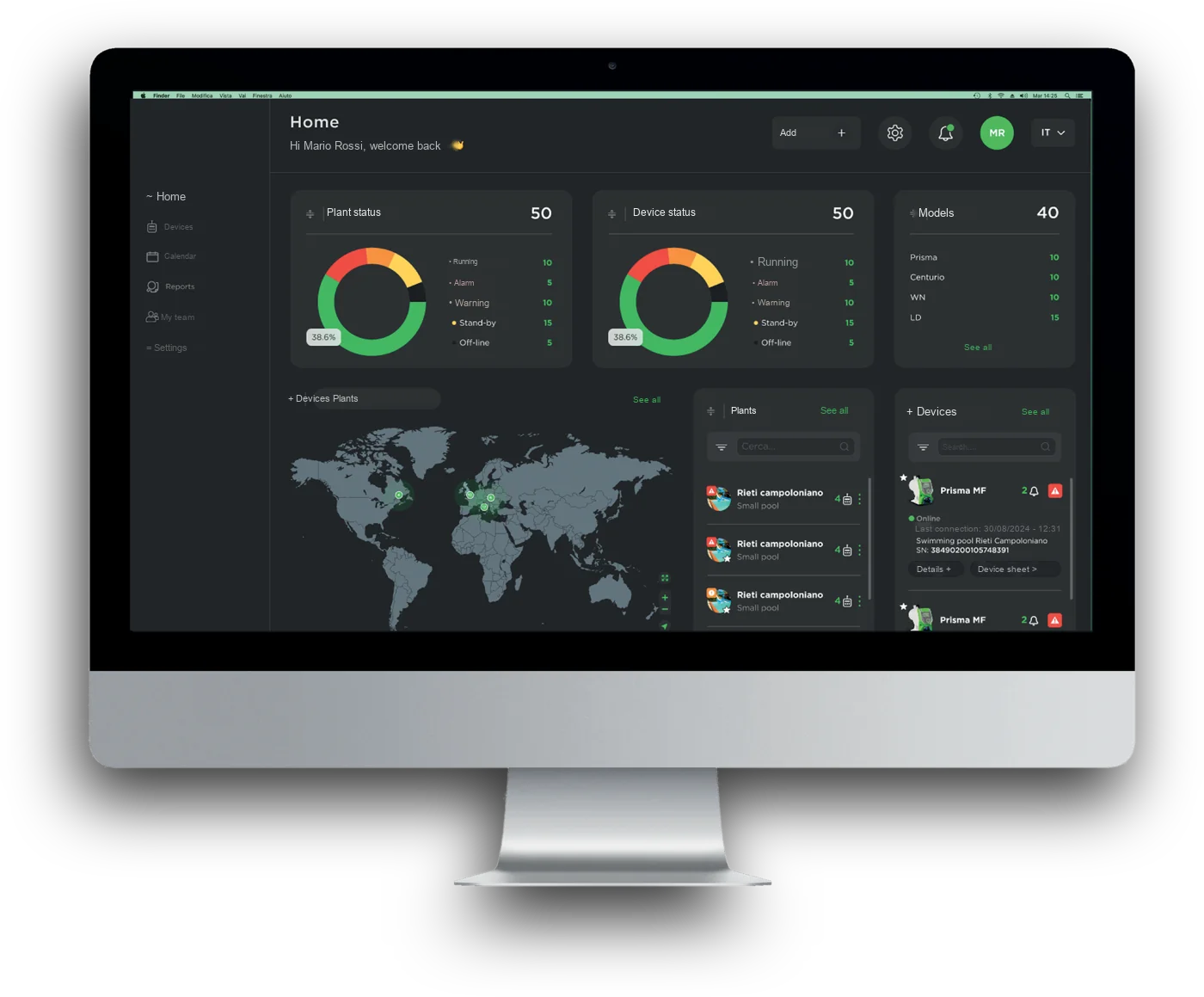
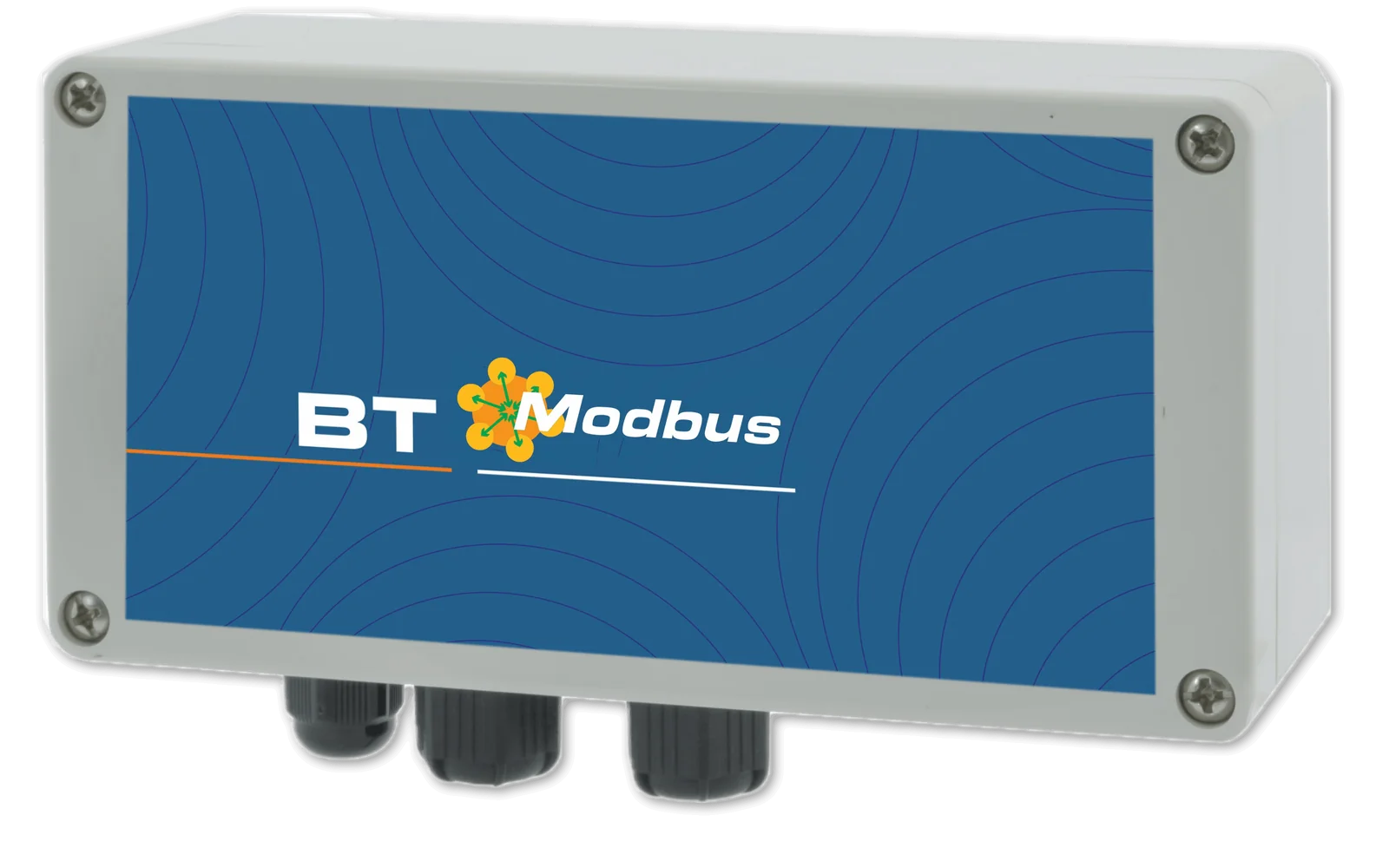
The controllers can be remotely controlled bidirectionally (read and write) from the web portal, from PC, tablet and smartphone: viewing of measurements, modification of set points, dosing and alarms, receipt of alarms and download of logs. Alternatively, integration into your PLC via Modbus is possible.

NIMBUS web portal for remote control of the systems

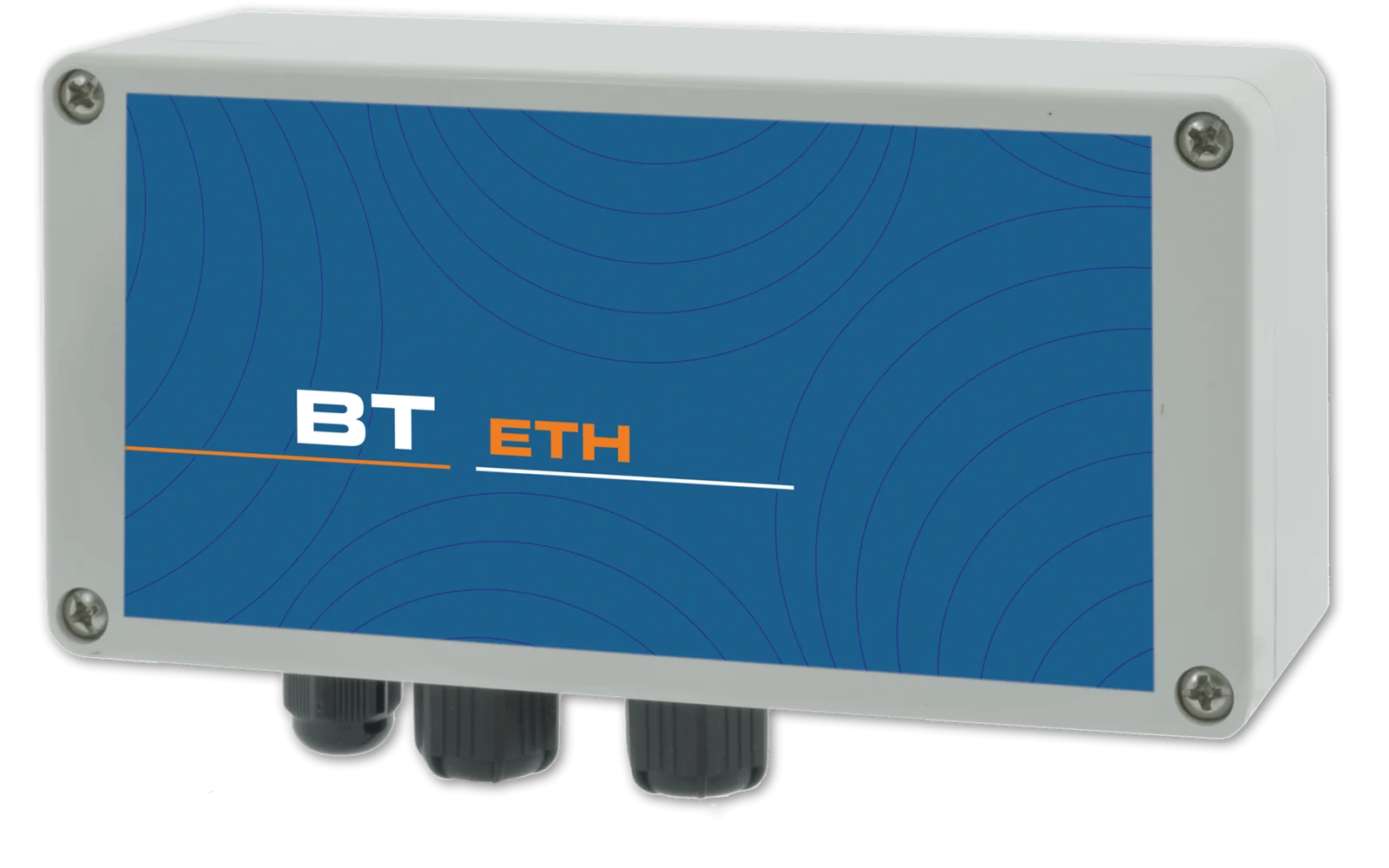
Ethernet

Connection to the web portal via network cable: measurements, set points, dosing and alarms accessible from PC, tablet and smartphone.

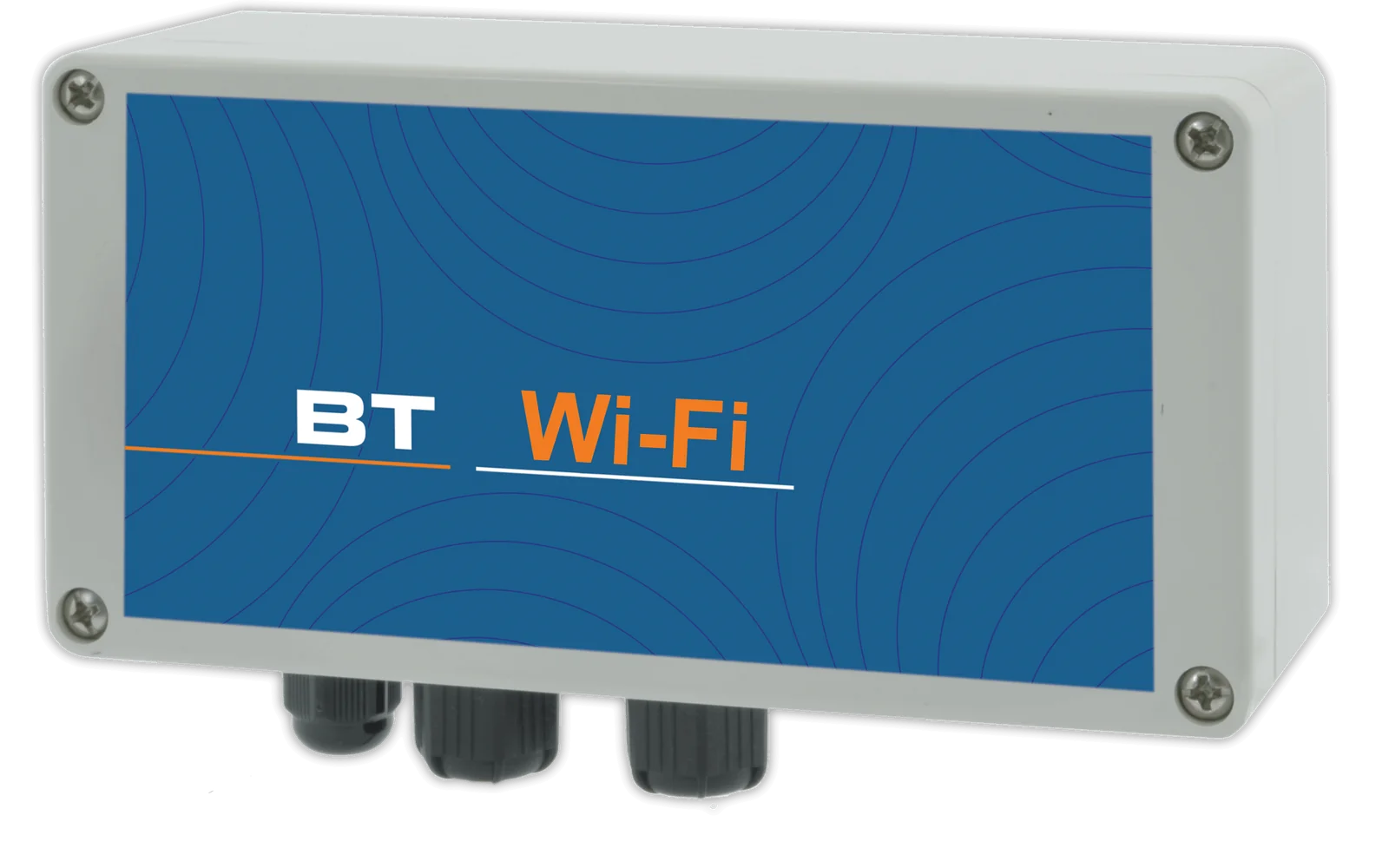
Wi-Fi

Wireless connection to the web portal, with the same functions as the cable connection.

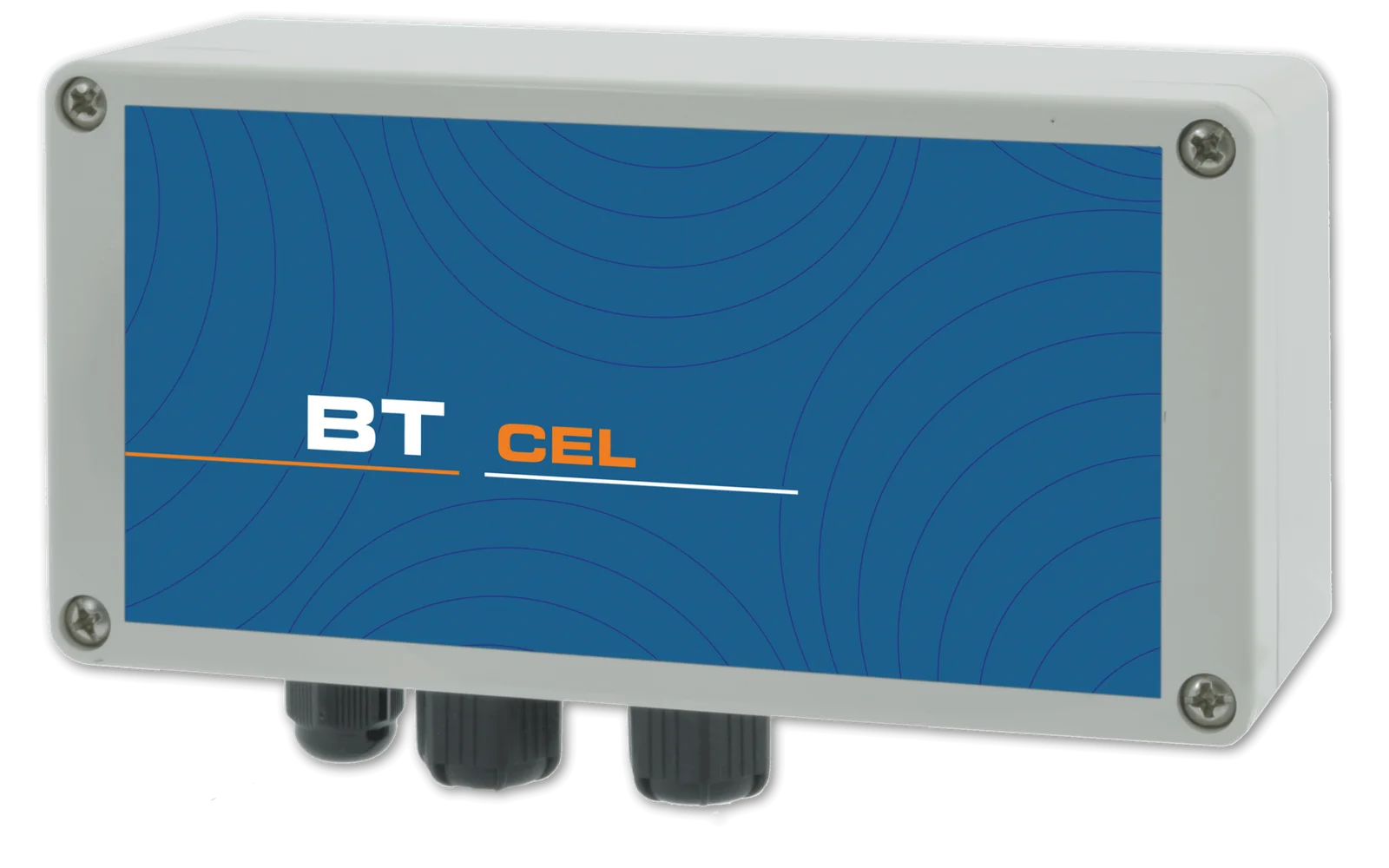
4G

Connection via the cellular network for installations without a local network, with alarm notification by SMS or e-mail.

Modbus RTU

Integration into your PLC via serial port.

Modbus TCP/IP

Integration into your PLC or SCADA via Ethernet network.

0-4/20 mA output

Current signal proportional to the measured value, for remote monitoring or for controlling pumps and other instrumentation.

The NIMBUS portal

A single account brings together all registered installations, each with its own devices: the web portal, free of charge and with no subscription, can be accessed from PC, Mac, tablet and smartphone and allows every parameter to be both viewed and changed, with an encrypted connection and protected access.

The NIMBUS portal on monitor, laptop, tablet and smartphone

Overview

On a single screen: probe readings, chemical levels, pump activation thresholds and active alarms, with the status of installations and devices (normal, warning, alarm, standby, not connected).

Installation map

Installations appear on an interactive map with their status and open with a click; for each one, the local weather conditions and temperature are also shown.

History and charts

Archive of measurements and alarms, available for consultation at any time with charts and numerical reports exportable in Excel format.

Alarms and notifications

Alarm thresholds for readings, dosing, faulty probe and out-of-range readings, with notification by e-mail or SMS depending on the communication system; a warning is also issued when an installation remains disconnected beyond the set time.

Set points and dosing

Remote modification of the set points, of the dosing pump activation thresholds and of the corresponding hourly flow rate.

Inputs and outputs

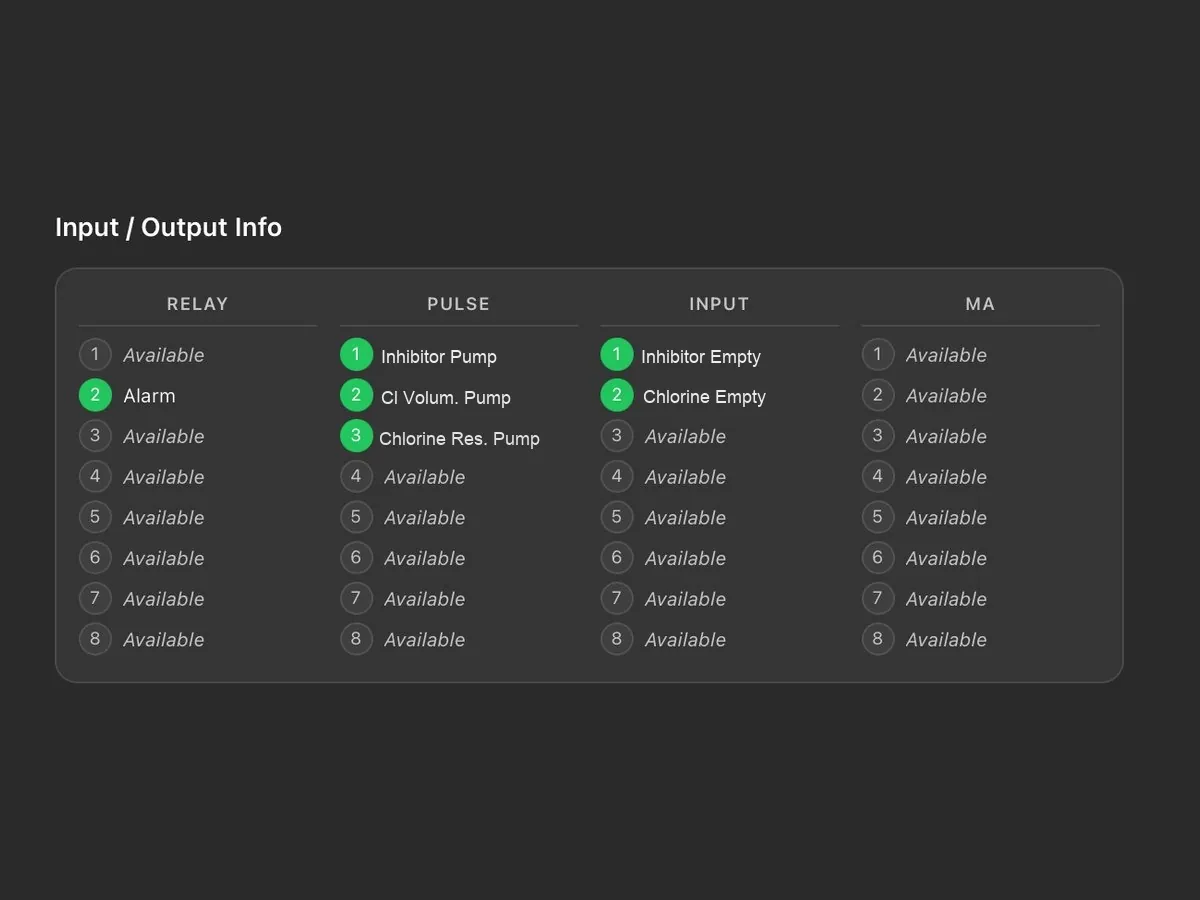
Status of relays, pulse outputs, digital inputs and current outputs, with the name assigned to each connection.

Maintenance calendar

Tasks are scheduled by installation or by device and assigned to technicians; a reminder is sent by e-mail two days before the due date. Each task is shown as scheduled, due, overdue or completed.

Team and permissions

The main account has full access and creates the technicians’ accounts, each enabled only for the assigned installations and devices; the last login and activity of each technician are visible.

Reports and activity log

Reports on devices, tasks and technicians, downloadable in PDF or CSV with the customer’s logo; the log keeps the history of operations and disconnections.

Customisation

Logo, main colour and light or dark theme; the tiles on the main screen can be rearranged by dragging them. Two installations can be displayed side by side for comparison.

Guided registration

Each device is added through a guided procedure: the model is recognised automatically and associated with the installation, together with the technician to be contacted.

PLC integration

As an alternative to the portal, the Modbus RTU or TCP/IP port allows integration into the plant supervision system.
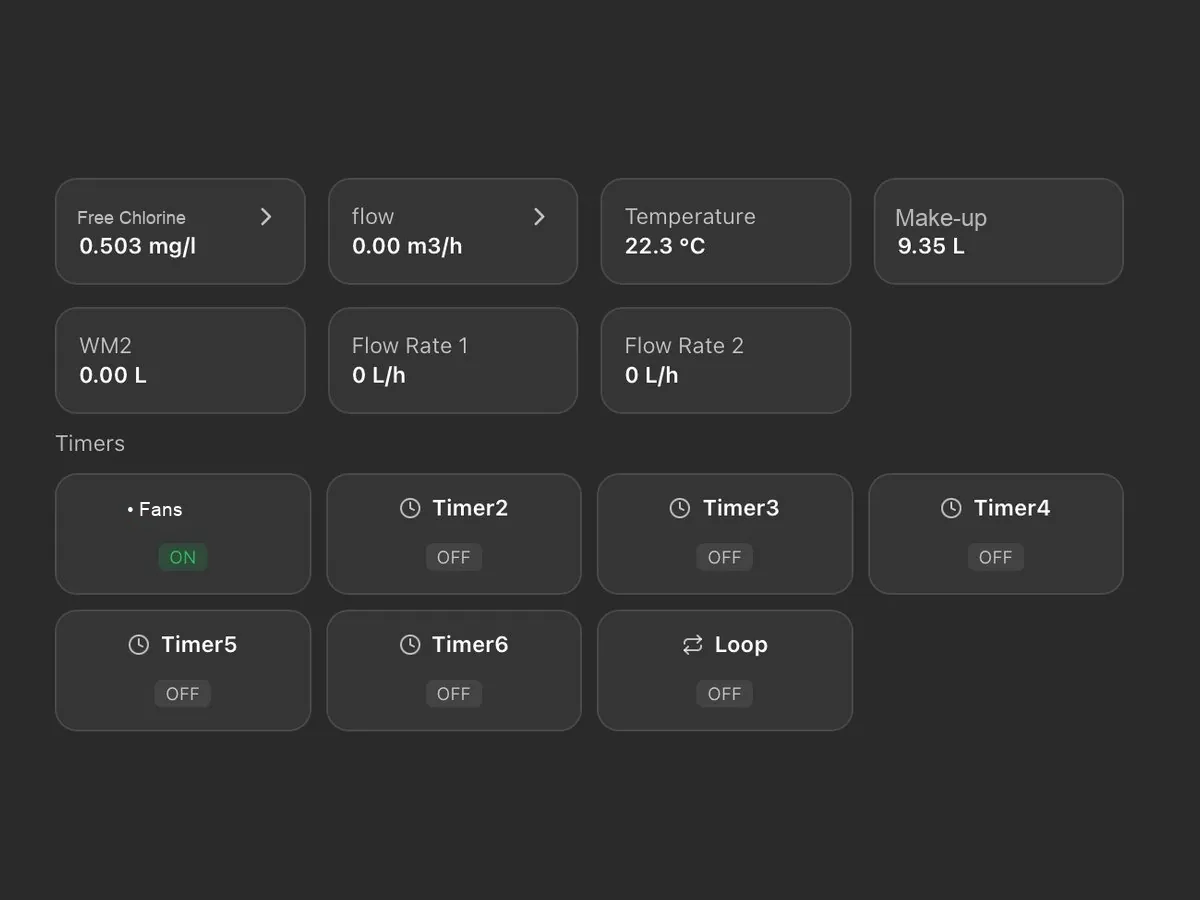
NIMBUS portal: Real-time readings, counters and timers
Real-time readings, counters and timers
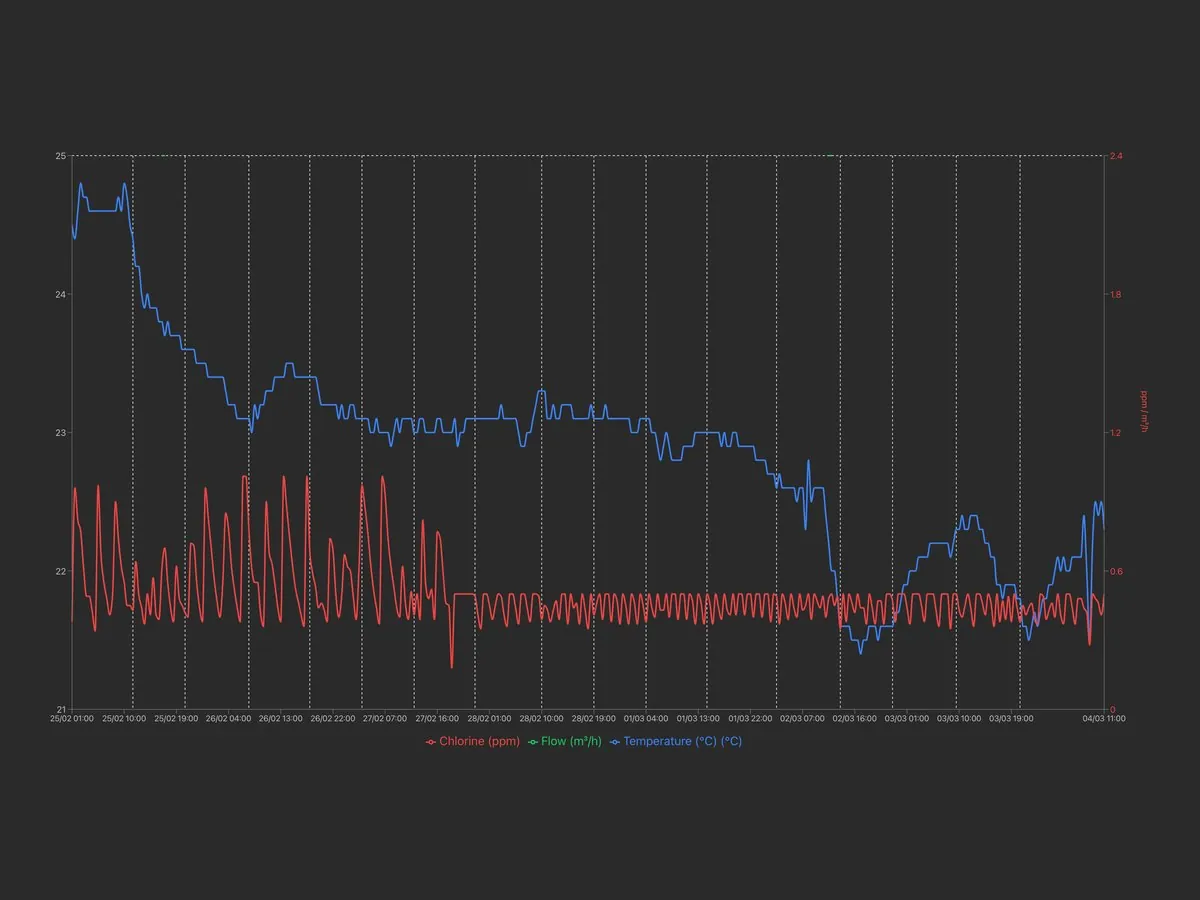
NIMBUS portal: Free chlorine and temperature trends
Free chlorine and temperature trends
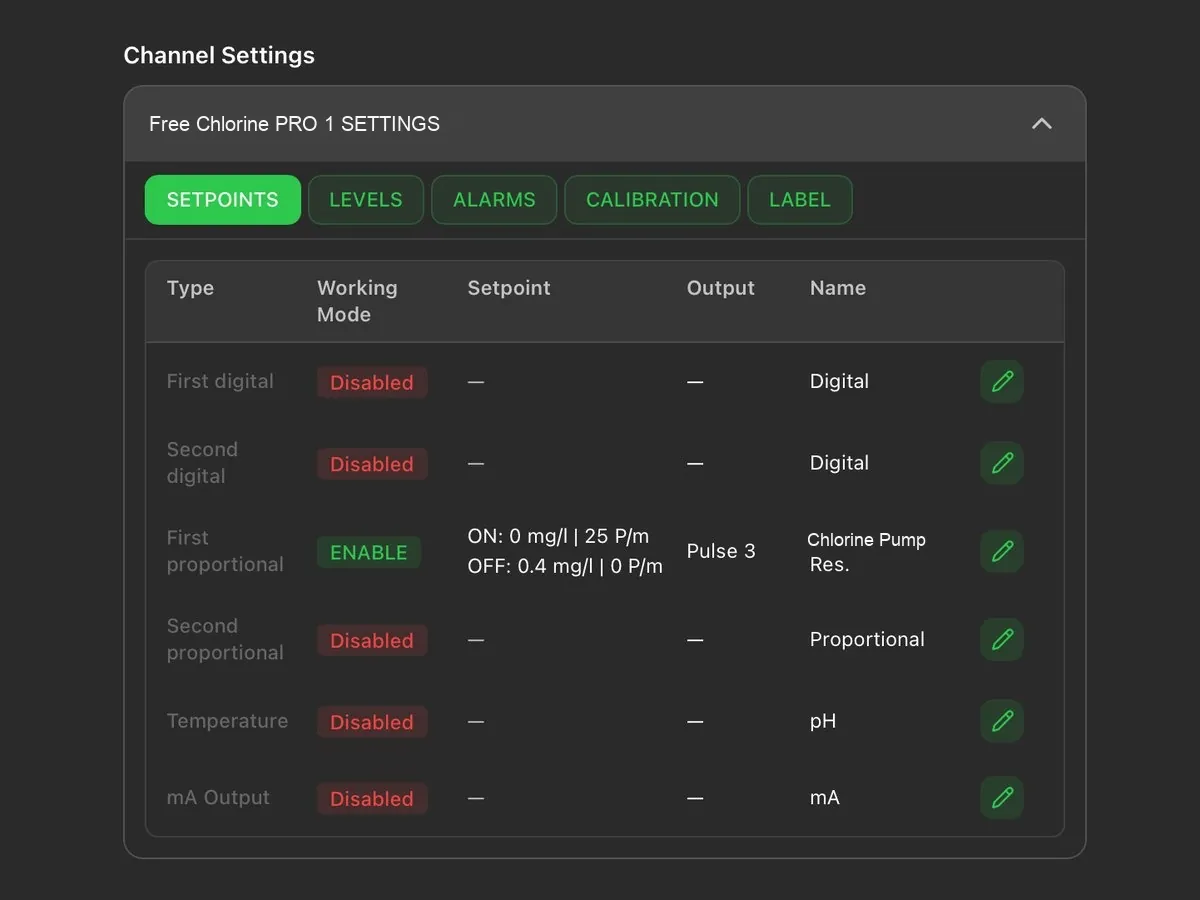
NIMBUS portal: Set point and operating mode of each channel
Set point and operating mode of each channel
NIMBUS portal: Status of relays, pulses, inputs and mA outputs
Status of relays, pulses, inputs and mA outputs
Dimensions

Dimensions

Dimensioned drawing of the LOTUS AIR 10

LOTUS AIR 10

600 × 900 × 285 mm, 55 kg.
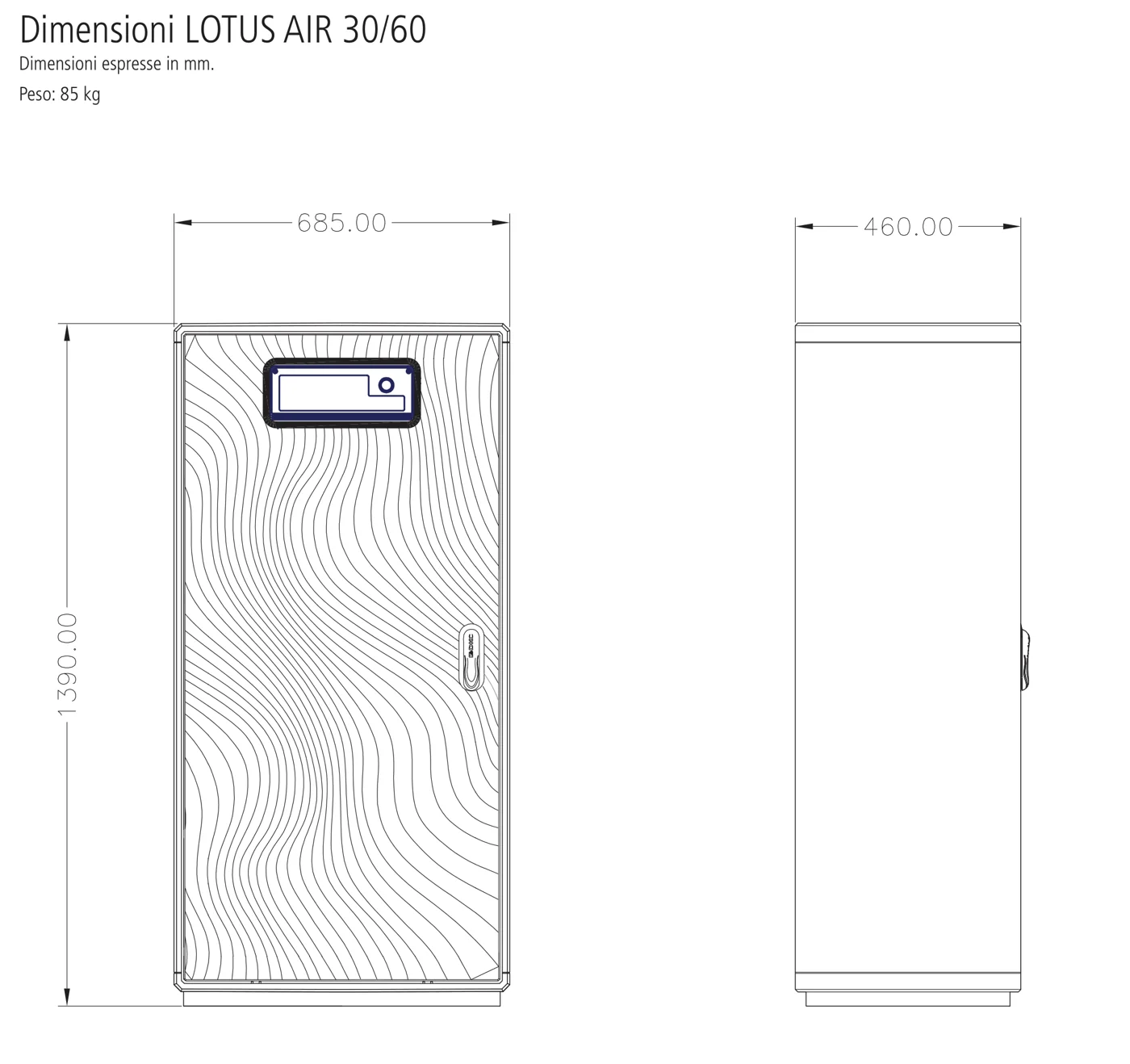
Dimensioned drawing of the LOTUS AIR 30 and 60

LOTUS AIR 30 and 60

685 × 1,390 × 460 mm, 85 kg.

Applications

Applications

Drinking water

Raw water from wells and springs, private and from public water supply networks.

Insight: well water →

Hot water and Legionella control

Domestic water circuits of hotels and accommodation facilities, hospitals, care homes and swimming pools.

Industry

Process water, food washing, cooling towers.

Wastewater

Municipal and industrial wastewater.

Accessories

Accessories for the installation

Components complementary to the generator for dosing chlorine dioxide at one or more points.

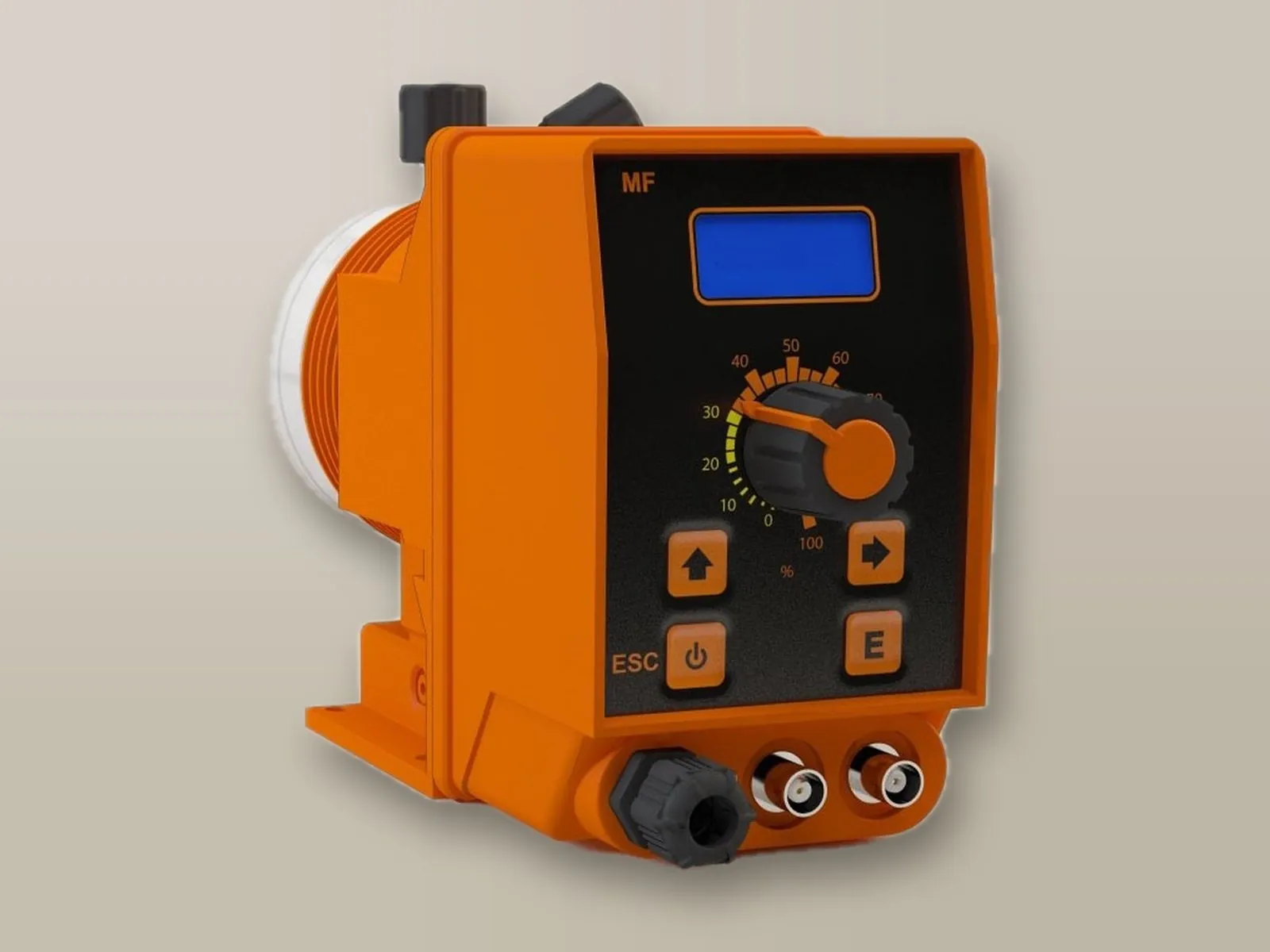
KMS MF multifunction dosing pump

Dosing pumps

For dosing the chlorine dioxide produced, also with several pumps on separate circuits, and the film-forming inhibitor.

Dosing pumps →
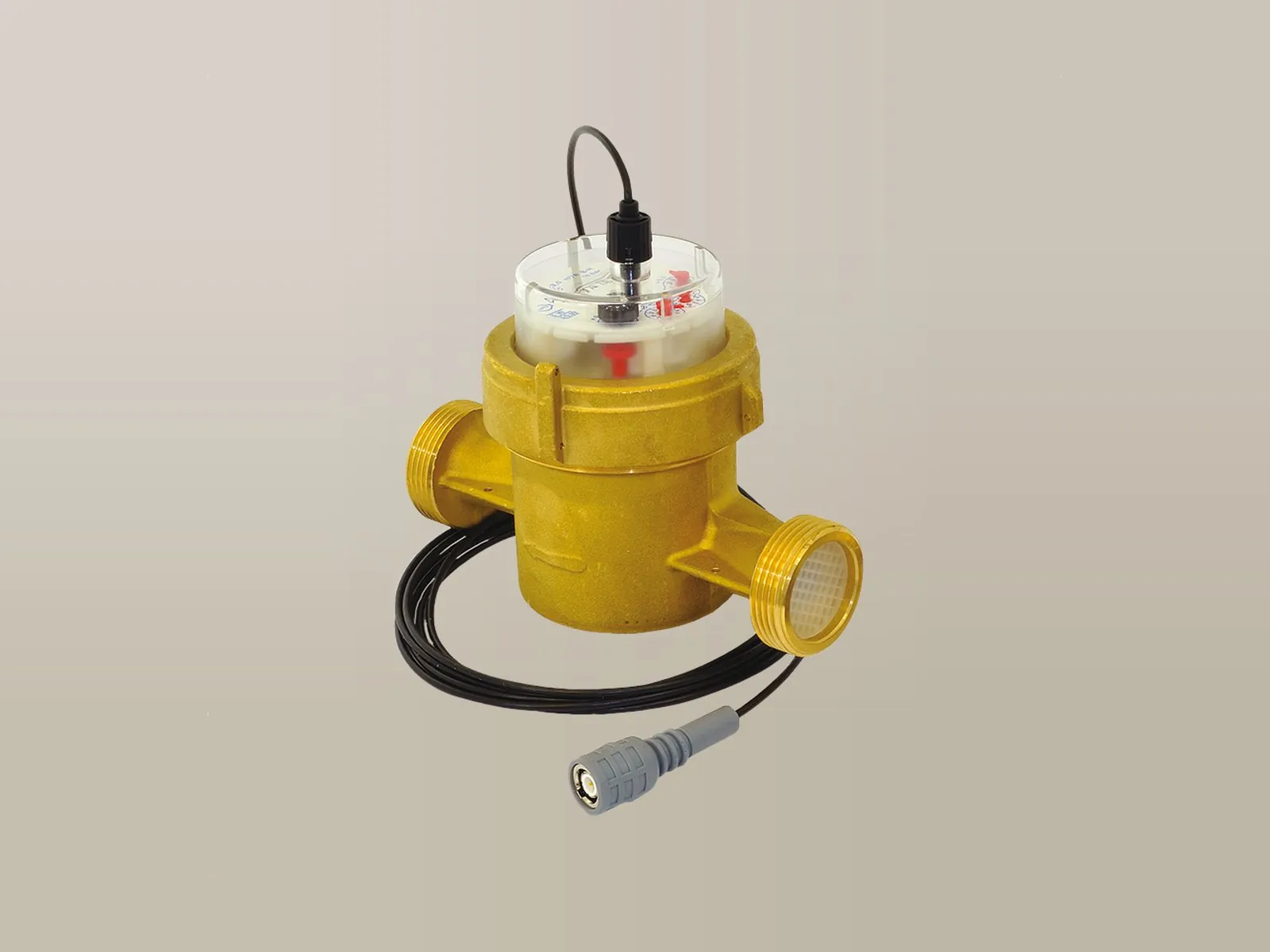
Turbine pulse-output water meter

Pulse-output water meter

Installed on the make-up water pipe, it measures the volume of water and controls dosing.

Water meters →
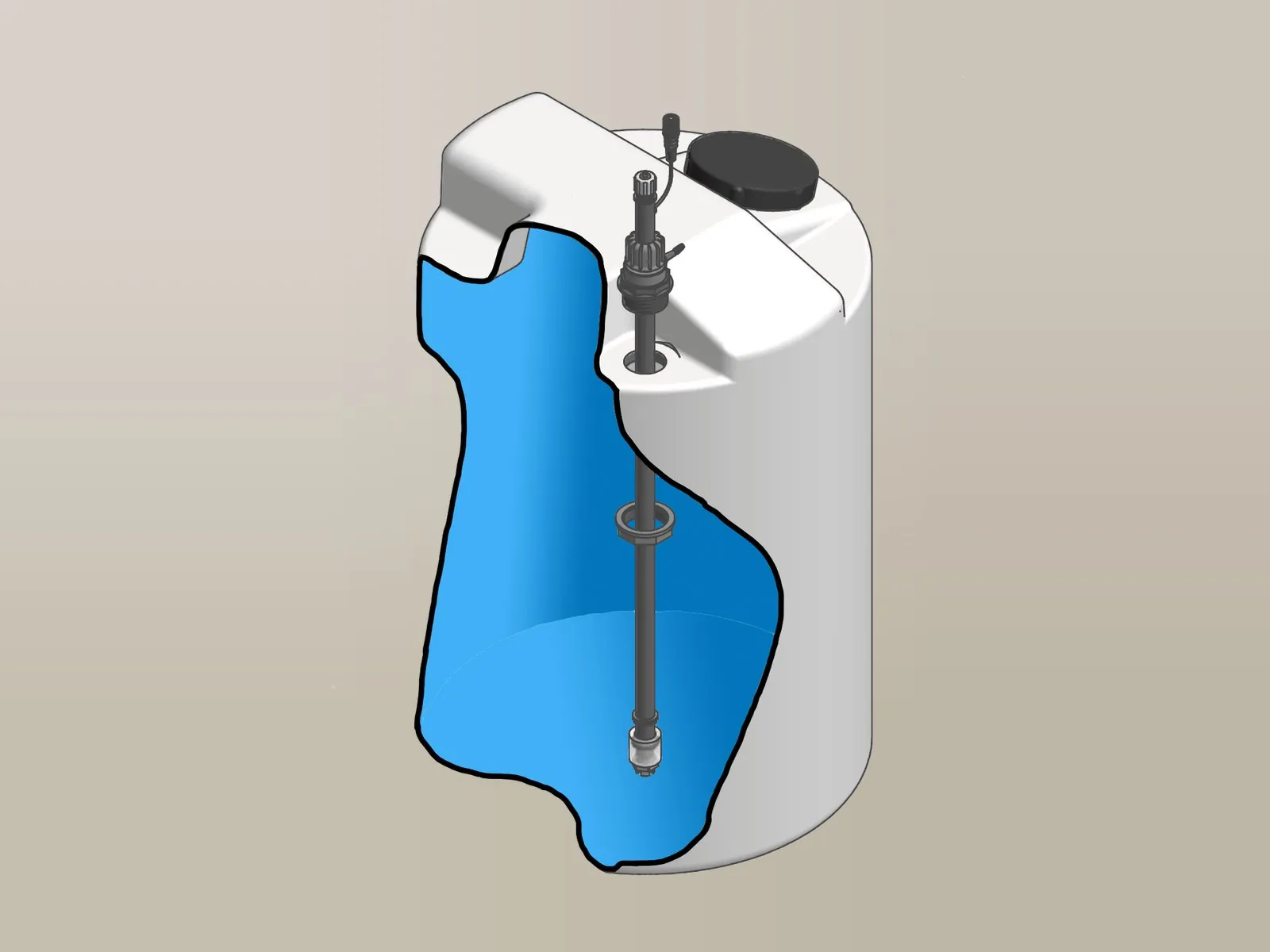
Tank with suction lance and level probe

Tanks with suction lance

For the precursors, with suction lance and level probe for signalling when the chemical has run out.

Lances →
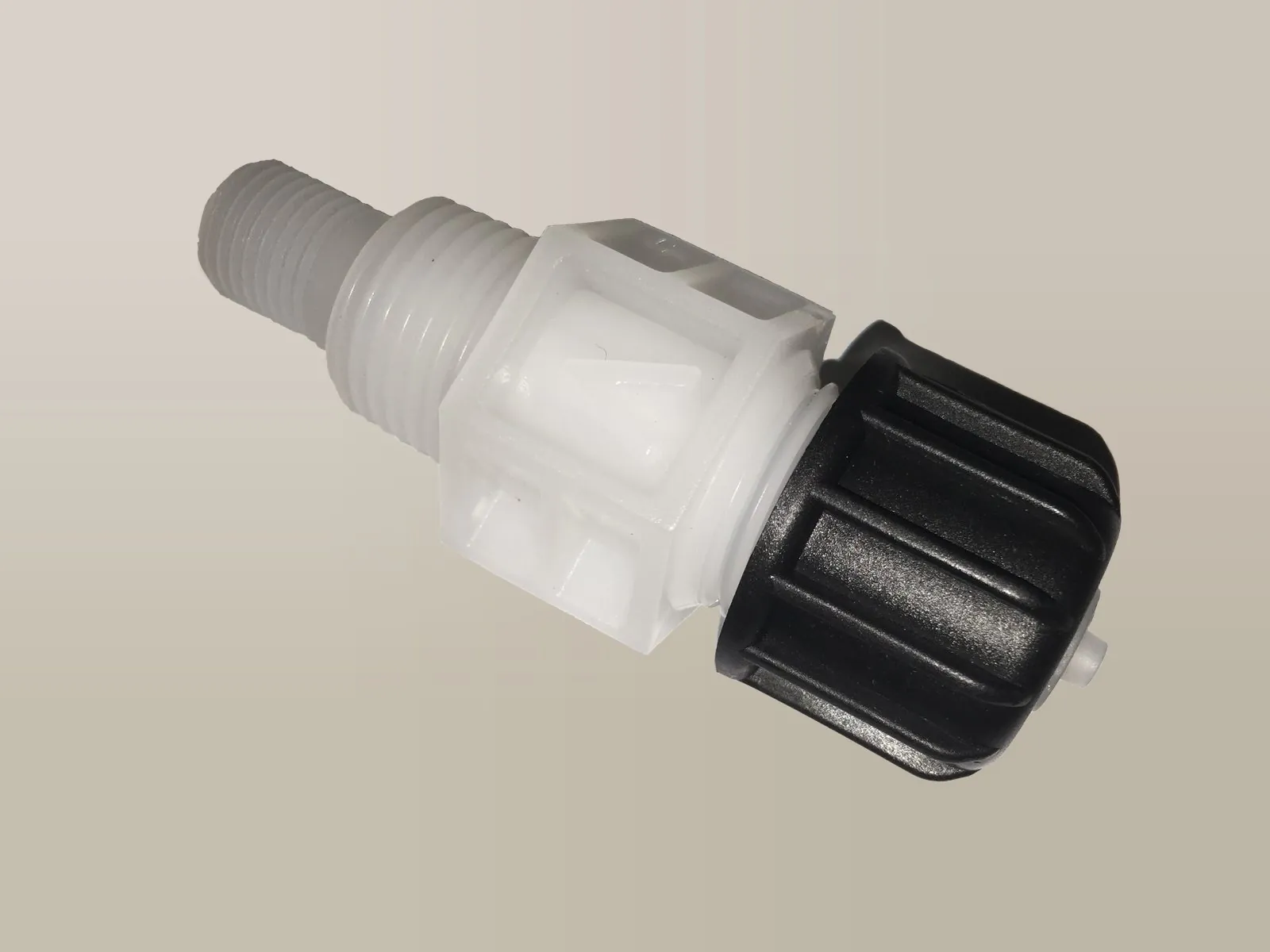
Injection valve

Injection valve

It injects the chlorine dioxide into the pipe and prevents backflow of the water.

Injection →
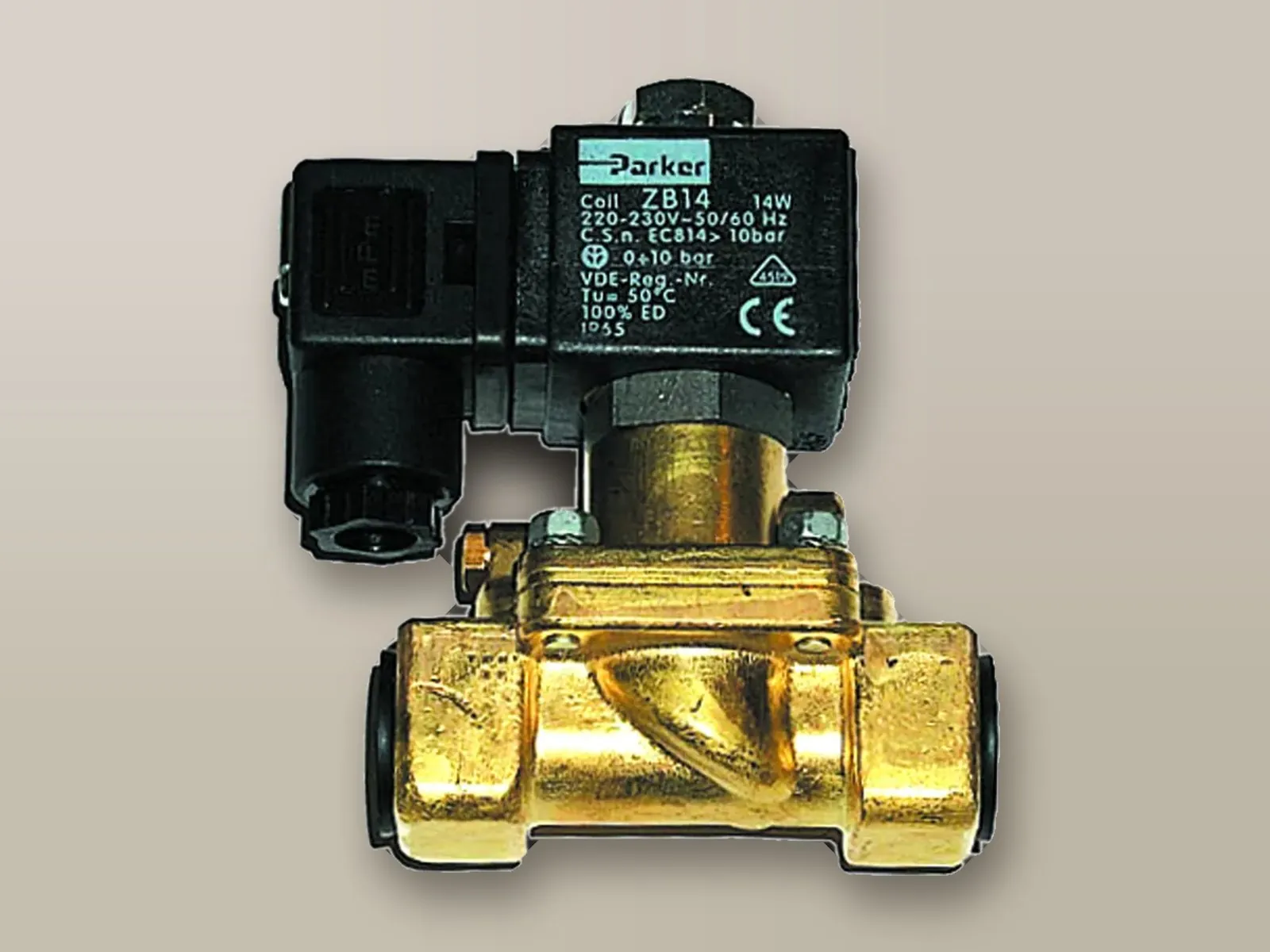
Solenoid valve for dilution water

Solenoid valve

It feeds the dilution water into the reactor.

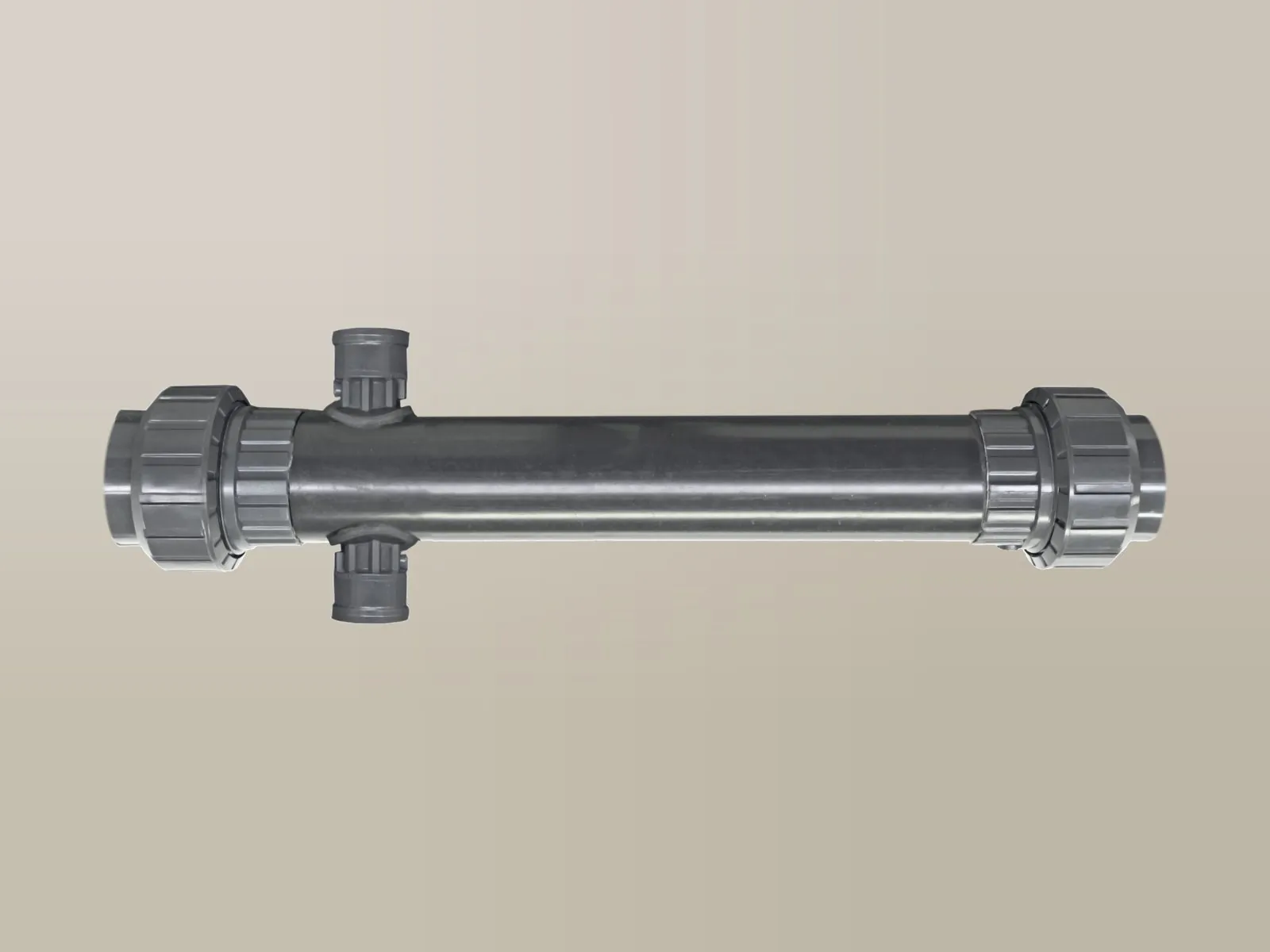
Static mixer with two inlets

Static mixer

It ensures the dispersion of the chlorine dioxide in the water and protects the pipe from direct contact with the product.

Mixers →
Pulsation dampener

Pulsation dampener

It attenuates the pulsations of the dosing pump.

Dampeners →
Installations

Installation examples

Systems are supplied pre-assembled and tested, in the form best suited to the plant room: on a panel, in a cabinet or on a skid (with cover, in a box or on a frame), also tailor-made. Some examples.

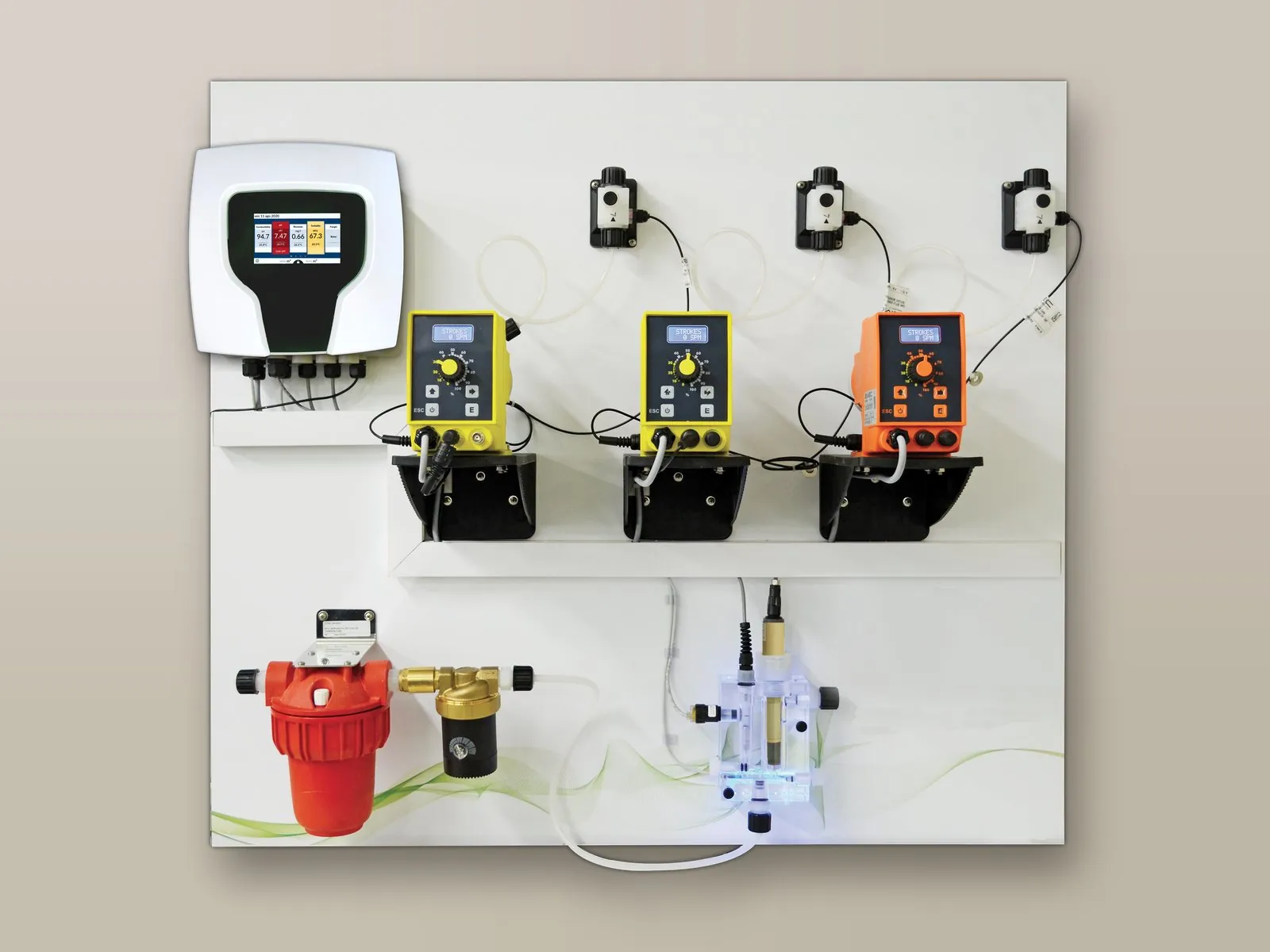
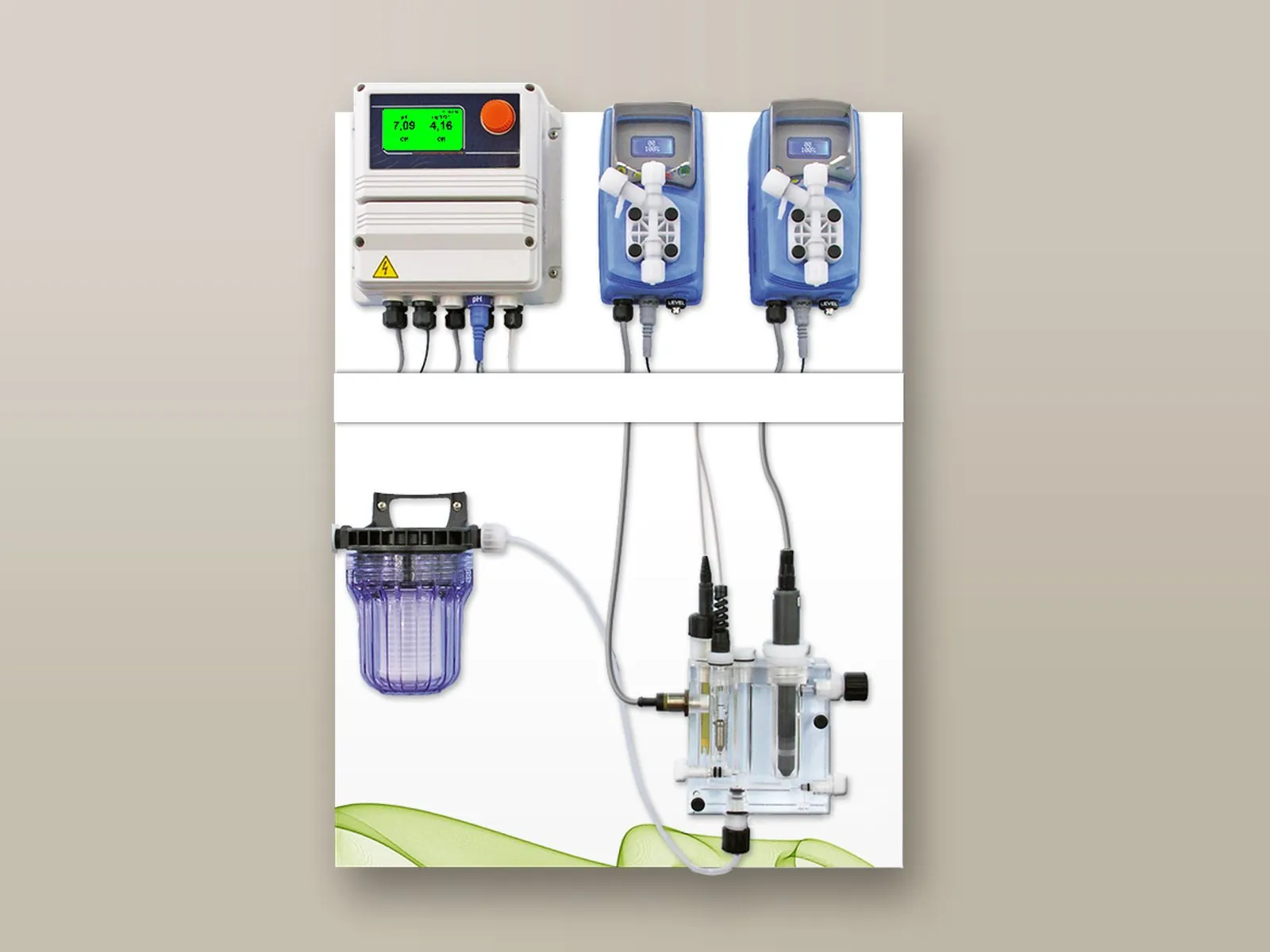
System on a panel with controller, dosing pumps, filter and probe holder

On a panel

Controller, pumps, probe holder and accessories mounted and wired on a wall panel.

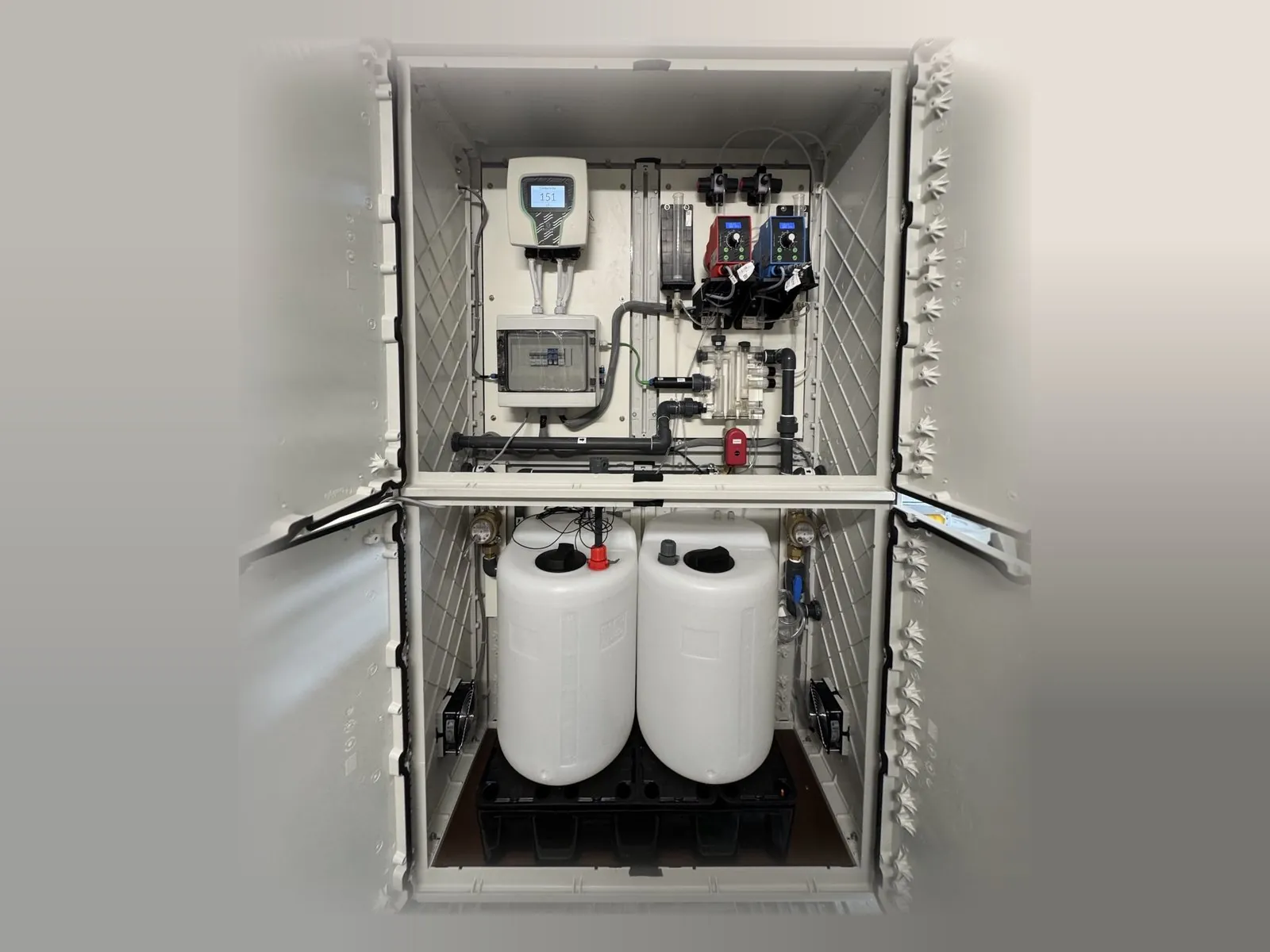
System in a cabinet with panel and chemical tanks

In a cabinet

System panel and chemical tanks housed in a single cabinet.

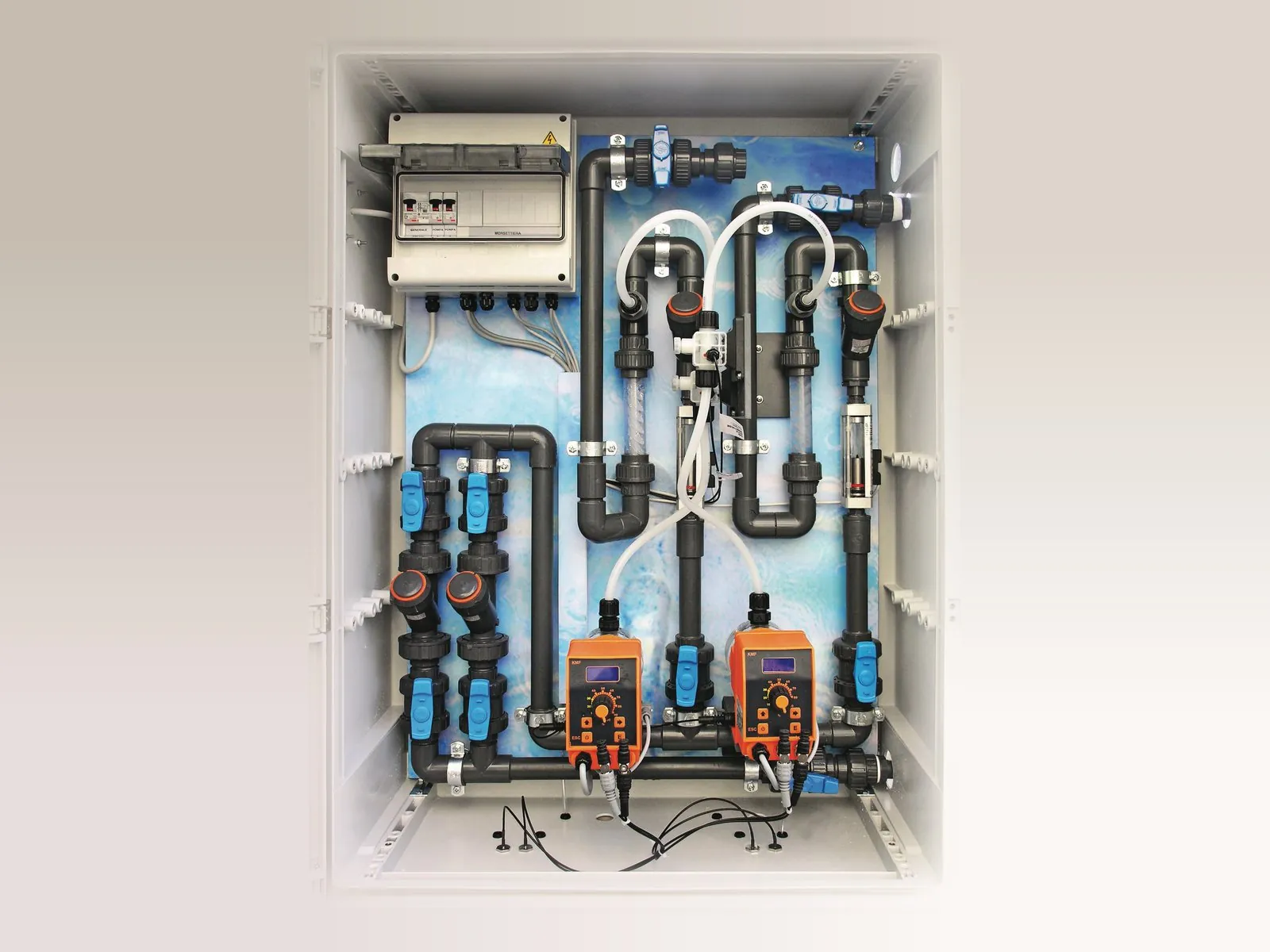
System assembled in a wall cabinet with electrical panel, pipework and dosing pumps

Wall cabinet

Pipework, pumps and electrical panel in a wall cabinet with door.

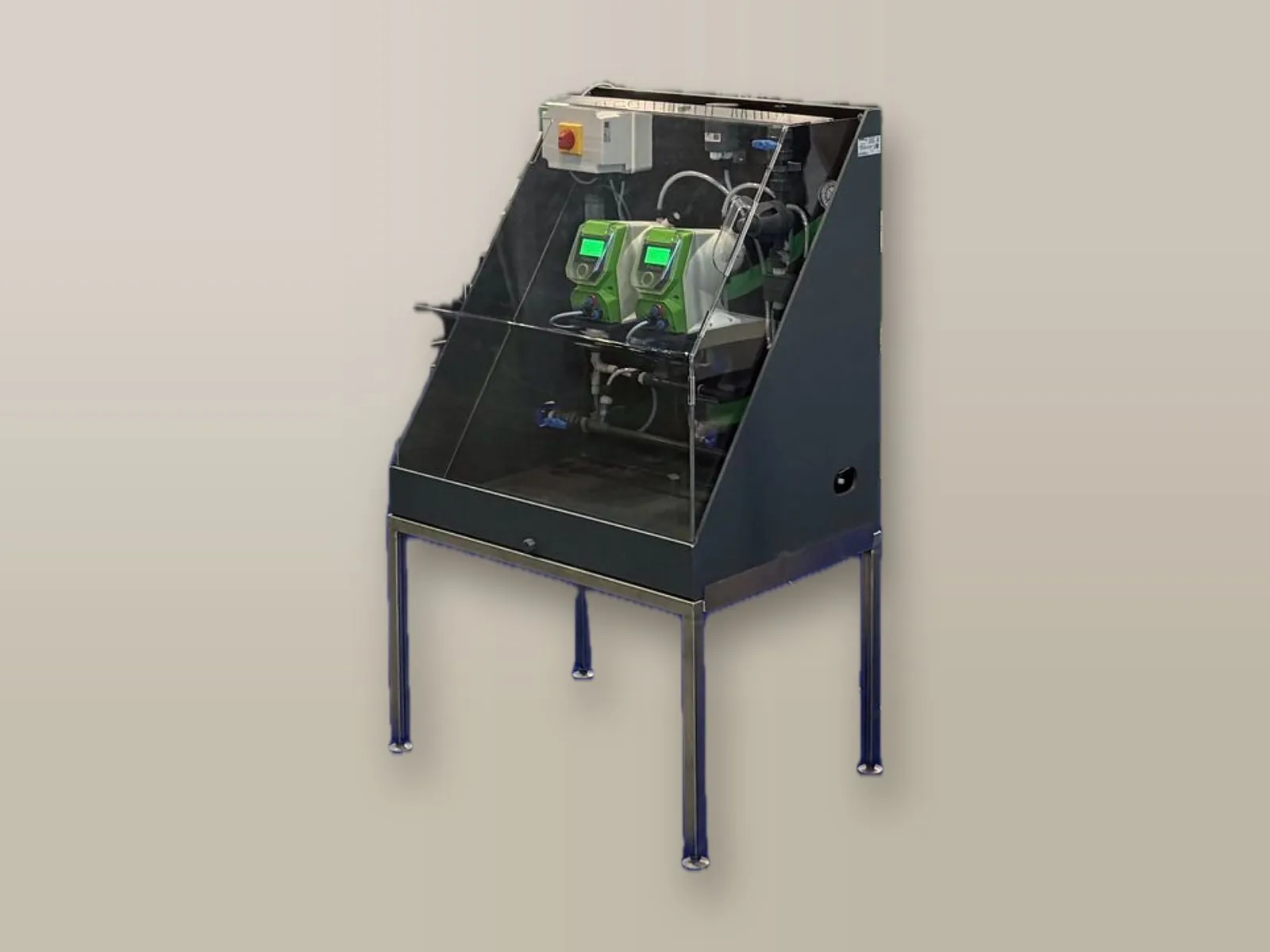
Skid with two dosing pumps, PMMA cover and raised stainless steel frame

Skid with cover

Skid with raised stainless steel frame and protective PMMA cover.

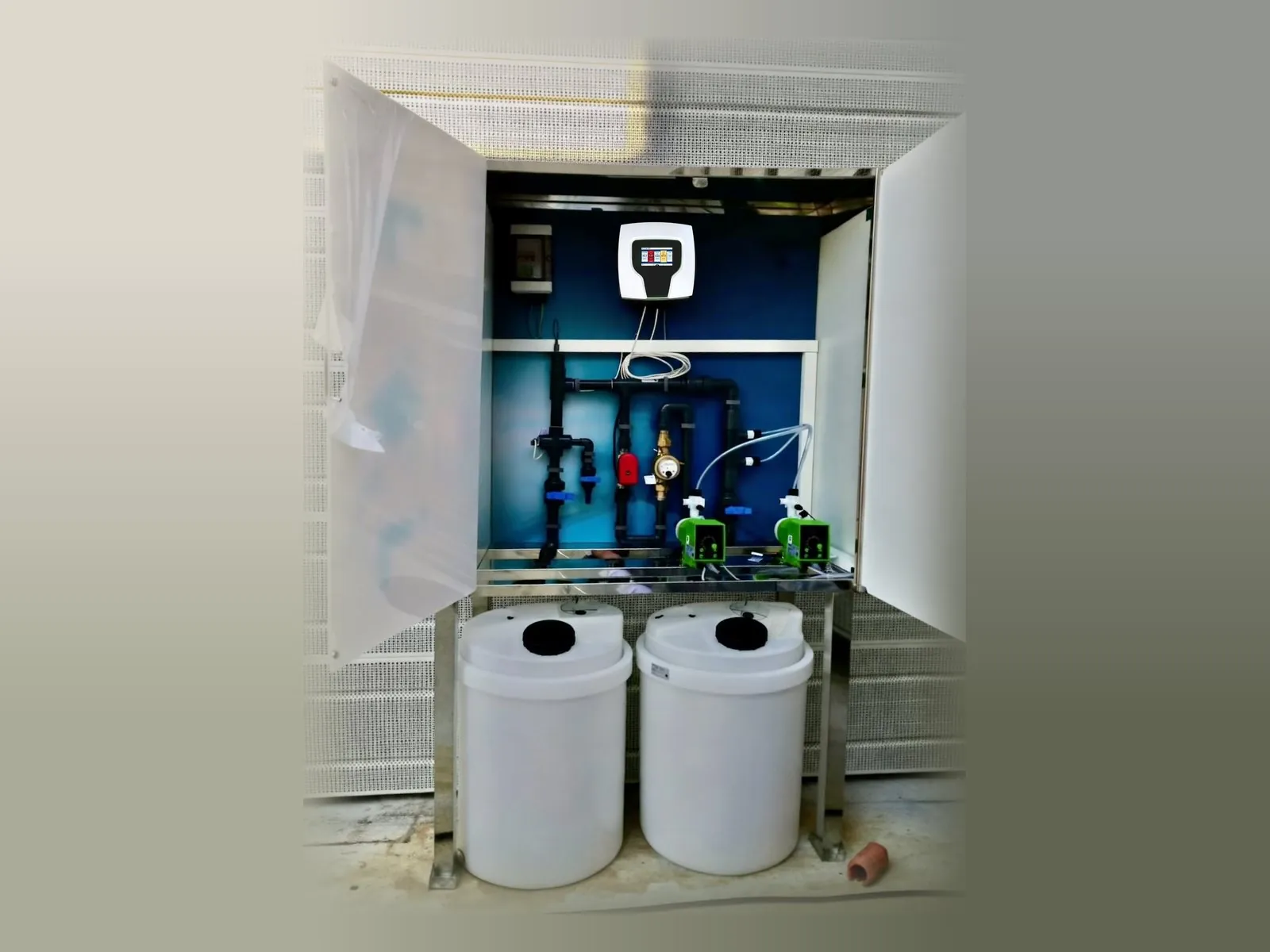
Skid in a box with door, dosing pumps and chemical tanks

Skid in a box

Skid enclosed in a box with door, with the chemical tanks at the base.

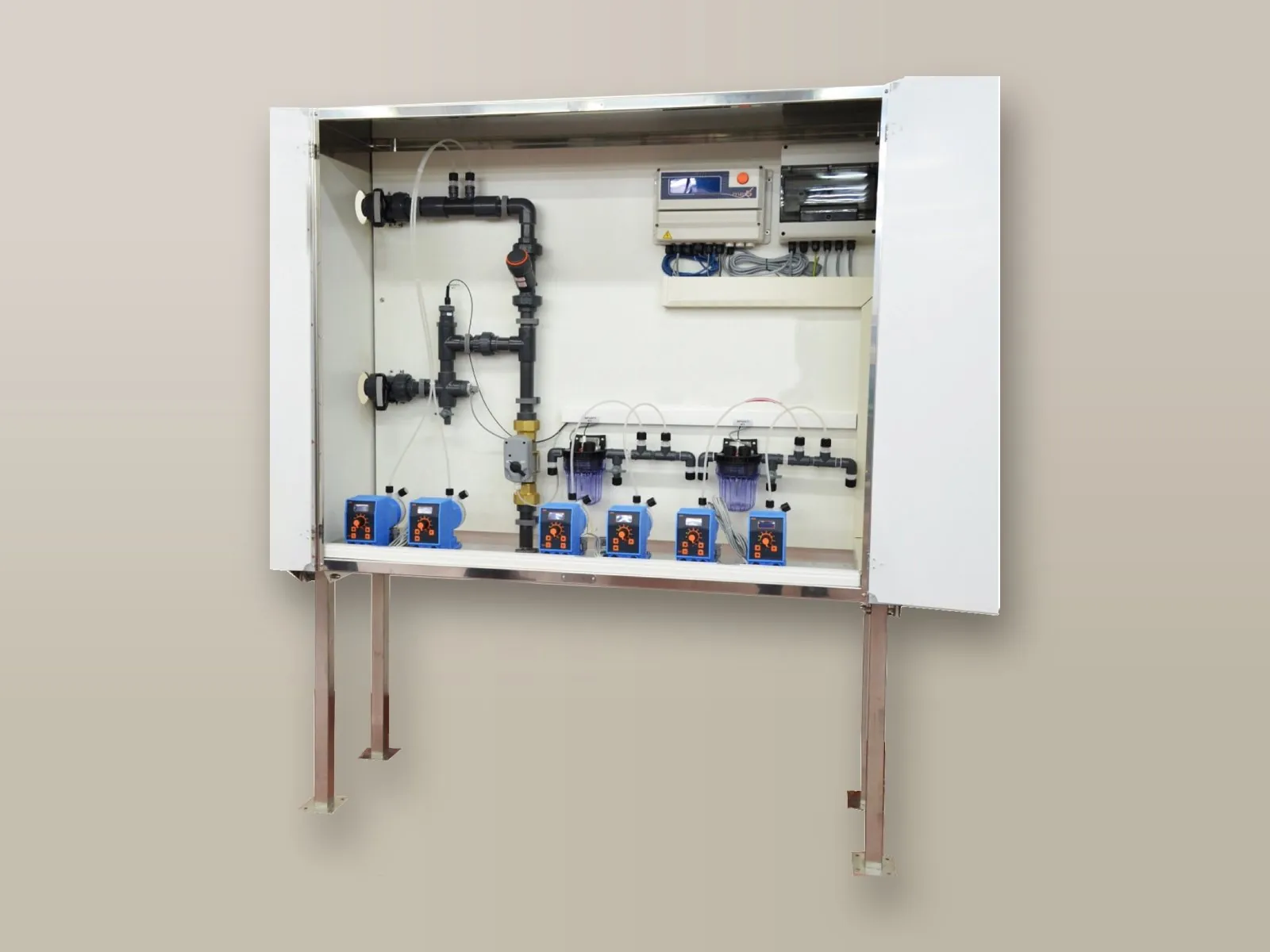
Skid on a frame with doors, controller, dosing pumps and pipework

Skid on a frame

Skid on a frame with doors, pre-assembled and ready for connection.

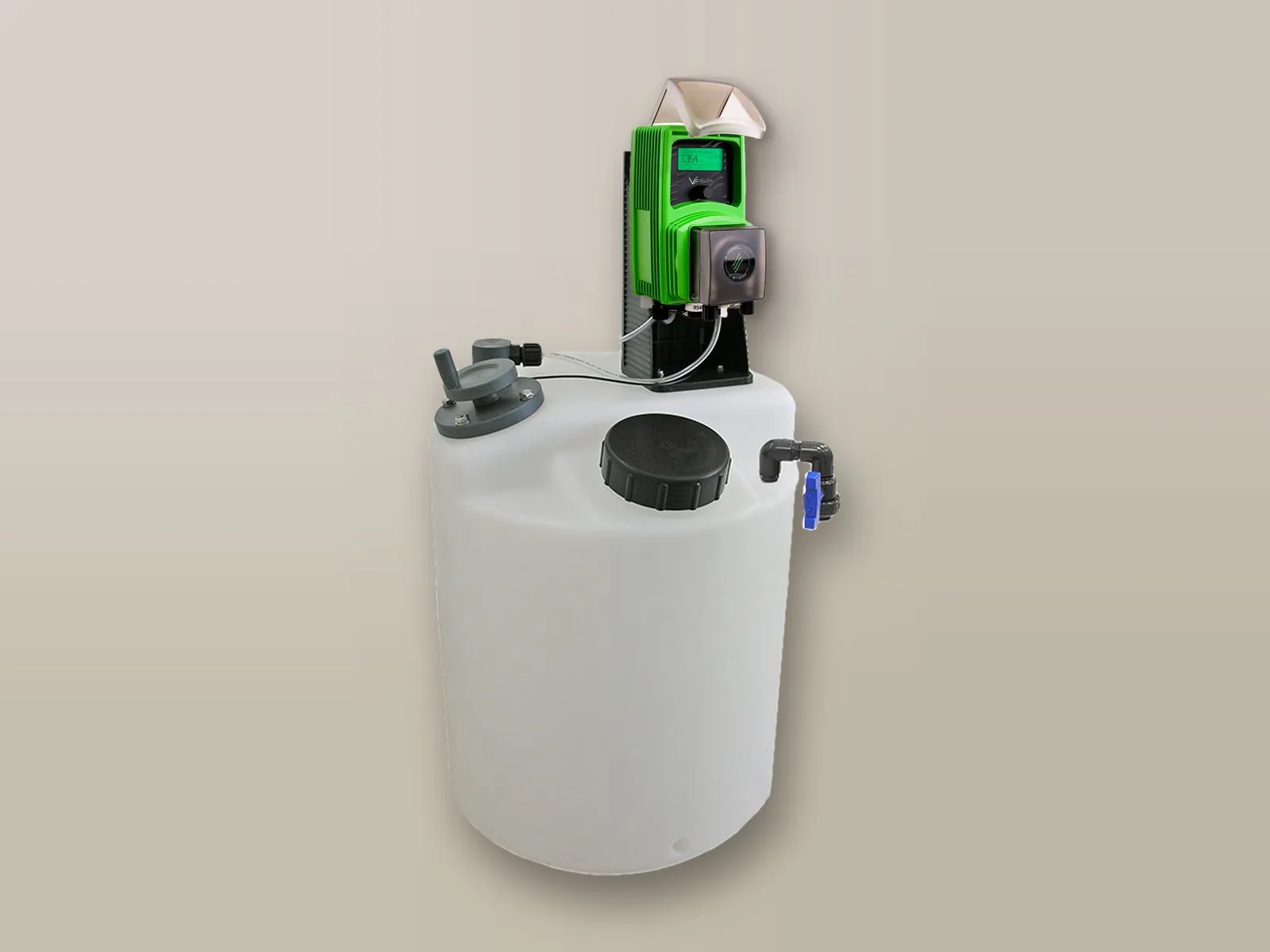
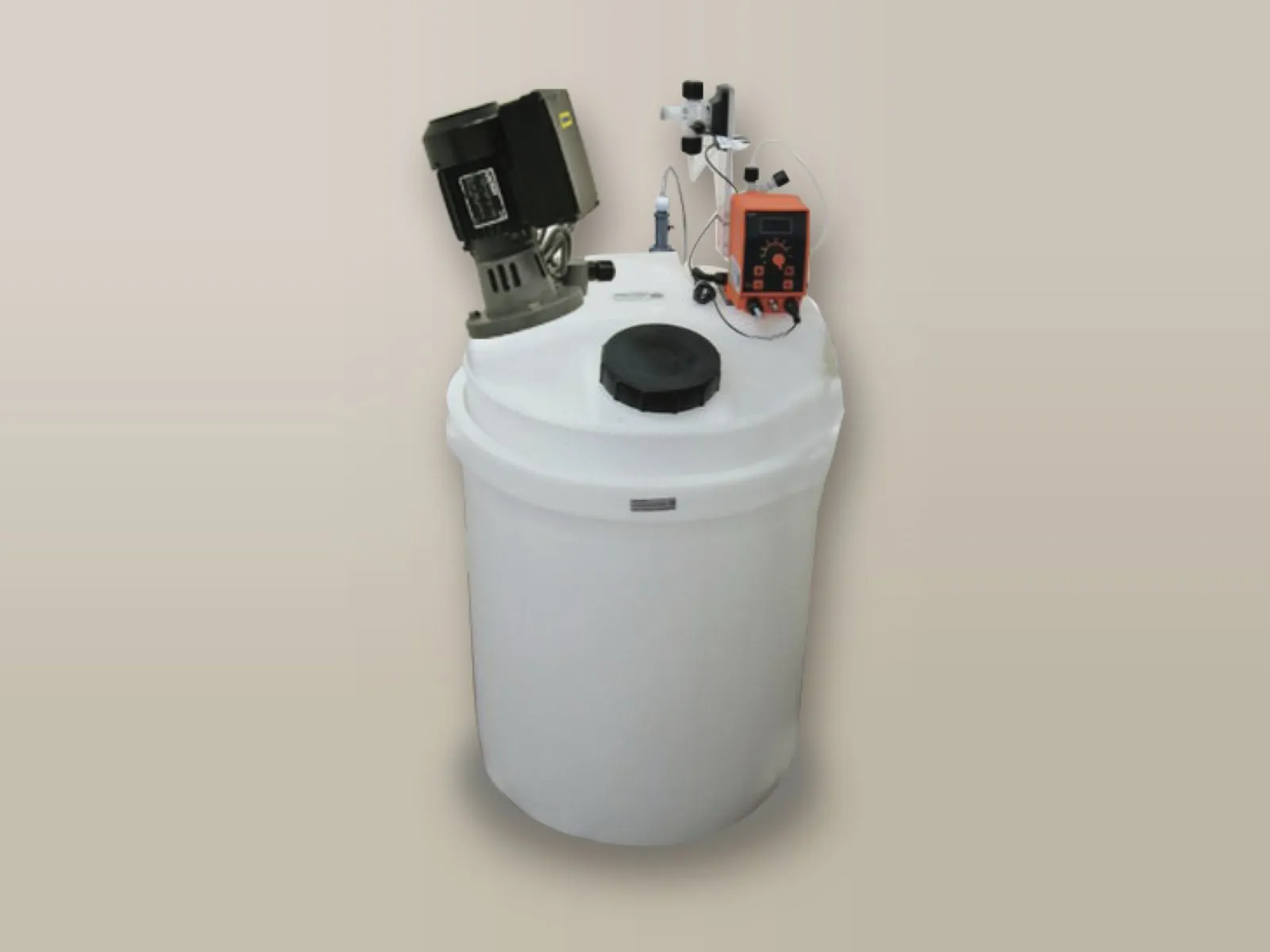
Dosing station with the pump mounted on the chemical tank

On the tank

Dosing pump mounted directly on the tank: the most compact solution.

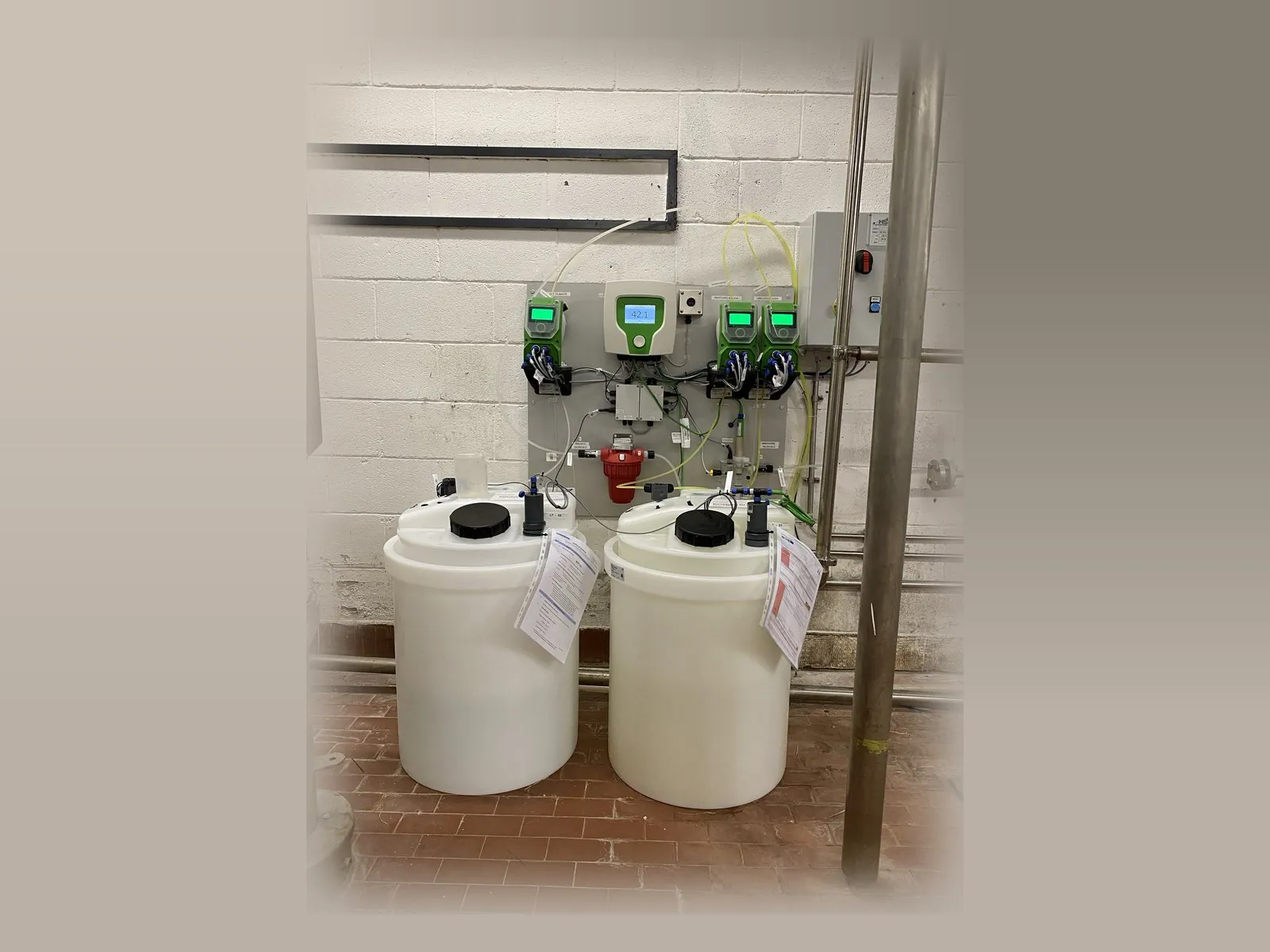
System wall-mounted in the plant room with dosing pumps and chemical tanks

In the plant room

Wall installation in the plant room, with the chemical tanks on the floor.

Pumps, controllers or components supplied by the customer can also be fitted, with custom dimensions, back panel and electrical panel. Dosing stations and skids →

Which one to choose

From the simplest to the most complete solution

For chlorine and other disinfectants the basic solution is the dosing station; to dose according to the concentration actually present in the water, measuring controllers are used.

Dosing station on a tank

Dosing station

The simplest solution: the pump doses at a constant rate or in proportion to the volume of water measured by the pulse-output water meter.

Details →
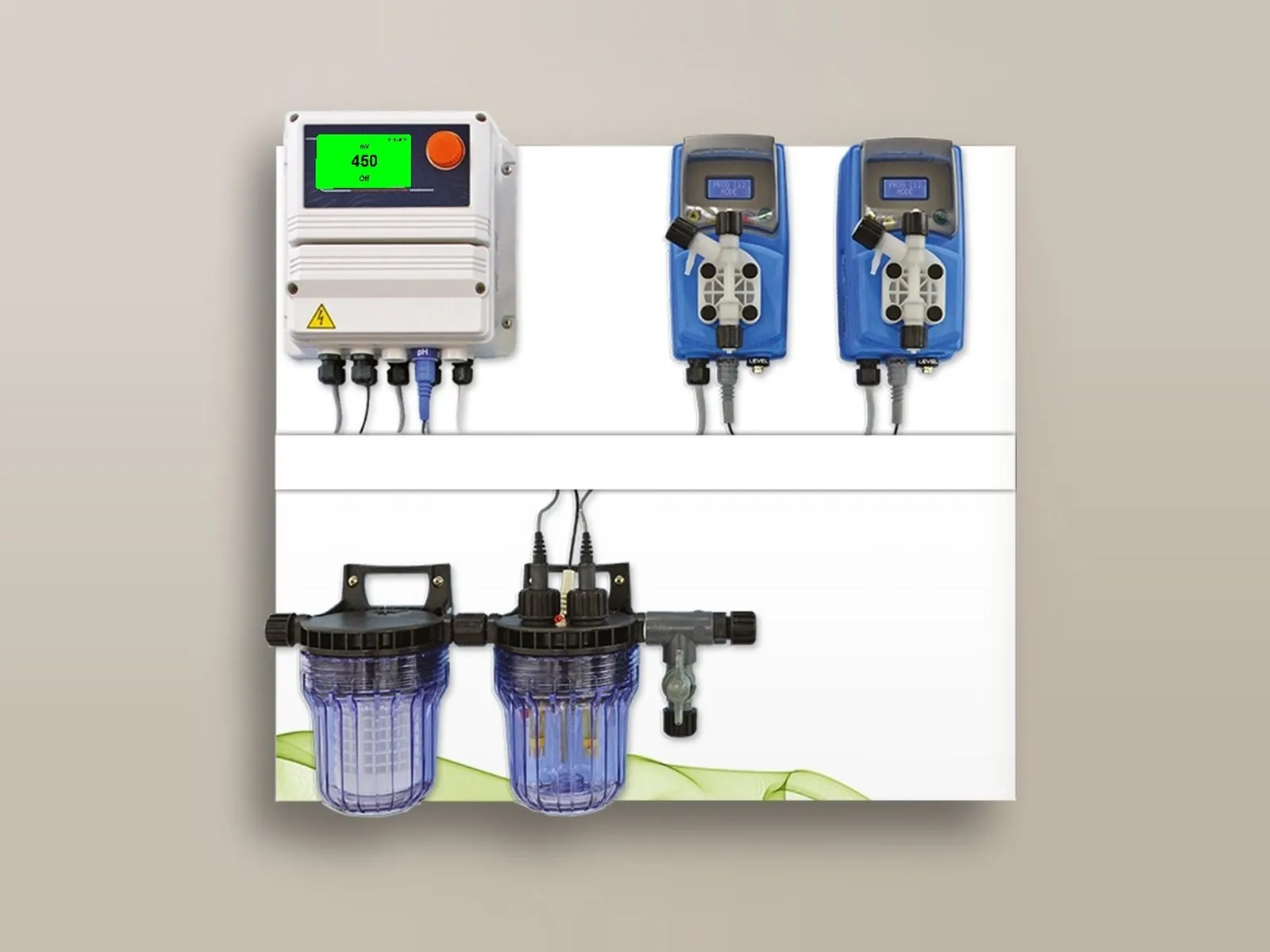
LDsRh system on a panel

LDsRh

Dosing based on the Redox potential of the water: an economical solution, based on an indirect measurement.

Details →
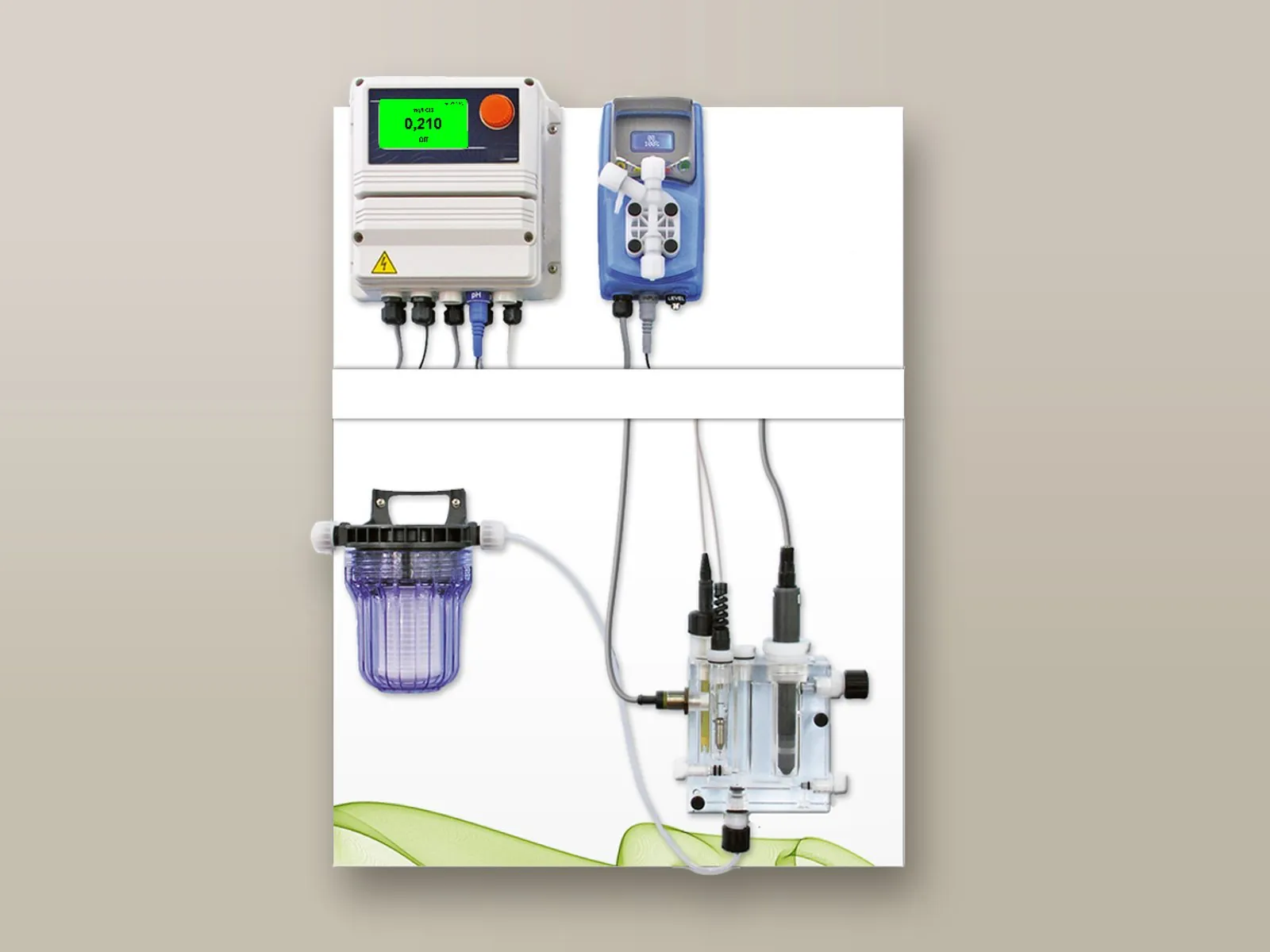
LDsCL system on a panel

LDsCL

The amperometric cell directly measures the disinfectant concentration in mg/l, ensuring maximum dosing accuracy.

Details →
Two-channel LD system on a panel

LD Dual Parameter

Simultaneous management of two parameters, for example pH and chlorine, with a single controller.

Details →
Centurio PRO on a panel

Centurio PRO

Management of up to 10 parameters and of all the pumps in the installation, with touch screen and remote control as standard.

Details →
LOTUS AIR chlorine dioxide generator

LOTUS AIR

Chlorine dioxide generator: it produces the disinfectant on site from the precursors and doses it in proportion to the water meter or to the measured residual.

Plant sizing

Tell us the water flow rate to be treated and the characteristics of the installation: we will propose the most suitable model, pumps and dosing mode.

Contact

Tell us about your plant

Call or write to us: a technician will reply with a tailored proposal of controllers, pumps, probes and accessories.

What do you need?
Please enter your name.
Please enter a valid email address.
Please enter your message.

Describe your plant: type, water volume or flow rate, parameters to be controlled.

You must accept the privacy notice to continue.