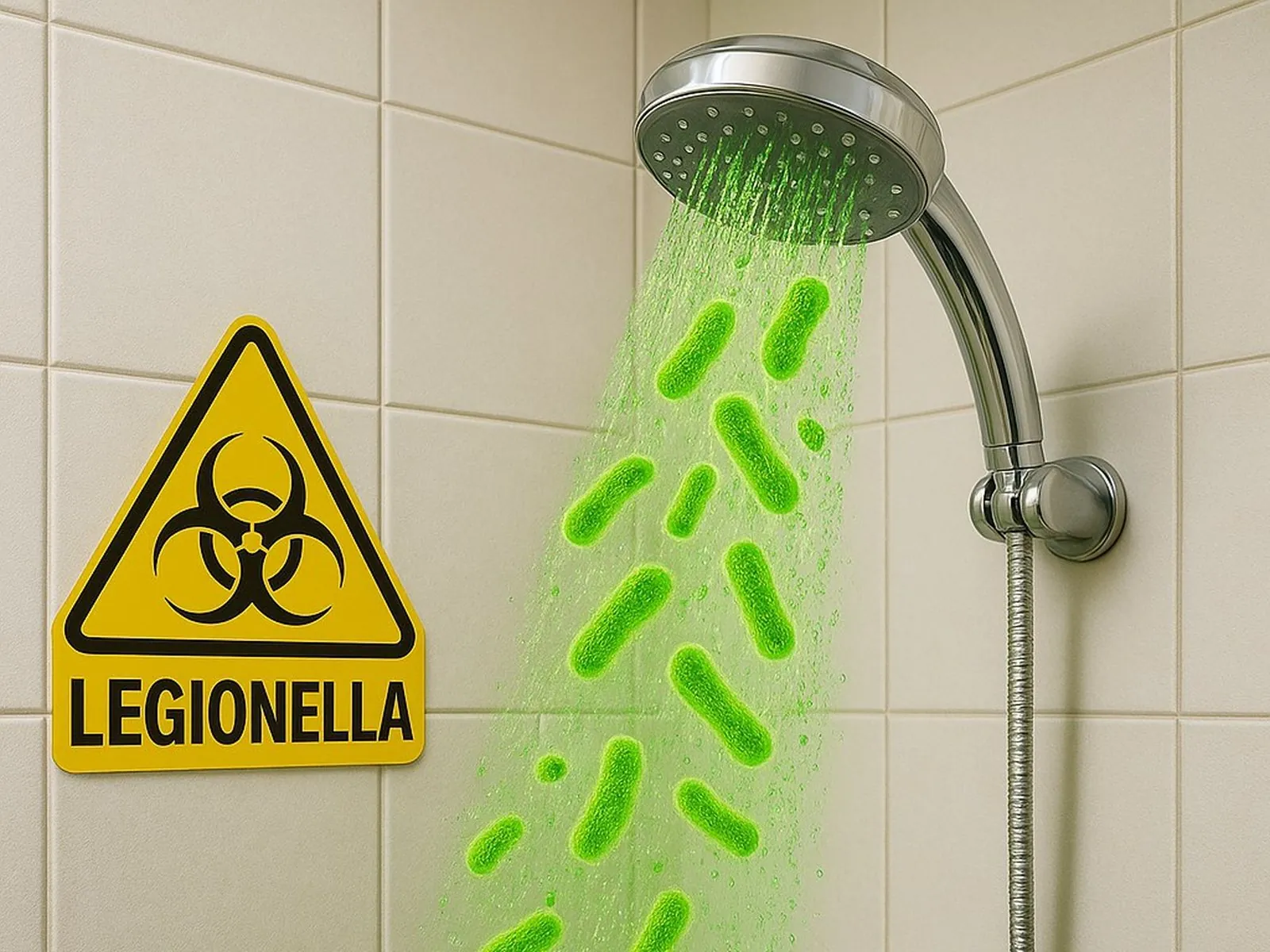
Showers and washbasins
Showers, washbasins, humidifiers and nebulisers: droplets of nebulised water are the route of infection.
Legionella is present in low concentrations in all natural waters and proliferates in water systems where there is stagnation, rust and biofilm, particularly between 25 and 55 °C; it is transmitted by inhaling droplets of aerosolised water. D.Lgs. 18/2023, the 2015 national guidelines and D.Lgs. 81/2008 establish who must assess the risk, how it must be controlled and which measures must be taken.

From natural environments (cold and thermal springs, rivers, lakes, soil) Legionella reaches municipal water networks and public and private water systems. Accommodation facilities (hotels, swimming pools), healthcare facilities (hospitals, care homes, nursing homes) and industrial facilities (cooling towers) require particular attention and appropriate treatment.
Showers, washbasins, humidifiers and nebulisers: droplets of nebulised water are the route of infection.
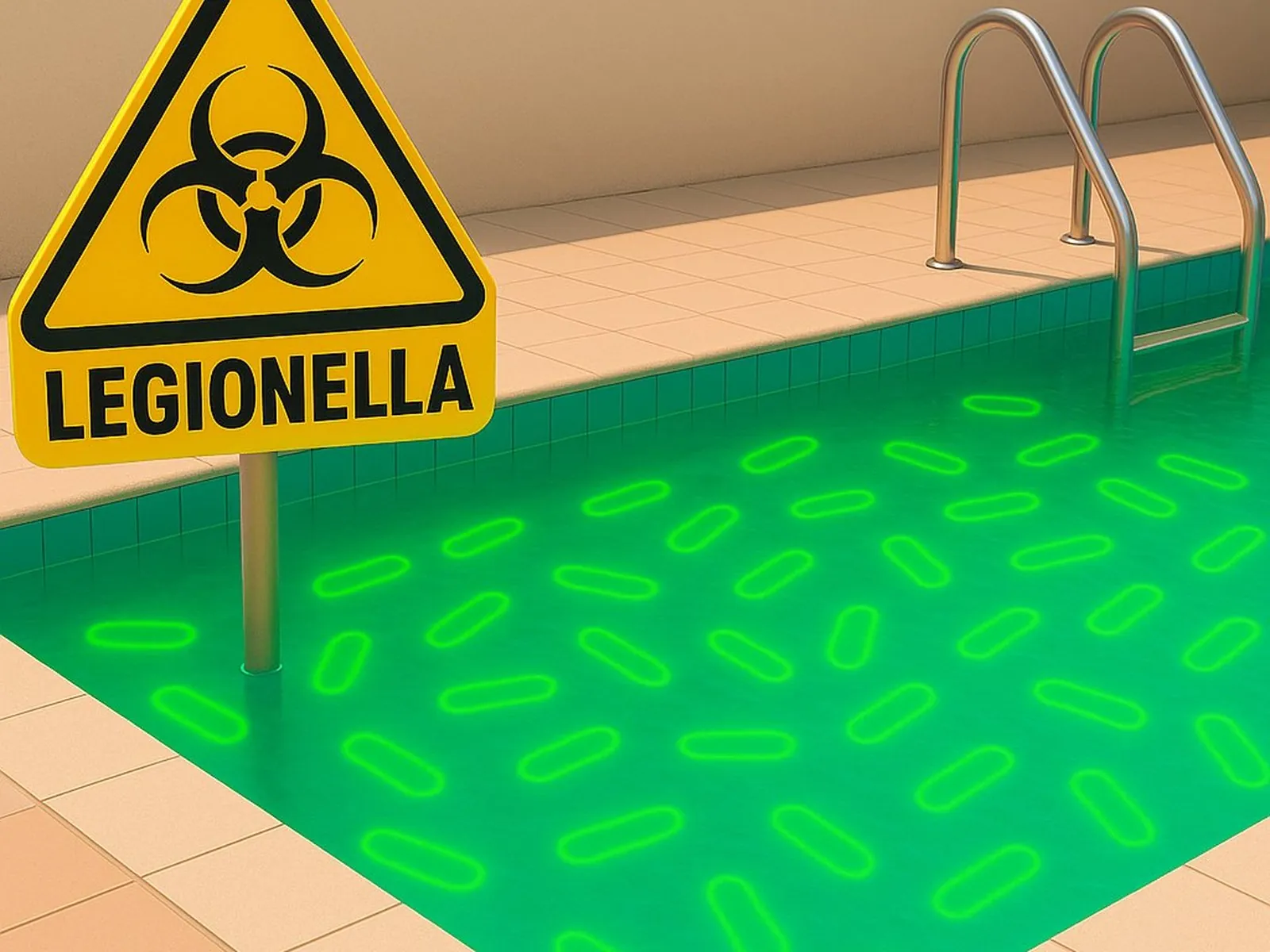
Swimming pools, saunas, steam rooms and whirlpool baths.
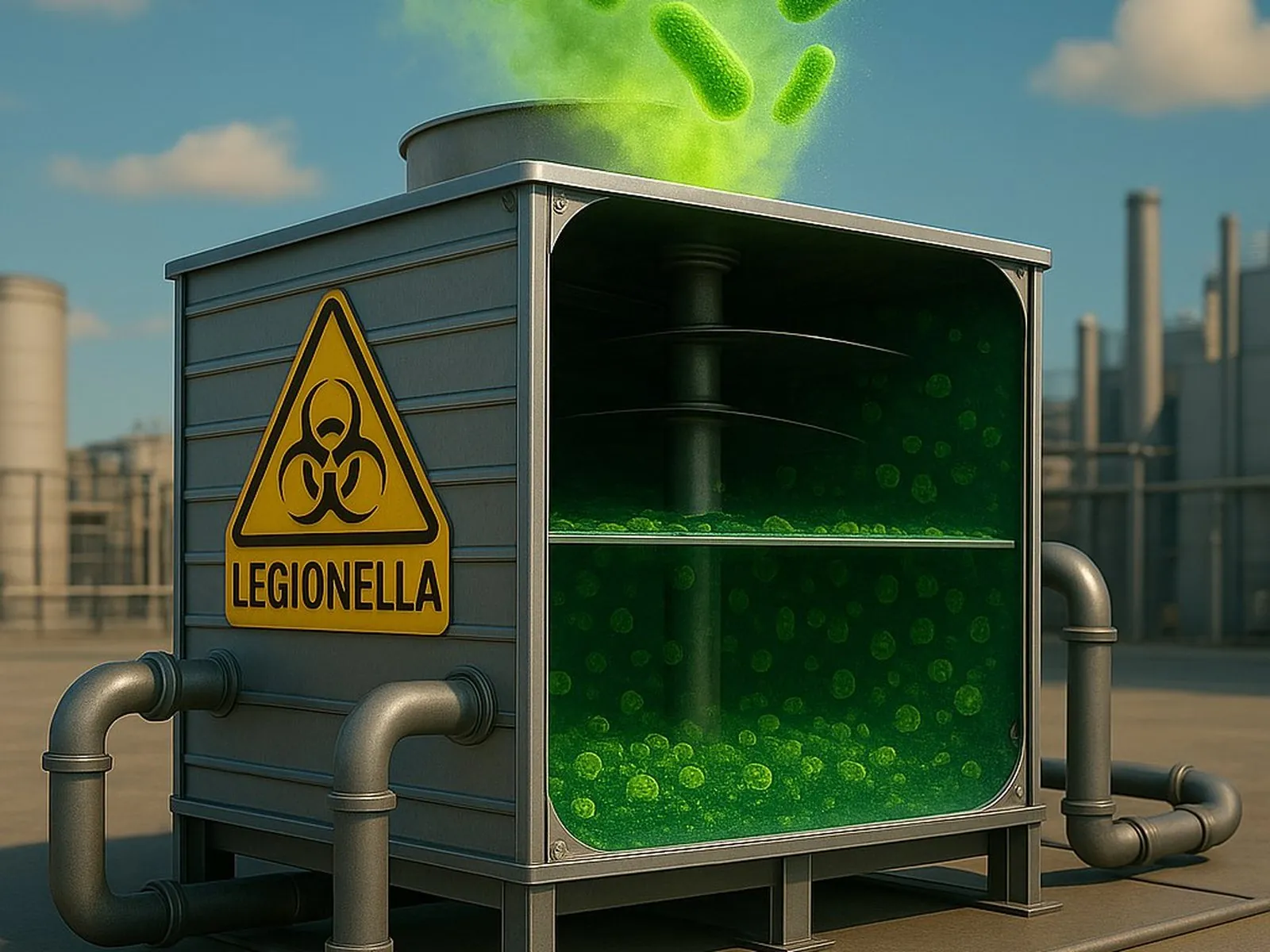
Evaporative cooling towers release water droplets into the atmosphere.
Cooling towers →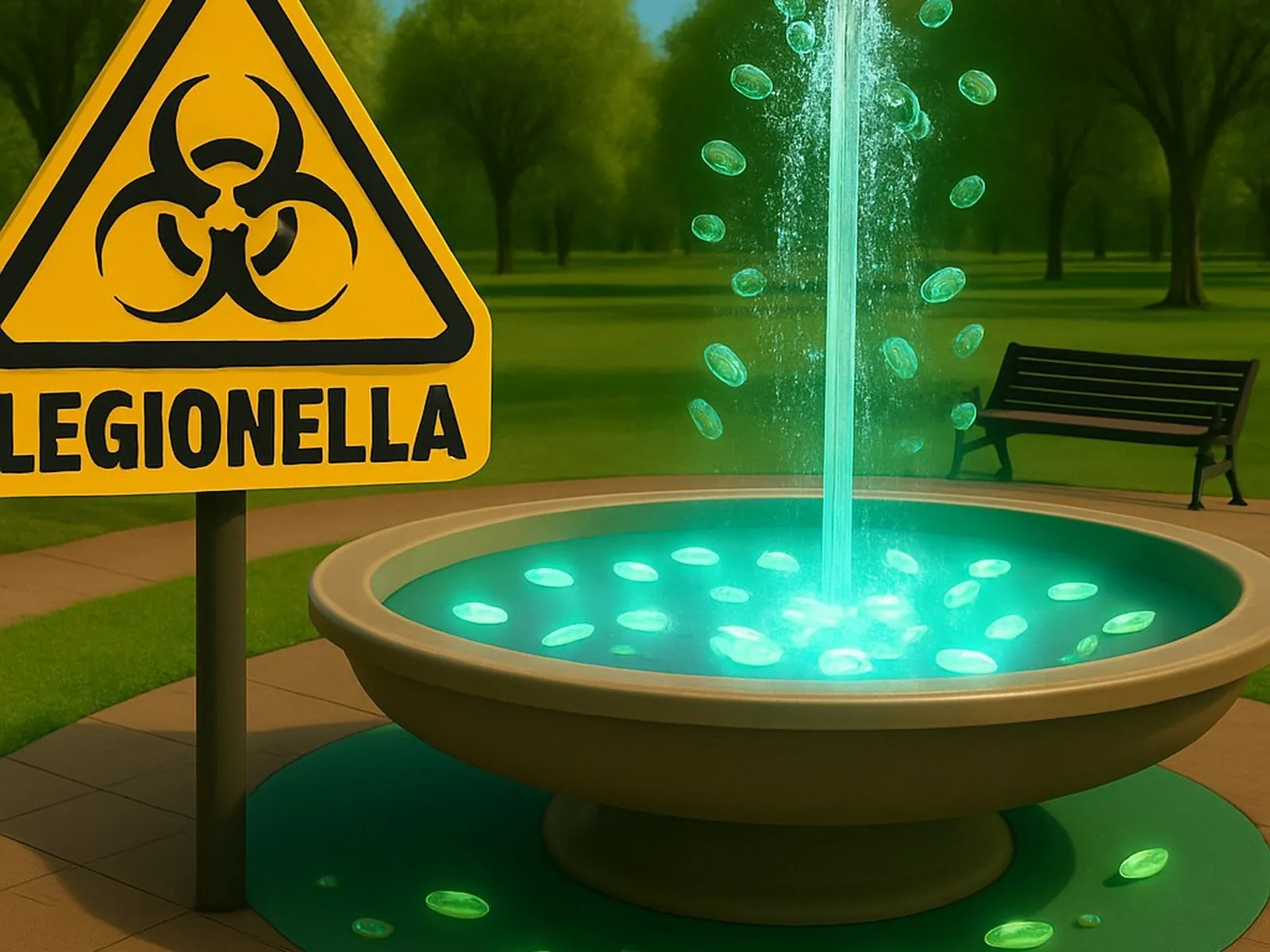
Fountains, sprinklers, water heaters, storage tanks, the lower part of hot water storage tanks and pipework with slow or no circulation.
Legionella and other microorganisms adhere to the walls of tanks and pipework, forming biofilm, similar to dental plaque or to the film that builds up on ship hulls. Rich in nutrients, biofilm protects bacteria from the action of disinfectants; it develops at points of slow flow (branches, bends, fittings, valves) or stagnation (dead legs, taps, shower heads, seals, aerators). With the water flow, fragments of biofilm detach and reach the outlets.
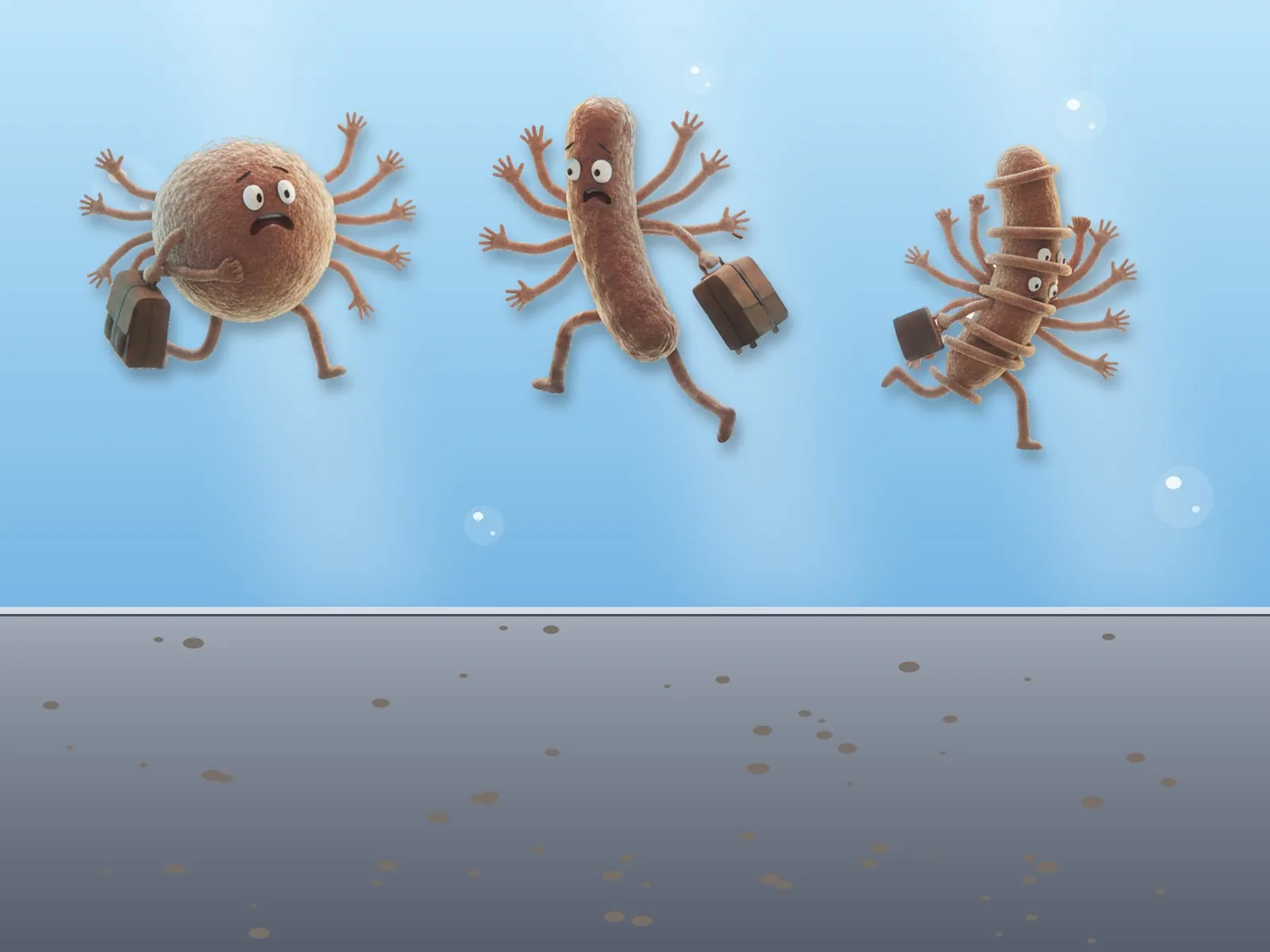
Bacteria, including Legionella, are present in free-floating form in the water coming from natural environments.
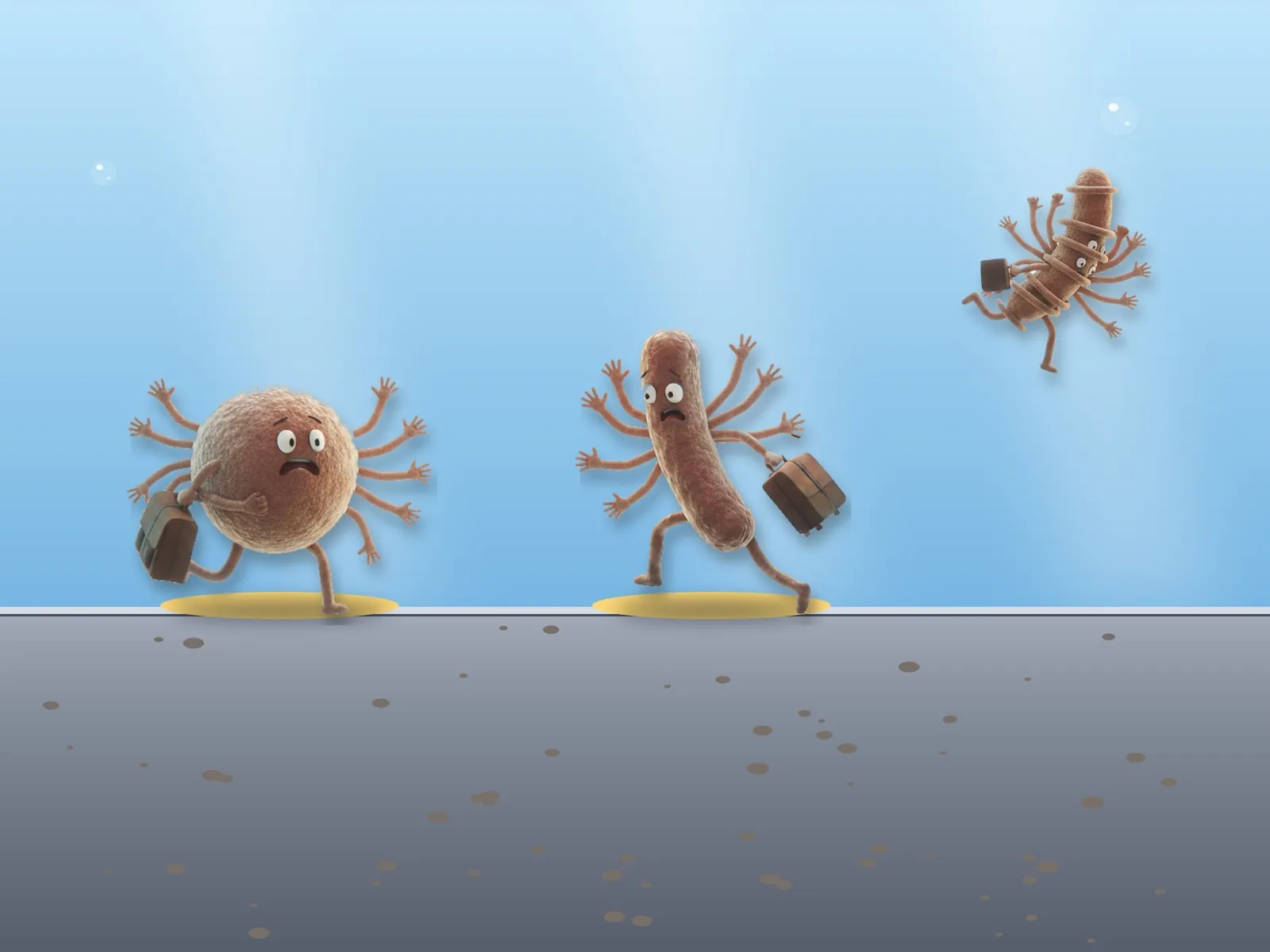
Some of the bacteria adhere to the pipe wall, particularly at points of slow flow or stagnation, producing the first adhesive substances.
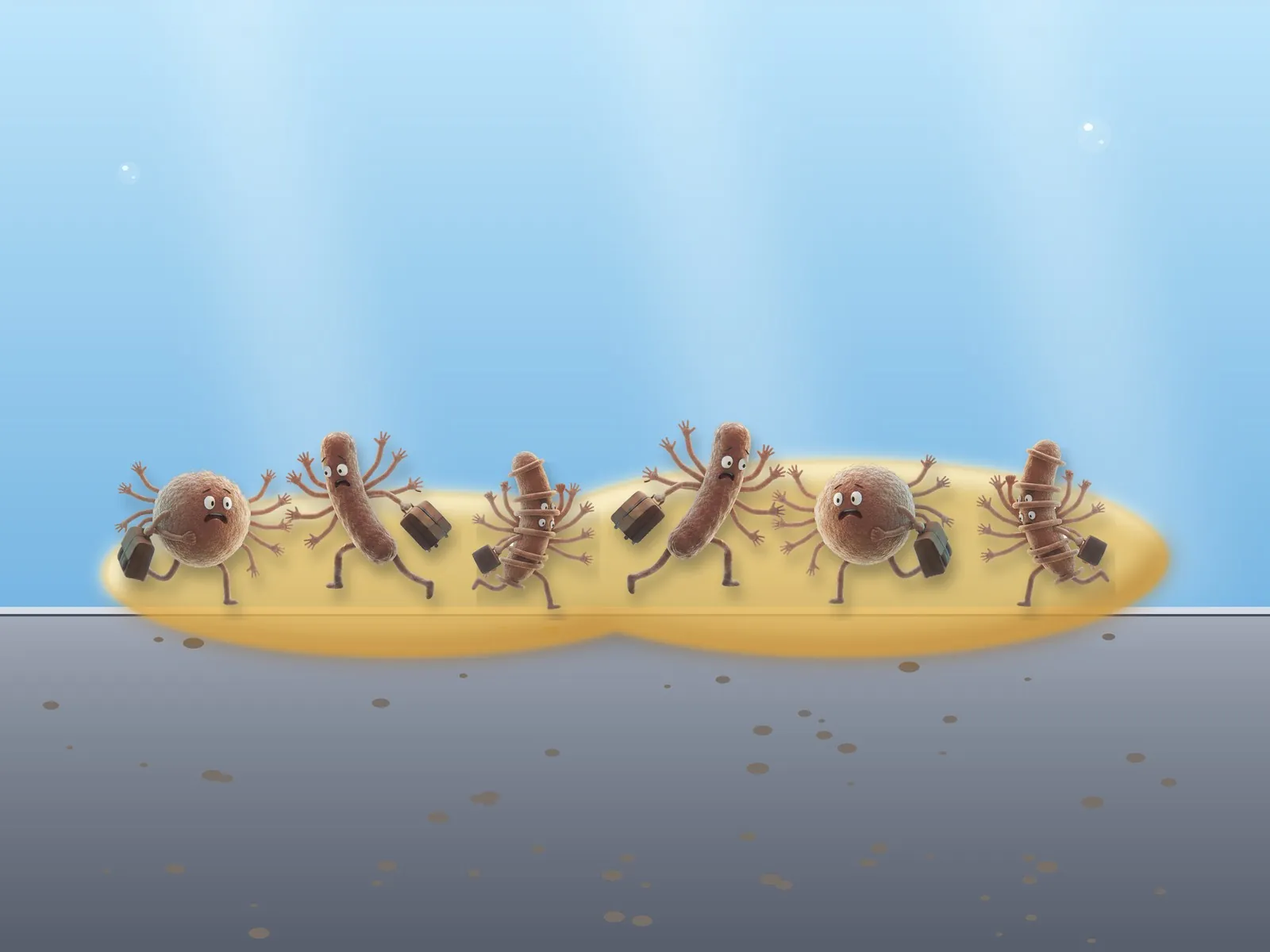
The bacteria multiply and surround themselves with a nutrient-rich gelatinous matrix that protects them from the action of disinfectants.
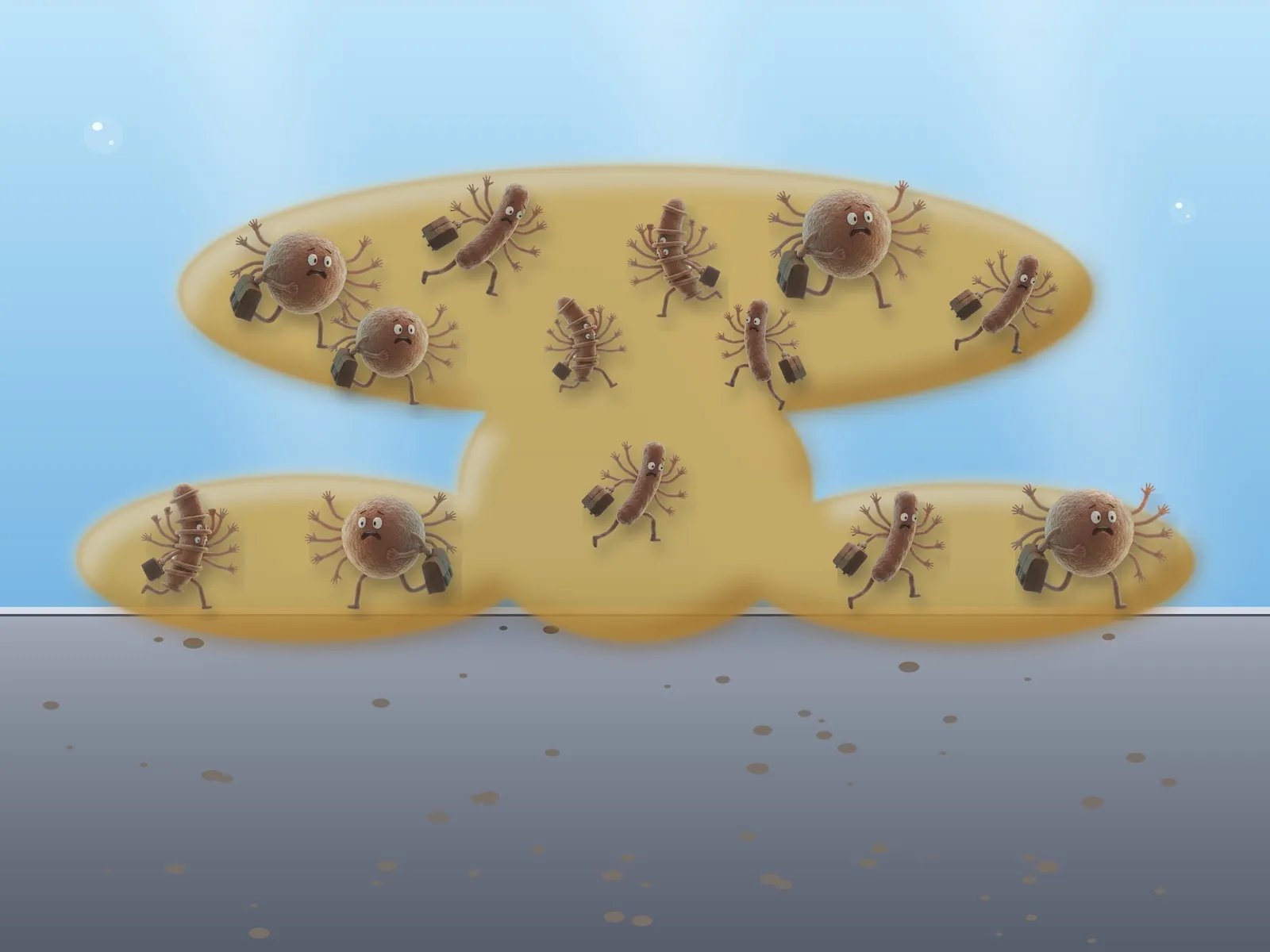
The biofilm grows and becomes organised; limescale and rust in the pipework promote its formation.
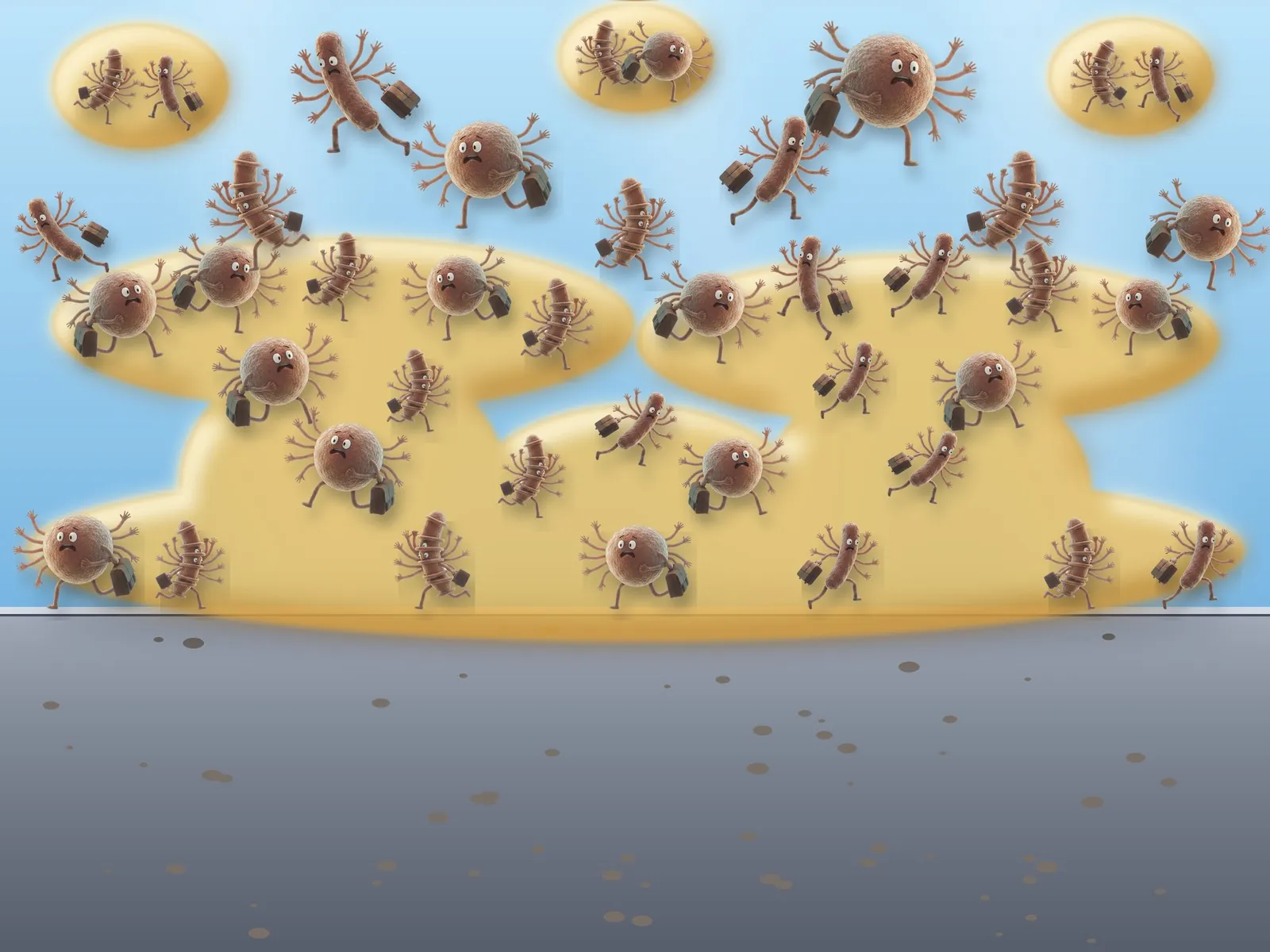
Owing to the flow, portions of biofilm detach: the bacteria reach the outlets and colonise other areas of the system.
Limescale and rust promote biofilm formation: it is advisable to reduce water hardness and to dose polyphosphates with an antiscalant and pipe-protecting action. To control Legionella, in addition to keeping hot water between 50 and 60 °C, chemical disinfection treatment is required.
Those responsible for water systems are required to draw up a risk assessment document specifying the planned measures, their frequency and the means adopted to reduce exposure. If an employee or a guest becomes infected, the person in charge of the facility is liable to criminal prosecution.

Italian Guidelines for the prevention and control of legionellosis (2000; 2005 for accommodation and thermal facilities; a single text since 2015): requirements for public and private facilities.
The guidelines → Italian Legislative Decree 81/2008 (D.Lgs. 81/2008): Legionella is classified as a group 2 biological agent; the risk of exposure requires assessment, prevention and protection for all persons present.
Employer obligations →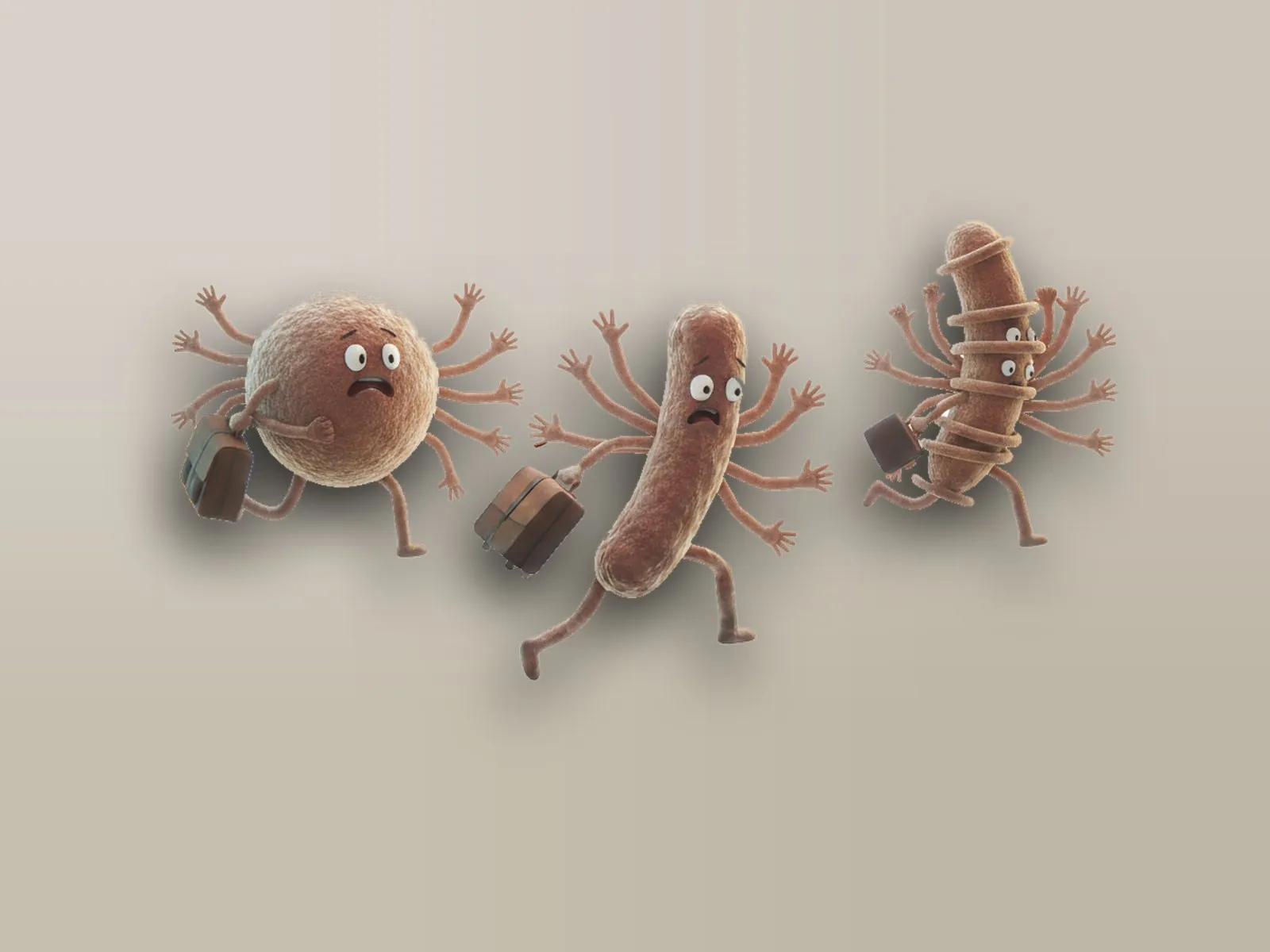
Italian Legislative Decree 18/2023 (D.Lgs. 18/2023, which replaced D.Lgs. 31/2001), amended by Legislative Decree 102/2025: quality of water intended for human consumption and Legionella risk assessment in priority buildings. UNI 8065 (Italian standard): treatment of water in civil heating systems.
Decrees and obligations →The pipework, fittings and appliances installed between the point of delivery and the taps normally used for water intended for human consumption, in public and private premises.
The party responsible for the domestic distribution system: the owner, the holder, the administrator, the director or any other party, including delegates or contractors.
Large non-residential buildings, or parts of them, in particular those for public use, with many users potentially exposed to water-related risks; they are identified in Annex VIII.
The domestic distribution managers of priority buildings carry out the risk assessment and management of the internal system, paying particular attention to the parameters in Part D of Annex I (Legionella and lead), and adopt preventive and corrective measures proportionate to the risk in order to restore water quality. The method is that of the guidelines of the Italian National Institute of Health (Istituto Superiore di Sanità, ISTISAN Reports 22/32) and subsequent revisions.
The first assessment must be completed by 12 January 2029, entered by the manager into the national AnTeA system and reviewed every six years. At the request of the local health authority the manager demonstrates compliance with the requirements; procedures and records must be kept, updated and made available, with traceability for at least six years.
In the event of non-compliance at the points of use caused by the internal system or its maintenance, the corrective measures of Article 15 apply.
Legionella spp. below 1,000 CFU/l (Annex I, Part D), for the purposes of the risk assessment and corrective measures. Action may also be necessary below this value, in particular in the event of infections and outbreaks. The parameter covers all species, including Legionella pneumophila, the one most frequently tested for.
At the points that represent a risk of Legionella proliferation, at those that represent systemic exposure, or both (Annex II); the CeNSiA (Italian national centre for water safety) provides guidance on sampling methods.
Culture method UNI EN ISO 11731 (Annex III); rapid culture methods, non-culture methods and molecular methods, such as qPCR according to ISO/TS 12869, may be used alongside it.
The risk of exposure to Legionella derives from the inhalation of aerosols and not from drinking the water. For uses excluded from the decree, such as clinical uses and certain civil uses, the decree refers to the Italian Guidelines for the prevention and control of legionellosis. Lead has a value of 10 µg/l, which will fall to 5 µg/l by 12 January 2036.
In all classes the domestic distribution manager (GIDI) must be identified. The examples are indicative and not exhaustive; the classes are listed in decreasing order of complexity of the risk management systems.
| Class | Examples | Minimum requirement |
|---|---|---|
| A | Healthcare, social-healthcare and social-care facilities with inpatient accommodation | Water safety plan for the internal system, with particular regard to lead and Legionella spp., drawn up by a multidisciplinary team |
| B | Healthcare, social-healthcare and social-care facilities without inpatient accommodation | Self-monitoring plan for the internal water installations, with minimum monitoring of lead, Legionella spp. and L. pneumophila |
| C | Hotels and accommodation facilities, campsites, prisons, ships, stations, airports; public and collective catering, including canteens | Self-monitoring plan for the internal water installations, which may also be incorporated into the risk assessment document (D.Lgs. 81/2008) or the HACCP plan, with minimum monitoring of lead, Legionella spp. and L. pneumophila |
| D | Barracks, educational institutions with sports facilities, gyms, sports, fitness and wellness centres, bathing establishments, large water parks, swimming pools with play features, theme parks | Water hygiene verification plan based on the ISS guidelines, with minimum monitoring of lead, Legionella spp. and L. pneumophila (self-monitoring plan recommended) |
Three sequential and interrelated phases, to be applied in every facility with potentially at-risk installations: domestic water systems, air-conditioning systems with water-based humidification, cooling towers and evaporative condensers, thermal spa installations, swimming pools and whirlpool baths.
Inspection of the installations, supported by up-to-date diagrams, to identify their critical points: temperature between 20 and 50 °C, sections with minimal or no flow, seasonal or intermittent use, maintenance of outlets, water characteristics, age and complexity of the installation, refurbishments, rubber and natural-fibre seals, results of previous sampling. It must be entrusted to a competent person (hygienist, microbiologist, engineer with specific experience).
Measures and procedures that remove or contain the critical points identified, set out in a written control and maintenance plan for each installation, with the cleaning and disinfection procedures and their frequency, drawn up by a multidisciplinary working group.
Information and training for installation managers, control staff and exposed persons. The results of the assessment and the control plan are sent to the manager, who informs all the parties involved.
In tourist accommodation facilities the assessment must be repeated at least every two years, preferably every year, and whenever the situation may have changed (refurbishments, positive results); it must be carried out urgently when a possible case of legionellosis is reported.
Sampling is carried out before any disinfection, or approximately 48 hours after the installation has returned to normal operation; the number of samples is proportionate to the size of the installation.
At least: flow (or the tap closest to the tank), recirculation, bottom of each tank and at least three representative points, i.e. the furthest along the distribution and the coldest.
At least: bottom of each tank and two representative points, i.e. the furthest along the distribution and the warmest.
Check after approximately 48 hours; if negative, after one month, then after three months, then after six months or at the frequency set by the control plan. Seasonal facilities must be sampled before reopening.
Control measures that managers of healthcare, residential care, accommodation, thermal, collective-use and industrial facilities must ensure.
Cold water not above 20 °C. In installations with recirculation, hot water must be kept at no less than 60 °C in storage and not below 50 °C at the base of each recirculation riser, with a properly sized and balanced recirculation network; to prevent scalding, thermostatic mixing valves close to the points of use (ideally one per tap, within 2 m).
If the temperatures cannot be maintained (technical constraints or risk of scalding), an alternative disinfection system must be provided, for example on a continuous basis, justified in the risk assessment document.
Treatment systems →A treatment programme that prevents the formation of biofilm, corrosion and scale, which indirectly promote microbial growth; linear networks, without dead legs or sections with intermittent flow.
Cold water tanks inspected monthly and disinfected at least once a year with 50 mg/l of free chlorine for one hour; hot water storage tanks drained, disinfected and, if necessary, descaled at least twice a year; drain valve at the base and sampling tap.
Disinfection of the hot water system with free chlorine at 50 mg/l for one hour or 20 mg/l for two hours, or with other methods of proven effectiveness, after work on the heat exchangers; if not applicable, an alternative measure of at least equivalent effectiveness, such as continuous disinfection of the make-up water.
Showers and aerators clean and free from scale (open types preferred); in accommodation facilities, hot and cold water run for at least 5 minutes before rooms are reoccupied; in seasonal buildings, cleaning of the tanks and disinfection of the entire network before reopening.
Discharge outlets at least 2 m above or at least 20 m horizontally (preferably more than 50 m) from windows, air intakes and frequented areas. Continuous biocide treatment, supported by periodic disinfection, and treatment against scale and corrosion; cleaning, draining and disinfection before commissioning, at the end of the season or before long periods of inactivity and at least twice a year with continuous operation; periodic bleed-off and, if necessary, softening of the make-up water; drift eliminators always in good working order.
Cooling towers →Free chlorine in the pool 0.7 – 1.5 mg/l and pH 7.0 – 7.6, dosed automatically and continuously, with pumps and disinfection running 24 hours a day. In collective whirlpool baths up to 10 m³: daily replacement of at least half of the water, checks of temperature, chlorine and pH at least three times a day, daily filter washing, disinfection of the installation at least once a week, Legionella testing every three months.
Each method has limits of use and of duration of effectiveness and must be chosen after assessment of the individual installation; all are of limited effectiveness in stagnant areas. Biofilm, scale, corrosion, materials, pH, temperature, turbidity and water hardness reduce their effectiveness: operating conditions must be monitored constantly, including the disinfectant concentration.
Produced on site with a generator; effective concentration 0.1 – 1.0 mg/l depending on the installation and the water, shock flushing 5 – 10 mg/l. More active than chlorine against biofilm, independent of pH and corrosion inhibitors, it does not form organohalogen compounds; it forms chlorites and chlorates and is corrosive above 0.4 mg/l; not recommended with copper pipework.
Shock hyperchlorination: 20 – 50 mg/l of free chlorine throughout the network with the installation below 30 °C (2 hours at 20 mg/l or 1 hour at 50 mg/l), then 0.5 – 1.0 mg/l at the distal points; effective but temporary and corrosive. Continuous hyperchlorination: 1 – 3 mg/l, not compatible with drinking water requirements; optimum pH between 6 and 7.
LDsCL system →2 – 3 mg/l: it decays more slowly than chlorine, does not form trihalomethanes, penetrates stagnant areas and biofilm better and is more compatible with materials; incompatible with some types of rubber seals.
MDS system →10 mg/l of peroxide and 10 µg/l of silver, dosed with a flow-paced pump: less aggressive than chlorine and chlorine dioxide, with no reported by-products; concentrations must be checked systematically; not suitable for galvanised steel.
Thermal shock at 70 – 80 °C for three days with at least 30 minutes of daily flushing from all points, checking that at least 60 °C is reached at the distal points: it can be applied immediately, but installations often do not reach these temperatures, with high costs and a risk of scalding.
Ozone 1 – 2 mg/l, with no residual effect; UV radiation, effective on thin water layers and with no residual effect; copper-silver ionisation (copper 0.2 – 0.8 mg/l, silver 0.02 – 0.08 mg/l), not suitable for stainless steel, galvanised and copper networks; 0.2 µm microfiltration at the point of use, for high-risk wards.
Chemical treatments may make domestic hot water temporarily or permanently non-compliant with drinking water requirements: in such cases restrictions on use must be adopted (for example in food preparation) and users must be informed.
Managers of at-risk installations keep, and make available to the inspection authorities, documentation concerning:
Any modifications made to each at-risk installation, with the updating of the water network diagrams.
Routine and extraordinary maintenance work relating to risk control.
Cleaning and disinfection operations carried out on each installation; continuous recording of disinfectant measurements documents the treatment.
Data logging and remote monitoring →Actions recommended by the guidelines according to the Legionella concentration detected. For water intended for human consumption in domestic distribution systems, D.Lgs. 18/2023 also sets a parametric value below 1,000 CFU/l.
Applicable to the water systems of all civil and industrial sites, excluding healthcare facilities and thermal spa installations (where Legionella must be absent, i.e. below the detection limit) and water-based humidifiers.
| Legionella (CFU/l) | Action required |
|---|---|
| up to 100 | Check that risk control practices are correctly applied. |
| 101 – 1,000 | Without cases: review the risk assessment and the application of control measures. With cases: revision of the assessment and disinfection of the installation. |
| 1,001 – 10,000 | Without cases: with less than 20% of samples positive, resample and, if confirmed, revise the assessment; with more than 20% positive, disinfection and revision of the assessment. With cases: disinfection and revision of the assessment, then resampling. |
| over 10,000 | With or without cases: disinfection of the installation (replacing the positive outlets), revision of the assessment and resampling. |
| Legionella (CFU/l) | Action required |
|---|---|
| up to 1,000 | Check that risk control practices are correctly applied. |
| 1,001 – 10,000 | Resample after checking the control practices and increasing the dosage of an appropriate biocide; if confirmed, revise the risk assessment. |
| 10,001 – 100,000 | Disinfection with an appropriate biocide and revision of the assessment, with mechanical cleaning of the basin if necessary. |
| over 100,000 | Shut down the installation, disinfect, revise the assessment; restart when samples return below 1,000 CFU/l. |
| Legionella (CFU/l) | Action required |
|---|---|
| up to 100 | Check that risk control practices are correctly applied. |
| 101 – 1,000 | Resample, drain and refill the bath, repeat the test the following day and after 1 – 4 weeks; if confirmed, revise the risk assessment. |
| over 1,000 | Close the bath, shock chlorination at 50 mg/l for one hour, drain, clean and disinfect again; reopen only below 100 CFU/l and with a satisfactory risk assessment. |
Annex XLVI classifies Legionella pneumophila and the other species pathogenic to humans (Legionella spp.) in group 2: according to Article 268, agents that can cause disease in humans and might be a hazard to workers, that are unlikely to spread to the community and for which effective prophylaxis or treatment is usually available.
According to the guidelines, those most exposed are maintenance staff working on water and air-handling systems and technicians carrying out inspections, checks and sampling, because they work on systems capable of generating potentially contaminated aerosols.
Infection occurs through the inhalation of aerosol droplets, not through drinking the water; person-to-person transmission has never been demonstrated.
Healthcare and social-care facilities, accommodation, thermal and sports facilities, industrial sites with cooling towers or process water, air-conditioning systems with water-based humidification.
In the assessment required by Article 17, the employer takes into account all available information on the biological agent and on working practices: its classification, the diseases it can cause, its allergenic and toxic effects, workers’ illnesses related to the activity, and situations reported by the health authority. The employer applies the principles of good practice and adopts protective and preventive measures appropriate to the actual situation.
The assessment document specifies the work phases at risk, the number of workers involved, the head of the prevention and protection service, and the methods and measures adopted; the workers’ safety representative is consulted before the assessment. The assessment must be repeated in the event of significant changes to the activity or the installations, and in any case every three years; the guidelines recommend more frequent updates for healthcare and thermal facilities.
For accommodation facilities, campsites, stations and airports, D.Lgs. 18/2023 (Annex VIII, class C) allows the self-monitoring plan for the internal water installations to be incorporated into the risk assessment document. Drinking water and water systems.
When the assessment reveals a risk, the employer keeps the number of exposed workers to a minimum, designs work processes appropriately, adopts collective protection measures and, where exposure cannot otherwise be avoided, individual ones, establishes emergency procedures and, where necessary and possible, checks for the presence of the agent in the workplace.
Adequate sanitary facilities, protective clothing stored separately from personal clothing, non-disposable protective equipment checked, disinfected and cleaned after each use; in areas at risk, eating, drinking, smoking and storing food are prohibited.
The guidelines indicate temperature control, maintenance and disinfection of the installations as the reference technical measures; among collective protective devices, point-of-use filtration systems.
Information and instructions on risks, precautions, hygiene measures, use of protective equipment and accident prevention; training is given before assignment to the activities, repeated at least every five years and whenever there is a change that alters the risks; the procedures to be followed in the event of an accident are displayed in the workplace.
Where the assessment makes it necessary, exposed workers undergo health surveillance by the occupational physician; on the physician’s advice the employer adopts special protective measures for workers who need them. An anomaly attributable to exposure found in several workers entails a new risk assessment.
For operators carrying out inspections, sampling and maintenance, companies identify the appropriate collective protection measures and personal protective equipment, including against non-microbiological risks such as scalding and injuries from pressurised water.
These measures are not sufficient on their own: they must be accompanied by a disinfection system that protects the installation fully and continuously.
Flushing of all hot and cold water pipework by opening showers, washbasins and taps.
Cleaning and disinfection of water filters and inspection of deposits.
Disinfection of the entire circuit, including the hot water storage tank, by shock treatment; draining, cleaning and disinfection of cooling towers, tanks, water heaters and pipework; descaling and disinfection of showers and taps; periodic replacement of aerators and flexible hoses.
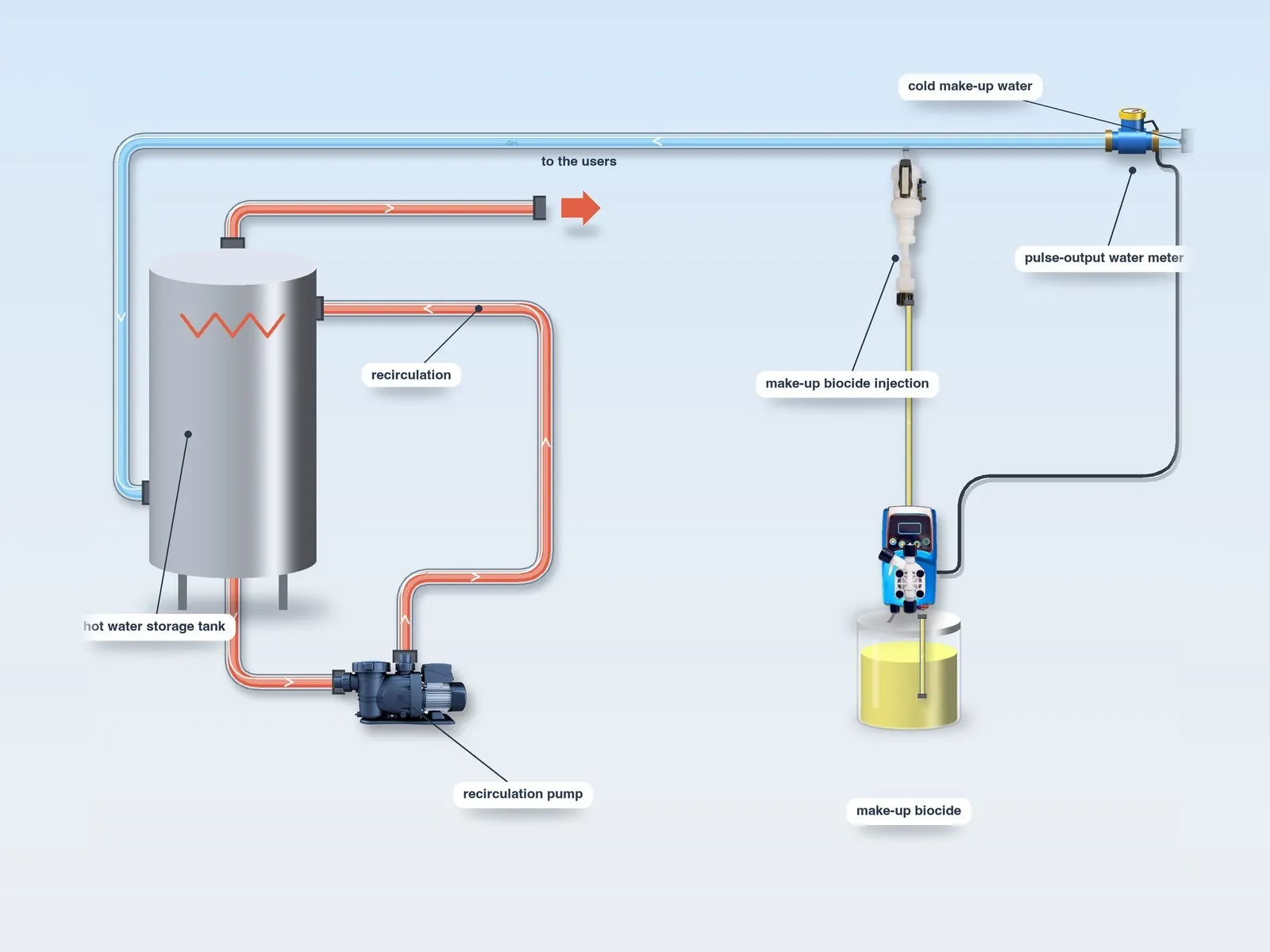
In hotels and hospitals water must always be available: a treatment that does not interrupt the operation of the system is required. In large installations, on-site production of the disinfectant with a LOTUS generator is cost-effective.
LOTUS generator →Hardness, iron, manganese, zinc, pH, temperature, turbidity and organic substances influence both the choice of treatment and the degree of contamination.
Age, wear and state of corrosion, diameters and routing, joints and dead legs, storage and recirculation, state of maintenance.
Porous and rough surfaces, glass and plastics promote bacterial proliferation; polyethylene is not subject to corrosion but promotes biofilm formation.
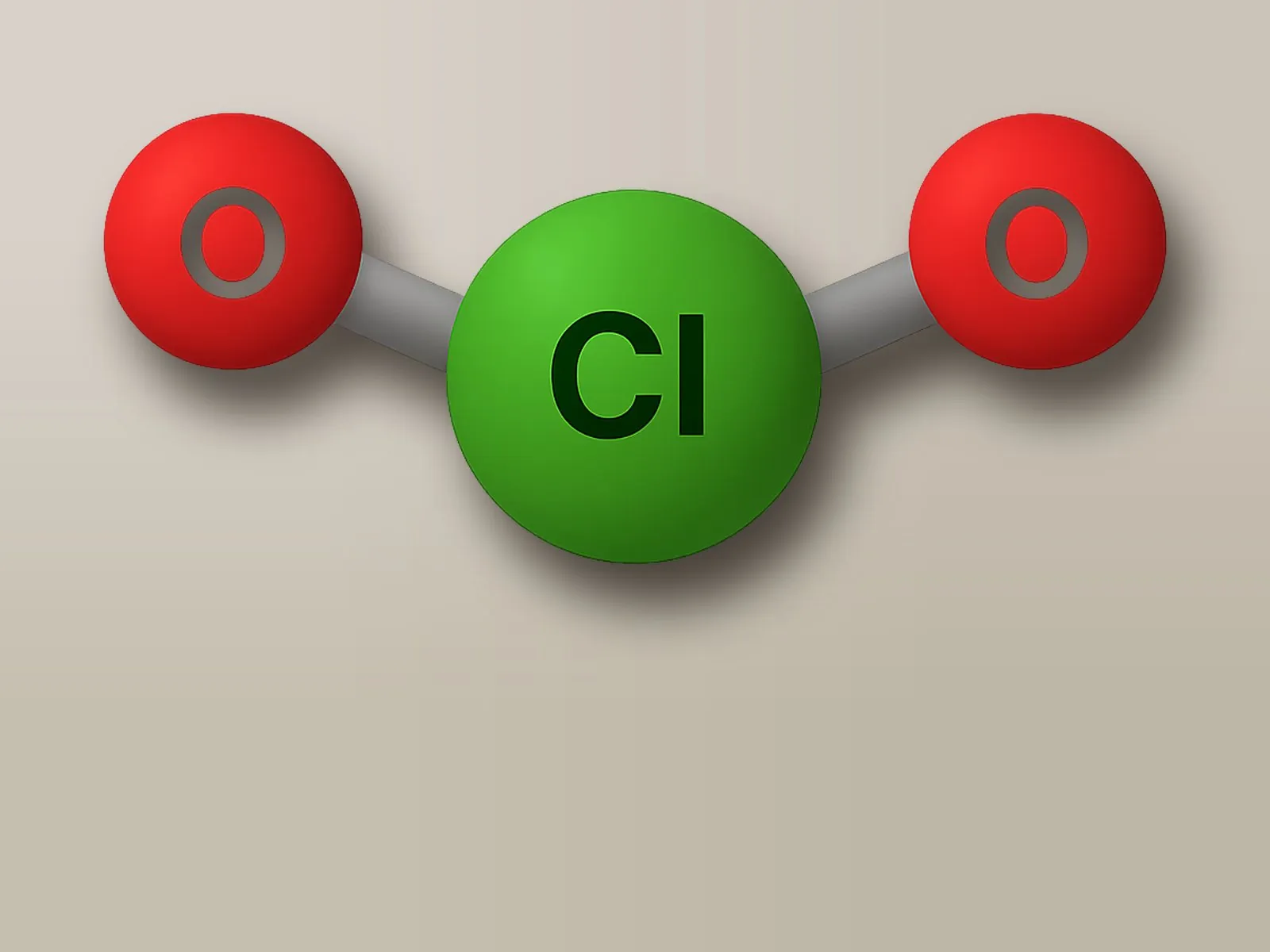
High effectiveness against biofilm, action independent of pH and of the presence of corrosion inhibitors, no formation of organohalogen compounds and greater residual effectiveness; less effective on copper, not suitable for galvanised steel. Concentration 0.1 – 1.0 mg/l; shock treatment 5 – 10 mg/l. On-site production avoids the formation of chlorites and chlorates.
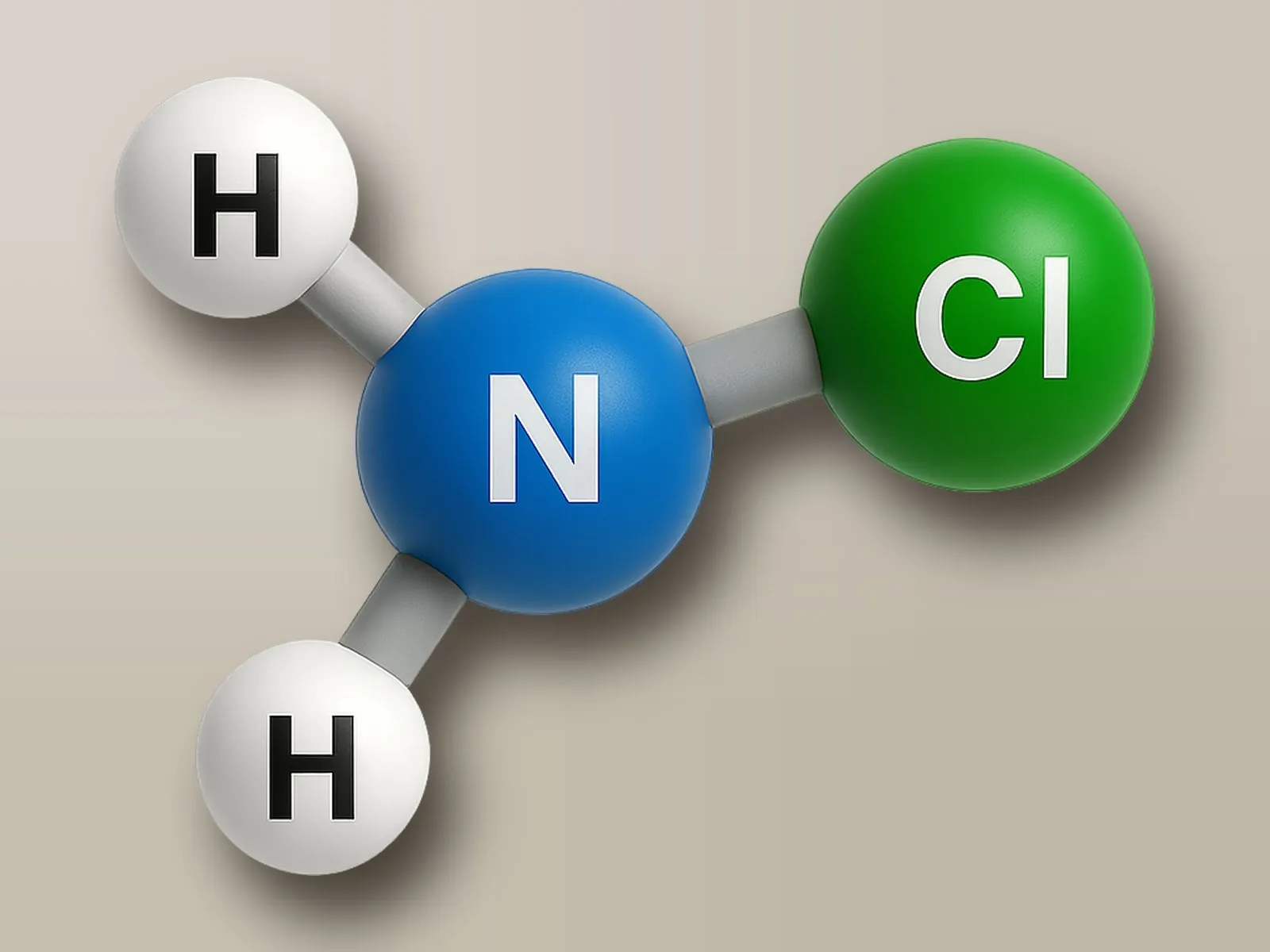
Good effectiveness against biofilm, action independent of pH, concentration of approximately 3 mg/l and high stability: it allows the disinfection of extensive and complex hot and cold water networks and is only slightly aggressive. Produced on site, it is cost-effective for large volumes of water.
MDS system →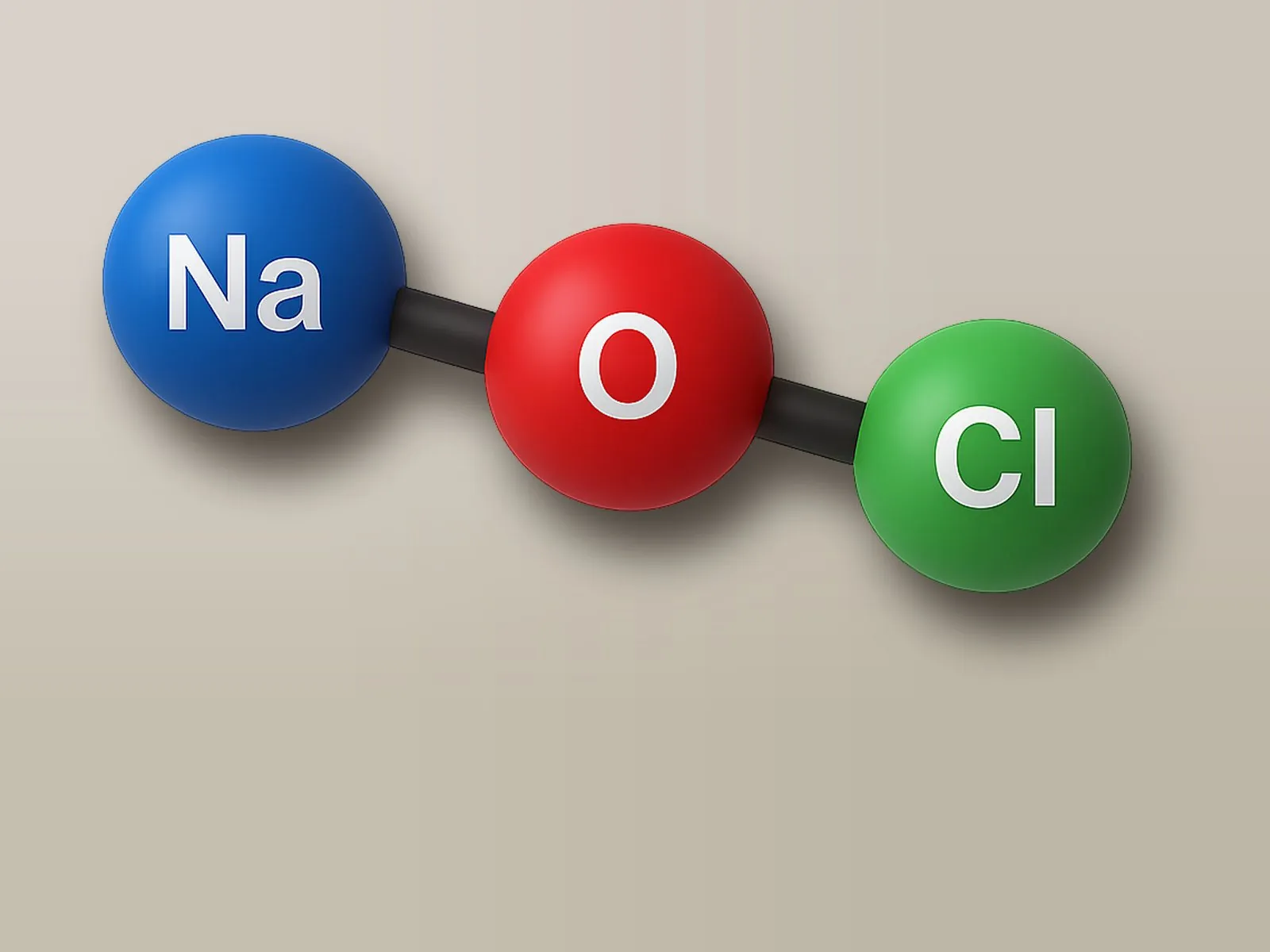
Residual chlorine of 1 – 3 mg/l throughout the network, including the distal points. Chlorine is corrosive; at these concentrations the water is no longer drinkable (maximum 0.2 mg/l) and trihalomethanes are formed. Reduced effectiveness above 30 °C and pH 7 and against biofilm.
LDsCL system → With the system at a temperature below 30 °C, 20 – 50 mg/l of chlorine (2 hours at 20 mg/l or 1 hour at 50 mg/l), followed by draining and restoration of 0.5 – 1 mg/l at the distal points. An effective but temporary treatment: recolonisation occurs within weeks or months; highly corrosive, it requires the use of hot water to be suspended.
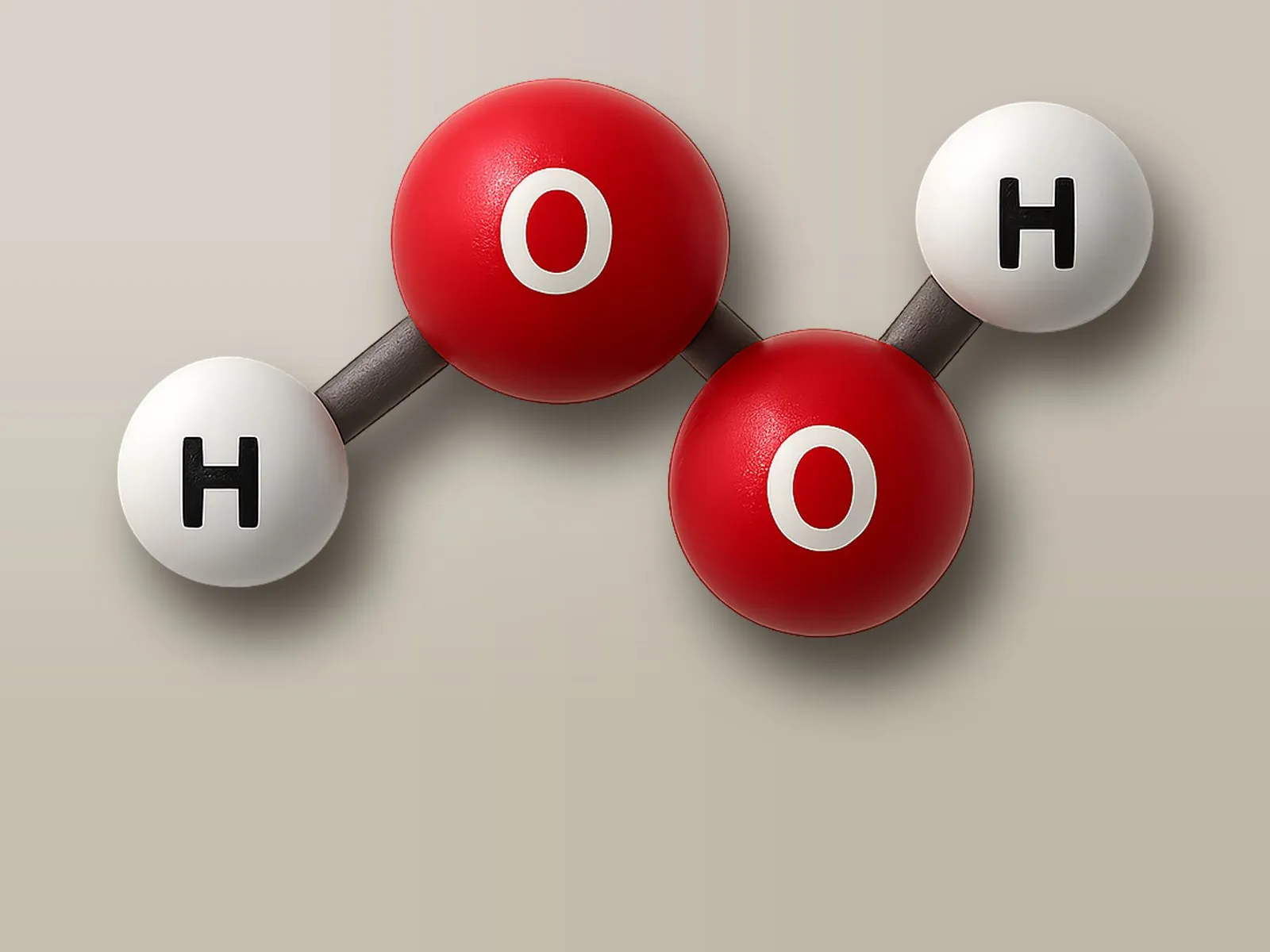
10 mg/l of peroxide and 10 µg/l of silver, dosed with a pump and water meter: less aggressive than chlorine and chlorine dioxide, with no known by-products; more effective at pH below 8, not suitable for galvanised steel.
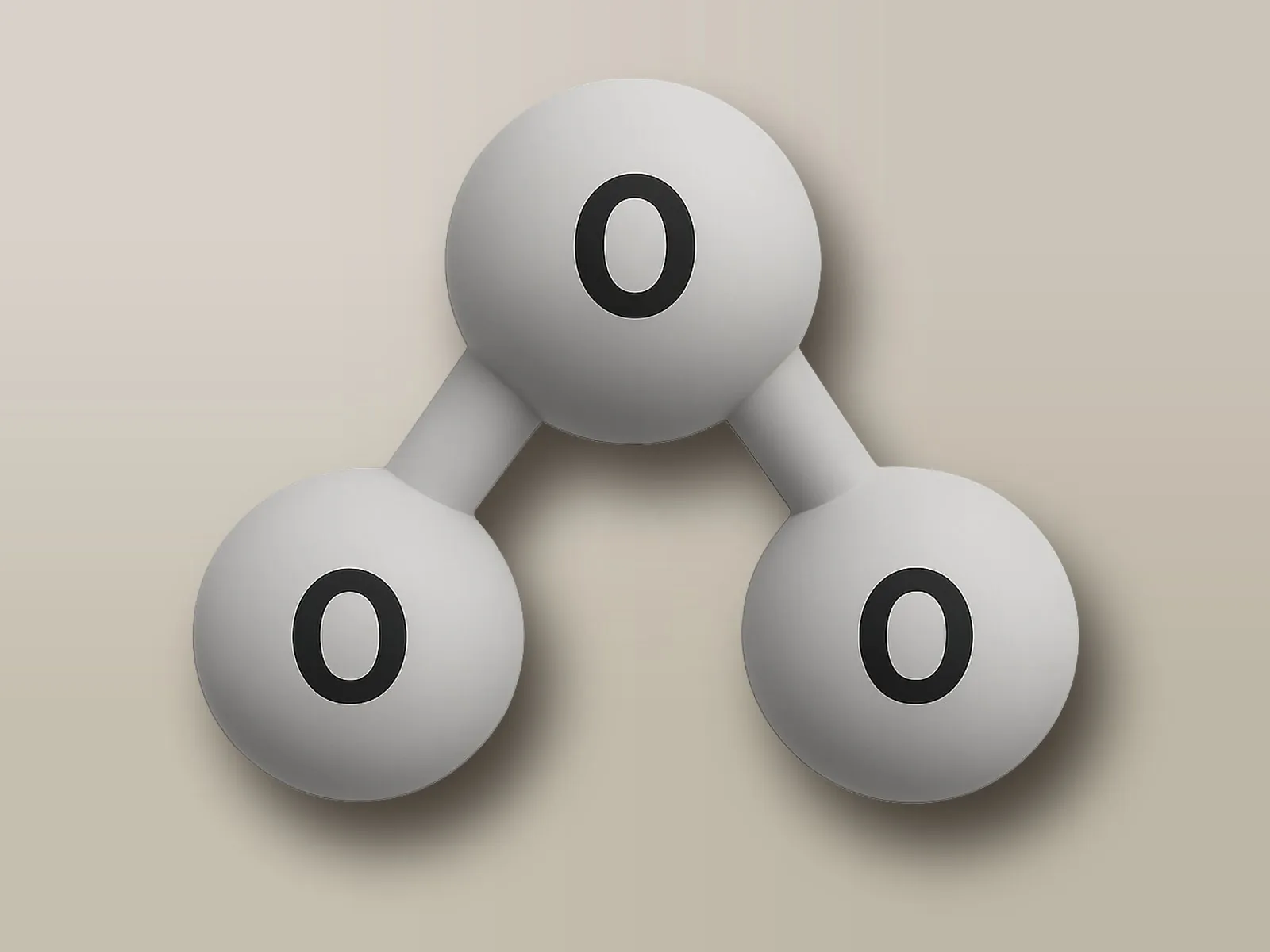
A highly effective biocide, 1 – 2 mg/l produced by a generator; it decomposes rapidly into oxygen and has no residual effect, so it must be combined with another disinfectant. Poor effectiveness against biofilm, formation of by-products and, at high concentrations, damage to pipework.
Ozone measurement →
Radiation at 254 nm inactivates bacteria close to the point of installation, without by-products or changes in taste. With no residual effect, it is not sufficient for an entire building: it requires clear water, a water layer only a few centimetres thick and a complementary chemical treatment.
Hot water storage tank at 70 – 80 °C for three days, with at least 30 minutes of daily flow through all branches. 60 °C is not always reached at all points, there is a risk of scalding (not applicable in facilities open to the public) and its effectiveness is limited in time.
Ions produced by electrolysis, effective up to pH 9; they require continuous measurement (copper 0.20 – 0.40 mg/l, silver 0.02 – 0.04 mg/l) and water with hardness up to 15 °f, free from zinc, nitrates and chlorine; maintenance costs are high.
Continuous disinfection of domestic hot water, with measurement and recording of the disinfectant residual, is one of the preventive measures the plan may include to keep Legionella below the parametric value.
The technical standard on water treatment in civil heating systems defines the characteristics of fill and make-up water and the conditioning treatments, to prevent scale and corrosion, which also promote biofilm.
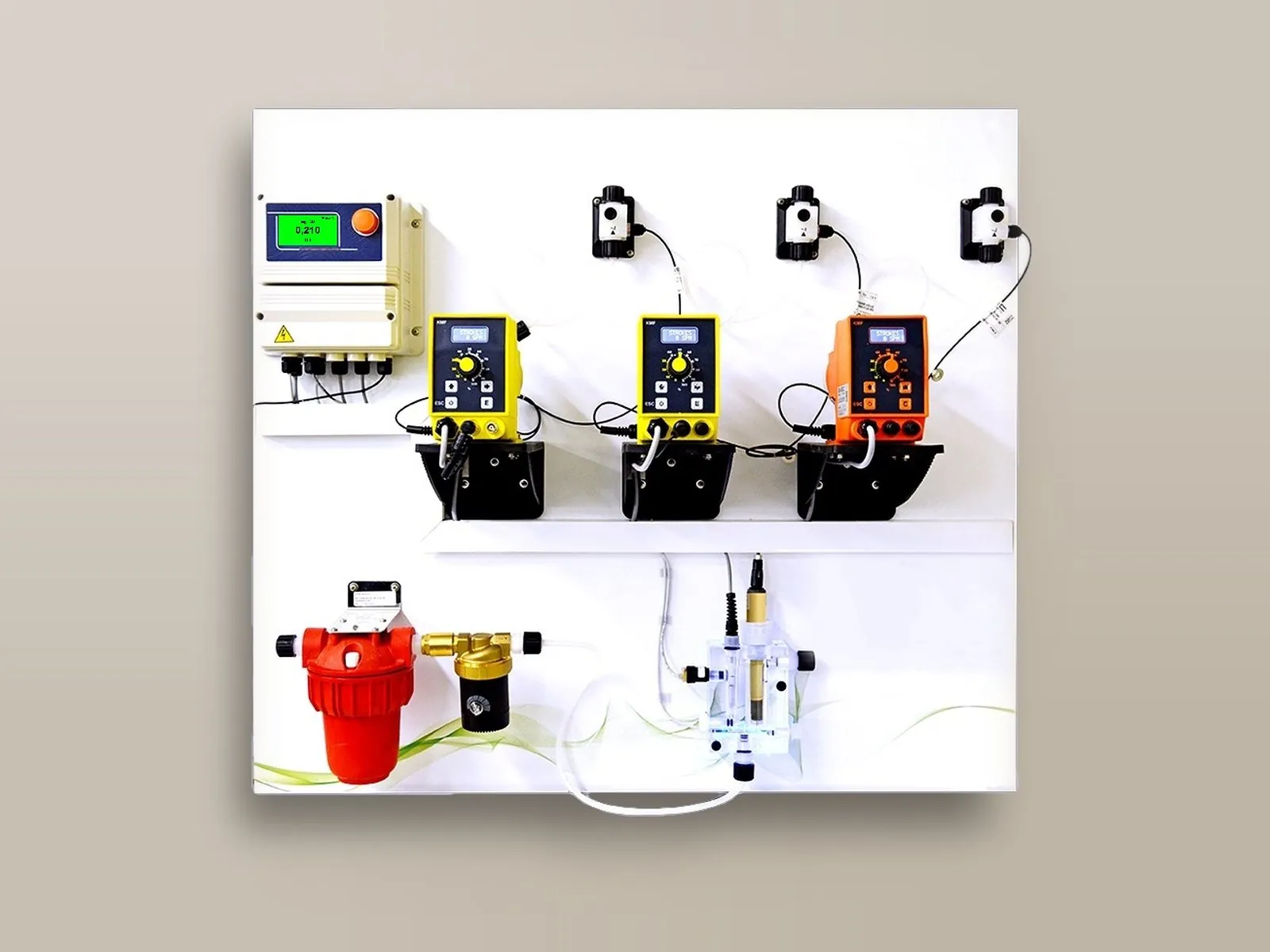
Dosing stations →Tell us about the characteristics of the facility and the water system: we will help you identify the most suitable disinfection treatment and measuring systems to support the risk assessment.
Call or write to us: a technician will reply with a tailored proposal of controllers, pumps, probes and accessories.