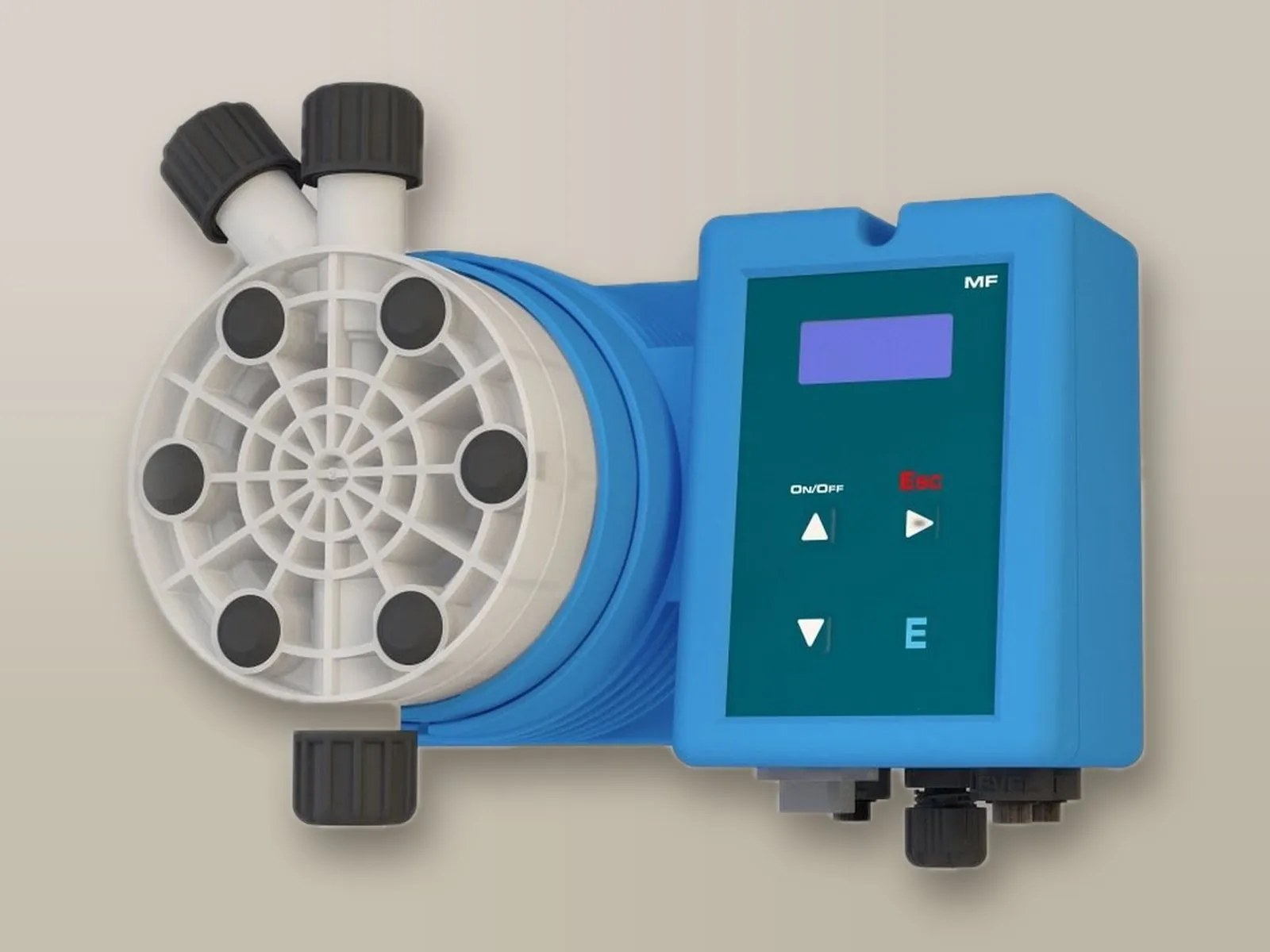
TMS MF
Constant dosing or dosing proportional to 4/20 mA or 0-10 V signals or to a pulse-output water meter.
- Digital constant
- Multiply
- Divide
- PPM
- Millilitres per quintal
- Percentage
- Batch
- mA
- Volt
Diaphragm dosing pumps for every dosing requirement, with models for high-viscosity liquids and a compressed air version up to 230 l/h. Electronic adjustment of the injection frequency.
From the basic constant dosing model to the multifunction model with display, with integrated pH meter or Redox meter.
Constant dosing or dosing proportional to 4/20 mA or 0-10 V signals or to a pulse-output water meter.
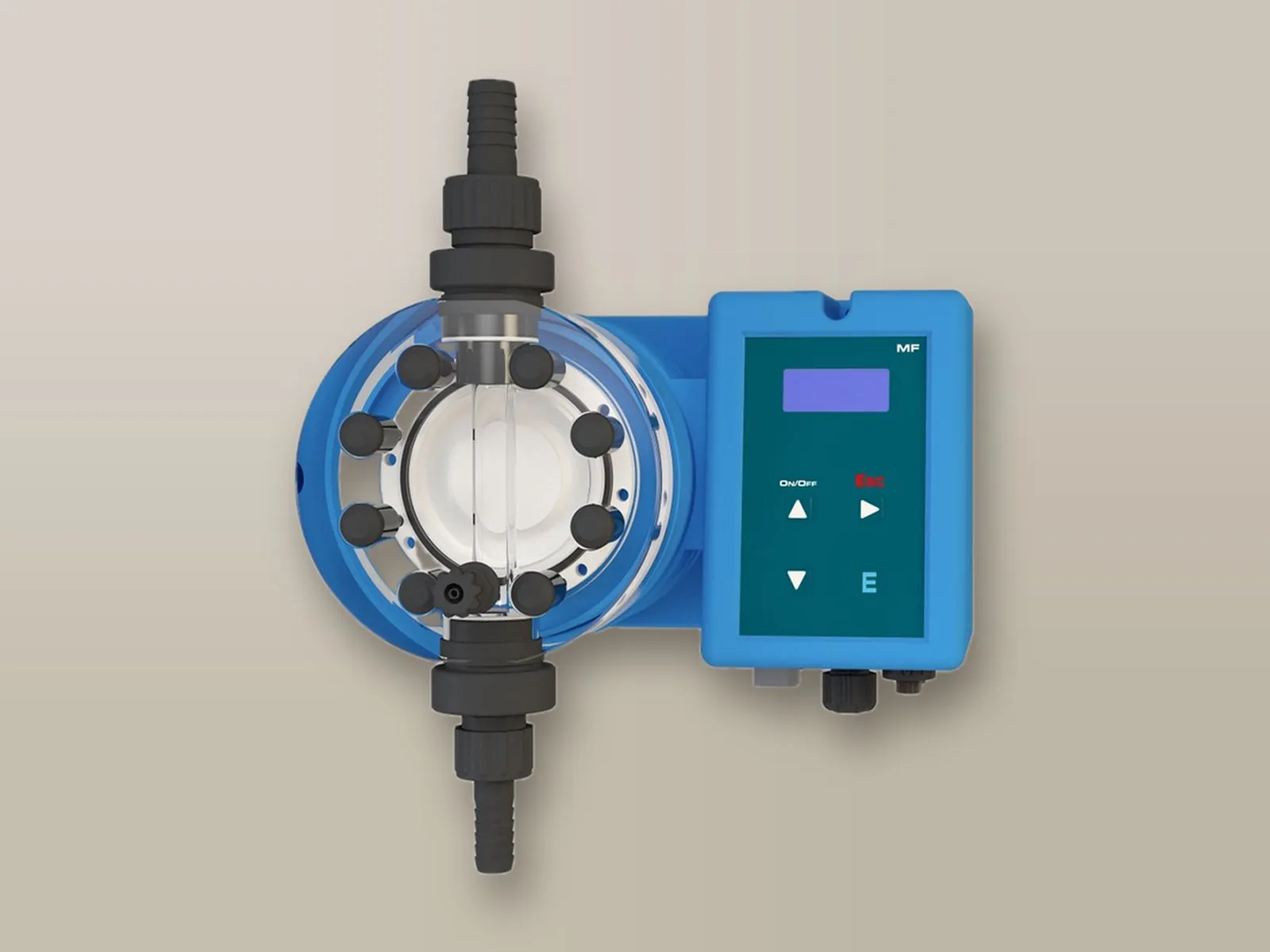 TMS MF PPMMA pump head for viscous liquids up to 50,000 cPs.
Pump head: PVDF, PP, PMMA or AISI 316L
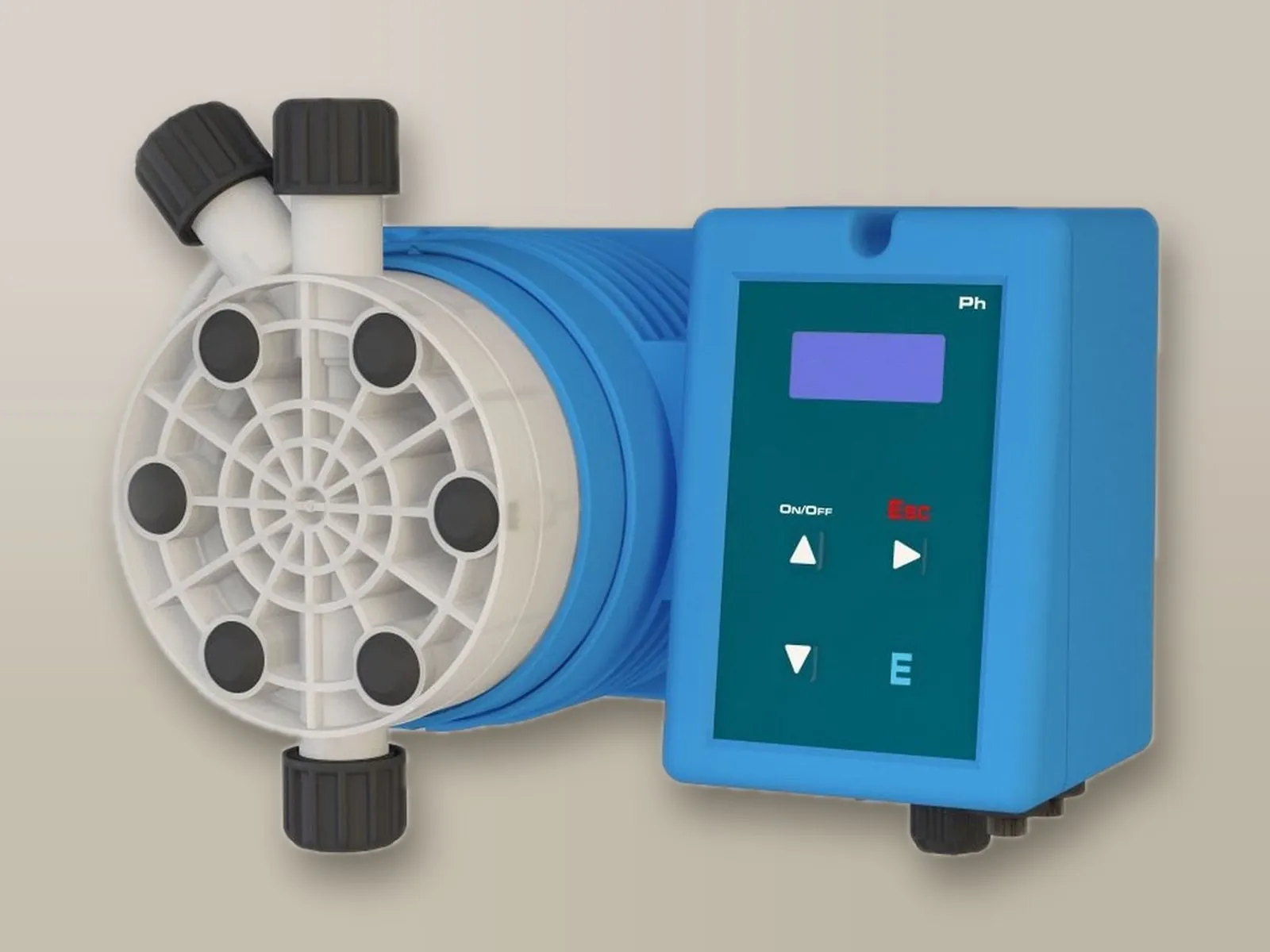
With integrated pH meter for automatic pH control.
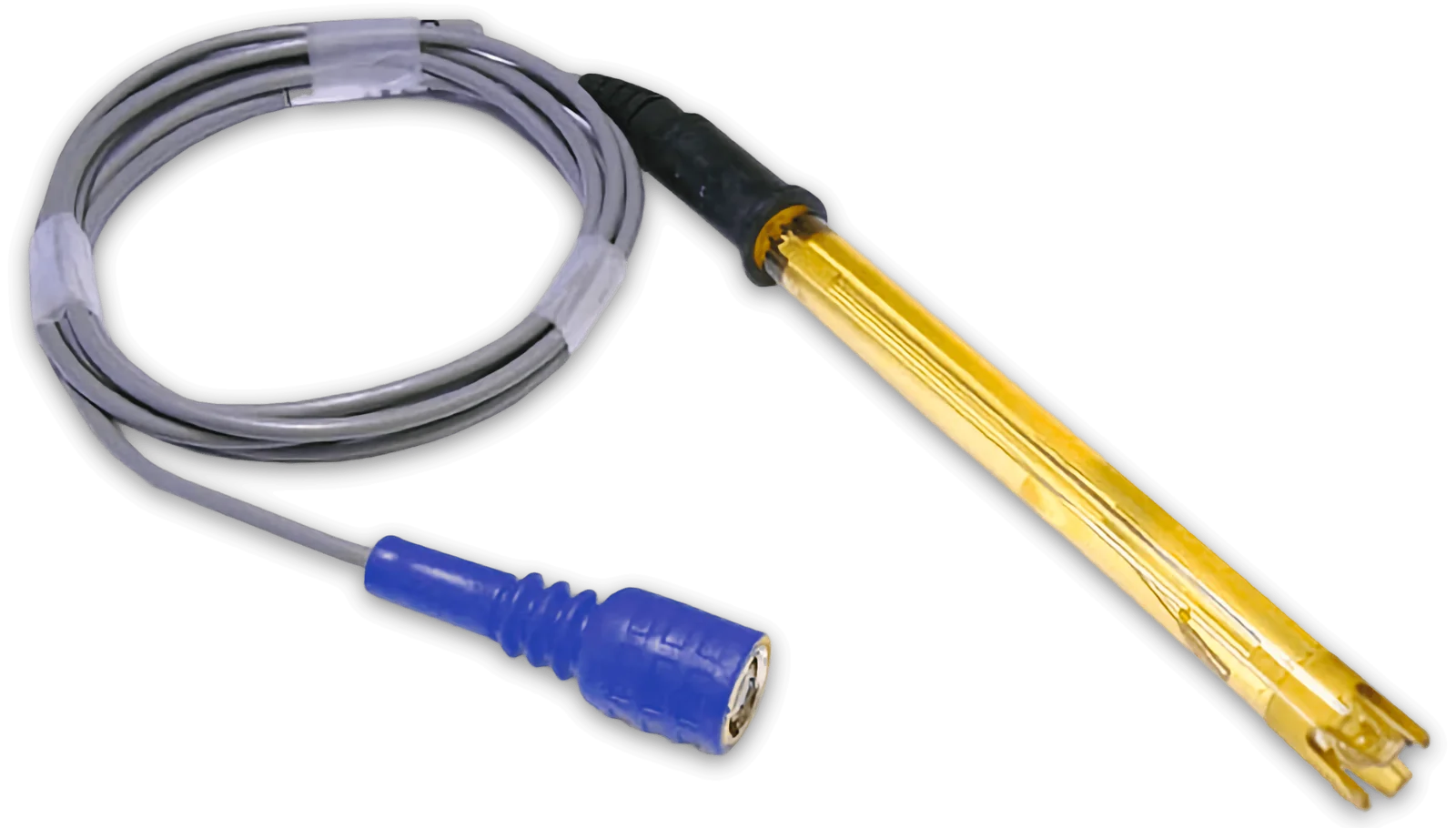 EpHSpH electrode
Pump head: PVDF, PP, PMMA or AISI 316L
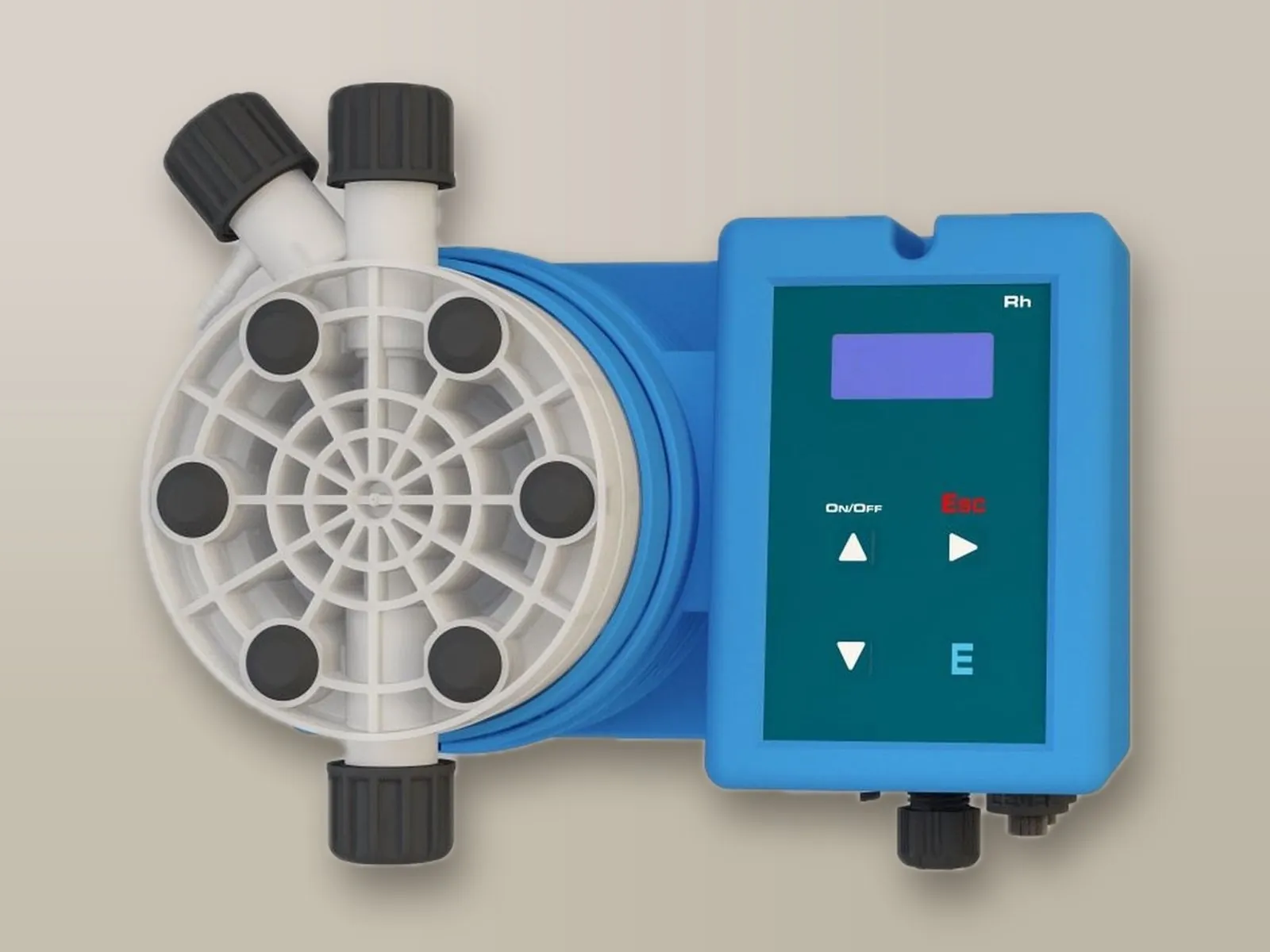
With integrated Redox meter for control of the Redox potential (ORP).
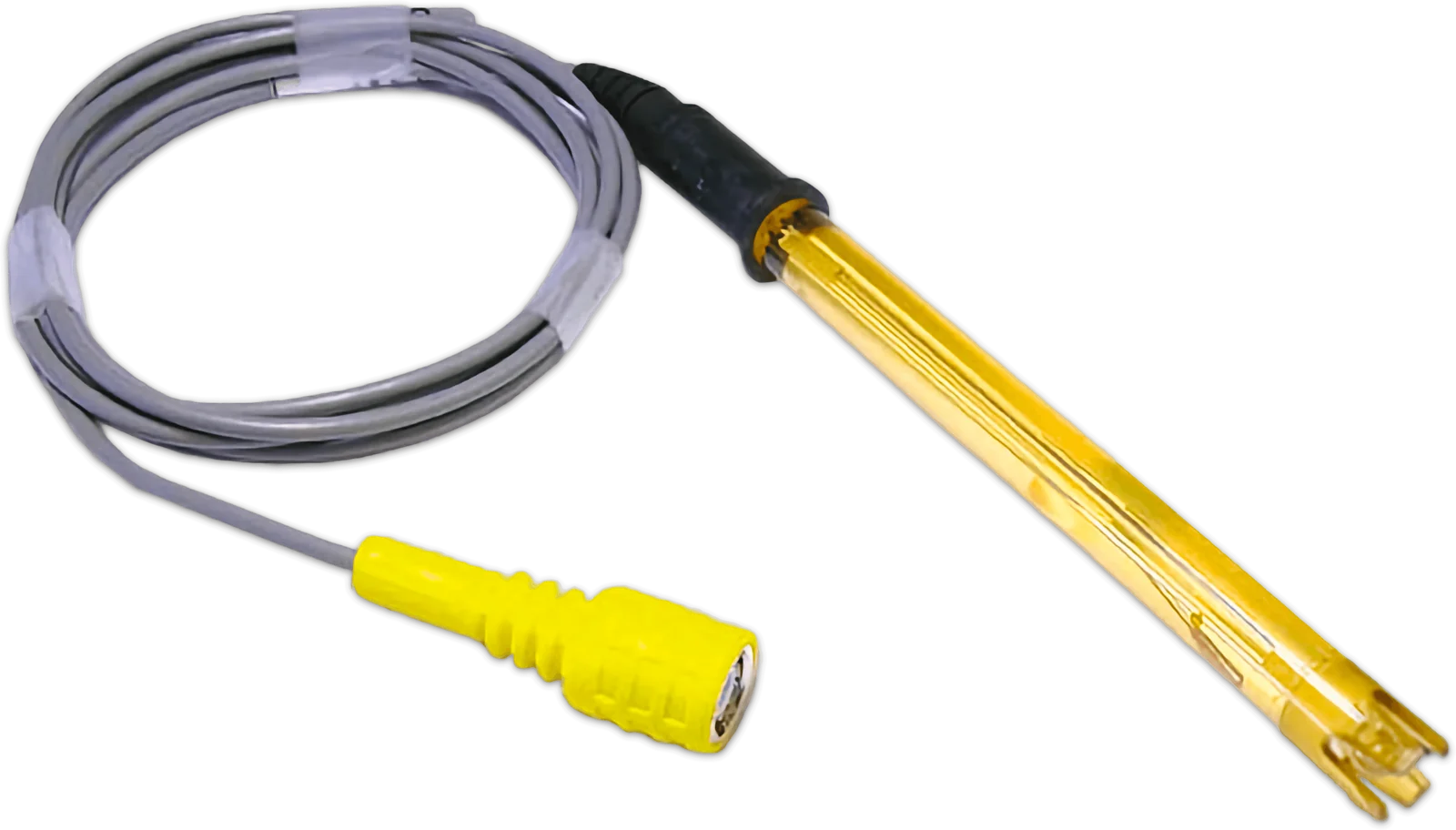 ERhSRedox (ORP) electrode
Pump head: PVDF, PP, PMMA or AISI 316L
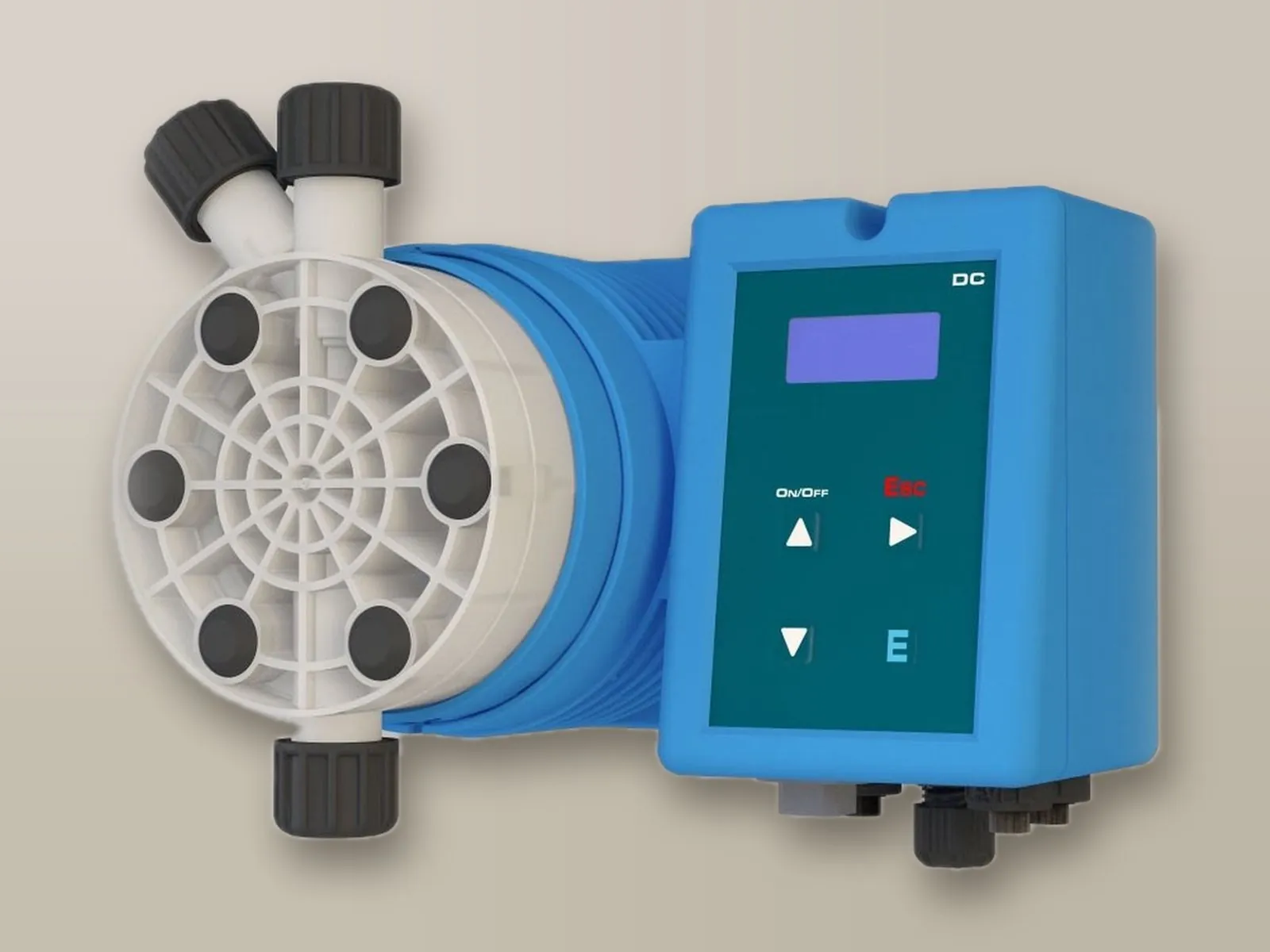
Constant dosing (l/h or strokes) with the option of remote control via an external contact.
Pump head: PVDF, PP, PMMA or AISI 316L
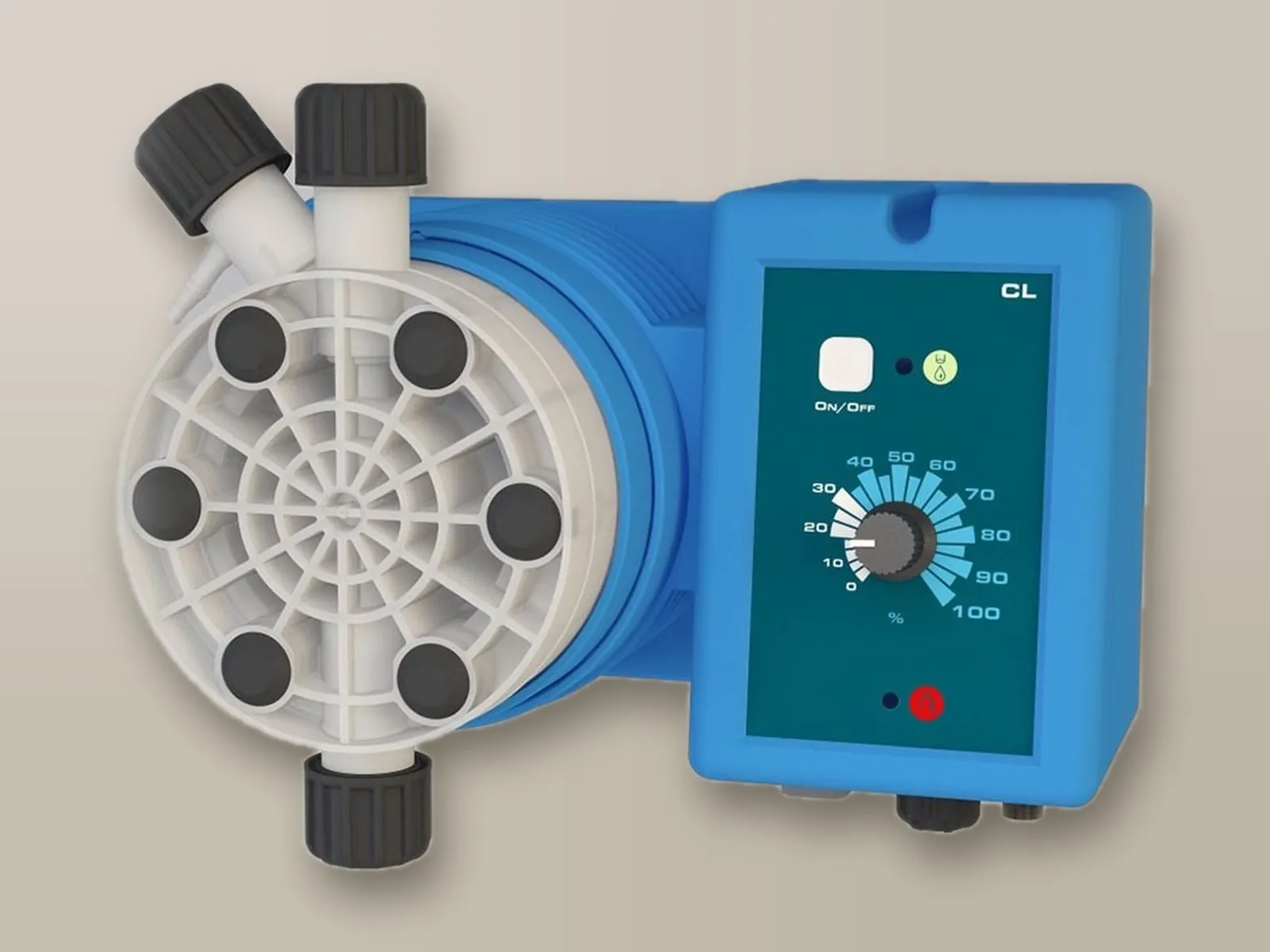
For constant dosing, with input for tank level control.
Pump head: PVDF, PP, PMMA or AISI 316L
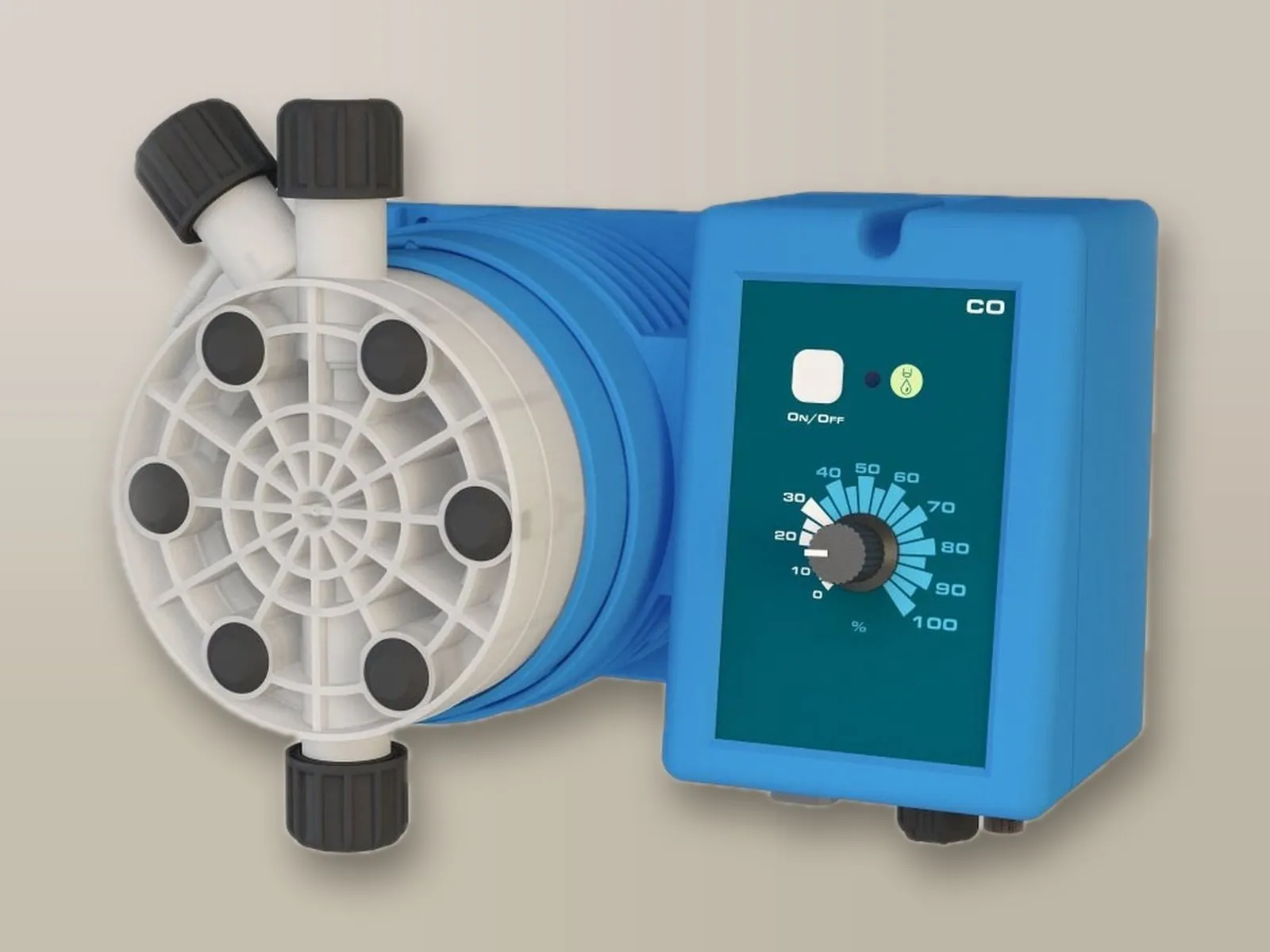
Basic model for constant dosing without external controls.
Pump head: PVDF, PP, PMMA or AISI 316L
State how the pump must dose, the product, the flow rate and the back pressure: the guide proposes the most suitable model and configuration of the series, among those listed in the technical data.
Answer the questions and enter flow rate and back pressure: the recommended model appears below.
| Function | MF | pH | Rh | DC | TCL | TCO |
|---|---|---|---|---|---|---|
| Dosing modes | ||||||
| Constant | – | – | – | – | ● | ● |
| Constant with divider | – | – | – | – | ● | ● |
| Digital constant | ● | – | – | ● | – | – |
| Multiply | ● | – | – | – | – | – |
| Divide | ● | – | – | – | – | – |
| PPM | ● | – | – | – | – | – |
| Millilitres per quintal | ● | – | – | – | – | – |
| Percentage | ● | – | – | – | – | – |
| Batch | ● | – | – | – | – | – |
| mA | ● | – | – | – | – | – |
| Volt | ● | – | – | – | – | – |
| Proportional to pH | – | ● | – | – | – | – |
| Proportional to Redox | – | – | ● | – | – | – |
| Functions | ||||||
| Electronic flow rate adjustment | ● | ● | ● | ● | ● | ● |
| Digital display | ● | ● | ● | ● | – | – |
| Level control | ● | ● | ● | ● | ● | – |
| Stand-by | ● | ● | ● | ● | – | – |
| Flow sensor | ● | – | – | – | – | – |
| Alarm output | ● | ● | ● | ● | – | – |
The pump doses at a constant injection frequency, proportional to the flow rate percentage set with the analogue selector (0 – 100%).
Models: TCL, TCO
Operation similar to constant dosing, with the selector adjustable between 0 and 10%: the maximum flow rate is reduced to as little as 1/10 of the rated value.
Models: TCL, TCO
The pump doses at a constant frequency, determined by the SPH (strokes/hour), SPM (strokes/minute) or LPH (litres/hour) values set during programming.
Models: TMS MF, TMS DC
The pulses from the pulse-output water meter are multiplied by the set factor.
Models: TMS MF
The pulses from the pulse-output water meter are divided by the set factor.
Models: TMS MF
Dosing is calculated from the pulses of the pulse-output water meter and the set PPM value; the concentration of the chemical and the volume per stroke can be programmed.
Models: TMS MF
Dosing is calculated from the pulses of the pulse-output water meter and the set MLQ value (millilitres per quintal).
Models: TMS MF
Dosing is calculated from the pulses of the pulse-output water meter and the set percentage (%).
Models: TMS MF
A pulse from an external contact starts the dosing of the set quantity; pause and work cycles can be programmed.
Models: TMS MF
The 0-4/20 mA current signal controls dosing proportionally, between the set minimum and maximum values.
Models: TMS MF
The 0-10 V voltage signal controls dosing proportionally, between the set minimum and maximum values.
Models: TMS MF
The required pH value (SET POINT) is set: the pump measures the pH by means of a pH electrode and progressively reduces the injection frequency as the set value approaches, stopping when the SET POINT is reached.
Models: TMS pH
The required Redox potential (ORP) (SET POINT) is set: the pump measures it by means of a Redox electrode and progressively reduces the injection frequency as the set value approaches, stopping when the SET POINT is reached.
Models: TMS Rh
Performance varies with the working back-pressure (head) and with the characteristics of the chemical: for this reason the T and TMS pumps are available in specific configurations.
Suitable for most chemicals: the standard configuration for the most common applications.
| Code | Max pressure (bar) | Max flow rate (l/h) |
|---|---|---|
| TMS 2005 | 20 | 5 |
| TMS 0515 | 5 | 15 |
| TMS 0420 | 4 | 20 |
| TMS 0330 | 3 | 30 |
| TMS 0150 | 1 | 50 |
| TMS 00100 | 0 | 100 |
Required with chemicals that release gas (e.g. peroxides), to prevent the pump from becoming air-locked.
| Code | Max pressure (bar) | Max flow rate (l/h) |
|---|---|---|
| TMSA 2003,2 | 20 | 3.2 |
| TMSA 0510 | 5 | 10 |
| TMSA 0413 | 4 | 13 |
| TMSA 0320 | 3 | 20 |
| TMSA 0135 | 1 | 35 |
For chemicals with a viscosity between 8,000 and 50,000 cPs.
| Code | Max pressure (bar) | Max flow rate (l/h) |
|---|---|---|
| TMS P 0601 | 6 | 1 |
| TMS P 0403 | 4 | 3 |
| TMS P 0208 | 2 | 8 |
| TMS P 0120 | 1 | 20 |
| TMS P 0025 | 0 | 25 |
Nominal flow rate measured with water at room temperature.
For dosing large quantities of chemical in industrial applications.
| Code | Max pressure (bar) | Max flow rate (l/h) |
|---|---|---|
| TMS AC 1050 | 10 | 50 |
| TMS AC 05150 | 5 | 150 |
| TMS AC 00230 | 0 | 230 |
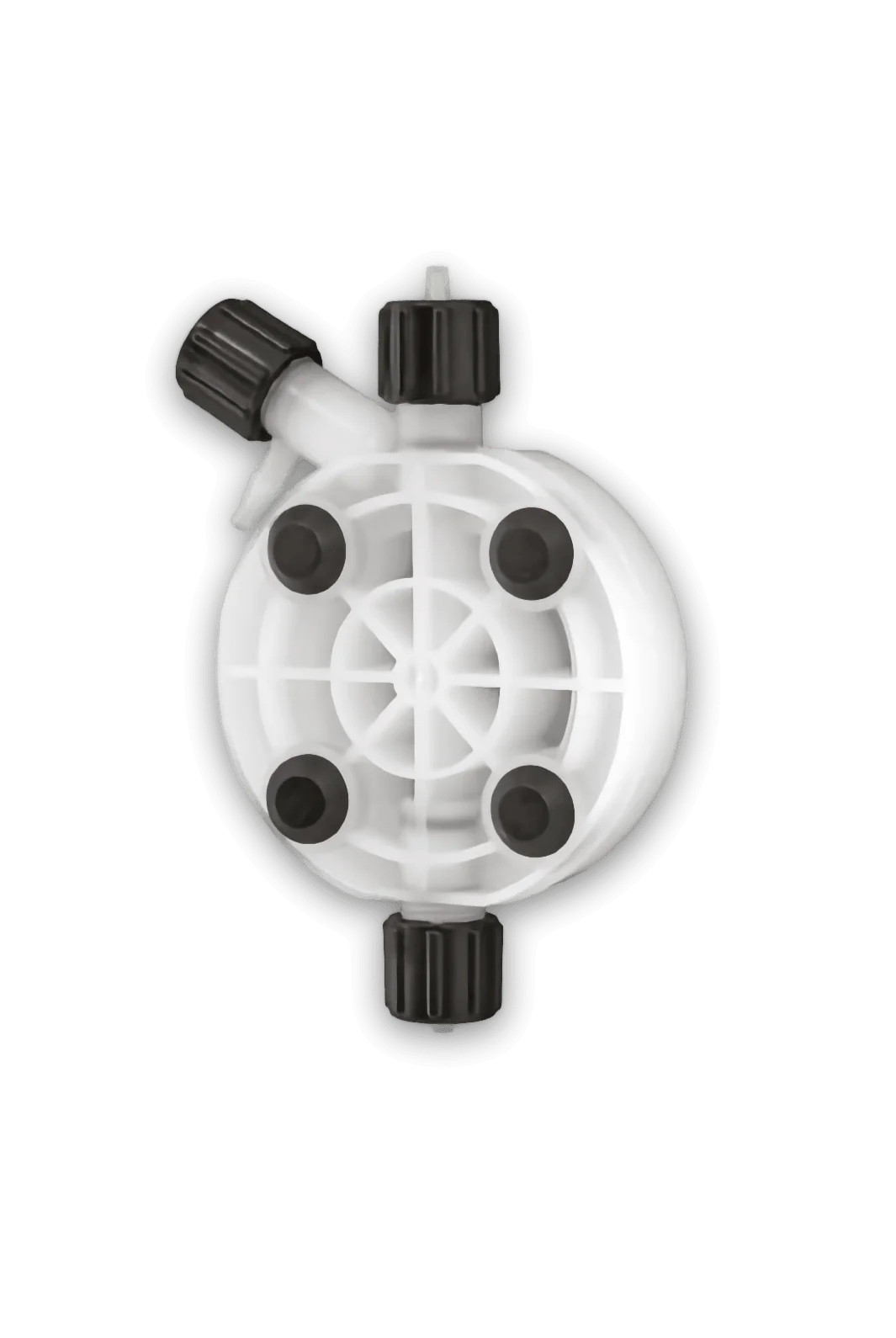
Suitable for most acids, for peroxides and for sodium hypochlorite (chlorine).
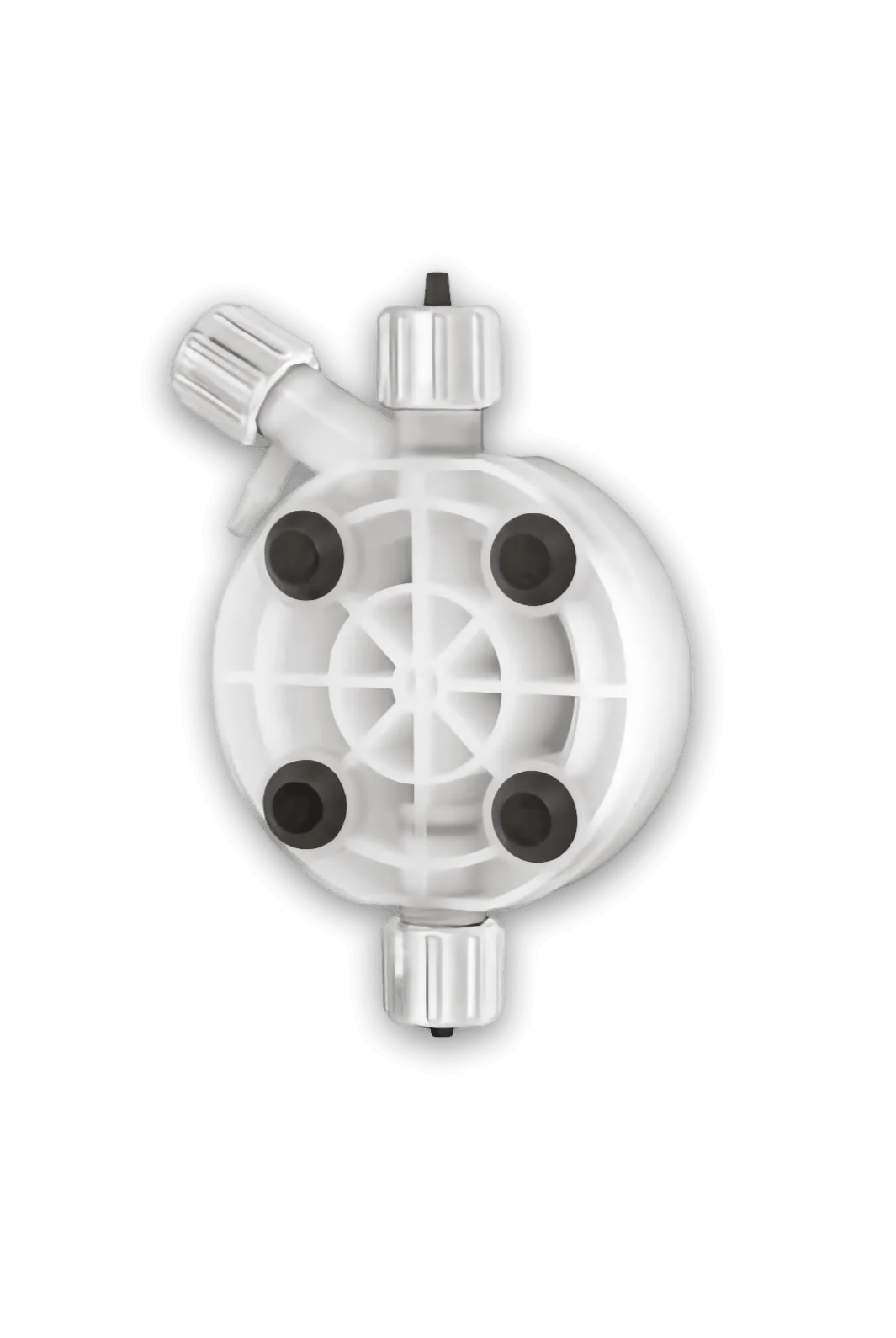
Suitable for sodium hydroxide (caustic soda).
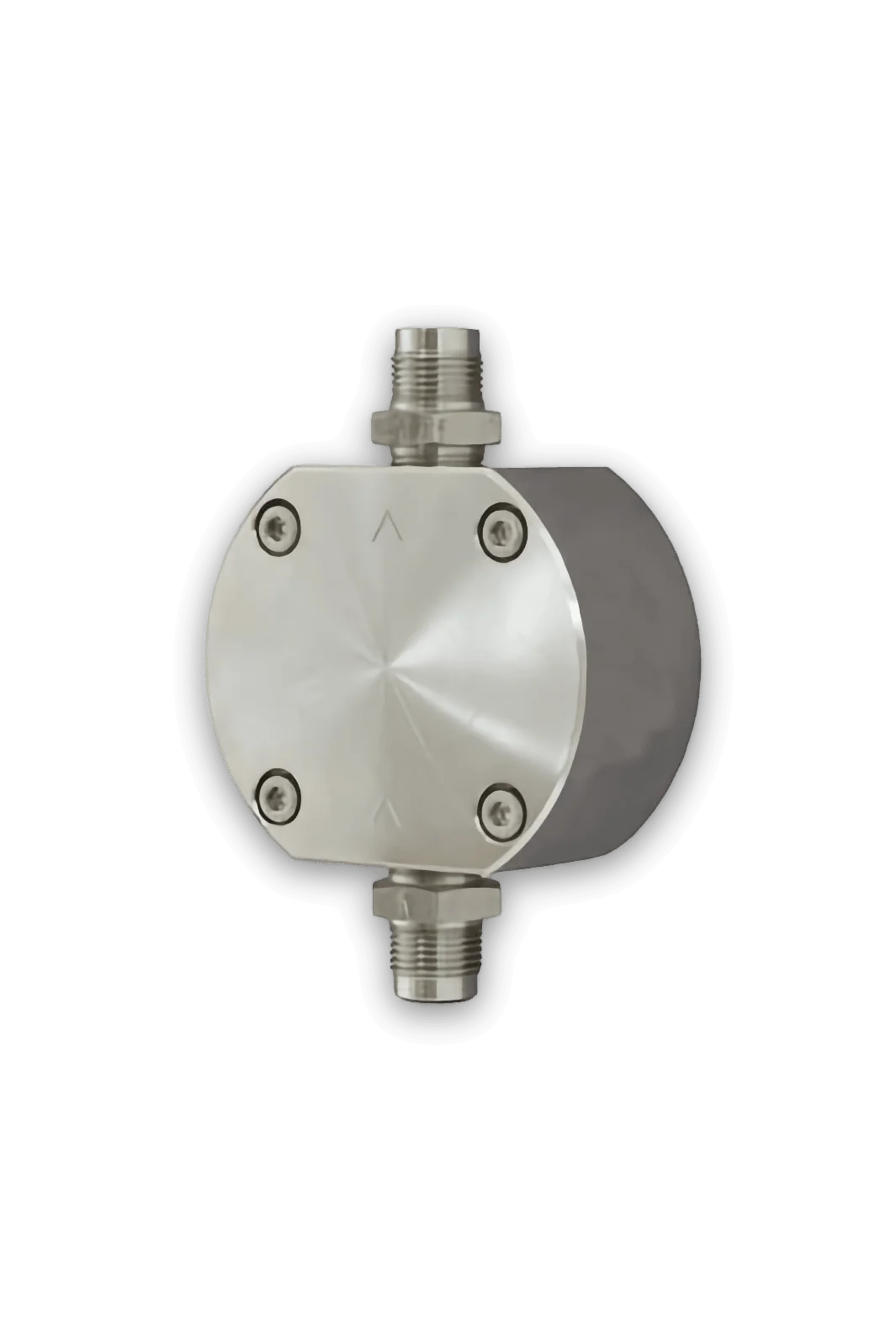
Suitable for peracetic acid and sodium hydroxide.
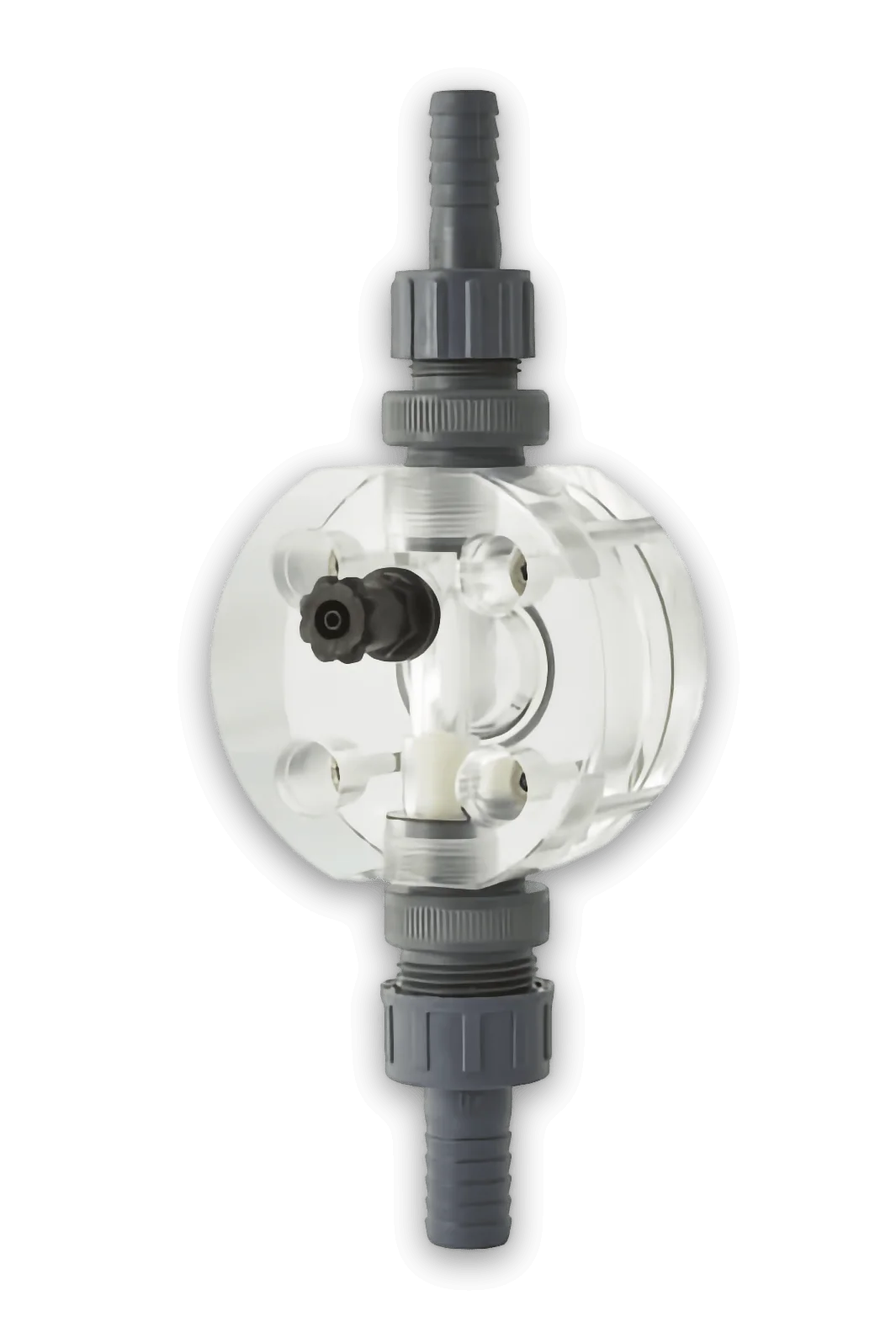
Suitable for medium and high viscosity substances.
In addition to the standard configuration, versions dedicated to particular applications are available; the performance of each is given in the technical data. The pages by application compare the suitable pumps of all the series.
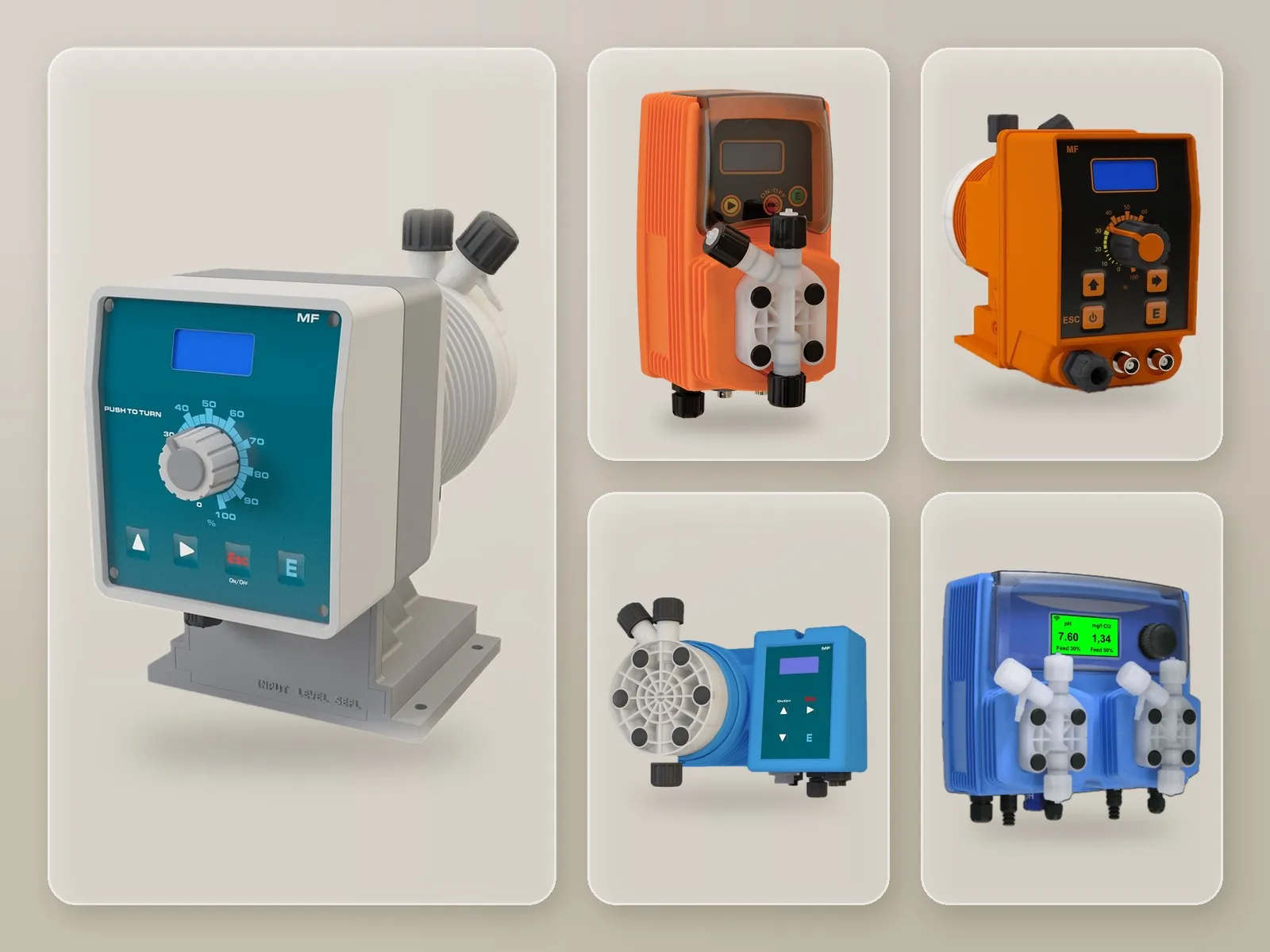
Self-venting pump head, required with chemicals that release gas (e.g. sodium hypochlorite and peroxides): it vents the gas and prevents the pump from locking.
PMMA pump head for high-viscosity liquids, from 8,000 to 50,000 cPs.
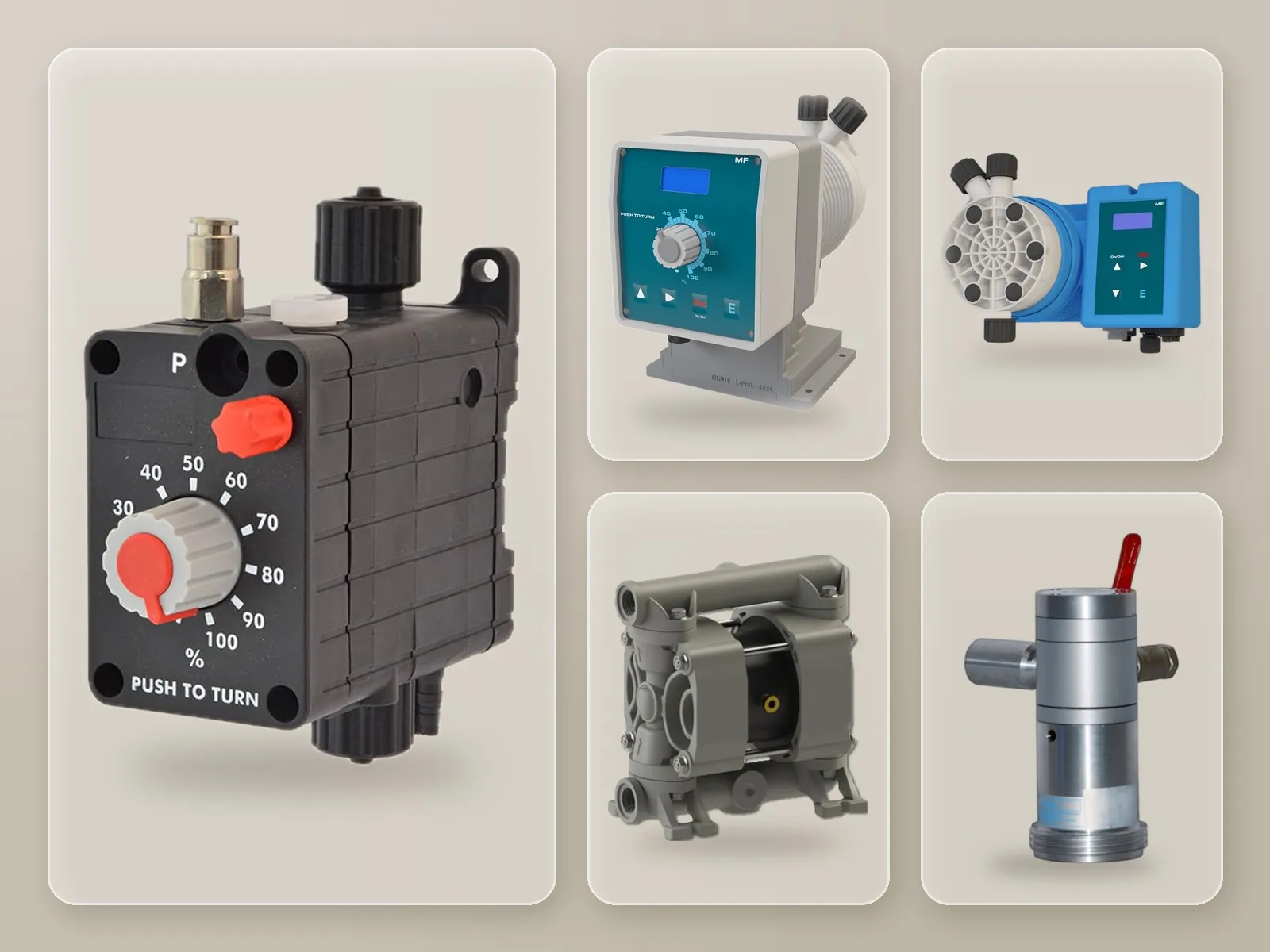
For dosing large quantities of chemicals in industrial applications: up to 230 l/h.
The most frequent causes of malfunction and the corrective actions to check before contacting technical support.
Insight: the pump does not prime and does not dose →| Message | Meaning | Action |
|---|---|---|
| ALARM LEVEL | Chemical in the tank has run out. | Restore the chemical level in the tank. |
| ALARM SEFL | The flow sensor has detected an excessive number of empty strokes, or the automatic re-priming has failed. | Check the SEFL sensor, prime the pump manually, then switch it off and on again. |
| OVER FLOW | The required operating frequency exceeds the rated value. | Check the set parameters and the pump flow rate, then switch it off and on again. |
| ALARM STROKE | The set flow rate exceeds the rated value. | Check the set parameters and the flow rate, then switch the pump off and on again. |
| ALARM POWER | Supply voltage outside the permitted limits. | Check that the voltage matches the rating plate data, then switch the pump off and on again. |
| ALARM BATCH | Batch dosing interrupted by a change of state of the external contact. | Check that the connected contact matches the pump configuration, then switch off and on again. |
| INPUT OPEN | No input signal in mA or Volt mode. | Check the external signal and its connection. |
| ERROR DATA | Inconsistent set values. | Check the values again; if they are correct and the error persists, the pump is undersized for the required dosing. |
| ERROR MEM | Error in the settings memory. | Restore the factory values with the LOAD DEFAULT procedure. |
| WRONG ENTRY | Invalid setting, for example the same value for the signal minimum and maximum. | Set distinct, correct values. |
| Incorrect password | The password entered does not match the stored one. | If it has been lost, restore the value 0000 with the RESET PASSWORD procedure. |
The # symbol on the display indicates one or more active alarms, which can be viewed on the ALARM QTY screen.
| Message | Meaning | Action |
|---|---|---|
| LOW LEVEL | Product running low in the tank. | Refill the tank. |
| LOW VOLT | The mains voltage is lower than the rated voltage. | Check the power supply. |
| HIGH VOL | The mains voltage is higher than the rated voltage. | Check the power supply. |
| DOSING · AL OFF | The maximum dosing time alarm (1 – 100 minutes) has been triggered. | In STOP mode the pump remains stopped: press any key to restart it and check why the value does not reach the set point. |
| CALIB ERROR | Probe calibration failed. | Repeat the calibration, strictly following the procedure. |
| STAND-BY | The pump is completing the waiting phase. | No action required. |
| DATA SAVED | The data have been saved. | No action required. |
| Message | Meaning | Action |
|---|---|---|
| ALARM LEVEL | Product exhausted in the tank. | Refill the tank. |
| ALARM STD-BY | Pump stopped by the stand-by signal. | Normal condition: the pump restarts when the enable signal is restored. |
| ALARM POWER | The power supply is outside the permitted values (180 – 260 VAC). | Check the mains voltage. |
| ALARM STROKE | The set flow rate exceeds the rated flow rate. | Correct the settings. |
| ERROR MEM | Error in the settings memory. | Restore the factory values with the LOAD DEFAULT procedure. |
| ERROR DATA | The values entered are not consistent. | Check the values; if they are correct and the error persists, the pump is undersized. |
| LED | Meaning | Action |
|---|---|---|
| 3 flashes per second | Mains voltage below the rated value. | Check the power supply. |
| 2 flashes per second | Mains voltage above the rated value. | Check the power supply. |
| 1 flash every 2 seconds | Pump OFF, powered. | No action required. |
| On, goes off at each stroke | Pump running. | No action required. |
| On, goes off every 2 seconds | Pump in divide mode (frequency reduced by a factor of 10). | No action required. |
| Steady red (two-colour LED) | Chemical below the minimum level: the pump stops. | Restore the chemical level in the tank. |
| Green, flashing every second (two-colour LED) | Supply voltage out of range. | Check that the mains voltage matches the rated value. |
Adjustment is linear between 30 and 100%: below 30% the actual flow rate may differ from the expected one and must therefore be checked.
Connect all the tubing, open the bleed valve and set the adjustment to 100%; start the pump and close the bleed valve as soon as the chemical comes out. With viscous liquids the operation can be assisted with a 20 cc syringe applied to the bleed port.
With the pump switched off, hold down both arrow keys and restore power: LOAD DEFAULT appears and the programming is reset to the factory values (password 0000).
If the problem persists, contact us. Before sending the pump for servicing, empty the pump head of chemical and dry it.
According to the operating mode and the set parameters, the pump automatically adapts the injection frequency to ensure the required dosing.
The integrated LCD display allows the pump to be programmed and its operating status to be monitored at all times.
Models: TMS MF, TMS pH, TMS Rh, TMS DC
The pump is supplied with a low-level probe for the tank: when the chemical runs out, it shows the alarm on the display and activates the corresponding output.
Models: TMS MF, TMS pH, TMS Rh, TMS DC, TCL
Pump start and stop can be controlled remotely by means of a run/stop contact from a PLC or another source.
Models: TMS MF, TMS pH, TMS Rh, TMS DC
A flow sensor can be connected to check every single injection: if one or more injections are missed, the pump performs an automatic re-priming and recovers the lost injections; if this fails, it activates the alarm output.
Models: TMS MF
In the event of a fault, a volt-free contact is activated, configurable as normally open (N.O.) or normally closed (N.C.), to drive a visual or audible signalling device, send an SMS or report the event to a PLC.
Models: TMS MF, TMS pH, TMS Rh, TMS DC
Tell us about your application: our technical staff will recommend the most suitable model, configuration and accessories.
Call or write to us: a technician will reply with a tailored proposal of controllers, pumps, probes and accessories.