Short suction
Pump close to the tank, with a low suction lift and a suction tube as short as possible, with no loops or sections where air can collect.
When the pump is running but the chemical does not reach the injection point, the cause almost always lies in the suction circuit: air in the tubes, a clogged foot filter, an empty chemical tank or incorrect installation. The most frequent causes, the remedies and the rules for preventing them are set out below.
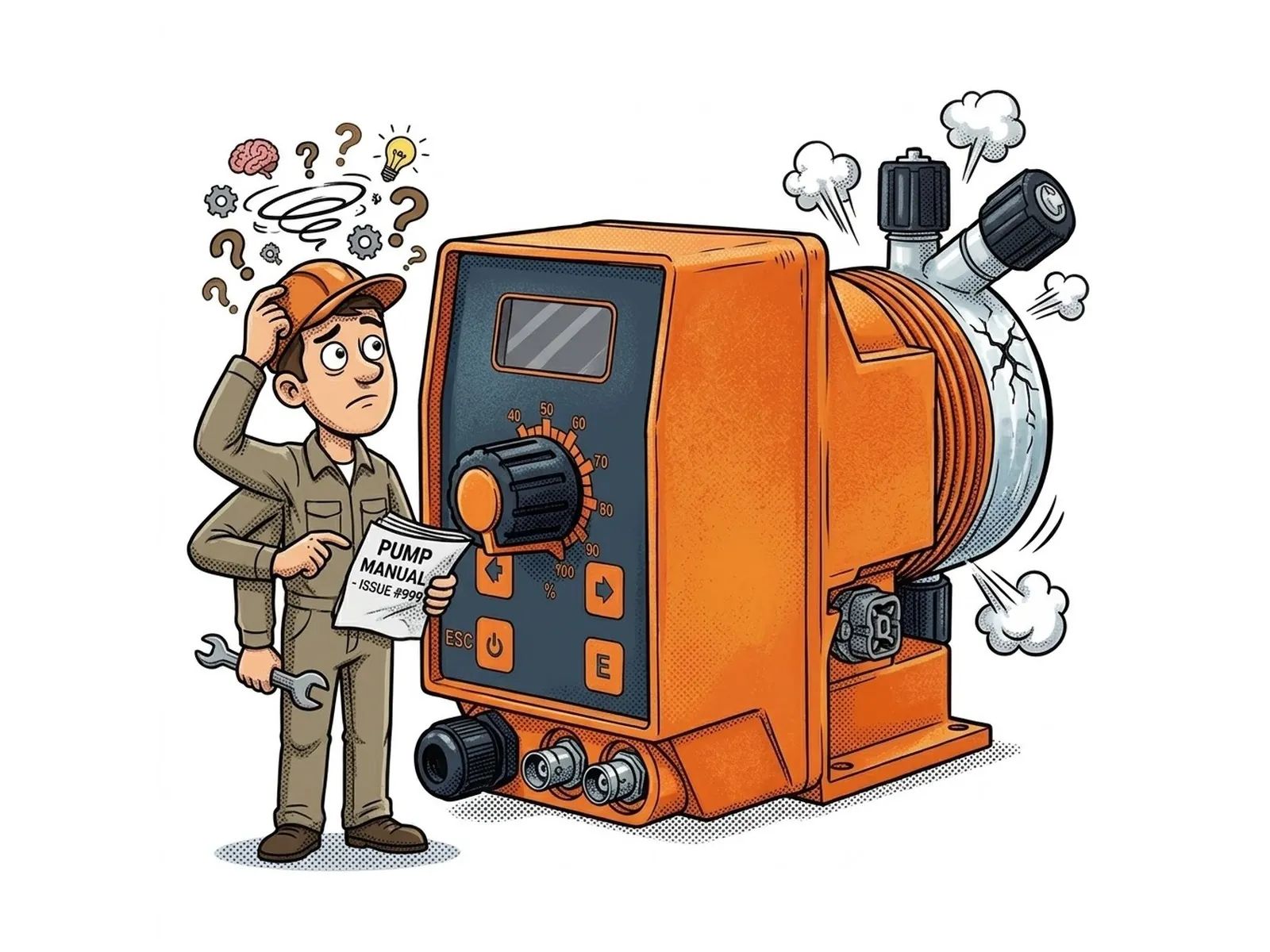
Most priming problems can be prevented at the installation stage, paying particular attention to the suction circuit.
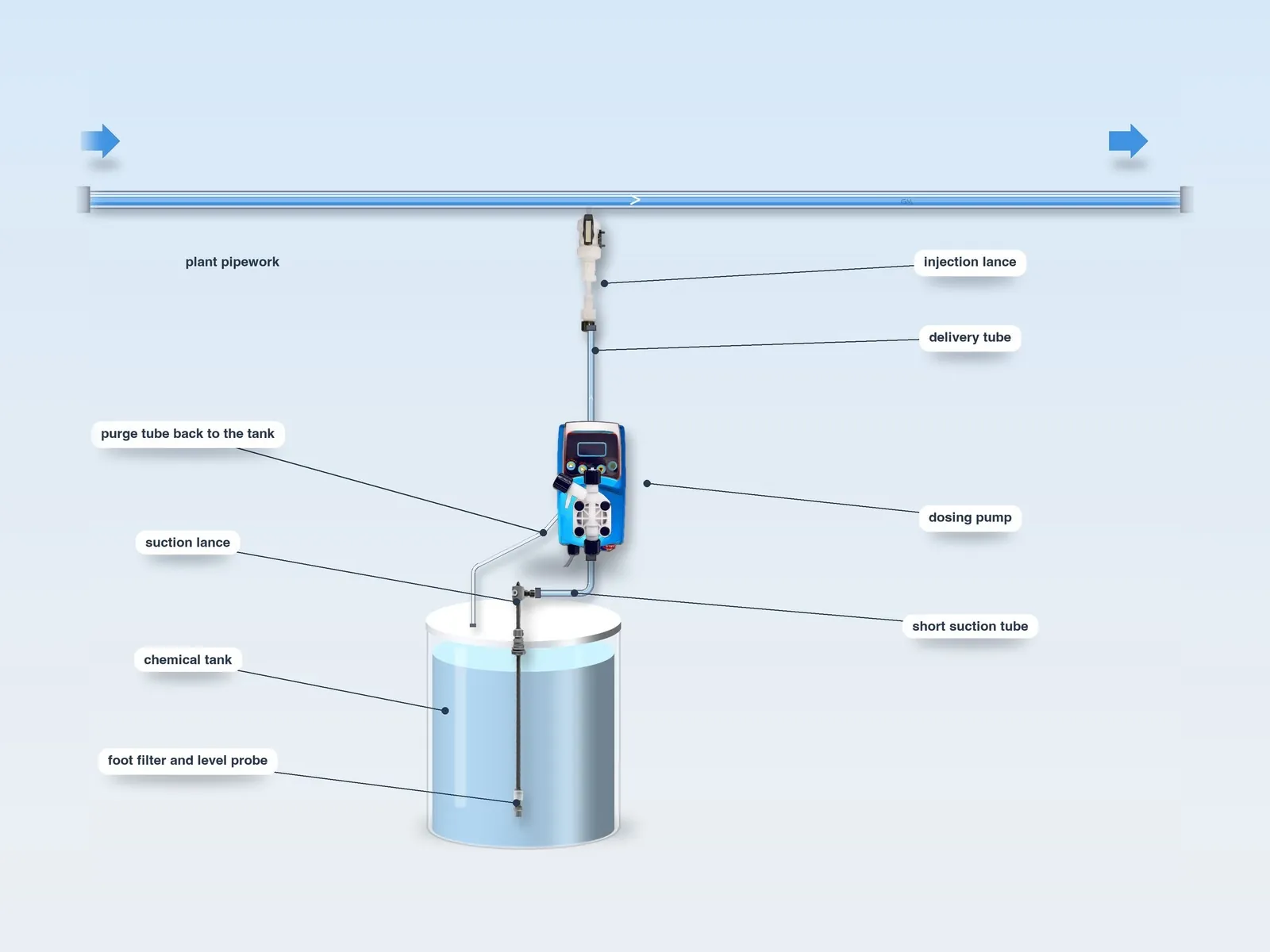
Pump close to the tank, with a low suction lift and a suction tube as short as possible, with no loops or sections where air can collect.
The foot filter must always remain immersed in the chemical; the level probe signals when the chemical is running low and stops the pump before it draws in air.
Lances →Connected to the purge valve of the pump head, it returns to the tank the air and chemical discharged during priming.
The delivery tube carries the chemical to the injection valve, which introduces it into the centre of the pipe.
Injection valves →The typical sign is a pump that operates normally, with the solenoid or motor running, while the chemical does not advance in the delivery tube.
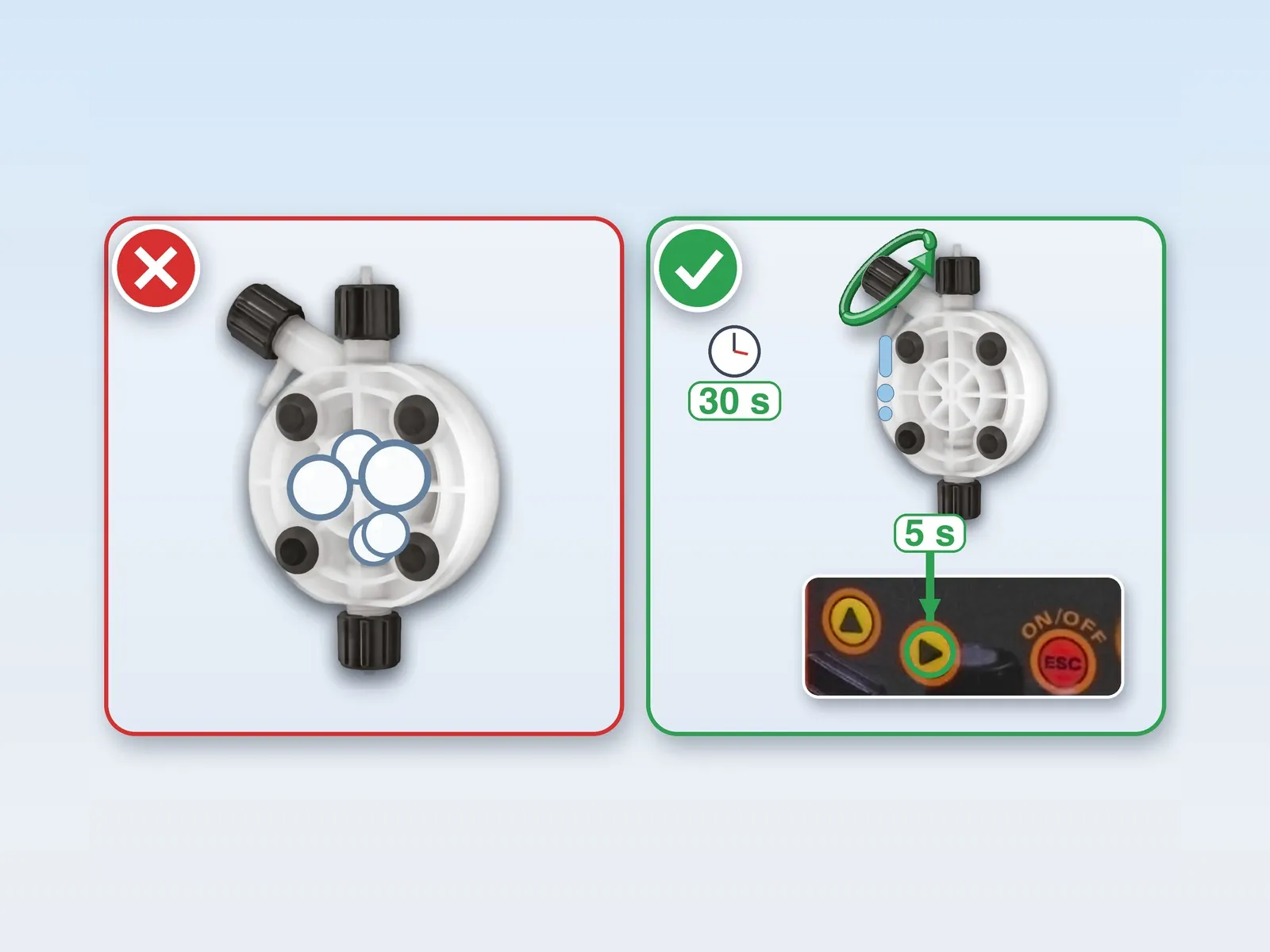
The suction tube is empty, for example at first start-up, after a long shutdown or after the tank has been replaced. Remedy: open the purge valve and hold down the right arrow key for 5 seconds, which starts the 30-second automatic priming; when the chemical comes out of the purge valve, close the valve.
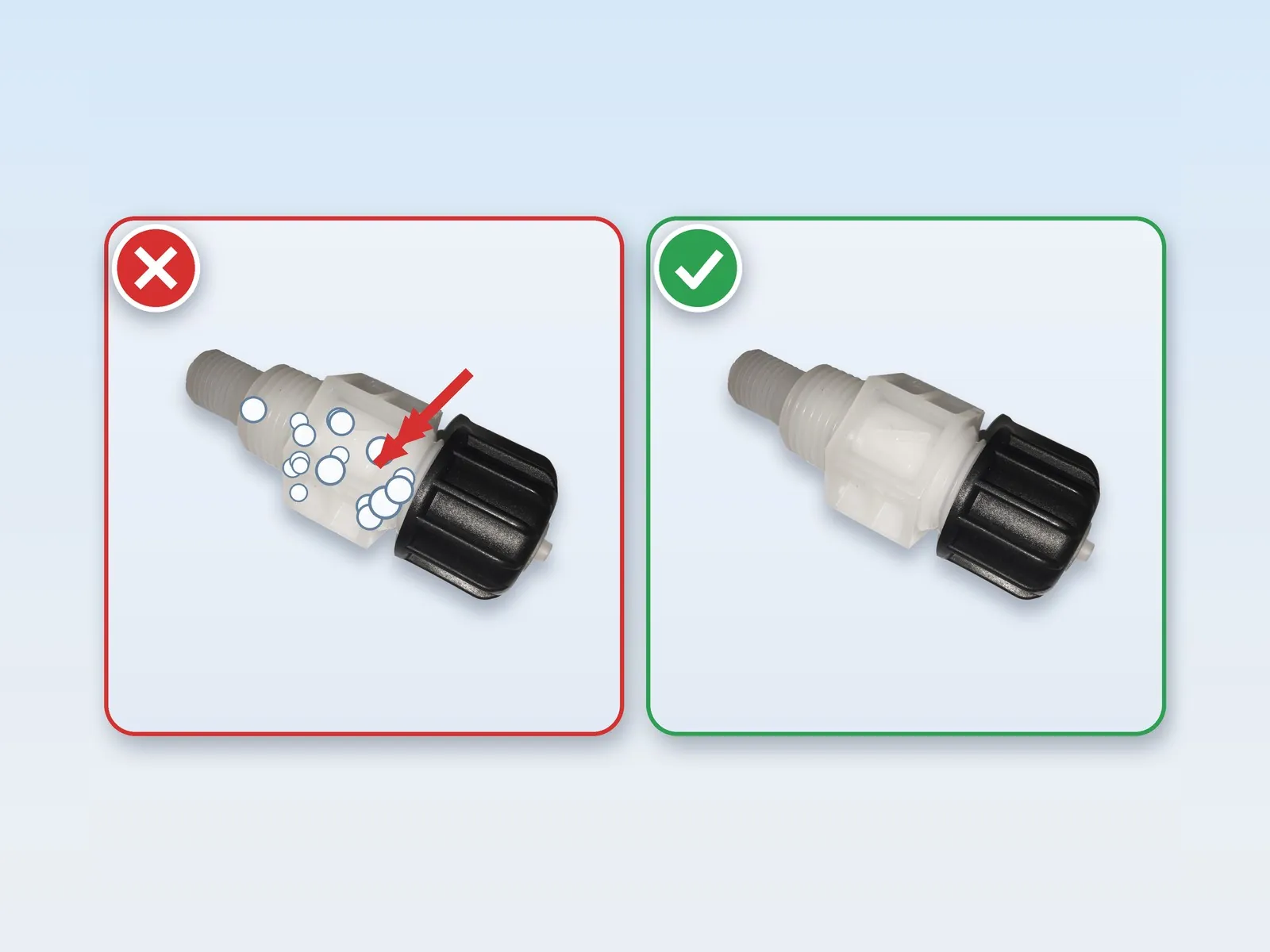
Loose fittings or damaged tubes let air in, forming bubbles in the pump head. Remedy: check fittings and tubes, remove the air and replace worn tubes.
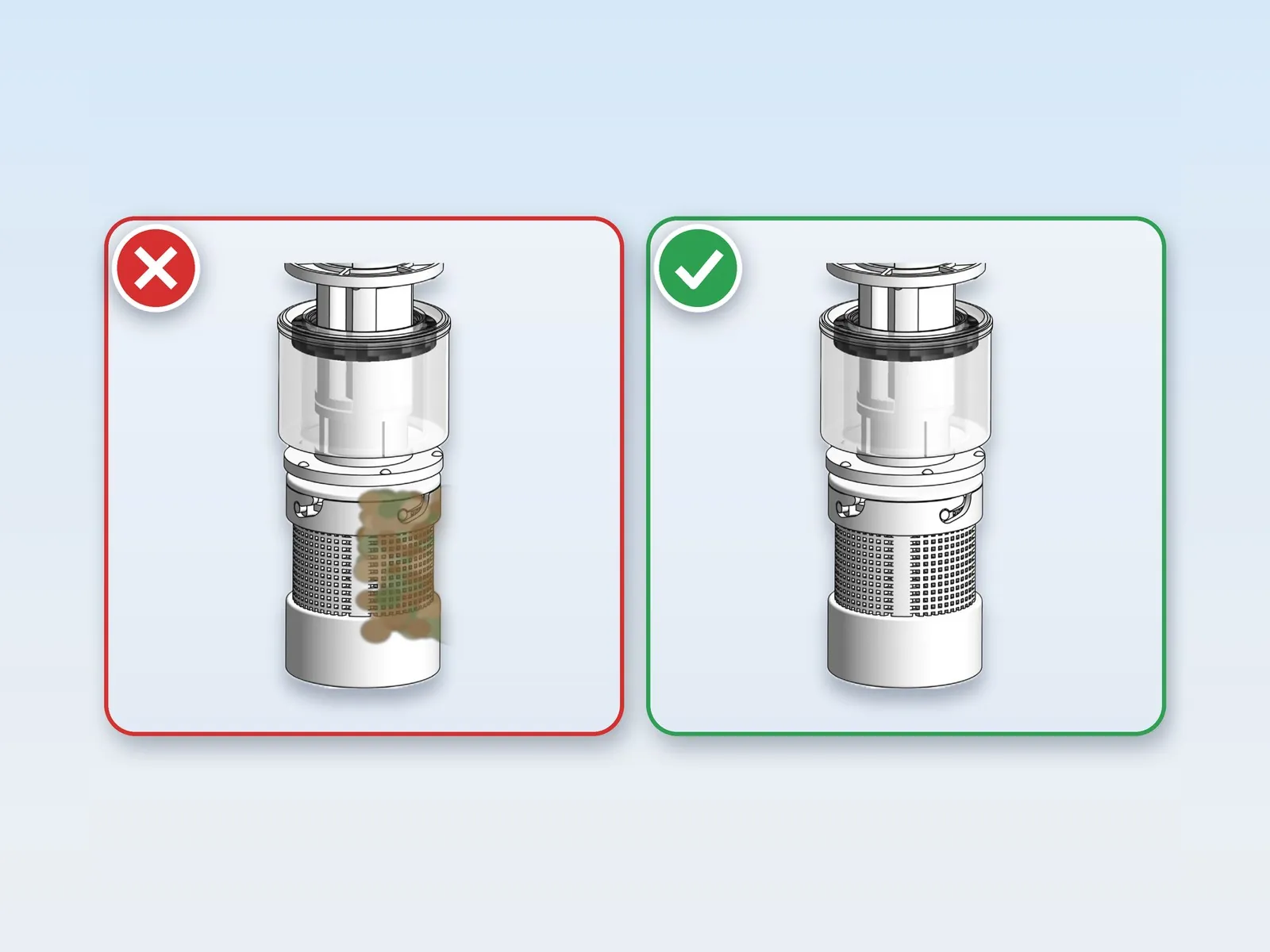
Impurities in the chemical clog the filter and the pump cannot draw. Remedy: clean the foot filter.
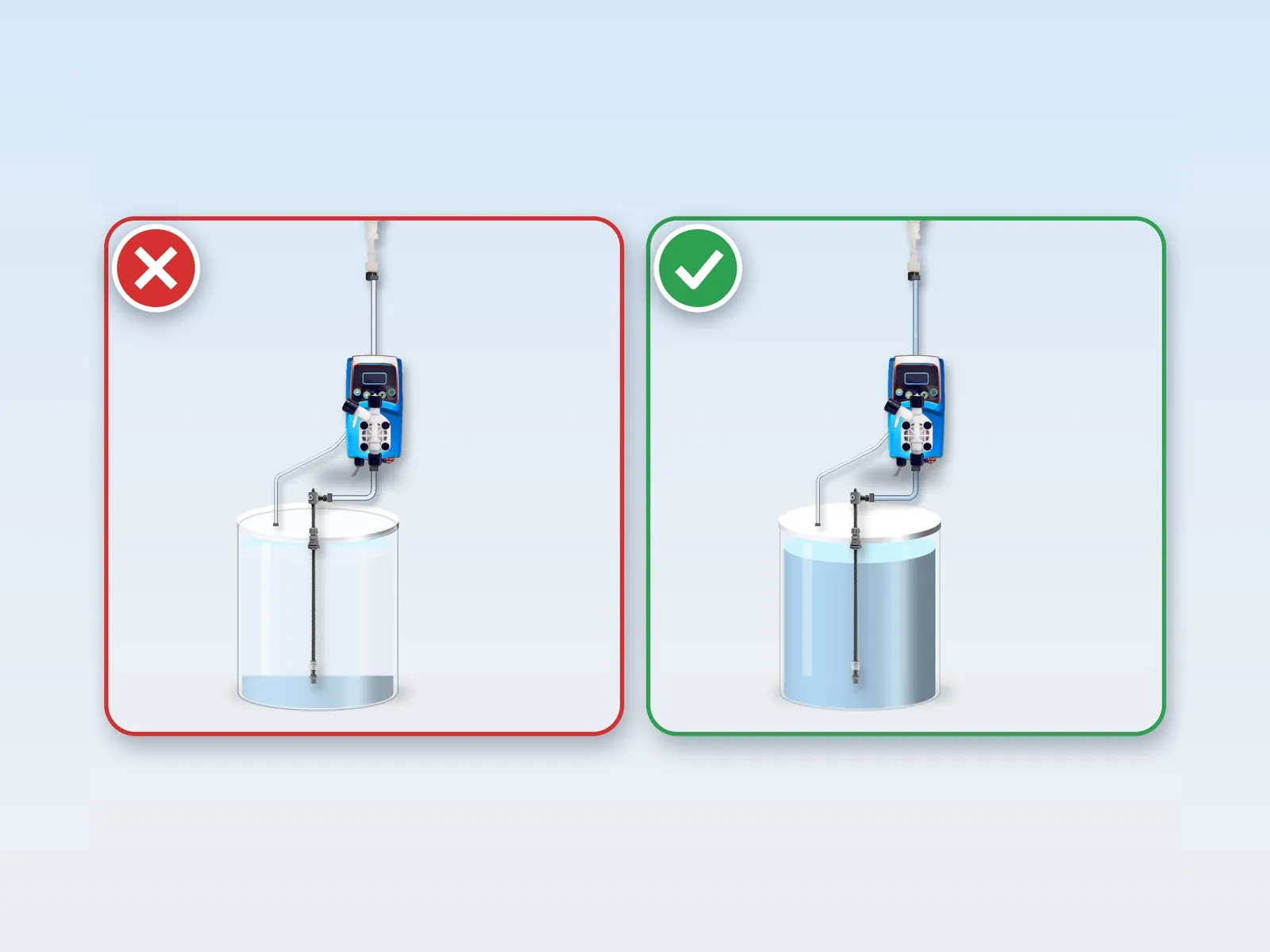
The foot filter is no longer immersed and the pump draws in air. Remedy: top up the tank and prime; the level probe prevents the problem.
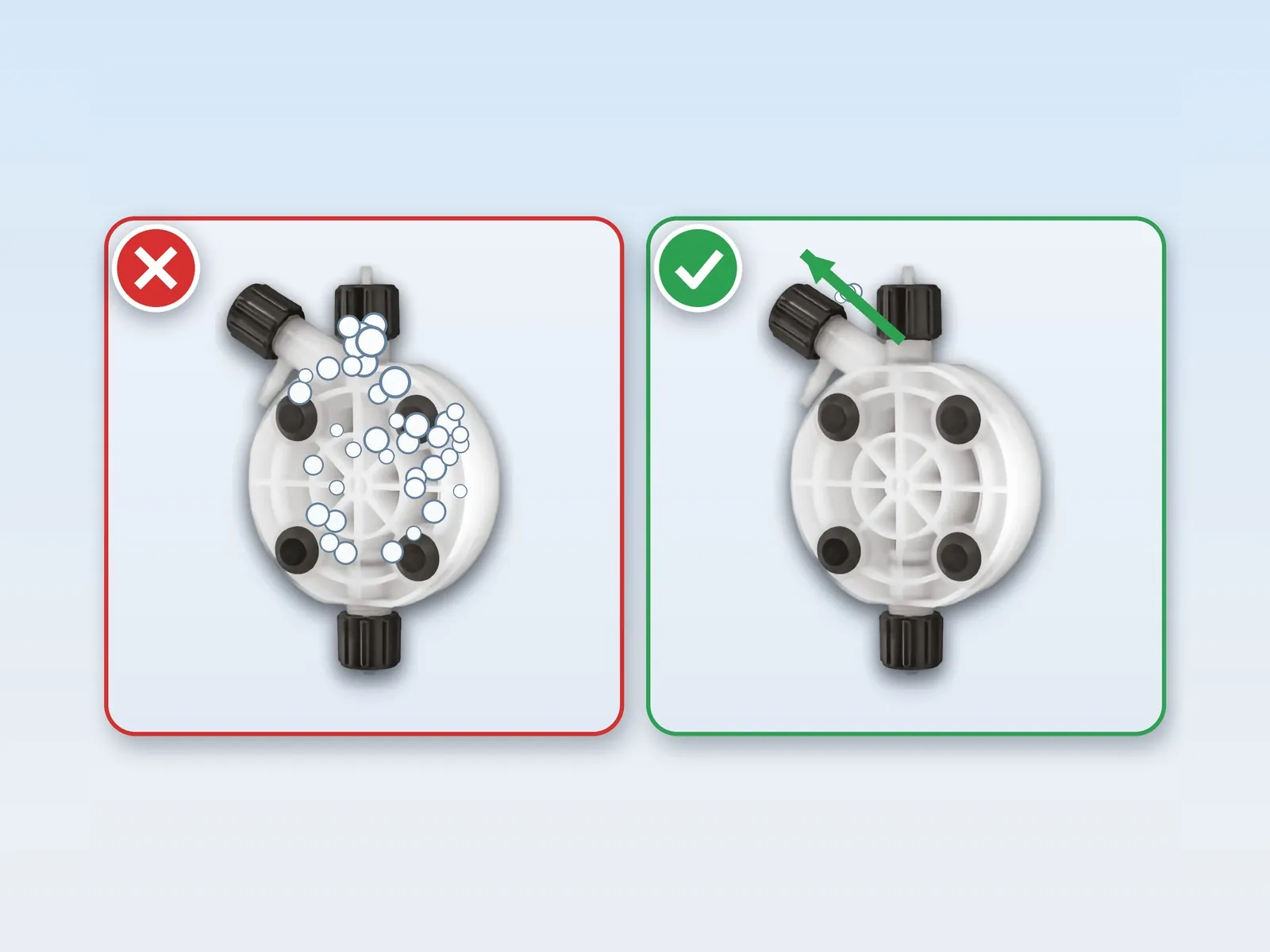
Sodium hypochlorite and hydrogen peroxide release gas that accumulates in the pump head. Remedy: open the purge valve and let the gas out; for continuous use, a self-venting pump head.
Self-venting pumps →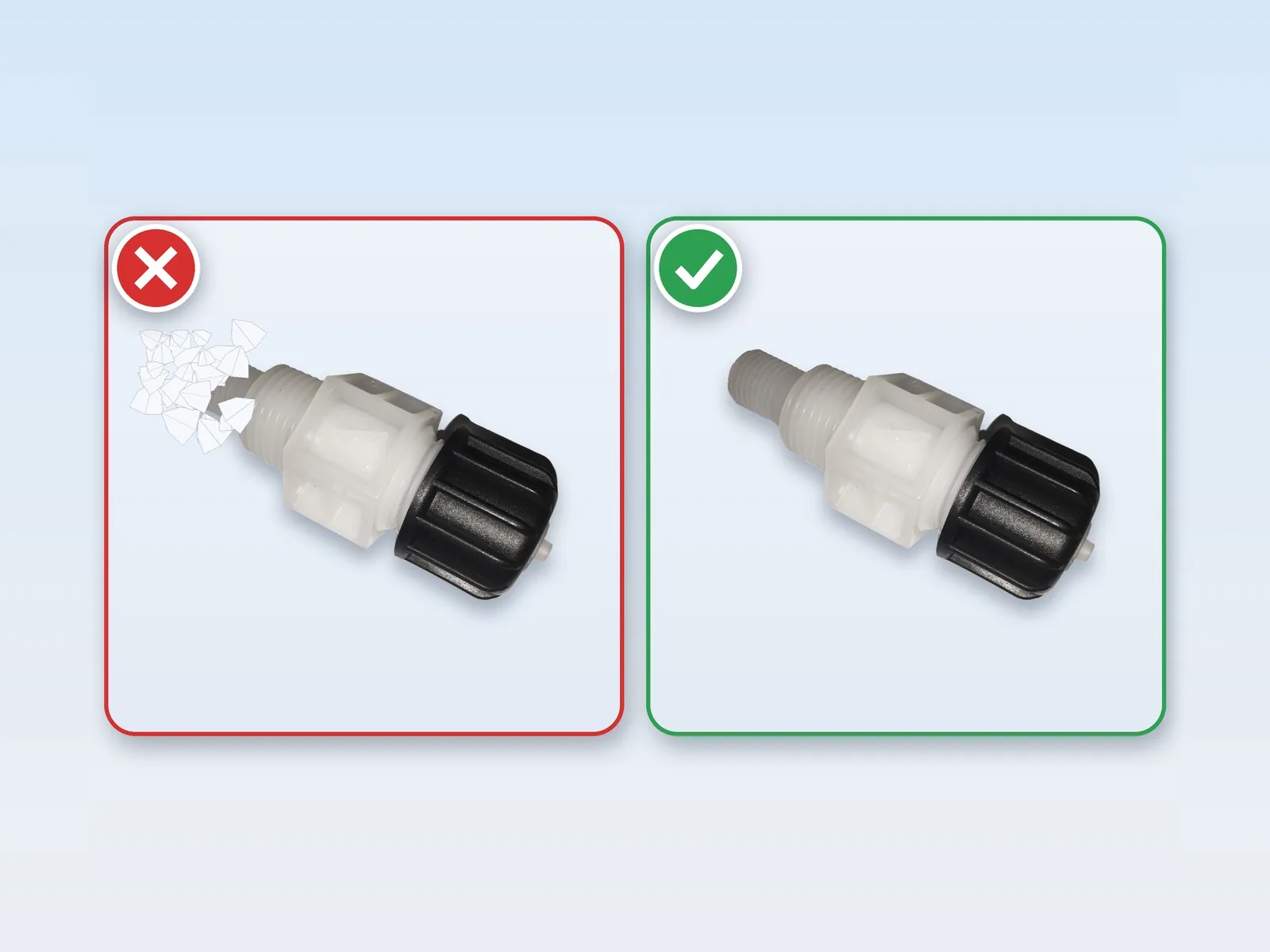
Crystals or impurities prevent the valve from closing, or the valve leaks. Remedy: clean or replace the suction valve.
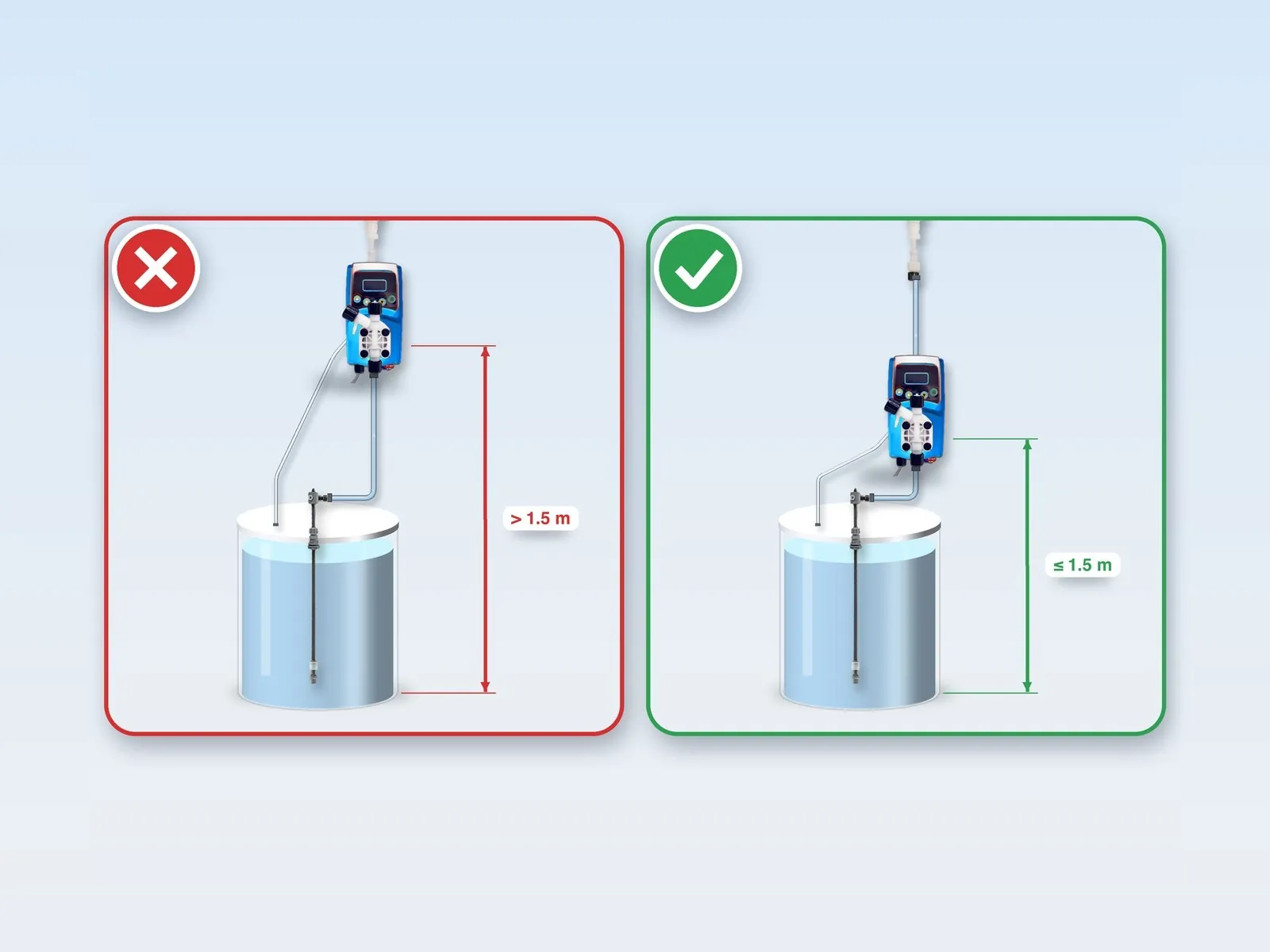
The pump is installed too high above the tank: the distance between the bottom of the tank and the centre of the pump head must not exceed 1.5 m. Remedy: reduce the suction lift by moving the pump closer to the tank.
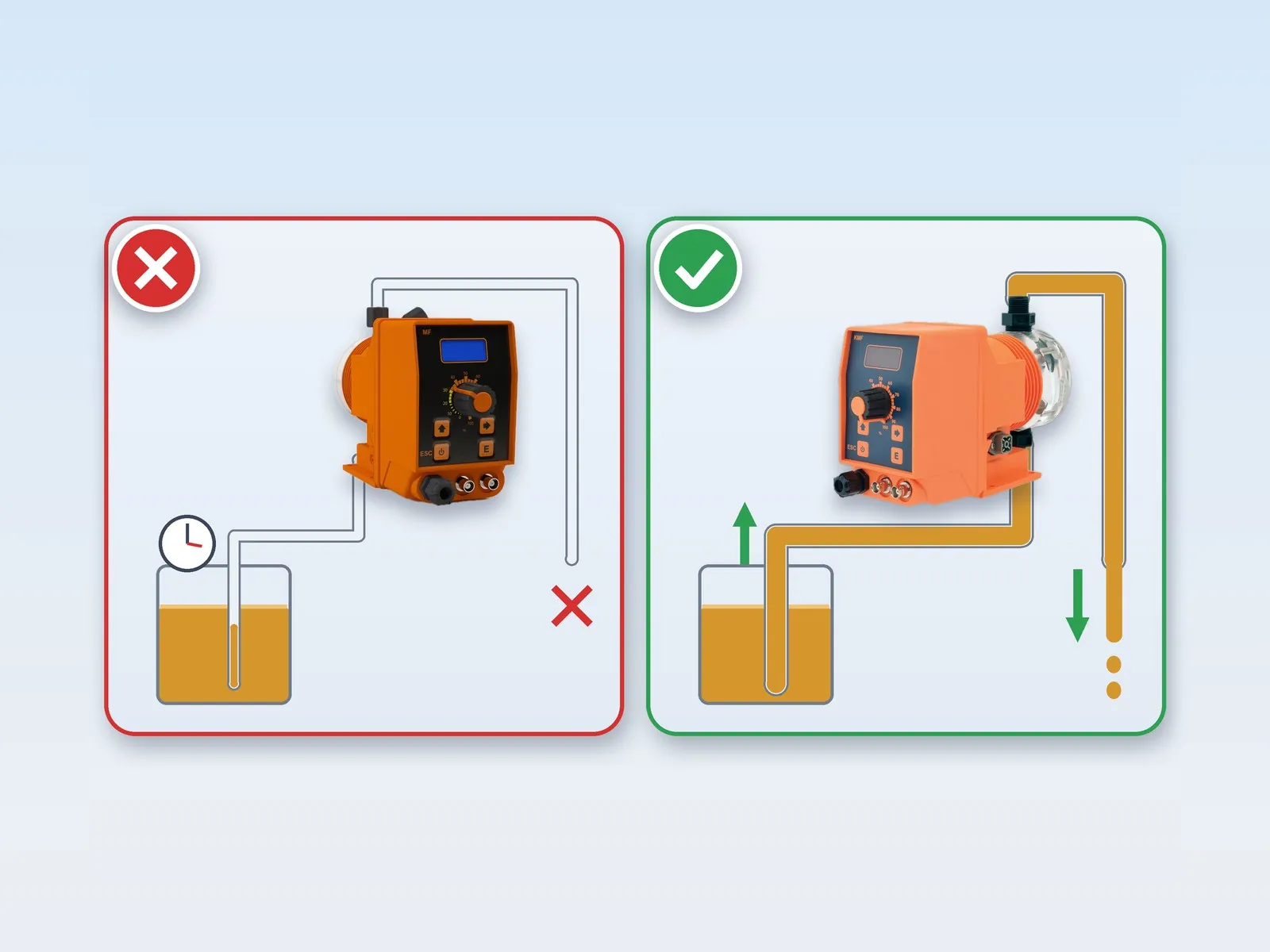
Viscous chemicals flow with difficulty in the suction tube and the pump cannot draw them in. Remedy: use pumps for low-viscosity liquids (up to 8,000 cPs) or pumps for polymers (up to 50,000 cPs).
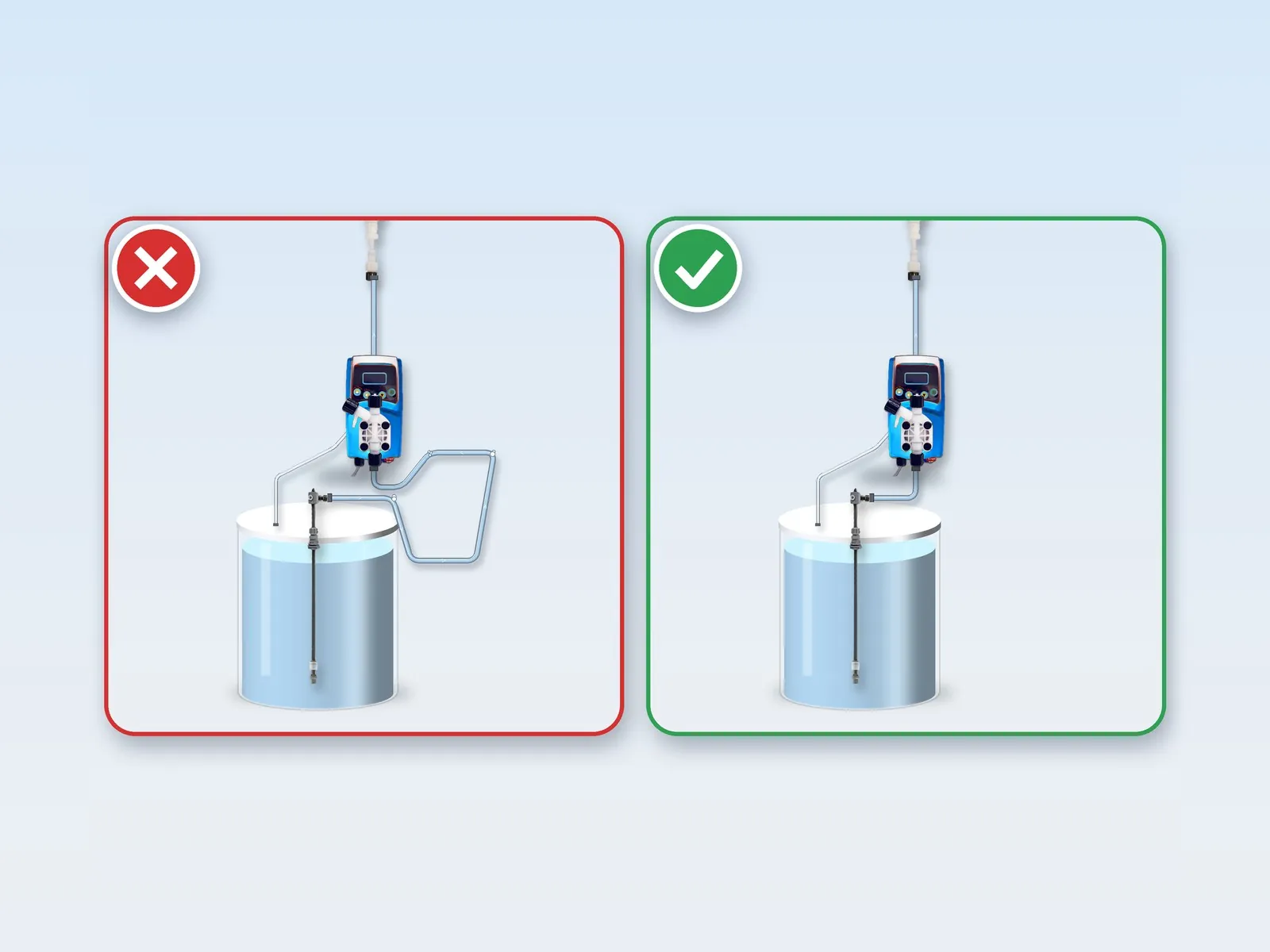
Loops and horizontal sections trap air bubbles, which the pump cannot remove.
When the chemical runs out, the pump continues to run, drawing in air, and must be primed again.
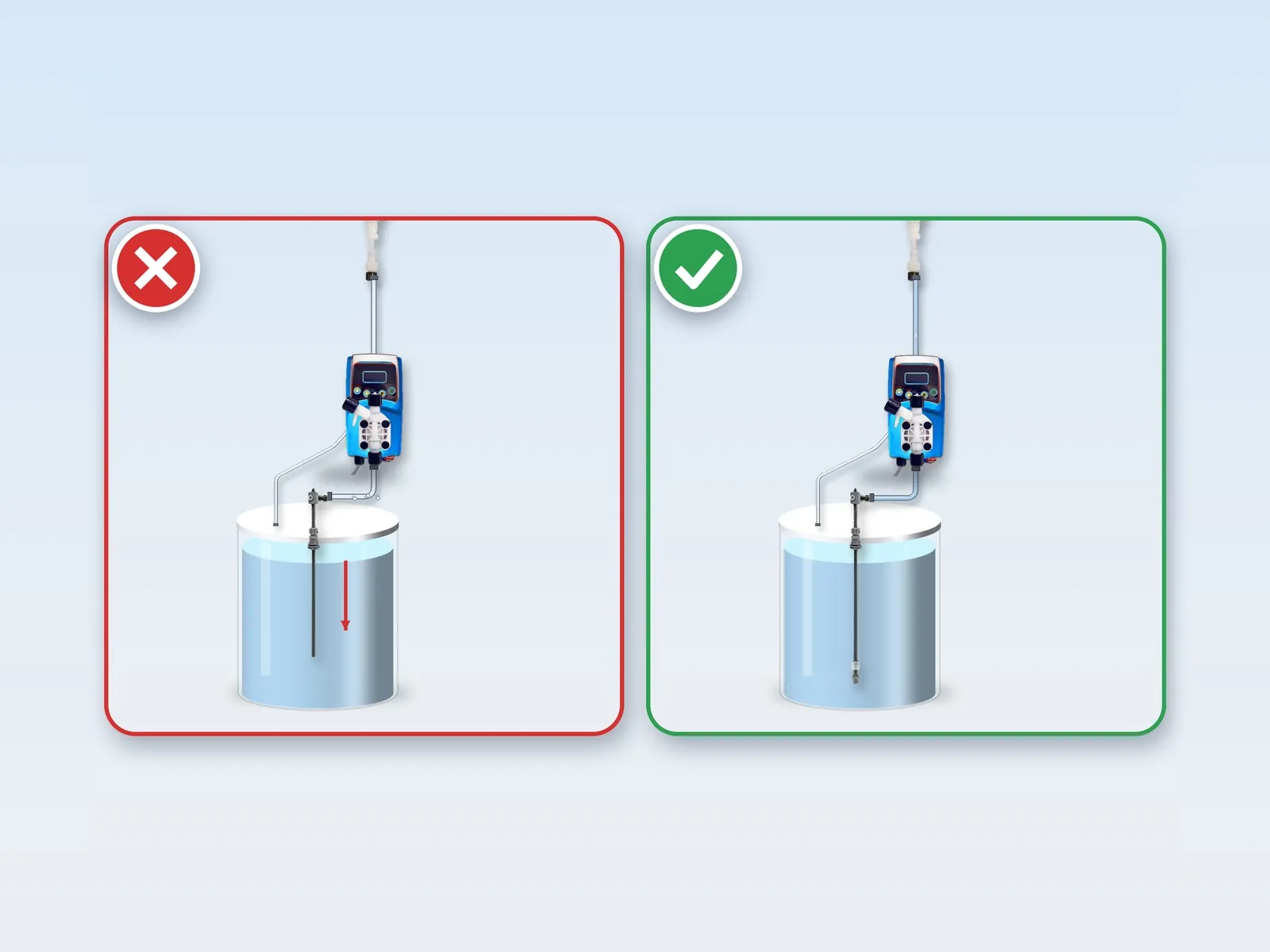
The foot filter incorporates a non-return system that prevents the suction line from emptying during dosing or during pauses.
An excessive suction lift makes priming difficult, especially with viscous liquids.
Even minimal air ingress on the suction side reduces or stops dosing.
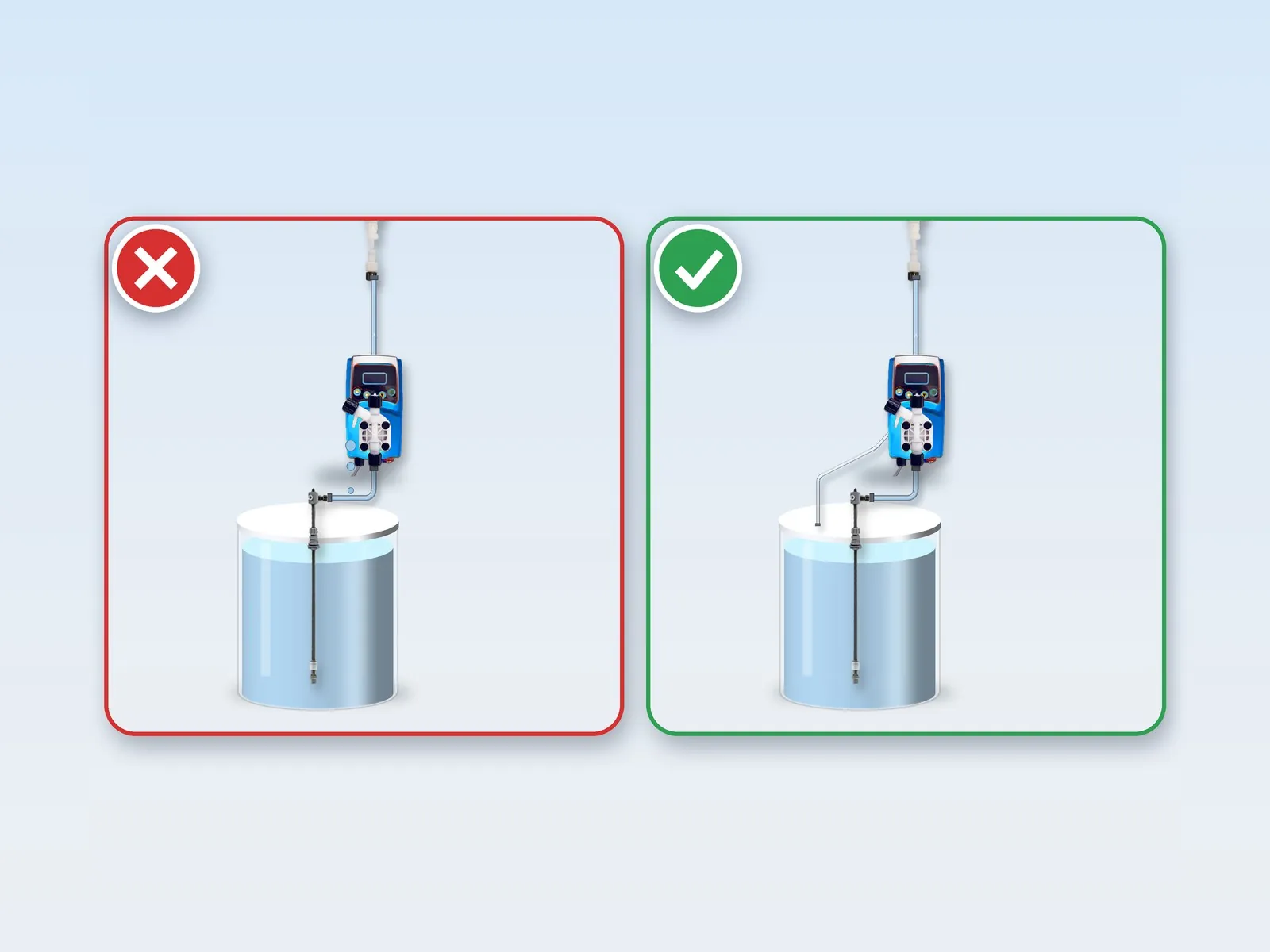
Without the purge tube returning to the tank, priming is more difficult and the discharged chemical is lost.
With chemicals that release gas, a standard pump head loses its prime: the self-venting version is required.
Self-venting pumps →Priming fills the suction tube and the pump head with chemical. It is carried out at first start-up, after a long shutdown and whenever air has entered the circuit.
Dosing pumps →Suction, delivery and purge tubes connected, with the purge tube in the tank.
Open the purge valve of the pump head.
Hold down the right arrow key for 5 seconds: automatic priming starts and lasts 30 seconds.
When the chemical comes out of the purge valve, close the valve; self-venting pump heads do not require this operation.
Self-venting pumps →Alternatively, self-venting pumps can be used, which automatically expel any air present in the circuit.
Self-venting pumps →With viscous chemicals, suction can be applied with a 20 cc syringe connected to the purge outlet. At the end, check that the chemical flows steadily and without bubbles in the delivery tube. The specific procedures for each series are given in the troubleshooting section of the relevant page.
If the pump still does not dose, tell us the model, the chemical being dosed and how the installation has been made: we will help you identify the cause.
Call or write to us: a technician will reply with a tailored proposal of controllers, pumps, probes and accessories.