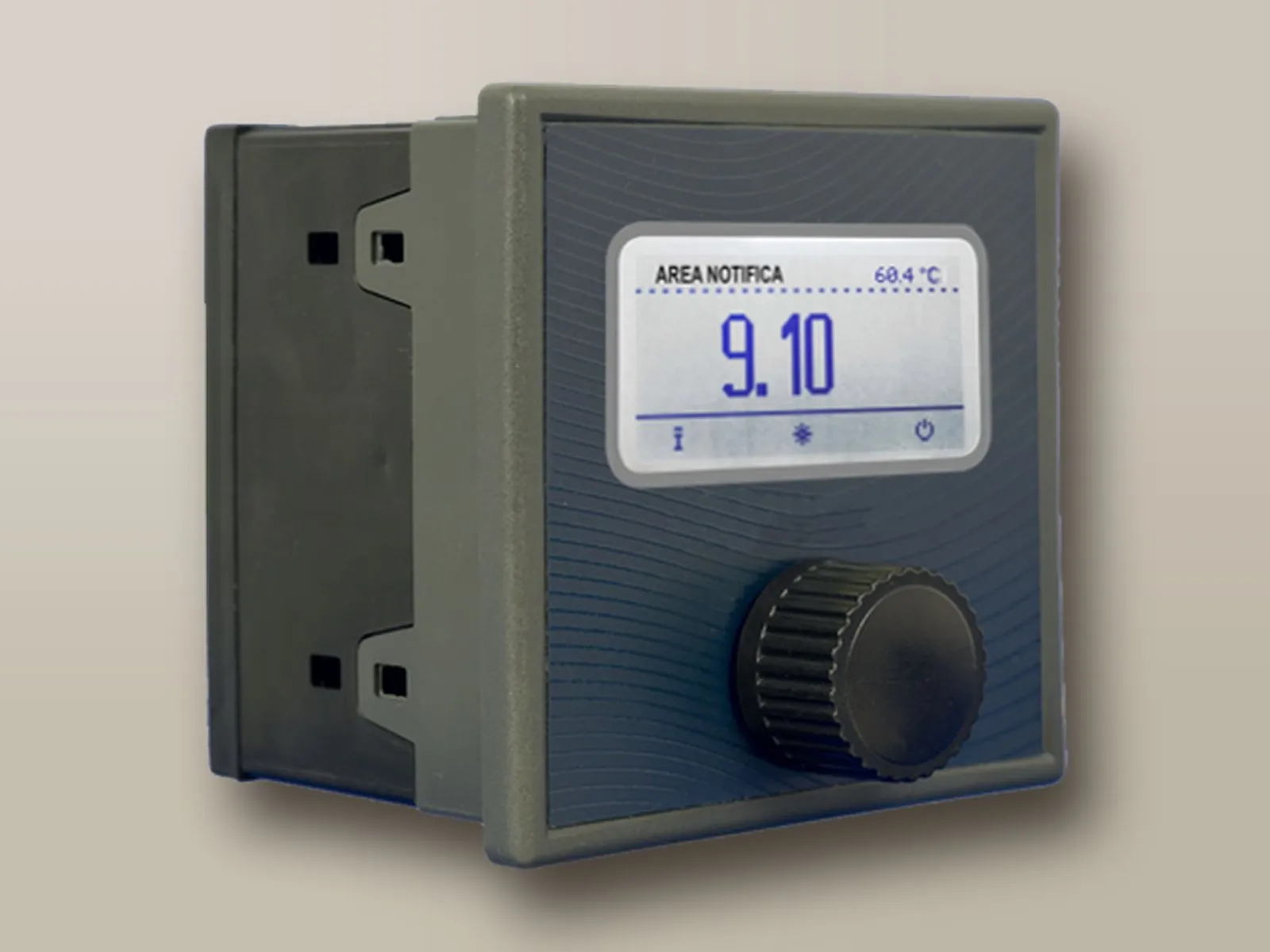
JA PRO controller · JACL PRO
Single-channel controller plus temperature, for 96×96 flush mounting, with two volt-free contact outputs, one proportional pump output, one 0-4/20 mA output and Modbus RTU communication.
JA PRO →The system continuously measures the residual free chlorine with a closed amperometric cell and the JA PRO controller, flush-mounted on the front of the electrical panel of the plant; according to the set points it drives the hypochlorite dosing pump, including one already installed, and the motorised valves. The two volt-free contact outputs work in ON/OFF, proportional or PID mode; the Modbus RTU port connects the controller to the PLC network of the plant.
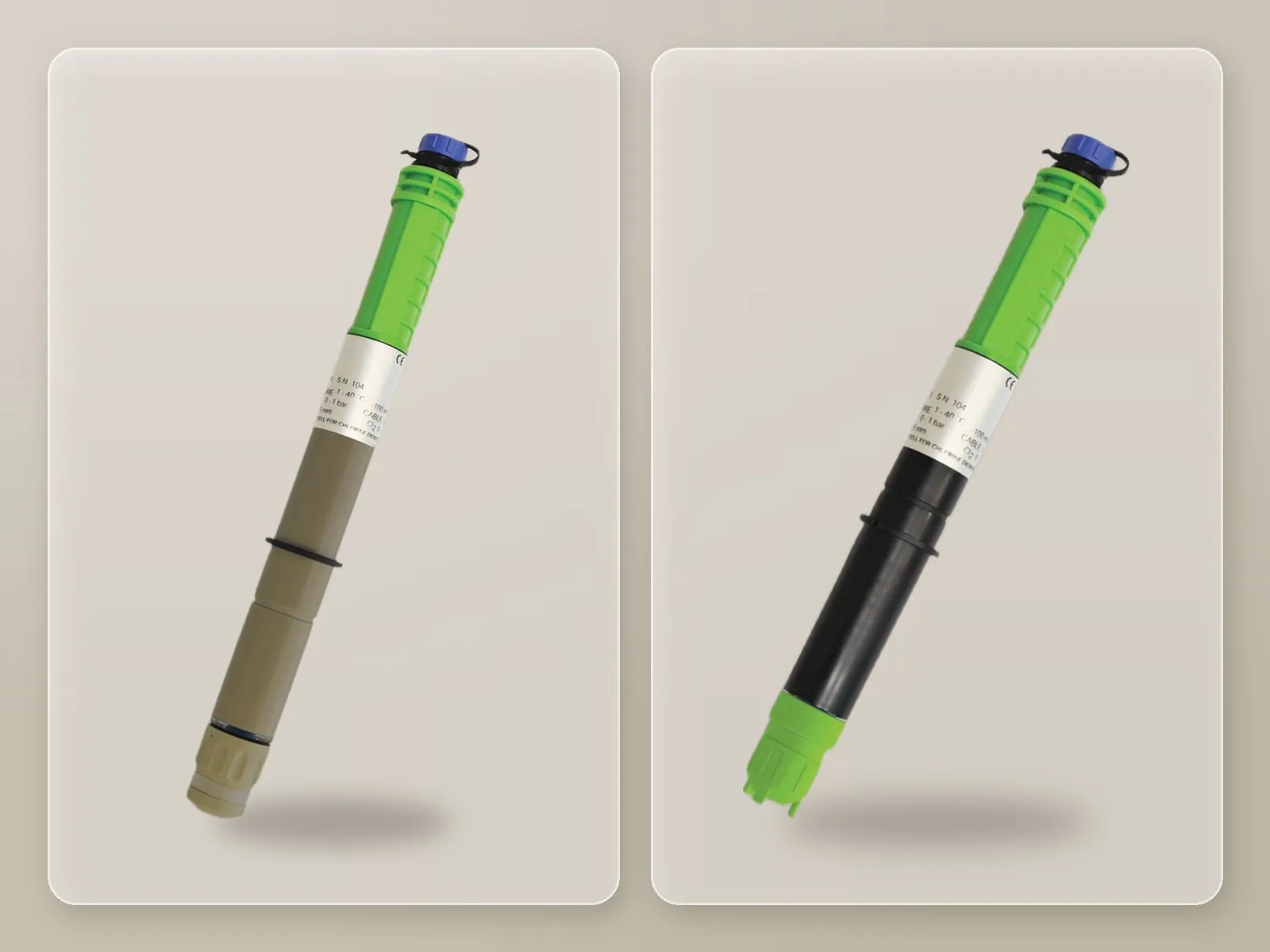
The controller is completed by the amperometric cell, the probe holder with the filter, the hypochlorite dosing pump and the shut-off accessories of the plant.
Single-channel controller plus temperature, for 96×96 flush mounting, with two volt-free contact outputs, one proportional pump output, one 0-4/20 mA output and Modbus RTU communication.
JA PRO → The electrodes are protected by a selective membrane that excludes contaminants from the measurement; with automatic pH and temperature compensation the measurement remains reliable. The galvanic part, the only one subject to wear, can be regenerated without replacing the electronic part.
SCL cells →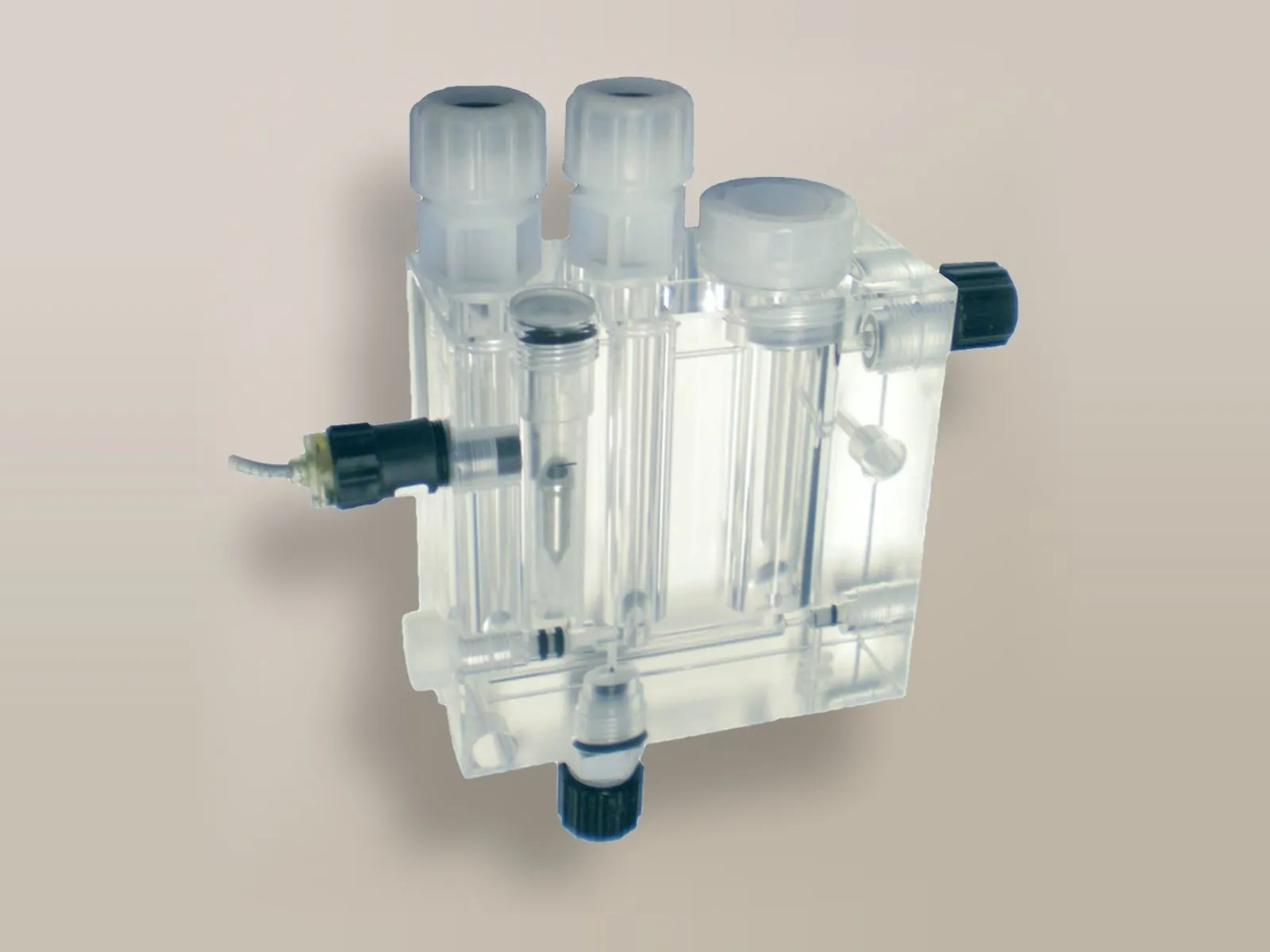
Probe holder connected in a bypass line to the circuit, with 5" filter with washable 60 µm PET cartridges or 100 µm wound cartridges (maximum 5 bar).
Probe holders →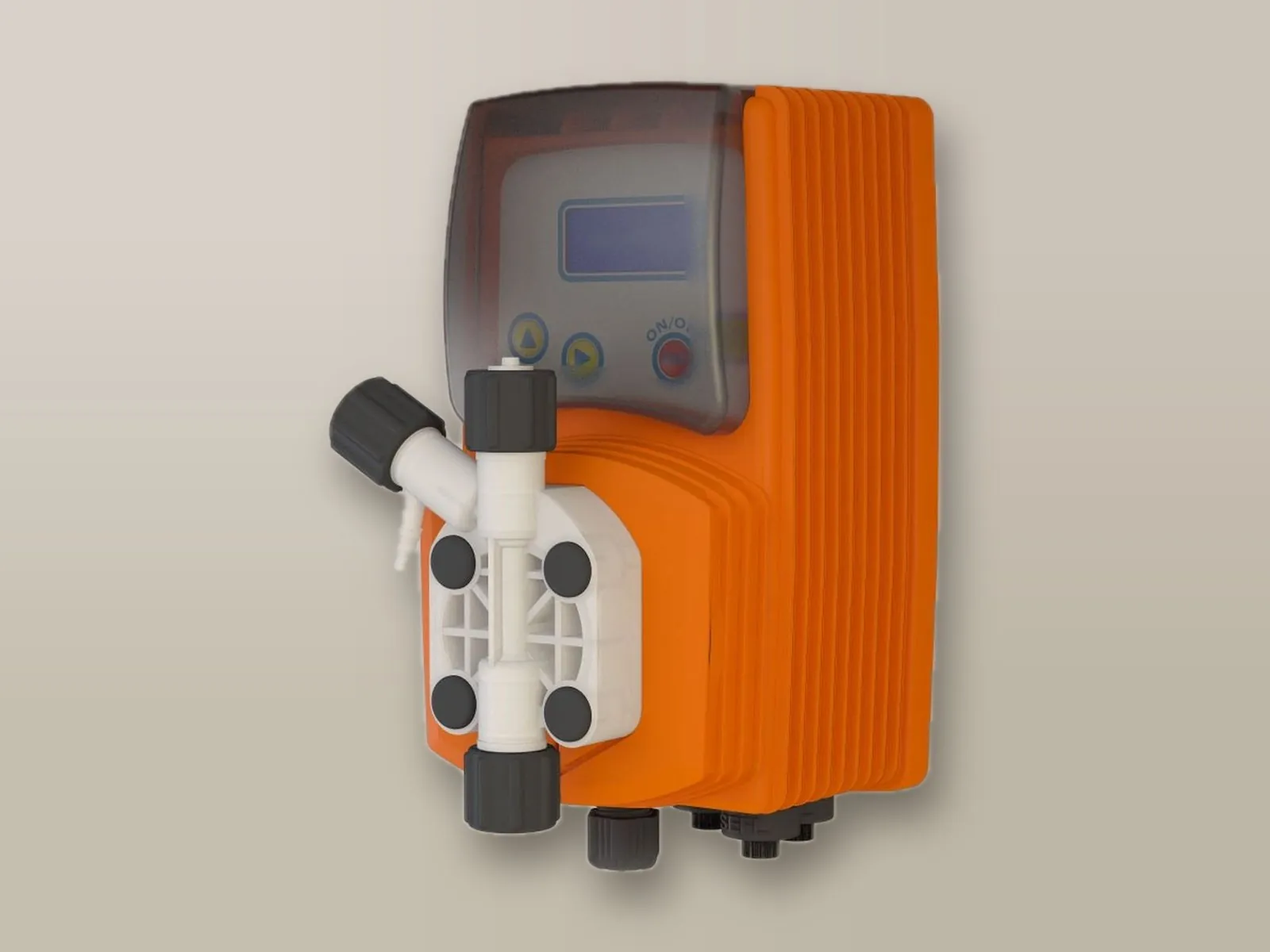
Flow rate and back pressure defined at the time of ordering, wetted parts in PVDF, PP, PVC or stainless steel. Supplied with a pre-calibrated injection valve and a magnetic level probe with foot suction pipe, which stops the pump when the chemical runs out.
Dosing pumps →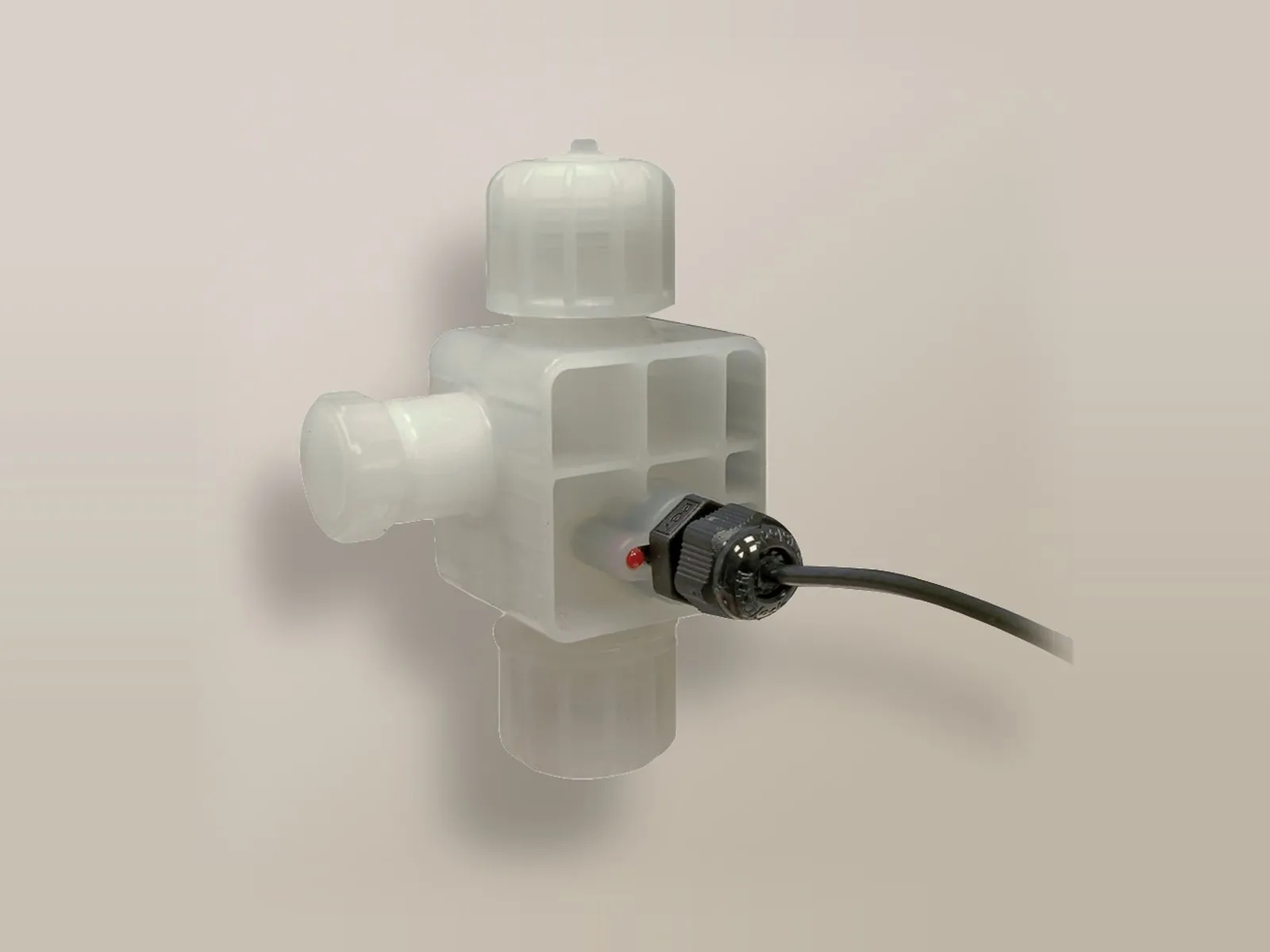
Installed on the pump delivery, it checks the passage of the liquid: in the event of a fault the pump performs automatic re-priming and recovers the missed injections; if the anomaly persists, it is also signalled remotely. With an acquisition unit it records chemical consumption and transmits it via Modbus.
Flow sensor →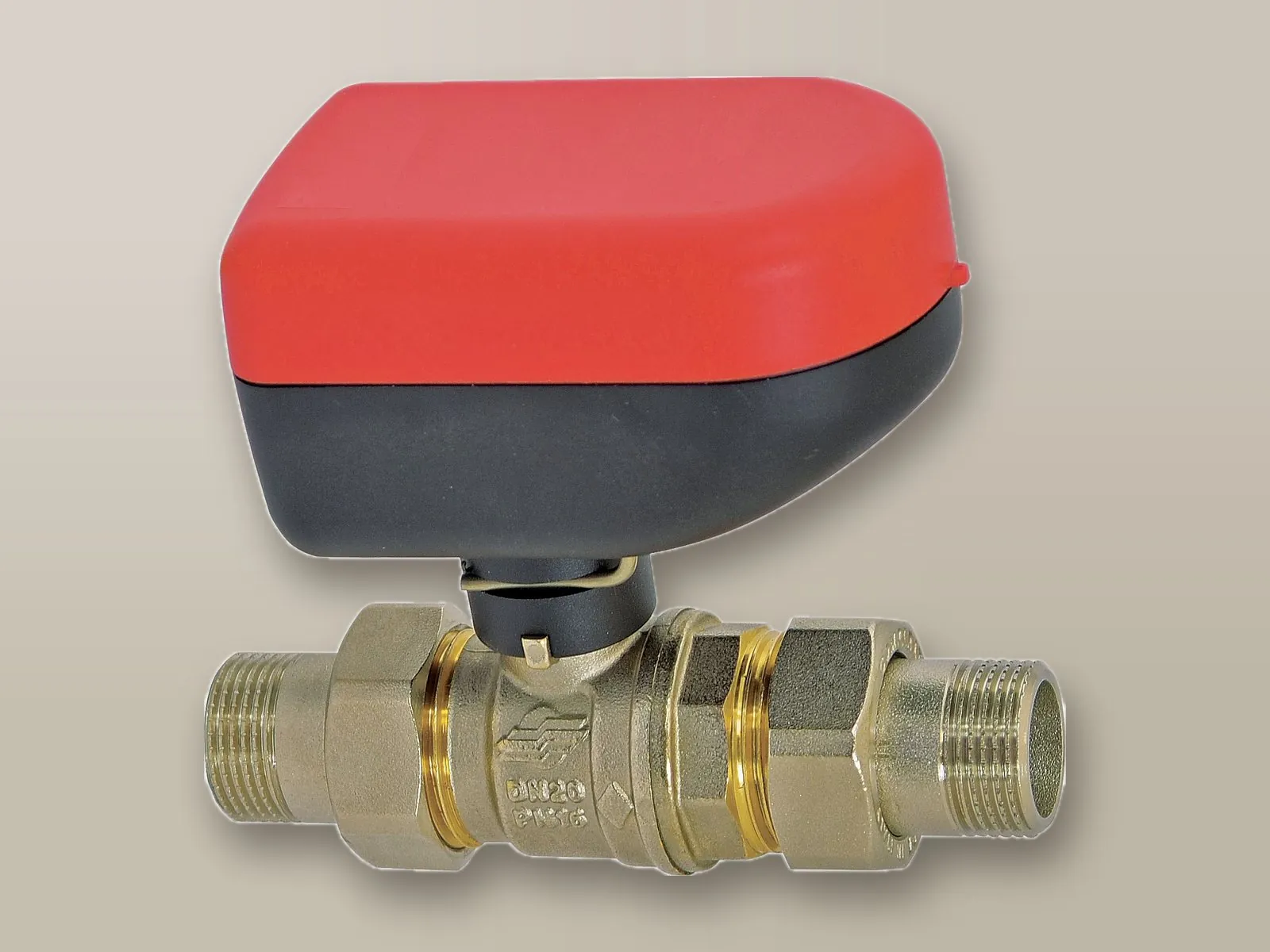
Connected to a set-point-controlled volt-free contact output, they shut off the water inlet or outlet according to the measured value.
The set points of the parameter to be controlled are entered; the controller drives the connected equipment automatically and continuously.
The sample water flows through the filter and the probe holder in a bypass line, where the amperometric cell measures the free chlorine and the PT100 probe the temperature; the display shows the measured value, the temperature and the status of the outputs.
The two volt-free contact outputs work in ON/OFF, proportional or PID mode; the proportional pump output varies the injection frequency in proportion to the deviation from the set point and the 0-4/20 mA output drives a pump directly over the proportional band.
The volt-free contact outputs control pumps already installed and motorised valves that shut off the water inlet or outlet when the set points are reached.
The flow input suspends dosing when no water flows through the probe holder; the stand-by input stops the activity of the controller on an external command. The Modbus RTU port connects the controller to the PLC of the plant.
The probes, the external contacts and the controlled loads are connected to the terminal board of the controller.
The controller is flush-mounted on the front of the electrical panel of the plant, in a 96×96 mm cut-out; ABS housing, IP40 protection (IP54 on request), 230 VAC or 12 or 24 VDC power supply.
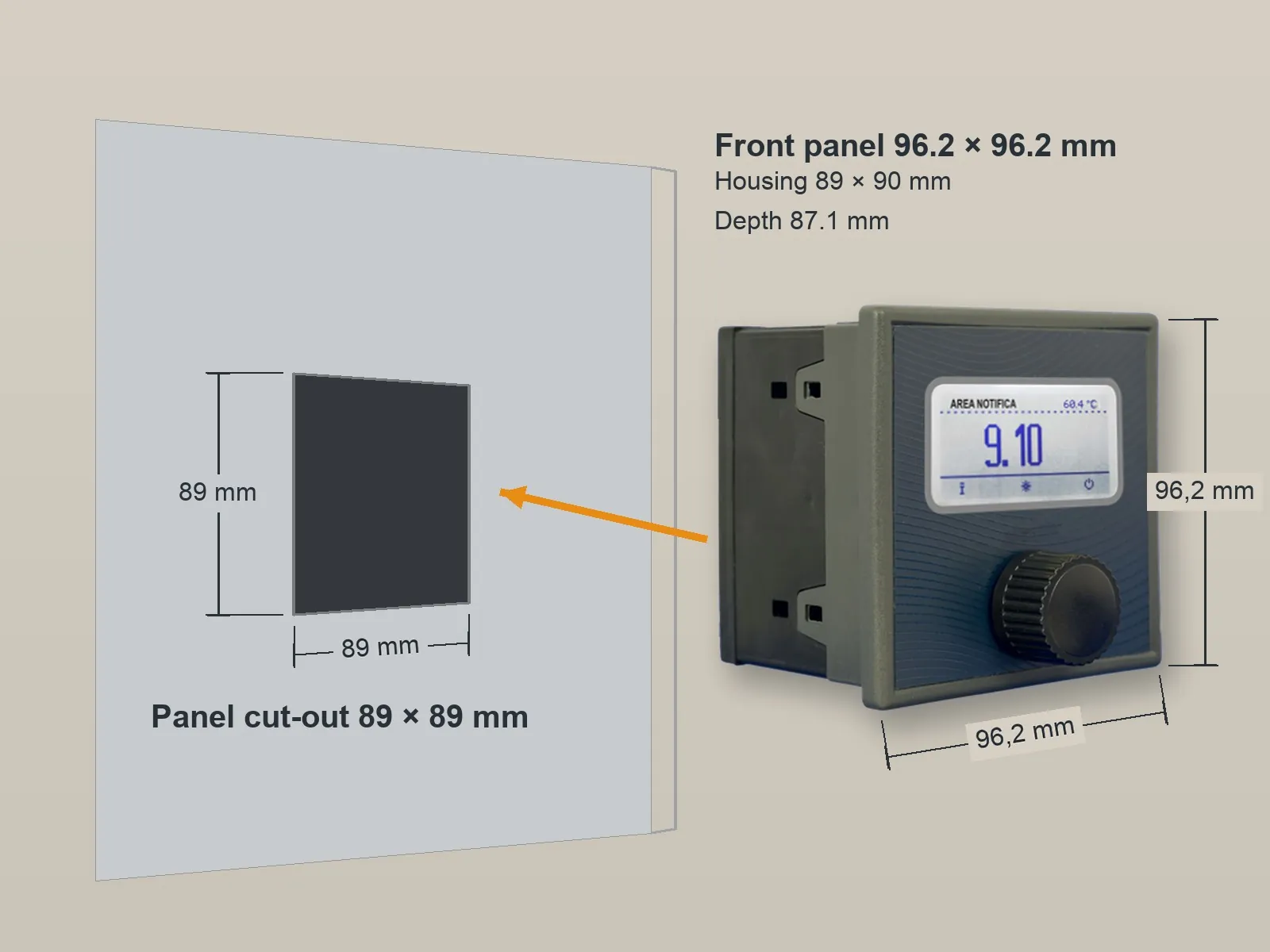
The RS485 port with Modbus RTU protocol connects the controller to the PLC network of the plant, for reading the measurements.
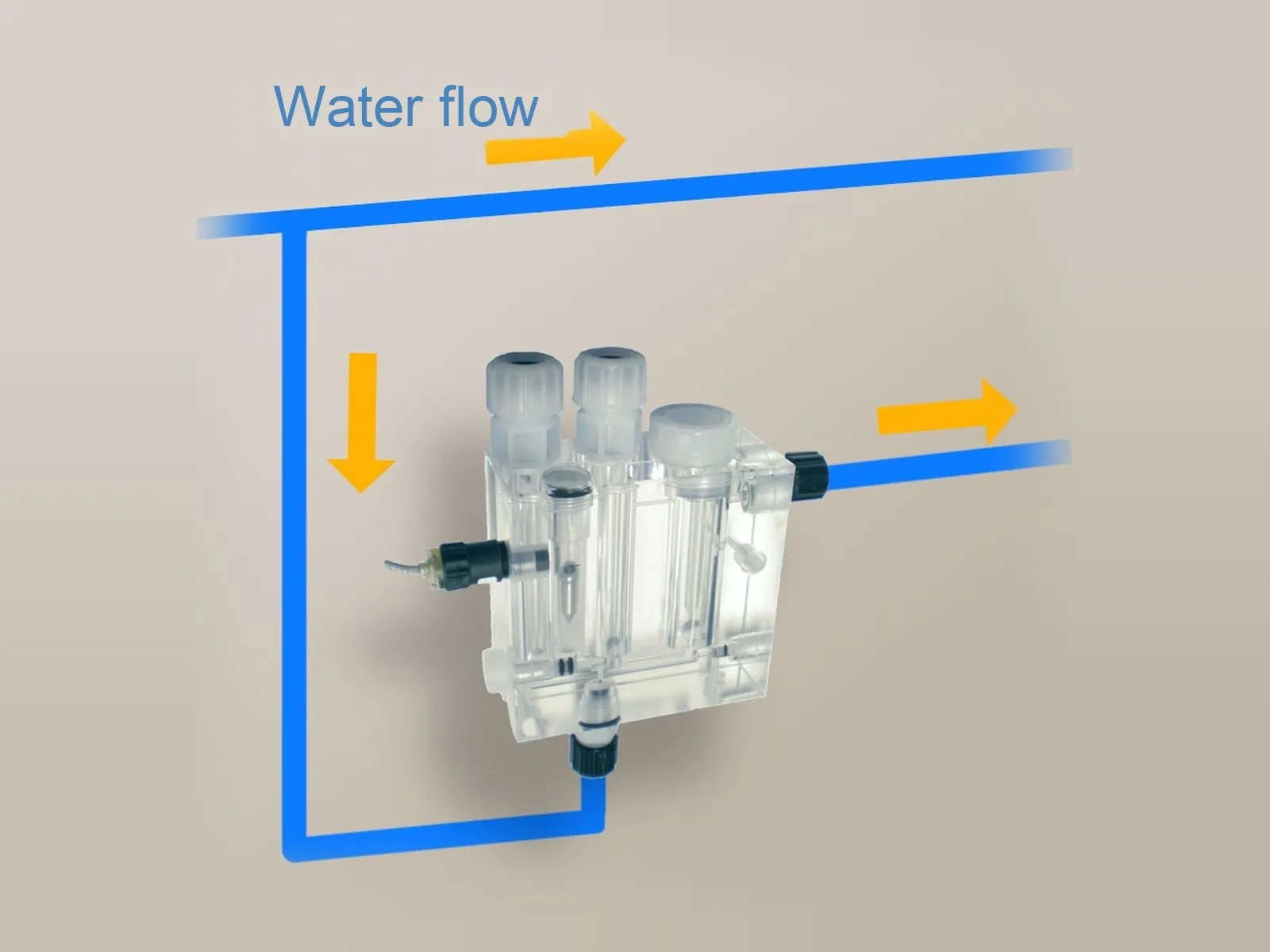
The sample water is taken with a T-fitting on the pipe, flows through the filter and the probe holder and returns to the circuit or to drain.
Probe holders →The panel-mounted system is used when measurement and control must be part of the electrical panel of the plant and communicate with the PLC.
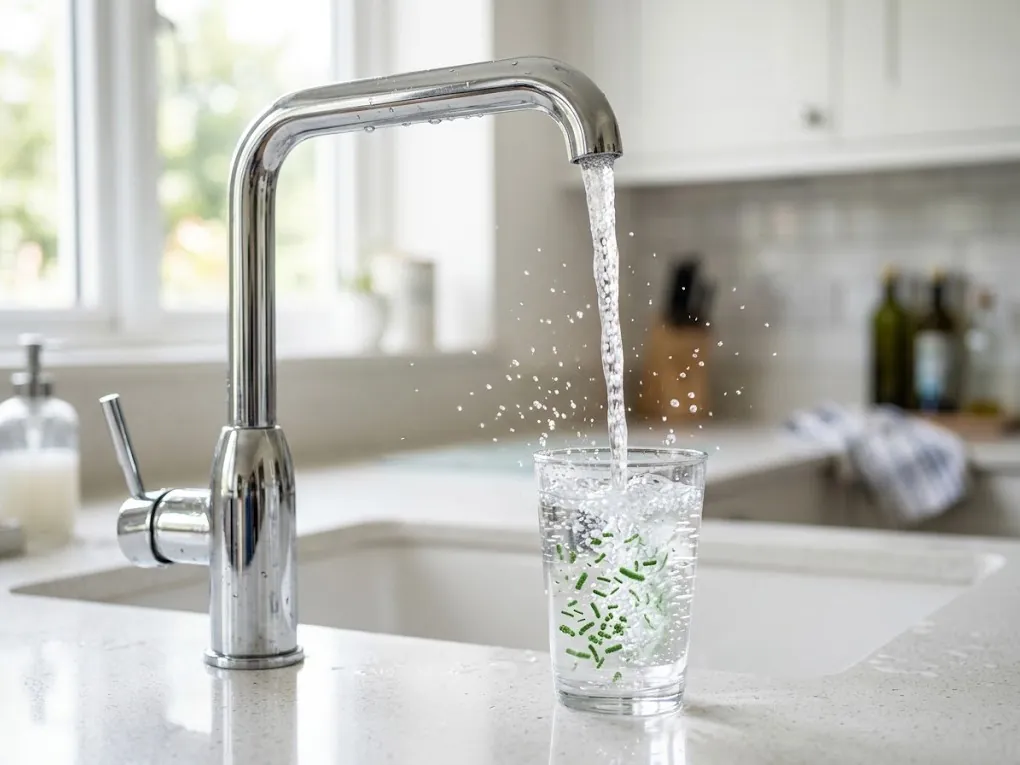
The system controls the free chlorine residual in water from private wells and springs and from public water supply networks, and in storage tanks.
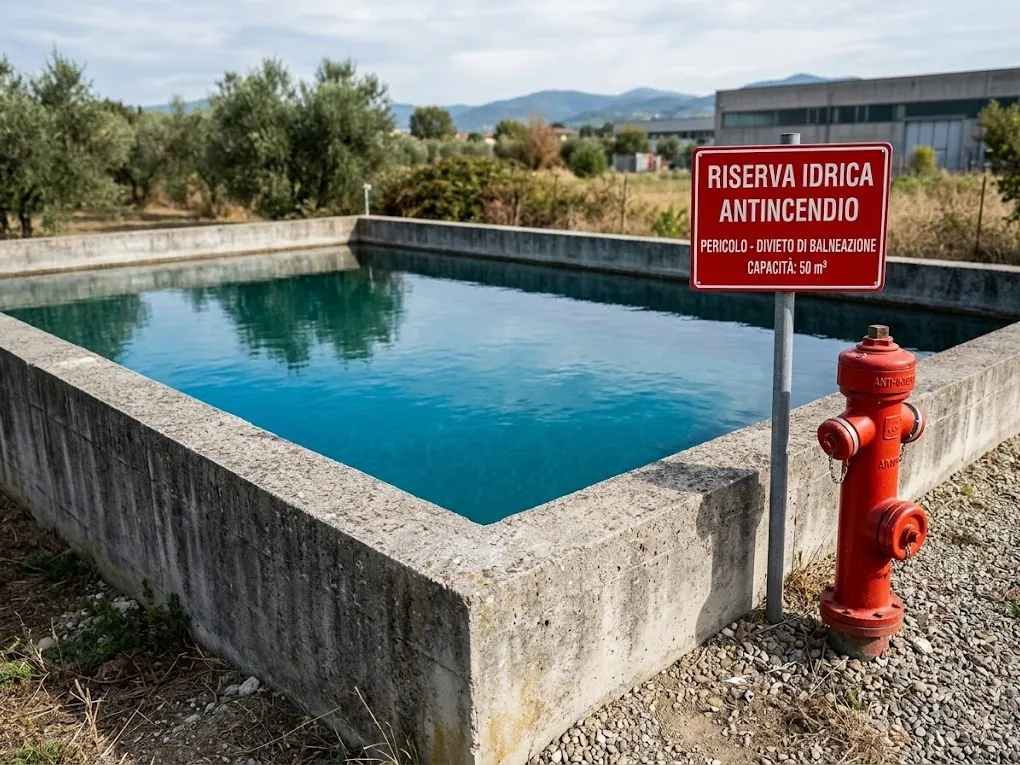
In fire-fighting water reserves, free chlorine is kept at the set point by injecting hypochlorite into the make-up line of the tank.
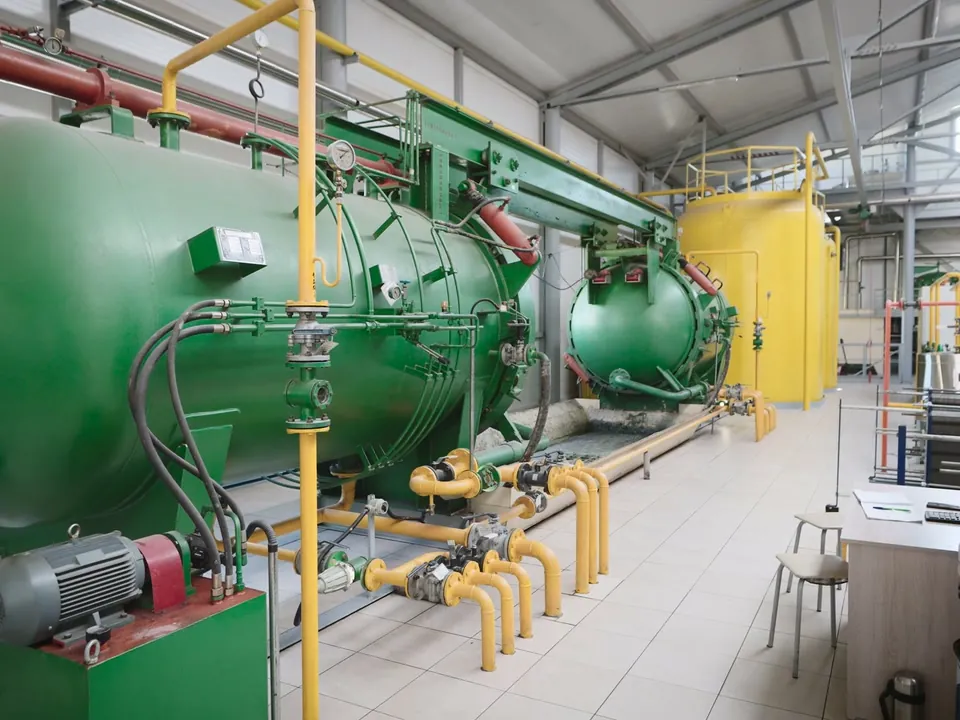
In water used in industrial processes, free chlorine remains at the set value as the flow rate and load vary.
Learn more: industrial water →Versions and models, parameters, measuring ranges, inputs, outputs and technical characteristics are given on the controller page.
Accessories available on request to adapt the system to the requirements of the installation.
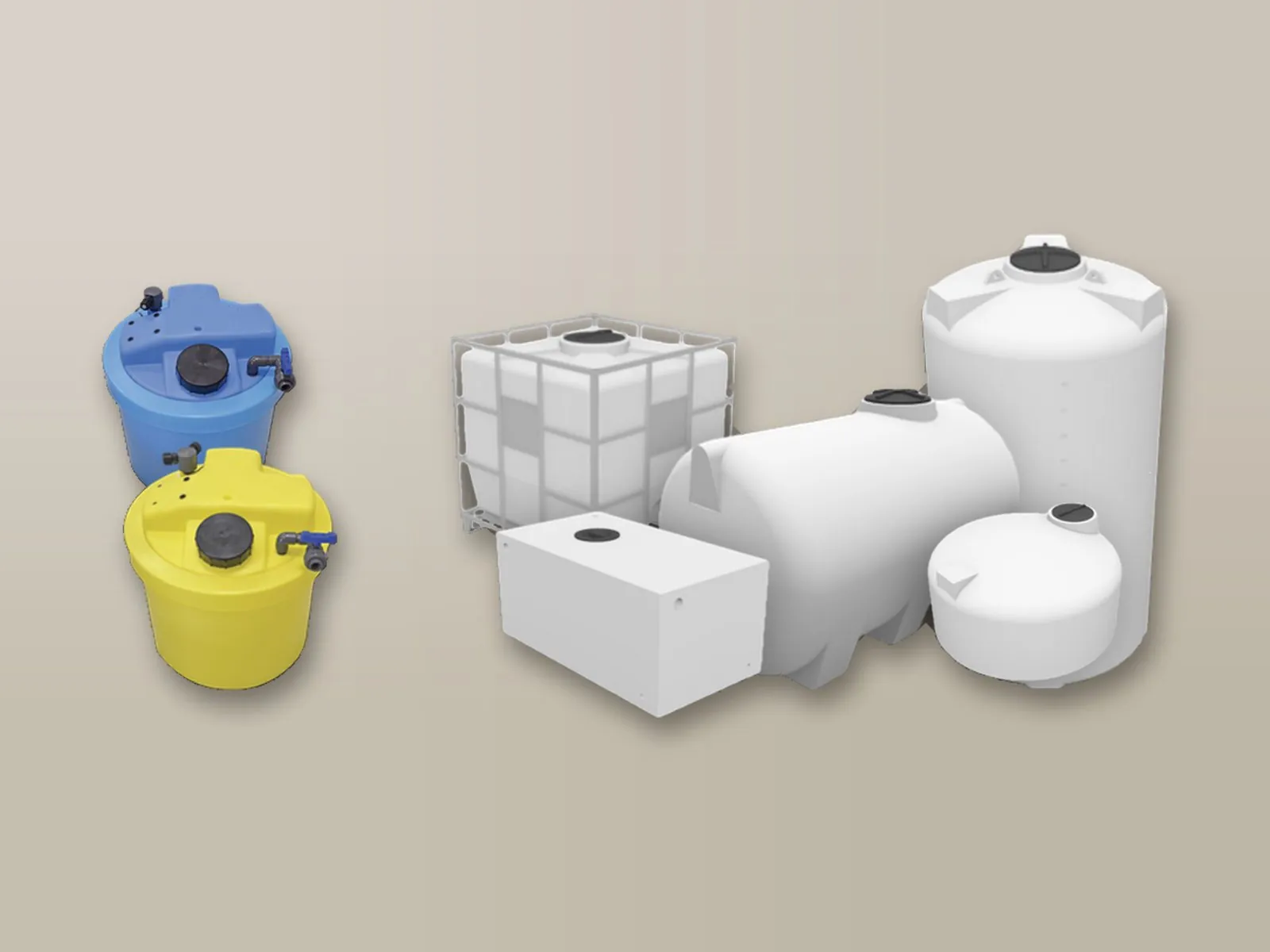
PE tanks for the chemical, with safety bund.
Details →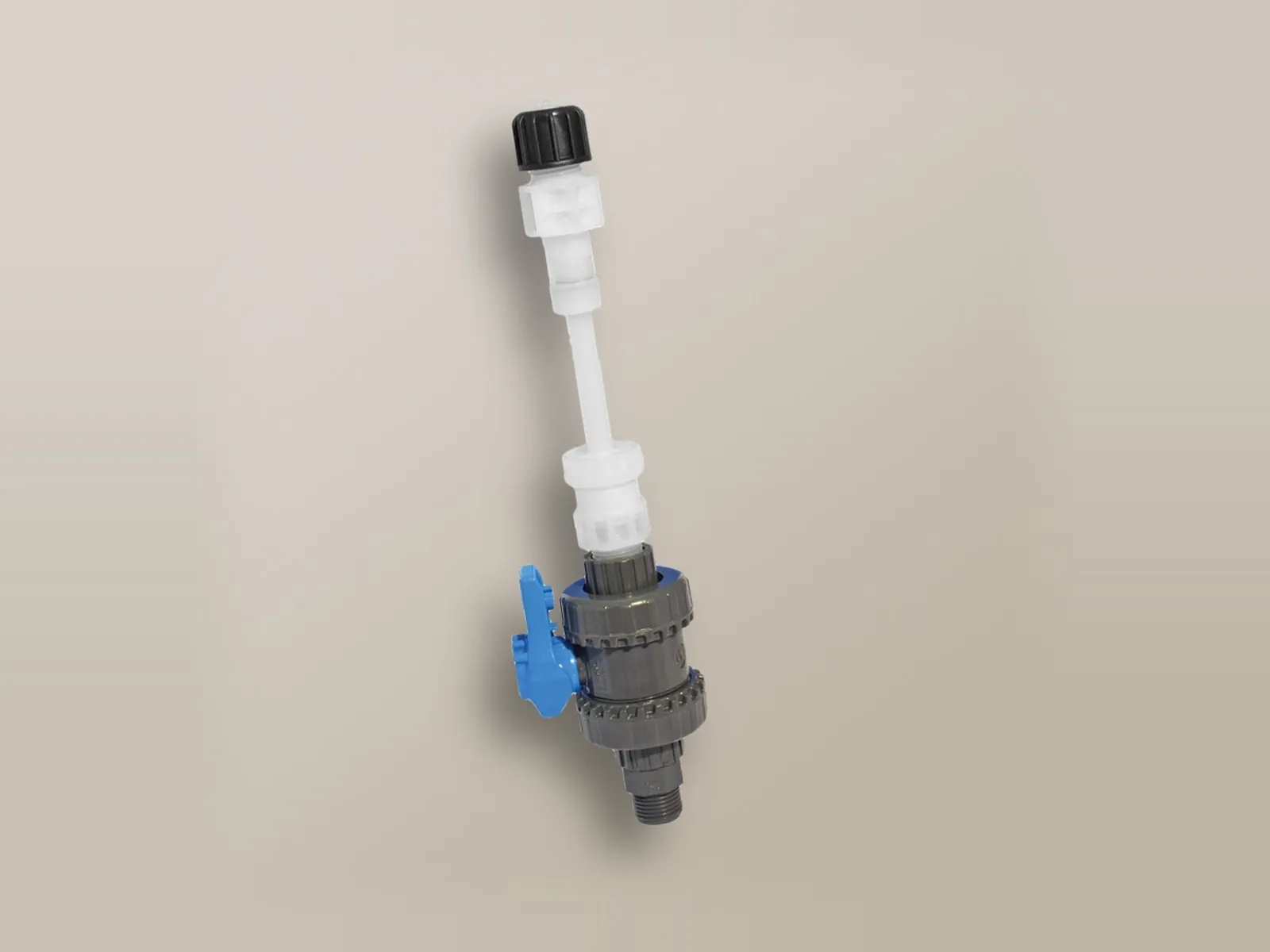
Injects the chemical into the centre of the pipe.
Details →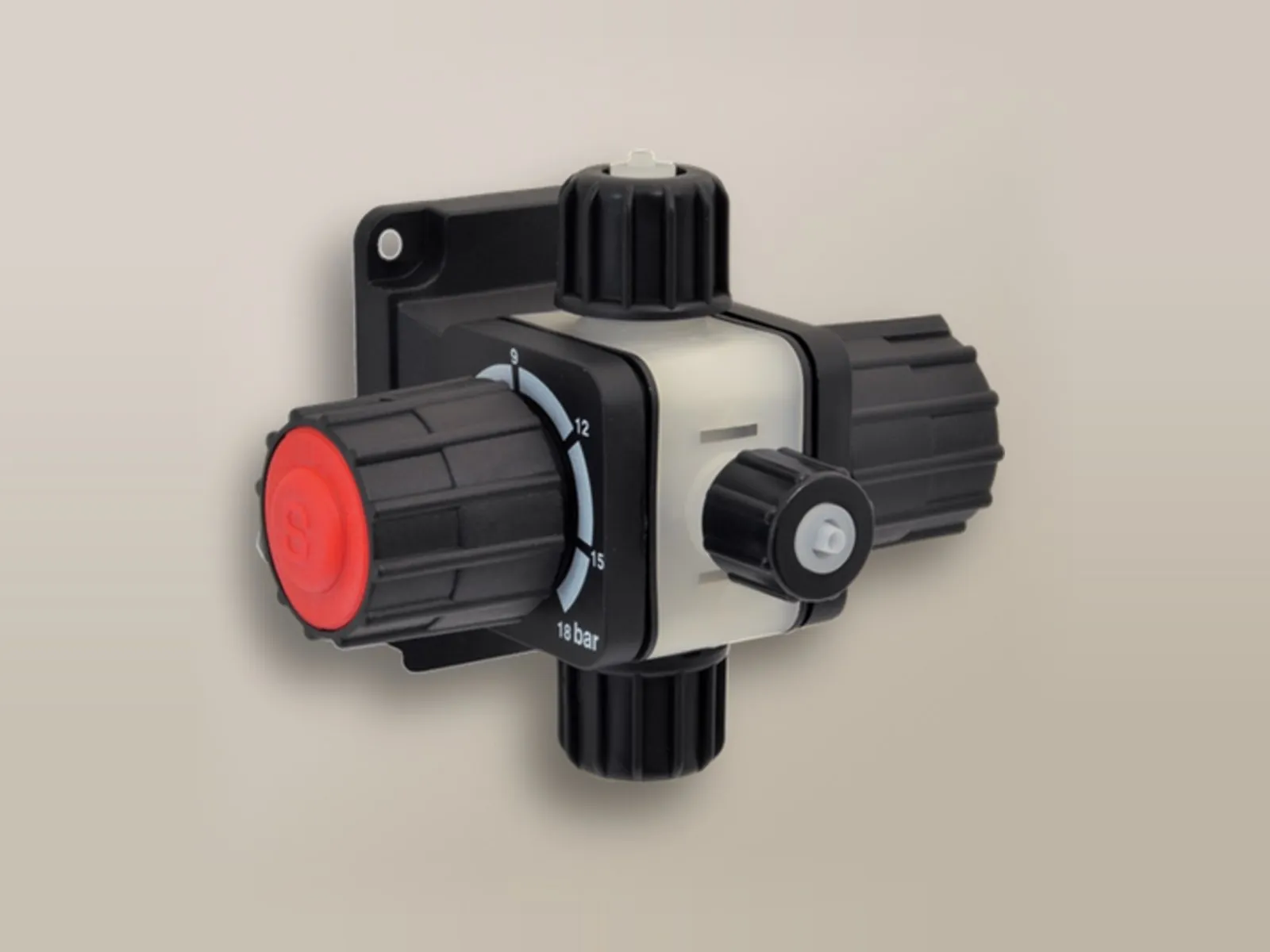
Pressure, safety and anti-siphon functions combined in a single valve.
Details →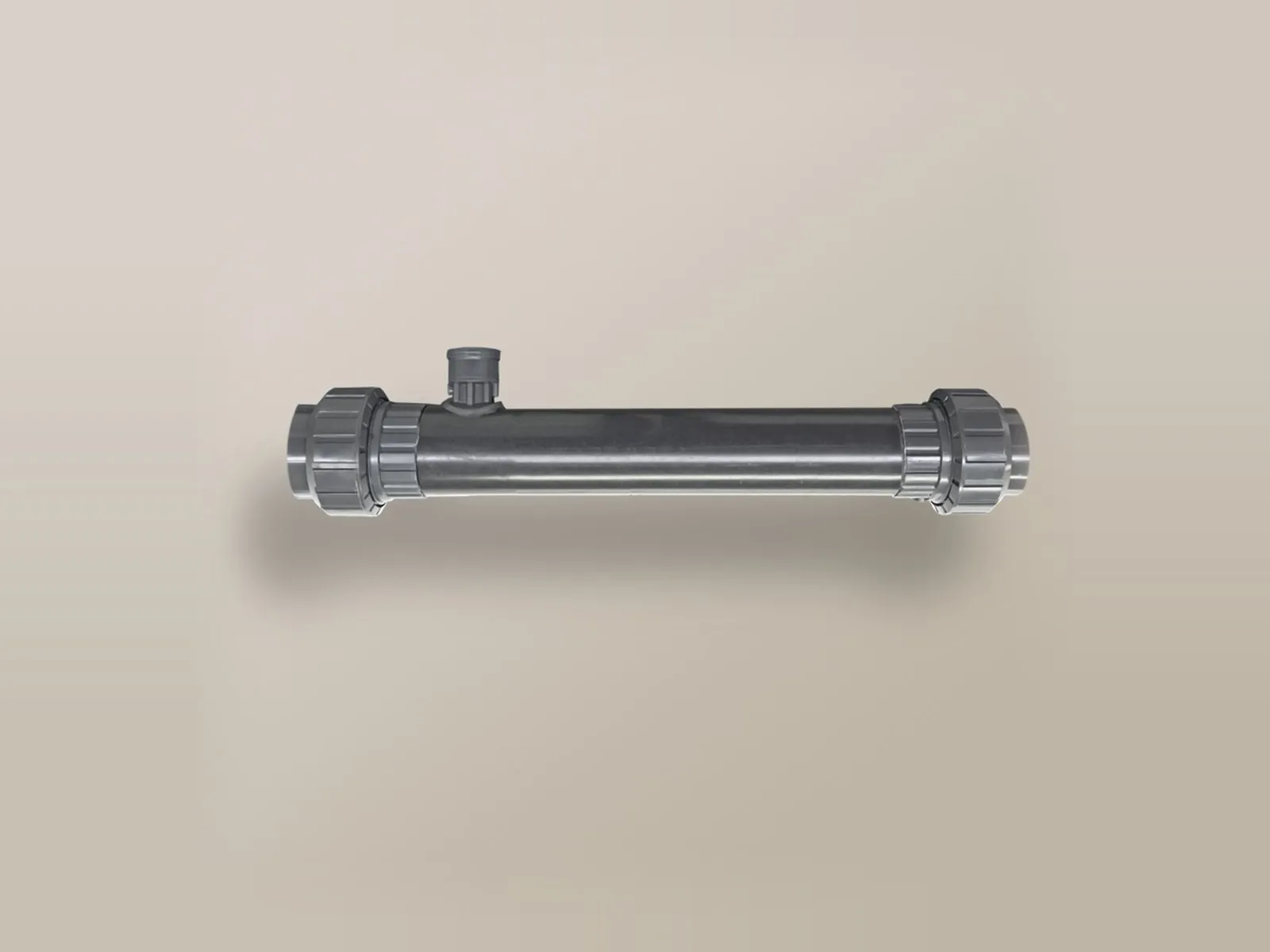
Ensures the chemical is mixed with the water and protects the pipe from direct contact with it.
Details →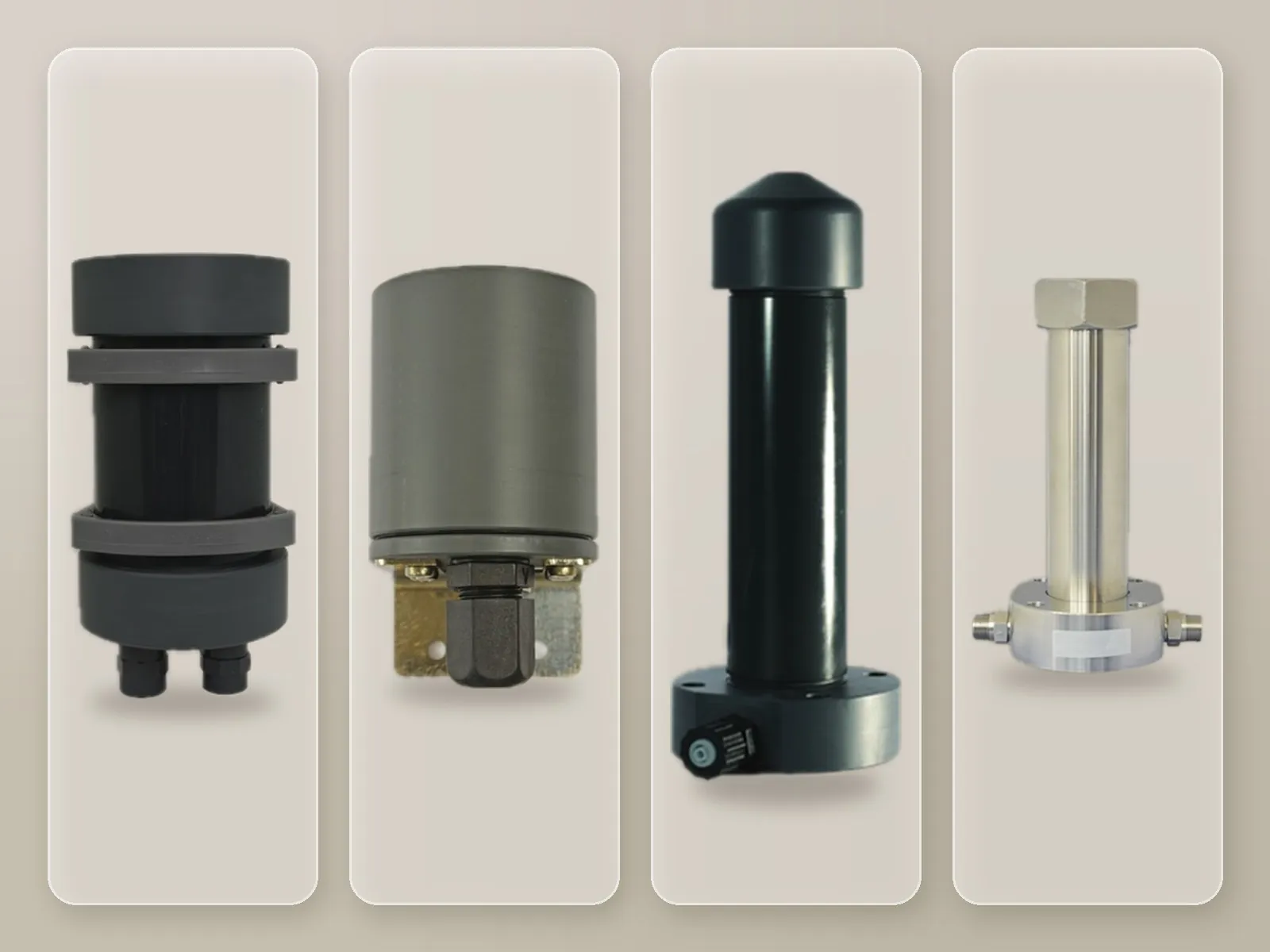
Attenuates the pulsations generated by the dosing pump.
Details →Tell us the parameter to be controlled, the characteristics of the panel and the equipment to be driven: we will propose the most suitable probe, pumps and accessories.
Call or write to us: a technician will reply with a tailored proposal of controllers, pumps, probes and accessories.