pH channel
Two proportional pulse outputs and one relay output drive the pH corrector pumps, acid or alkali, up to the set point; two level inputs monitor the respective tanks.
The system continuously measures the pH and the turbidity of the water with a single dual-channel controller. The pH channel drives the corrector dosing pumps up to the set value; the turbidity channel compares the measurement, expressed in NTU, with its own set point and drives its output, for example the motorised valve that diverts turbid water to drain.
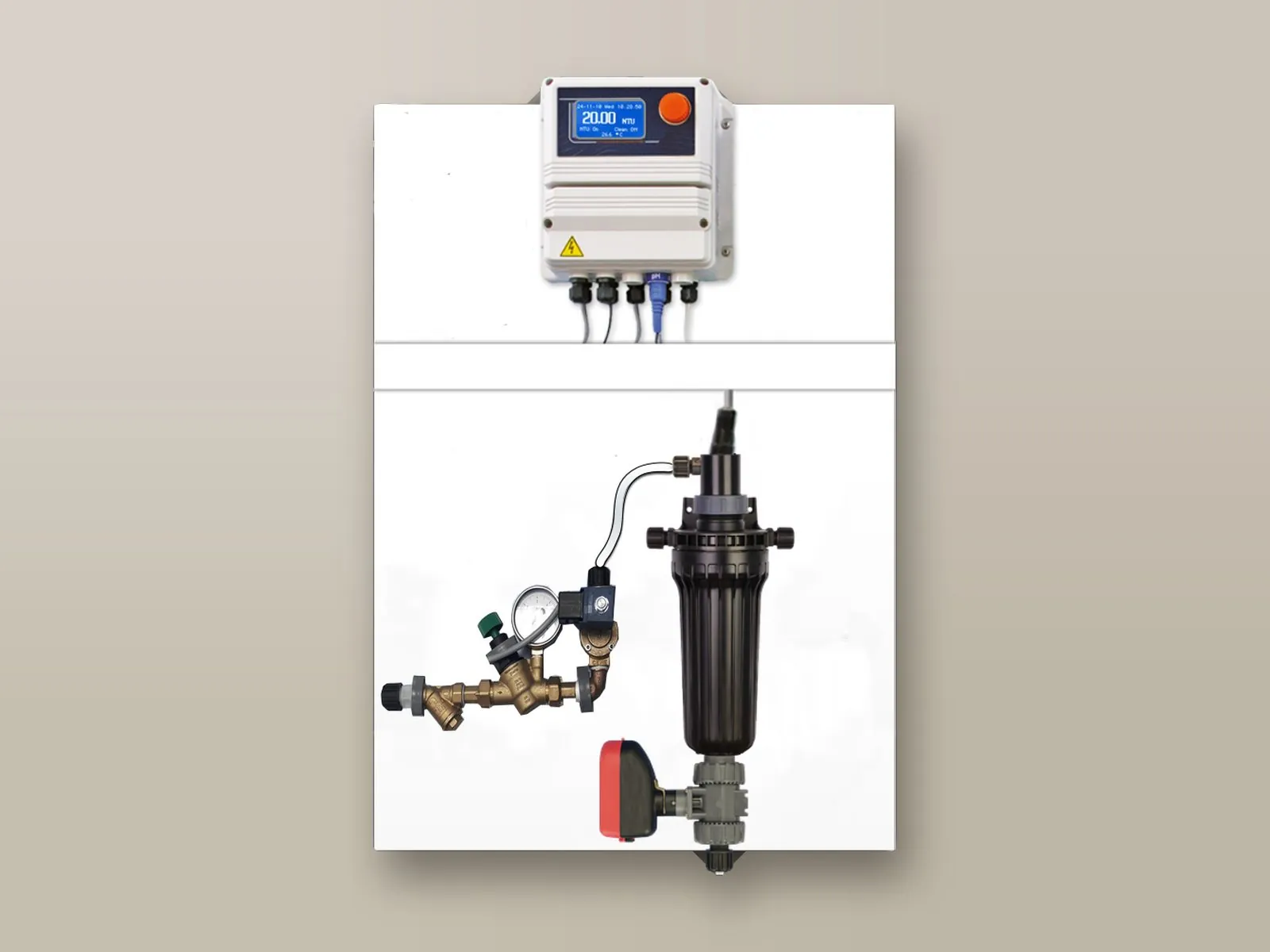
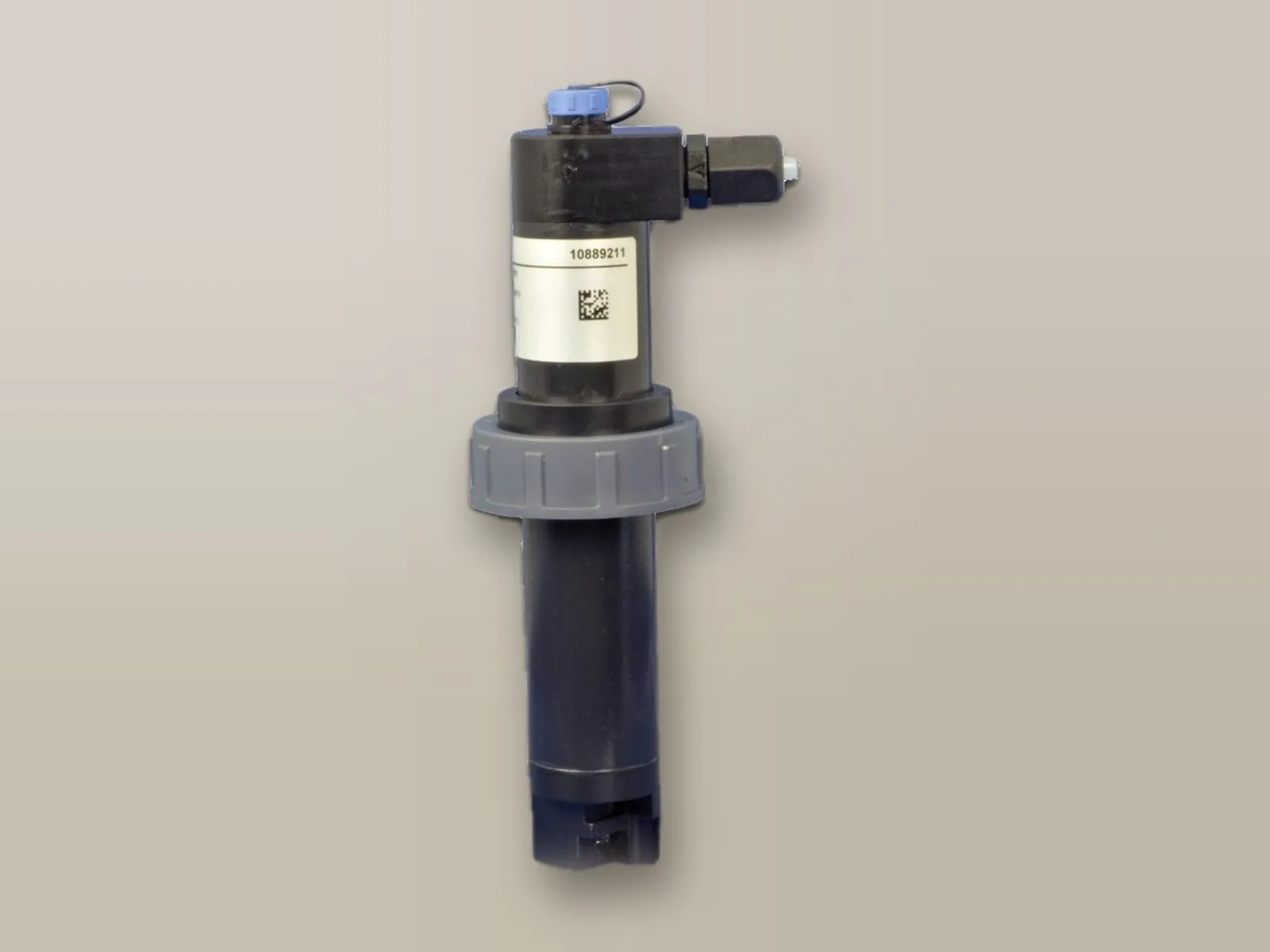
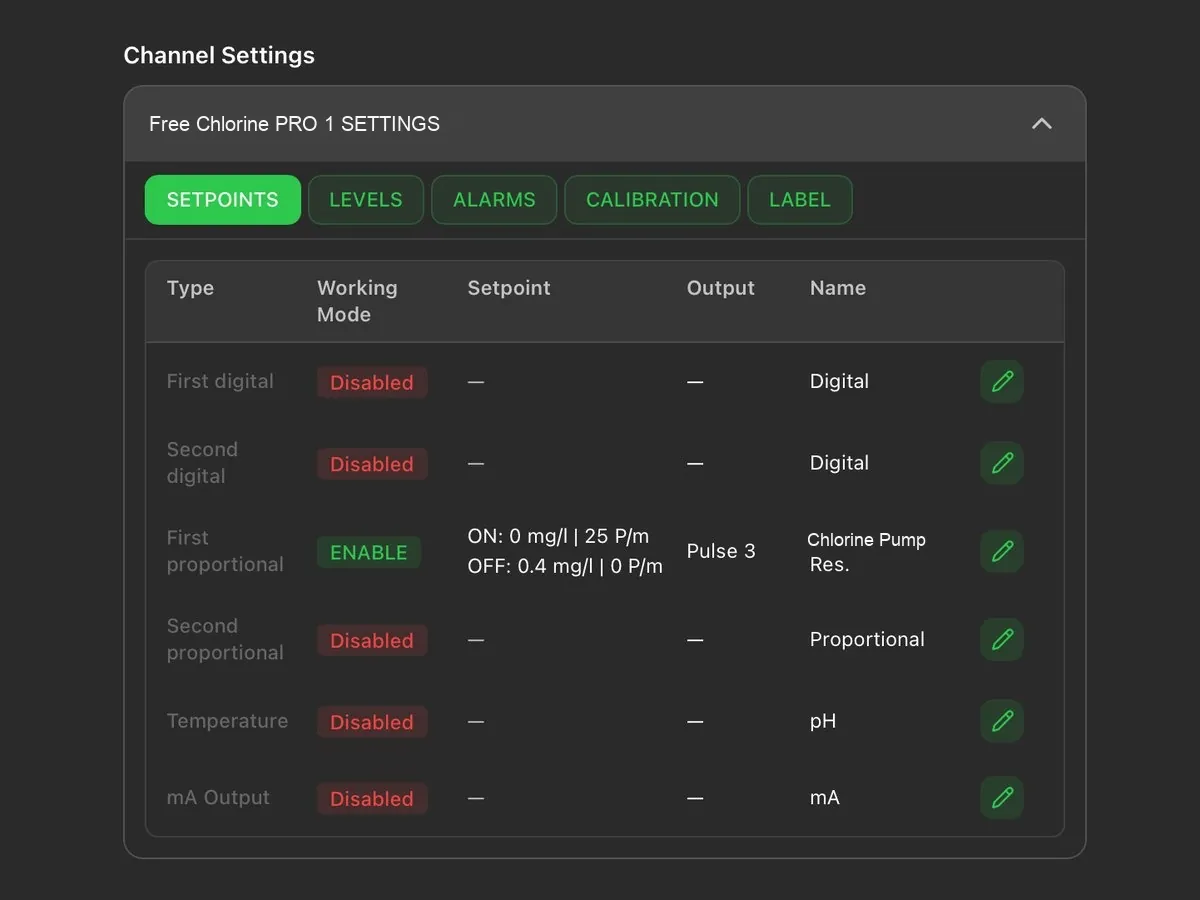
The controller reads the pH electrode, the turbidity probe and the temperature probe; for each channel the set points and the control mode, ON/OFF or proportional, are set.
Two proportional pulse outputs and one relay output drive the pH corrector pumps, acid or alkali, up to the set point; two level inputs monitor the respective tanks.
When the set point is exceeded, the relay output of the channel drives the connected equipment, for example the motorised three-way valve that sends turbid water to drain instead of to the storage tank; the channel also has a proportional pulse output and a level input.
A dedicated output drives the cleaning of the turbidity probe, so that the optical window stays clean and the measurement reliable.
The controller and the two probes are complemented by the pH corrector pumps and by the plant valves driven by the turbidity channel.
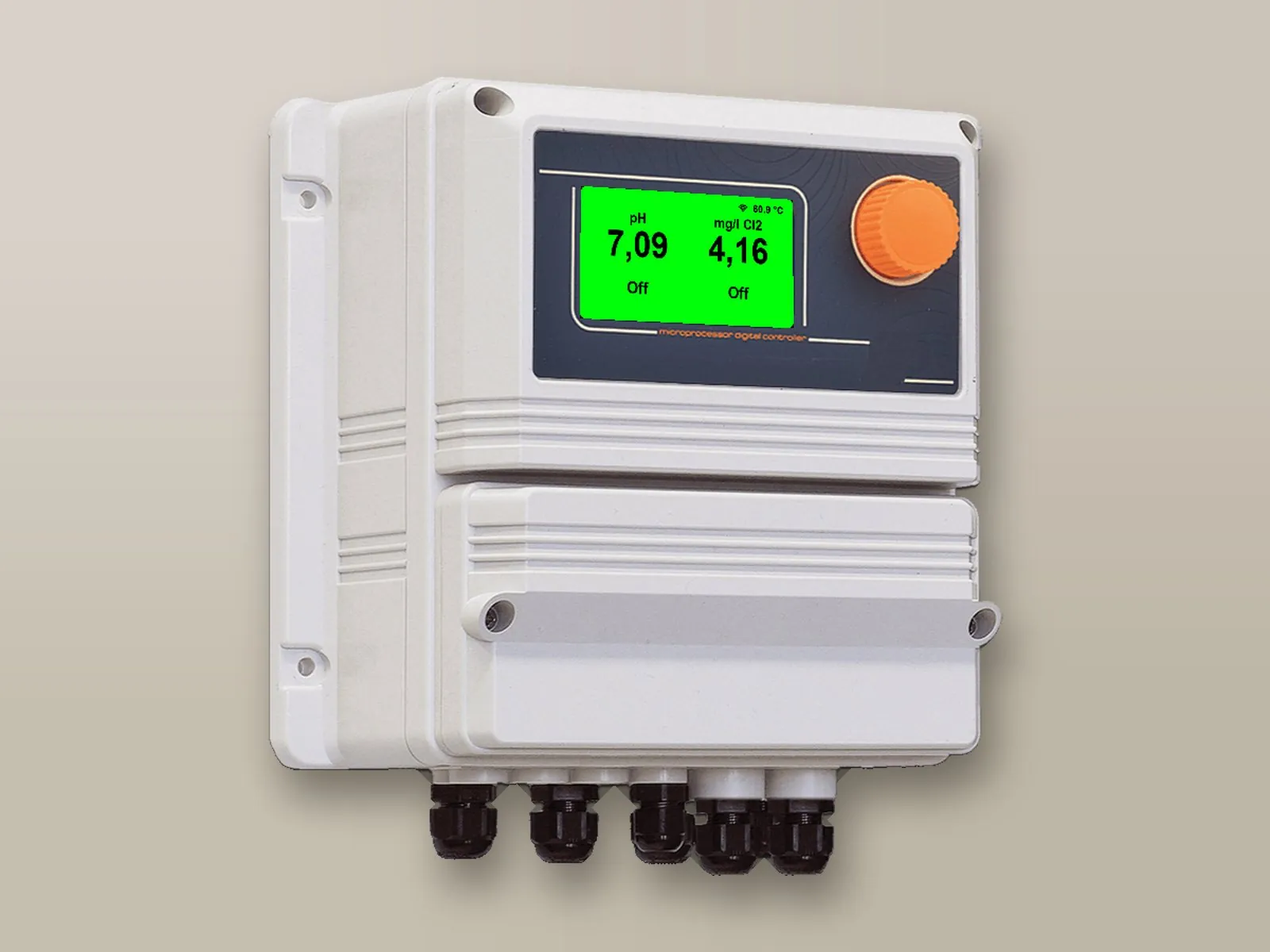
It acquires pH, turbidity and temperature and drives dosing pumps, valves and alarm according to the set points of each channel.
LD dual-channel controllers →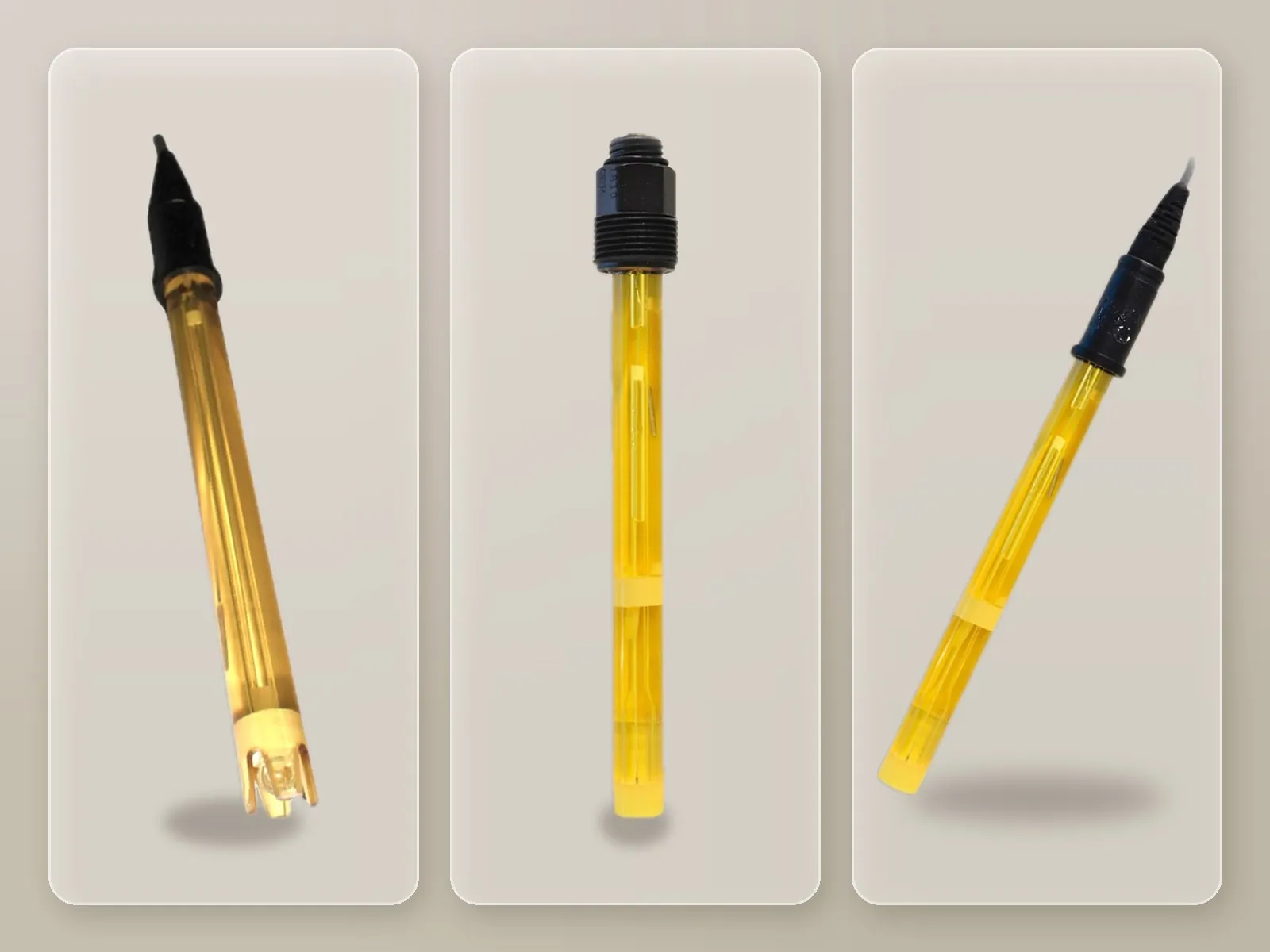
The combined electrode measures pH from 0 to 14; the reading is temperature-compensated.
pH electrodes → Nephelometric measurement with light scattered at 90°, with integrated temperature sensor and water-jet cleaning of the optical window.
The probe →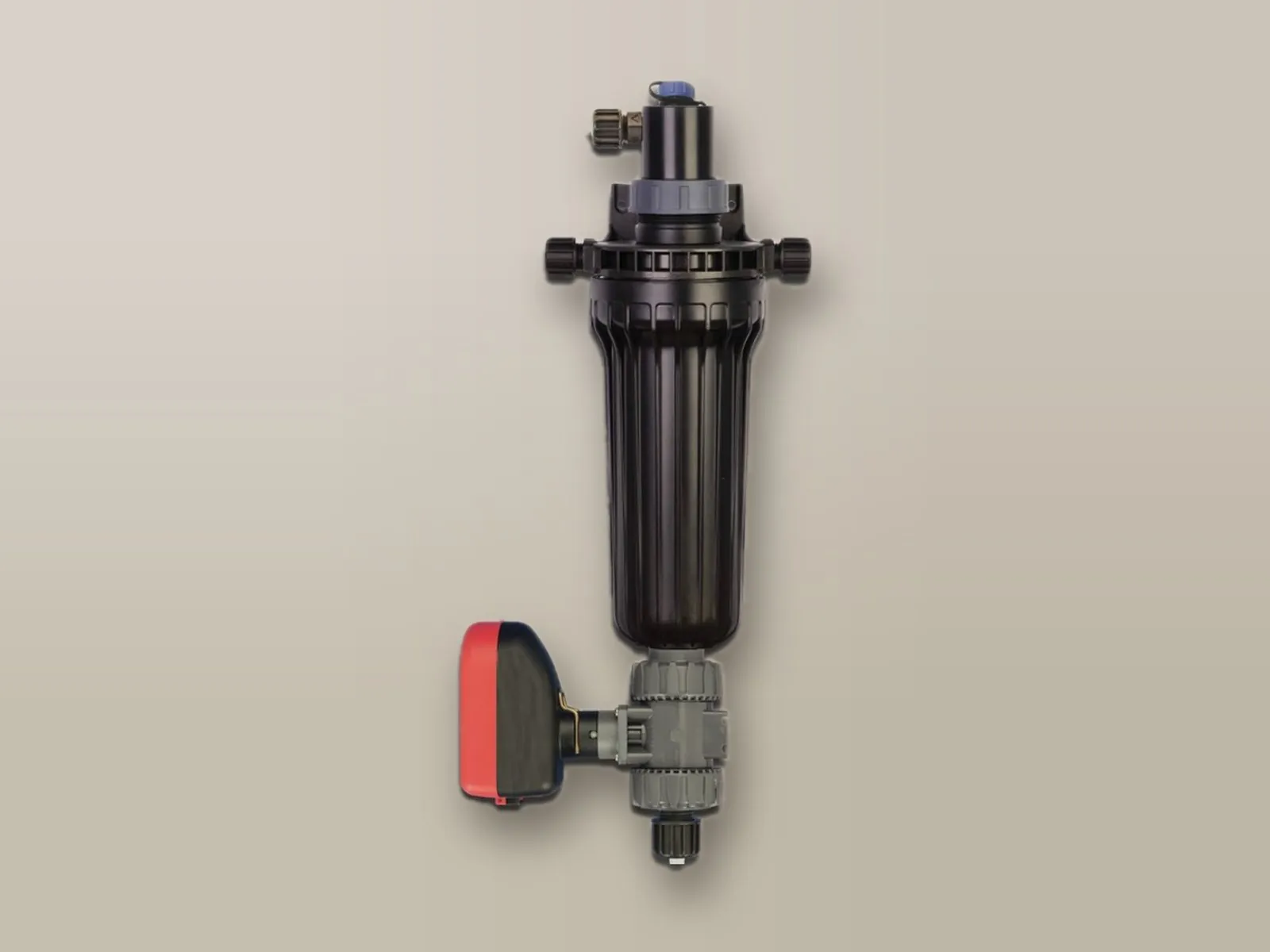
It houses the turbidity probe in the flow of sample water, with the motorised drain valve for cleaning and the connection for the washing water.
Probe holders →The flow sensor signals the absence of circulation in the probe holder and stops dosing.
An external contact puts the controller in stand-by and suspends control, for example when the plant is stopped.
The alarm output signals faults on both channels, such as out-of-range readings or product depletion.

Raw water from wells and springs, in which turbid water must be kept out of the storage tank and the pH corrected before distribution.
Learn more: well water →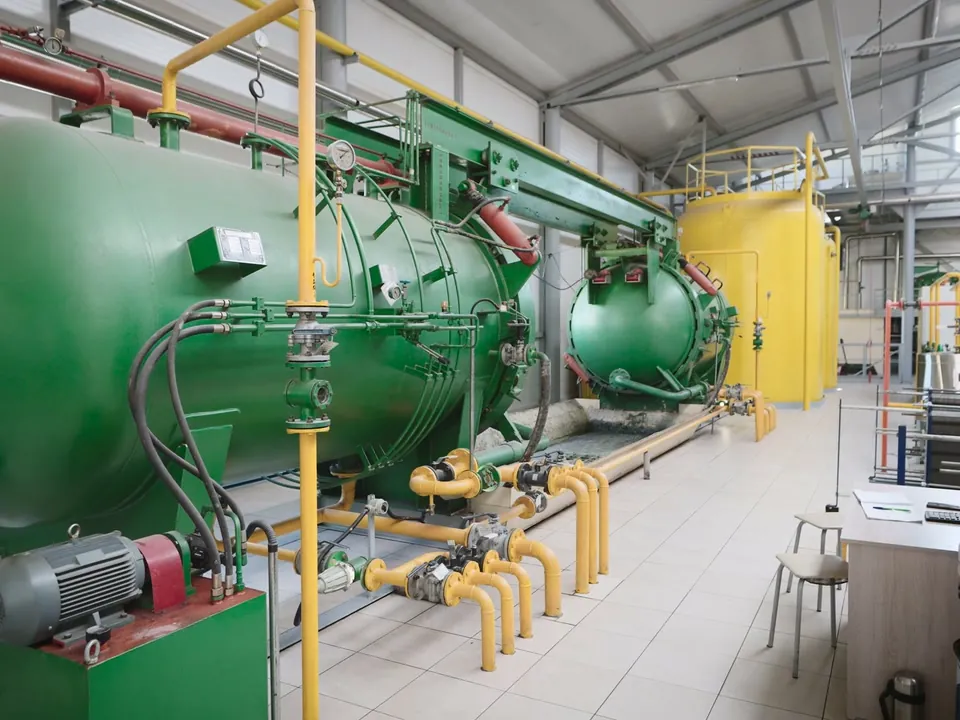
Industrial process water, in which pH and suspended solids are monitored.
Learn more: industrial water →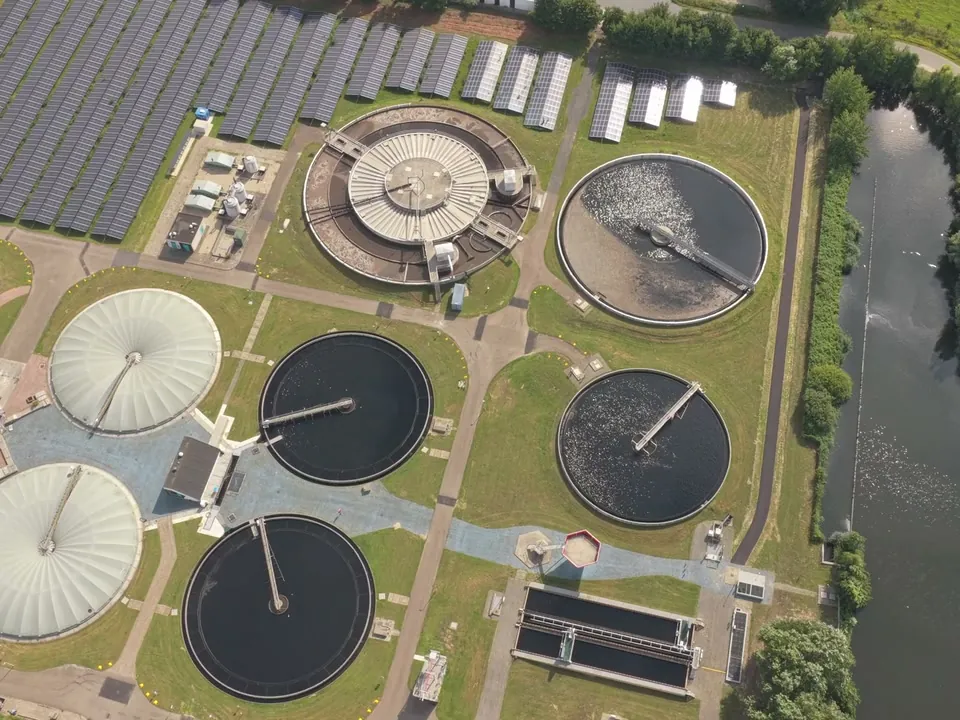
Municipal and industrial wastewater, with pH correction and turbidity monitoring at the outlet.
Learn more: wastewater →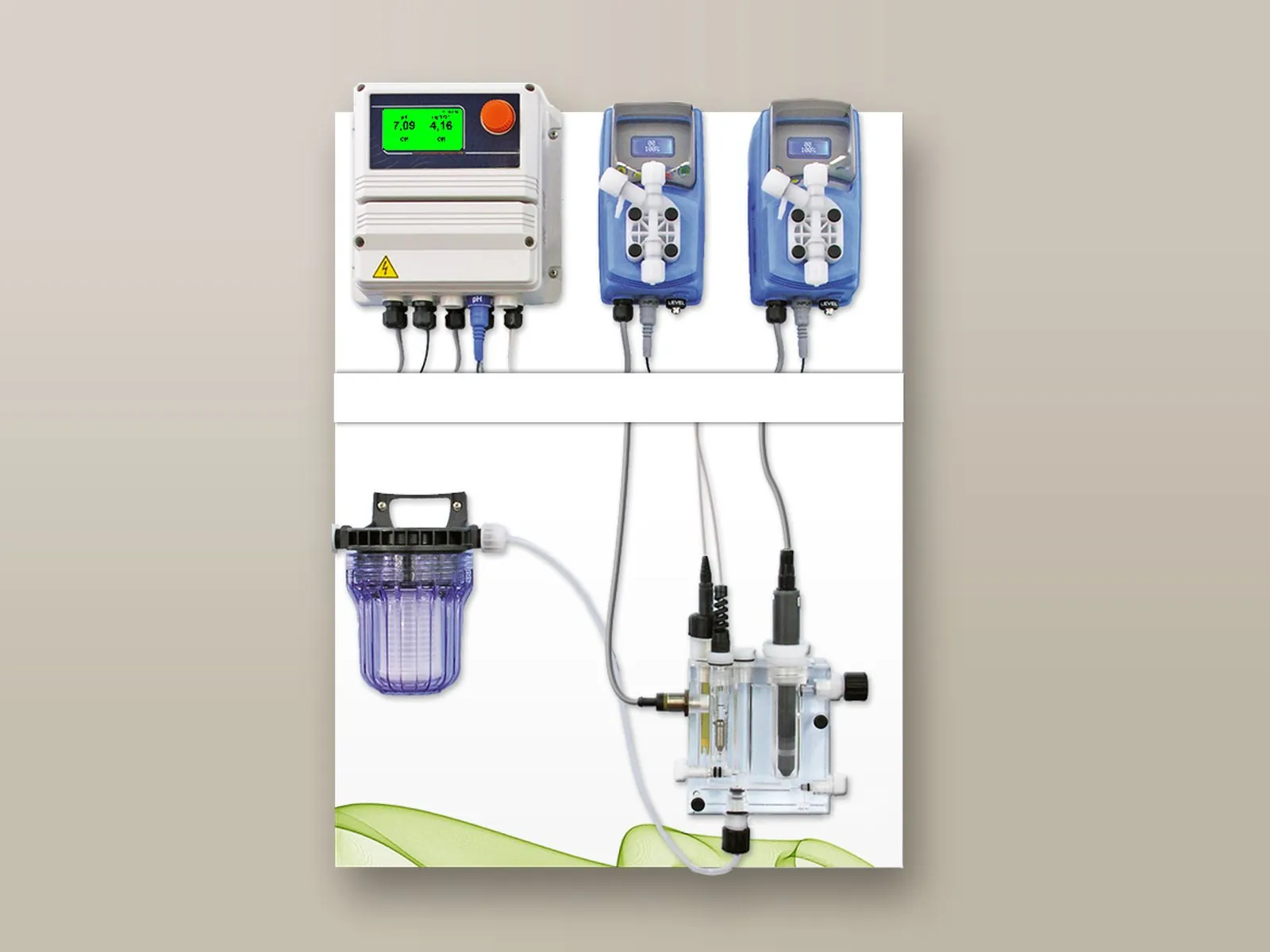
Available parameter combinations, BASIC and PLUS versions, display and connections of the dual-channel controllers are given on the series page.
The controllers support two-way remote access (read and write) through the web portal from a PC, tablet or smartphone: measurements can be viewed, set points, dosing and alarms changed, alarms received and logs downloaded. Alternatively, they can be integrated into your PLC via Modbus.
Connection to the web portal via network cable: measurements, set points, dosing and alarms accessible from a PC, tablet or smartphone.
Wireless connection to the web portal, with the same functions as the cable connection.
Connection via the 4G network for installations without a local network, with alarm notification by SMS or e-mail.
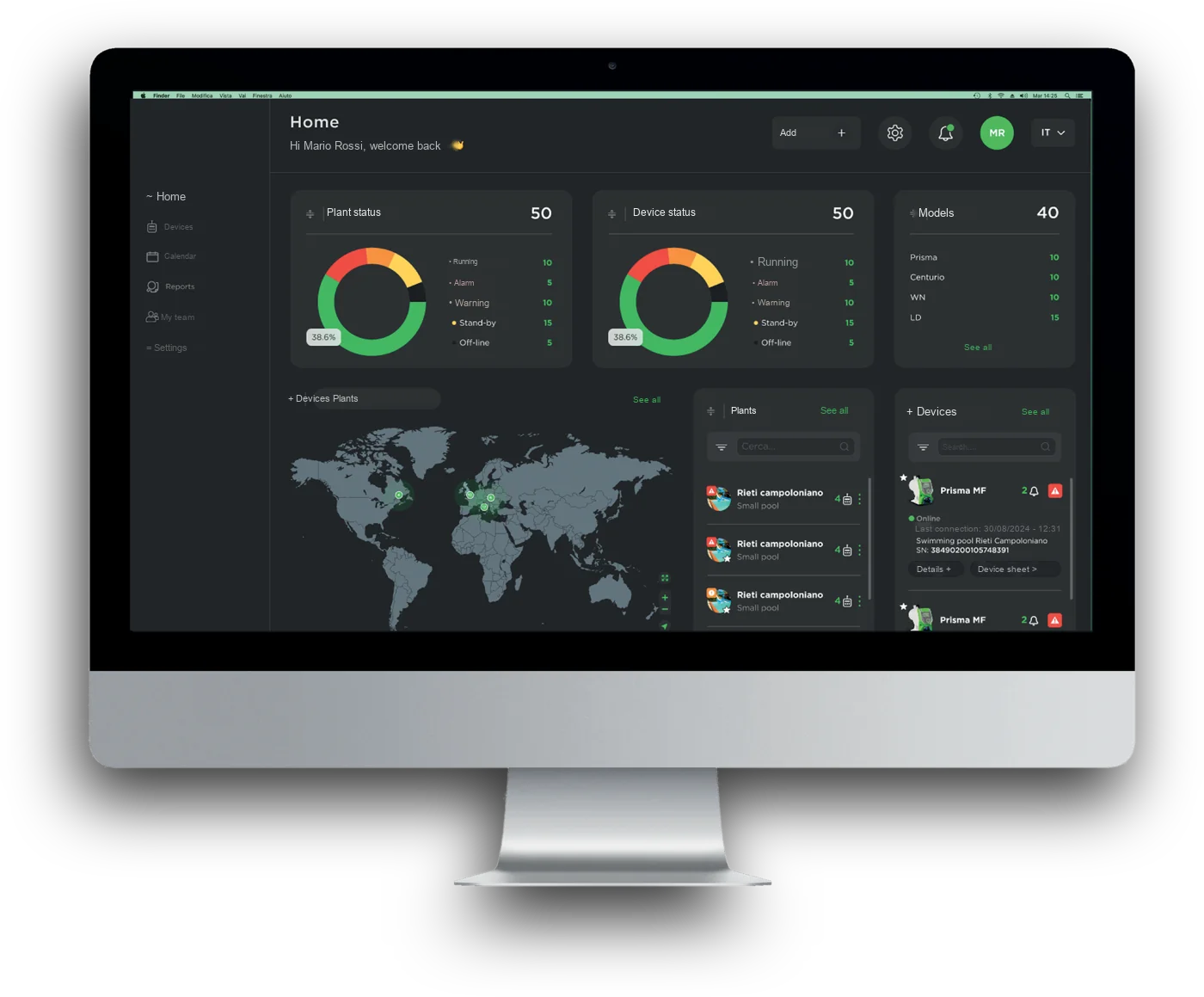 Web portalPC, tablet and smartphone
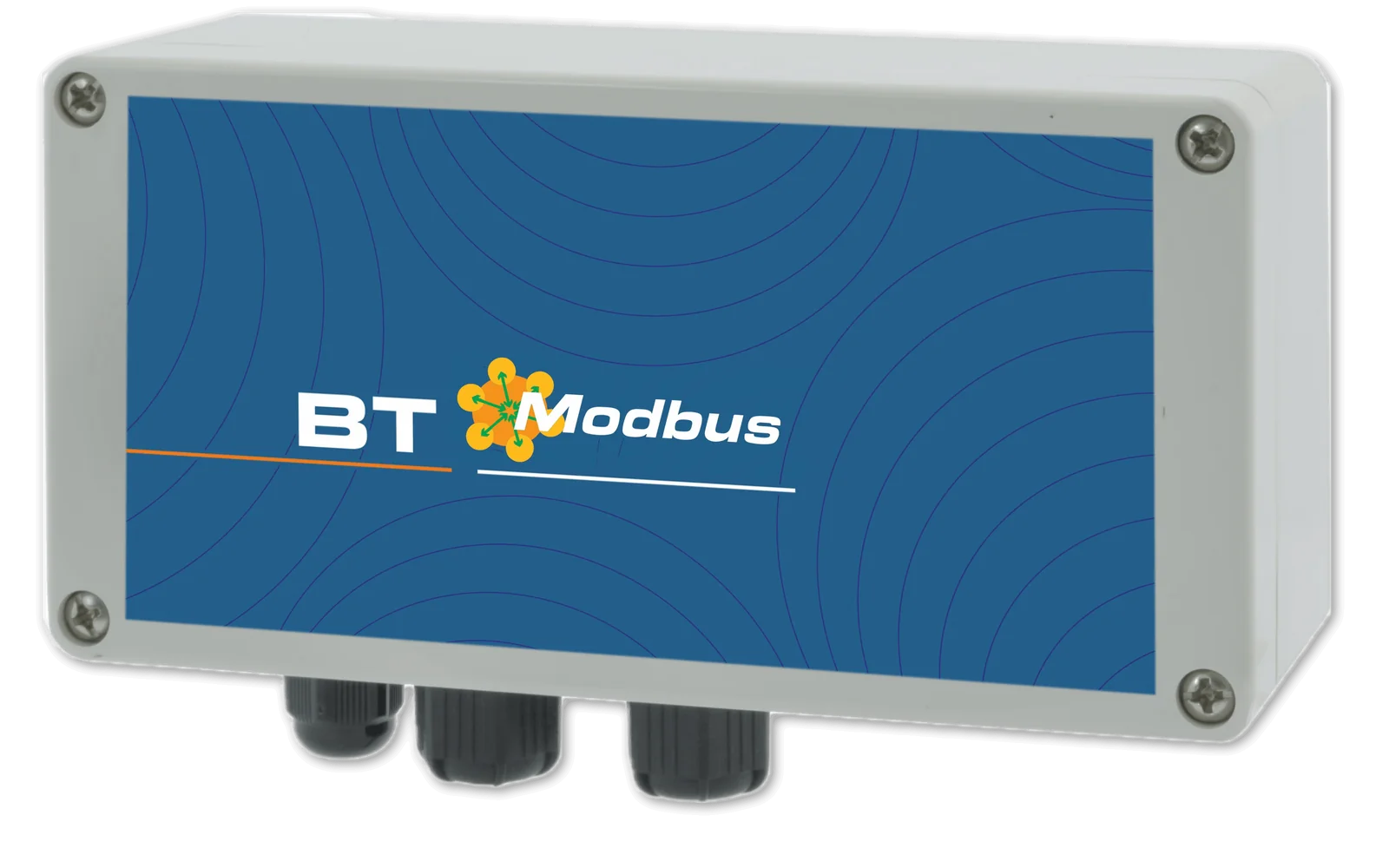
Integration into your PLC via serial port.

Current signal proportional to the measured value, for remote monitoring or for controlling pumps and other instrumentation.

Download of the logged data to a USB memory stick, for archiving and analysis with a spreadsheet.
One communication type at a time: Ethernet, Wi-Fi, 4G or Modbus RTU (built into the BASIC versions, optional on the PLUS versions). 0-4/20 mA current loop outputs optional; meter input on the PLUS versions only.
A single account brings together all registered installations, each with its own devices: the web portal, free of charge and with no subscription, can be accessed from a PC, Mac, tablet or smartphone and allows every parameter to be both viewed and changed, with an encrypted connection and protected access.
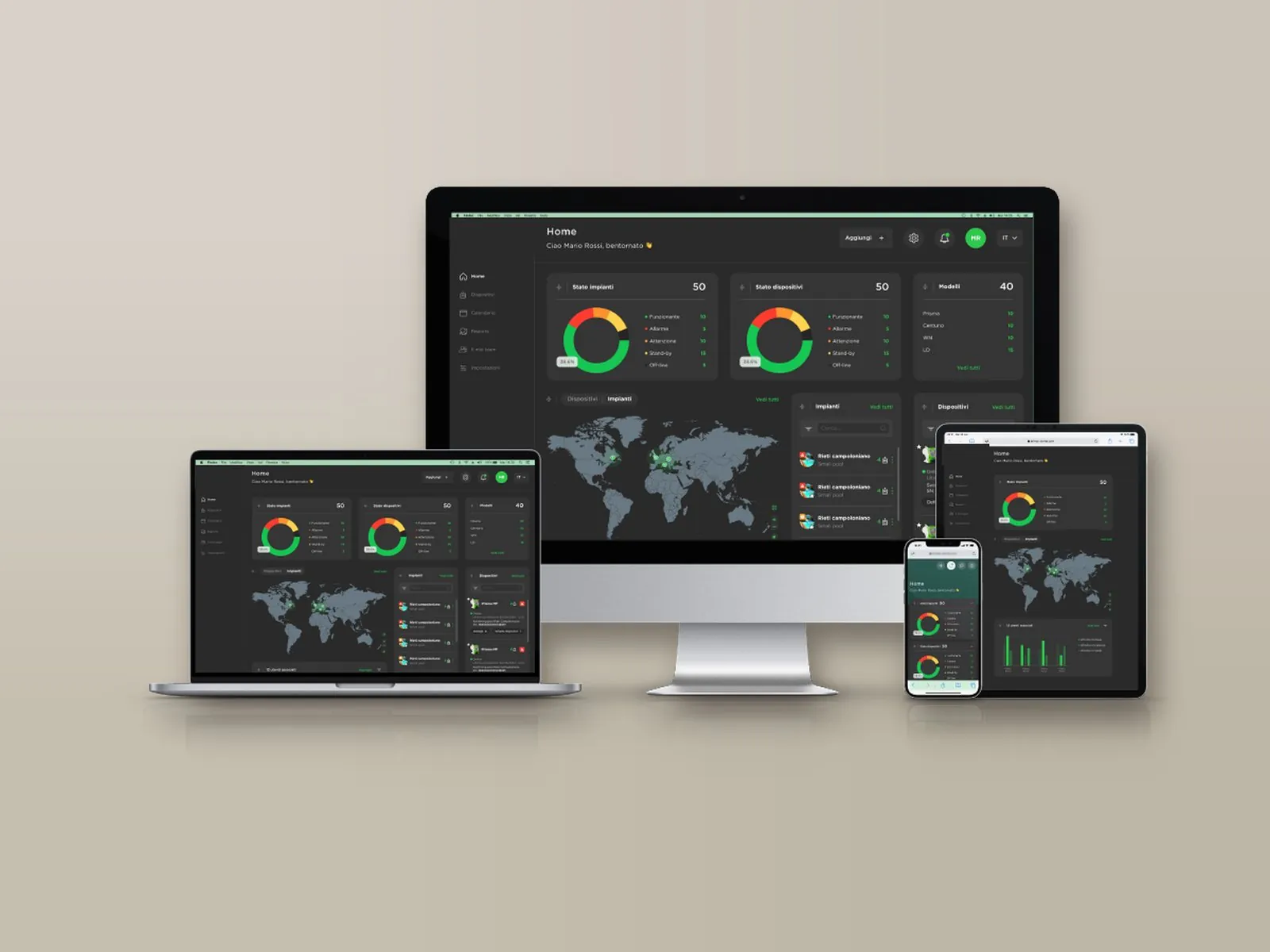
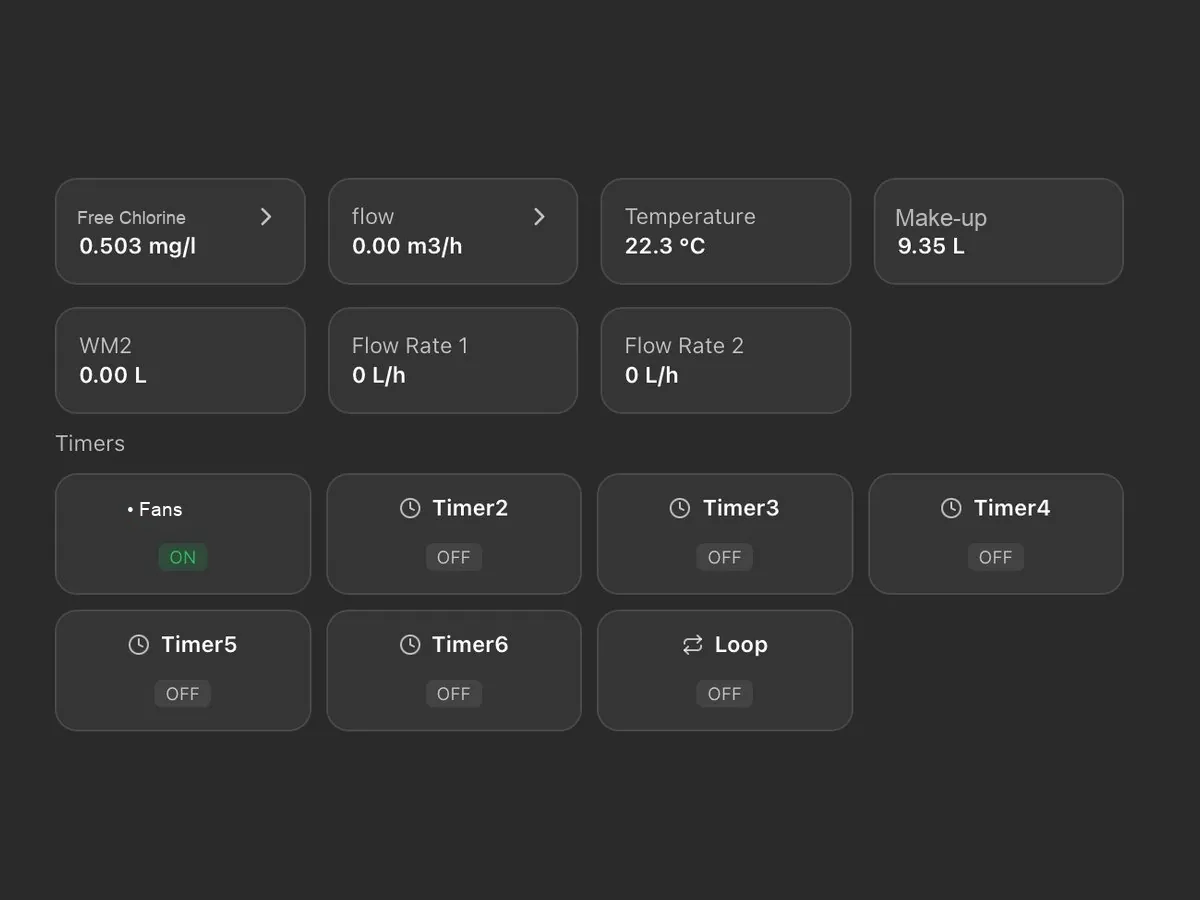
On a single screen: probe readings, chemical levels, pump activation thresholds and active alarms, with the status of installations and devices (normal, warning, alarm, standby, not connected).
Installations appear on an interactive map with their status and open with a click; for each one, the local weather conditions and temperature are also shown.
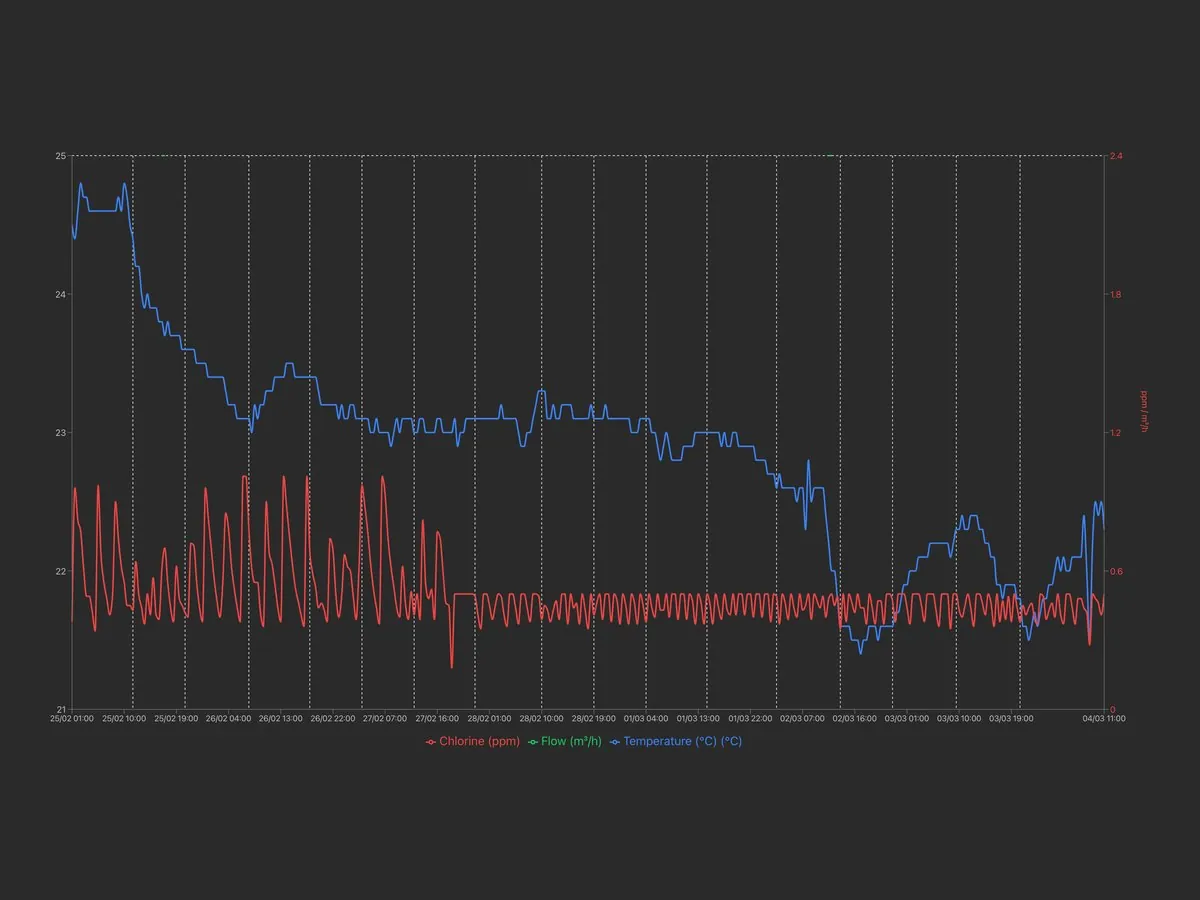
Archive of measurements and alarms, available for consultation at any time with charts and numerical reports exportable in Excel format.
Alarm thresholds for readings, dosing, faulty probe and out-of-range readings, with notification by e-mail or SMS depending on the communication system; a warning is also issued when an installation remains disconnected beyond the set time.
Remote modification of the set points, of the dosing pump activation thresholds and of the corresponding hourly flow rate.
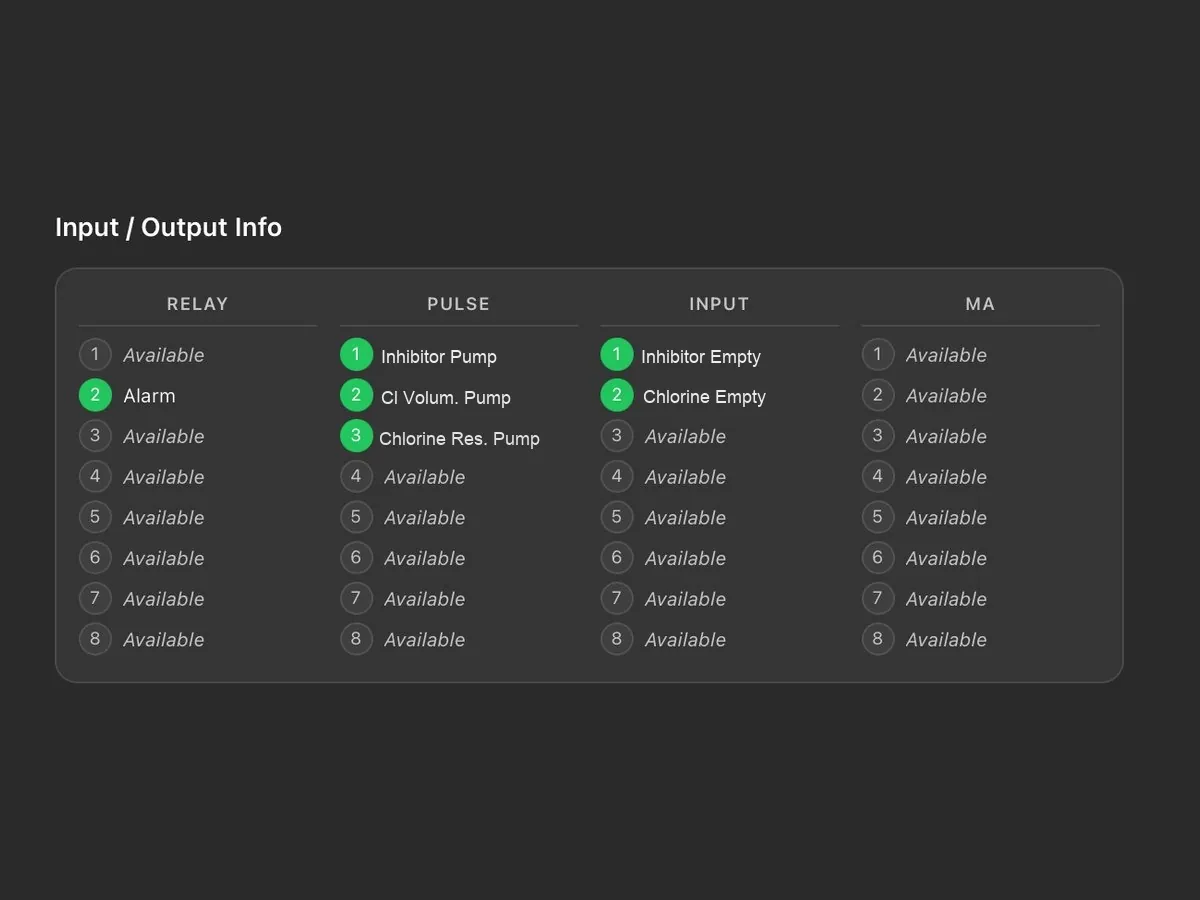
Status of relays, pulse outputs, digital inputs and current outputs, with the name assigned to each connection.
Tasks are scheduled by installation or by device and assigned to technicians; a reminder is sent by e-mail two days before the due date. Each task is shown as scheduled, due, overdue or completed.
The main account has full access and creates the technicians’ accounts, each enabled only for the assigned installations and devices; the last login and activity of each technician are visible.
Reports on devices, tasks and technicians, downloadable in PDF or CSV with the customer’s logo; the log keeps the history of operations and disconnections.
Logo, main colour and light or dark theme; the tiles on the main screen can be rearranged by dragging them. Two installations can be displayed side by side for comparison.
Each device is added through a guided procedure: the model is recognised automatically and associated with the installation, together with the technician to be contacted.
As an alternative to the portal, the Modbus RTU port allows integration into the plant supervision system.
Tell us the type of water, the flow rate and the point where pH and turbidity are to be monitored: we will propose the most suitable installation, valves and accessories.
Call or write to us: a technician will reply with a tailored proposal of controllers, pumps, probes and accessories.