Skip to content
Solenoid dosing pump

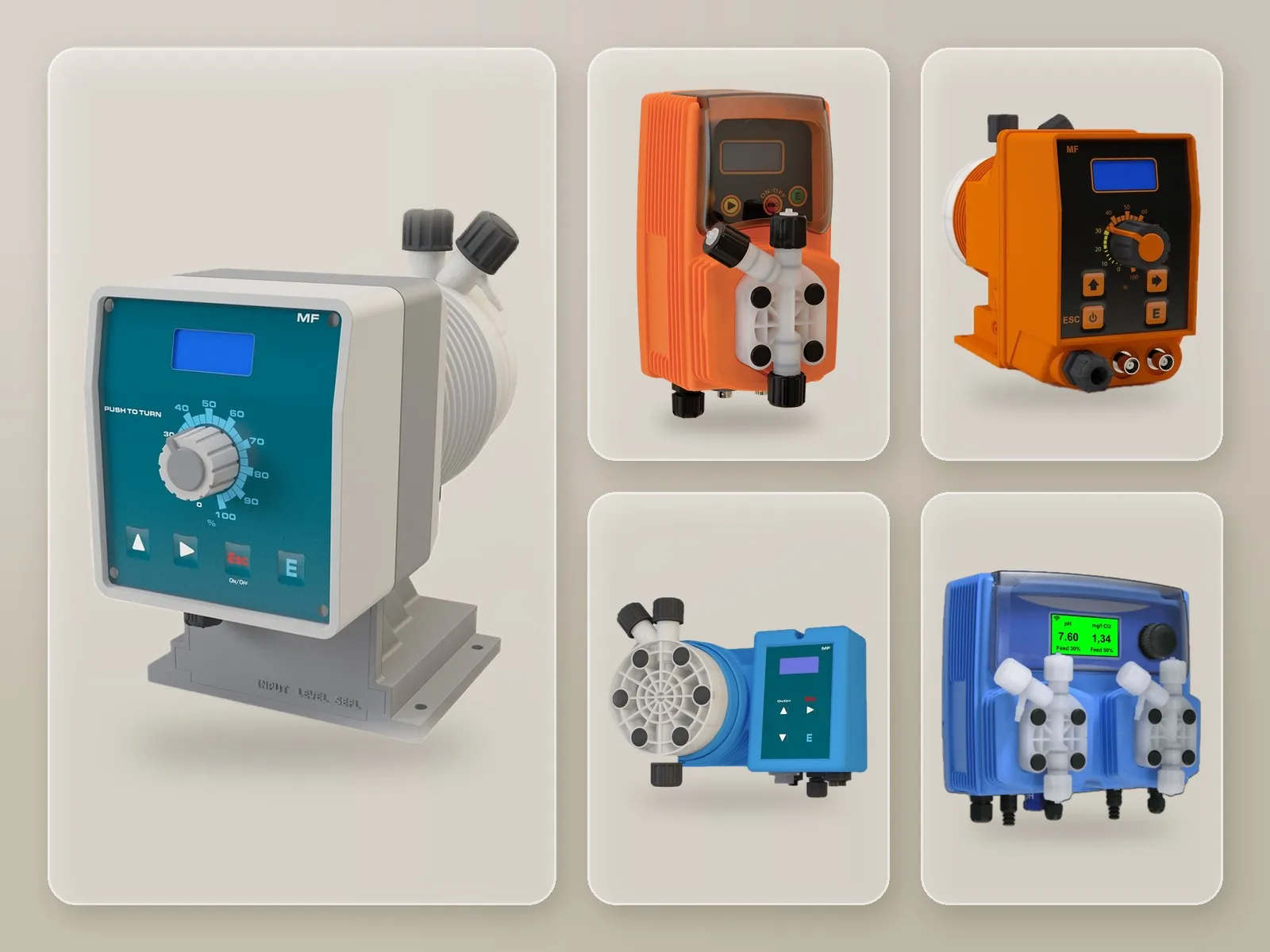
KMS MF

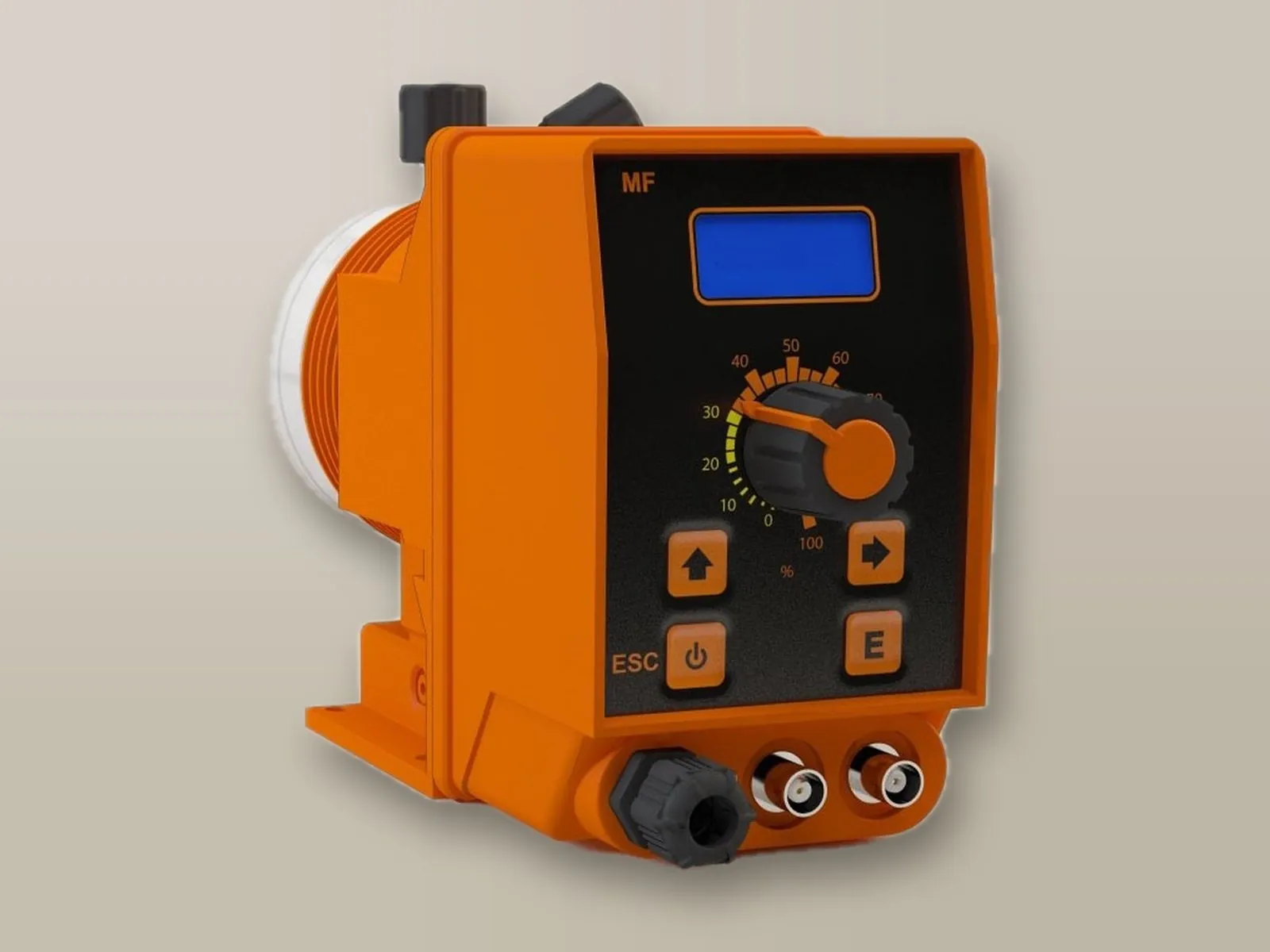
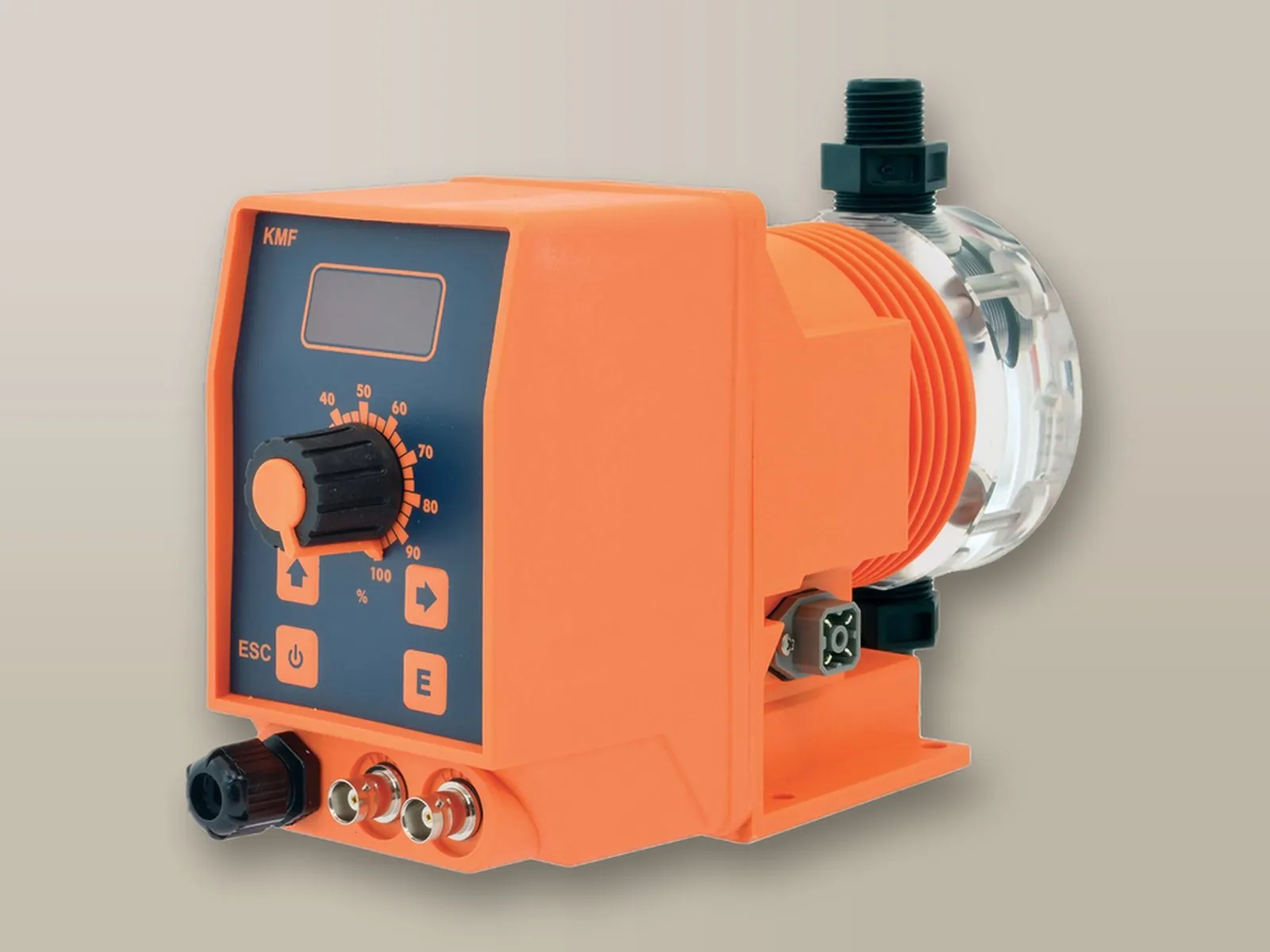
Multifunction diaphragm dosing pump with display, for constant dosing or dosing proportional to a pulse-output water meter or to 0-4/20 mA and 0-10 V signals, in ppm, as a percentage, in batches and by timer. The flow rate is adjusted electronically through the stroke frequency and mechanically through the volume of each stroke. Level control, stand-by input, flow sensor input and alarm output are standard.

  • Multifunction with display
  • Water meter and mA input
  • Up to 20 bar
  • Up to 18 l/h
KMS MF dosing pump
18l/hMaximum flow rate
20barMaximum pressure
21Configurations
8,000cPMaximum viscosity (LPV version)
The model

KMS MF

KMS MF dosing pump
Multifunction

KMS MF

Constant dosing or dosing proportional to 0-4/20 mA current loop or 0-10 V signals or to a pulse-output water meter.

  • Digital constant
  • Multiply
  • Divide
  • PPM
  • Millilitres per quintal (100 kg)
  • Percentage
  • Batch
  • mA
  • Volt
  • Timer
  • External constant
  • Pause / work
Available versions
KMS MF LPV KMS MF LPVPMMA pump head for viscous liquids up to 8,000 cP.

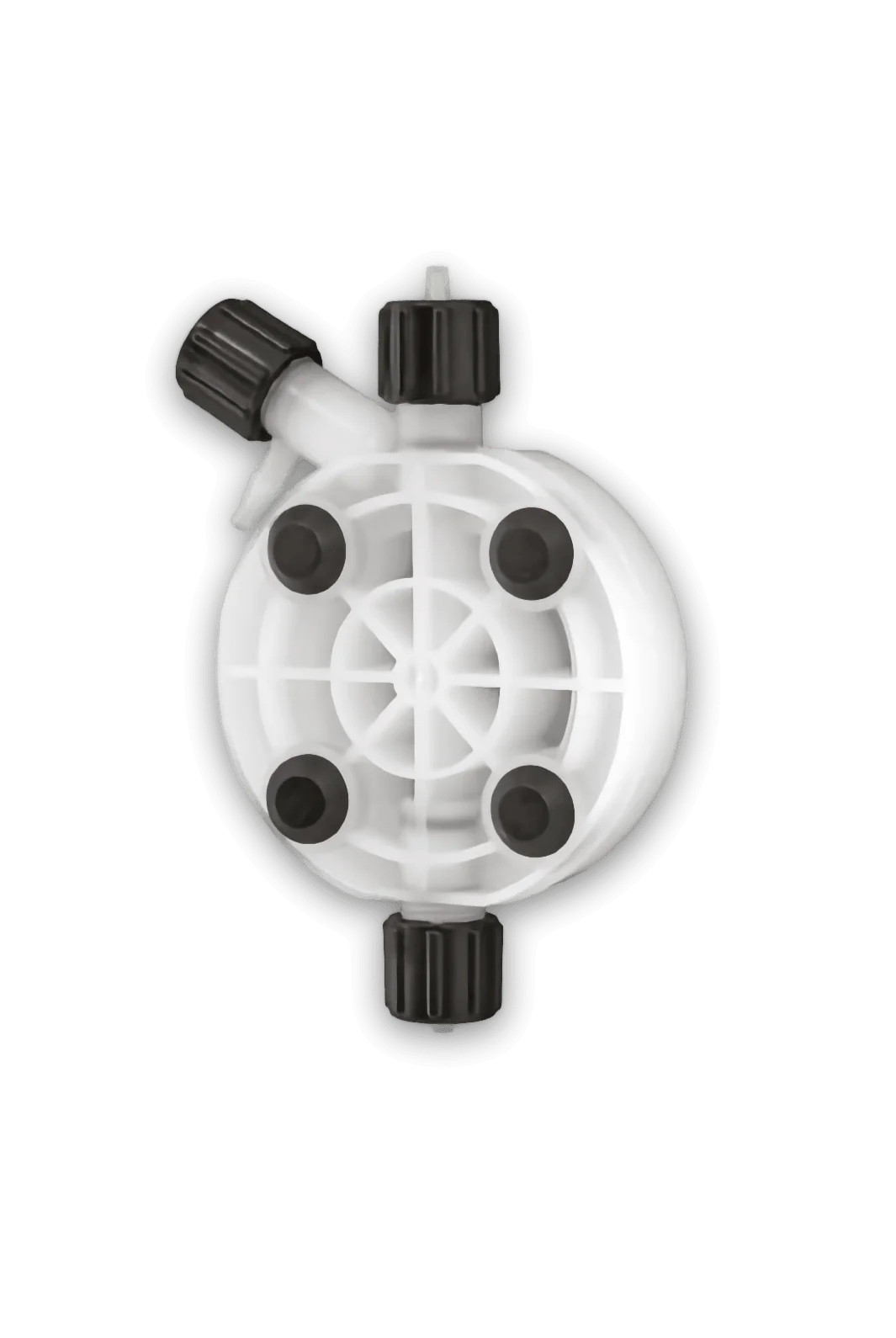
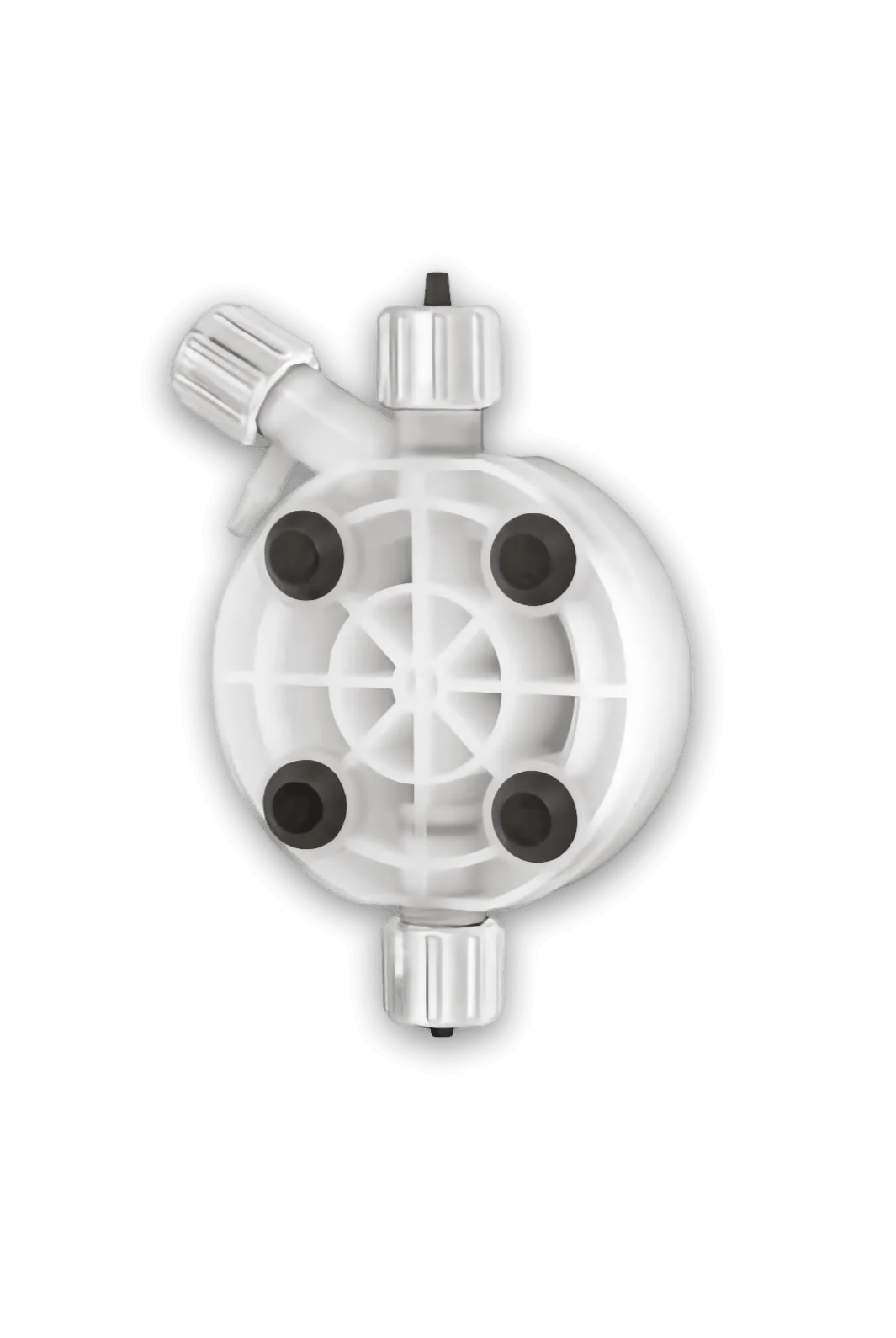
Pump head: PVDF, PP, PMMA or AISI 316L

Operation

Dosing modes

Digital constant

The pump doses at a constant frequency, determined by the SPH (strokes/hour), SPM (strokes/minute) or LPH (litres/hour) values set during programming.

External constant

When the run contact closes, the pump doses the set quantity of chemical.

Pause / work

The pump runs the programmed cycle: during the WORK time it doses the set quantity of chemical; during the PAUSE time dosing is suspended.

PPM

Dosing is calculated from the pulses of the pulse-output water meter and the set PPM value; the concentration of the chemical and the volume per stroke can be programmed.

Millilitres per quintal (100 kg)

Dosing is calculated from the pulses of the pulse-output water meter and the set MLQ value (millilitres per quintal, i.e. per 100 kg).

Batch

A pulse from an external contact starts the dosing of the set quantity; pause and work cycles can be programmed.

mA

The 0-4/20 mA current loop signal controls dosing proportionally, between the set minimum and maximum values.

Volt

The 0-10 V voltage signal controls dosing proportionally, between the set minimum and maximum values.

Timer

Up to 16 weekly on/off time slots can be programmed, during which the pump doses the set quantity of chemical.

Technical data

Performance and configurations

The pump code is made up of the model name and the performance: maximum pressure in bar as two digits followed by the flow rate in l/h (KMS MF 0218 = 2 bar, 18 l/h). It is followed by the pump head code and the power supply code, listed in the tables at the end of this section. Performance varies with the working back pressure and with the characteristics of the chemical.

Manual air bleed

Suitable for most chemicals, with a viscosity up to 100 cP: the standard configuration for the most common applications.

CodeMax pressure (bar)Max flow rate (l/h)Tubing (mm)
KMS MF 20012014 x 6
KMS MF 18021824 x 6
KMS MF 15041544 x 6
KMS MF 10051054 x 6
KMS MF 0808884 x 6
KMS MF 05105104 x 6
KMS MF 0501514 x 6
KMS MF 02182186 x 8

Automatic air bleed

Required with chemicals that release gas (e.g. peroxides), to prevent the pump from becoming air-locked.

CodeMax pressure (bar)Max flow rate (l/h)Tubing (mm)
KMSA MF 18011814 x 6
KMSA MF 15031534 x 6
KMSA MF 103.5103.54 x 6
KMSA MF 100.5100.54 x 6
KMSA MF 085.585.54 x 6
KMSA MF 057.557.54 x 6
KMSA MF 02132136 x 8

Viscous liquids

For chemicals with a viscosity up to 8,000 cP.

CodeMax pressure (bar)Max flow rate (l/h)Delivery tube (mm)Suction tube (mm)
KMS MF LPV 18021828 x 1216 x 22
KMS MF LPV 15041548 x 1216 x 22
KMS MF LPV 10051058 x 1216 x 22
KMS MF LPV 0808888 x 1216 x 22
KMS MF LPV 05105108 x 1216 x 22
KMS MF LPV 02182188 x 1216 x 22

Nominal flow rate measured with water at room temperature. The LPV version is supplied with a 3/4" injection valve, PE delivery tube, PVC suction tube and a priming kit with syringe, without level probe.

Technical specifications

SpecificationValue
StrokesFrom 1 per hour to 180 per minute
Mechanical adjustment of the single strokeLinear from 30 to 100 %
Maximum chemical viscosity100 cP; 8,000 cP in the LPV version
Average power draw at maximum flow rate19 W at 230 VAC, 24 W at 115 VAC, 12 W at 24 VAC and 24 VDC, 8.8 W at 12 VDC
Protection ratingIP65
Noise level73.4 dB(A); 74 dB(A) in the LPV version
Weight4.1 kg
HousingPP
Maximum altitude2,000 m a.s.l.
MountingHorizontal, or vertical with the dedicated bracket
Ambient temperature10 – 45 °C
Product temperature0 – 50 °C
Transport and storage temperature-10 – 50 °C
Relative humidity85 % up to 40 °C, 70 % at 45 °C, non-condensing
Installation categoryII
Pollution degree2

Wetted parts

ComponentMaterial
DiaphragmPTFE, in all versions
Dynamic O-rings (pump head)Viton (FKM) or Dutral (EPDM)
Static O-ringsViton (FKM), Dutral (EPDM), Nitrile (NBR) or Teflon (PTFE)
Valve ballsCeramic; stainless steel in the AISI 316L pump head

Pump head codes

Pump headMaterialO-ringsValvesBallsDelivery hoseSuction hoseMax viscosity (cP)
KPVDFFKMPVDFCeramicPVDFPVC100
PPVDFEPDMPVDFCeramicPVDFPVC100
YPVDFNBRPVDFCeramicPVDFPVC100
VPPFKMPVDFCeramicPEPVC100
DPPEPDMPVDFCeramicPEPVC100
JPVDFFKM + PTFEPVDFCeramicPVDFPVC100
APMMAFKMPVDFCeramicPVDFPVC100
ZAISI 316LFKMAISI 316LAISI 316L––100
$ (LPV)PMMAFKMPPStainless steel, Hastelloy springPEPVC8,000

PTFE diaphragm for all pump heads. 4 × 6 mm hoses, 6 × 8 mm for models 0218 and 0213: the size may vary with the pump head material. In some applications the $ head for slightly viscous liquids may reduce the flow rate.

Power supply codes

CodePower supply
00230 VAC, Schuko plug
0S230 VAC, Australian plug
01230 VAC, no plug
03115 VAC, US plug
0424 VAC, no plug
0512 VDC (some models only)
0724 VDC

Supplied with

  • Foot filter with level probe
  • 0.3 bar injection valve
  • Delivery, suction and drain tubes (2 m each)
  • Input signal cable (2.5 m)
  • Alarm and stand-by cable (2 m)
  • 5 × 20 time-delay fuse
  • Mounting kit
  • Operating manual

Pump head materials

Pump head in PVDF

PVDF

Suitable for most acids, for peroxides and for sodium hypochlorite (chlorine).

Pump head in PP

PP

Suitable for sodium hydroxide (caustic soda).

Pump head in AISI 316L

AISI 316L

Suitable for peracetic acid and sodium hydroxide.

Pump head in PMMA

PMMA

Suitable for medium and high viscosity substances.

Learn more: chemical compatibility of materials →

Special versions

Special versions

In addition to the standard configuration, versions dedicated to particular applications are available; the performance of each is given in the technical data. The pages by application compare the suitable pumps of all the series.

KA and KMSA Series

KA and KMSA Series

Self-venting pump head, required with chemicals that release gas (e.g. sodium hypochlorite and peroxides): it vents the gas and prevents the pump from locking.

Dimensions

Dimensions

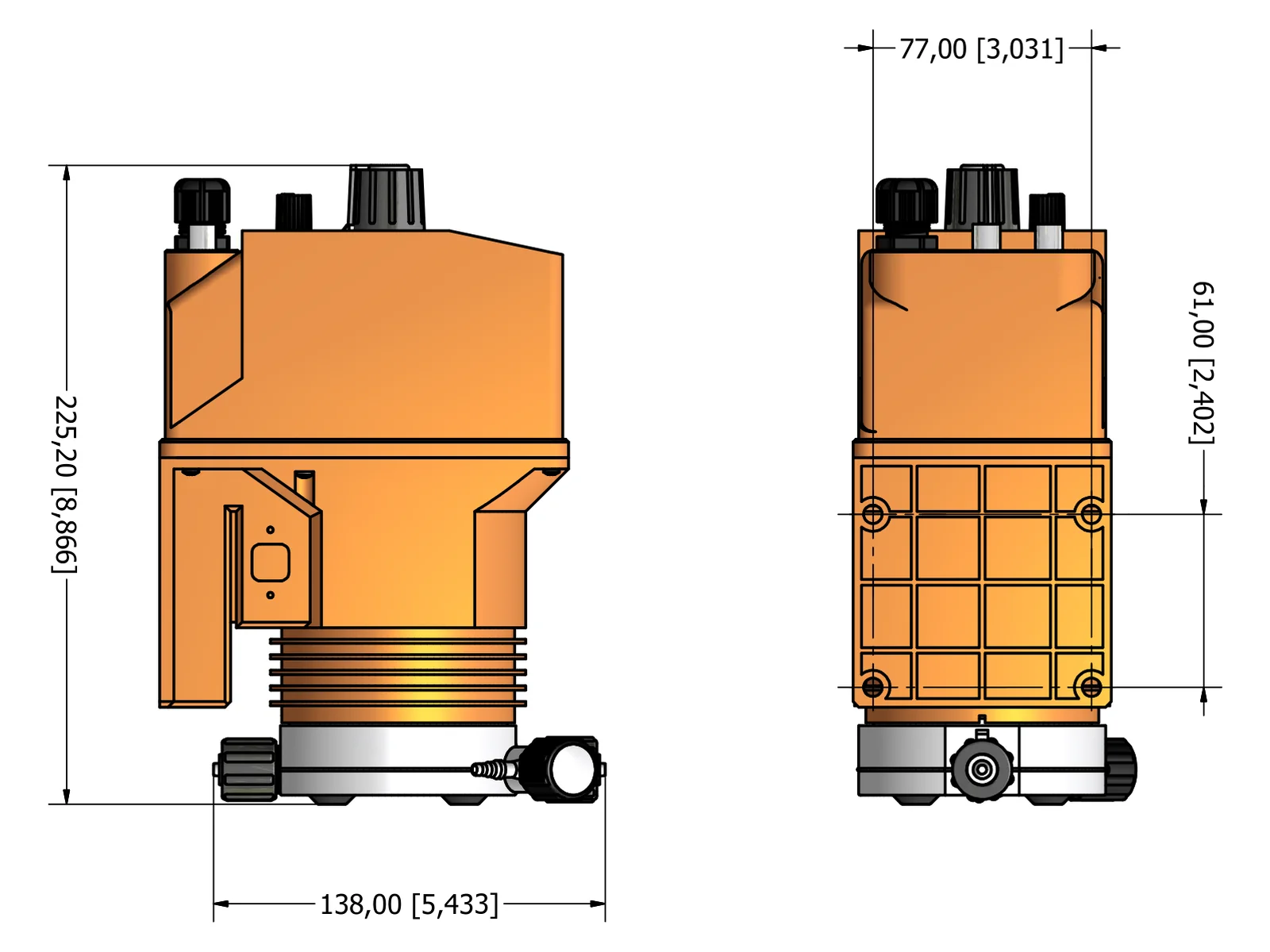
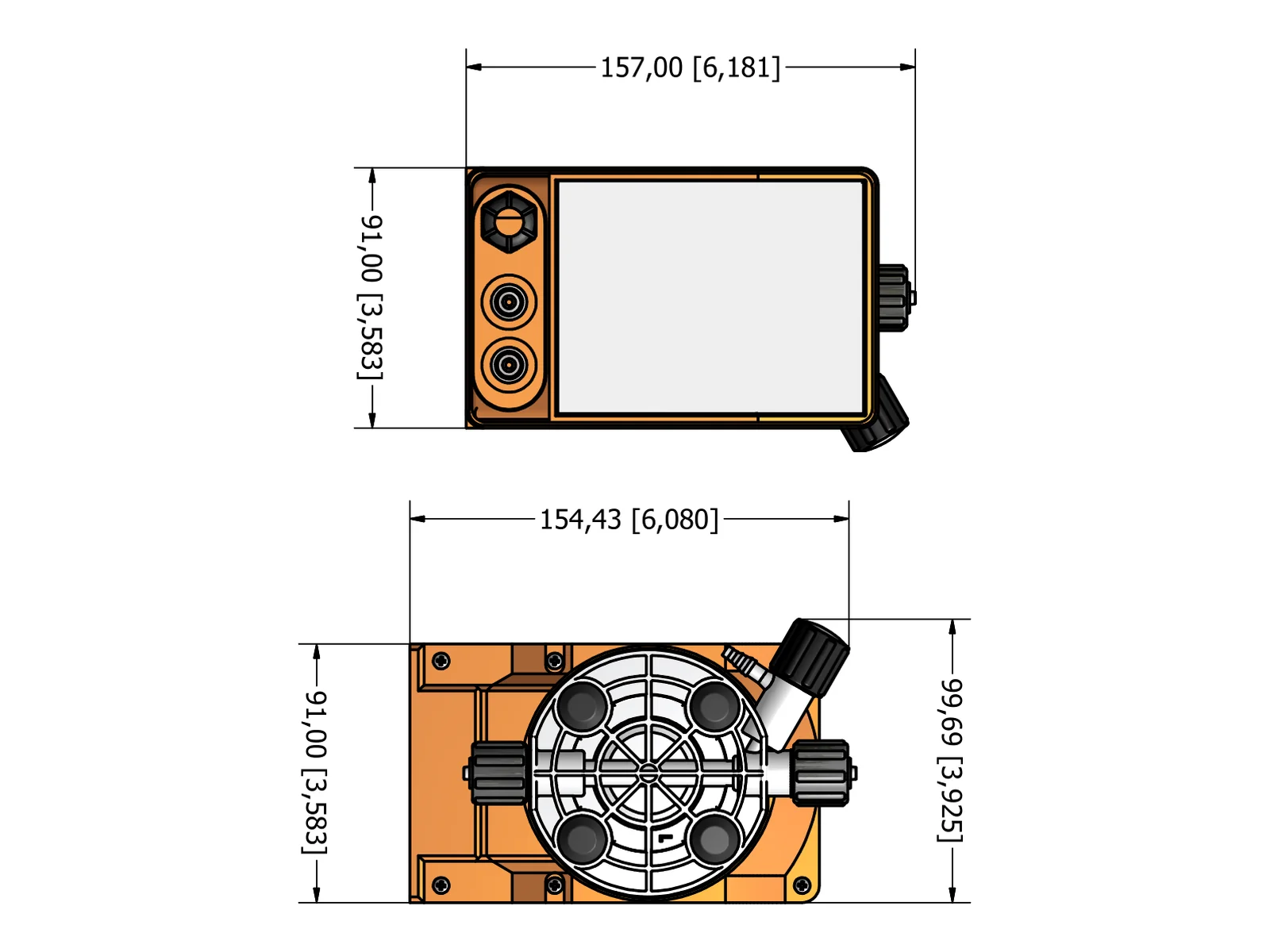
Measurements in mm [inches], the same for the K and KMS series.

K and KMS pump dimensions: front and side view

Front and side

K and KMS pump dimensions: top and bottom view

Top and bottom

Technical support

Troubleshooting and error messages

The most frequent causes of malfunction and the corrective actions to check before contacting technical support.

Learn more: the pump does not prime and does not dose →

If the pump…

The pump strokes normally, but the chemical is not dosed
  • Air in the hydraulic circuitCheck fittings and tubing, tighten any loose ones and bleed the air.
  • Suction tube emptiedThe pump has lost its prime: repeat the priming procedure.
  • Foot filter cloggedRemove the lance or filter from the tank and clean it.
  • Gas released by the chemicalOpen the bleed valve to discharge the gas; if this recurs, fit a self-bleeding pump head.
No strokes, or weak and damped stroke
  • Valve balls blocked by crystallisation of the chemicalClean the valves and run the pump with 2 – 3 litres of water instead of the chemical; if the problem persists, replace the valves.
  • Injection valve cloggedReplace the injection valve.
The pump does not switch on
  • No power supplyCheck the mains connection and that the voltage matches the rated value.
  • Protection fuse blownReplace the fuse with one of the same rating.
  • Faulty circuit boardThe board must be replaced: contact our technical support service.

Display of the KMS MF

MessageMeaningAction
ALARM LEVELChemical in the tank has run out.Restore the chemical level in the tank.
ALARM SEFLThe flow sensor has detected an excessive number of empty strokes, or the automatic re-priming has failed.Check the SEFL sensor, prime the pump manually, then switch it off and on again.
OVER FLOWThe required operating frequency exceeds the rated value.Check the set parameters and the pump flow rate, then switch it off and on again.
ALARM STROKEThe set flow rate exceeds the rated value.Check the set parameters and the flow rate, then switch the pump off and on again.
ALARM POWERSupply voltage outside the permitted limits.Check that the voltage matches the rating plate data, then switch the pump off and on again.
ALARM BATCHBatch dosing interrupted by a change of state of the external contact.Check that the connected contact matches the pump configuration, then switch off and on again.
INPUT OPENNo input signal in mA or Volt mode.Check the external signal and its connection.
ERROR DATAInconsistent set values.Check the values again; if they are correct and the error persists, the pump is undersized for the required dosing.
ERROR MEMError in the settings memory.Restore the factory values with the LOAD DEFAULT procedure.
WRONG ENTRYInvalid setting, for example the same value for the signal minimum and maximum.Set distinct, correct values.
Incorrect passwordThe password entered does not match the stored one.If it has been lost, restore the value 0000 with the RESET PASSWORD procedure.

The # symbol on the display indicates one or more active alarms (ALARM QTY screen); from the main screen, pressing the UP key opens the INFO MENU showing the pump status.

Flow rate between 30 and 100%

Adjustment is linear between 30 and 100%: below 30% the actual flow rate may differ from the expected one and must therefore be checked.

Priming

Connect all the tubing, open the bleed valve and set the adjustment to 100%; start the pump and close the bleed valve as soon as the chemical comes out. With viscous liquids the operation can be assisted with a 20 cc syringe applied to the bleed port.

Factory settings

With the pump switched off, hold down both arrow keys and restore power: LOAD DEFAULT appears and the programming is reset to the factory values (password 0000).

If the problem persists, contact us. Before sending the pump for servicing, empty the pump head of chemical and dry it.

Summary

Main features

Electronic flow rate adjustment

According to the operating mode and the set parameters, the pump automatically adapts the injection frequency to ensure the required dosing.

Mechanical flow rate adjustment

The knob reduces the stroke length of the diaphragm, i.e. the volume of each injection and, consequently, the maximum flow rate. This offers two advantages:
Linear dosing: a high number of small-volume injections promotes mixing of the chemical into the water flow and avoids concentration peaks.
Accuracy at low dosing rates: with a 10 l/h pump required to dose 1 l/h, reducing the stroke length to 50% brings the maximum flow rate down to 5 l/h and doubles the injection frequency. Particularly suitable in combination with the pulse-output water meter.

Digital display

The integrated LCD display allows the pump to be programmed and its operating status to be monitored at all times.

Level control

The pump is supplied with a low-level probe for the tank: when the chemical runs out, it shows the alarm on the display and activates the corresponding output.

Stand-by

Pump start and stop can be controlled remotely by means of a run/stop contact from a PLC or another source.

Flow sensor

A flow sensor can be connected to check every single injection: if one or more injections are missed, the pump performs an automatic re-priming and recovers the lost injections; if this fails, it activates the alarm output.

Alarm output

In the event of a fault, a volt-free contact is activated, configurable as normally open (N.O.) or normally closed (N.C.), to drive a visual or audible signalling device, send an SMS or report the event to a PLC.

Priming button

A dedicated button allows the lines to be filled with the chemical to be dosed.

Versatile mounting

Horizontal installation, or vertical installation by means of a dedicated bracket.

Technical advice

Tell us about your application: our technical staff will recommend the most suitable model, configuration and accessories.

Contact

Tell us about your plant

Call or write to us: a technician will reply with a tailored proposal of controllers, pumps, probes and accessories.

What do you need?
Please enter your name.
Please enter a valid email address.
Please enter your message.

Describe your plant: type, water volume or flow rate, parameters to be controlled.

You must accept the privacy notice to continue.