Open circuit
The system water is distributed over the fill in direct contact with the air, collects in the basin and returns to the system: treatment concerns the entire circuit.
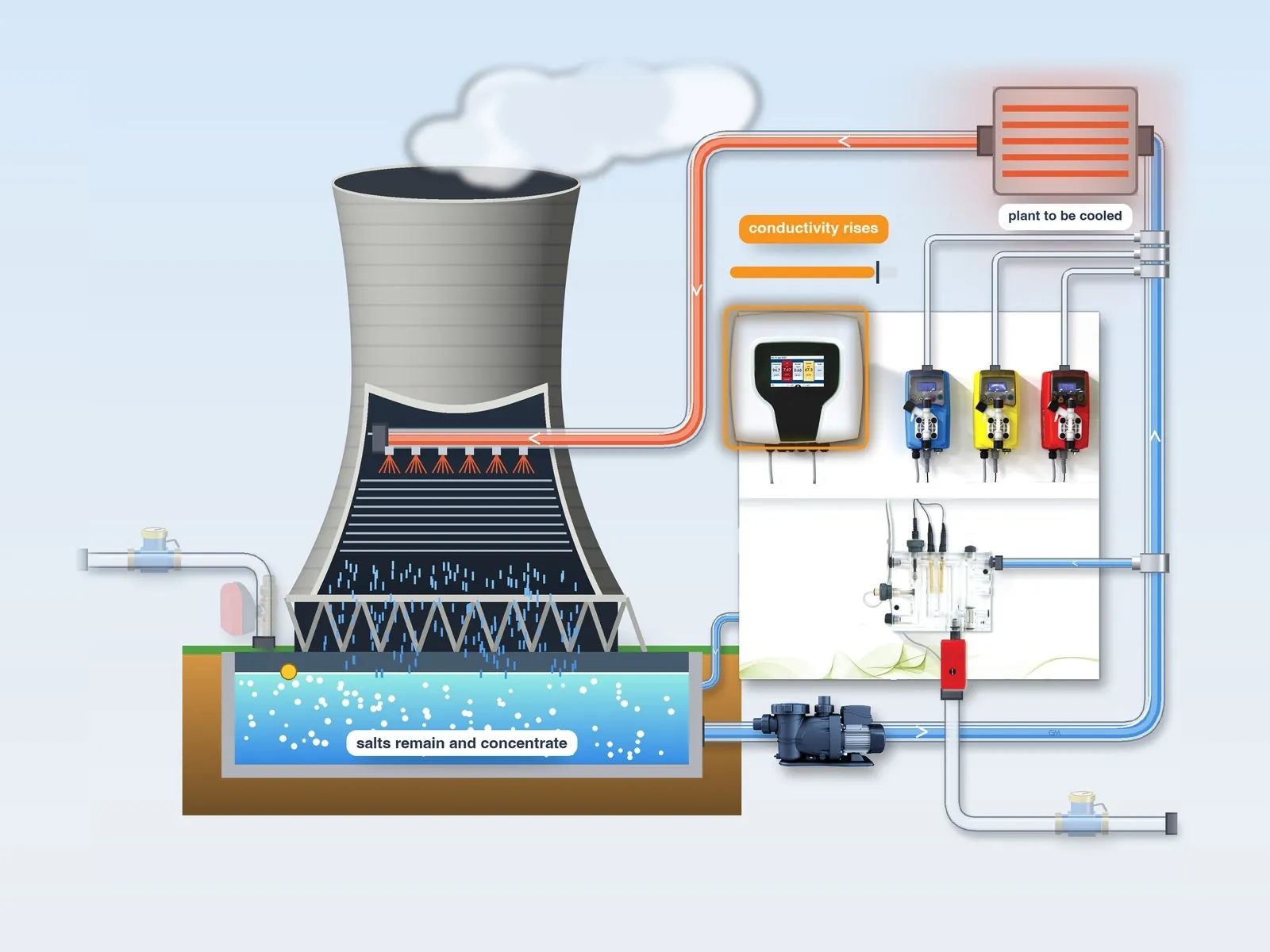
In an evaporative cooling tower, a small part of the water evaporates and cools all the remaining mass. The water that evaporates is practically pure: the dissolved salts remain in the circuit and become concentrated. To keep the tower efficient and safe, the concentration must be controlled by bleed-off, scaling and corrosion must be counteracted and bacterial proliferation, including Legionella, must be prevented.
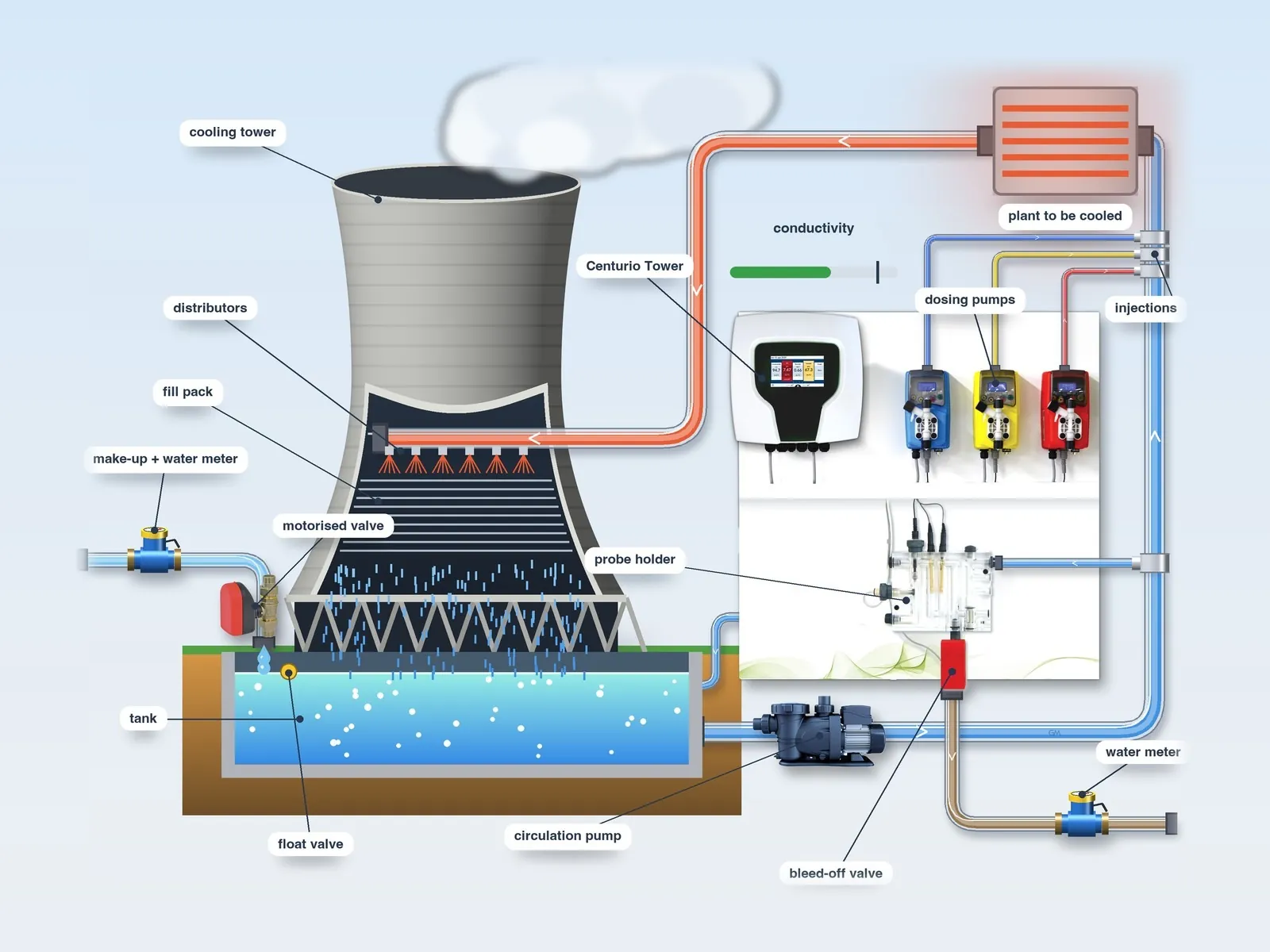
The tower releases the heat of a system to the atmosphere: the hot water flows down over the fill, meets a stream of air and a small fraction of it evaporates, removing heat from the water that falls back, cooled, into the basin. The drier the air, the greater the possible evaporation.
The six stages of operation →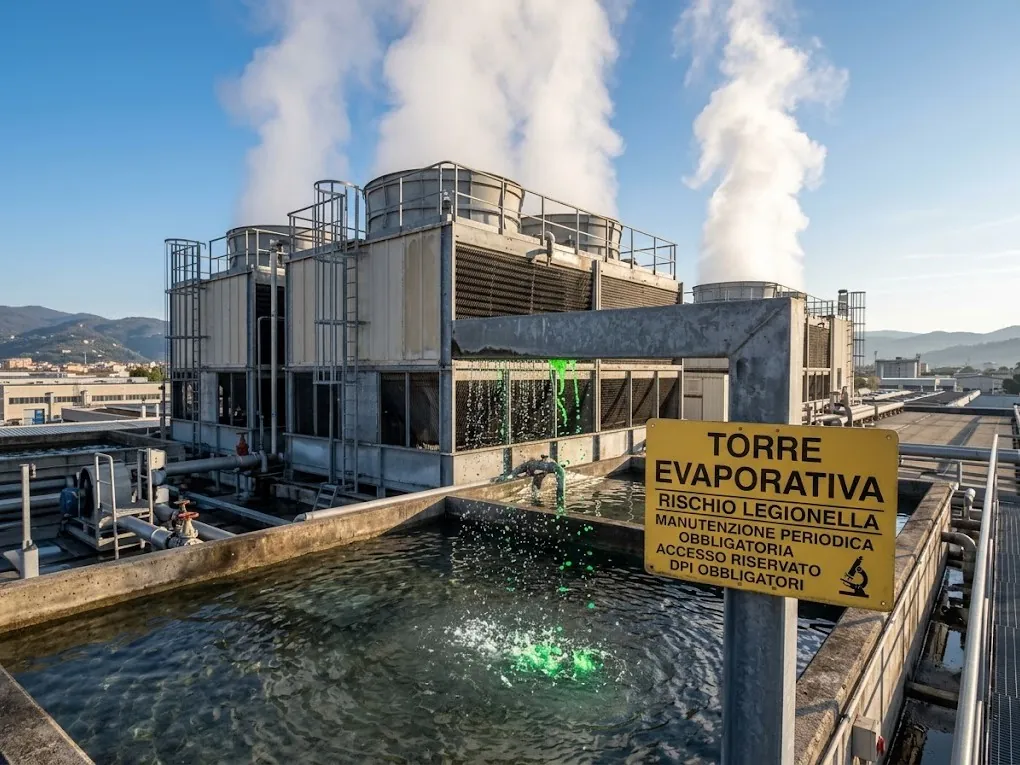
The system water is distributed over the fill in direct contact with the air, collects in the basin and returns to the system: treatment concerns the entire circuit.
The fluid to be cooled flows through a tube coil and does not come into contact with the air; separate cooling water recirculates over the coil, evaporates and is subject to the same phenomena.
The water leaving the circuit must be replaced: make-up equals the sum of evaporation, bleed-off and drift, plus any leaks.
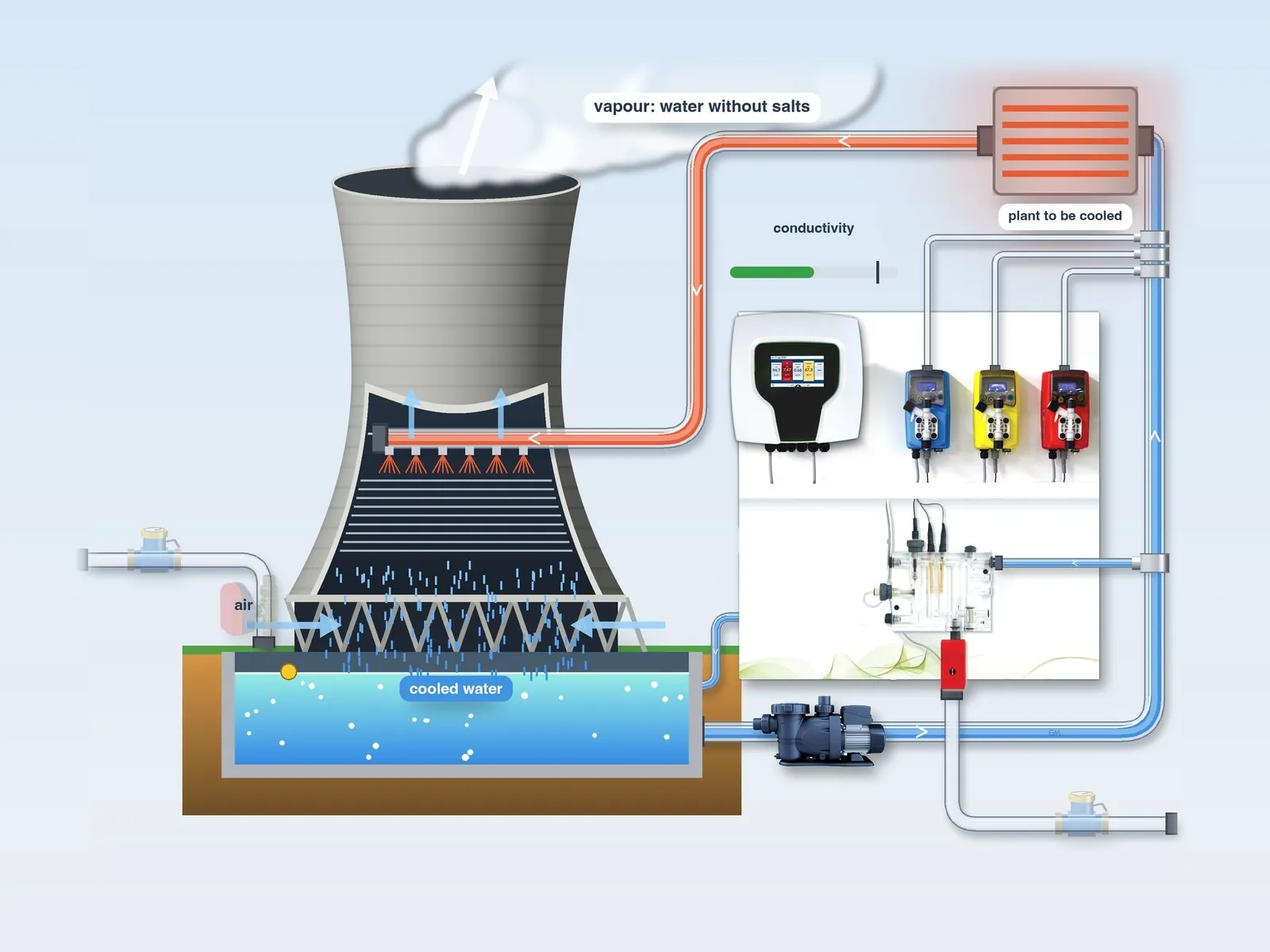
It is the part of the water that cools the rest: it leaves as pure vapour and leaves all the dissolved salts in the circuit.
Droplets carried out by the exhaust air, with the same composition as the circulating water; they are limited by drift eliminators.
The discharge of part of the concentrated water, controlled by conductivity: it is the only way to remove the accumulated salts.
The fresh water that replaces the water evaporated, discharged and lost as drift; measured by a water meter, it is the basis for antiscalant dosing.
They indicate how many times more concentrated the circuit water is than the make-up water: they are the ratio between the conductivity of the circuit and that of the make-up water and, since salts enter with the make-up and leave with the bleed-off, they are approximately equal to the ratio between make-up and bleed-off volumes.
With two conductivity probes, on the circuit and on the make-up, or with two water meters, on the make-up and on the bleed-off. If the two ratios do not match, there are unaccounted leaks, overflows or withdrawals in the circuit.
Many systems operate between 2 and 4 cycles; with suitable make-up water and effective treatment, 6 can be exceeded. Moving from 3 to 6 cycles reduces make-up by approximately 20% and bleed-off by 50%.
More cycles mean less water consumed, but also more salts in solution: the maximum value depends on the quality of the make-up water and on the effectiveness of the treatment against scaling and corrosion.
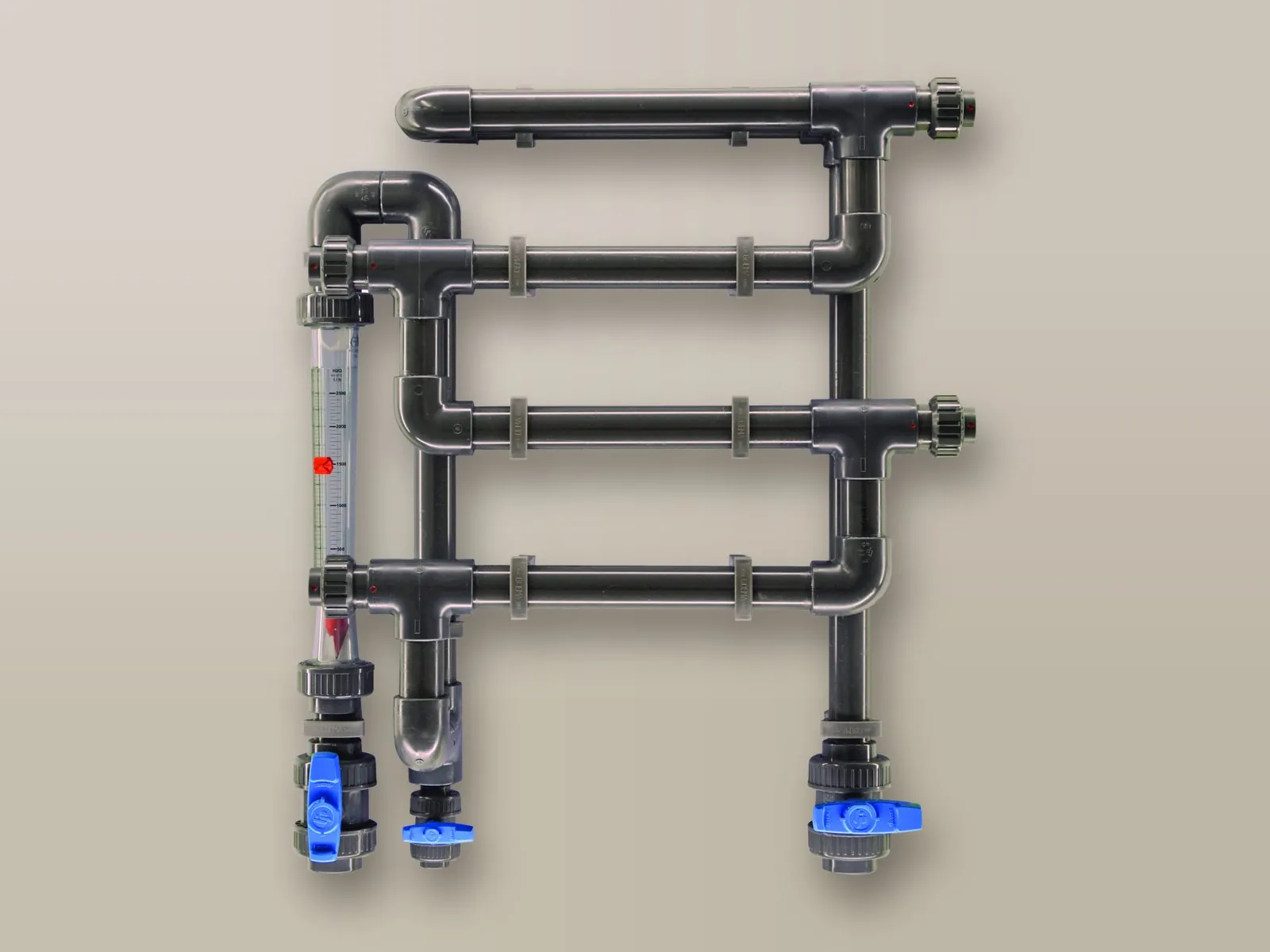
Salts that exceed their solubility limit precipitate: calcium and magnesium are deposited where the water is hottest, in the heat exchangers and in the upper part of the fill. The layer insulates and reduces heat exchange.
Dissolved salts and oxygen promote metal loss, either general or localised (pitting); the rate increases with temperature and is highest at the outlet of the heat exchangers.
Heat, nutrients and deposits promote algae, bacteria and biofilm, which insulates surfaces and protects microorganisms. The tower disperses aerosols: in Italy, the most significant legionellosis outbreaks of the last twenty years have been associated with cooling towers.
Each product has a specific function. Antiscalants and corrosion inhibitors are distinct active ingredients, but in cooling towers they are generally combined in a single formulation, dosed in proportion to the make-up water.
Dosing modes of the systems →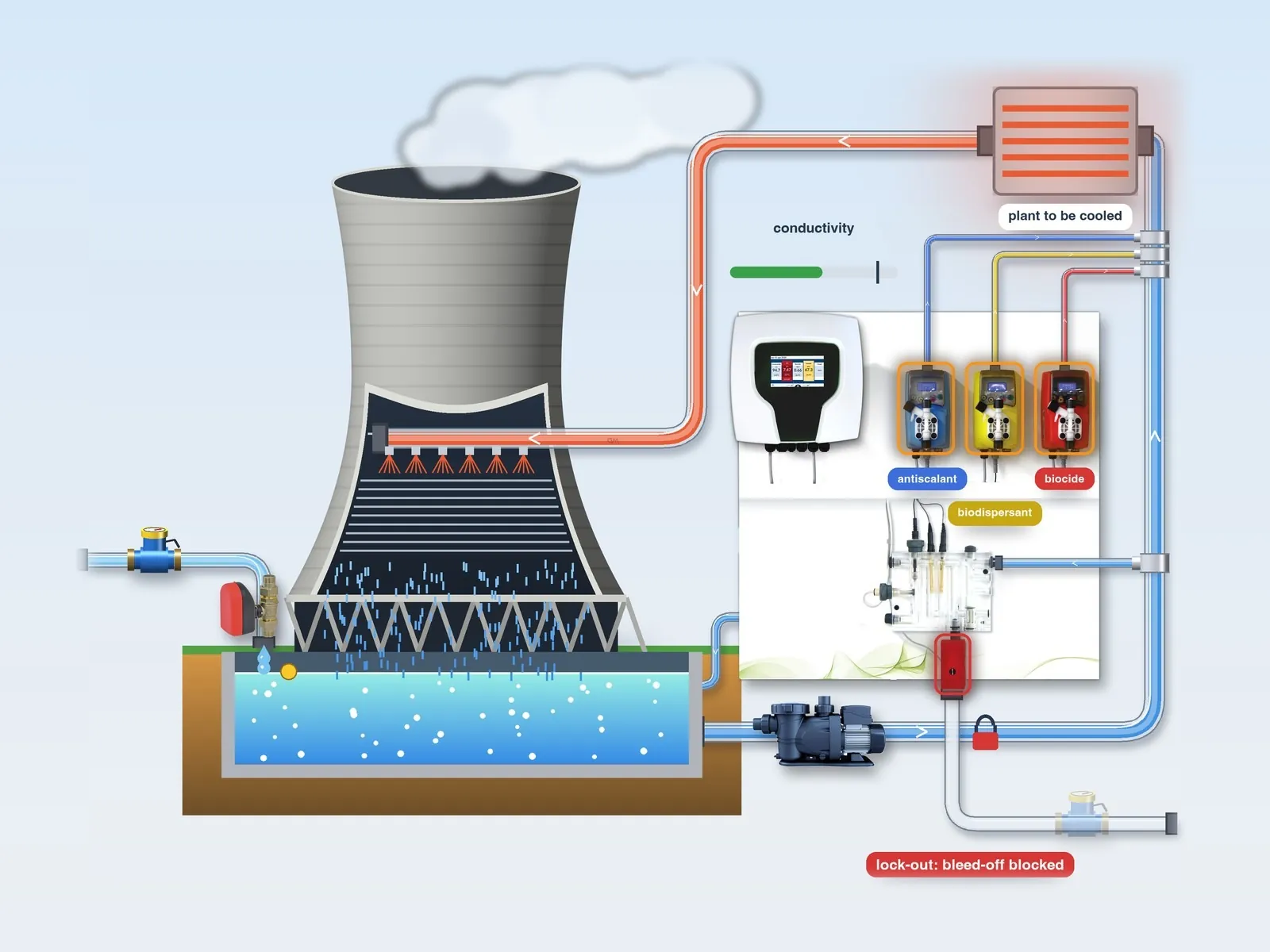
They prevent the formation of mineral deposits: calcium carbonate, sulphate and phosphate, magnesium silicate and silica. Scale reduces heat exchange and promotes under-deposit corrosion. Phosphonates and polymers, such as acrylates and maleic acid copolymers, are used to keep the salts in solution or in suspension.
They form a protective film on metal surfaces against corrosion caused by oxygen, acids, high temperature and contaminants. The most common formulations contain phosphates, zinc salts, phosphonates and organic inhibitors; where copper alloys are present, azole compounds such as tolyltriazole (TTA) are required. They protect carbon steel, copper alloys and the other metals of the circuit.
They keep suspended solids, precipitated salts, corrosion products and biological residues in suspension, preventing them from settling on heat exchange surfaces: they do not prevent scale formation, but disperse the solids that form, which are then removed with the bleed-off. Acrylic polymers, maleic acid copolymers and sulphonated polymers are used; they are normally dosed with the same system as the antiscalant.
Acid controls the alkalinity and pH of the recirculating water: a high pH increases the tendency to scale, particularly for calcium carbonate and phosphate, while too low a pH increases corrosion. Sulphuric or hydrochloric acid is dosed when the treatment programme requires the pH to be kept within a defined range.
They control the growth of algae, bacteria, fungi and slime, which foul surfaces, promote corrosion, reduce heat exchange, clog nozzles and form sludge. Chlorine, hypochlorite, bromine, chlorine dioxide, hydrogen peroxide: they act by oxidation and are maintained with a measurable residual, which can be controlled continuously with Redox or with an amperometric cell. Chlorine loses effectiveness above pH 7.5 – 8; bromine remains effective at higher pH.
Organic compounds that act on specific cell processes; they are dosed at intervals and require contact times ranging from a few hours to a day. Prolonged use of the same product can select resistant microorganisms: for this reason two different biocides are alternated.
It penetrates and dissolves the biofilm matrix, detaches it from surfaces and exposes it to the action of biocides, restoring heat exchange efficiency.
Products are generally injected into the cooled water collection basin, in the area furthest from the suction of the recirculation pump, so as to ensure adequate contact time; some products are instead dosed in-line. The most suitable injection point depends on the product used.
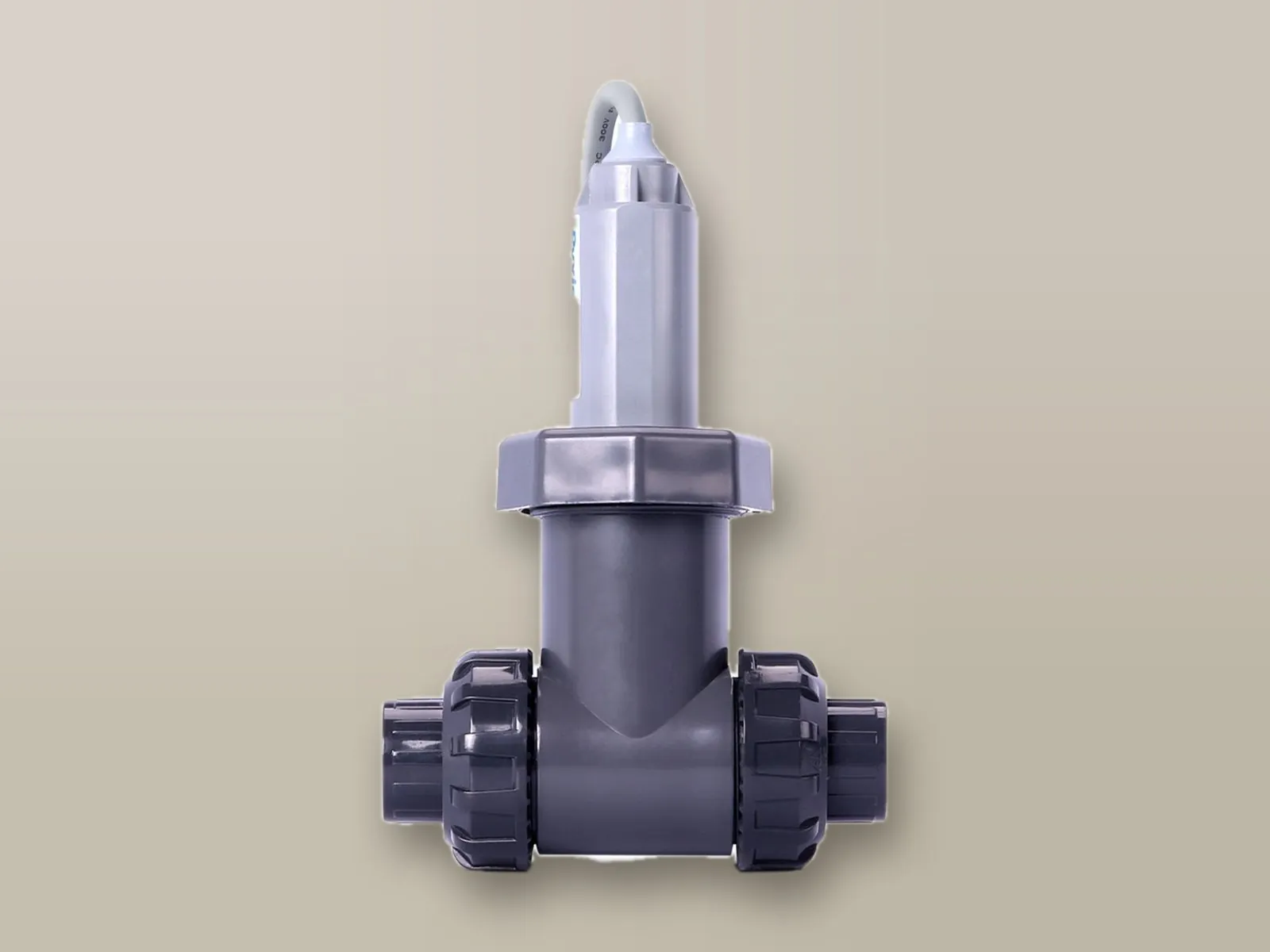
An inert fluorescent substance, added to the antiscalant in a known proportion, is measured by the fluorimeter in ppb: from this, the actual concentration of the product in the water is derived.
Tracers →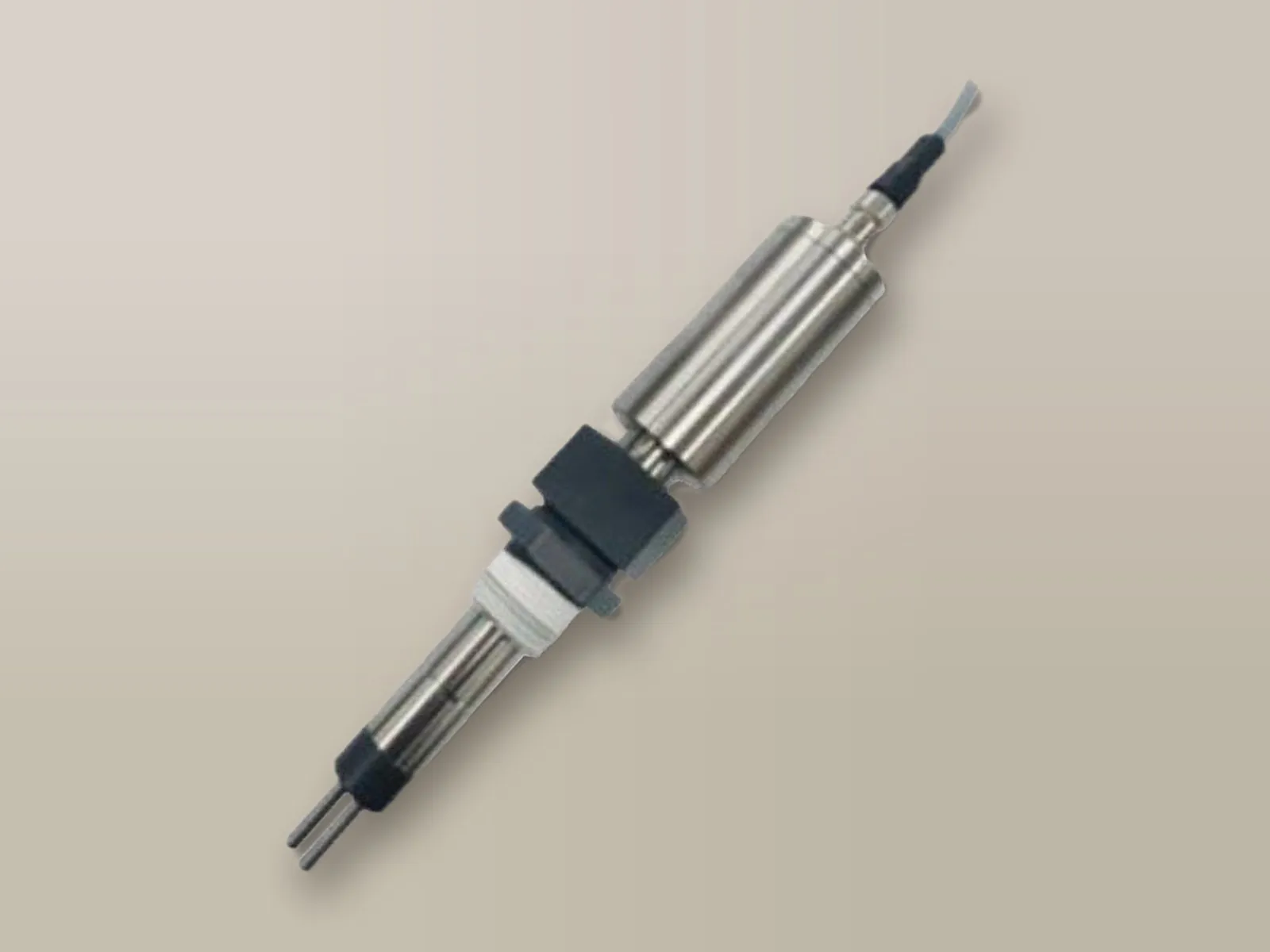
The linear polarisation resistance probe continuously measures the corrosion rate, expressed in MPY; coupons, exposed for a defined period, verify it over the long term from weight loss.
Corrosion probe →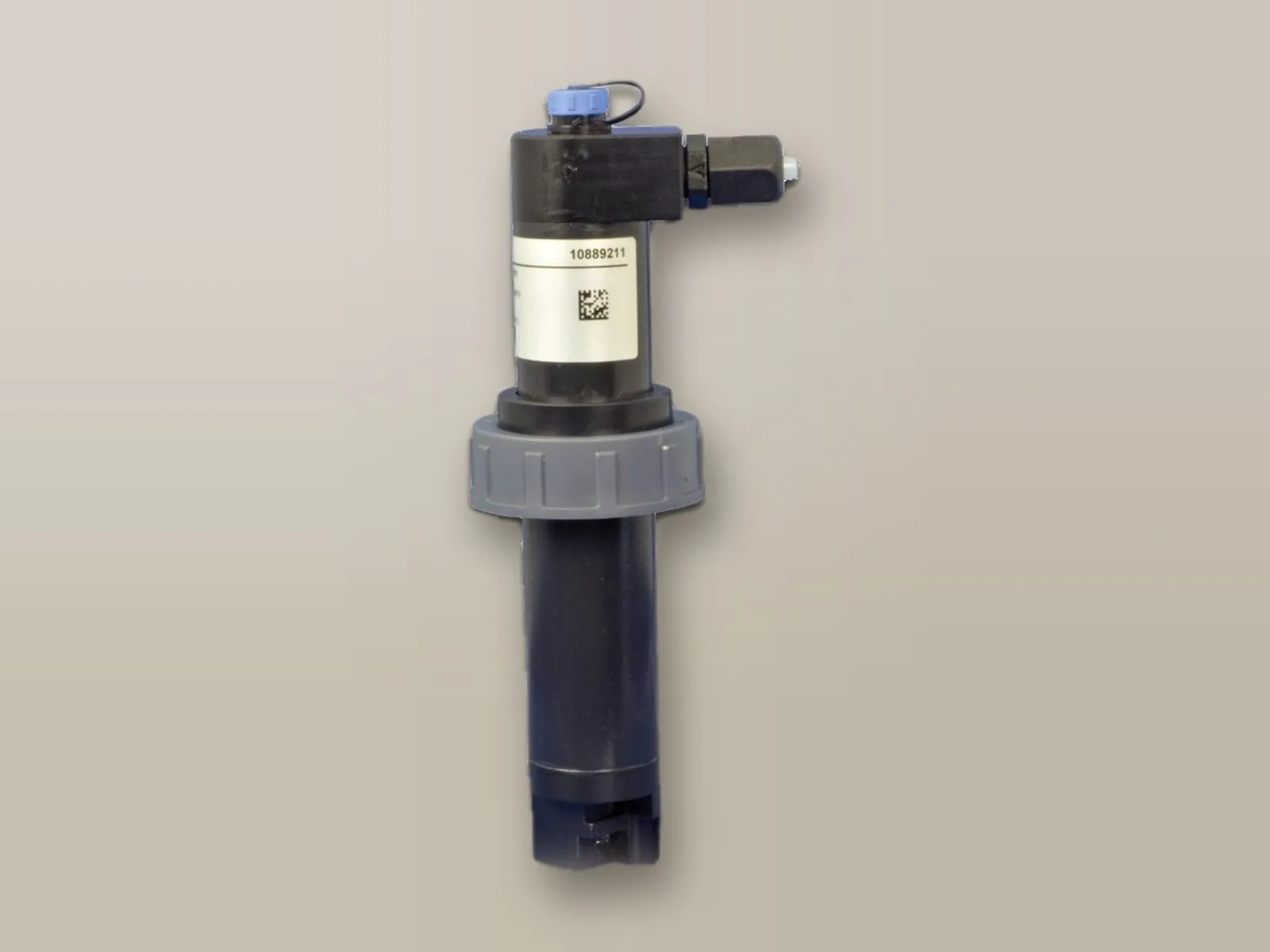
The nephelometric turbidimeter measures the light scattered by suspended particles, in NTU: it signals fouling of the circuit and changes in the quality of the make-up water.
Turbidity →The 2015 Italian Guidelines for the prevention and control of legionellosis, approved by the State-Regions Conference on 7 May 2015, contain specific indications on the installation and management of cooling towers. They are summarised below.
Discharge outlets at least 2 m above or at least 20 m horizontally (preferably more than 50 m) from windows, air intakes and frequented areas; materials resistant to corrosion and disinfectants, an inspectable system, a smooth basin with drain at the lowest point; high-efficiency drift eliminators, with losses of less than 0.05% of the circulating water mass.
Continuous biocide treatment, achieved for example with dosing controlled by an amperometric cell or a Redox probe, supported by periodic disinfections established by the risk assessment; treatment against scaling and corrosion; periodic replacement of part of the water and, if necessary, softening of the make-up water.
Before commissioning, at the end and start of the season or after long periods of inactivity and, for systems in continuous operation, at least twice a year.
Periodic microbiological analyses, with samples taken from the basin or from the hot return; records of maintenance, cleaning and disinfection must be kept.
| Legionella (CFU/l) | Action |
|---|---|
| Up to 1,000 | Review of control practices. |
| 1,001 – 10,000 | Review of control practices, increase in biocide dosing and resampling; if the result is confirmed, review of the risk assessment. |
| 10,001 – 100,000 | Disinfection of the system and review of the risk assessment, with mechanical cleaning of the basin if necessary. |
| Over 100,000 | Shutdown of the system, disinfection and review of the risk assessment; restart is permitted with a result below 1,000 CFU/l. |
Summary of Table 7 of the 2015 Guidelines. After disinfection, the check is repeated after approximately 48 hours and, if negative, after 1 month, 3 months and then every 6 months or according to the control plan.
| Term | Meaning |
|---|---|
| Bleed-off (blowdown) | Discharge of part of the circulating water to keep the salt concentration within the set value; in automatic systems it is controlled by conductivity. |
| Make-up | Water fed into the circuit to compensate for evaporation, bleed-off, drift and leaks. |
| Drift | Water droplets carried out of the tower by the exhaust air, with the same composition as the circulating water. |
| Cycles of concentration | Ratio between the conductivity of the circuit water and that of the make-up water. |
| Bleed-off set point | Conductivity value above which the controller opens the drain valve. |
| Delay | Time that must elapse above the set point before the drain opens: it prevents actions caused by momentary disturbances in the measurement. |
| Dead band | Margin below the set point that conductivity must reach for the drain to close: with a set point of 1,500 µS/cm and a dead band of 200 µS/cm, the drain opens above 1,500 and closes below 1,300 µS/cm. |
| Bleed-off timeout | Maximum drain opening time: when it expires, the controller closes the drain and signals the alarm, as protection against valve or probe failure. |
| Pre-bleed | Bleed-off carried out before biocide dosing, timed or down to a lower conductivity: during dosing and the subsequent lock-out, in fact, the drain remains blocked. |
| Lock-out | Blocking of the drain valve for the set time at the end of biocide dosing: the product remains in the circuit for the necessary contact time and is not discharged. The cycle follows the order pre-bleed, pre-biocide, biocide, lock-out. |
| Feed & Bleed | The antiscalant pump runs for the entire time the drain is open. |
| Feed & % Bleed | At the end of the bleed-off, the pump doses for a percentage of its duration: with 10 minutes of bleed-off at 50%, 5 minutes of dosing. |
| Feed & % Time | The pump doses for a percentage of a fixed time cycle: with a 1-hour cycle at 50%, 30 minutes of dosing. |
| Water meter dosing | For every preset number of pulses from the make-up water meter, the pump doses for a set time, for example 30 minutes every 50 pulses. |
| Constant ppm dosing | From the water meter pulses, the controller calculates the volume of product needed to maintain the set concentration, based on the product concentration and the pump flow rate. |
| Oxidising biocide | Disinfectant that acts by oxidation (chlorine, bromine, chlorine dioxide, hydrogen peroxide), maintained with a measurable residual; with an amperometric cell or a Redox probe it is dosed continuously according to the measurement. |
| Non-oxidising biocide | Organic compound that acts on specific cell processes; it is dosed at intervals, with long contact times. |
| Pre-biocide (activator) | Product dosed for a set time before the biocide, from a dedicated output of the controller: it is generally an activator for the subsequent dosing. |
| Biodispersant | Product that dissolves the biofilm matrix and exposes it to the action of biocides. |
| Tracer | Inert fluorescent substance added to the product in a known proportion; the fluorimeter measures its concentration in ppb (µg/l). |
| MPY | Mils per year, thousandths of an inch of metal lost in one year: 1 MPY corresponds to 0.0254 mm/year. |
| Linear polarisation resistance | Electrochemical method for measuring corrosion: a small potential shift is applied to the electrode and the instantaneous corrosion rate is derived from the resulting current. |
| Corrosion coupons | Metal strips exposed to the circuit water for a defined period: the corrosion rate is derived from the weight loss. |
| NTU | Unit of measurement of turbidity by the nephelometric method, i.e. of the light scattered at 90° by suspended particles. |
| Flow control | Sensor that detects the passage of water in the probe holder: in its absence, dosing is suspended and the alarm is activated. |
No entry matches your search.
Tell us the characteristics of the tower, the recirculation flow rate, the quality of the make-up water and the products used: we will propose the most suitable treatment system.
Call or write to us: a technician will reply with a tailored proposal of controllers, pumps, probes and accessories.