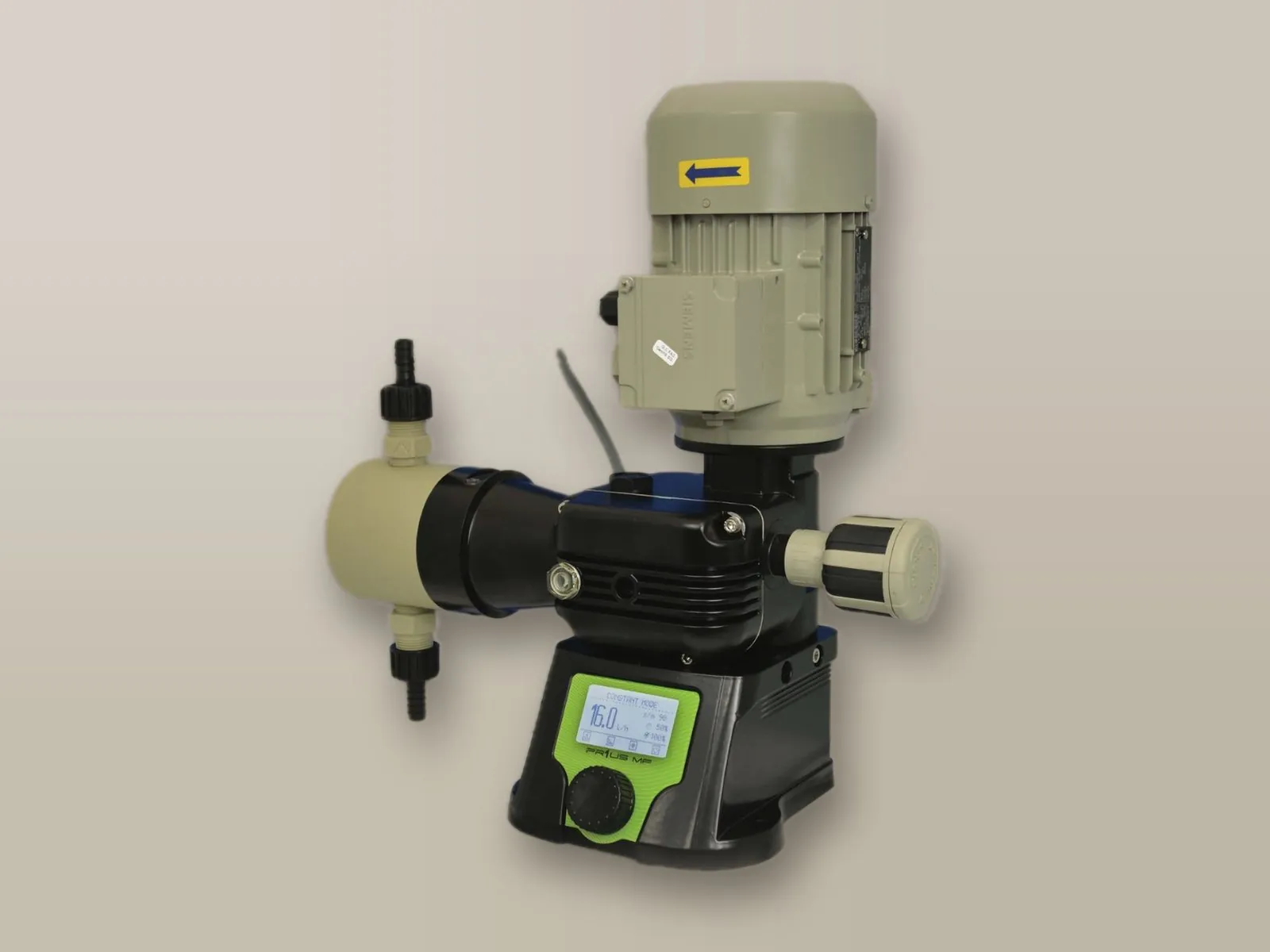
Prius P MF
Constant dosing or dosing proportional to 4/20 mA or 0-10 V signals or to a pulse-output water meter.
- Constant (litres/hour)
- PPM
- Percentage
- Millilitres per quintal
- Volt
- Pulses
- Batch
- mA
- Timer
- Pause / work
Motor-driven piston dosing pumps for high flow rate or high back-pressure dosing in industrial applications. Floor mounting, or wall mounting with a dedicated bracket.
In the MF model the flow rate is adjusted by frequency, according to the operating mode, and by the volume of each injection; in the basic model only by the volume of each injection.
Constant dosing or dosing proportional to 4/20 mA or 0-10 V signals or to a pulse-output water meter.
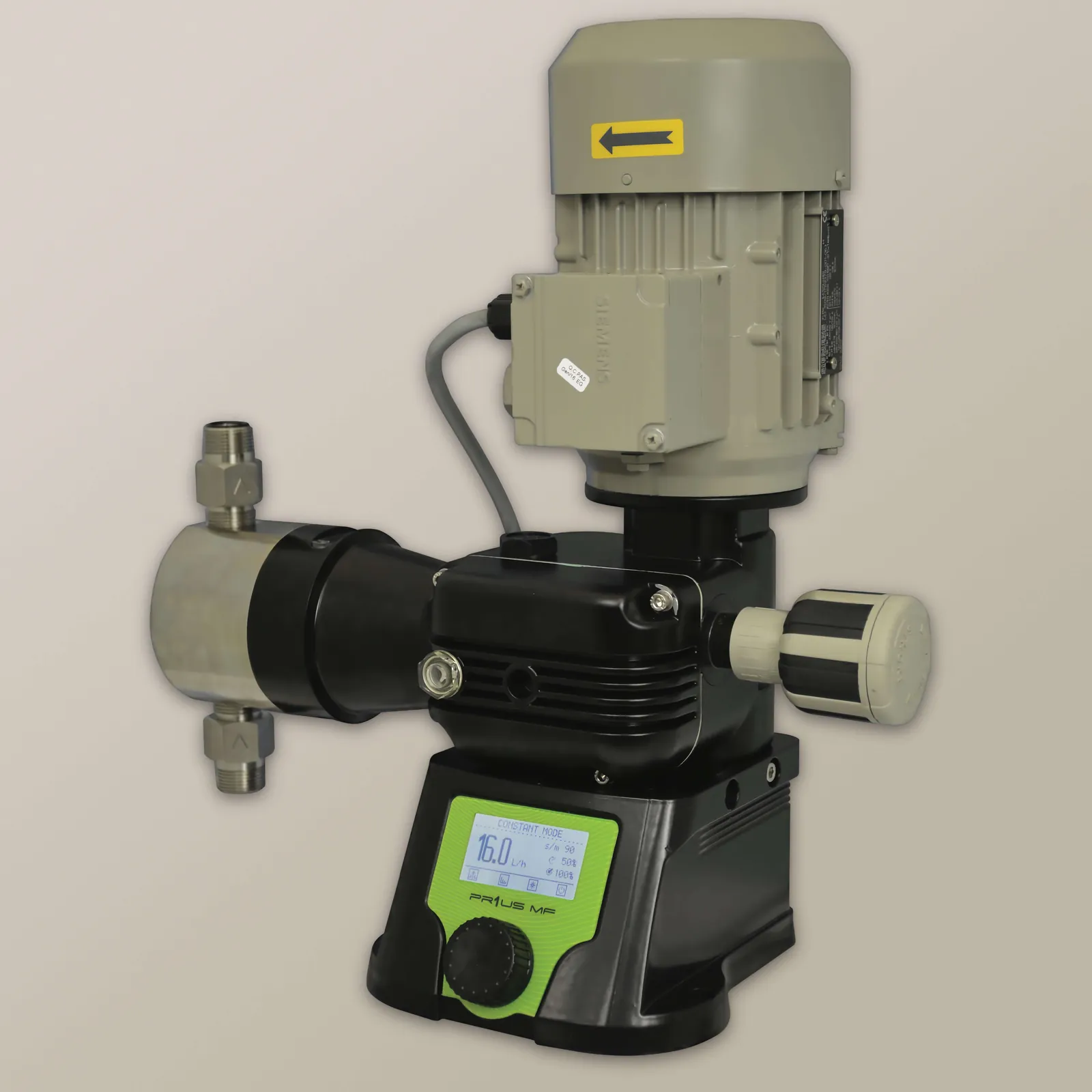 Prius P MF SSAISI 316L stainless steel pump head and AISI 420 stainless steel piston.
Pump head: PP with ceramic piston, or AISI 316L with AISI 420 piston
Power supply: single-phase 240 VAC 50 Hz
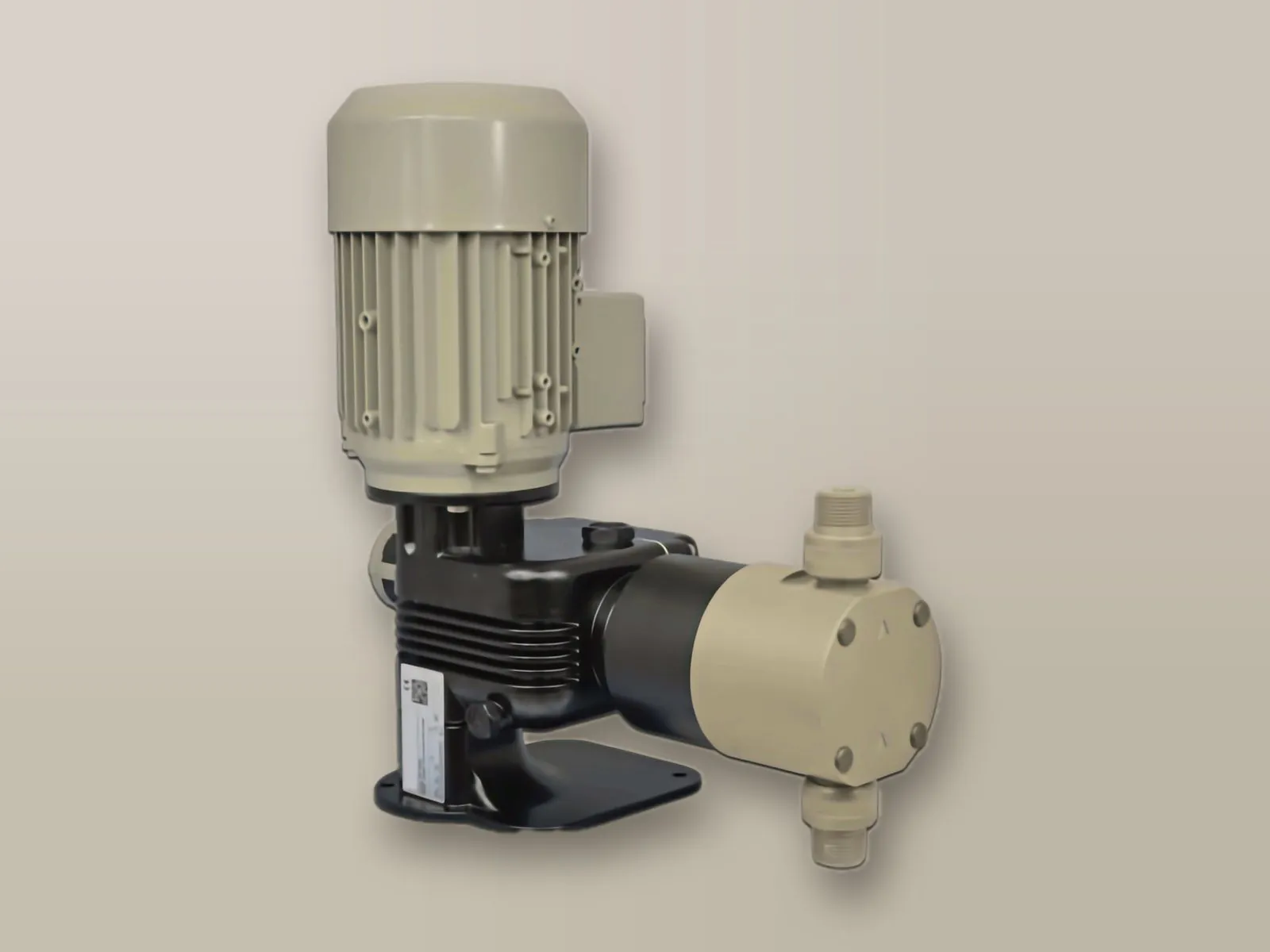
For constant dosing of chemicals.
Pump head: PP with ceramic piston, or AISI 316L with AISI 420 piston
State how the pump must dose, the product, the flow rate and the back pressure: the guide proposes the most suitable model and configuration of the series, among those listed in the technical data.
Answer the questions and enter flow rate and back pressure: the recommended model appears below.
| Function | P MF | P |
|---|---|---|
| Dosing modes | ||
| Constant | – | ● |
| Constant (litres/hour) | ● | – |
| Pause / work | ● | – |
| Pulses | ● | – |
| PPM | ● | – |
| Millilitres per quintal | ● | – |
| Percentage | ● | – |
| Batch | ● | – |
| mA | ● | – |
| Volt | ● | – |
| Timer | ● | – |
| Functions | ||
| Electronic flow rate adjustment | ● | – |
| Mechanical flow rate adjustment | ● | ● |
| Digital display | ● | – |
| Level control | ● | – |
| Stand-by | ● | – |
| Flow sensor | ● | – |
| Alarm output | ● | – |
The pump doses at a constant frequency, according to the flow rate percentage set with the stroke length adjustment knob of the piston.
Models: Prius P
The pump doses at a constant frequency, according to the flow rate set in litres/hour.
Models: Prius P MF
The pump runs the programmed cycle: during the WORK time it doses the set quantity of chemical; during the PAUSE time dosing is suspended.
Models: Prius P MF
The pump doses in proportion to the pulses received from an external controller.
Models: Prius P MF
Dosing is calculated from the pulses of the pulse-output water meter and the set PPM value; the concentration of the chemical and the volume per stroke can be programmed.
Models: Prius P MF
Dosing is calculated from the pulses of the pulse-output water meter and the set MLQ value (millilitres per quintal).
Models: Prius P MF
Dosing is calculated from the pulses of the pulse-output water meter and the set percentage (%).
Models: Prius P MF
A pulse from an external contact starts the dosing of the set quantity; pause and work cycles can be programmed.
Models: Prius P MF
The 0-4/20 mA current signal controls dosing proportionally, between the set minimum and maximum values.
Models: Prius P MF
The 0-10 V voltage signal controls dosing proportionally, between the set minimum and maximum values.
Models: Prius P MF
Up to 16 weekly on/off timers can be programmed, during which the pump doses the set quantity of chemical.
Models: Prius P MF
In the MF model the display colour changes according to the operating status, so that an alarm can be recognised even from a distance.
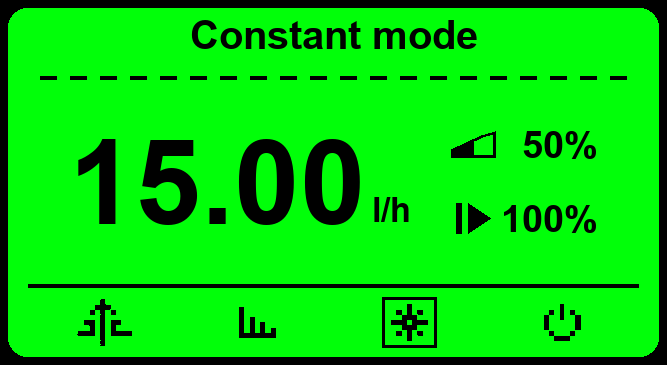
Normal operation according to the set parameters, no active alarms.
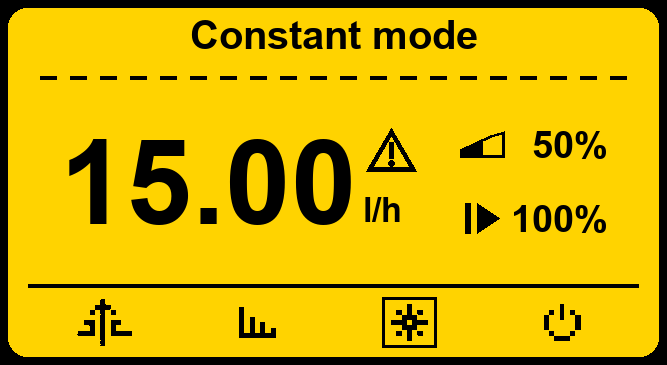
Non-blocking alarm, for example waiting for an external signal.
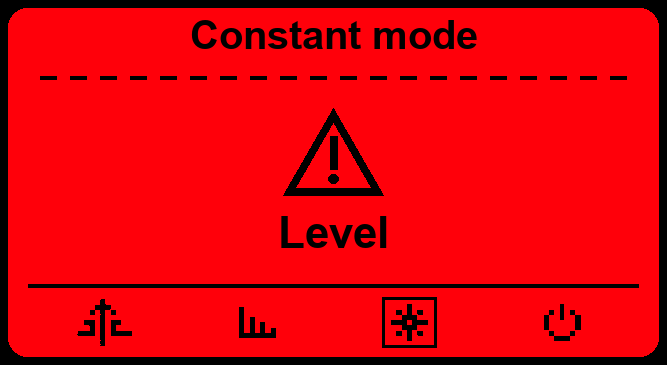
Blocking alarm, for example the chemical in the tank running out.
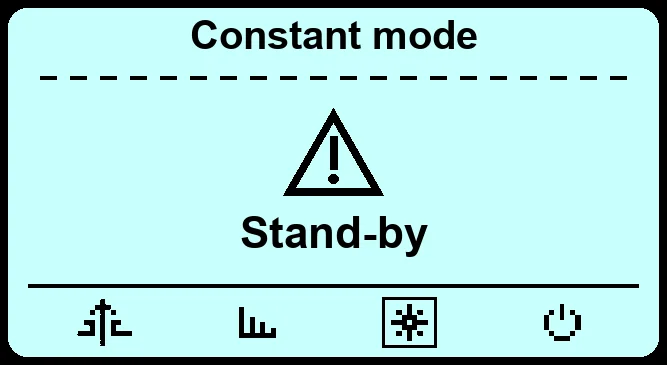
Pump stopped by an external control signal (stand-by).
The MF model can be integrated into your control system via Modbus RTU, or it can send a read-only 4/20 mA signal.

Integration into your PLC: all pump parameters can be managed from your control interface.

Current signal proportional to the instantaneous flow rate, to be fed to your PLC / SCADA for remote monitoring of operation (read-only).
The Prius P pumps share the same basic construction; the pump head and piston are made of materials compatible with the product being dosed. Performance depends on the model, the working back-pressure and the number of strokes per minute.
Manual air bleed, suitable for most chemicals. As the viscosity of the product increases, a lower number of strokes per minute is recommended.
| Code | Max pressure (bar) | Max flow rate (l/h) | Strokes / minute |
|---|---|---|---|
| Prius P MF 1024 | 10 | 24 | 175 |
| Prius P MF 1013 | 10 | 13 | 94 |
| Prius P MF 1010 | 10 | 10 | 70 |
| Prius P MF 1005 | 10 | 5 | 35 |
| Prius P MF 1080 | 10 | 80 | 175 |
| Prius P MF 1043 | 10 | 43 | 94 |
| Prius P MF 1032 | 10 | 32 | 70 |
| Prius P MF 1016 | 10 | 16 | 35 |
| Prius P MF 10130 | 10 | 130 | 175 |
| Prius P MF 1070 | 10 | 70 | 94 |
| Prius P MF 1052 | 10 | 52 | 70 |
| Prius P MF 1026 | 10 | 26 | 35 |
| Prius P MF 10210 | 10 | 210 | 175 |
| Prius P MF 10113 | 10 | 113 | 94 |
| Prius P MF 1084 | 10 | 84 | 70 |
| Prius P MF 1042 | 10 | 42 | 35 |
| Prius P MF 10320 | 10 | 320 | 175 |
| Prius P MF 10172 | 10 | 172 | 94 |
| Prius P MF 10128 | 10 | 128 | 70 |
| Prius P MF 1064 | 10 | 64 | 35 |
Manual air bleed, suitable for most chemicals. As the viscosity of the product increases, a lower number of strokes per minute is recommended.
| Code | Max pressure (bar) | Max flow rate (l/h) | Strokes / minute |
|---|---|---|---|
| Prius P 1024 | 10 | 24 | 175 |
| Prius P 1013 | 10 | 13 | 94 |
| Prius P 1010 | 10 | 10 | 70 |
| Prius P 1005 | 10 | 5 | 35 |
| Prius P 1080 | 10 | 80 | 175 |
| Prius P 1043 | 10 | 43 | 94 |
| Prius P 1032 | 10 | 32 | 70 |
| Prius P 1016 | 10 | 16 | 35 |
| Prius P 10130 | 10 | 130 | 175 |
| Prius P 1070 | 10 | 70 | 94 |
| Prius P 1052 | 10 | 52 | 70 |
| Prius P 1026 | 10 | 26 | 35 |
| Prius P 10210 | 10 | 210 | 175 |
| Prius P 10113 | 10 | 113 | 94 |
| Prius P 1084 | 10 | 84 | 70 |
| Prius P 1042 | 10 | 42 | 35 |
| Prius P 10320 | 10 | 320 | 175 |
| Prius P 10172 | 10 | 172 | 94 |
| Prius P 10128 | 10 | 128 | 70 |
| Prius P 1064 | 10 | 64 | 35 |
| Prius P 07508 | 7 | 508 | 175 |
| Prius P 07273 | 7 | 273 | 94 |
| Prius P 07203 | 7 | 203 | 70 |
| Prius P 07101 | 7 | 101 | 35 |
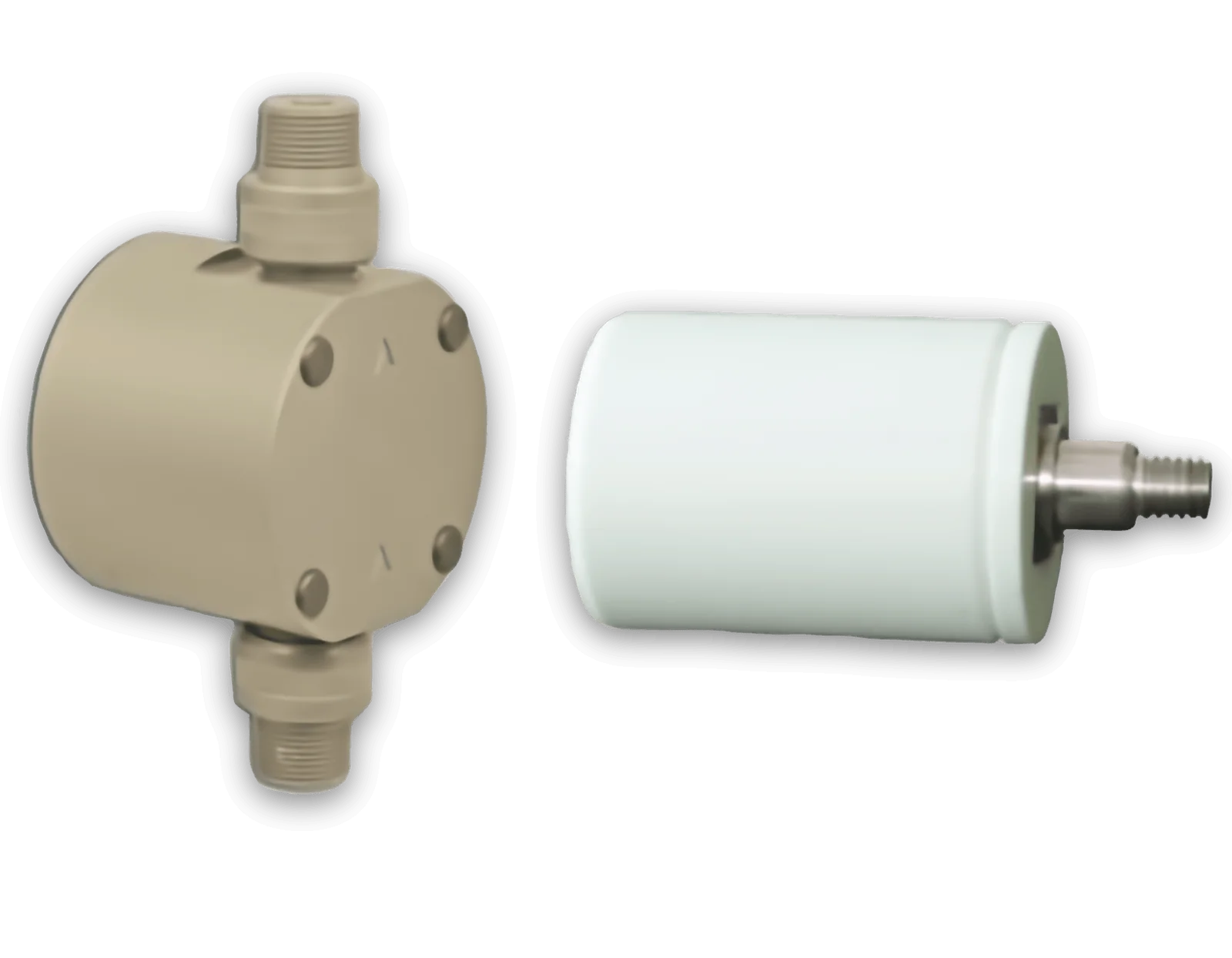
PP pump head and SIALOX96 ceramic piston.
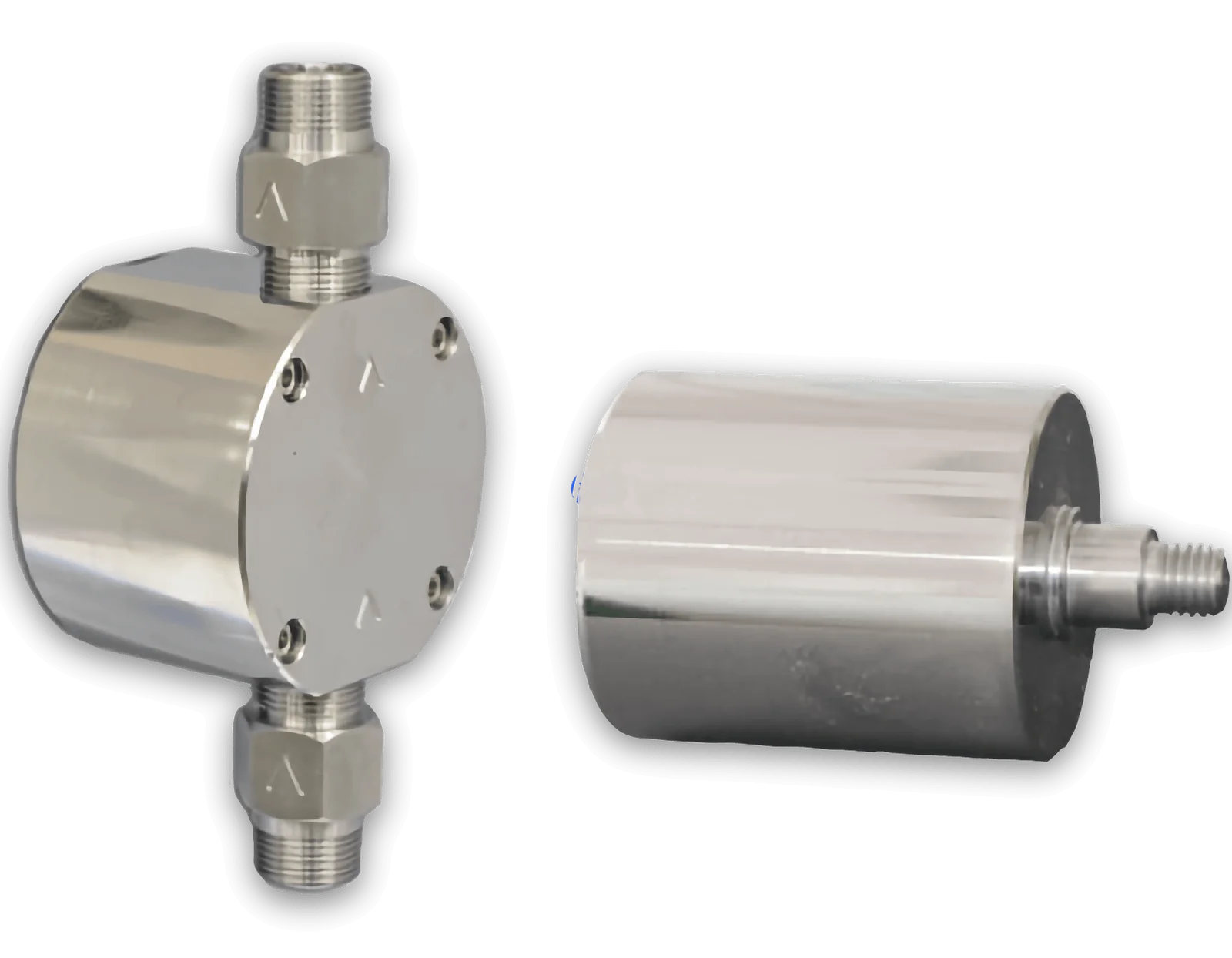
AISI 316L stainless steel pump head and AISI 420 stainless steel piston.
The most frequent causes of malfunction and the corrective actions to check before contacting technical support.
Insight: the pump does not prime and does not dose →| Message | Meaning | Action |
|---|---|---|
| LEVEL | Chemical in the tank has run out. | Restore the chemical level in the tank. |
| OVER FLOW | The required flow rate exceeds the rated value. | Check the settings and the flow rate, then switch the pump off and on again. |
| HIGH VOLT | Supply voltage above the permitted limits. | Check that the voltage matches the rating plate data; if the pump has locked out, switch it off and on again. |
| LOW VOLT | Supply voltage below the permitted limits; after 5 alarms within two minutes the pump locks out. | Check the mains voltage, then switch the pump off and on again. |
| ANOMALIA IMPIANTO | Sudden stop of the pump or motor (system fault). | Identify and eliminate the cause of the stop, then switch the pump off and on again. |
| SEFL | The flow sensor does not detect the passage of product within the set time (5 seconds as factory setting). | Check the sensor and the delivery line, then switch the pump off and on again. |
Red display: alarm; yellow: warning; green: normal operation; white: stand-by or OFF. Active alarms can be viewed under SETUP › INFO › ALARMS.
Start the pump with the stroke length set to 20% and minimum back pressure; after about 5 minutes increase it gradually. If the pressure exceeds the rated value, stop the motor immediately.
Check the level using the dedicated indicator and never run the pump without oil; change it every 8,000 – 10,000 operating hours and in any case at least once a year.
Every three months check bolts and seals; once a year check that flow rate, pressure and power match the rating plate data. With abrasive or corrosive chemicals, shorten the intervals.
If the problem persists, contact us. Before sending the pump for servicing, empty the pump head of chemical and dry it.
According to the operating mode and the set parameters, the pump automatically adapts the injection frequency to ensure the required dosing.
Models: Prius P MF
The knob reduces the stroke length of the piston, i.e. the volume of each injection and, consequently, the maximum flow rate. This offers two advantages:
Linear dosing: a high number of small-volume injections promotes mixing of the chemical into the water flow and avoids concentration peaks.
Accuracy at low dosing rates: with a 10 l/h pump required to dose 1 l/h, reducing the stroke length to 50% brings the maximum flow rate down to 5 l/h and doubles the injection frequency. Particularly suitable in combination with the pulse-output water meter.
The integrated LCD display allows the pump to be programmed and its operating status to be monitored at all times.
Models: Prius P MF
The pump is supplied with a low-level probe for the tank: when the chemical runs out, it shows the alarm on the display and activates the corresponding output.
Models: Prius P MF
Pump start and stop can be controlled remotely by means of a run/stop contact from a PLC or another source.
Models: Prius P MF
A flow sensor can be connected to check every single injection: if one or more injections are missed, the pump performs an automatic re-priming and recovers the lost injections; if this fails, it activates the alarm output.
Models: Prius P MF
In the event of a fault, a volt-free contact is activated, configurable as normally open (N.O.) or normally closed (N.C.), to drive a visual or audible signalling device, send an SMS or report the event to a PLC.
Models: Prius P MF
Tell us about your application: our technical staff will recommend the most suitable model, configuration and accessories.
Call or write to us: a technician will reply with a tailored proposal of controllers, pumps, probes and accessories.