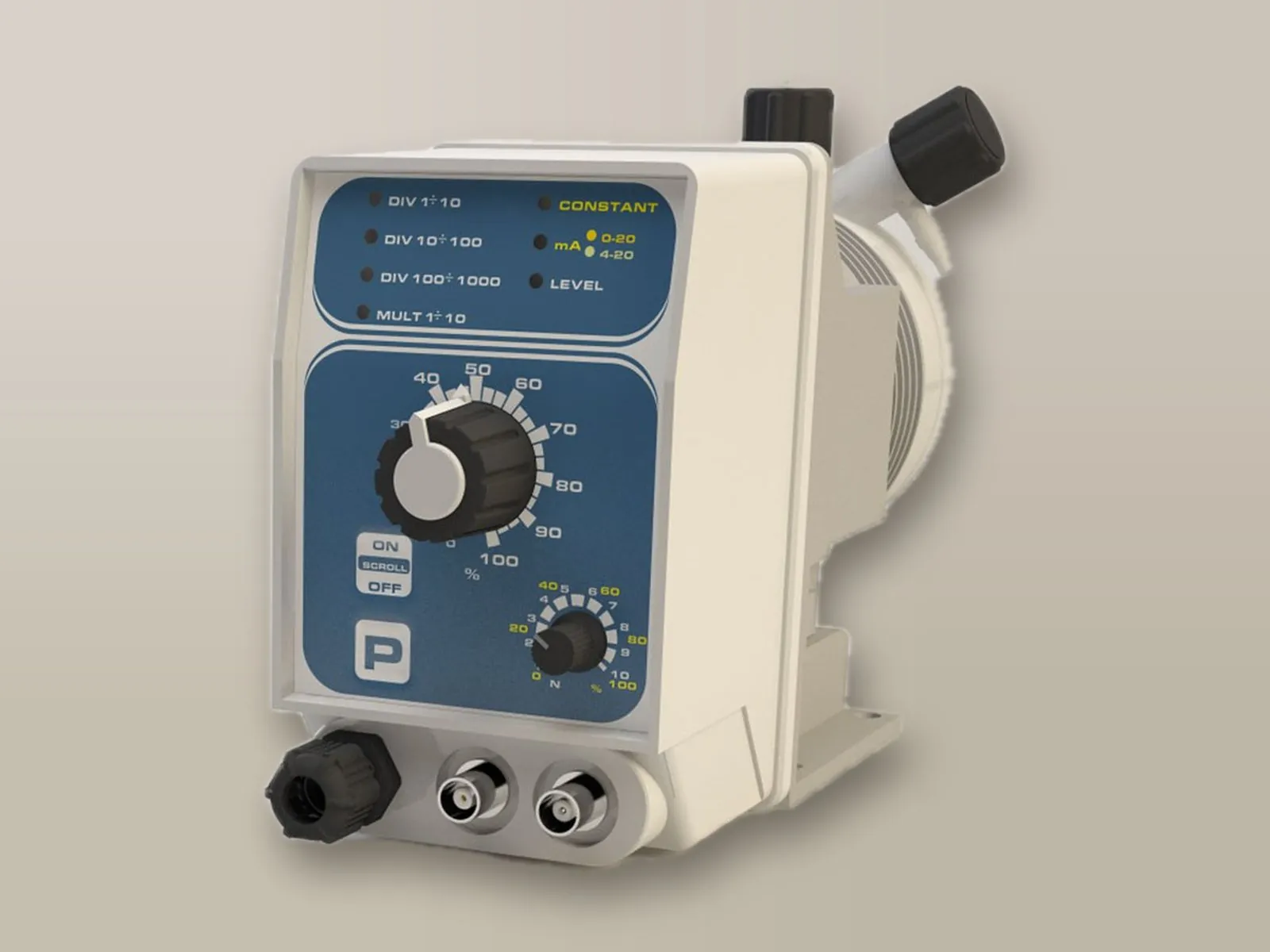
K PLUS
For constant dosing and dosing proportional to a pulse-output water meter or to a 0-4/20 mA current loop signal.
- Constant
- Constant with divider
- Multiply
- Divide
- mA
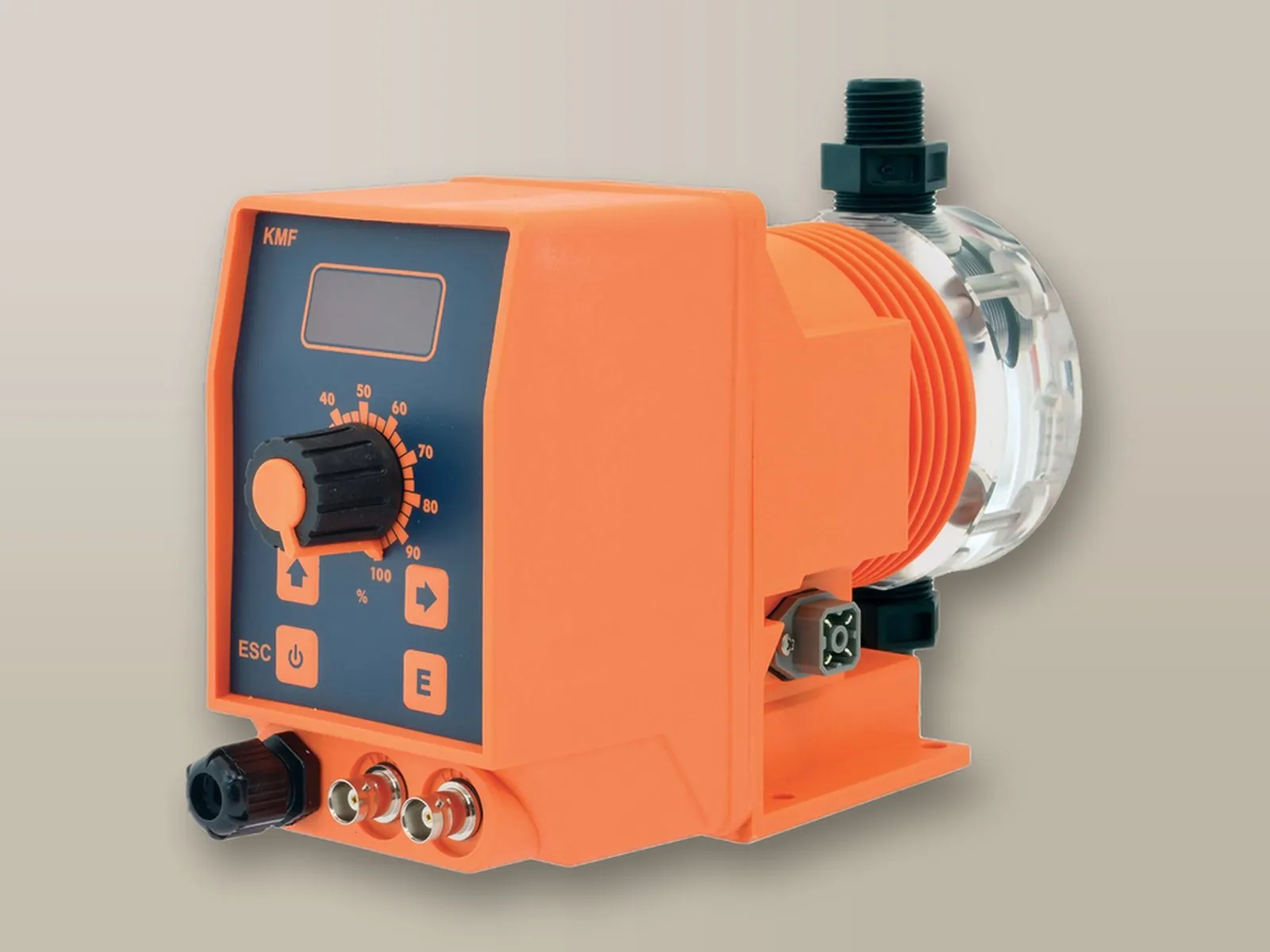
Diaphragm dosing pump for constant dosing or dosing proportional to a pulse-output water meter, with pulse multiplier and divider, or to a 0/4 – 20 mA current signal. The flow rate is adjusted electronically through the stroke frequency and mechanically through the volume of each stroke; level control is standard.
The K PLUS is the K series pump that doses in proportion to an external signal: the pulses of a pulse-output water meter, with multiplier and divider, or a 0/4 – 20 mA current signal. It is therefore suitable when the quantity of chemical must follow the flow of the treated water. When dosing can remain constant, the KCO or the KCL, which adds the level probe, are used.
For constant dosing and dosing proportional to a pulse-output water meter or to a 0-4/20 mA current loop signal.
Pump head: PVDF, PP, PMMA or AISI 316L
The pump doses at a constant injection frequency, proportional to the flow rate percentage set with the analogue selector (0 – 100%).
Operation similar to constant dosing, with the selector adjustable between 0 and 10%: the maximum flow rate is reduced to as little as 1/10 of the rated value.
The pulses from the pulse-output water meter are multiplied by the set factor.
The pulses from the pulse-output water meter are divided by the set factor.
The 0-4/20 mA current loop signal controls dosing proportionally, between the set minimum and maximum values.
The pump code is made up of the model name and the performance: maximum pressure in bar as two digits followed by the flow rate in l/h (K PLUS 0218 = 2 bar, 18 l/h). It is followed by the pump head code and the power supply code, listed in the tables at the end of this section. Performance varies with the working back pressure and with the characteristics of the chemical.
Suitable for most chemicals, with a viscosity up to 100 cP: the standard configuration for the most common applications.
| Code | Max pressure (bar) | Max flow rate (l/h) | Tubing (mm) |
|---|---|---|---|
| K PLUS 2001 | 20 | 1 | 4 x 6 |
| K PLUS 1802 | 18 | 2 | 4 x 6 |
| K PLUS 1504 | 15 | 4 | 4 x 6 |
| K PLUS 1005 | 10 | 5 | 4 x 6 |
| K PLUS 0808 | 8 | 8 | 4 x 6 |
| K PLUS 0510 | 5 | 10 | 4 x 6 |
| K PLUS 0501 | 5 | 1 | 4 x 6 |
| K PLUS 0218 | 2 | 18 | 6 x 8 |
Required with chemicals that release gas (e.g. peroxides), to prevent the pump from becoming air-locked.
| Code | Max pressure (bar) | Max flow rate (l/h) | Tubing (mm) |
|---|---|---|---|
| KA PLUS 1801 | 18 | 1 | 4 x 6 |
| KA PLUS 1503 | 15 | 3 | 4 x 6 |
| KA PLUS 103.5 | 10 | 3.5 | 4 x 6 |
| KA PLUS 100.5 | 10 | 0.5 | 4 x 6 |
| KA PLUS 085.5 | 8 | 5.5 | 4 x 6 |
| KA PLUS 057.5 | 5 | 7.5 | 4 x 6 |
| KA PLUS 0213 | 2 | 13 | 6 x 8 |
For chemicals with a viscosity up to 8,000 cP.
| Code | Max pressure (bar) | Max flow rate (l/h) | Delivery tube (mm) | Suction tube (mm) |
|---|---|---|---|---|
| K PLUS LPV 1802 | 18 | 2 | 8 x 12 | 16 x 22 |
| K PLUS LPV 1504 | 15 | 4 | 8 x 12 | 16 x 22 |
| K PLUS LPV 1005 | 10 | 5 | 8 x 12 | 16 x 22 |
| K PLUS LPV 0808 | 8 | 8 | 8 x 12 | 16 x 22 |
| K PLUS LPV 0510 | 5 | 10 | 8 x 12 | 16 x 22 |
| K PLUS LPV 0218 | 2 | 18 | 8 x 12 | 16 x 22 |
Nominal flow rate measured with water at room temperature. The LPV version is supplied with a 3/4" injection valve, PE delivery tube, PVC suction tube and a priming kit with syringe, without level probe.
| Specification | Value |
|---|---|
| Strokes | From 18 to 180 per minute |
| Mechanical adjustment of the single stroke | Linear from 30 to 100 % |
| Maximum chemical viscosity | 100 cP; 8,000 cP in the LPV version |
| Average power draw at maximum flow rate | 19 W at 230 VAC, 24 W at 115 VAC, 12 W at 24 VAC and 24 VDC, 8.8 W at 12 VDC |
| Protection rating | IP65 |
| Noise level | 73.4 dB(A); 74 dB(A) in the LPV version |
| Weight | 4.1 kg |
| Housing | PP |
| Maximum altitude | 2,000 m a.s.l. |
| Mounting | Horizontal, or vertical with the dedicated bracket |
| Ambient temperature | 10 – 45 °C |
| Product temperature | 0 – 50 °C |
| Transport and storage temperature | -10 – 50 °C |
| Relative humidity | 85 % up to 40 °C, 70 % at 45 °C, non-condensing |
| Installation category | II |
| Pollution degree | 2 |
| Component | Material |
|---|---|
| Diaphragm | PTFE, in all versions |
| Dynamic O-rings (pump head) | Viton (FKM) or Dutral (EPDM) |
| Static O-rings | Viton (FKM), Dutral (EPDM), Nitrile (NBR) or Teflon (PTFE) |
| Valve balls | Ceramic; stainless steel in the AISI 316L pump head |
| Pump head | Material | O-rings | Valves | Balls | Delivery hose | Suction hose | Max viscosity (cP) |
|---|---|---|---|---|---|---|---|
| K | PVDF | FKM | PVDF | Ceramic | PVDF | PVC | 100 |
| P | PVDF | EPDM | PVDF | Ceramic | PVDF | PVC | 100 |
| Y | PVDF | NBR | PVDF | Ceramic | PVDF | PVC | 100 |
| V | PP | FKM | PVDF | Ceramic | PE | PVC | 100 |
| D | PP | EPDM | PVDF | Ceramic | PE | PVC | 100 |
| J | PVDF | FKM + PTFE | PVDF | Ceramic | PVDF | PVC | 100 |
| A | PMMA | FKM | PVDF | Ceramic | PVDF | PVC | 100 |
| Z | AISI 316L | FKM | AISI 316L | AISI 316L | – | – | 100 |
| $ (LPV) | PMMA | FKM | PP | Stainless steel, Hastelloy spring | PE | PVC | 8,000 |
PTFE diaphragm for all pump heads. 4 × 6 mm hoses, 6 × 8 mm for models 0218 and 0213: the size may vary with the pump head material. In some applications the $ head for slightly viscous liquids may reduce the flow rate.
| Code | Power supply |
|---|---|
| 00 | 230 VAC, Schuko plug |
| 0S | 230 VAC, Australian plug |
| 01 | 230 VAC, no plug |
| 03 | 115 VAC, US plug |
| 04 | 24 VAC, no plug |
| 05 | 12 VDC (some models only) |
| 07 | 24 VDC |
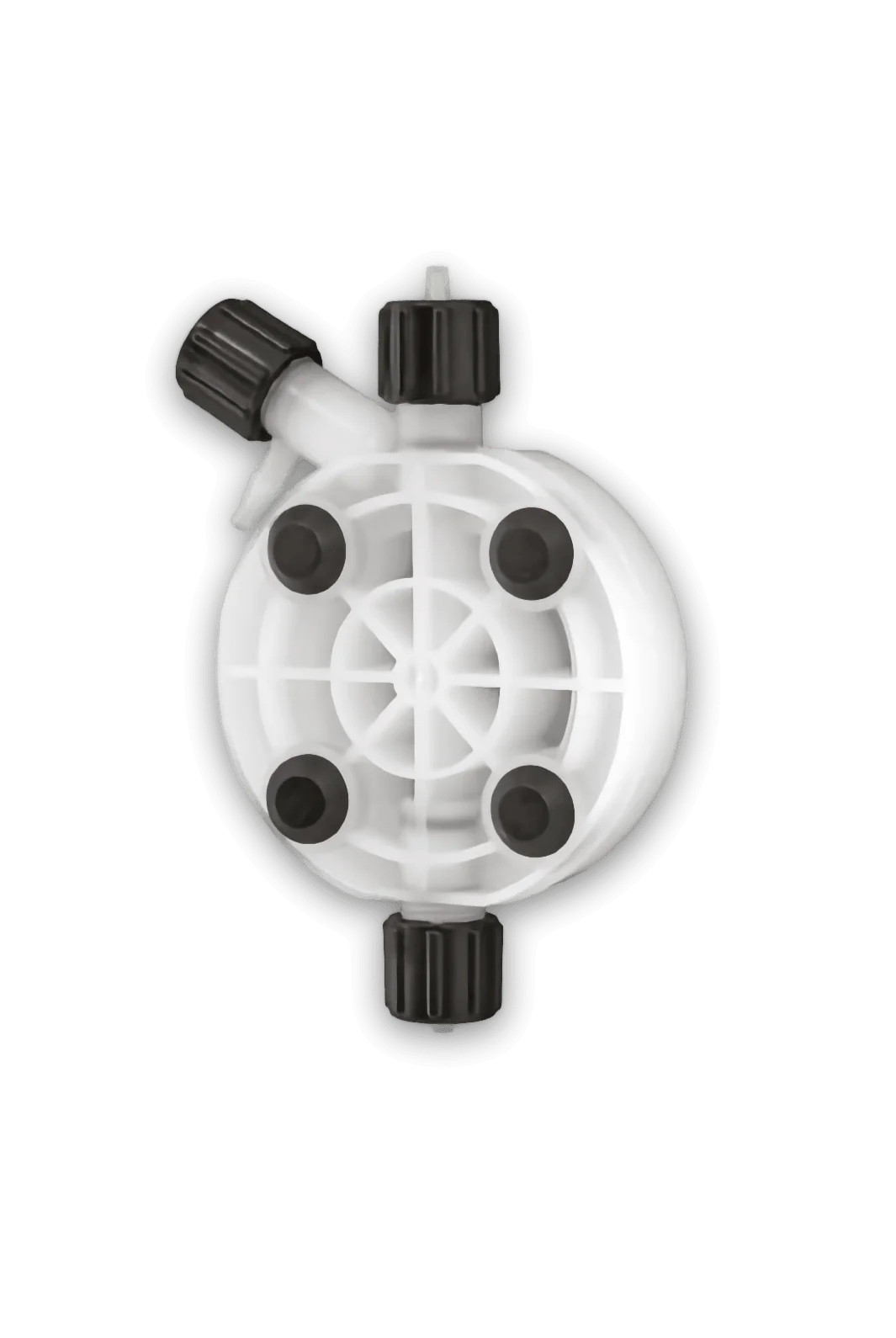
Suitable for most acids, for peroxides and for sodium hypochlorite (chlorine).
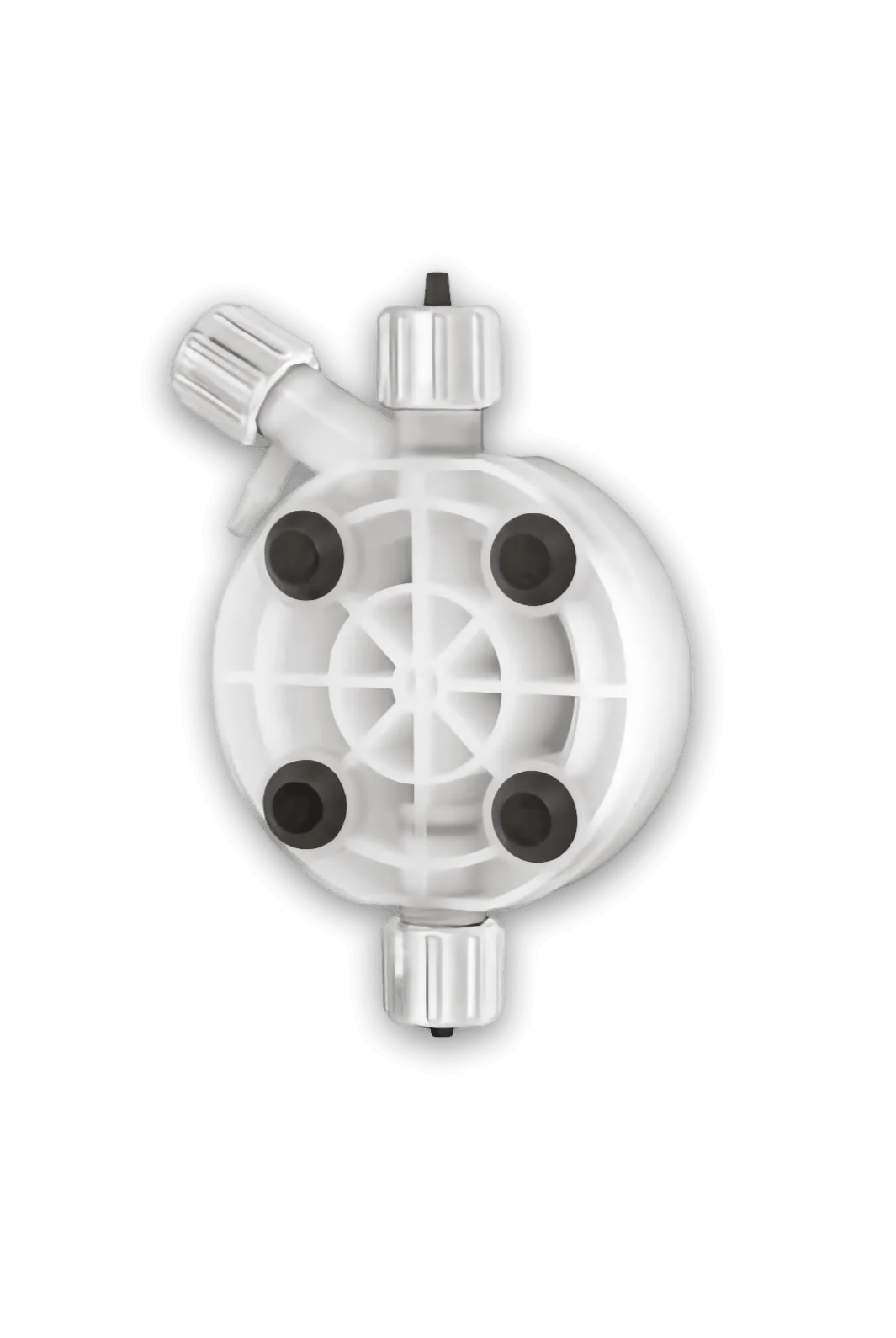
Suitable for sodium hydroxide (caustic soda).
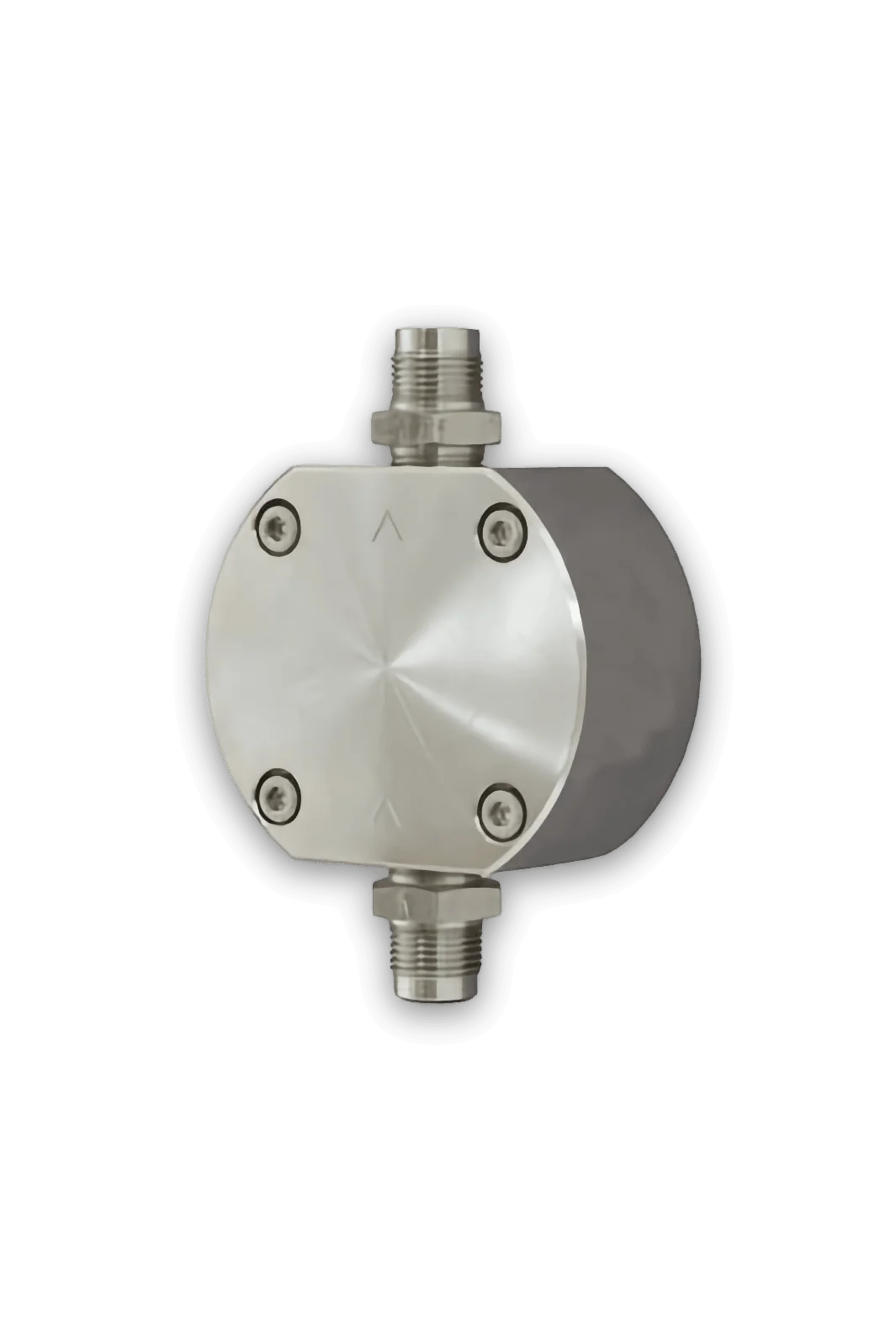
Suitable for peracetic acid and sodium hydroxide.
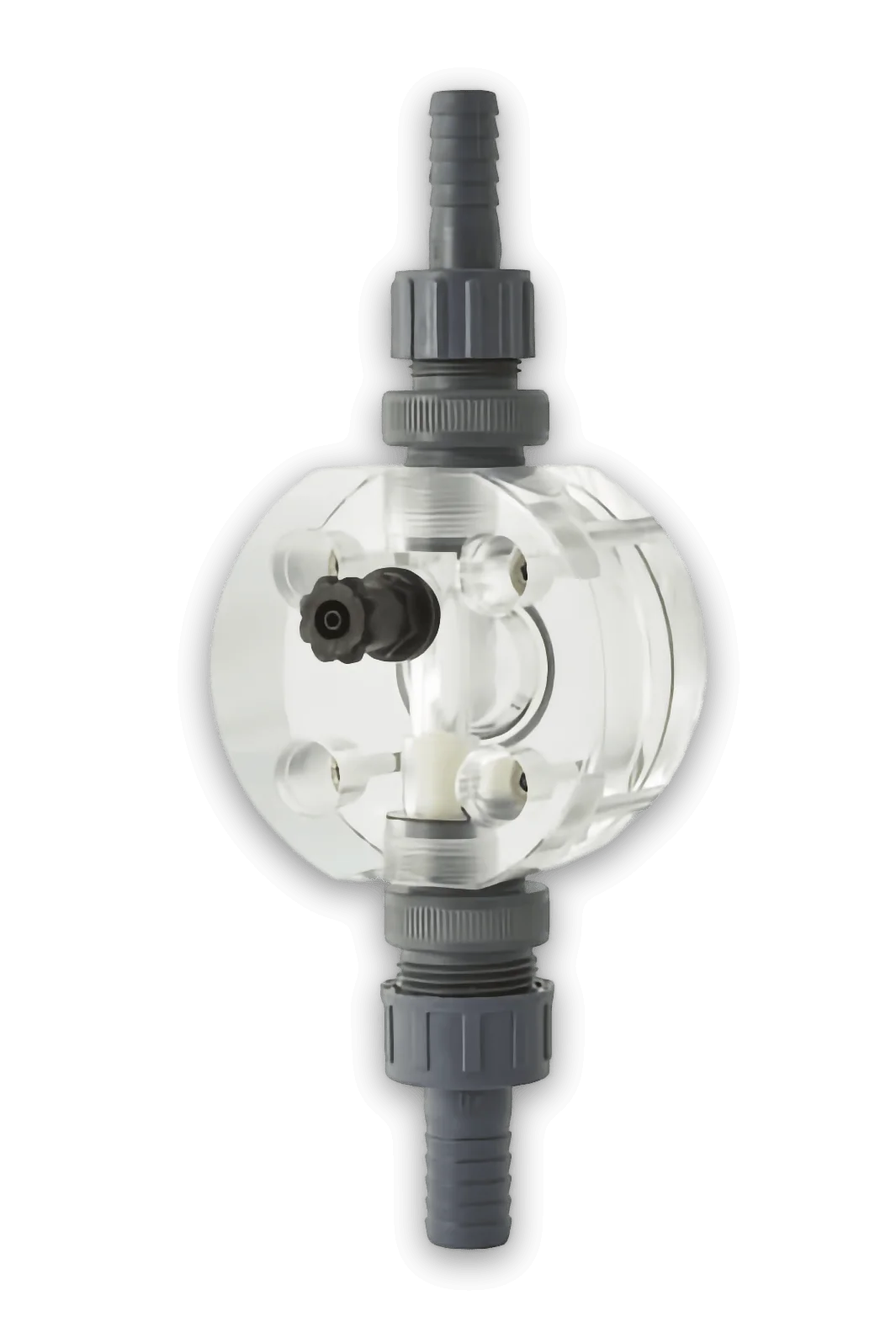
Suitable for medium and high viscosity substances.
In addition to the standard configuration, versions dedicated to particular applications are available; the performance of each is given in the technical data. The pages by application compare the suitable pumps of all the series.
Self-venting pump head, required with chemicals that release gas (e.g. sodium hypochlorite and peroxides): it vents the gas and prevents the pump from locking.
PMMA pump head for viscous liquids up to 8,000 cP.
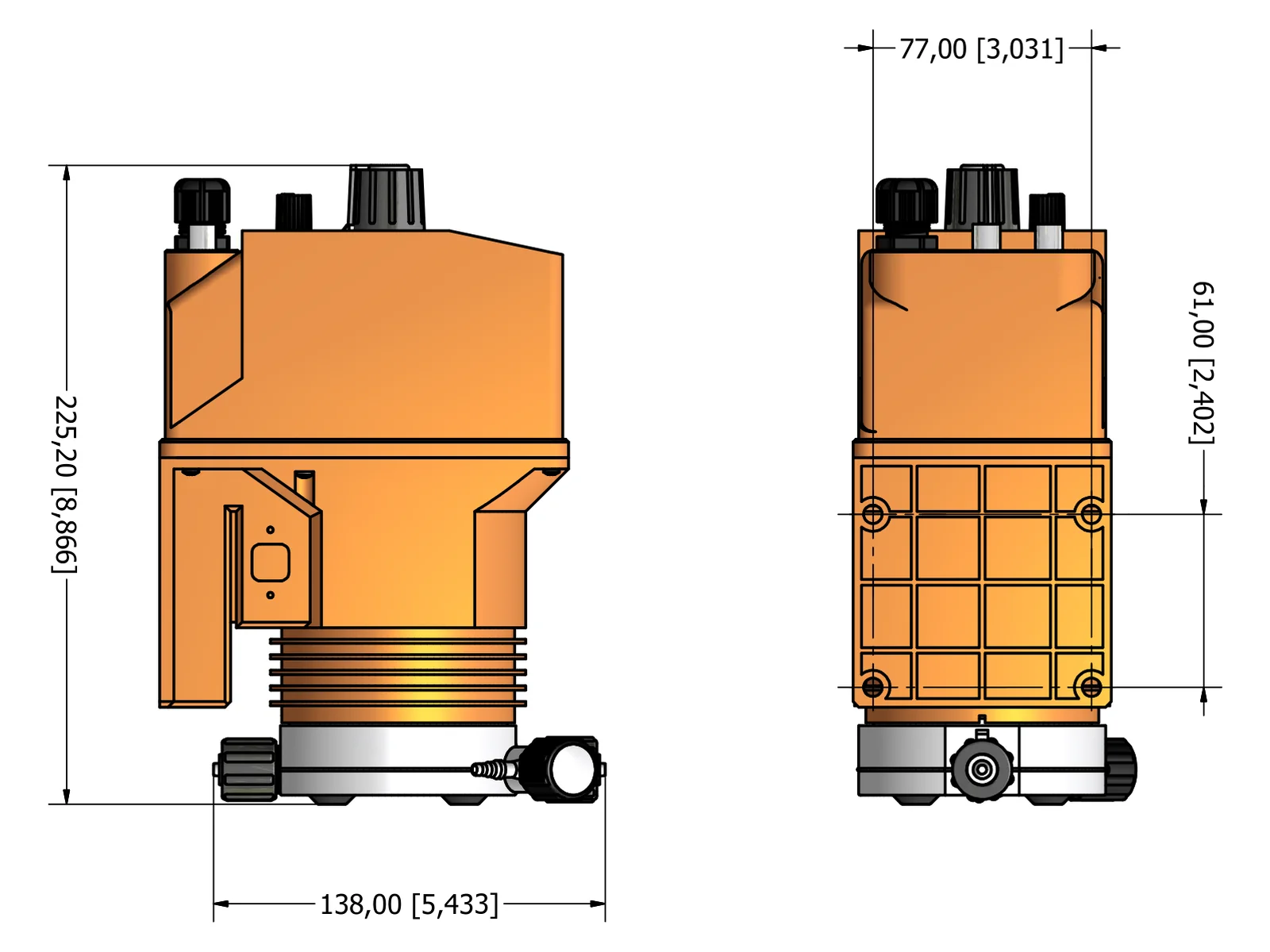
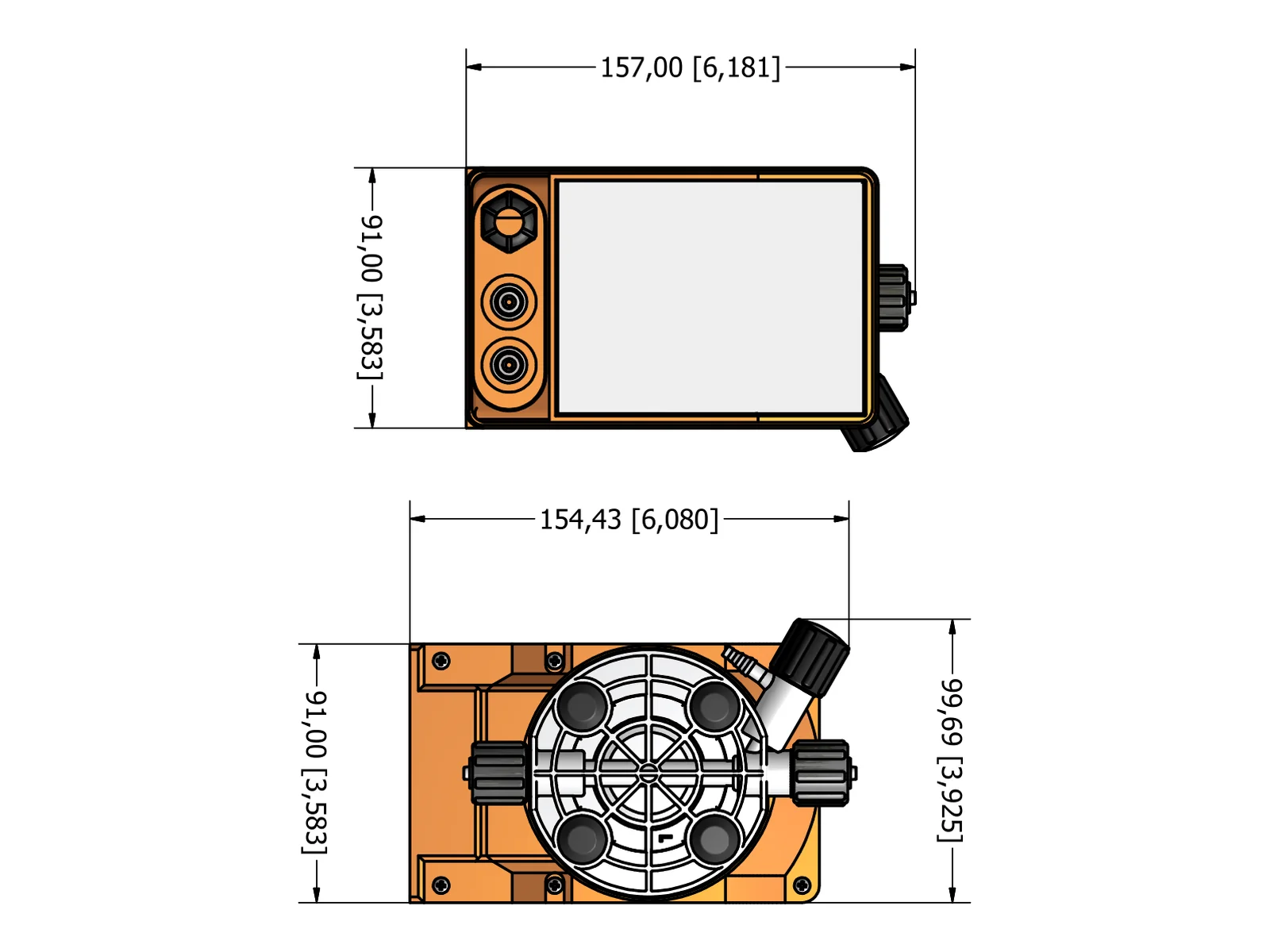
Measurements in mm [inches], the same for the K and KMS series.
The most frequent causes of malfunction and the corrective actions to check before contacting technical support.
Learn more: the pump does not prime and does not dose →| LED | Meaning | Action |
|---|---|---|
| Steady red | Chemical run out (with level probe connected). | Restore the chemical level in the tank. |
| Red, 3 flashes per second | Mains voltage below the rated value. | Check the power supply, then switch the pump off and on again. |
| Red, 2 flashes per second | Mains voltage above the rated value. | Check the power supply, then switch the pump off and on again. |
| Red, 1 flash per second | The pump is waiting for a program to be selected. | Press SCROLL, select the program and confirm with P. |
| Steady green | Pump running in the mode indicated by the LED. | No action required. |
| Green, 1 flash every 2 seconds | Pump OFF, on the last program used. | No action required. |
| All LEDs flashing | Pump in programming mode. | Press P and SCROLL, or wait 30 seconds to exit without changes. |
Adjustment is linear between 30 and 100%: below 30% the actual flow rate may differ from the expected one and must therefore be checked.
Connect all the tubing, open the bleed valve and set the adjustment to 100%; start the pump and close the bleed valve as soon as the chemical comes out. With viscous liquids the operation can be assisted with a 20 cc syringe applied to the bleed port.
With the pump switched off, hold down both arrow keys and restore power: LOAD DEFAULT appears and the programming is reset to the factory values (password 0000).
If the problem persists, contact us. Before sending the pump for servicing, empty the pump head of chemical and dry it.
According to the operating mode and the set parameters, the pump automatically adapts the injection frequency to ensure the required dosing.
The knob reduces the stroke length of the diaphragm, i.e. the volume of each injection and, consequently, the maximum flow rate. This offers two advantages:
Linear dosing: a high number of small-volume injections promotes mixing of the chemical into the water flow and avoids concentration peaks.
Accuracy at low dosing rates: with a 10 l/h pump required to dose 1 l/h, reducing the stroke length to 50% brings the maximum flow rate down to 5 l/h and doubles the injection frequency. Particularly suitable in combination with the pulse-output water meter.
The pump is supplied with a low-level probe for the tank: when the chemical runs out, it shows the alarm on the display and activates the corresponding output.
A dedicated button allows the lines to be filled with the chemical to be dosed.
Horizontal installation, or vertical installation by means of a dedicated bracket.
Tell us about your application: our technical staff will recommend the most suitable model, configuration and accessories.
Call or write to us: a technician will reply with a tailored proposal of controllers, pumps, probes and accessories.