Clogged pipes
Over time limescale reduces the effective bore of the pipes until it blocks them.
Magnetic scale inhibitors, or ionic accelerators, prevent calcium and magnesium ions from bonding with carbonates, thus preventing the formation of limescale. They operate with a permanent magnet, with no electrical connections, no maintenance and no running costs.
Hardness is the quantity of calcium (Ca++) and magnesium (Mg++) salts dissolved in water. In very hard water these ions bond with other substances to form a precipitate, limescale; the phenomenon increases as temperature rises.
Over time limescale reduces the effective bore of the pipes until it blocks them.
Deposits thermally insulate heating elements and heat exchangers: just one millimetre of limescale reduces the efficiency of a heating or cooling system by 10 – 20%.
Limescale is an ideal substrate for the deposition and proliferation of bacteria and microorganisms, which form biofilm on the inner walls of the pipes.
Hard water leaves stains on shower screens and tableware and increases the risk of faults and the need for maintenance of household appliances, boilers and radiators.
Installed on the pipe with negligible pressure losses, it forces the water through an intense magnetic field generated by a permanent magnet, with no need for electrical connections.
The magnetic field causes a molecular dissociation of the hardness salts (calcium and magnesium ions), turning them into a soft, powdery, talc-like precipitate called aragonite, which remains in suspension.
Unlike ion-exchange softeners, it does not reduce water hardness, but prevents it from precipitating and building up as limescale. Once installed it requires no maintenance and has no running costs.
It can easily be installed on any system, upstream of each point of use, as required.
Downstream of the storage reservoirs of large public water supply networks, on the pipes distributing water to users.
Downstream of the water meter, to protect the entire plumbing system and household appliances.
In the heating circuit, as additional protection for the boiler, radiators and the entire system.
In industrial plants, both on the water supply line and in the circuit.
It is fitted directly in the circuit, with the same diameter as the pipe, or in by-pass (recirculation) with a smaller diameter.
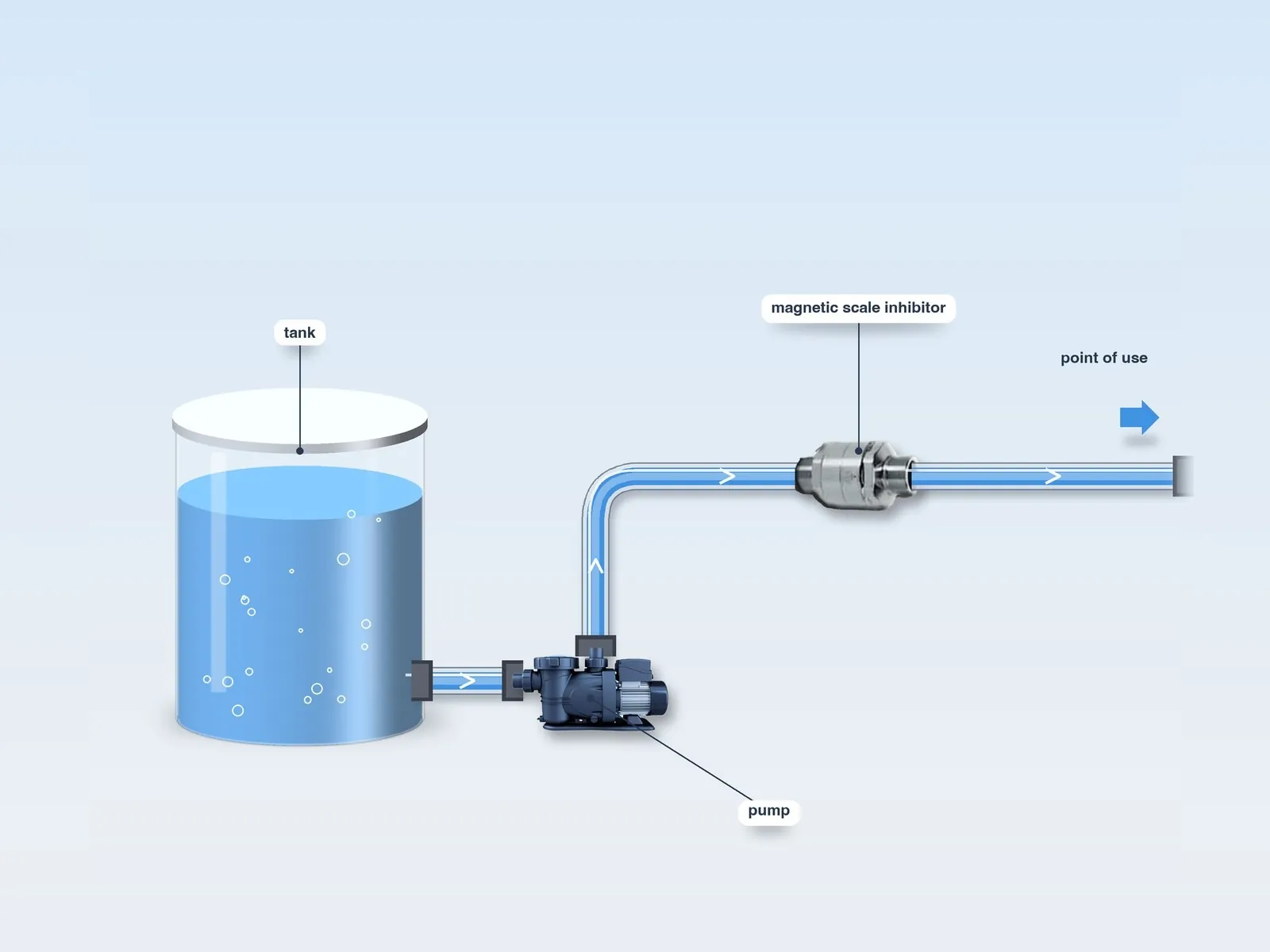
Downstream of tank and pump, upstream of the point of use.
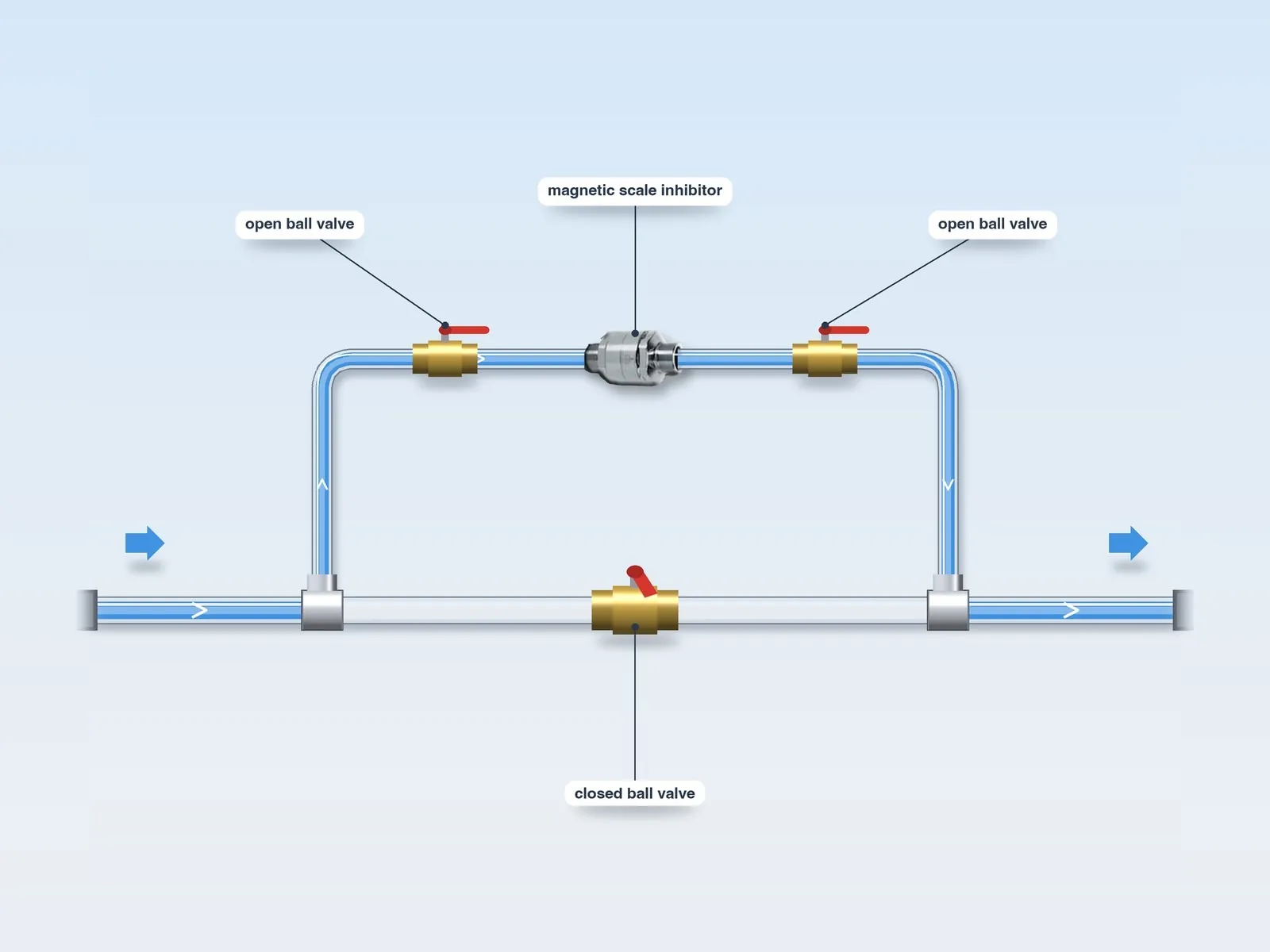
In by-pass between two ball valves, with a third valve on the main line.
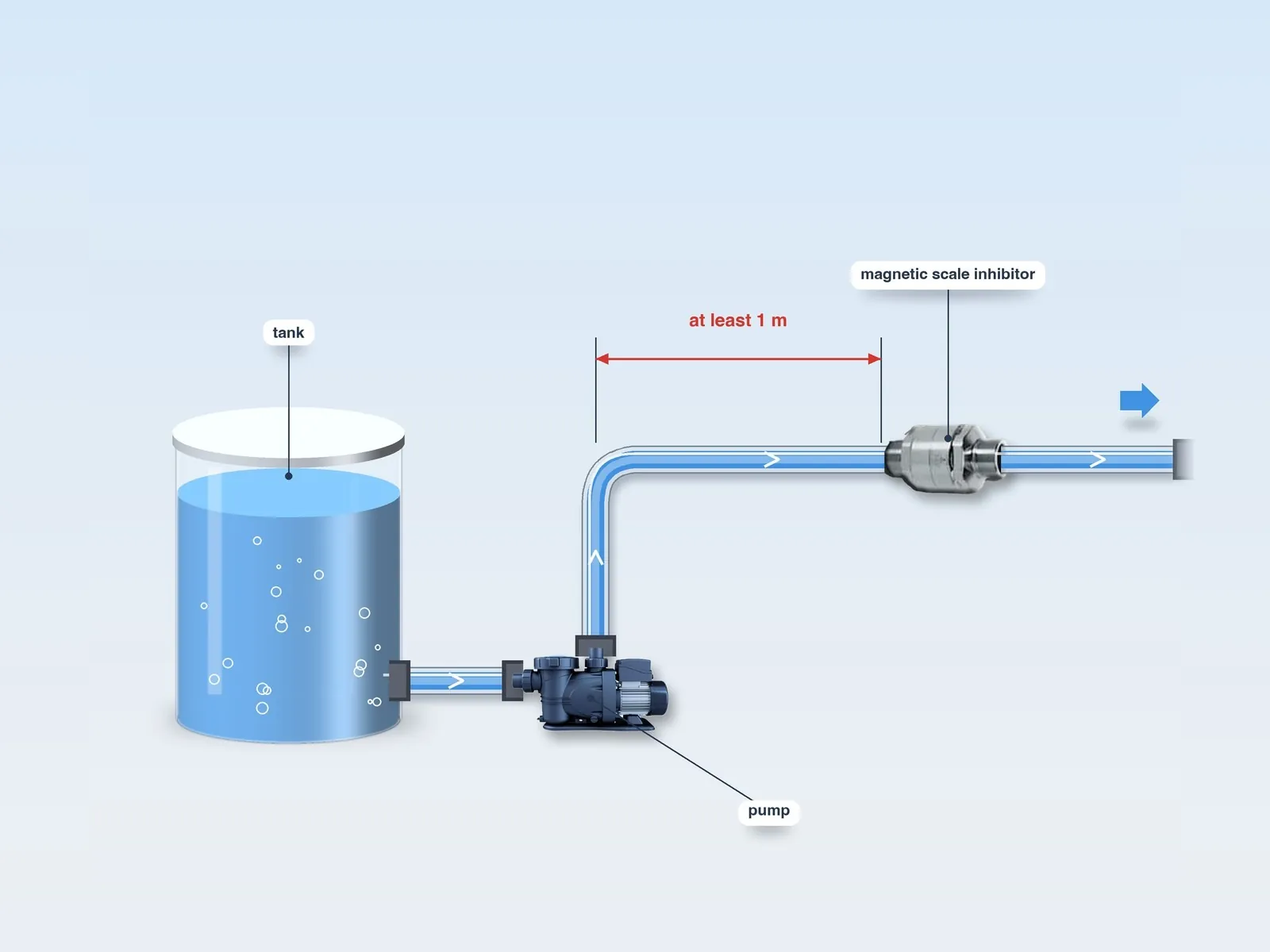
At least 1 metre from the pump outlet.
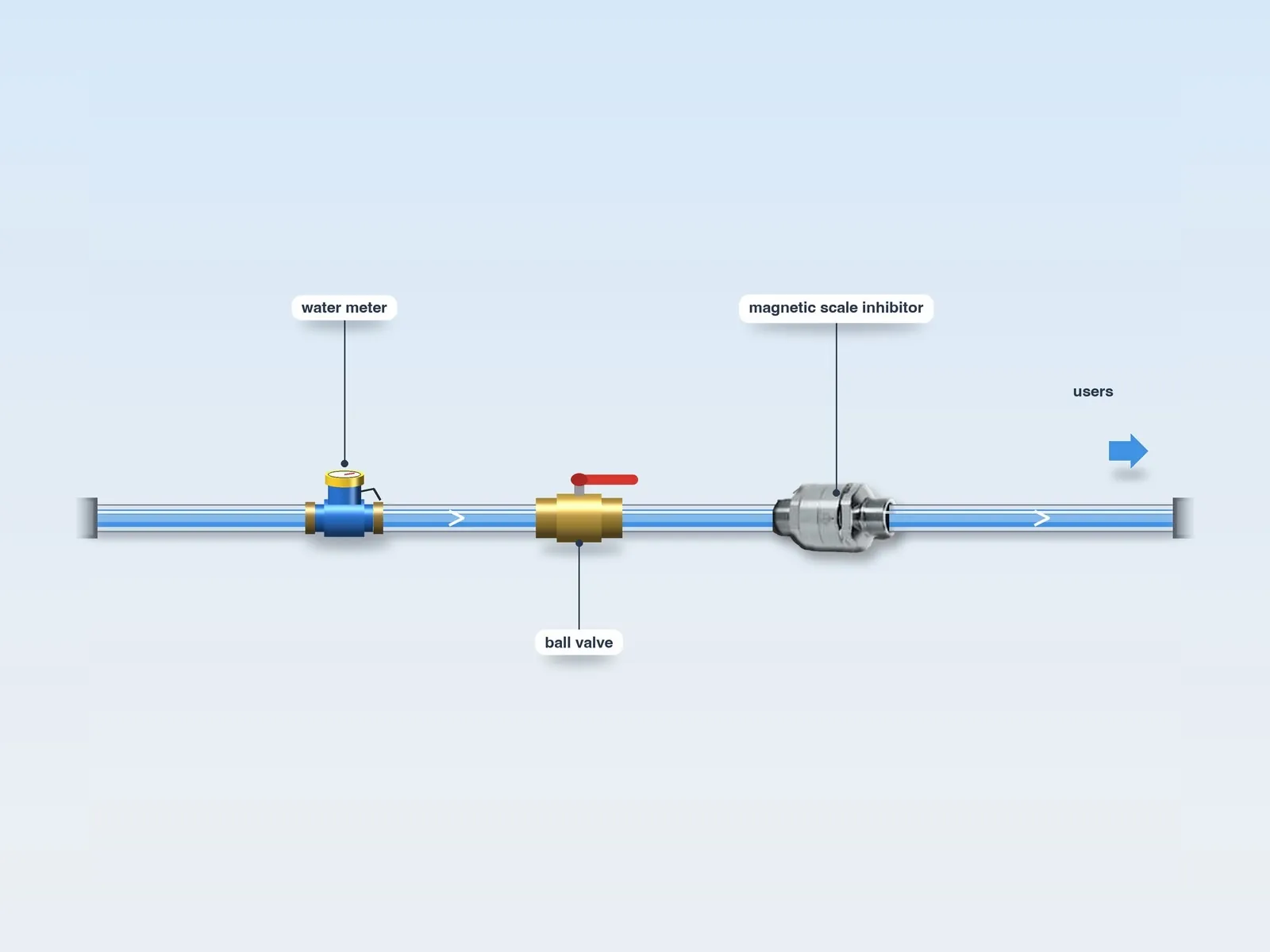
Downstream of the water meter and a ball valve, upstream of the points of use.
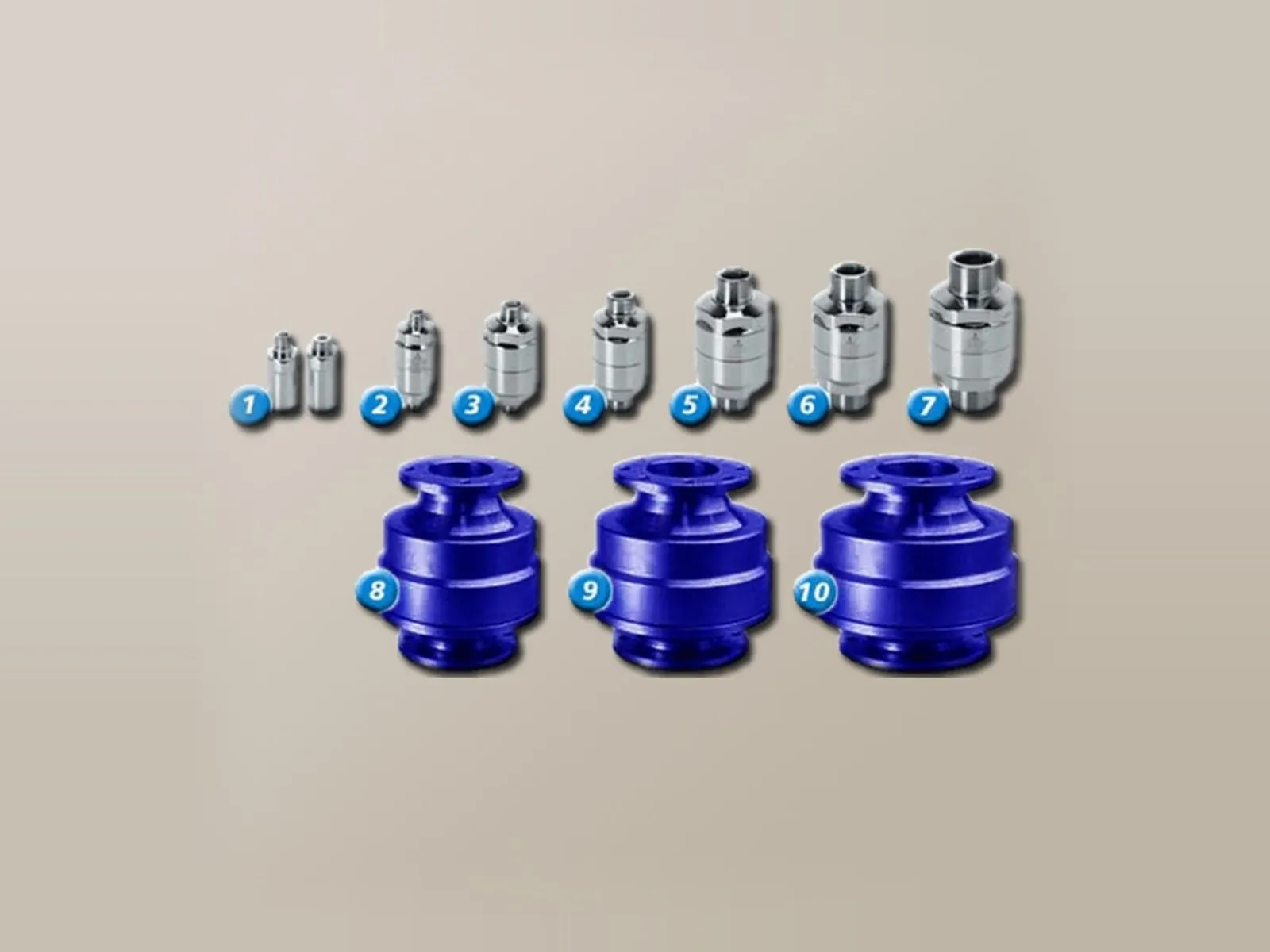
Depending on the application, they are made of chrome-plated brass, Anticorodal aluminium or AISI 304 stainless steel machined from solid.
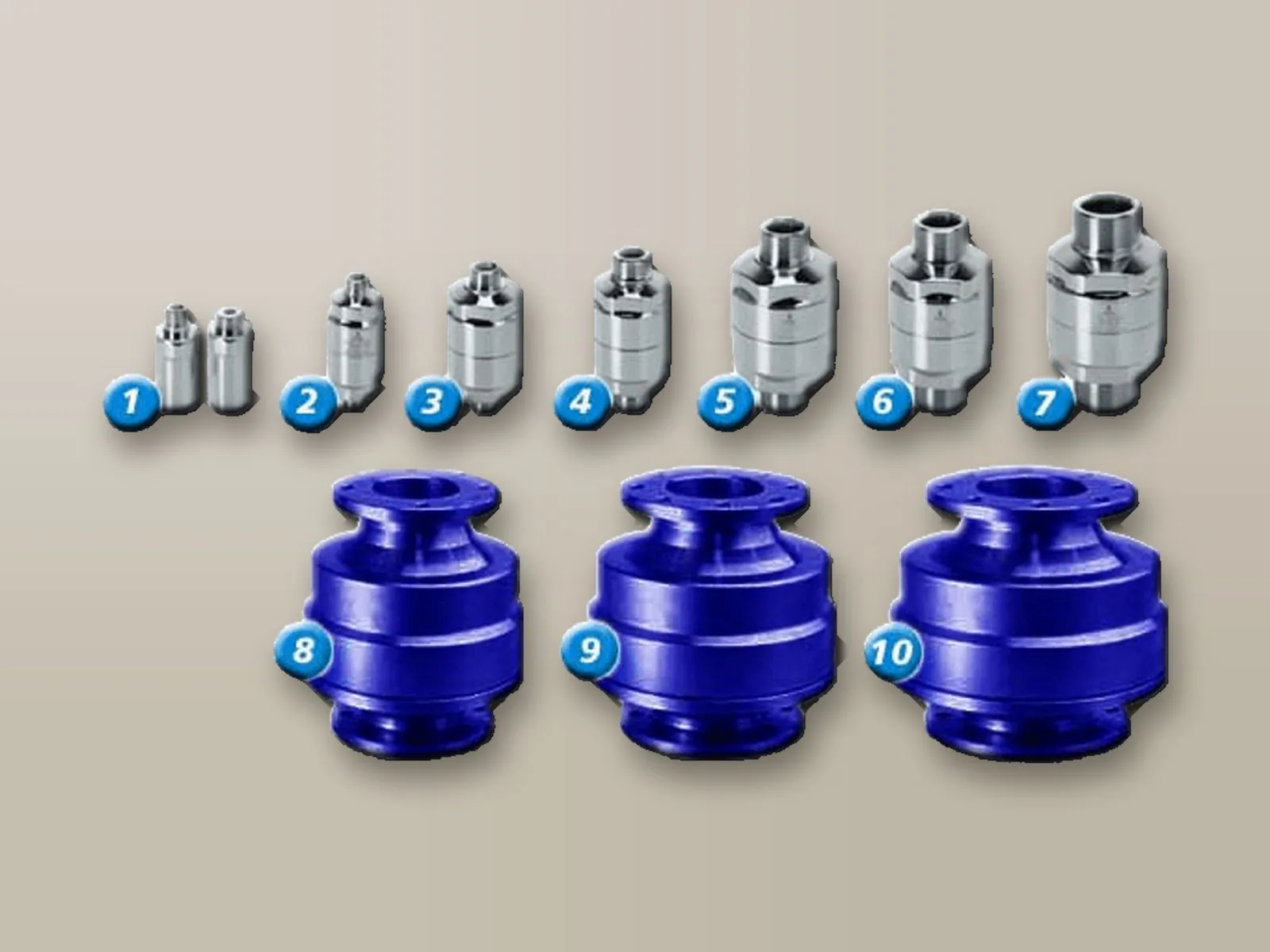
With threaded or flanged connections, for residential, domestic water and industrial applications.
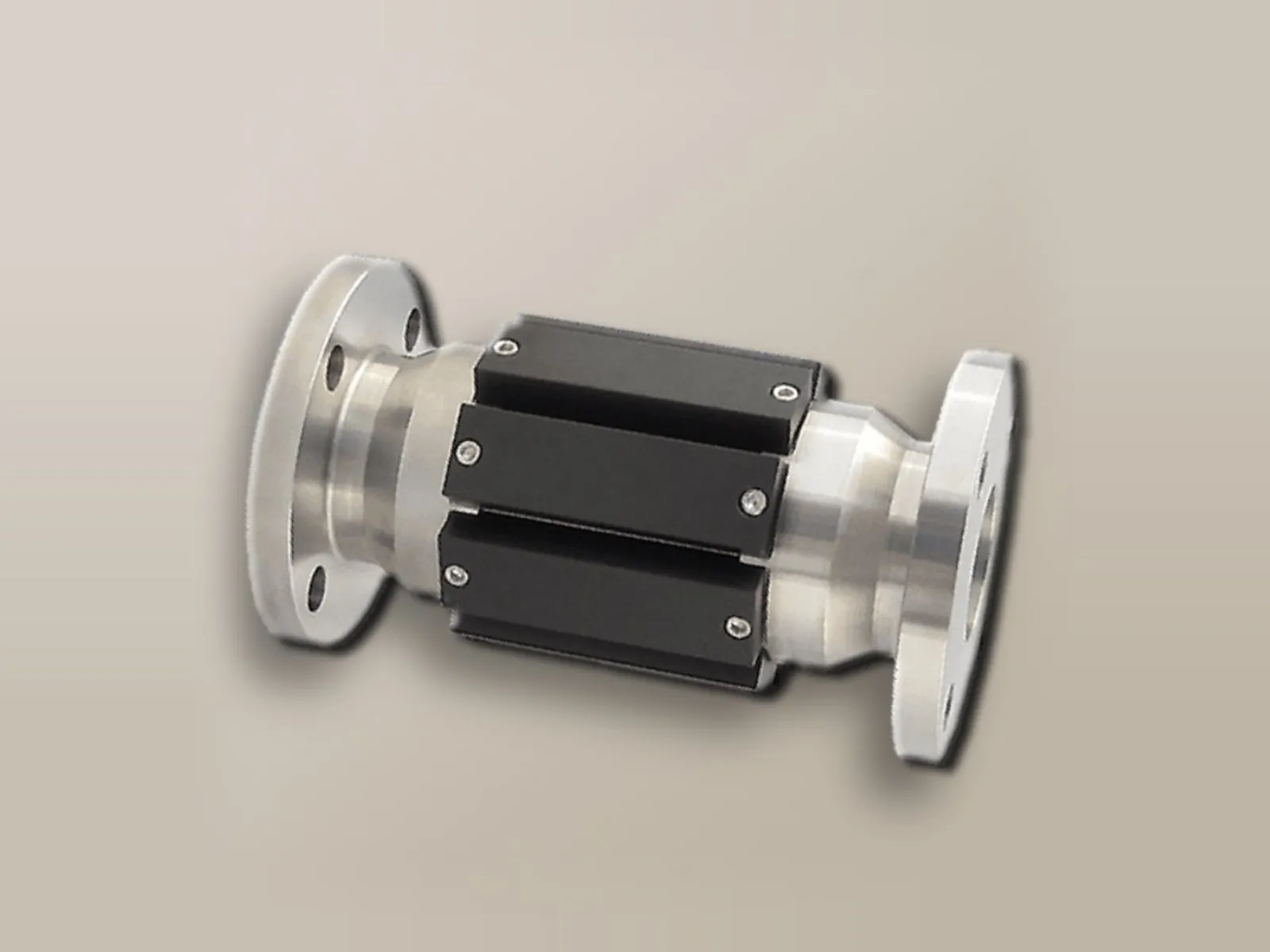
Single-piece body in AISI 304 stainless steel, designed for the most demanding operating conditions: high-pressure pipes, brackish or acidic water. The water never comes into contact with the magnets: the internal ones are protected by AISI 304 stainless steel, the external ones by hard-anodised aluminium.
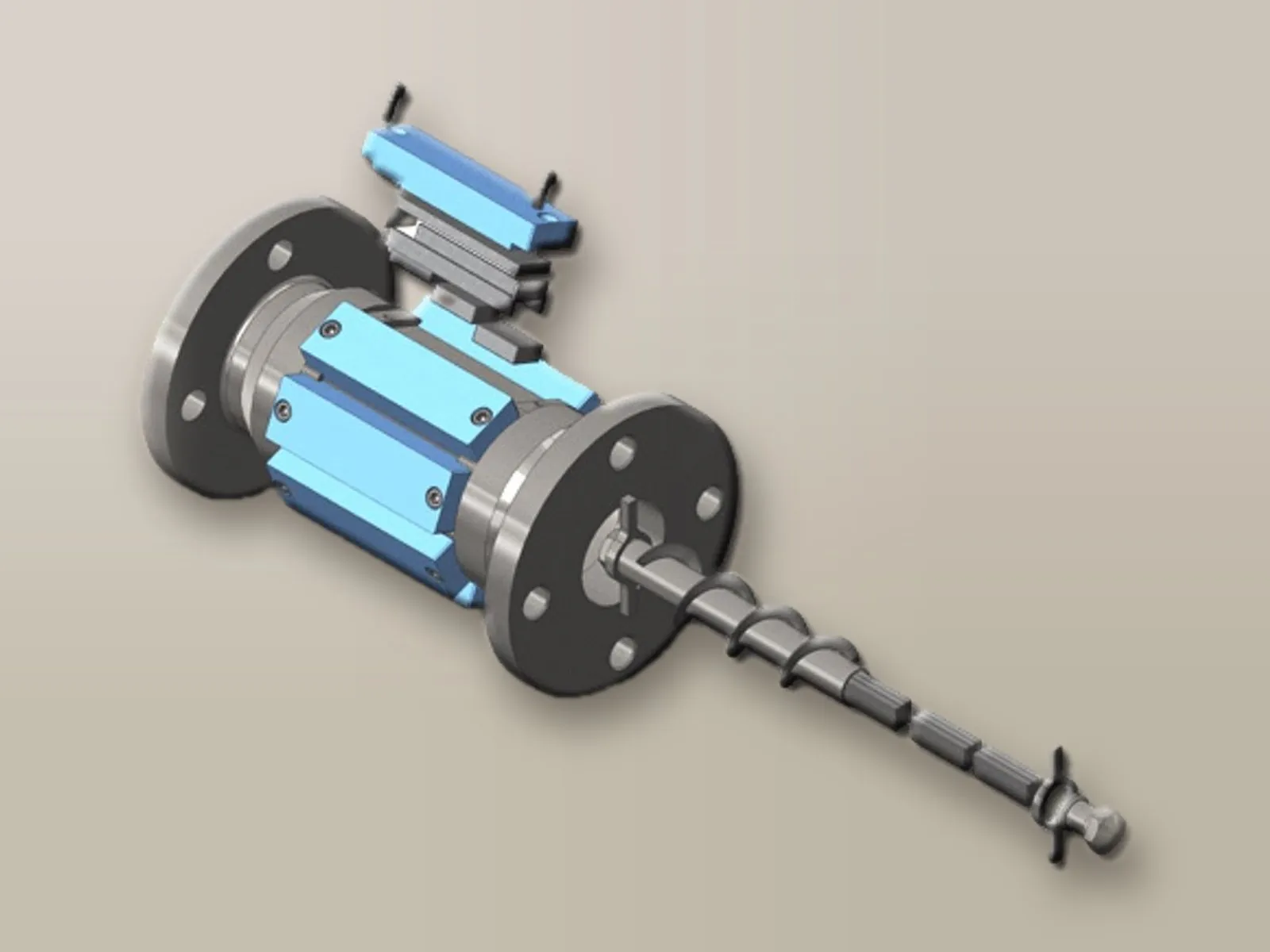
In the stainless steel version a helical insert coaxial with the magnets imparts a swirling motion to the water, so that the entire volume passes through the magnetic field and the treatment is as effective as possible.
In French degrees: 1 °f = 10 mg/l of calcium carbonate (CaCO3).
| Hardness (°f) | Water type |
|---|---|
| 0 – 10 | Soft |
| 10 – 20 | Moderately hard |
| 20 – 30 | Hard |
| 30 – 50 | Very hard |
Available for any pipe: in standard sizes from 1/2" to 4" and, on request, in larger sizes, with threaded or flanged connections.
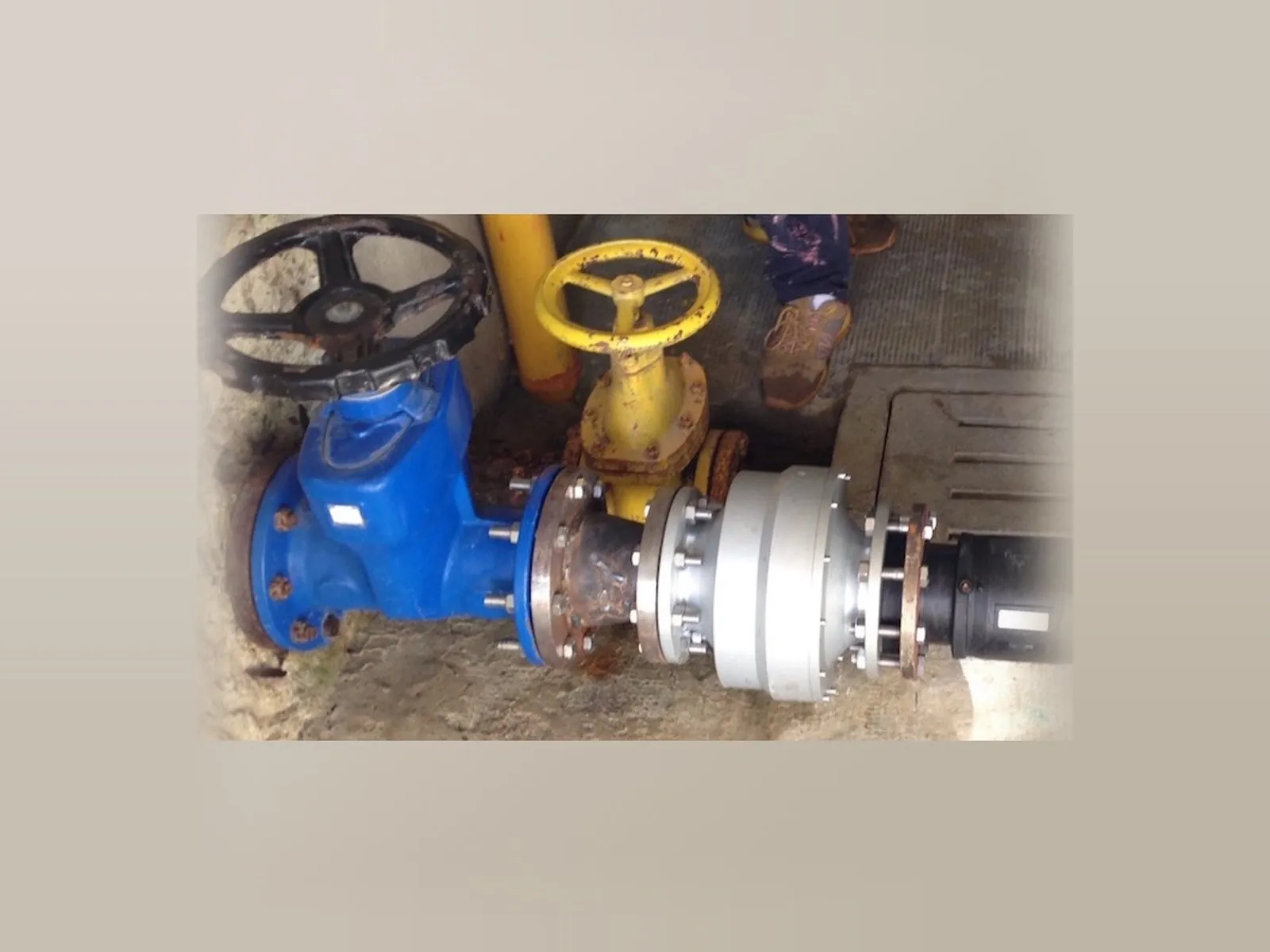
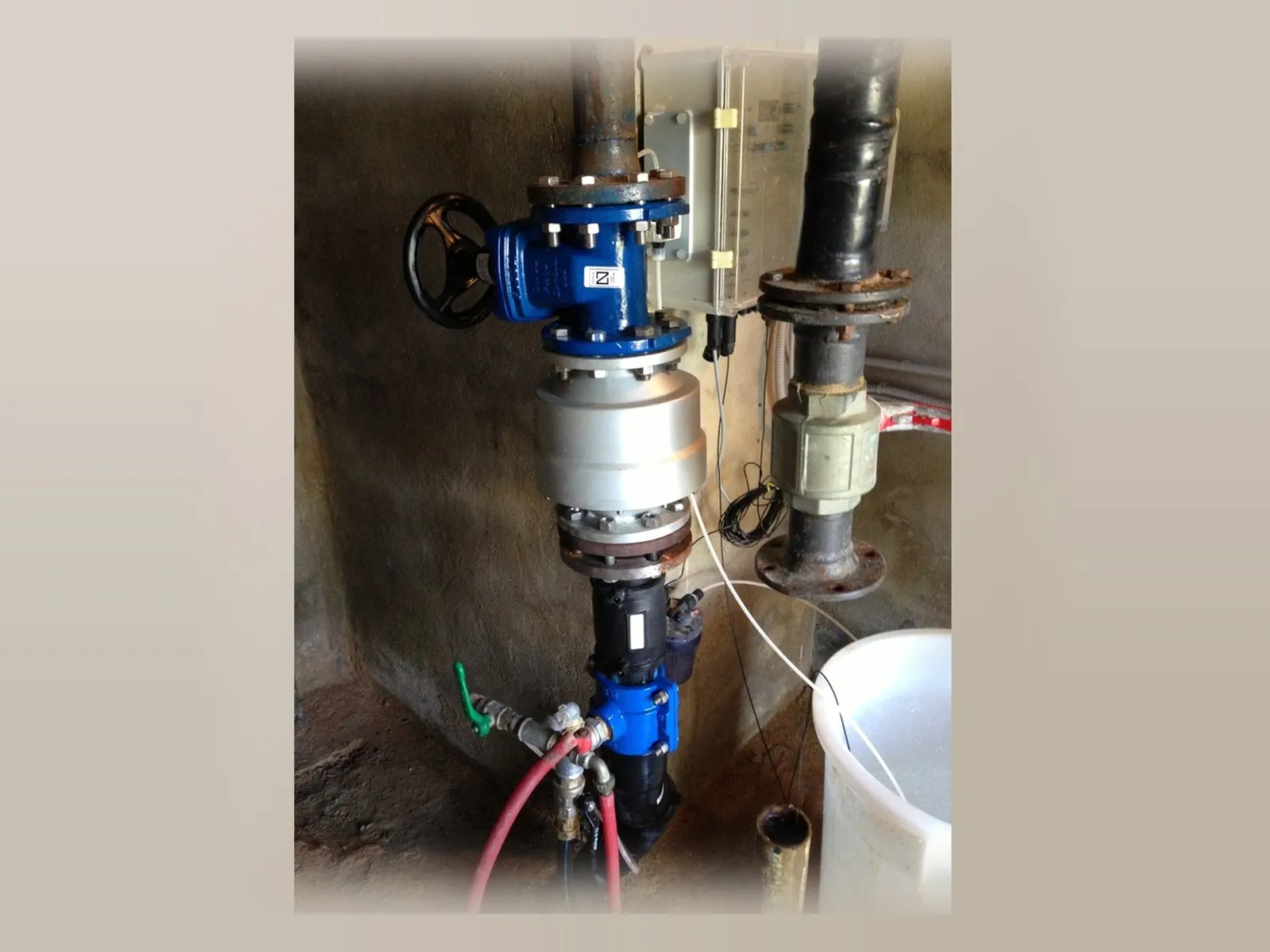
Tell us the pipe diameter, flow rate and water hardness: we will recommend the most suitable scale inhibitor.
Call or write to us: a technician will reply with a tailored proposal of controllers, pumps, probes and accessories.